
Reviewed · PROVENCE DAY TOURS
Aix-en-Provence: Between History and City Charm
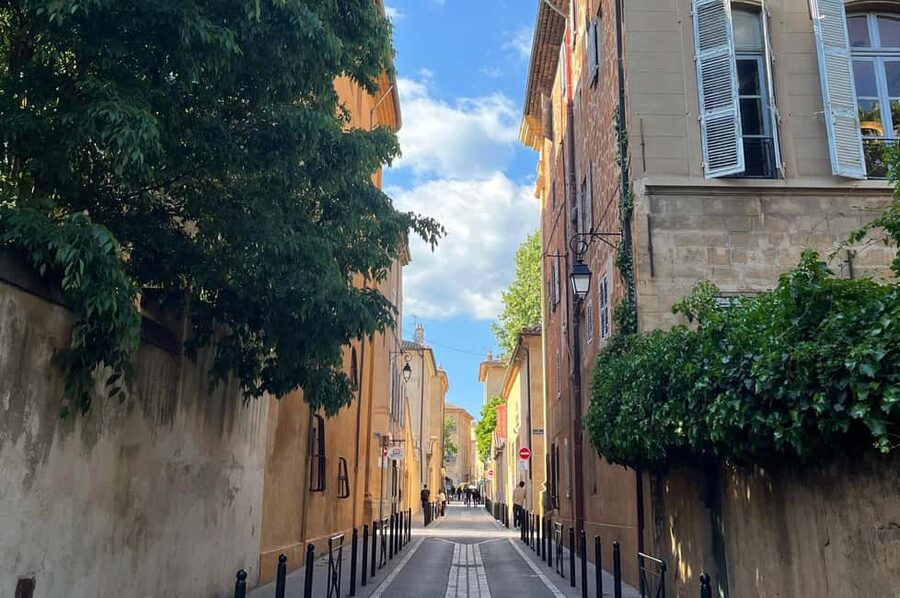
Aix tells its story by foot. In this 90-minute walk, you get a clear historical thread plus the kind of guide personality that makes street details stick. I love the way famous people and their hometown ties get woven into real stops, and I love the Paula-style humor that turns facts into easy moments. A small drawback to note: you are not doing museum time here, so this is about what you see on the streets and church fronts.
You’ll start near La Rotonde, then glide along Cours Mirabeau, pass through squares and passages, and end at St Sauveur Cathedral. The guide uses images to show how the city changed over time, which helps even if you are not a total architecture nerd. With Portuguese, English, and Spanish live guiding, plus a wheelchair-accessible route, this is a strong way to get oriented fast without rushing you through big-ticket sites.
In This Review
- Key things I’d circle on your Aix map
- Meeting at La Rotonde, then letting Aix explain itself
- Cours Mirabeau: the tree-lined showpiece with a story behind it
- Lycée Mignet and the Paul Cézanne connection you will remember
- Saint Jean de Malte: church stop, wider European history
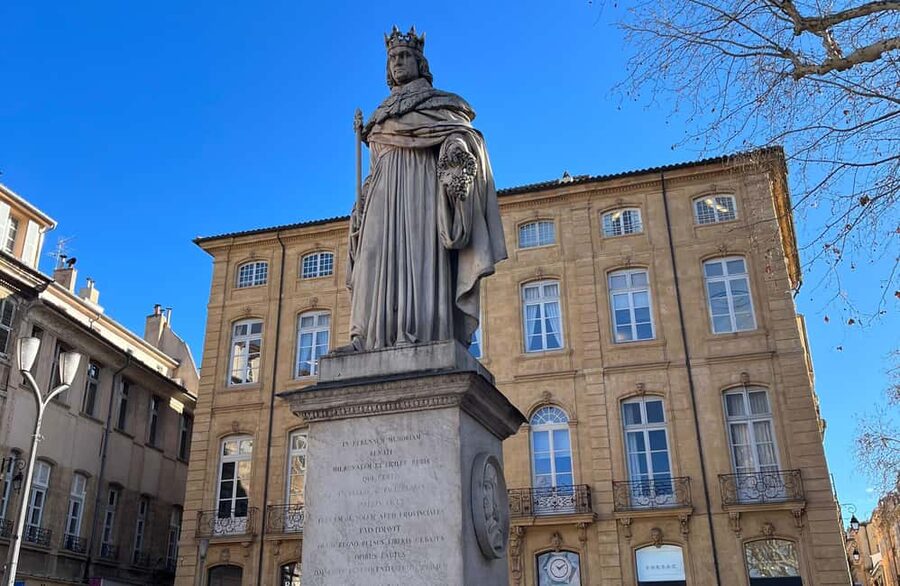
- Fontaine du Roi René: a king’s story tied to the everyday
- Passage Agard and the art-gallery feel of a pedestrian cut-through
- Place des Prêcheurs and the ruins story you will want to remember
- Place d’Albertas: a quieter square break with an elegant feel
- Hotel de Ville and the city’s personality in small details
- St Sauveur Cathedral: closing with Gothic drama and stained glass
- Why $29 for 90 minutes is a solid value in Aix
- What you should bring, and how to get more out of it
- Should you book the Aix Between History and City Charm tour?
- FAQ
- How long is the Aix-en-Provence Between History and City Charm tour?
- Where do I meet the guide?
- What does the tour include?
- Is museum access included?
- What languages is the live guide available in?
- Is the tour wheelchair accessible?
- How much does it cost?
- Is free cancellation available?
- Can I reserve and pay later?
Key things I’d circle on your Aix map
- La Rotonde to Cours Mirabeau get your bearings fast, with a history snapshot right away
- Cézanne and other Provence artists connect to Lycée Mignet, so you understand why Aix mattered
- Saint Jean de Malte adds a Europe-wide story angle, not just local scenery
- Passage Agard and Fontaine du Roi René mix charm with context, so you remember the corners, not just the buildings
- Place d’Albertas gives you a rare quiet pause, with a fountain-centered break in the middle
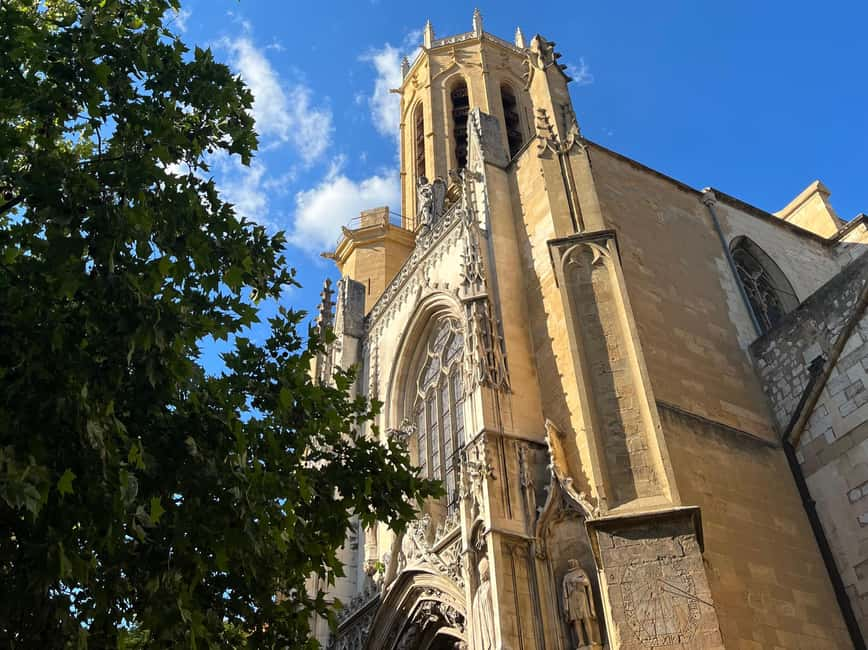
- St Sauveur Cathedral closes the tour with Gothic details, including stained glass that catches your eye
Meeting at La Rotonde, then letting Aix explain itself
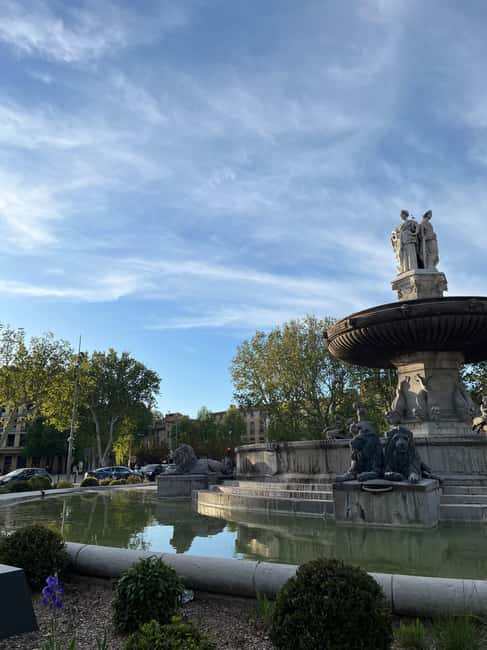
The tour starts at the fountain in the roundabout at La Rotonde, across from Five Guys, where the guide holds a sign that says Happy Walking Tour. It is an easy meeting spot once you know what you are looking for. From there, you do not waste time on a long preamble, you start with the city’s big storyline.
I like this approach because Aix can feel “pretty first, explain later” if you wander alone. This walk gives you names, dates in plain language, and a sense of why different buildings ended up where they did. You also get small visual aids along the way, so when the guide points out a detail, you can actually picture how it fit into the past.
One practical note, because this is a walking tour: wear shoes you trust. You will be moving through squares, passages, and church-adjacent streets, and the best photos happen when you stop, angle, and look up.
Cours Mirabeau: the tree-lined showpiece with a story behind it
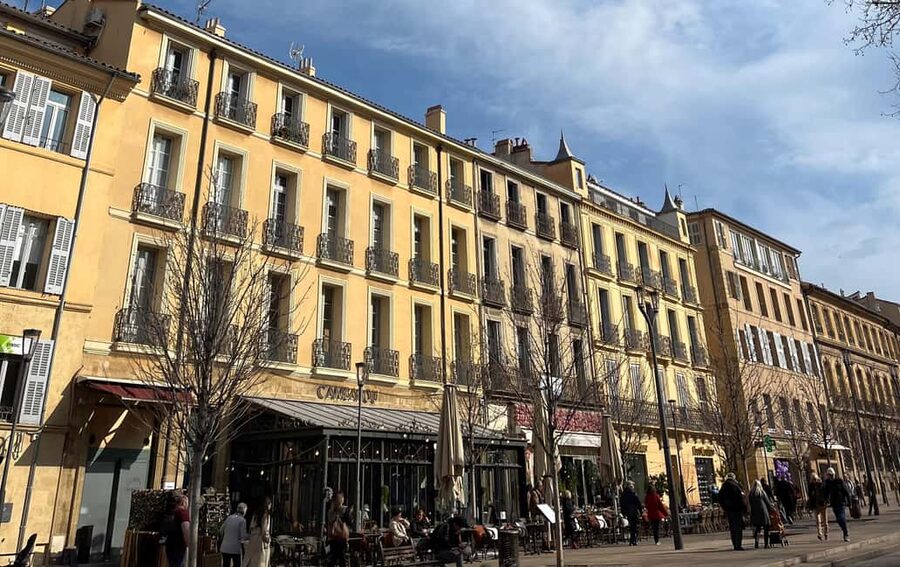
One of the first sections is Cours Mirabeau, and you spend about 25 minutes there with guided stops and context. This is Aix’s classic promenade, lined with trees and packed with daily life. Shops and restaurants are part of the appeal, but the tour turns the avenue into more than just a stroll.
This segment works well because it hits a balance: you get a lively setting to walk through, then you get explanations for what you are seeing. The guide connects city planning and local power to the spaces people still use today. If you have only a day in Aix, this is where you feel the city start clicking into place.
Photo tip: this is a good stretch to take wide shots of storefront rhythm and avenue symmetry, then come back for close-ups after you understand which landmarks matter most.
More centuries, footnoted:
- Gourmet & Cultural Tour Aix En Provence English / Espanol
★ 5.0 · 88 reviews - Paris: Louvre Museum Entry with History of Mona Lisa
★ 3.9 · 2,823 reviews - Paris: Dark History and Ghostly Guided Walking Tour
★ 4.7 · 1,000 reviews
Lycée Mignet and the Paul Cézanne connection you will remember
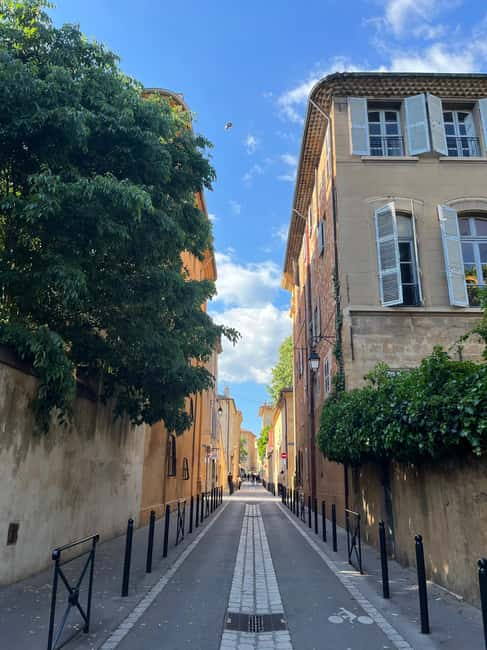
Aix is famous for artists, and the tour nudges you toward that reality with a stop related to Lycée Mignet. Here, you hear anecdotes and stories tied to Paul Cézanne and other great Provence artists who began their lives at this school.
What I like about this is the angle. Instead of treating Cézanne like a museum-only name, you see how education and local culture feed artistic careers. It gives you a reason to pay attention when you notice the kind of buildings and streets that educated people used and walked.
This is also a great moment to ask questions. The guide adapts the narrative based on what you want to know, and the topic naturally leads to “How did Aix shape them?” type conversation.
If you are traveling with kids, or if you just do not want a lecture, this stop is often where the tour style feels most friendly. You do not have to sit with your brain in neutral.
Saint Jean de Malte: church stop, wider European history
Next comes Saint Jean de Malte, with a guided segment of about 20 minutes plus a photo stop. The tour treats this church not just as a pretty landmark, but as a doorway into European history.
That is the key difference. You will not only look at architecture, you will learn what connected this place to larger stories. Churches like this often served as landmarks, social anchors, and historical markers, so you start to see why the city keeps mentioning religious buildings in its own “timeline.”
Look up when you get there. Even if you are not sure what you are seeing, the guide points out details in a way that makes the structures feel legible. It is easier than trying to decode everything on your own.
Fontaine du Roi René: a king’s story tied to the everyday
You also stop for Fontaine du Roi René, and you hear the story of the beloved king of Aix. This part matters because fountains in old towns are rarely just decoration. They are meeting points, symbols of civic pride, and often linked to how power and welfare were imagined.
What you gain here is a sense of how leadership showed up in public space. You start understanding why certain squares and crossings feel like they matter. The fountain becomes a reference point you can carry into the rest of your walk.
If you like small stories that explain why a place feels familiar, this fountain stop delivers that. It also gives you a chance to regroup, since the rest of the route is very “look, learn, move.”
Other Aix En Provence bookings in the margin notes

Passage Agard and the art-gallery feel of a pedestrian cut-through
Another highlight is Passage Agard, a pedestrian passageway filled with shops and art galleries. The tour uses this space to show how Aix layers commerce and culture into tight walkways, not only big avenues.
This is a good stop to slow down. Passageways can be easy to miss if you are just hunting for the main streets. The guide helps you notice the way the passage shapes movement and how it creates a different mood than the open courses and plazas.
What I’d do: browse lightly, but keep moving. The tour has a rhythm, and if you get pulled into every gallery display, you might feel rushed later. Think of it like a chance to notice the vibe, not to shop your whole trip.
Place des Prêcheurs and the ruins story you will want to remember
You also spend time around Place des Prêcheurs, with about 20 minutes of guided time. This area is tied into the bigger civic and justice side of Aix, including the history behind ruins and the market square energy connected to the city’s past.
This is one of the stops where the guide’s personality really helps. Aix has real old stone, but it can be hard to connect ruins to “what happened here” without a narrator. The tour gives you that missing glue.
You’ll also get a sense of how the city handled conflict, trade, and public life. It makes the modern street life make more sense, because you understand what used to happen at the same crossroads.
Practical drawback to consider: if you hate standing for photos or short pauses, this part may feel a bit more “stop and look” than you prefer. On the bright side, you can always lean on a wall for a minute and let the guide finish.
Place d’Albertas: a quieter square break with an elegant feel
Then you reach Place d’Albertas for about 10 minutes, with photo time and a small guided segment. This is a calmer moment in the tour, anchored by a central fountain and elegant buildings.
I like this stop because it resets your attention. After the more story-heavy civic and church segments, you get a pretty square where you can breathe and look around without feeling like you are rushing to the next fact.
If you want that classic Provence feeling, this is where it shows up in a softer way. You will see how Aix balances grand monuments with everyday civic spaces.
Hotel de Ville and the city’s personality in small details
You also stop at Hotel de Ville, with about 15 minutes of guided time and photo stops. City halls in old European cities are never just bureaucratic buildings. They express pride, stability, and how local power wanted to be seen.
The tour adds an extra layer with curiosities and jokes left behind by the city’s architects. That might sound like a gimmick, but it actually works because it turns architecture into something human. When you catch one of these playful details, you stop thinking of buildings as static objects and start seeing them as messages.
This is also a good moment to slow down and notice textures. Even if you only remember a couple of features later, that is enough. You leave with a mental image of the city’s mood, not just a list of stops.
St Sauveur Cathedral: closing with Gothic drama and stained glass
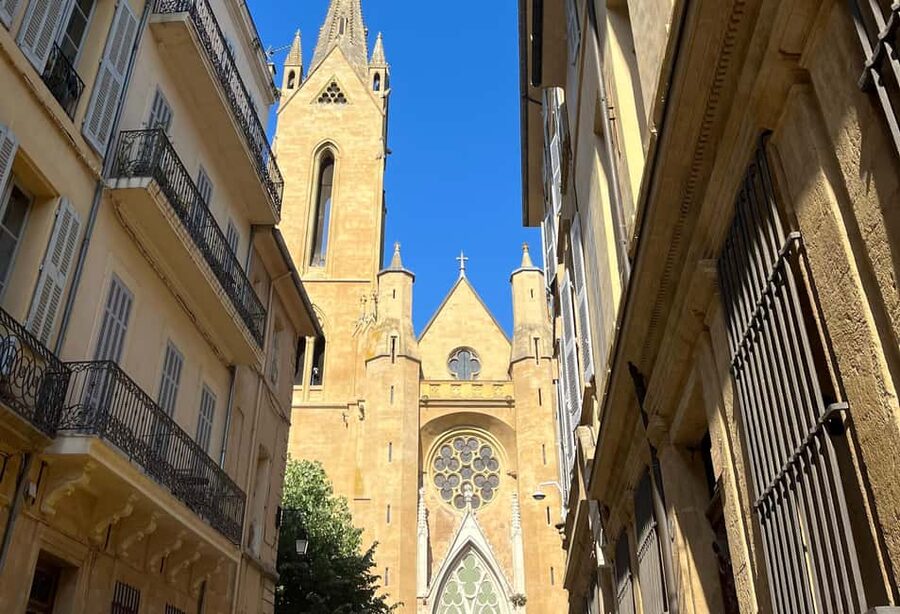
The last big stop is Paroisse Cathedrale Saint Sauveur, with about 15 minutes of guided time and a finish at Catedral de St Sauveur. This is where you get the majesty of the Gothic cathedral, plus architectural details and stained glass windows that take your breath away, in the good way.
Even without museum entry, the cathedral works as a finale because it gives you both scale and detail. You see broad forms first, then you start spotting the craftsmanship the guide highlights. It is the kind of ending that makes you feel like Aix has been building toward something all along.
My advice: take one slow look first, then come back with the guide’s cues. If you jump straight to photos, you might miss the details that make the stop memorable.
Why $29 for 90 minutes is a solid value in Aix
At about $29 per person for 90 minutes, this tour is priced like a classic “small slice of the city” experience. You are paying for two things: a structured route through key sights and a guide who can explain what you see without making you work for it.
For me, the value comes from the density. In a short time, you cover major public spaces and landmarks, plus artist connections tied to Lycée Mignet and Cézanne. You also get images that show how places changed over time, which helps you understand the city rather than just collect photos.
If you already plan to visit museums later, this tour is still worth it because it gives context before you spend time indoors. If you do not plan museums at all, it still delivers street-level meaning through churches, squares, and city buildings.
What you should bring, and how to get more out of it
This is a walk. Plan for comfortable shoes and a camera you are willing to use vertically, because a lot of the magic is in what you look up at. Bring water, especially if you are traveling in warmer months.
Also, bring curiosity. The guide is comfortable answering questions and tailoring content based on what your group wants, and the tour can shift in tone if you have kids with you. If you want more jokes, ask for them. If you want more architecture, ask for that too.
A final practical point: the tour includes guided time at each stop, but museums are not part of the package. So if you were hoping for guaranteed museum access, you will need to plan that separately.
Should you book the Aix Between History and City Charm tour?
If you want a fast, friendly way to connect Aix’s landmarks to the stories behind them, I think you should book it. The tour’s best strength is the combination of strong location choices and a guide who makes the material easy to follow, funny when it fits, and flexible when you have questions.
I would skip it only if your perfect Aix day is 100 percent museums and long, quiet self-guided wandering with no structured route. This one is for people who like walking, learning, and using the streets as the classroom.
FAQ
How long is the Aix-en-Provence Between History and City Charm tour?
It lasts 90 minutes.
Where do I meet the guide?
Meet at the fountain in the roundabout at La Rotonde, across from Five Guys, and look for the sign that says Happy Walking Tour.
What does the tour include?
You get a guided visit, with images used to illustrate the passage of time.
Is museum access included?
No. Access to museums is not included.
What languages is the live guide available in?
The guide offers live tour support in Portuguese, English, and Spanish.
Is the tour wheelchair accessible?
Yes, the tour is wheelchair accessible.
How much does it cost?
The price is listed as $29 per person.
Is free cancellation available?
Yes. You can cancel up to 24 hours in advance for a full refund.
Can I reserve and pay later?
Yes. You can reserve now and pay later to keep your plans flexible.
Latest Aix En Provence entries, notes attached







Provence Day Tours, compared.


Provence Highlights Full-Day Tour from Avignon
Read our review →

4×4 Camargue Safari 4h – Departure from Arles
Read our review →

Luberon Villages Half-Day Tour from Aix-en-Provence
Read our review →

This tour also appears in