Reviewed · THINGS TO DO IN PARIS
Behind the Scenes of a Boulangerie: French Bakery Tour in Paris
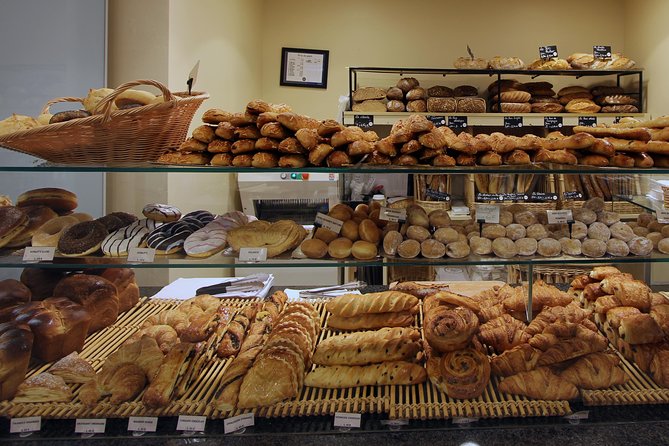
Bread and butter in Paris, in real time. This behind-the-scenes boulangerie tour gives you a close look at how a Paris bakery works day to day, not a staged demo. You follow the making of pain, pâtisseries, and classic baguettes, then leave with fresh bread you can taste later.
I love the small-group feel (max 8) and the way the guide keeps things practical, with explanations translated clearly into English. I also like that you end up with a fresh baguette and croissant to take home, plus extra samples while you’re inside the production area.
One thing to consider: it’s mostly a watch-and-learn tour. If you want to knead dough for most of the hour, this may feel too observational, even though you might get small chances to participate.
In This Review
- Key highlights worth your time
- Backstage at a Montmartre boulangerie in one short hour
- What you’ll see in the bakery: pain, gateaux, and patisseries
- The baguette lesson: rules, shaping, and why machines matter
- Croissants and pastry time: what you taste and why it’s part of the lesson
- Your take-home baguette and croissant, plus small tips for enjoying them
- Small kitchen logistics, and what to expect if the space feels tight
- Price and value: why this is often worth it, and when it might not be
- Who should book this bakery tour in Paris
- Should you book the Behind the Scenes Boulangerie tour
- FAQ
- How long is the French bakery tour?
- Where does the tour start in Paris?
- Is the tour offered in English?
- What food do I take home?
- What is the group size?
- Is it suitable for children?
- Is it safe for people with airborne food allergies?
Key highlights worth your time
- A real Montmartre bakery production space where bread and pastries are made daily
- 1 hour with a max of 8 people, so questions stay manageable
- Baguette shaping plus key process moments, explained in plain English
- Fresh take-home bread: one baguette and one croissant included
- Family-friendly energy, with guides noted for handling kids well
Backstage at a Montmartre boulangerie in one short hour
Paris has no shortage of food tours. This one works because it focuses on one specific craft, and it does it in the place where the work actually happens.
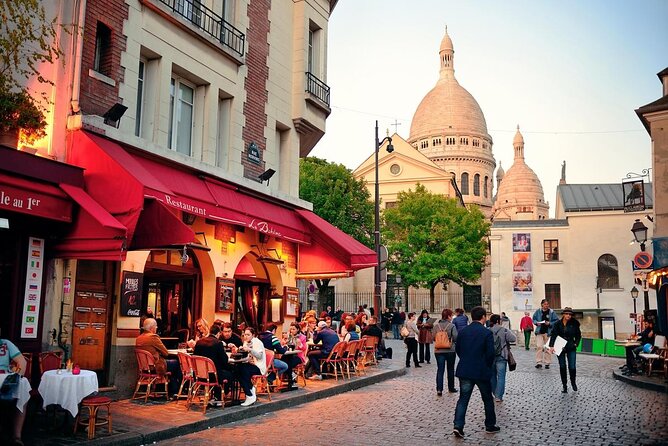
You meet at Le Grenier à Pain Caulaincourt, 127 Rue Caulaincourt in Montmartre (public transit is nearby). The group stays small, capped at 8 people, which matters in a kitchen that is not built for crowds. This is also offered in English, and many guides bring strong translation skills, with names like Marie, Mariette, and Vincent showing up in past experiences. Even when the bakery staff speaks French, the guide bridges the gap so you do not feel lost.
The tour lasts about 1 hour, and that time is packed. You’re not sitting in a classroom. You’re walking through production rooms and watching the rhythms of a working boulangerie.
What you’ll see in the bakery: pain, gateaux, and patisseries
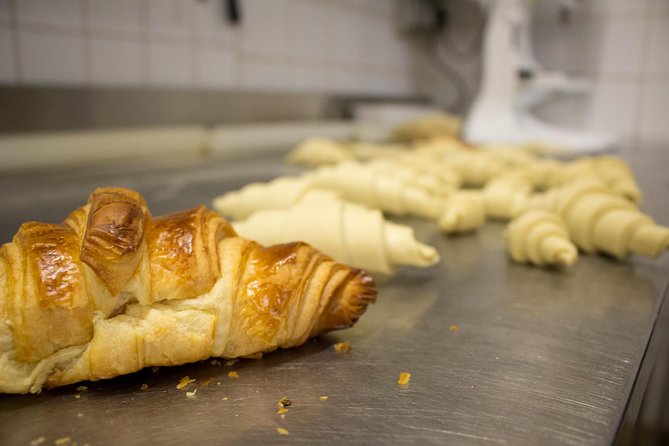
The tour takes you into the kitchens and production areas, where bread and pastries move from prep to baking on a daily schedule. You’ll hear about how French bakeries manage the flow, because timing is everything when yeast and fermentation are involved.
Here’s what makes this kind of access valuable: you see that French baking is not one magical trick. It’s many small steps that need to line up, plus tools that do real work. You’ll also learn the basics of what bakers mean when they talk about categories like pain (bread), gateaux (cakes), and pâtisseries (pastries). Even if you only care about baguettes and croissants, understanding the broader operation helps you taste more thoughtfully later.
You’ll also notice something practical right away. This is not a museum-style “look, but don’t touch” setup. It’s a real production environment, which can make the space feel tight. Some guides also coordinate closely with the bakery staff, including manager or staff members who may talk in French. The best part is that your guide translates key points into English so the important takeaways still land.
More Things to Do in Paris
- Paris: 1-Hour Seine Cruise departing from the Eiffel Tower
★ 4.4 · 77,472 reviews - Disneyland® Paris 1-Day Ticket
★ 4.6 · 49,412 reviews - Paris: Versailles Palace and Gardens Full Access Ticket
★ 4.6 · 41,579 reviews
The baguette lesson: rules, shaping, and why machines matter
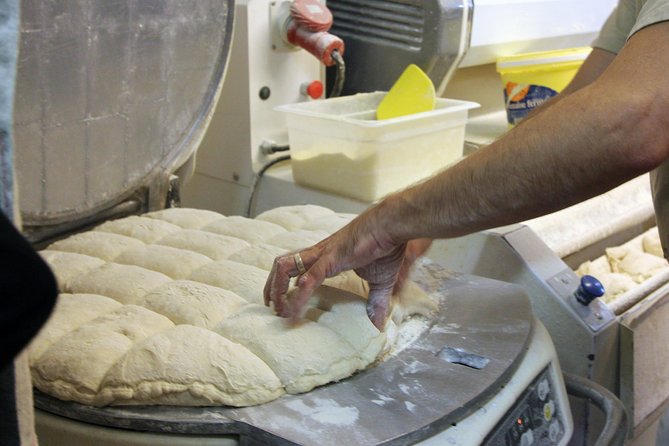
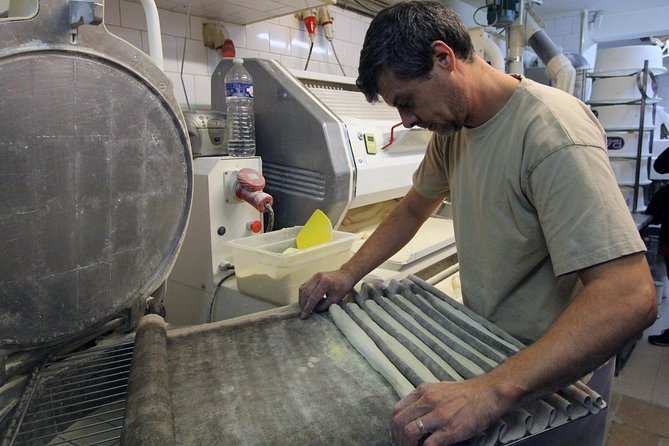
The heart of the tour is the French baguette story. You’ll learn how baguettes are made using the bakery’s process, and you’ll watch how machinery is used in day-to-day work. That sounds like a small detail, but it’s a big deal if you’ve ever tried making baguettes at home. Real bakeries are efficient because they rely on both skill and the right equipment.
Expect the guide to explain the steps and timing behind the baguette. One of the most praised parts is the way the tour connects technique to outcome, including information about the rules around baguettes and how proper shaping affects the final loaf. You’ll also hear bread-making tips that come from a working professional mindset, not a theoretical cookbook lecture.
A few past participants noted that you may get a small hands-on moment, like scoring and making the release cuts on baguettes that you then take home. That kind of short participation is usually the difference between a passive hour and a memorable one. Still, do not expect to do every step yourself.
If you’re hoping for a full workshop style where you roll, shape, and proof dough at length, this tour may feel limited. But if your goal is to understand the craft, and to see how French bakers stay consistent, it’s a strong format.
Croissants and pastry time: what you taste and why it’s part of the lesson
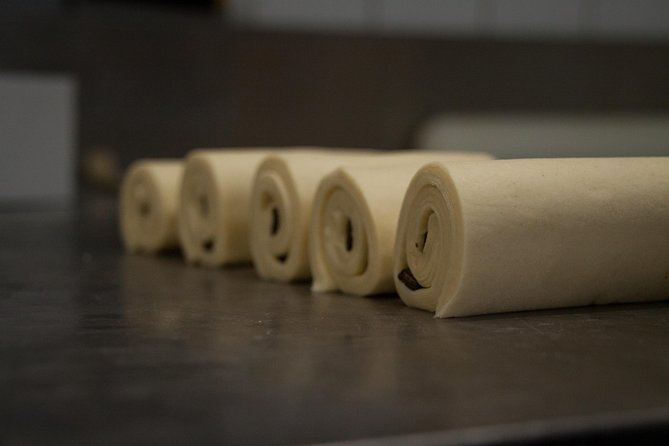
After the baguette focus, the tour shifts toward the pastry side. You’ll see how pastries are assembled and how the patisserie workflow differs from bread production. Croissants get special attention because they’re a perfect example of technique and temperature control.
Even when the tour is mostly observational, the tasting makes it feel real. You should expect samples during the visit, and then a freshly baked croissant included at the end. Many people love this part because you taste what you just saw in motion, straight from the bakery’s output.
I also like the practicality here: tasting in context helps you notice differences you would otherwise miss. You start thinking about layers, flakiness, and baking cues instead of just rating it “good” or “great.”
For families, croissant and pastry moments often keep kids engaged. Guides are specifically praised for making facts about croissants understandable, and for keeping the tone friendly rather than overly technical.
Your take-home baguette and croissant, plus small tips for enjoying them
The best souvenir is not a photo. It’s the bread you take home.
You leave with:
- One freshly baked French baguette
- One freshly baked croissant
That matters for value, because you’re not paying for information only. You’re also paying for fresh food you can enjoy later. Some tours also include extra samples during the hour, so you tend to get more than just the final takeaway.
How to make this bread last (and taste better)
- Plan your next bite soon. Freshly baked bread has peak texture early.
- If you’re carrying the baguette, keep it protected in a way that won’t crush it. A baguette is fragile in a soft bag.
- For the croissant, handle it gently so it keeps its shape.
One practical note from real experiences: wear clothes you don’t mind getting flour on, and choose non-skid shoes. Bakery floors can be slippery, especially in tight production spaces.
The Paris dossier continues:


Small kitchen logistics, and what to expect if the space feels tight
This is a working bakery, and working bakeries are not designed for tour flow. Even with a small group of up to 8, you may feel close to staff and equipment.
Some people pointed out that the production area can be compact, with limited room to move. That can make you feel like you’re getting in the way, even when everyone is trying to be helpful. Your best move is simple: stay aware of others’ space, move only when your guide cues you, and keep your bag secured so you’re not bumping elbows.
Also, when bakery managers or staff members speak French during explanations, the guide’s translation matters. If you really want deep baking talk and technical back-and-forth in English, you might find the English explanations more basic than you hoped. The tour is designed to be accessible, not a full engineering class.
Price and value: why this is often worth it, and when it might not be
Some reviews call the tour pricey for an hour. That’s a fair question, because it is an hour, not a half-day workshop.
Here’s the value case for you:
- You get a baguette and a croissant to take home, fresh from the bakery
- You get a small-group setting with room for questions
- You learn how the process works in a real Parisian environment, not a generic demonstration
If you’re mainly after hands-on work, you might feel you should be paying for kneading and forming dough yourself. But if your goal is to understand what makes French baguettes and croissants consistently good, and you want a memorable food experience that includes actual bread at the end, the price is easier to justify.
If budget is tight, compare what you’d spend on a regular pastry run plus a guided experience. In many cases, this tour saves you time and gives you context you would not get from eating alone.
Who should book this bakery tour in Paris
This tour is a great fit if you:
- Want an authentic Paris boulangerie experience without a long day plan
- Like food tours that focus on one craft and one location
- Travel with kids, since the pace and pastry focus can be kid-friendly
- Enjoy learning by watching real work, especially bread shaping and production steps
It’s less ideal if you:
- Need an active hands-on class where you do most of the baking
- Have sensitive airborne food allergies, since you’re in an active bakery environment
- Expect a classroom-style explanation with lots of technical detail in English
Should you book the Behind the Scenes Boulangerie tour
I’d book it if you want a short, well-paced, real-life look at how Paris bakeries make bread and pastries, and you’re happy to learn by watching. The combination of small-group access, fresh take-home bread, and guides who help you understand what you’re seeing makes it more than a quick snack stop.
Skip it, or at least adjust expectations, if you mainly want to make dough end to end. This is a backstage look, not a full baking course.
If you do decide to go, bring the practical stuff: plan for a tight kitchen, wear shoes with grip, and come hungry enough to enjoy the samples and then take your baguette and croissant home.
FAQ
How long is the French bakery tour?
The tour is about 1 hour.
Where does the tour start in Paris?
You start at Le Grenier à Pain Caulaincourt, 127 Rue Caulaincourt, 75018 Paris. The tour ends back at the meeting point.
Is the tour offered in English?
Yes, it is offered in English.
What food do I take home?
You receive one freshly baked French baguette and one freshly baked croissant to take home.
What is the group size?
It is a small-group tour with a maximum of 8 travelers.
Is it suitable for children?
It’s for ages 6 and up, and children must be accompanied by an adult.
Is it safe for people with airborne food allergies?
It is not recommended for travelers with sensitive airborne food allergies.
Latest Paris entries, notes attached






Things to Do in Paris, compared.

1-Hour Seine Cruise departing from the Eiffel Tower
Read our review →

Versailles Palace and Gardens Full Access Ticket
Read our review →



Eiffel Tower Entry Ticket with Optional Summit Access
Read our review →