
Reviewed · LOUVRE TICKETS & TOURS
Best of the Louvre Museum Private Tour with Monalisa
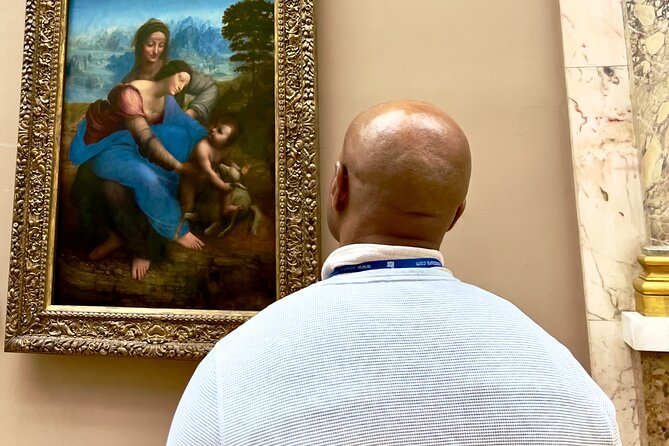
Louvre feels like a maze, not a museum. This private Louvre tour with Monalisa keeps you oriented with a chronological route and prebooked entry, starting right at the Louvre Pyramid. You also get a clear plan for the highlights, from the Mona Lisa to big-ticket sculptures and Napoleon-era works, without burning hours figuring it out.
Two things I like a lot: the prepaid tickets that cut down time at ticket desks, and the fact that your guide shapes the visit around what you want to see. If you end up with guides like Blerta, Mindy, Vivian, Wei, Malina, or Avi, the tone tends to be friendly and personal, with enough backstory to make the art feel human.
One consideration: the tour is about 2 hours, so this is a best-of sprint, not a slow, room-by-room wander. If you want long pauses in several areas, you may feel slightly rushed, especially in a museum that crowds you back.
In This Review
- Key highlights to look for
- Start at the Louvre Pyramid, then stop losing time
- A chronological route that actually helps you read the museum
- The Mona Lisa and the art around it that gives it context
- Royal jewels and palace halls, without the museum fatigue
- Quiet rooms and rules you should not fight
- Egyptian Antiquities, plus the mummy option in the 3-hour tour
- Price and value: what $299.57 buys you in a 2-hour plan
- Private vs shared or semi-private, and who should choose each
- Practical tips so security and timing do not steal your day
- Should you book the Best of the Louvre Museum Private Tour with Monalisa?
- FAQ
- How long is the Best of the Louvre Museum Private Tour with Monalisa?
- Is the museum admission ticket included?
- Is this tour private or shared?
- Where do we meet, and where does the tour end?
- Can I add the Egyptian Antiquities with the mummy?
- What is not included in the tour price?
- What are the rules for bags inside the Louvre?
- Can I cancel and get a full refund?
Key highlights to look for
- Prebooked tickets at the Louvre Pyramid (easy start), with the tour ending back where you meet
- Chronological route that helps you understand why each era looks the way it does
- Choose private or shared/semi-private (different fees) depending on how much you want to pay for attention
- Optional Egyptian Antiquities add-on, with the mummy included only in the 3-hour option
- Quiet or restricted rooms, where your guide handles the talk rules before you enter
- Guides who tailor pacing, including built-in chances to sit and rest when needed
Start at the Louvre Pyramid, then stop losing time
The biggest win here is the meeting point. You start at the Louvre Pyramid in 75001, which means you can get your bearings fast and avoid the usual “where do we line up” chaos. Your tour is designed around a smooth entry, helped by the fact that you get prepaid admission rather than trying to buy tickets on arrival.
For me, that matters because the Louvre punishes indecision. Even if you love museums, you can waste real energy circling for entrances, exits, and the right wing. With this tour, you begin with a plan and a guide who knows where to go next.
The tour runs about 2 hours, and it stays focused on the highlights. That’s great if your goal is seeing the iconic stuff without spending your whole day inside. Just remember: there is no hotel pickup or drop-off, so you will rely on public transportation and your own arrival timing.
Also, the Louvre takes security seriously. Plan on arriving with only what you can carry comfortably. The rules say no large bags or suitcases, only handbags or small thin bag packs through security.
And one more practical point: you’ll be asked for a valid phone number so you can be reached the day of the tour. In a museum this big, being reachable is not a small detail.
A chronological route that actually helps you read the museum
The tour’s structure is the difference between seeing art and understanding it. Instead of bouncing randomly, you follow a chronological path through the Louvre’s foundations, art collections, royal jewels, and palace halls. The guide uses that order to connect the dots: why styles change, what patrons wanted, and how each era leaves clues for the next one.
This is where the tour earns its keep. The Louvre is huge, and the collection spans centuries. When you enter without a thread, you often leave with a list of famous names and not much sense of how they relate. A timeline route turns the museum into a story you can follow.
In the 2-hour format, you’ll cover major stops that most people feel they must see. That includes the Mona Lisa, of course, but also sculpture and painting that help round out what the Louvre is about beyond one painting. You’ll also get explanations that tie major works to their time period and to the museum’s bigger artistic evolution.
One nice feature of the private approach: you go at your own pace. That does not mean you can stop everywhere for as long as you like. But it does mean your guide can adjust the rhythm when you want more time at a specific work, or if your group needs a breather.
More Private Tours in Paris
- Louvre Museum Paris Essential Guided Tour Semi-Private 6ppl Max
★ 5.0 · 3,807 reviews - SUV Private Transfer: Paris to Charles de Gaulle Airport (CDG)
★ 4.0 · 3,091 reviews - Paris: Private Photoshoot at the Eiffel Tower
★ 4.7 · 2,636 reviews
The Mona Lisa and the art around it that gives it context
Yes, the Mona Lisa is the headline. But if you only stare at that one moment, the experience can feel flat. The real value is what your guide builds around it.
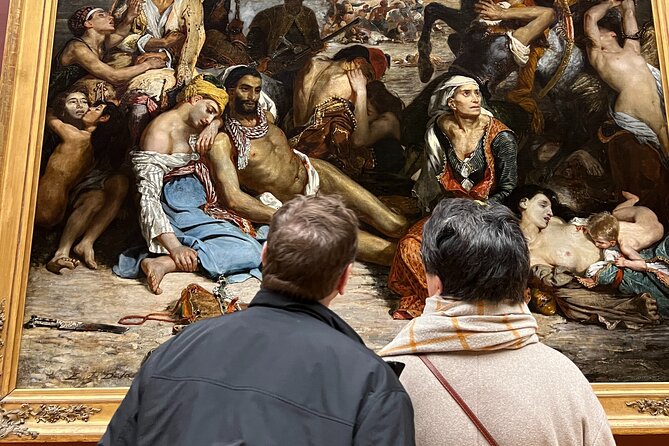
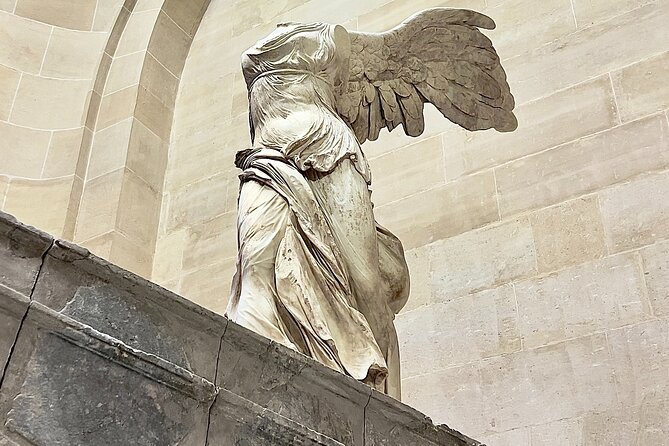
On this tour, the Mona Lisa is part of a sequence that also includes other mega-famous works, such as the Venus de Milo and Michael Angelo’s slaves. You also get stops like Wedding at Cana and the Raft of Medusa, plus Napoleon’s Coronation. The guide’s job is not just to name the pieces, but to help you notice the details that make them important.
For example, the Louvre’s greatest strength is variety in medium and technique. A guide can explain why a marble statue hits differently when you understand the sculptor’s goal, and why a painting can feel like a snapshot of power, belief, or politics. When the art is framed like this, you do not just look. You start comparing: emotion to technique, story to symbol.
There is also an element of “hidden messages,” at least in the way your guide interprets what you’re seeing. Even without walking into a mystery novel vibe, it helps to have someone point out what an artist emphasized and what viewers at the time likely cared about.
You can also expect stops that are more classical-popular, like Canova’s Cupid and Psyche. That kind of piece works well on a highlight route because it’s accessible but still deep if you know what to look for.
One more thing: if your group likes interaction, some guides handle it well. In past experiences, guides such as Mindy have kept teenagers engaged by asking questions and linking the art to big ideas. That’s a good sign if you’re traveling with family and you want everyone to stay involved.
Royal jewels and palace halls, without the museum fatigue

The Louvre is not just galleries of paintings. It also carries a sense of palace life through the halls and decorative spaces. This tour explicitly moves through palace areas and royal jewels, so you are not stuck in a single museum mode.
That matters because your brain needs variety. Constant painting galleries can become visual wallpaper. When you switch to palace halls and decorative displays, you feel the building change around you. You also start to understand why the Louvre looks the way it does, since it is shaped by centuries of collecting and power.
Royal jewels tend to be a strong contrast for people who mainly think of the Louvre as art. They remind you that collecting was about status and story. Even if you have never cared much about crowns and gemstones, it helps to hear what makes a display significant in context.
The palace-hall segments also make a tour like this easier to handle in a limited time window. You get memorable space, then you move back into the art with less “just keep walking” fatigue.
And if your group has mobility concerns, pay attention to the pacing approach. One guide, Vivian, is noted for patience with elderly parents and for encouraging rest. If you have someone who needs to sit or slow down, that sort of flexibility is a real comfort.
Quiet rooms and rules you should not fight

The Louvre has pockets of rules. Some rooms are described as quiet or restricted for speaking. Your guide will explain what you need to know about those places before you enter, so you do not get hit with awkward silence or confusion right in the middle of the moment.
This sounds small, but it affects the vibe. You want to hear your guide clearly, and you also want to respect the room’s conditions so you can actually enjoy the art. With a guide handling the transitions, you spend less energy adapting and more energy absorbing what you came for.
Another factor in crowded museums is sound. In some group formats, you may use audio devices so you can hear the guide over the crowd. Quality can vary, and a poorly matched headset can make the experience frustrating. If you notice audio issues, let your guide know early so adjustments can be tried. It’s the simplest way to protect your enjoyment.
Finally, time stamped tickets mean you do not want to wander off at the start. The tour instructions ask you to arrive 15 minutes early for check-in, and late arrivals may not be accommodated because tickets are time-stamped. Plan like a grown-up, not like you’re heading to a cafe.
More hours budgeted for the Louvre:
Egyptian Antiquities, plus the mummy option in the 3-hour tour
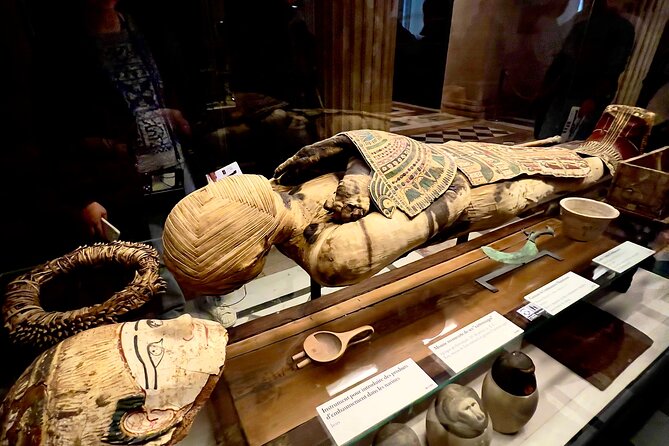
If Egypt is on your wish list, this tour gives you an optional expansion. The Egyptian Antiquities add-on includes the Egyptian Mummy, but only in the 3-hour Egyptian option.
That’s a key value point. It means you are not paying extra for a random extra block of time that may or may not hit your interests. You can go deeper in a specific direction. If the mummy is a must-see, choose the 3-hour Egyptian version so it is built into the plan.
One guide, Malina, is mentioned for ensuring extra time to see the mummy. That’s not something to assume for every guide, but it tells you what’s possible when the guide understands what matters to your group.
If you are doing the standard 2-hour tour, the focus stays on the Louvre highlights. In that case, you might still enjoy the Egyptian-related context if your guide mentions it, but the dedicated mummy time is tied to the longer option.
So the decision is simple: Louvre highlights now, or Louvre highlights plus Egypt as the bigger story.
Price and value: what $299.57 buys you in a 2-hour plan

The price is listed at $299.57 per person for about 2 hours. That sounds steep until you break it down, because the museum entrance ticket is included, listed as €22 for adults.
What you are paying for is not just access. You are paying for someone to decide the order, keep you moving intelligently, and explain what you are seeing. In the Louvre, that reduces two major costs: time and mental energy.
Time cost is obvious. The tour uses prepaid entry to save you time waiting to buy tickets. The mental energy cost is harder to measure. Without a plan, you often end up zigzagging and second-guessing. With a guide, you spend your limited time walking with intention.
You are also paying for flexibility. The private tour option is described as letting you go at your own pace, with more opportunity to interact with your guide without fighting for attention. That matters if you have kids who need engagement, adults who want deeper explanations, or anyone who just gets tired fast in big museums.
Is it worth it? For many people, yes, if you want the highlights done well in one go and you like having a guide translate art into meaning. If you prefer to wander slowly with no structure and you already know the Louvre’s main routes, you might decide to go on your own and invest in your own research. But if you want a fast, guided “best of,” this is aimed exactly there.
Private vs shared or semi-private, and who should choose each

You can choose private or shared, with different fees. The private option gives you the most control over pacing and questions, and you only have your group in the tour.
That setup is ideal if you:
- want to linger at a few key works
- have mobility needs and want a slower rhythm
- are traveling with kids or teens and want the guide’s full attention
- would rather avoid the pressure of keeping up with strangers
If you pick the shared or semi-private approach, you still get the structure and guide work, but with a smaller group feel sometimes depending on the tour. In one example, Wei is associated with a semi-private experience that felt manageable because there were about eight in the group, plus audio help due to the crowd.
Shared options can be a smart budget move if you still care about hearing explanations and avoiding time-wasting ticket lines. The tradeoff is that your guide’s attention is split. Still, the tour is built around seeing major works in order, so you should not feel lost even in a mixed group.
My rule of thumb: if it’s your first Louvre visit and you want the best use of your limited time, go private or at least semi-private. If you’ve been before and you want specific rooms, you can go self-guided and pick your own pace.
Practical tips so security and timing do not steal your day
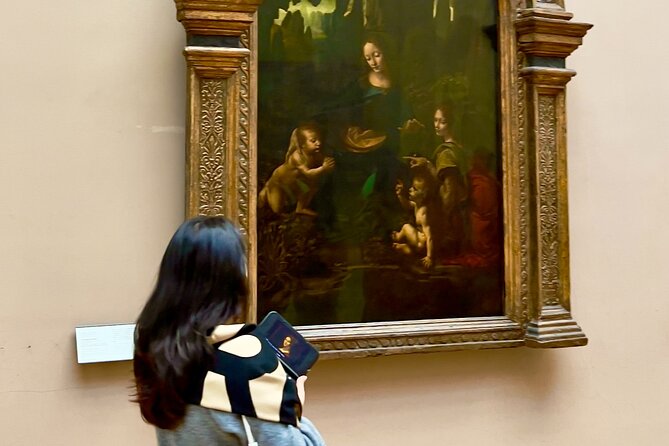
The success of any Louvre tour comes down to logistics that you can control. Here are the big ones from the tour rules.
- Arrive early: arrive 15 minutes before the meeting point. The guide starts on time, and late arrivals may not be accommodated because tickets are time-stamped.
- Keep bags small: no large bags or suitcases inside. Only handbags or small thin bag packs go through security.
- Bring ID if asked: an identification document may be required.
- Provide a working phone number: it’s imperative so they can contact you the day of the tour.
- Expect quiet rules: some rooms limit speaking, and your guide will prep you before entering.
- Plan for occasional closures: the museum may have occasional closures without warning. If opening is delayed more than 1 hour from the tour start time, the provider will offer an appropriate alternative. Refunds or discounts are not included in that case because entry tickets are pre-purchased.
Also note what is not included: hotel pickup and drop-off. You will need to get yourself to the Louvre Pyramid by public transportation.
One more thing that’s easy to forget: confirmation comes at booking time, but always double-check the meeting point details. In a massive complex like this, being off by a few blocks can throw off your entire schedule.
Should you book the Best of the Louvre Museum Private Tour with Monalisa?
Book it if you want a guided, efficient Louvre visit that:
- centers the Mona Lisa but does not stop there
- uses a chronological route so the art connects in your mind
- gives you time with a guide instead of rushing through rooms
- works well for mixed ages, including teens, when your guide takes questions and keeps things active
This is especially worth it if you hate ticket-line chaos and you’d rather spend your energy looking at art. The combination of prepaid entry, a real plan, and pacing support is what makes it feel like more than just a ticket with a person walking beside you.
Skip it or consider the self-guided option if you:
- want to linger for hours in random corners, not a structured set of stops
- need a full-day plan rather than a highlights hit
- are comfortable navigating on your own and already have a route in mind
If you are Egypt-curious, seriously consider the 3-hour option so the Egyptian Antiquities with the mummy is built in, instead of being an afterthought.
My final take: this tour is a strong choice for first-time Louvre visitors and anyone who wants the big names plus context, without spending your vacation acting as your own museum logistics manager.
FAQ
How long is the Best of the Louvre Museum Private Tour with Monalisa?
It runs for about 2 hours.
Is the museum admission ticket included?
Yes. The adult entrance ticket (listed as €22) is included, and it is part of the tour.
Is this tour private or shared?
It’s offered as a private tour, and there is also an option for shared or semi-private with different fees. Private means only your group participates.
Where do we meet, and where does the tour end?
You meet at the Louvre Pyramid, 75001 Paris, France. The tour ends back at the meeting point.
Can I add the Egyptian Antiquities with the mummy?
Yes, but only with the 3-hour Egyptian option. The Egyptian tour with the mummy is included only in that longer format.
What is not included in the tour price?
Hotel pickup and drop-off are not included.
What are the rules for bags inside the Louvre?
No large bags or suitcases are allowed inside. Only handbags or small thin bag packs are allowed through security.
Can I cancel and get a full refund?
Yes. You can cancel up to 24 hours in advance for a full refund. If you cancel less than 24 hours before the start time, the amount paid is not refunded.
Worth the Coat Check
- Paris: Orsay Museum Entry Ticket
★ 4.7 · 25,647 reviews - Les Invalides: Napoleon’s Tomb & Army Museum Entry
★ 4.6 · 9,185 reviews - Louvre Museum – Exclusive Guided Tour (Entry Included)
★ 5.0 · 6,296 reviews - Paris: Louvre Museum Hosted Entry and Mona Lisa Audioguide
★ 4.6 · 5,235 reviews
Latest Paris entries, notes attached







Louvre Tickets & Tours, compared.

Louvre Guided Tour with Reserved Access & Boat Cruise
Read our review →
Louvre Museum Masterpieces Guided Tour with Access
Read our review →
Louvre Overview, Exploration tour and Reserved Entry
Read our review →
Louvre Museum Entry Ticket With Host and River Cruise
Read our review →
Mona Lisa & Louvre Masterpieces Tour with Reserved Access
Read our review →
Louvre Museum – Exclusive Guided Tour (Entry Included)
Read our review →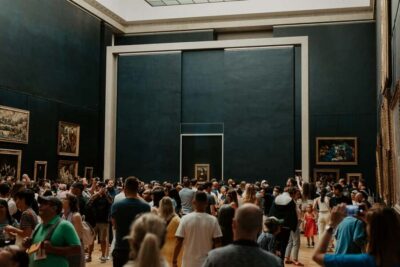
Louvre Museum Hosted Entry and Mona Lisa Audioguide
Read our review →
Louvre Access with Mona Lisa Escort or Guided Option
Read our review →This tour also appears in