
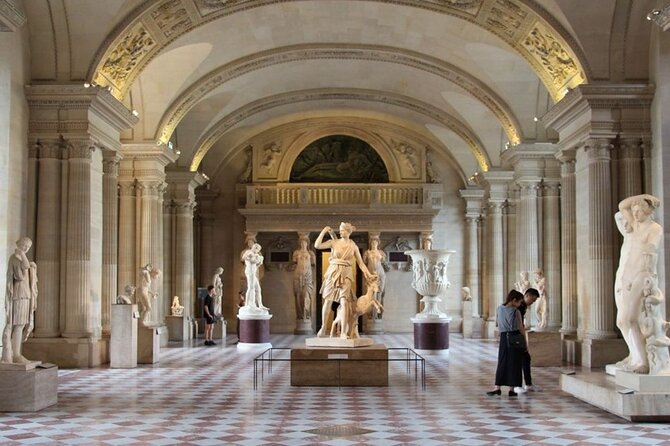
Reviewed · LOUVRE TICKETS & TOURS
Guided tour of the Louvre Museum with tickets included
The Louvre feels manageable with a plan. This guided, English-language highlights tour bundles skip-the-line entry and a tight route through the museum’s biggest moments, with Matteo Allavena giving you the context behind what you are seeing. You get more than names on a label.
I especially like the way the tour balances major crowd magnets with smart detours, from the medieval Louvre walls to the Tanis Sphinx. You also move with a small group (max 6), so the pace stays human and your questions actually get answered.
One consideration: this is a 2-hour focused tour, not an all-day museum pass. If you love to linger, you will want to plan extra time for your own wandering afterward, so the route does not feel like it ends too soon.
In This Review
- Key takeaways before you go
- Meeting at Le Café Marly, then straight into the Louvre machine
- Skip-the-line Louvre entry plus a 2-hour route that saves your energy
- Medieval Louvre walls and the 13th-century angle most people miss
- Greek department stops: Athena, Venus de Milo, and Victory of Samothrace
- Galerie Apollon: the gallery that bridges power, Versailles, and masterpieces
- Giotto and the Middle Ages: Saint Francis receiving the stigmata
- Classicism and Romanticism rooms: Napoleon, Jacques Louis David, and Delacroix
- After the tour: how to keep the momentum without getting lost
- Price and value: what you are paying for at $114.93
- Who this tour is perfect for, and who should think twice
- Before you book: meeting-point smarts and on-the-ground tips
- Should you book this Louvre highlights tour with Matteo Allavena?
- FAQ
- How long is the Louvre guided highlights tour?
- What is included in the price?
- Is skip-the-line entry included?
- What language is the tour offered in?
- How many people are in the group?
- Where is the meeting point?
- Where does the tour end?
- Are coffee or drinks included?
- Are service animals allowed?
- Can kids get free admission?
Key takeaways before you go

- Skip-the-line entry so you spend less time queuing in the heat
- Max 6 people which keeps the experience flexible and question-friendly
- Matteo Allavena guides in English with art-historical context, not just facts
- A time-efficient highlights sweep across major departments and rooms
- You get a map-like structure to stop you from feeling lost in the Louvre
- Return back to the meeting point at the end, so you do not have to re-orient
Meeting at Le Café Marly, then straight into the Louvre machine
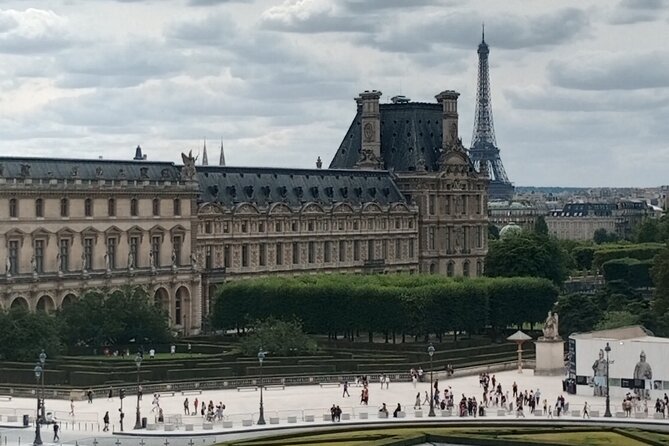
The tour starts at Le Café Marly, 93 Rue de Rivoli, 75001 Paris. That location matters because it is easy to reach by public transportation, and it sets you up for a quick hop into the Louvre zone without wasting time.
I like that the experience ends back at the meeting point. It makes the whole plan feel safer, especially if this is your first trip to the museum and you do not yet know your way around the labyrinth of halls.
One small practical thing: the meeting area can be crowded. Bring your confirmation info, keep an eye on your phone in case you need to reconnect quickly, and arrive a few minutes early so you are not hunting for the guide while everyone else is entering.
Skip-the-line Louvre entry plus a 2-hour route that saves your energy
You pay $114.93 per person for the guided experience, and entrance is included (28 euros). In other words, the price is not just for a lecture, it is for time-saving access plus a guide to translate the museum into something you can follow.
The duration is about 2 hours. That is long enough to hit serious highlights, but short enough that you are not wiped out before you even get to enjoy the rest of your day.
Here is the value angle I look for: in the Louvre, the museum is huge, and waiting can eat hours. A skip-the-line setup plus a planned route is a smart way to keep your visit from turning into a sprint through crowds with zero meaning.
More hours budgeted for the Louvre:
- Paris: Louvre Guided Tour with Reserved Access & Boat Cruise
★ 4.3 · 16,353 reviews - Louvre Museum Masterpieces Guided Tour with Access
★ 4.5 · 12,023 reviews - Paris: Louvre Overview, Exploration tour and Reserved Entry
★ 4.1 · 10,145 reviews
Medieval Louvre walls and the 13th-century angle most people miss
The tour starts with a medieval focus, including the visit to the 13th-century walls. This is a great opener because it reminds you the Louvre was not built as a single-purpose art gallery. It also helps you understand why the building feels like it has layers, not just rooms.
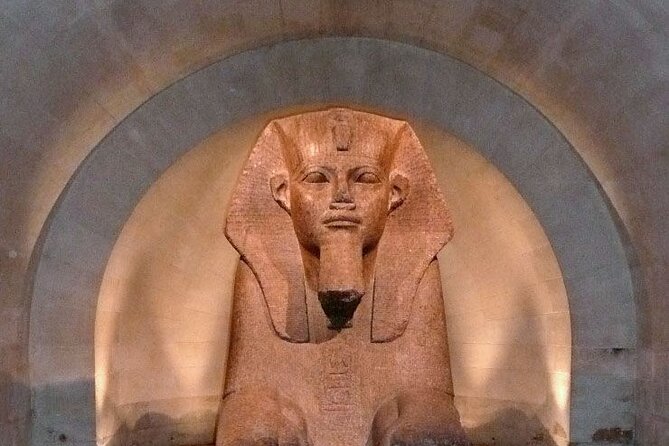
Then you shift into the ancient world with the Tanis Sphinx, described as a 4000-year-old sphinx. Even if you are not an archaeology expert, you get the useful framing of why these objects matter and how they show up in the Louvre’s larger story.
The drawback to know: if you only want paintings and sculptures and you have no interest in architecture or early arrivals of ancient art, the first segment might feel slower. For most first-timers, though, this section prevents the visit from feeling like disconnected stops.
Greek department stops: Athena, Venus de Milo, and Victory of Samothrace
Next comes the Greek department, built around heavyweight icons like Athena of Velletrie, Venus de Milo, and Victory of Samothrace. This is where a guide earns their fee. You get a clearer sense of what these works represent in their original cultural context, not just the fact that they are famous.
I like that you are not stuck staring at a list of must-sees. Instead, you get guidance for how to look at each one as part of a bigger set of ideas, and that helps you compare them instead of treating them like isolated trophies.
Also, the Louvre crowds can make it hard to get a good view. A short guided push helps you reach the art before your patience runs out, and then you can decide what you want to return to after the group moves on.
Galerie Apollon: the gallery that bridges power, Versailles, and masterpieces
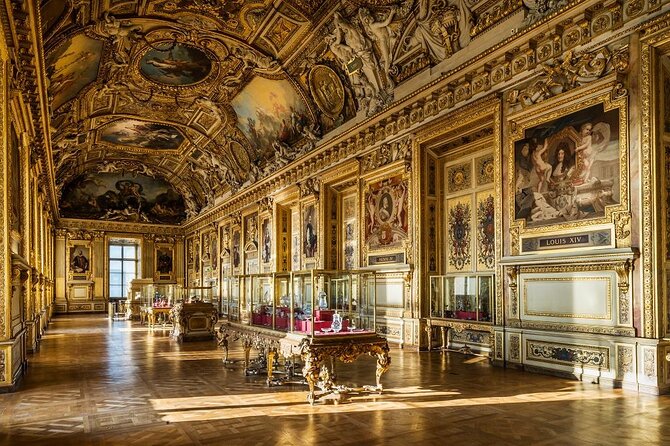
One of the most memorable parts is Galerie Apollon. The tour frames it as one of the Louvre’s finest spaces, and it is also described as the piece that inspired Versailles. That kind of connection matters because it turns a gallery into a historical link, not just a beautiful corridor.
From there, you pass key works including Guirlandao’s L’enfant et l’ancien and Veronese’s Les noces de Cana. You then reach Leonardo da Vinci’s Mona Lisa, which is the obvious headline, but the guide focuses on the context behind it rather than only repeating the obvious.
If you have ever stood in front of the Mona Lisa and felt like you were watching other people watch it, this portion helps. You get a stronger idea of what to pay attention to, so your viewing feels intentional instead of rushed.
More French collections worth the coat check:

Giotto and the Middle Ages: Saint Francis receiving the stigmata

After the big-name galleries, the tour jumps into Italian painting of the Middle Ages. The highlight here is Saint Francis receiving the stigmata by Giotto.
I like this stop because it resets your brain. After ancient sculpture and grand galleries, this is more about narrative and religious art, and it adds a different way to understand what the Louvre collects and why.
The practical benefit: it gives you variety during a short visit. Without that shift, highlights tours can become one long blur of famous names.
Classicism and Romanticism rooms: Napoleon, Jacques Louis David, and Delacroix
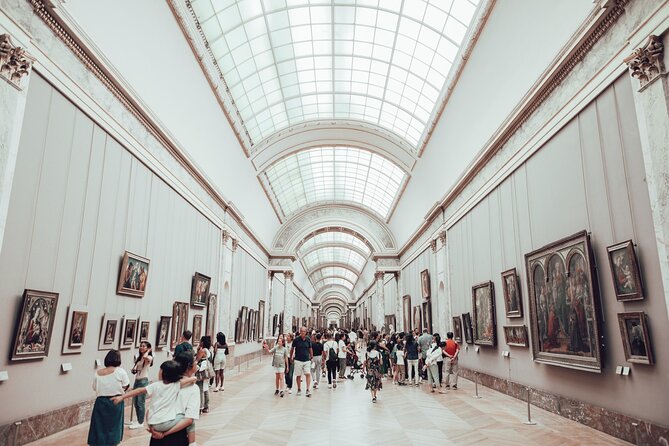
The tour then moves through distinct rooms that spotlight major styles and periods.
In the Classicism room, you see The Coronation of Napoleon and Leonidas at Thermopylae by Jacques Louis David. This is a strong pairing because it shows how art supports ideas of power and identity, not just beauty.
Next is the Romanticism room, featuring Géricault’s Raft of the Medusa and Eugène Delacroix’s Liberty Guiding the People. This is where emotion and drama take the stage, and the tour helps you understand the backdrop for those works so they do not feel like random masterpieces placed side by side.
Why this structure works: you get a quick style map of the museum. In two hours, you can feel how the Louvre changes tone across time, and that makes it easier to choose what to revisit later.
After the tour: how to keep the momentum without getting lost
When the tour ends, you go back to the meeting point. That is helpful, but it also means you are likely still within a short time window to keep exploring.
My strategy is simple: pick one or two areas you are genuinely curious about and commit to wandering there on purpose. Use the route you just learned as a backbone. You will move more confidently because you know at least the major “neighborhoods” the guide connected for you.
Also, plan a realistic snack and break. Coffee and food are not included, so build in a pause if your energy usually drops after museums.
If you want one practical tip: in the Louvre, label reading is easier when your brain has a theme. Let the tour’s style shifts guide you, and you will find yourself noticing details rather than just collecting images.
Price and value: what you are paying for at $114.93
Let’s break down what is included: the speaker guide, entrance fee (28 euros), and skip-the-line access. You are paying for your time and for translation of the museum’s complexity into a route you can actually handle.
Two-hour guided tours are often worth it when the venue is as overwhelming as the Louvre. The guide does the heavy lifting, from choosing which highlights to hit to explaining the context behind iconic pieces like the Mona Lisa.
There is also a group-size advantage. With a maximum of 6 travelers, the experience feels more like a conversation than a factory line. That matters in a museum setting, where follow-up questions are part of enjoying the art, not a distraction from it.
Who this tour is perfect for, and who should think twice
This is a strong fit if you want the Louvre’s top highlights without spending your day trapped in queues. It is also ideal if you like structure. The Louvre is too big to “wing it” well, especially when you have limited time.
It is also a good option for families. The tour is organized in a way that keeps kids engaged, and the guide answers questions instead of shutting them down.
You may want to think twice if your plan is to slowly absorb the museum like a research project. A highlights route can be the best intro, but it can also feel limiting if you hoped to spend most of your time in one department.
Before you book: meeting-point smarts and on-the-ground tips
Come to Le Café Marly on Rue de Rivoli with a few minutes buffer. The crowd can make it easy to miss the guide if you show up right on time, so give yourself slack.
Also, double-check your confirmation details before you go. If you rely on mobile messages to coordinate, make sure you can access them when you arrive.
For adults, couples, and solo visitors, this format is especially reassuring. You do not have to decide what to see first, you follow a plan, and you come away with a clear sense of the museum’s major beats.
Should you book this Louvre highlights tour with Matteo Allavena?
Book it if you want a high-impact Louvre visit with skip-the-line entry and expert context for the biggest artworks. You will leave with a time-efficient overview of the museum’s main periods, from medieval walls to ancient sculpture to the Classicism and Romanticism rooms.
Skip it if you want total freedom to wander without any structure, or if you already have a strong plan for the Louvre that does not need a guided framework. In that case, you might be happier buying tickets and spending the day at your own speed.
For most people, though, this is a smart first Louvre move. It turns the museum from a chaotic blur into a route you can follow, and it makes the highlights feel earned, not just photographed.
FAQ
How long is the Louvre guided highlights tour?
It runs for about 2 hours.
What is included in the price?
The tour includes a speaker guide, the entrance fee (28 euros), and skip-the-line access.
Is skip-the-line entry included?
Yes, skip the line is included as part of the tour.
What language is the tour offered in?
The tour is offered in English.
How many people are in the group?
The tour has a maximum of 6 travelers.
Where is the meeting point?
The meeting point is Le Café Marly, 93 Rue de Rivoli, 75001 Paris, France.
Where does the tour end?
The tour ends back at the meeting point.
Are coffee or drinks included?
No. Coffee and/or tea and food and drinks are not included.
Are service animals allowed?
Yes, service animals are allowed.
Can kids get free admission?
Free admission applies to visitors under 18 and EEA residents under 26, with valid ID and proof of residency.
Latest Paris entries, notes attached






Louvre Tickets & Tours, compared.

Louvre Guided Tour with Reserved Access & Boat Cruise
Read our review →
Louvre Museum Masterpieces Guided Tour with Access
Read our review →
Louvre Overview, Exploration tour and Reserved Entry
Read our review →
Louvre Museum Entry Ticket With Host and River Cruise
Read our review →
Mona Lisa & Louvre Masterpieces Tour with Reserved Access
Read our review →
Louvre Museum – Exclusive Guided Tour (Entry Included)
Read our review →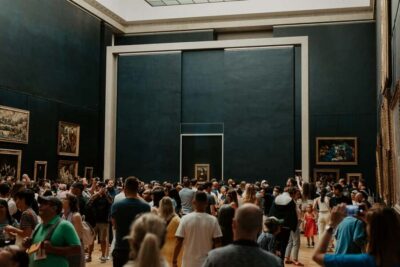
Louvre Museum Hosted Entry and Mona Lisa Audioguide
Read our review →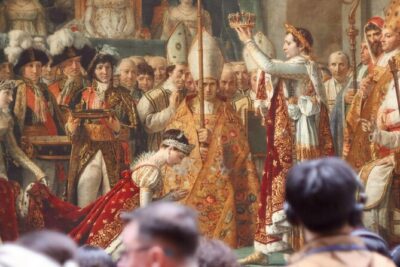
Louvre Access with Mona Lisa Escort or Guided Option
Read our review →This tour also appears in