
Reviewed · MACARON & PASTRY CLASSES
Hands-on Eclair and Choux Making with a Pastry Chef
Chocolate-dipped éclairs start with hot steam.
This hands-on cooking class in Paris teaches you how to make pâte à choux from scratch, then turn it into éclairs and other choux treats. I love that it is beginner-friendly and technique-focused, with small-group attention that helps you get the dough and piping right.
One possible drawback: depending on the group, you may be paired up and take turns at the work station instead of having totally separate setups the whole time.
In This Review
- Key highlights from the class
- First stop: Maison Fleuret on Rue de Béarn
- The pâte à choux lesson: water, butter, salt, flour, eggs
- Piping and baking: turning dough into crisp shells
- Pastry cream made the French way: thick, smooth, pipe-ready
- Filling your éclairs: chocolate, vanilla, and coffee options
- Chocolate glaze: the final dip that makes it look like Paris
- What you take home: results, recipe, and real-world practice
- Price, time, and who this class fits best
- Should you book this éclair and choux class?
- FAQ
- What will I make during the class?
- Is this class suitable for beginners?
- How long does the class run?
- How many people are in the group?
- Is the class taught in English?
- What drink is included?
- Where does the class meet?
- Do I get a recipe to use at home?
- If I cancel, will I get a refund?
Key highlights from the class
- Beginner-friendly pâté à choux basics, with clear step-by-step guidance
- You pipe, bake, fill, and glaze your own choux treats
- Small group size (max 8) for more hands-on coaching
- Pastry cream from scratch, cooked until thick and ready to pipe
- Coffee and/or tea included, with a take-home recipe
- English instruction, and mobile ticket check-in
First stop: Maison Fleuret on Rue de Béarn
You’ll meet at 7 Rue de Béarn in the 3rd arrondissement, and the class ends back at the same meeting point. The location is easy to reach, a short walk from a metro station and near public transportation, which matters because you do not want to rush through transit while you’re holding baking timing in your head.
The session runs about 2 hours 30 minutes, and the class size is capped at 8. That smaller room energy shows up in the way the teacher can watch your hands, not just your answers. In the past, instructors such as Clara, Mathieu, Matteo, and Millie have been mentioned in the same positive light, especially for being patient and encouraging while you practice technique.
One practical note I’d take seriously: this class is hands-on, so your comfort with standing and working at a counter matters more than you might expect. Also, you should bring basic “kitchen humility.” Piping is fiddly at first, and you will likely get better by doing, not by staring at someone else do it.
The pâte à choux lesson: water, butter, salt, flour, eggs
The heart of the class is making choux pastry (pâte à choux). You start by heating water, butter, and salt in a saucepan until the butter melts. Then you add flour and mix until the dough comes away from the sides of the pan. That moment is more than a step, it is your first real checkpoint. When the dough pulls away cleanly, it means the flour is cooked enough and the texture is right to handle.
Next comes the part that scares most first-timers: eggs. You add eggs one at at a time, mixing well between each addition. This is where you learn the logic behind choux. You are not just mixing. You are adjusting the dough so it becomes smooth, glossy, and pipeable, without getting too loose or too stiff.
What I like about this setup is that it makes the “why” easier to feel. If your dough looks off, the teacher can often correct it while you are still mid-process. Several class comments also point out that ingredients are premeasured, which helps you focus on technique and timing instead of math and messy measuring.
Beginner-friendly means you do not need to know pastry jargon ahead of time. You just need to follow the rhythm:
- heat and melt,
- cook and pull away from the pan,
- add eggs gradually.
And yes, you will see how choux changes as you work. That transformation is half the fun, even if you end up with a few imperfect shapes at first.
More piping bags and patient shells:
- Paris: Montmartre Cheese, Wine & Pastry Guided Walking Tour
★ 4.8 · 2,255 reviews - Paris: Macaron Class at Galeries Lafayette
★ 4.2 · 1,196 reviews - Paris Croissant Small-Group Baking Class with a Chef
★ 5.0 · 910 reviews
Piping and baking: turning dough into crisp shells
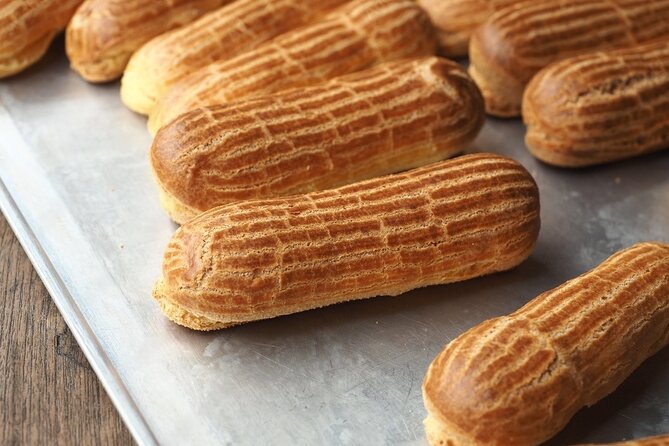
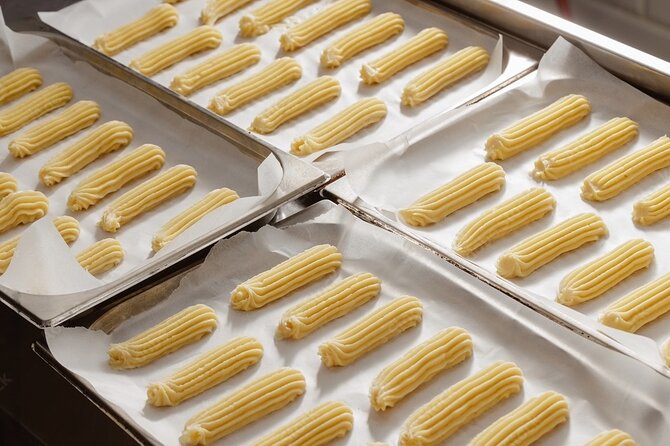
Once your choux dough is ready, you transfer it into a piping bag fitted with a plain tip. Then you pipe sticks onto a baking sheet lined with parchment paper. This is where you learn a simple but important skill: even pressure and consistent length. Your first attempt might look shaky. That is normal.
Then the class moves you into the baking phase with a clear target: bake at 200°C for about 20 to 25 minutes, until golden and crispy. That bake window matters because choux pastry relies on what happens inside the shell. As it bakes, steam forms and helps puff the structure. If it bakes too lightly, the shell can turn soft. If it bakes too long, it may get dry. The golden, crisp cue is your friend.
You also learn something practical here. Baking is not just “put it in and hope.” You’re building trust in cues. When you remove the tray, you should see shells that look dry and sturdy enough to hold filling. In many hands-on classes, students are surprised how much the finished bake depends on the earlier dough texture and your piping.
If you are worried about piping, remember this class is set up so you learn by doing, not by performing. Many people mention they got impressive results even with imperfect piping. You’re building skills, and the payoff is immediate.
Pastry cream made the French way: thick, smooth, pipe-ready
While the choux is baking (or as the class flows into finishing), you make pastry cream. You heat milk in a saucepan. In a separate bowl, you whisk egg yolks, sugar, flour, and cornstarch. Then you pour hot milk into the egg mixture while stirring constantly. After that, you return everything to the saucepan and cook over low heat until the cream thickens.
This is classic French custard technique, and it is useful knowledge far beyond éclairs. The keys you practice here:
- slow, careful stirring when combining hot milk with yolks,
- low heat once it is back on the stove,
- watching for thickening rather than chasing a specific minute count.
If pastry cream sounds intimidating, this class helps you because it gives you a controlled path. You’re not winging it. The goal is a texture that pipes smoothly and tastes rich, not runny.
You also get a feel for how temperature affects cream. Too hot or too aggressive heat can lead to graininess. Low heat plus constant stirring is what keeps it smooth. Even if your first stir is clumsy, your teacher can correct the rhythm in real time.
And there is one more payoff: while the choux is cooling, the pastry cream is essentially ready to take over your attention next. That pacing makes the whole session feel efficient, not like one long waiting game.
Filling your éclairs: chocolate, vanilla, and coffee options
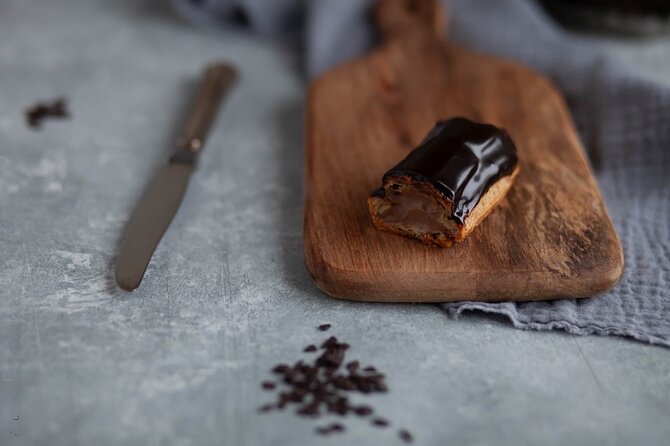
After the éclairs cool, you cut them in half. Then you fill them using a piping bag with your chosen pastry cream flavor. The class commonly offers chocolate, vanilla, coffee, and similar options based on what is available for your session.
Cooling is not optional here. Warm shells and hot filling do not mix well. You want the pastry to set so it stays crisp and the filling stays where you put it.
This filling step is satisfying because it turns your work from “baked parts” into something that looks and tastes like a real French pastry case item. You also get to adjust how much filling you use, which is one of those small freedoms that makes a huge difference. Too little feels underwhelming. Too much can get messy. With guidance, you’ll find the balance.
If you’re sensitive to sweetness, pick a flavor that matches your taste. Chocolate and coffee can feel a bit more adult than sugar-heavy options, and you’ll appreciate how pastry cream still tastes creamy without being candy-like.
Other Paris bookings in the margin notes
Chocolate glaze: the final dip that makes it look like Paris
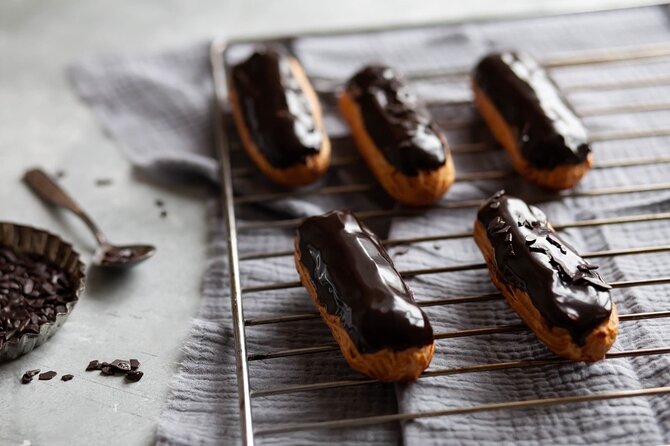
Next comes the glaze. You melt dark chocolate and add melted butter, then mix until smooth. Then you glaze the éclairs by dipping the top into the chocolate.
This part is simpler than it sounds, but it still has technique. The chocolate should be fluid enough to cover cleanly, not chunky. And you want a controlled dip so the glaze does not drip everywhere. That last 20 seconds can make the difference between a neat top and a chocolate disaster.
The glaze also adds a useful lesson: flavor balance. Dark chocolate and butter make the sweetness feel rounded, not flat. When your éclairs are done, you can taste the full system: crisp choux shell, rich pastry cream, then a chocolate top note.
Because you do the full chain yourself, you can also see where flaws came from if something is off. For example:
- Soft shell usually points to underbaking or undercooling.
- Lumpy cream points to rushed heating or inadequate stirring.
- Thick glaze can point to chocolate that was too cool when you dipped.
That cause-and-effect awareness is what helps you repeat the results later at home.
What you take home: results, recipe, and real-world practice
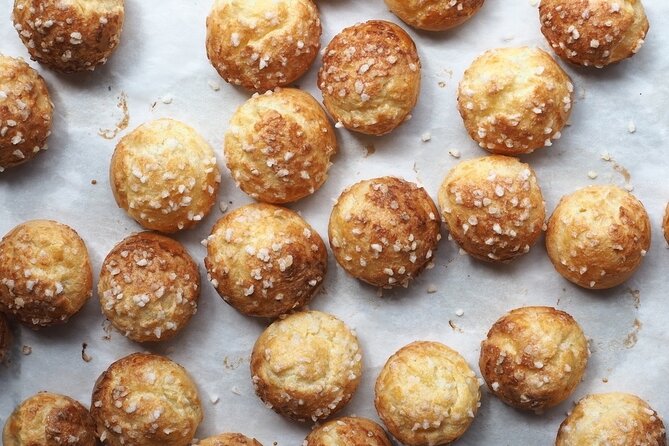
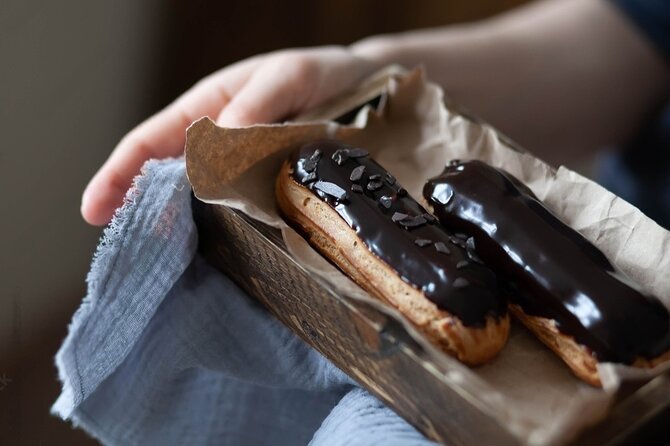
At the end, you leave with your baked treats, and you also get a recipe. People note you can expect more than one pastry, and some mention leaving with three regular size eclairs. You should also know that the recipe may be provided digitally in some form, not always as a printed handout. If you prefer paper, you might want to ask at check-in how you’ll receive it.
One more practical detail: some classes run with coffee and/or tea included, but the flow can vary. If you are hoping to sit and linger, keep expectations flexible. A few comments point out pastries were packed up instead of a full sit-down tasting.
Also, check your expectations about the “private feel.” The class is small, and often social, but you might get paired up and take turns if the group size is odd or if work stations are shared. That can be totally fine and still hands-on, but it is worth knowing in advance so you do not feel like you paid for a solo baking station when the reality is shared counter time.
The big win here is confidence. Even people who said they do not usually like éclairs still liked what they made in this class, because the components are balanced and the textures come out right. And if you already bake, this class can feel like a tidy skills refresher. If you bake rarely, it becomes a reliable “I can do this” project.
Price, time, and who this class fits best
The price is $132.75 per person for about 2 hours 30 minutes, and the class is offered in English with a mobile ticket. To judge value, look at what you’re actually paying for:
- real kitchen time with a teacher,
- structured instruction through every major component,
- and food you can eat right away, plus recipe guidance.
At this price point in Paris, you are not just buying chocolate. You are buying technique instruction plus ingredients handling plus a full end-to-end pastry experience. If you’ve ever tried making choux or pastry cream at home, you know those steps can go wrong for invisible reasons. Paying for guided practice can be worth it fast.
You’ll get the most out of it if you:
- want an authentic Paris food skill, not just a tasting tour,
- are curious about pastry technique, but you are not trying to master it overnight,
- like small-group classes where you can ask questions and adjust on the fly,
- travel with family or friends who want hands-on fun, including kids at least old enough to participate safely with hot trays and piping bags (one family mentioned a 9-year-old enjoying it).
You might think twice if:
- you need guaranteed solo workstation time,
- you hate environments that feel small and close quarters,
- you rely on printed handouts and do not want to use a phone or scan a recipe.
One more smart move: this type of class tends to book ahead. The average advance booking is about 45 days, so if your travel dates are fixed, lock it in early.
Should you book this éclair and choux class?
Yes, I’d book it if you want a real skill you can repeat, and you like the idea of creating the whole pastry, not just assembling it. The class is built around pâte à choux technique, a from-scratch pastry cream, and a clean chocolate glaze finish. That combination is why people leave feeling proud, not just stuffed.
If you want a low-stress “Paris flavor” experience, it also works because the structure is clear and beginner-friendly. Just go in with the expectation that piping and timing take practice, and you may be paired up depending on the day’s group.
If you dislike shared setups or you need more polished ambience, you might prefer a different food experience. But for most first-timers, this is one of those rare activities where the lesson and the reward match.
FAQ
What will I make during the class?
You will make choux pastry, pipe and bake the choux into sticks, make pastry cream, fill the éclairs with your chosen pastry cream, and finish with a chocolate glaze.
Is this class suitable for beginners?
Yes. It is described as beginner-friendly and you do not need previous pastry experience.
How long does the class run?
The duration is about 2 hours 30 minutes.
How many people are in the group?
The class has a maximum of 8 travelers.
Is the class taught in English?
Yes. The class is offered in English.
What drink is included?
Coffee and/or tea is included.
Where does the class meet?
The meeting point is 7 Rue de Béarn, 75003 Paris, France.
Do I get a recipe to use at home?
You receive the recipe, though it may be provided in a scanned or digital format rather than a printed sheet.
If I cancel, will I get a refund?
You can cancel for a full refund if you cancel at least 24 hours before the experience starts. If you cancel less than 24 hours before, you will not receive a refund.
Latest Paris entries, notes attached






Macaron & Pastry Classes, compared.
Montmartre Cheese, Wine & Pastry Guided Walking Tour
Read our review →
Paris Croissant Small-Group Baking Class with a Chef
Read our review →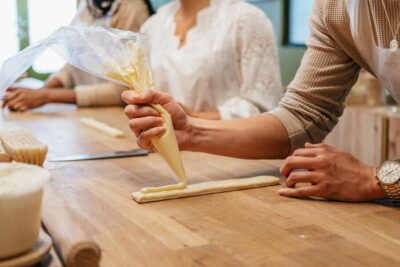
Saint-Germain: Gourmet Chocolate & Pastry Walking Food Tour
Read our review →
Paris Chocolate, Macaron & Pastry Food Tour: 10 Gourmet Tastings
Read our review →
Macaron Bakery Class at Galeries Lafayette Paris
Read our review →This tour also appears in