
Reviewed · MUSEUMS
Invalides Museum – WWI & WWII – Guided Tour up to 8 guests
Les Invalides hits hard when you have a guide. You’ll walk the court that Louis XIV created for veterans, then move into the story of Napoleon Bonaparte, ending with Napoleon’s tomb under the gold dome. This is one of those places where the architecture and the politics are tangled together, and a good historian helps you read the clues.
I love how the tour keeps the timeline straight, from the 17th-century hospital idea under Louis XIV to Napoleon’s exile and burial. I also like the small-group feel, up to 8 guests, so you can actually ask questions and not just follow arrows in the dark.
One consideration: you do a moderate amount of walking, and the semi-private format is not suited to wheelchair users or people with walking disabilities. If mobility is tight for you, you’ll want to think carefully before booking.
In This Review
- Key highlights to watch for
- Entering Les Invalides like you have a map (not just a ticket)
- $156 for 2 hours: when the price feels fair
- What to bring and what to expect at the door
- The courtyard that starts it all, Louis XIV and the veterans’ hospital
- The cathedral built for former troops, where faith and power meet
- Napoleon’s tomb under the gold dome, the moment that clicks
- Museum galleries: artifacts, recreations, and military maps that explain the story
- Tomb stones, graves, and the artistic side of remembrance
- The guide makes the difference, and you’ll likely feel it fast
- Logistics that affect your day more than you think
- Who this tour suits best, and who should reconsider
- Should you book the Invalides WWI and WWII guided tour up to 8?
- FAQ
- How long is the guided tour?
- Is skip-the-line access included?
- How many guests are in a group?
- What ID do I need, and can I bring luggage?
- What languages are available for the live guide?
- Is the tour wheelchair friendly?
Key highlights to watch for

- Up to 8 guests per guide for a more personal pace
- Skip-the-line access so you spend time inside, not in queues
- Louis XIV’s veteran hospital story told in the exact spaces that matter
- Napoleon’s gold-domed tomb plus the graves of those closest to him
- Artifacts, recreations, and military maps that explain wins and defeats
- Art-historian guidance with multiple languages available
Entering Les Invalides like you have a map (not just a ticket)
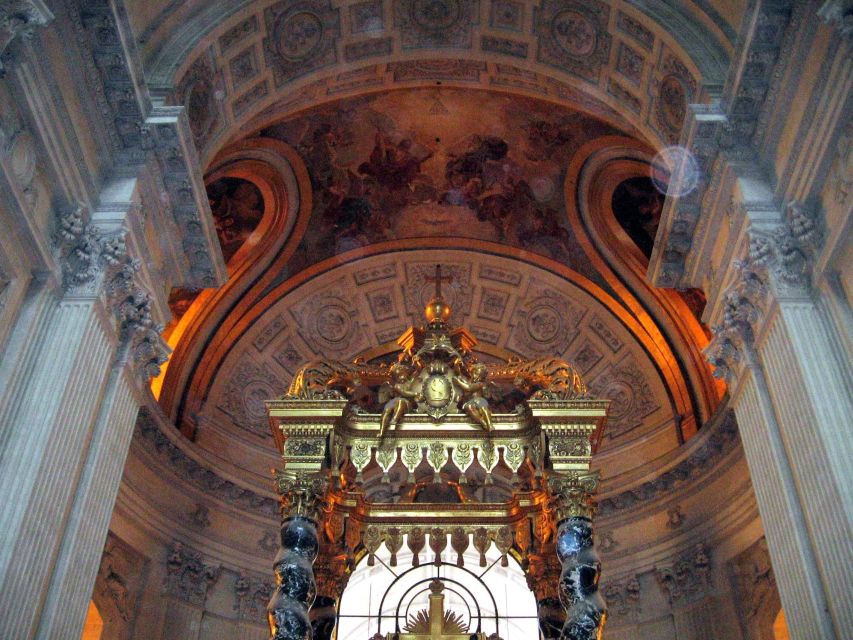
Les Invalides is not just a museum. It’s a whole statement, built to honor military service and then later to frame who France should remember. When you enter with a guide, you stop treating it like a random collection of rooms and start seeing it as one designed narrative.
I like that this tour is set up for focus. In just 2 hours, you hit the big visual anchors you came for, then you get the context that makes the details make sense. You’ll learn why the complex exists, how Louis XIV used it for his soldiers, and why Napoleon’s remains ended up at the center of the story.
The tour is run by Babylon Tours Paris, and the format is private or small group. Guides are described as professional art historian types, and that shows in the way they connect architecture to politics, not just dates to dates.
$156 for 2 hours: when the price feels fair
At $156 per person for a 2-hour guided visit, the value comes down to time and focus. Skip-the-line entry helps you avoid wasting your Paris day in paperwork and ticket lines. And because the group is limited to 8, the guide can keep moving without turning your tour into a slow conga line.
Another value point: the guide coverage isn’t only Napoleon. You get Louis XIV, the origins of the Invalides complex, and then Napoleon’s rise and fall through museum materials like artifacts, recreations, and military maps. That mix matters because Napoleon is famous, but understanding how the site itself was built to tell a specific version of French military identity takes a translator, not just a poster.
You should also consider how big the museum is. A first-time visit can feel like information overload. A guided route keeps you from wandering aimlessly through galleries that are impressive, but easy to forget once you’re out the door.
More French collections worth the coat check:
- Paris: Orsay Museum Entry Ticket
★ 4.7 · 25,647 reviews - Louvre Museum Masterpieces Guided Tour with Access
★ 4.5 · 12,023 reviews - Paris: Louvre Museum Entry Ticket With Host and River Cruise
★ 4.6 · 9,926 reviews
What to bring and what to expect at the door
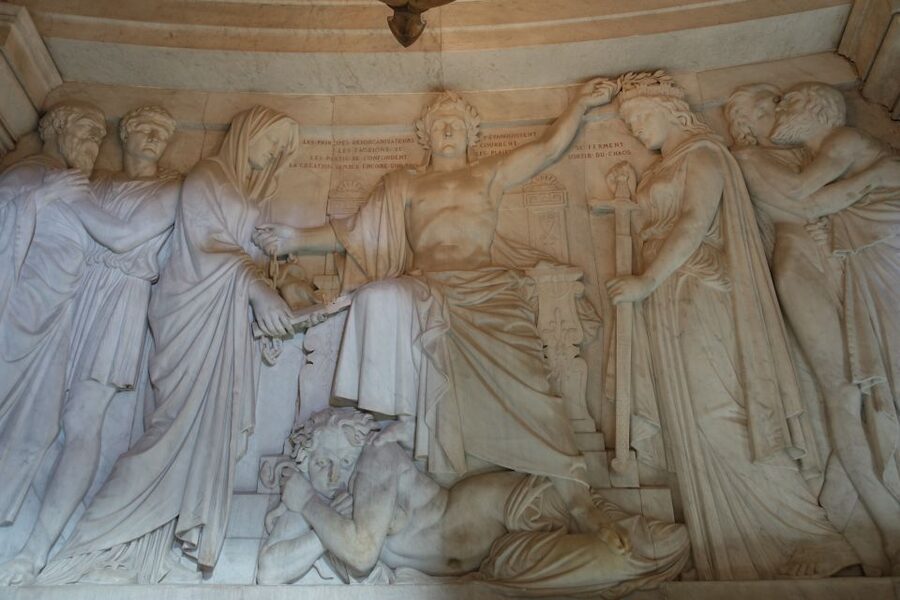
Bring a passport or ID card. That’s the practical detail that matters on a guided museum tour.
Plan on moderate walking. The tour is described as not suitable for people with mobility impairments, and the semi-private option is not available for wheelchair users. Even if you’re fine on your feet, you’ll be on a route through courts and indoor spaces where movement is part of the experience.
Keep your bag small. Luggage or large bags are not allowed. If you’re traveling with a bigger suitcase, leave it behind or switch to a smaller daypack so you can move quickly.
Also, museum rules can affect sound. Some rooms require quiet or restricted speaking, so expect your guide to guide the group without chatter. That’s not a dealbreaker, it’s just part of how this collection is managed.
The courtyard that starts it all, Louis XIV and the veterans’ hospital
Most people remember the dome. Smart visitors start with the courtyard. That’s exactly what this tour does, walking you through the epic courtyard of Les Invalides and explaining its 17th-century roots.
The key idea is simple: this site began as a veteran’s hospital under King Louis XIV. Instead of treating soldiers only as assets during war, Louis XIV created a place where former troops could find respite after battle. When you stand in the courtyard with that in mind, you read the space differently. It stops being “nice architecture” and becomes a political choice with human consequences.
The guide’s job here is to connect the design to the purpose. You’ll hear about the origins of the Invalides building and how the complex grew into a central symbol of France’s military story. It’s one of those moments where you realize the building isn’t neutral. It is telling you who deserves honor, and how that honor should be displayed.
The cathedral built for former troops, where faith and power meet
After the courtyard, you move toward the cathedral that Louis built for his former troops. This is where the tour gets more than historical facts. You start seeing how religious architecture supports a national message.
Louis XIV didn’t only create a place to house veterans. He built a setting that framed their service within a moral and ceremonial world. On this tour, you’ll get the context for why the cathedral matters and why it belongs in the same story as the hospital and the later Napoleon cult.
This is also where the pace becomes important. Indoor spaces can slow down, and groups can get bunched. The advantage of a small group up to 8 is that you can usually keep your footing, listen without constantly stepping around others, and still see the points your guide highlights.
More Things to Do in Paris




Napoleon’s tomb under the gold dome, the moment that clicks

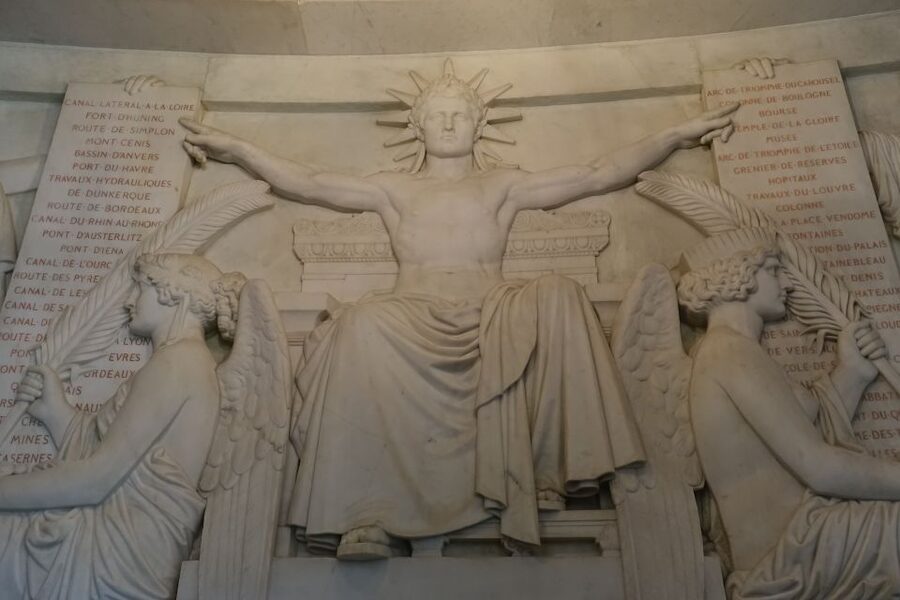
Then comes the main event: Napoleon Bonaparte. The tour is built around his presence at Les Invalides, from his identity as a brilliant general and audacious emperor to the reality that he pushed too far and died in exile. You get the arc, not just the monument.
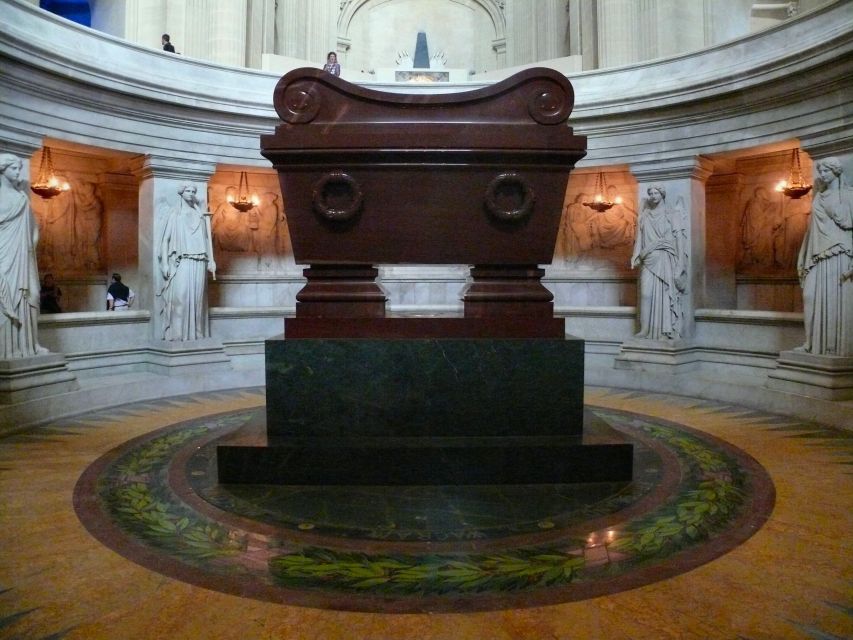
And yes, you see his tomb up close. The gold dome is a showpiece, but the real effect is emotional. Even if you think you already know Napoleon’s story, standing near his remains, hearing how the site frames his legacy, and learning about what happened after exile makes the history feel like more than school memorization.
The guide also shows you the tombs of the closest to him. That turns the experience from “hero worship” into something more human. You start realizing this place is about relationships, memory, and how power gets packaged for future generations.
You’ll spend time inside the museum too, but the tomb stop is the turning point where the tour stops being a history lecture and becomes a lived experience.
Museum galleries: artifacts, recreations, and military maps that explain the story
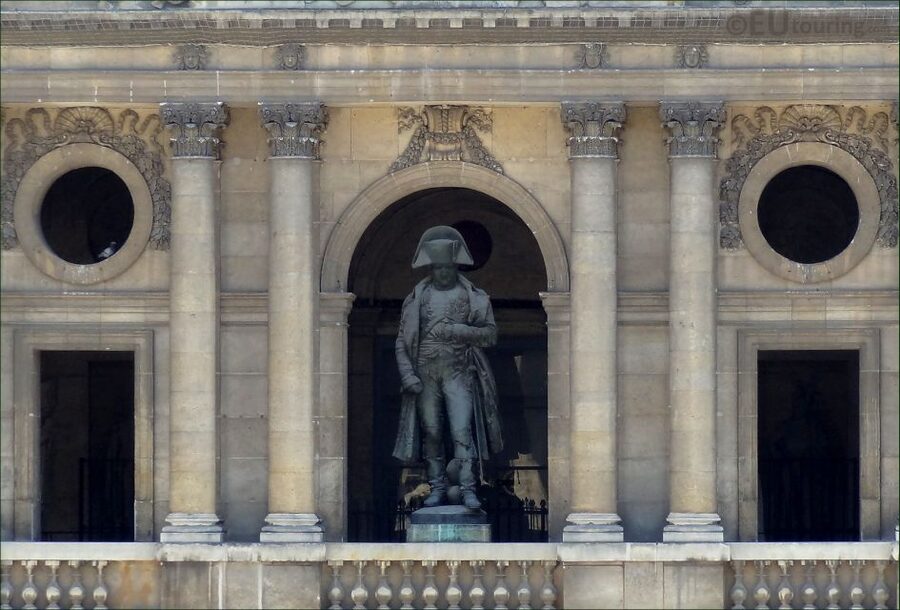
After the tomb area, the tour moves into the museum experience itself. This is where the tour earns its keep if you care about more than landmarks.
You’ll learn about Napoleon beyond his famous stature through museum materials such as artifacts, recreations, and military maps. The maps matter because Napoleon is often reduced to a vibe, daring and speed. Maps help you see what he actually did, where he advanced, and where the strategy broke.
The tour route is designed to help you understand both the wins and the defeats. That balanced framing is important. If you only hear victory stories, Napoleon becomes a myth. If you only hear failure, he becomes a cautionary tale. Here, you get the messy middle, which is usually what history looks like in real life.
One practical note: some collections can vary by season, so the exact room contents might shift slightly. But the big themes should stay the same, especially the Napoleon-focused core.
Tomb stones, graves, and the artistic side of remembrance
One of the more satisfying parts of this tour is the stroll past artistic tomb stones and graves. It might sound like a background detail, but it changes how you experience the entire complex.
France has a tradition of making memory visible in stone and decoration. When you walk through that section with the guide’s explanations in your head, you notice how the site blends solemnity with artistry. It’s not only about who was powerful. It’s also about how people wanted to be seen after death.
This is one of those moments where the guide can turn a “look at that” stop into something you remember later, because you understand what the design choices are communicating.
The guide makes the difference, and you’ll likely feel it fast
The tour uses live guides, and the languages listed include French, Italian, German, English, Russian, and Spanish. That matters if you want a clean explanation without drifting through translations that miss nuance.
The guide talent level also shows in how the story is presented. In particular, guides have a knack for tying Napoleon’s era to Louis XIV and explaining Napoleon I, II, and III references where relevant to the broader memorial culture. That helps if you’ve heard Napoleon named in different ways and you want the connections made clear.
The best part is that guides tend to answer questions and keep the tour interactive. If you’re visiting with a history-loving teen, this kind of back-and-forth can make the difference between boredom and real interest. One family-friendly angle that pops up with this tour is that it can work well for a 13-year-old who wants to understand the characters, not just memorize dates.
Also, don’t be shy about asking for local extras after the tour. One of the more fun offhand tips tied to this experience: guides may recommend Angelina for hot chocolate, which is an easy, classic Paris reward to pair with a heavy dose of Napoleon.
Logistics that affect your day more than you think
A few small details can change how smooth your visit feels.
First, meeting point may vary depending on the option booked. Plan a few minutes early so you’re not stressing while everyone else is already moving.
Second, temporary exhibits are not included. You’re paying for the core historical route. That’s good if you want a dependable experience, not something that depends on what’s on display that week.
Third, occasional closures can happen without prior warning from museum management. If this delays the tour by more than 1 hour from the start time, an alternative is provided, but refunds or discounts aren’t offered by the tour provider in those cases. In real terms, I treat this like weather risk. Build in buffer time on your schedule, especially if you have other timed plans.
Finally, some specific rooms may require quiet or restricted speaking. If you’re the type who wants to talk a lot, switch to listening mode during those segments. It’s the difference between a calm, respectful visit and a frustrating one.
Who this tour suits best, and who should reconsider
This tour fits you if you want a tight route with clear storytelling. If you like military history, political history, or you just want the Napoleon parts explained with context, the 2-hour structure works well.
It’s also a good fit for first-timers to Paris who feel daunted by big museums. You get the key “must-see” areas, and you leave with a coherent understanding rather than random photos.
It may not be the best choice if you cannot handle moderate walking. The tour data is clear that it is not suitable for people with mobility impairments. Even though wheelchair tours are available only on request, the semi-private tour is not available for wheelchair users. If accessibility is a factor, you’ll want to check the request option directly before you commit.
Should you book the Invalides WWI and WWII guided tour up to 8?
If your priority is a guided, high-impact orientation to Les Invalides, I’d say yes. The skip-the-line access plus the small group size makes the most sense for a 2-hour window. You’ll see Napoleon’s tomb under the gold dome, understand why the Invalides complex exists in the first place, and get museum context through maps, artifacts, and recreations.
The only real “no” I’d give is for visitors who cannot manage moderate walking or who need wheelchair-friendly routing within the semi-private setup. Otherwise, this is a smart way to turn a famous landmark into an understandable story, with guides who can explain things in clear language and handle questions.
If you do book it, bring your ID, pack light, and show up ready to listen. Then plan a relaxed next stop nearby, because your brain will want a break after the Napoleon-heavy finale.
FAQ
How long is the guided tour?
The tour lasts 2 hours.
Is skip-the-line access included?
Yes. Entrance fees and skip-the-line access to the museums are included.
How many guests are in a group?
The maximum group size is up to 8 guests per guide for a more intimate experience.
What ID do I need, and can I bring luggage?
You should bring a passport or ID card. Luggage or large bags are not allowed.
What languages are available for the live guide?
The live tour guide is available in French, Italian, German, English, Russian, and Spanish.
Is the tour wheelchair friendly?
Wheelchair tours are available only on request, but the semi-private option is not available for wheelchair users or people with walking disabilities. The tour is also listed as not suitable for people with mobility impairments.
Latest Paris entries, notes attached







Museums, compared.

Louvre Museum Masterpieces Guided Tour with Access
Read our review →
Louvre Museum Entry Ticket With Host and River Cruise
Read our review →
Les Invalides: Napoleon’s Tomb & Army Museum Entry
Read our review →
Musée de l’Orangerie Reserved Entrance Ticket
Read our review →
Louvre Museum – Exclusive Guided Tour (Entry Included)
Read our review →
Louvre Museum Hosted Entry and Mona Lisa Audioguide
Read our review →
This tour also appears in