
Reviewed · D-DAY BEACHES TOURS
Omaha and Utah beaches
D-Day hits different when you stand where it happened. This Omaha and Utah beaches tour turns big history into a clear, stop-by-stop route, with a guide bringing the V Corps and VII Corps story into focus. I love how you cover Omaha and Utah in one day without fuss, and I also like the small-group feel, capped at 16 people. One watch-out, the day is long and you will be outside at beach height, so plan for cold, damp morning weather.
What really makes this work is the way the guide paces the route, then connects each location to the next. I especially like that you get context, maps or photos in hand, and a clear sense of why each named spot matters, from landing areas to supporting sites in the countryside. The other plus is the stress-free round-trip transport from central Bayeux, so you can focus on the sites instead of parking and route planning.
If you want D-Day in a single, well-timed day, this is a strong pick. It is also ideal if you prefer your history as a guided story, not a self-guided scramble.
In This Review
- Key Highlights You Should Not Miss
- Getting Your Bearings: Bayeux Pick-Up and a 9-Hour Route
- Omaha Beach and the American Cemetery: Where Scale Becomes Real
- Pointe du Hoc: Fortified Ground and Hard Choices
- Sainte-Mère-Eglise, La Fière, and the Village Layer of D-Day
- Beyond the Main Spots: Longues-sur-Mer Battery and DeGlopper Action
- Utah Beach and Sainte-Marie-du-Mont: A Second Landing With Different Meaning
- Holdy Battery, First Aid, La Colombière Hospital, and Hiesville: War After the Impact
- General Pratt Memorial and Angoville au Plain: Memorial Thinking, Not Just Site Hopping
- Guides and Drivers: The Human Factor That Makes History Stick
- Price and Value: Paying for a Guided Circuit, Not Just a Ride
- Timing, Weather, and What to Wear on Cold Normandy Mornings
- Who This Tour Is Best For
- Should You Book This Omaha and Utah Beaches Tour?
- FAQ
- FAQ
- How long is the Omaha and Utah beaches tour from Bayeux?
- Where do I meet the tour in Bayeux?
- What time does the tour start?
- Is the tour in English?
- Is lunch or food included?
- What sites are included in the full day itinerary?
- What is the cancellation policy?
Key Highlights You Should Not Miss
- Omaha + Utah in one day with the route built around the American sectors of D-Day
- American Cemetery of Colleville for a long, meaningful pause
- Pointe du Hoc and the bluffs experience that helps you understand the stakes
- Long day, smooth flow with frequent stops and a pace that avoids feeling rushed
- Small group max 16 plus a comfortable private vehicle for the long drive
Getting Your Bearings: Bayeux Pick-Up and a 9-Hour Route
You start in Bayeux at Place du Québec, with a morning departure at 8:20 am. That early start matters because you will want daylight for the beaches and villages, and you also want buffer time for the road once the Normandy crowds kick in.
The tour runs about 9 hours and returns you to the same meeting point. You are not just seeing one beach and calling it a day. The itinerary is shaped like a circuit, moving from landing geography, to key action points, to memorial ground, and then back toward town.
One practical note: this is a guided day with transport by private vehicle, so it is built for comfort. You are still on your feet for short periods at each stop, and the beaches can feel raw in the morning, so wear layers and bring something warm you can actually use.
Omaha Beach and the American Cemetery: Where Scale Becomes Real
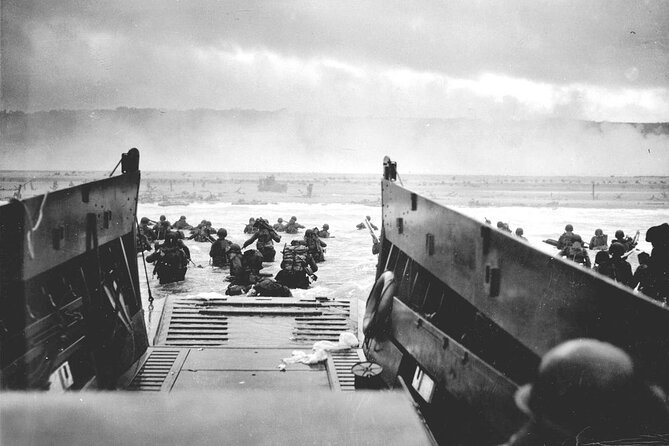
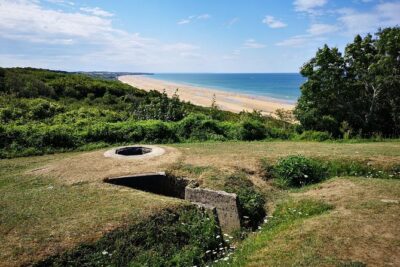
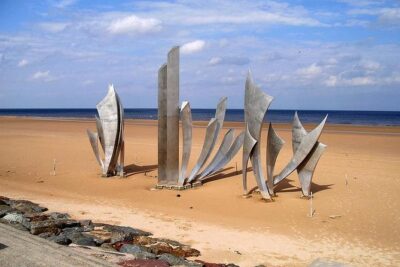
The day’s first major emotional anchor is Omaha Beach, followed by the American Cemetery of Colleville. Omaha is the kind of place where your brain keeps trying to shrink it into something manageable, but the view and the scale do not cooperate.
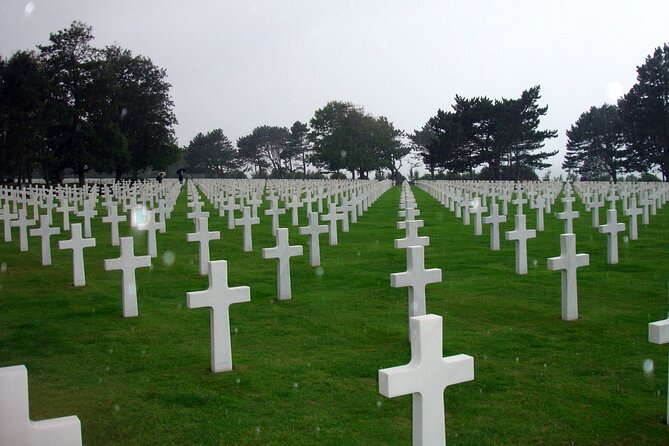
At the cemetery, the experience shifts from action to aftermath. You get time to absorb the rows and the quiet, and it helps you connect what you learn from stories and maps to the human cost. Many guides do a good job here, but the big difference on this tour is the narrative flow, where your guide keeps helping you understand what you are looking at, not just what happened in general.
If you care about details and you want the visit to feel grounded, this is the stop sequence that delivers. The cemetery is where you will likely slow down, look longer, and feel the weight of the day in a different way than at the coastline.
More visits along the D-Day coast:
- Normandy American D-Day Beaches Full Day Tour from Bayeux
★ 5.0 · 2,103 reviews - Normandy American D-Day Experience – Group tour from Bayeux
★ 5.0 · 1,566 reviews - Omaha and Band Of Brothers Full Day Tour
★ 5.0 · 1,104 reviews
Pointe du Hoc: Fortified Ground and Hard Choices
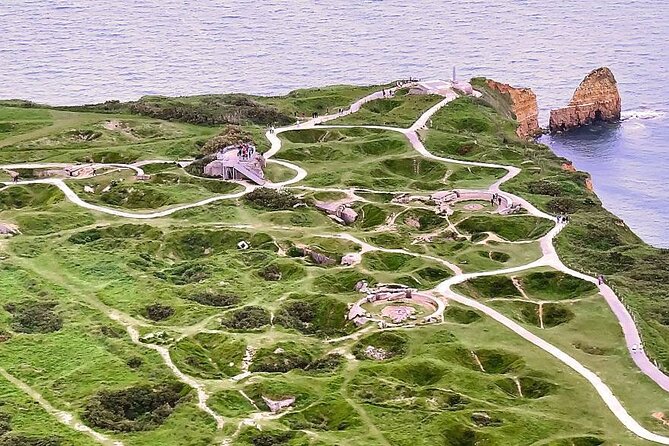
Next you head to Pointe du Hoc. This is one of those stops where the landscape and the mission are tied together, so standing there with a guide changes everything. You are not just looking at a famous name, you are watching the terrain become part of the explanation.
Your guide walks the line between the big picture and the immediate problem faced by attackers. You should expect a lot of how-and-why language at this stage, and you might also get pushback on common myths, framed in a way that keeps the story clear.
A smart move here is to pause and actually look out from the viewpoint. Even if you think you understand the campaign, this stop can reset what you thought you knew by putting the route, the timing, and the objective into the same frame.
Sainte-Mère-Eglise, La Fière, and the Village Layer of D-Day
From the coast, the itinerary shifts to Sainte Mère Eglise and La Fière. These stops help you see D-Day as more than a shoreline event. The campaign moved through towns, crossings, and local terrain, and the guide keeps tying the dots to why the Americans had to capture and hold the right positions.
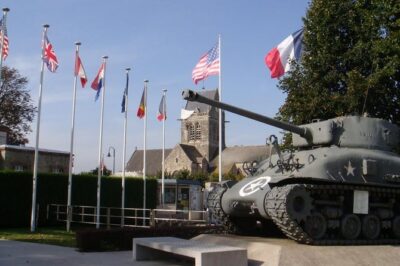
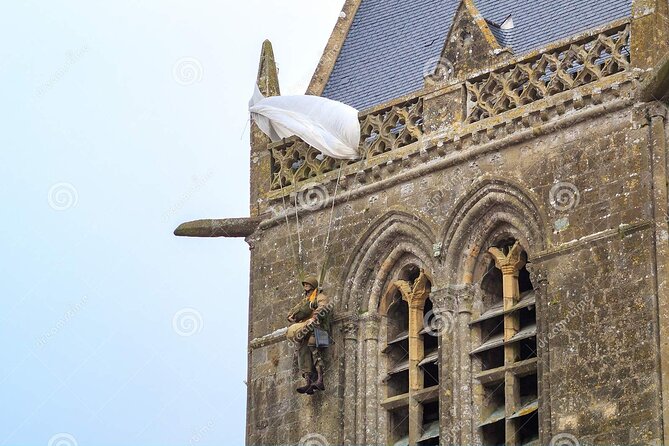
Sainte-Mère-Eglise is also one of those places where people remember the name from pop culture, but the tour’s value is how it turns that name into a location with a specific role in the landing story. You get the sense of how day-of events echoed into the villages around them.
La Fière adds another layer, because the name points to action and urgency rather than only commemoration. If you like history that feels practical, this part of the route scratches that itch, since it is about how plans met real ground.
Beyond the Main Spots: Longues-sur-Mer Battery and DeGlopper Action

The route also includes Longues-sur-Mer Battery early on, before you fully commit to Omaha and the cemetery. A battery stop gives you a different angle on the invasion, since it anchors the story in the defensive setup the Allies had to overcome.
Later you reach DeGlopper Action. This is the kind of stop that makes a tour feel more than just postcard points. You start to realize the invasion was a patchwork of operations, not one single dramatic moment. You might find yourself understanding the campaign better because these names break up the day into action beats.
The best part of these less-touted stops is the way your guide connects them into the overall movement of forces. You get the sense that the route is built to match the story structure, not just to hit the biggest attractions.
More Things to Do in Normandy
Utah Beach and Sainte-Marie-du-Mont: A Second Landing With Different Meaning
Then comes Utah Beach, with Sainte Marie du Mont on the list as well. The tour does not treat Utah as a quick repeat of Omaha. You get a different landing context, and your guide explains how the American approach played out across the wider sector.
Utah is often emotionally quieter than Omaha for many people, but that is exactly why it matters. It helps you see the full campaign picture instead of only the headline moments. You may also notice how the route uses this second landing to help you compare tactics, geography, and the pace of advances.
Sainte Marie du Mont supports that comparison. You get the village-side perspective that keeps the story anchored in place, not just in dates.
Holdy Battery, First Aid, La Colombière Hospital, and Hiesville: War After the Impact
One reason this tour feels complete is how it does not end at the waterline. You stop at Holdy Battery and 1st Aid Station, then later visit La Colombière Hospital. Those names point to the brutal reality that battle does not stop just because the first landing phase is over.
These stops help you understand the full arc of the day: defensive structures, the push, and then what happens when wounded arrive and decisions have to be made quickly. Even if you are focused on fighting, these locations give you the rest of the story.
Then you reach Hiesville, General Taylor’s Headquarter. A headquarters stop changes the tone again, because it shifts from field action to command and planning under pressure. This is where the tour’s guided structure can really click, since you can link earlier action points to the leadership decisions that followed.
General Pratt Memorial and Angoville au Plain: Memorial Thinking, Not Just Site Hopping
The itinerary continues with General Pratt Memorial and Angoville au Plain. Memorial sites are sometimes treated like a quick photo stop, but the best guides keep them reflective. On this route, the guide’s pacing is part of why people come away feeling the day made sense, emotionally and historically.
Angoville au Plain is particularly useful because it adds the place-and-people layer. You are not only standing on a battlefield, you are seeing how the war touched local infrastructure and daily life. That context is what makes a D-Day tour feel more grounded.
If you want a day that leaves you with a coherent story instead of a collection of famous names, this is the final stretch that helps it all land.
Guides and Drivers: The Human Factor That Makes History Stick
The biggest theme across the experience is simple: the guide is the difference between reading about D-Day and understanding it. Names like Theo, Jack, William, Gillaume, Louis, Stephan, Adam, Antoine, Ben, Fredric, and Valentine show up in the stories people share, and the common point is consistent, energetic narration with a pace that feels right.
What I like most from that pattern is balance. A good guide can give you enough detail to feel grounded without drowning you in dates. Many people also praise the way guides answer questions on the fly and keep the explanation tied to what you are actually standing in front of.
The driver matters too. Safe navigation on busy Normandy roads keeps the day smooth, so you spend time seeing, not worrying about logistics.
Price and Value: Paying for a Guided Circuit, Not Just a Ride
At $183.81 per person for an approx 9-hour day, this is not a budget option. But you are paying for more than seats in a van. You are paying for a guided route that strings together key sites, keeps the narrative coherent, and includes transport by private vehicle plus a driver/guide and local/professional guidance.
Admission is listed as free, which matters for value, because it reduces the number of small surprise costs that stack up during a full day. The main costs you should budget for are food and drinks, since they are not included.
In practice, that means bringing a plan for lunch. Either bring snacks or be ready to buy something nearby when the timing allows. A little advance planning can keep the day comfortable and prevent “hangry history” syndrome.
Timing, Weather, and What to Wear on Cold Normandy Mornings
This tour starts at 8:20 am and you will be outside in coastal and village areas. Even if the sun shows up, the beaches can stay chilly, so wear something warm you can move in. Think layers, not just a single coat.
If you are visiting during a big anniversary period, expect heavier traffic on the roads around Normandy. The upside is that the tour is designed to keep the schedule working, but you should still dress for the reality that you might wait a few minutes or take a slower route. Bring a warm layer, keep your phone charged, and you will be fine.
Finally, plan your energy. This is a full-day sightseeing circuit, with multiple stops. It is not a marathon hike, but it is not a sit-and-stare show either.
Who This Tour Is Best For
This tour fits you if:
- You want to see both Omaha and Utah in one day and keep the story connected.
- You prefer guided explanations over trying to piece together the campaign on your own.
- You like memorial sites but still want action points and supporting locations, not just a cemetery hour.
It may feel like a lot if you want a very slow pace or if you hate the idea of lots of short stops. But for most first-timers to Normandy, the structure gives you a strong overview you can build on.
Should You Book This Omaha and Utah Beaches Tour?
Yes, if you want D-Day to make sense fast. The big strength is the combination of a tightly routed itinerary and a guide who turns terrain and named sites into a clear story. The small-group size, comfortable private transport, and the focus on both Omaha and Utah make it a smart first stop in Normandy.
Book it if you care about the human side of the campaign as well as the tactical one. Skip it only if you want maximum freedom to wander on your own without a set sequence, because this day is built around the route and the guide’s pacing.
FAQ
FAQ
How long is the Omaha and Utah beaches tour from Bayeux?
It runs for about 9 hours.
Where do I meet the tour in Bayeux?
You meet at Place du Québec (Pl. du Québec, 14400 Bayeux, France).
What time does the tour start?
The start time is 8:20 am.
Is the tour in English?
Yes, it is offered in English.
Is lunch or food included?
No. Food and drinks are not included.
What sites are included in the full day itinerary?
The route includes Longues-sur-Mer Battery, Omaha Beach, the American Cemetery of Colleville, Pointe du Hoc, Sainte Mère Eglise, La Fière, DeGlopper Action, Utah Beach, Sainte Marie du Mont, Holdy Battery and 1st Aid Station, La Colombière Hospital, Hiesville (General Taylor’s Headquarter), General Pratt Memorial, and Angoville au Plain.
What is the cancellation policy?
Free cancellation is available if you cancel up to 24 hours in advance for a full refund.
Latest Bayeux entries, notes attached


D-Day Beaches Tours, compared.

Normandy D-Day Sites & Cemetery Day Trip from Paris with Lunch
Read our review →
Normandy D-Day Small-Group Day Trip with Omaha Beach, Cemetery & Cider Tasting
Read our review →
Normandy D-Day Beaches and American Cemetery Day Trip from Paris
Read our review →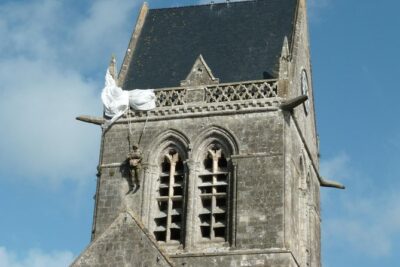
Normandy American D-Day Beaches Full Day Tour from Bayeux
Read our review →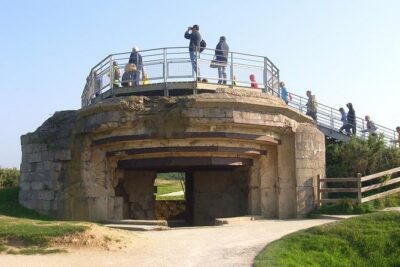
Normandy American D-Day Experience – Group tour from Bayeux
Read our review →
Omaha Beach D-Day Experience – Afternoon group tour from Bayeux
Read our review →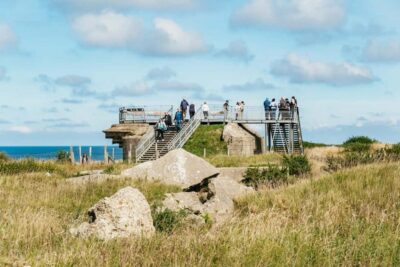
Normandy D-Day Sites Guided Day Trip with Lunch
Read our review →This tour also appears in