Reviewed · TICKETS
Paris: Château de Vincennes Entry Ticket
Château de Vincennes rewards the curious. This is one of those Paris area stops where the story is big, the setting is dramatic, and you can see centuries of power in one fortress. I love the climb to the 52-meter keep, because the height makes the whole place feel real, not just historical. I also like the way the visit threads together monarchy, imprisonment, and military use, so you get more than photo ops. One thing to plan for: the guided tour is in French only, with set start times at 2:15 PM and 3 PM, so if you want a specific language, you need to match your schedule to the day.
You’ll also appreciate that it runs as a small group, limited to 10 people, which keeps the visit from feeling crowded and frantic. You’ll meet at Château of Vincennes on Avenue de Paris in Vincennes, and you can use the self-guided option to control your pace. If you’re short on time, pick your route early, because there is a lot to read and look at inside.
In This Review
- Before you climb: 5 standouts at Château de Vincennes
- Why this fortress feels different from most Paris sights
- Getting there, meeting point, and how to time the French guided tour
- Arrival at Vincennes and the 14th-century message of power
- Inside the château: self-guided exploring with a visitors guide and AR
- The 52-meter keep climb: what it really gives you
- Famous inmates and key rooms: Fouquet, Sade, Mirabeau, and Henry V
- Napoleon to the 19th century: barracks, arsenal, and defending Paris
- World War II restoration and today’s role with the armed forces
- Price and value: is $15 worth it?
- What to bring and entry rules that can save your day
- Who this experience fits best
- Should you book Château de Vincennes?
Before you climb: 5 standouts at Château de Vincennes
- A 52-meter medieval keep that is the tallest of its kind in Europe, and yes, you’ll climb it.
- Charles V’s study with an augmented reality terminal that helps bring the details into focus.
- Prison history tied to named figures, including Fouquet, the Marquis de Sade, Mirabeau, and the place where King Henry V died.
- Napoleon-era reinvention, when the fortress became a barracks and arsenal under Napoleon I.
- A fortress restored after World War II damage, with today’s historical services of the three French armed forces housed there.
Why this fortress feels different from most Paris sights
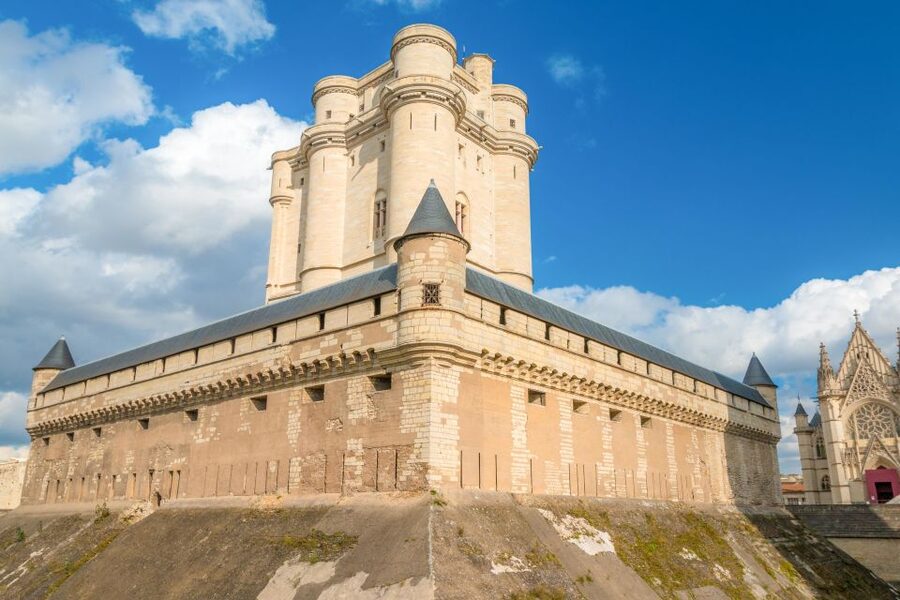
Paris is famous for art, beauty, and royal splendor. Château de Vincennes is more blunt than that, in the best way. It is a working symbol of the modern French state, built to project authority and control the capital. The setting in the eastern suburbs (Vincennes) also changes the mood fast, so the visit feels like a chapter you would not get by staying in central Paris.
What makes it interesting is the timeline you walk through. You start with the 14th-century idea of monarchy flexing its power, then move into later roles: imprisonment, military transformation, war damage, and restoration. By the time you’re inside the keep and rooms tied to historic prisoners, you understand this place as an engine of state power, not just a pretty shell.
I also like that it’s not a one-note stop. The fortress worked as a royal stronghold until Louis XIV chose Versailles in 1682. Later it functioned as a prison from the 16th up to the 19th century, then pivoted again under Napoleon I into barracks and an arsenal. That gives you real “how France worked” context, not just facts printed on a wall.
Getting there, meeting point, and how to time the French guided tour
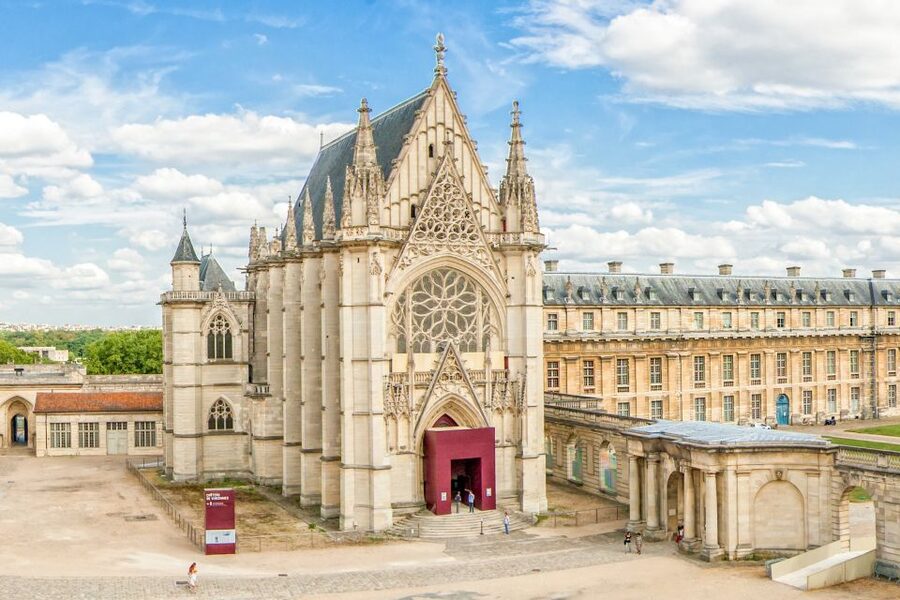
You’ll start at the Château of Vincennes, Avenue de Paris, 94300 Vincennes, France. A key practical point: the experience offers a guided tour in French every day at 2:15 PM and 3 PM, and it says no reservation is required for that tour. That matters because you can build a day around it without playing booking games.
Also note the small group size. Limited to 10 participants, it stays manageable. In practice, that means questions are more likely to happen during the French tour, and the group tends to move at a human pace instead of a stampede.
Finally, the ticket validity is long, listed as 365 days. That’s useful if your plans are flexible. Just keep in mind you still need to check availability to see starting times, since guided tours run at specific times.
Arrival at Vincennes and the 14th-century message of power
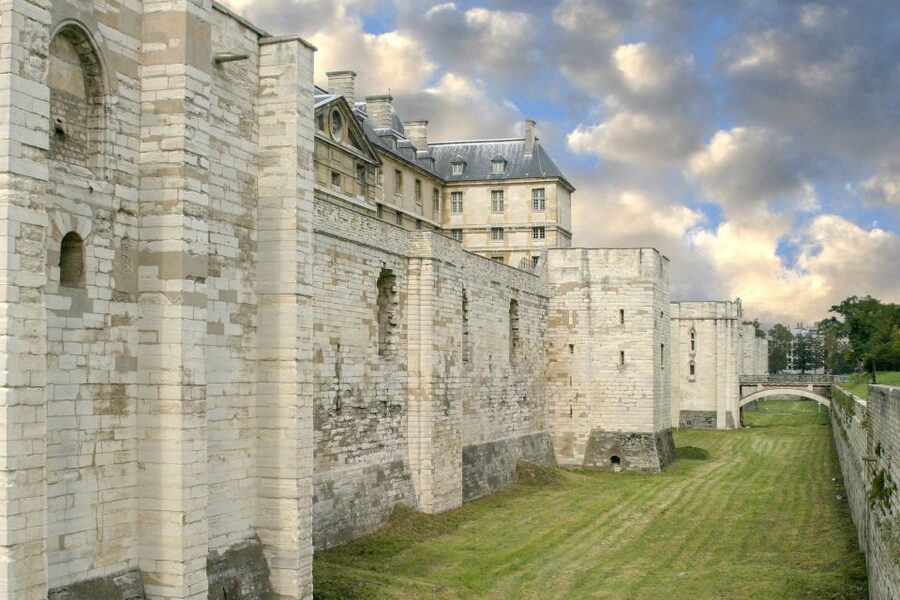
When you arrive at the château, the vibe is instantly fortress-like. This isn’t a palace that wants to impress you with gardens. It’s a structure meant to protect, guard, and signal authority. Built in the 14th-century to affirm the power of the monarchy, the fortress was meant to guard Paris and protect kings against uprisings.
As you orient yourself, I recommend you take a few minutes to look at the overall shape before you start moving room to room. That helps you understand why the later uses make sense. Prison architecture, military function, and defensive design all come from the same core idea: control the space.
This is where the “contemporary France” framing clicks. You’re watching a state story play out across changing governments and eras, while the walls keep doing what they were built to do: hold ground.
Inside the château: self-guided exploring with a visitors guide and AR
You get entrance, a self-guided route, and a visitors guide in several languages. That combo is underrated value because it lets you do the French guided part, then switch to your own pace for the rooms that grab you. If you prefer reading slowly and looking closely, self-guided time is where you’ll feel most comfortable.
One standout included feature is an augmented reality terminal in Charles V’s study. Even if you skip the AR details, it’s a good marker that this stop is not stuck in “just walls and plaques” mode. The AR element is there to help you connect to what you’re looking at, and it gives you something modern to interact with inside a medieval setting.
Practical tip: treat the guide like a map, not a novel. Pick one or two areas you care about most, then use the guide to “fill in” around them while you walk.
The 52-meter keep climb: what it really gives you
If you only do one part here, make it the keep climb to the 52-meter tower. The information says it’s the tallest fortified tower of its kind in Europe, and you feel that scale in your legs. But the reason it’s worth the effort is not bragging rights. It changes your understanding of the whole site.
From the stairs and upper levels, you can read the fortress as a defensive machine. The geometry matters. The sightlines matter. And it becomes easier to imagine why kings, armies, and later prisoners were all connected to this one vertical strategy: control, visibility, and security.
If stairs are an issue for you, be honest about your comfort level before you commit. The keep is a signature experience, but it is still a climb. I’d plan to visit it earlier in your visit so you’re not rushing or exhausted later.
Famous inmates and key rooms: Fouquet, Sade, Mirabeau, and Henry V
This is the part that turns the château from “interesting” into genuinely memorable. The visit includes rooms where notable figures were held, including Fouquet, the Marquis de Sade, and Mirabeau. You also see the place where King Henry V died.
Now, I’ll keep expectations grounded. This is not a thrill ride. It’s a historical site, and the tone is serious where imprisonment is concerned. But that seriousness is exactly why the information hits. You’re standing in rooms that were used for real confinement over long stretches of time, from the 16th up to the 19th century.
To make this part land, I suggest focusing on how the space functioned. Look at access points, the arrangement of rooms, and the overall security logic. Even without a deep background, the building teaches you what it was designed to do.
Also, if the names above mean something to you, you’ll feel a little like you’re connecting the dots between literature, political power, and punishment. If you don’t know them well, you can still use the rooms as a “state power in practice” lesson.
Napoleon to the 19th century: barracks, arsenal, and defending Paris
The château does not just sit in a museum-like past. Under Napoleon I, it was transformed into a barracks and arsenal. Later, during invasions in the 19th century, the fortress protected Paris. That sequence makes the place feel operational, not merely ceremonial.
When you move through areas linked to this military phase, watch for the shift in purpose. Prison logic is one kind of control. Military logic is another. The fortress stays the same, but the “why” changes. That contrast helps you understand the French state as something adaptive, not stuck in one role.
If you like military history or want a broader view of how France organized defense, this is a major payoff. It also makes the restoration story in the next section make sense, since war damage is not surprising for a fortress that kept its relevance across conflicts.
World War II restoration and today’s role with the armed forces
Another reason I like this stop is that it acknowledges disruption. The château suffered extensive damage during the Second World War, and it was restored afterward. That restoration gives you a usable monument today, rather than ruins that stop the story too early.
Today, the château houses the historical services of the three French armed forces. You can feel the “documentation and continuity” mindset in how the site is presented, even if the tone is still fortress serious. It’s a place where history is not just displayed. It is managed.
If you’re the kind of traveler who likes museums that connect the past to present institutions, this part is for you. It turns the visit into an ongoing relationship with history, not a one-day photo stop.
Price and value: is $15 worth it?
At $15 per person, this ticket sits in the “good deal” zone for a major fortress experience near Paris. You’re not just paying for entry. You’re getting access to:
- the guided French tour times at 2:15 PM and 3 PM (no reservation required)
- self-guided routes
- a visitors guide in several languages
- an augmented reality terminal in Charles V’s study
The value is strongest if you use the combination of guided plus self-guided. The French tour helps you get the main storyline. After that, self-guided exploring lets you linger in the rooms that matter to you, especially around the prison history and keep climb.
One more value point: the experience is small group, limited to 10 participants. At $15, that kind of group size can feel unusually personal compared to bigger tours that charge more for less attention.
What to bring and entry rules that can save your day
Bring a passport or ID card. This matters for ticketing, and it is also relevant for free entrance rules.
Free entrance is offered in a few situations:
- Free entrance for visitors under 18 years of age.
- Free entrance for EU citizens under 26 years of age, but you must show photo ID with a picture at the ticketing station first, before going to the monument entrance.
- Free entrance on the first Sunday of January, February, March, November, and December.
- Free entrance during European Heritage Days, the third weekend of September each year.
If you plan to visit on a special free day, arrive with extra time. At minimum, you’ll want buffer for ticketing checks.
Also, you should know the site is closed on January 1, May 1, and December 25.
And for timing: last entry into the castle is 45 minutes before the indicated closing time. That means you should not leave the keep for last if you want an unhurried climb.
Who this experience fits best
I think Château de Vincennes is a great match if you want:
- a serious, state-level view of French history, from monarchy to military use
- a hands-on experience like the keep climb, not just a walk through rooms
- named historical references tied to real spaces, including Fouquet, the Marquis de Sade, Mirabeau, and King Henry V
It also works well if you’re traveling with friends who like different themes. One person can focus on the prison rooms, another on Napoleon’s transformation, and you can all regroup for the keep and Charles V’s study AR.
If you only want light, surface-level sightseeing with minimal walking, you might find the keep climb and the fortress scale a little intense. The visit is rewarding, but it asks you to move and read.
Should you book Château de Vincennes?
Yes, I’d book it if you want a meaningful break from the usual Paris checklist. For the price, you get a full fortress experience with a 52-meter keep, serious history, and included self-guided tools like the visitors guide and Charles V’s study AR terminal.
Skip it only if you strongly prefer guided tours in English or you know you will struggle with stair-heavy areas like the keep. Also, if your schedule can’t flex around the 2:15 PM or 3 PM French tour times, you’ll still be able to self-guide, but the “story transfer” part will depend more on your own reading and exploration.
If you’re curious about how France projected power, punished dissent, defended the capital, and restored what war broke, Château de Vincennes is a smart, value-packed choice near Paris.
Tickets, compared.

Versailles Palace and Gardens Full Access Ticket
Read our review →
Eiffel Tower Entry Ticket with Optional Summit Access
Read our review →
Moulin Rouge Cabaret Show Ticket with Champagne
Read our review →
Montparnasse Tower Observation Deck Entry Ticket
Read our review →