
Reviewed · CITY TOURS
Paris City Center Free Walking Tour (Tip-Based)
Paris can feel like a blur, unless someone slows you down. This tip-based English walking tour links the city’s big landmarks with the stories you actually remember. I like the straightforward, mostly-exterior route, and I love how the guide keeps the focus on the French Revolution and major figures. The main thing to know up front: you do not go inside Notre-Dame or the Louvre on this walk.
You also get a format that works well for first-time planning. You start at the busy heart of the Seine, then work your way across historic bridges and royal-era sites, ending near the Tuileries. In the real world, that means you can connect it to the rest of your day without committing to timed museum tickets.
One practical caution: it is still a walking tour through central Paris, so plan for standing around at stops and use the restroom before you start if you want an easier morning.
In This Review
- Key highlights worth your attention
- Price, tips, and why this tour can be a bargain
- Meeting point and where you end: plan your day around it
- The route: from Île de la Cité to the Tuileries viewpoint
- Stop 1, Île de la Cité: where Paris begins (and why it matters)
- Stop 2, Notre-Dame surroundings: medieval power without interior time
- Stop 3, Fontaine Saint-Michel: built during a big Paris rebuild
- Stop 4, Pont Saint-Michel: a bridge you can read like a page
- Stop 5, Place Dauphine: Henri IV era charm and an easy lunch segue
- Stop 6, Equestrian statue of Henri IV: why the king is still everywhere
- Stop 7, Pont Neuf: the oldest bridge plus the weird local stories
- Stop 8, Louvre area viewpoint: Mona Lisa fame explained without entering
- Stop 9, Arc de Triomphe du Carrousel: Napoleon’s signature move
- Stop 10, Jardin des Tuileries: royal gardens and sculpted pauses
- Stop 11, Eiffel Tower viewpoint: the finish that feels like a reward
- Pacing, group size, and what to do with your feet
- What makes the guides hit different: stories, humor, and clear English
- Who should book this Paris city center tip-based walk
- Should you book this Paris City Center tip-based tour?
- FAQ
- Where is the tour meeting point?
- Where does the tour end?
- How long does the walk take and how big is the group?
- Is the tour offered in English?
- Do we enter Notre-Dame and the Louvre?
- How do tips work for this tip-based tour?
- Are service animals allowed?
- What happens if the weather is bad or I need to cancel?
Key highlights worth your attention
- French Revolution and Napoleon focus, with names like Napoleon, Francis I, and Henri IV woven into the walk.
- No interior museum time for Notre-Dame or the Louvre, so it is ideal when you want the big pictures fast.
- WW2 details at Pont Saint-Michel, including bullet holes, plus the story of why Paris was spared.
- A microphone-led experience, so the guide is easier to hear even in crowded areas.
- Quirky Paris stories, including odd local legends like the tooth pullers tied to Pont Neuf.
- A classic finish near the Eiffel Tower viewpoint, with a clear look back across the Seine.
Price, tips, and why this tour can be a bargain
On paper, the price looks tiny, but the real concept is tip-based. Your booking price is shown as about $3.62 per group (up to 9), and the “free” part is that you are paying for a guide who delivers a guided narrative, not for access fees. Most of the stops are outside, and you are not entering the big-ticket sites, so you avoid the cost and long lines that can eat half a day.
That said, the money model matters. Tips are accepted only via credit/debit cards and electronic payments, and VAT is added to contributions. If you are the type who prefers cash-only, adjust your plan before you meet at Fontaine Saint-Michel.
Value check I like: if you are in Paris for a short stay, a solid 2 hours on foot that helps you understand what you are looking at can save you time later. Instead of reading histories while standing in the cold, you get the big connections laid out while you are actually seeing the places.
Meeting point and where you end: plan your day around it
This tour meets at Fontaine Saint-Michel, Pl. Saint-Michel, 75005 Paris. It ends in the Tuileries Garden, 75001 Paris. That “start on the Left Bank, end near the Louvre and Tuileries” layout is useful because it lands you right where lots of next-step plans begin.
Also, the tour is offered in English and it is designed for most people to participate. Group size is capped at 50, so you get a lively pace but still small enough that you should be able to see the guide clearly, especially if the group is organized well (and many guides use a microphone, which helps a lot in busy areas).
More Walking Tours in Paris
- Paris Top Sights Half Day Walking Tour with a Fun Guide
★ 5.0 · 2,893 reviews - Montmartre Hidden Gems and Scenic Highlights Walking Tour
★ 5.0 · 2,684 reviews - Montmartre Hill French Gourmet Food and Wine Tasting Walking Tour
★ 5.0 · 2,588 reviews
The route: from Île de la Cité to the Tuileries viewpoint
The walking route is built like a history timeline you can physically move through. You start on the island that became the “heart” of Paris, then step across the bridges that shaped the city’s flow. After that, you move through royal-era squares and Henri IV monuments, then land at the famous cultural stretch near the Louvre and Tuileries, with the Eiffel Tower view as the closing beat.
You should expect a steady rhythm: short explanations at each stop, photo moments, and then quick movement to the next landmark. The best way to enjoy this is to treat it like a guided route-quiz: listen for the names, picture what the guide describes, then look up when you arrive at the actual place.
Stop 1, Île de la Cité: where Paris begins (and why it matters)
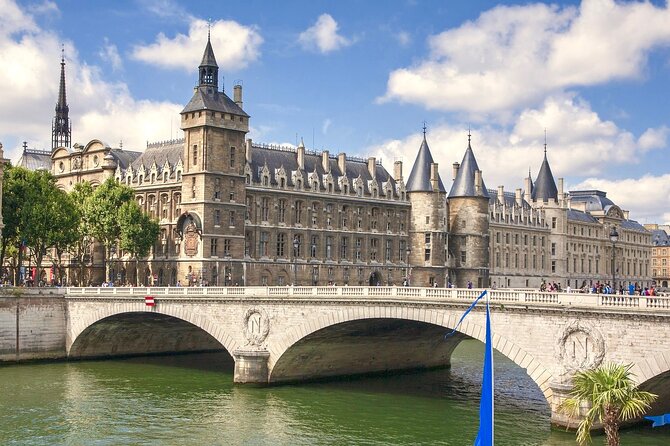
You kick off on Île de la Cité, the island tied to early Parisian settlement. The story starts with the Parisii tribe establishing temples there more than 2,000 years ago, and then shifting into the Roman era.
I like this opening because it gives context fast. When you start on the island, the rest of the Seine crossing themes make sense. You are not just ticking off sights. You are learning how Paris grew where it did, and why so many key events and institutions clustered here.
Expect a good chunk of the group to orient themselves at the start. It is the kind of first stop that helps the rest of the tour feel connected instead of random.
Stop 2, Notre-Dame surroundings: medieval power without interior time
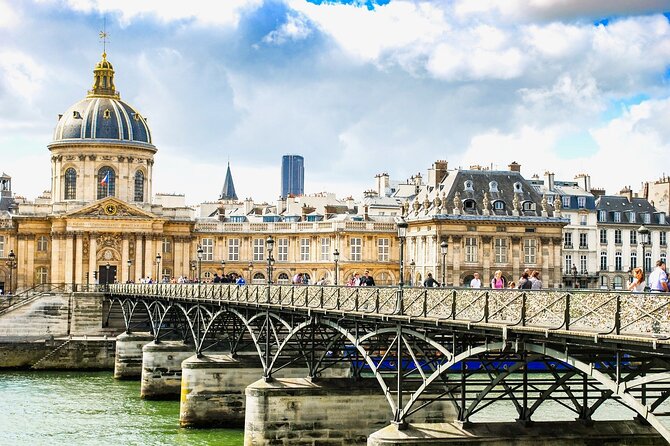
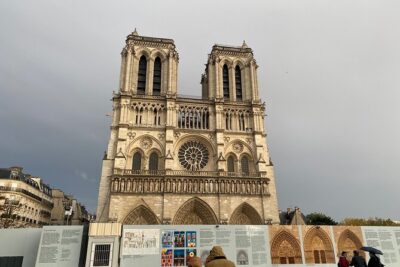
Next up is Cathedrale Notre-Dame de Paris. You get the timeline of the cathedral’s construction starting in 1163, then the major modern chapter with the 2019 fire.
You do not enter the cathedral on this tour. That is the tradeoff, but it is also why the schedule stays tight. If you want the stained glass and the interior details, you would plan a separate visit. For the walking tour purpose, the outside view plus the historical framing is the point.
This is also where the guide typically brings in major turning points like the French Revolution and Napoleon’s coronation. That blend works well, because Notre-Dame is one of those sites where different centuries feel stacked on top of each other.
More France at boulevard pace:

Stop 3, Fontaine Saint-Michel: built during a big Paris rebuild
Then you shift to Fontaine Saint-Michel, tied to the grand reconstruction of Paris. This stop is shorter, but it helps you see that Paris is not a single “old city.” It is old layers plus planned redesign.
Practical tip: keep an eye on your guide’s directions here. Fontaine Saint-Michel is a busy area, and the pace can feel quicker than you expect once you move on.
Stop 4, Pont Saint-Michel: a bridge you can read like a page
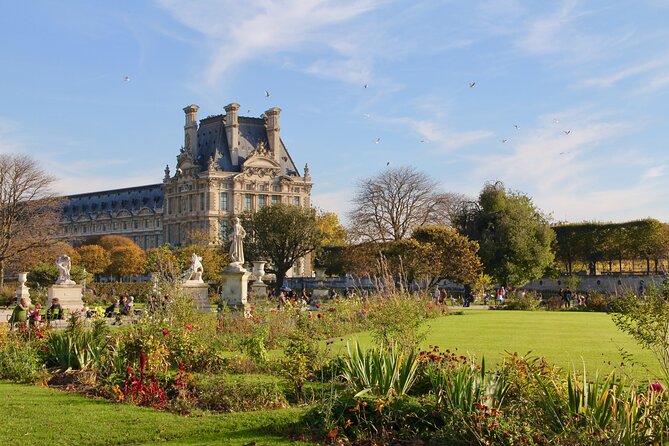
At Pont Saint-Michel, you look for the WW2 details, including bullet holes. The guide also explains why Paris was not destroyed during the war.
This is one of the stops that makes the walk feel real. It is the kind of story that turns a simple bridge photo into something heavier and more specific. It also reminds you that landmarks are not just “pretty backdrops.” They have survived events that shaped the modern city.
Stop 5, Place Dauphine: Henri IV era charm and an easy lunch segue
You arrive at Place Dauphine, known for its restaurants and its calmer square vibe. It is described as one of the first projects built by Henri IV.
This stop is a smart breathing point. It is also a natural place to imagine your next move, because the square gives you an instant lunch option. Even if you do not eat right away, it is a good mental reset after the heavier historical stops.
Stop 6, Equestrian statue of Henri IV: why the king is still everywhere
Next you see the Statue équestre d’Henri IV, with views over the Seine. You learn about Henri IV’s short but meaningful reign.
I like this stop because it ties together people and place. It is easy to look at statues and move on. Here, you get enough narrative to understand why the city chose to memorialize him there, and what his rule meant in broader terms.
Stop 7, Pont Neuf: the oldest bridge plus the weird local stories
You continue to Pont Neuf, called the oldest bridge in Paris and packed with stories. The guide highlights Henry IV, the bridge finishing in 1607, and quirky local lore like the tooth pullers of Paris.
This is another “you learn, then you look” moment. When someone explains the small human details tied to a bridge, it stops feeling like generic Paris scenery and starts feeling like a lived-in city.
Stop 8, Louvre area viewpoint: Mona Lisa fame explained without entering
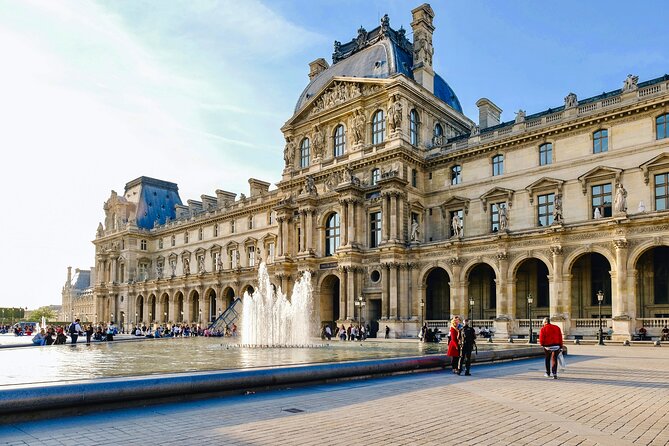
Then you reach the Louvre Museum area, but again, you do not go inside. You get the real story behind why the Mona Lisa is so famous, plus context connecting Leonardo da Vinci to the building’s legacy.
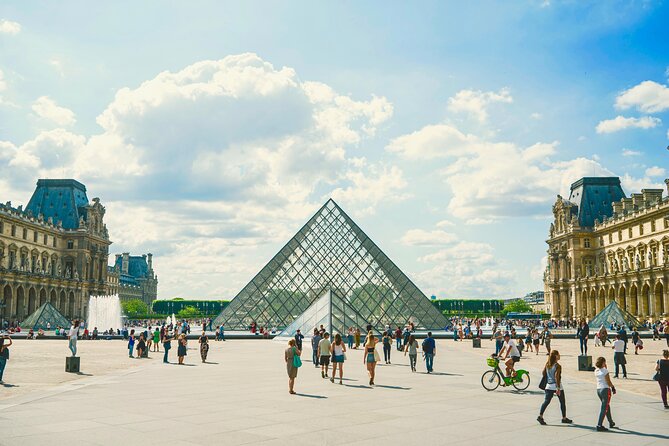
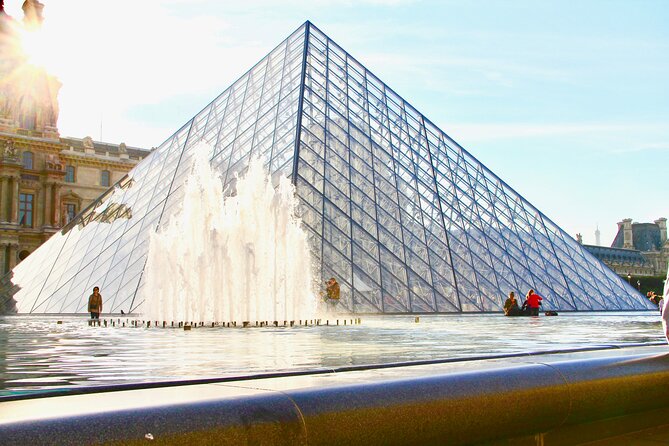
You also hear about Francis I, the king tied to building the foundations of the Louvre as a fortress and a palace. And you get views of the glass pyramid, with the guide pointing out its role and the “mysteries” people associate with it.
The “no entry” approach is ideal if:
- you want the big skyline views without losing time to security lines
- you plan to visit the museum later on your own schedule
The downside is obvious, but worth repeating: you are not touring galleries. You are getting orientation and story anchors.
Stop 9, Arc de Triomphe du Carrousel: Napoleon’s signature move
At Arc de Triomphe du Carrousel, you learn how it connects to Napoleon and his ascent as master of Europe.
Even if you are not a constant-arch fan, this stop is helpful because it keeps the history arc moving. The tour does not just hang out in medieval Paris. It travels forward to the Napoleonic era and beyond.
Stop 10, Jardin des Tuileries: royal gardens and sculpted pauses
The tour passes through Jardin des Tuileries, described as a shift from tile factory roots to royal gardens. You also get mention of statues, sculptures, and fountains.
This is a good “walk slowdown” area. Expect moments where the group naturally bunches for photos. It is also a place where you can rehydrate and reset your feet a bit.
Stop 11, Eiffel Tower viewpoint: the finish that feels like a reward
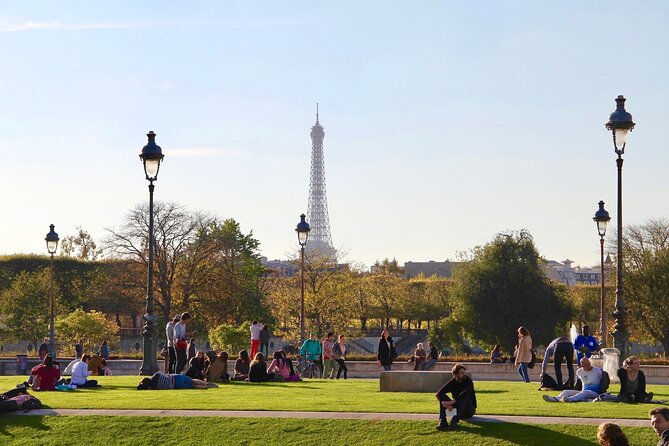
Finally, you end near a viewpoint of the Eiffel Tower from the Tuileries area. The guide explains how Gustave Eiffel pulled off the construction in 1889.
As a finish, it works because it gives you a big Paris payoff. You are not ending at a random corner. You end where you can easily extend the day with riverside wandering, museum planning, or dinner nearby.
Pacing, group size, and what to do with your feet
Most of the positive energy here comes from how the tour is delivered, not just where it goes. Many guides use a microphone and amplifier so you can hear in busier zones. That matters, because central Paris can drown out a normal voice.
Pace wise, you should plan for:
- a lot of standing at stops
- a steady walking rhythm over a couple hours
- limited “drop out and wander” time, since the narrative depends on staying together
One practical heads-up from the way this tour tends to run: if you need a restroom, plan ahead. It can be hard to find a smooth break mid-tour, so I recommend using facilities before you start, then treating the final area near the Louvre and Tuileries as your easier “wrap-up” moment.
What makes the guides hit different: stories, humor, and clear English
The big theme across the strongest experiences is storytelling done with energy. Guides mentioned by name include Ezra, Alberto, Sanna, Bruce, Kiara, and Michael. People consistently highlight that the guide stays friendly, uses humor, and answers questions rather than delivering a monologue and cutting everyone loose.
Another key point is delivery quality. Multiple guides are described as speaking clear English and using tech like a mic so the whole group can hear. If you have ever been stuck at the back of a group walk where you miss half the narration, this is the type of tour design that tries to fix that.
If you care about the French Revolution and Napoleon, this tour is especially well suited because those themes show up at major landmark moments rather than as a separate lecture. You learn the names, then you look at the place that connects to the story.
Who should book this Paris city center tip-based walk
This works best if you:
- want a first-day orientation to central Paris
- prefer walking with history stories that connect landmark to landmark
- want to see the big famous sights without buying interior tickets
- enjoy a guide who keeps it human, funny, and question-friendly
It might not be your best fit if you:
- came specifically for interior access inside Notre-Dame or the Louvre
- hate standing still for explanations
- need lots of scheduled breaks
- expect to tip in cash (tips are card and electronic payments only)
Also, because the route ends near the Tuileries, it fits nicely if you want to keep the day open afterward for the Louvre area, a cafe stop, or a Seine-side stroll.
Should you book this Paris City Center tip-based tour?
I think it is a smart choice for most people arriving in Paris for the first time. For a tip-based walk that stays in the heart of the city, you get a strong history backbone, clear landmarks, and a finish near the Tuileries that makes the rest of your day easier to plan.
Book it if you want to:
- get your bearings fast
- understand why these places matter, especially through the Revolution and Napoleon lens
- enjoy an energetic guide with humor and a mic
Skip it or plan a separate museum visit if you want interior time inside the cathedral or the Louvre. This tour is built for outside views and the stories behind them, not for full ticketed sightseeing.
FAQ
Where is the tour meeting point?
The tour starts at Fontaine Saint-Michel, Pl. Saint-Michel, 75005 Paris, France.
Where does the tour end?
The tour ends at Tuileries Garden, 75001 Paris, France.
How long does the walk take and how big is the group?
It runs for about 2 hours 15 minutes and there is a maximum of 50 people in the group.
Is the tour offered in English?
Yes, the tour is offered in English.
Do we enter Notre-Dame and the Louvre?
No. The tour does not enter Notre-Dame de Paris or the Louvre Museum.
How do tips work for this tip-based tour?
Tips are accepted only via credit/debit cards and electronic payments, and VAT is added to contributions.
Are service animals allowed?
Yes, service animals are allowed.
What happens if the weather is bad or I need to cancel?
The experience requires good weather. If it is canceled due to poor weather, you are offered a different date or a full refund. You can cancel up to 24 hours in advance for a full refund.
Latest Paris entries, notes attached






City Tours, compared.

Eiffel Tower Summit Option with Seine River Cruise and City Tour
Read our review →
Paris in a Day: Louvre or Orsay, Eiffel Tower, City Walk & Cruise
Read our review →
Lyon City Hop-on Hop-off Sightseeing Bus Tour
Read our review →
Eiffel Tower Hosted Tour, Seine Cruise and City Tour
Read our review →
Golf Cart in Paris – Private Guided City Tour – Pickup Included
Read our review →
City and River Seine Tour on an Amphibious Bus
Read our review →This tour also appears in