

Reviewed · SAINTE-CHAPELLE & CONCIERGERIE TICKETS
Paris: Conciergerie Ticket with Histopad
A prison with a royal past is hard to beat. The Conciergerie is one of Paris’s most powerful Revolution-era spaces, and the HistoPad adds a useful time-travel layer in the rooms that no longer look the way they once did.
I especially like how you can see both the grim reality of confinement and the physical scale of medieval grandeur, all in one ticket. You also get an audio guide with multiple languages, which makes the site easier to follow than you might expect for a self-guided visit. One thing to consider is that the visit is self-guided, so you should be ready to manage your own route and pacing.
In This Review
- Key Highlights Worth Your Time
- Conciergerie in One Minute: From Palace to Prison
- Where You Start at 2 Boulevard du Palais, 75001 Paris
- The Big Picture You’re Walking Through
- Entering the Prison Rooms and Cells
- The Chapel Connection to Marie Antoinette
- How the HistoPad Works (And Why It Matters)
- The Tombs of Revolution Heroes
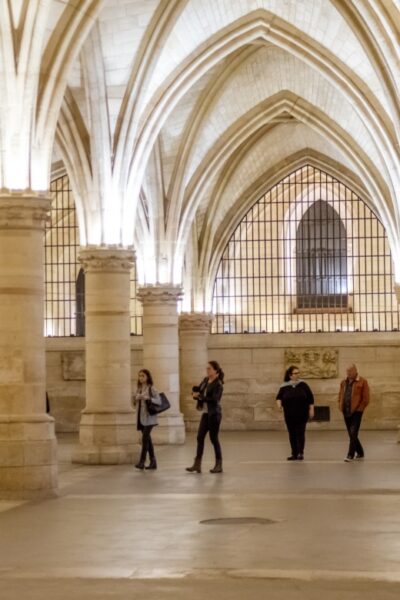
- Salle des Gens d’Armes: The Largest Medieval Hall in Europe
- Timing Your Visit: Last Entrance and Closures
- Audio Guide Languages and What You’ll Hear
- Ticket Price and Value: Is $15 a Good Deal?
- What’s Not Included: Sainte-Chapelle
- Who This Experience Fits Best
- Practical Tips So You Don’t Lose Time
- Should You Book This Conciergerie Ticket With HistoPad?
- FAQ
- How long is the ticket valid?
- Where do I meet for the experience?
- Is this a guided tour or self-guided?
- What is included with the ticket?
- What languages are available for the audio guide?
- What languages are available for the HistoPad 3D reproduction?
- Is Sainte-Chapelle included?
- What should I bring to the site?
- Are there restrictions on bags?
- What are the key closing and access timing rules?
Key Highlights Worth Your Time
- HistoPad 3D recreation brings Marie-Antoinette’s cell back to life, including places that are gone today
- Revolution-era storytelling ties the building’s transformation from royal palace to prison to the guillotine era
- The chapel space connected to Marie Antoinette gives you a focused, emotional stop that is easy to remember
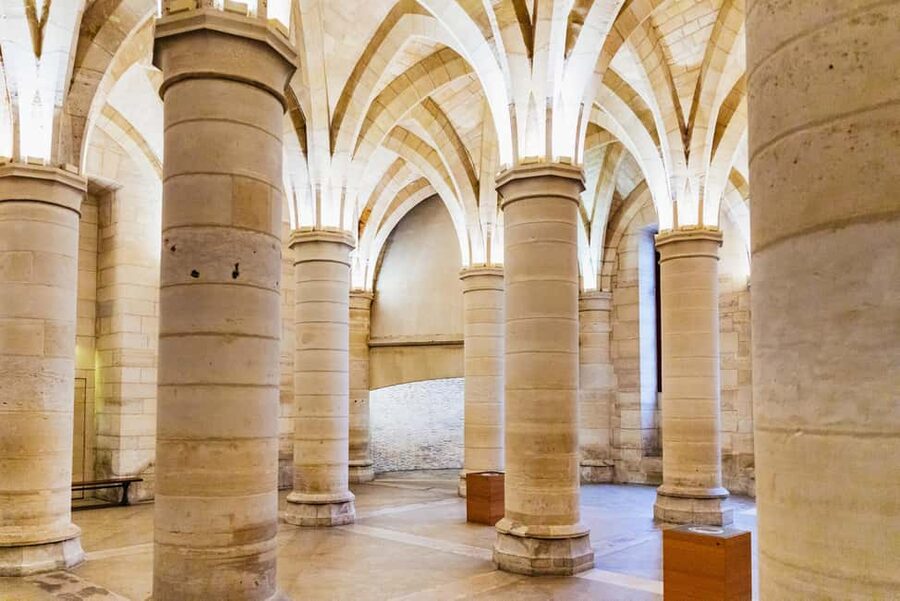
- Salle des Gens d’Armes is the largest remaining medieval hall in Europe, and it helps the building feel real
- Tombs of Revolution heroes add a respectful counterpoint to the cells and interrogation history
Conciergerie in One Minute: From Palace to Prison
The Conciergerie sits in a place where you can almost feel time stacking on itself. Built as a royal palace in the 14th century, it later became a prison when the royal family moved out. During the French Revolution, it was known as the antechamber to the guillotine, which is a brutal detail, but it also explains why the building’s layout matters so much.
What I like best is that this is not just “dark history for dark history’s sake.” You get a real sense of how power and fear operated in a physical setting. You also get enough structure to keep you moving, because the building’s major spaces naturally pull you from royal rooms into imprisonment, then into memorial spaces tied to the Revolution.
Where You Start at 2 Boulevard du Palais, 75001 Paris
Your starting point is the Conciergerie itself, at 2 Boulevard du Palais, 75001 Paris. There is no separate museum annex you need to find. That sounds basic, but it helps when you want a smooth first hour in Paris.
Plan to arrive with an ID ready. You’re asked to bring a passport or ID card. Also note what you cannot bring: luggage or large bags are not allowed. If you’re traveling light, you’ll find it less stressful to move through tight corridors and small rooms.
Because this is a self-guided visit, your “meeting point” is basically your first chance to set a route. I recommend stepping inside, scanning the main areas, then committing to an order. If you don’t, the site can feel like you’re zig-zagging between spaces instead of letting the story flow.
More stained glass and old cells:
- Paris: Sainte-Chapelle, Conciergerie, Notre Dame Guided Tour
★ 4.8 · 727 reviews - Paris: Notre Dame Outdoor Tour with Sainte-Chapelle / Crypt.
★ 4.7 · 723 reviews - Notre Dame Outdoor Walking Tour and Entrance to Sainte Chapelle
★ 5.0 · 625 reviews
The Big Picture You’re Walking Through

This is a 1-day ticket, and it’s built for your pace. You’re free to explore, and you’ll use the provided audio guide as you go. That matters because the Conciergerie is not a site where every corner is obvious without context.
Here’s the story thread you’ll follow in your own rhythm:
- The building’s royal origins set a contrast for what comes next
- The prison era turns that contrast into something darker and more personal
- Revolution-era memory shows up through memorial spaces, tombs, and the chapel connected to Marie Antoinette
- A major medieval hall anchors the scale of the place, so it doesn’t feel like a set of cramped cells only
If you like history you can see with your eyes, this layout does the work for you. You’re not just reading labels, you’re moving through spaces that shaped real lives.
Entering the Prison Rooms and Cells
The Conciergerie’s cells are the core experience. When you step into confinement rooms, you quickly understand why this place earned its grim reputation. The experience is designed around seeing spaces connected to criminals held there, and the building’s design helps you visualize how detainees were processed.
I like how the experience stays grounded. Instead of only presenting dramatic episodes, it makes you look at the reality of incarceration, including the narrowness and controlled movement. It gives the Revolution period a human scale, not just a textbook one.
A practical note for your visit: because you’re self-guided, it helps to slow down at the cell areas and let the audio guide do its job. If you rush from door to door, you’ll miss the way the site’s layout explains the system.
The Chapel Connection to Marie Antoinette
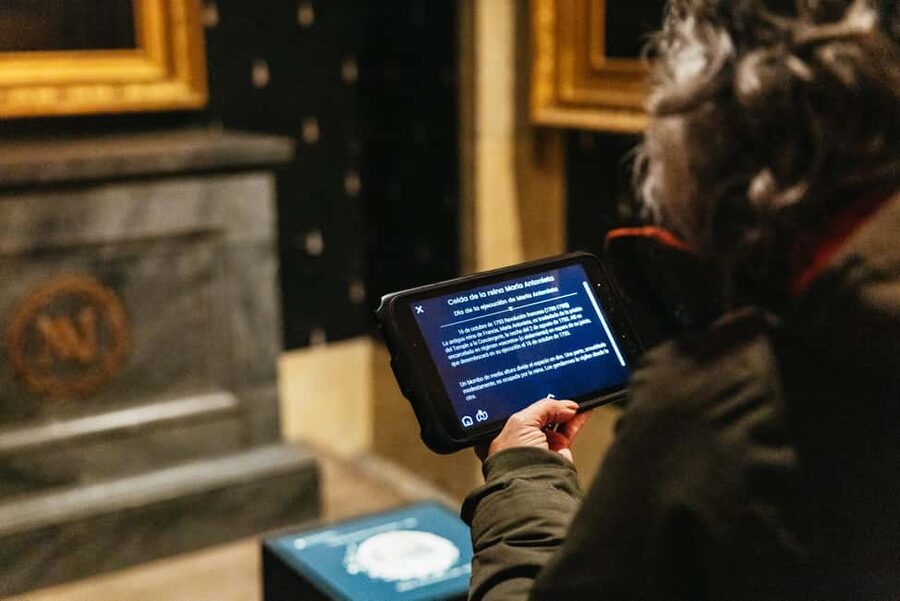
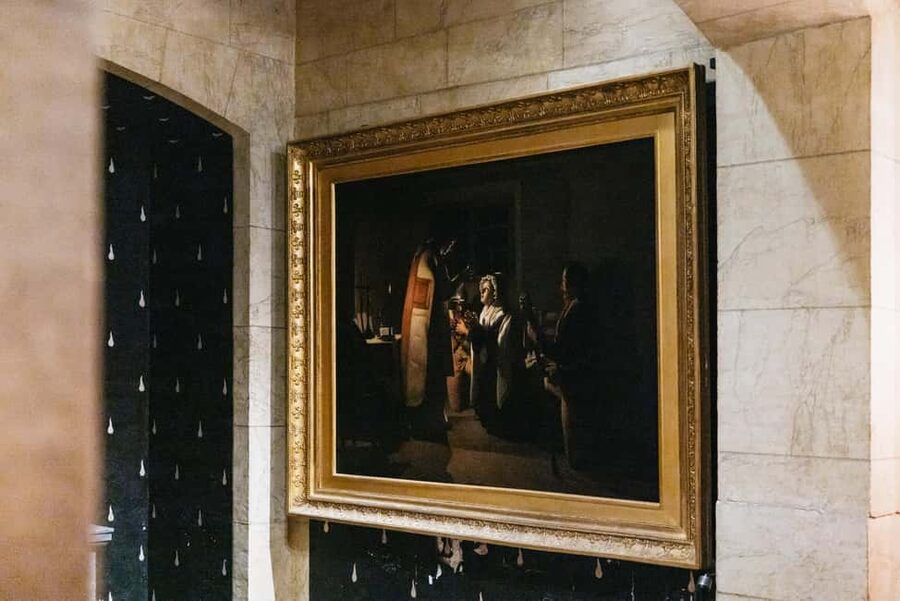
One of the most emotionally charged stops is the chapel that was once a prison cell where Marie Antoinette was held. Even if you already know her story, seeing this specific space is different from reading about it. The building’s religious architecture mixed with imprisonment creates an uncomfortable tension, and that’s exactly what makes the stop memorable.
This is also where the HistoPad can add extra value to your visit. The data provided says the HistoPad is a 3D reproduction tied to Marie-Antoinette’s cell. That means you’re not just looking at what remains, you’re also getting a way to picture how the cell may have appeared in its former state.
If you’re the type who loves “what used to be here” context, don’t skip this part. It’s the kind of stop that makes the Conciergerie feel connected to a single person rather than only a political era.
More Things to Do in Paris



How the HistoPad Works (And Why It Matters)
The HistoPad is an augmented reality tool with a 3D reproduction of Marie-Antoinette’s cell. It’s designed to help you go back in time, especially in parts of the building where today’s layout is different from what existed during the prison era. The included info specifically mentions that you can explore medieval rooms and spaces that have now disappeared.
This is the practical value of the HistoPad. Without it, you might stand in a room and think, I get that something was here, but I can’t picture the original form. With the HistoPad, you’re given a visual layer that helps you connect present space to past use.
Language coverage is wide for the HistoPad experience. The included languages listed are: French, English, German, Spanish, Italian, Japanese, and Chinese. That’s helpful if you’re traveling as a mixed-language group, because you can pick what works for everyone.
One more scheduling detail you should plan around: the HistoPad is distributed to visitors until 4:15 PM. If you plan to arrive late in the afternoon, you could miss that extra layer. If you care about the AR component, build your day around getting there in time.
The Tombs of Revolution Heroes
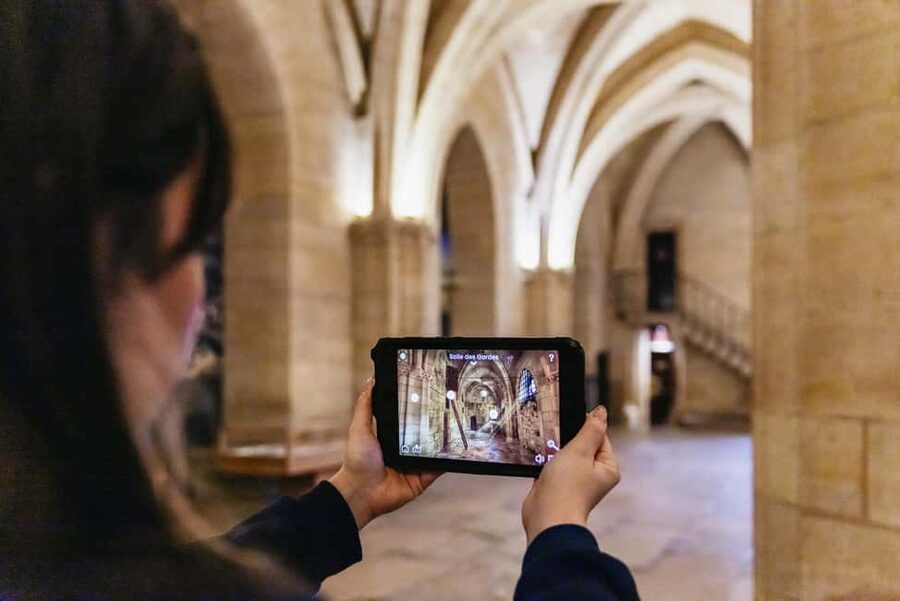
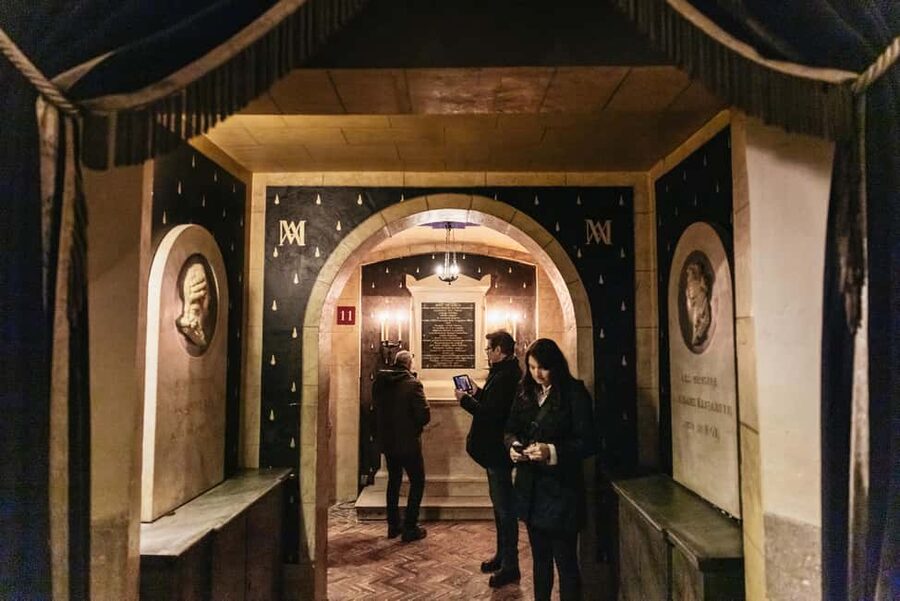
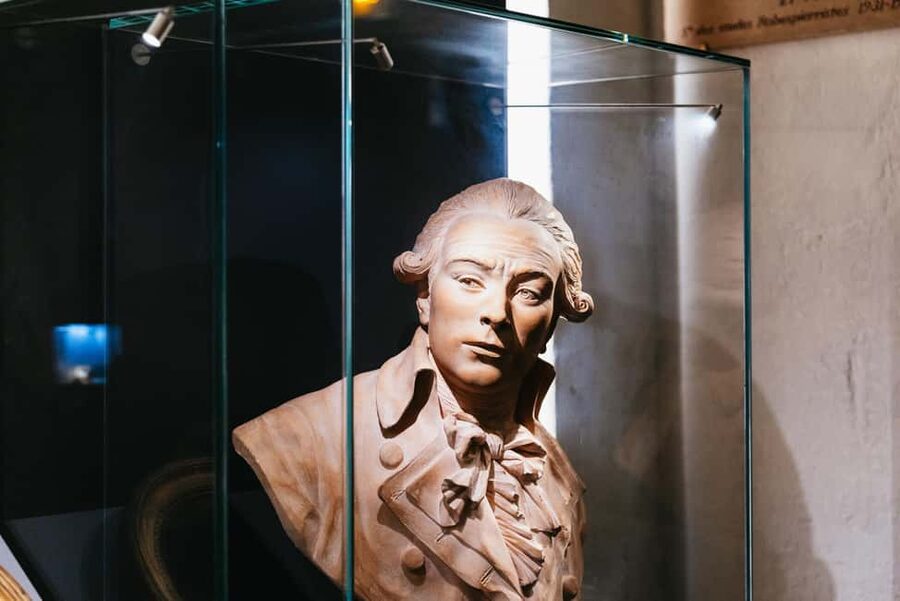
The Conciergerie also includes memorial areas, including tombs of heroes of the French Revolution. This is important because it shifts the emotional tone. After cells and imprisonment, tombs create a different kind of meaning, one tied to legacy and political change.
I like this contrast because it keeps the visit from being one-note. The building can easily feel like only confinement. The memorial pieces remind you that the French Revolution was not only about suffering and death, it was also about power changing hands and people being remembered.
Take a moment here to stand still. Don’t rush through the memorial zone like it’s just another room. You’ll get more out of it if you pause, then return to the prison sections with a better sense of the building’s purpose.
Salle des Gens d’Armes: The Largest Medieval Hall in Europe
If the cells pull you into the story of detention, Salle des Gens d’Armes brings you back to scale. The information provided notes it is the largest remaining medieval hall in Europe, which is not a small brag. It also changes how you read the building.
In a large hall, your body notices the space. You see how ceremonies, gatherings, and movements of people would have looked and sounded. It’s harder for the Conciergerie to feel like a dark hallway system only, because this hall makes it clear the building was also about status and authority.
This is a great stop when you need a visual reset between heavier rooms. Even if you’re not a medieval architecture fan, the sheer size makes the story easier to believe.
Timing Your Visit: Last Entrance and Closures
This is where practical planning matters. The last entrance is 30 minutes before closing time, so don’t assume you can walk in during the last hour and take your time. If you want the most from both the audio guide and the HistoPad, arrive earlier rather than later.
Also note the site closures: the Conciergerie is closed May 1 and December 25. And there are special free-entry times on certain dates, including the first Sunday of January, February, March, November, and December, plus during European Heritage Days (the third weekend of September each year).
If you’re flexible, these are good days to consider. If you’re not, simply choose a normal day and build your plan around the HistoPad distribution cut-off at 4:15 PM.
Audio Guide Languages and What You’ll Hear
The ticket includes an audio guide in many languages. The listed options are: Chinese, English, French, German, Italian, Spanish, Japanese, Korean, and Portuguese.
This kind of language coverage matters more than you might think. In a site like this, good narration helps you understand why you’re seeing a certain room and what to pay attention to. Without narration, you can easily treat the experience as a photo stop. With narration, you’re more likely to notice details like how spaces connect and what each area represents.
Ticket Price and Value: Is $15 a Good Deal?
At $15 per person with entrance included, this can be a strong value for a Paris stop, especially because you’re not only getting access to the site. You’re also getting a self-guided visit plus the HistoPad 3D reproduction experience and audio guide support.
Here’s why the price makes sense in practice:
- You’re paying for a premium historical site that covers multiple major areas in one building
- You’re not forced into a group tour, which can be ideal if you like pacing yourself
- The HistoPad adds an experience layer that can be hard to replicate on your own
The only “value risk” is timing. If you arrive after the HistoPad distribution ends, you could feel like you paid for more than you got. So if HistoPad is a big reason you booked, show up earlier.
What’s Not Included: Sainte-Chapelle
The ticket does not include entrance to Sainte-Chapelle. That matters if you’re planning a cluster of Revolution and royal-era sites in the same day. Sainte-Chapelle is close, but it is still a separate visit. If that chapel is on your must-see list, plan tickets accordingly.
Also, transportation is not included. The Conciergerie is in central Paris, but you’ll need to handle transit on your own.
Who This Experience Fits Best
This is a great match if you:
- Want one strong Revolution-era site without adding multiple tickets
- Like self-guided travel where you can slow down for the stops that hit hardest
- Enjoy AR tools when they help you picture what’s missing today
It may be less ideal if you:
- Want a fully guided, room-by-room scripted tour
- Hate self-navigation and prefer clear guided routes every step of the way
And based on how the experience is set up, I’d suggest bringing a simple mental plan: choose your emotional priorities first (Marie Antoinette cell, cells, memorial tombs), then let the rest of the rooms follow.
Practical Tips So You Don’t Lose Time
A few small things can make a big difference here:
- Bring your ID and keep it handy
- Travel light so you’re not stuck dealing with bag limits
- If HistoPad is on your list, arrive with enough time for distribution up to 4:15 PM
- Remember the last entrance is 30 minutes before closing, so don’t schedule other things right up to the end
- When the route feels confusing in a self-guided site, slow down early and decide your order so you stop backtracking
If you do those basics, the experience feels focused instead of rushed.
Should You Book This Conciergerie Ticket With HistoPad?
I think you should book it if you want a memorable, high-impact Paris history visit that blends access to the prison spaces with a modern visual tool for understanding what has changed. The combination of Conciergerie access, audio guidance, and the HistoPad 3D recreation of Marie-Antoinette’s cell gives you more than just static museum viewing.
Skip it or reconsider if your schedule is tight late in the day, because the HistoPad is distributed until 4:15 PM and the last entrance is 30 minutes before closing. Also reconsider if you strongly prefer a guided itinerary, since this is self-guided and you’ll need to manage your own route.
If you get the timing right, this is one of those Paris tickets that can turn into a lasting mental picture long after you leave.
FAQ
How long is the ticket valid?
The ticket is valid for 1 day. You can check available starting times based on the date you choose.
Where do I meet for the experience?
You should meet at the Conciergerie, 2 Boulevard du Palais, 75001 Paris.
Is this a guided tour or self-guided?
It is a self-guided visit. You’ll have access to the included audio guide.
What is included with the ticket?
The ticket includes an entrance ticket, self-guided visit access, and the HistoPad 3D reproduction of Marie-Antoinette’s cell. An audio guide is also included.
What languages are available for the audio guide?
The audio guide is available in Chinese, English, French, German, Italian, Spanish, Japanese, Korean, and Portuguese.
What languages are available for the HistoPad 3D reproduction?
The HistoPad 3D reproduction is available in French, English, German, Spanish, Italian, Japanese, and Chinese.
Is Sainte-Chapelle included?
No. Entrance to Sainte-Chapelle is not included.
What should I bring to the site?
Bring your passport or ID card.
Are there restrictions on bags?
Yes. Luggage or large bags are not allowed.
What are the key closing and access timing rules?
The Conciergerie is closed May 1 and December 25. The last entrance is 30 minutes before closing time, and HistoPads are distributed to visitors until 4:15 PM.
Latest Paris entries, notes attached






Sainte-Chapelle & Conciergerie Tickets, compared.
Sainte-Chapelle and Conciergerie Combined Tickets
Read our review →
Sainte-Chapelle, Conciergerie, Notre Dame Guided Tour
Read our review →
Notre Dame Outdoor Tour with Sainte-Chapelle / Crypt.
Read our review →
Notre Dame Outdoor Walking Tour and Entrance to Sainte Chapelle
Read our review →
Sainte-Chapelle Entry with Notre Dame Outdoor Tour
Read our review →
Outdoor Notre-Dame walking Tour with Sainte-Chapelle Entry
Read our review →
Sainte-Chapelle and Conciergerie Guided Tour with Ticket in Paris
Read our review →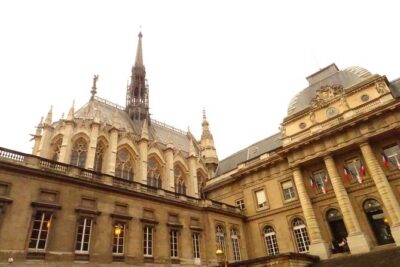
Sainte Chapelle 1h Guided Tour with entrance ticket – Eng / Esp
Read our review →This tour also appears in