
Reviewed · WORKSHOPS
Paris Cooking Class: Learn How to Make Macarons
Paris can make even simple plans feel like a circus.
This macaron class keeps things focused, with a hands-on 3-hour baking lesson that ends with tea or coffee and a box of your own macarons to carry away. It’s run at Le Foodist near the 5th arrondissement, and the class is offered in English, capped at just four people.
I love how the teaching is built around the tricky parts, so you’re not just watching from the sidelines. In particular, I like that you learn the process from meringue shells to piping the filling, with guidance that helps you get past intimidation fast.
One thing to consider: macarons are delicate, and they are also sweet. If you’re planning to check luggage, handle the take-home box carefully, because one past guest flagged packaging stress during travel.
In This Review
- Key highlights you will actually care about
- Entering Le Foodist: the calm start in central Paris
- The 3-hour flow: welcome drink, macaron work, and a proper tea break
- What you will make: shells, buttercream, and the real reason macarons feel tricky
- Making the shells: meringue base you build, not one you guess
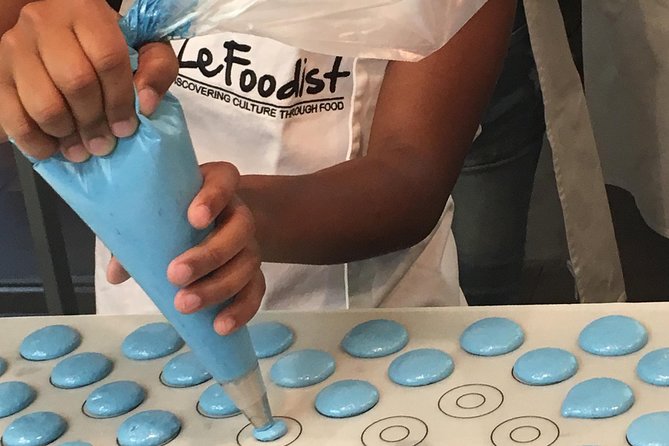
- Piping: learning the movement, not just the recipe
- Buttercream filling: balancing taste and structure
- Instructors you might meet, and why small-group teaching matters
- Tasting and the French macaron angle: why it’s more than sugar
- Price and value: $156 for a method you can repeat
- Who this class is best for (and who might want to think twice)
- A few practical tips before you go
- Should you book this Paris macaron class?
- FAQ
- What time does the macaron class start?
- How long is the experience?
- Where is the meeting point in Paris?
- What group size should I expect?
- Is the class offered in English?
- What’s included in the price?
- Is this class suitable for gluten allergies?
- What is the minimum age, and can children attend alone?
- What is the cancellation policy for a full refund?
Key highlights you will actually care about
- Small group of up to four people means you get real help while you pipe and assemble.
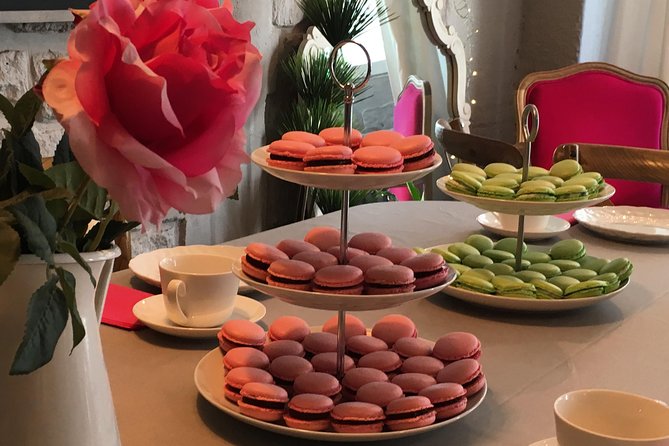
- You make the meringue shells from scratch, including choosing colors for your macarons.
- Buttercream piping practice is part of the core lesson, not an afterthought.
- Welcome drink, then tea or coffee tasting at the end, with your host talking about French macaron culture.
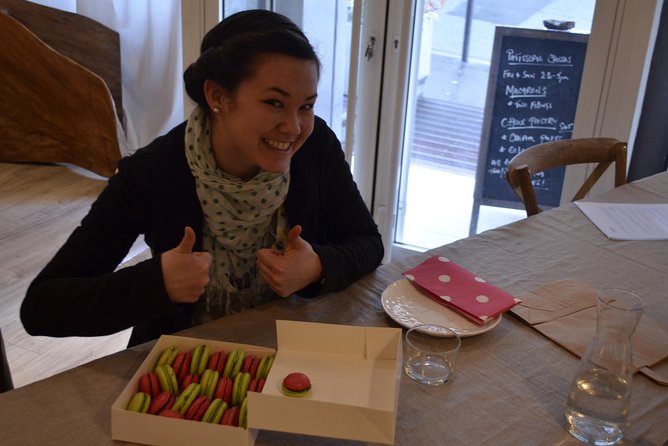
- Take-home box of 20 to 30 macarons, so you leave with more than a “nice try” souvenir.
- Gluten-allergy friendly for people who need that accommodation (as stated for this activity).
Entering Le Foodist: the calm start in central Paris
This class meets at Le Foodist, 59 Rue du Cardinal Lemoine (75005 Paris), starting at 3:00 pm. It’s in central Paris and is listed as near public transportation, which matters because you do not want to sprint across town with damp pastry hands and a deadline.
The location also signals the right vibe. You are not in a giant showroom where everyone waits their turn. Even before you bake, you’ll feel the class is set up for doing, not just looking. Past guests repeatedly mention instructors correcting technique, which is exactly what you want when the goal is macarons that actually rise properly and assemble cleanly.
Finally, the experience uses a mobile ticket, and you’ll confirm details at booking. That’s the kind of small friction-reducer that helps your afternoon feel smooth.
The 3-hour flow: welcome drink, macaron work, and a proper tea break
The day is structured like a baking session should be: short warm-up, focused work, then tasting and wrap-up.
You’ll head to the cookery school in the afternoon and then meet your instructor over a refreshing drink. This matters more than it sounds. In a hands-on class, people arrive at different skill levels. The drink helps everyone settle, and it sets the teacher up to get you started with the right basics before things get complicated.
Then comes the main event. During the class, you follow step-by-step guidance while you learn the delicate workflow:
- making the meringue macaron shells from scratch
- choosing the colors for your shells
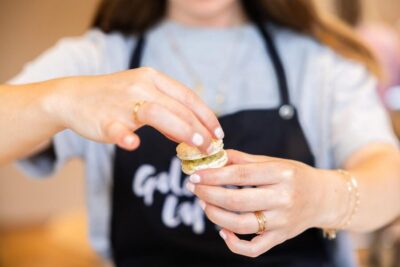
- learning to pipe the batter properly
- assembling macarons with buttercream filling
The session ends with a tasting, plus a bit of context. You’ll sample your macarons with tea or coffee, and your host explains the macaron’s place in French culture and tradition. This is a smart touch. Macarons are easy to treat like a trend food, but they’re also a real piece of French patisserie craft, and the explanation helps you understand why the steps matter.
After about three hours, you leave with your box of macarons, and the activity ends back at the meeting point.
More French technique, taught properly:
- Paris Cooking Class and Lunch with Wine plus Market Visit Option
★ 5.0 · 1,024 reviews - Paris Croissant Small-Group Baking Class with a Chef
★ 5.0 · 910 reviews - Paris: French Croissant Baking Class with a Chef
★ 4.9 · 712 reviews
What you will make: shells, buttercream, and the real reason macarons feel tricky
Let’s be honest. Many people think they’re signing up to make cookies. You’re actually learning a method where timing, texture, and technique are the difference between flat and feet, or between crisp shells and a chewy center.
Here’s what you will practice.
Making the shells: meringue base you build, not one you guess
The class focuses on mastering meringue shells from scratch. That means you are not just spooning batter and hoping it turns out. You get guided through the meringue, then the batter texture, then how you want it to look before piping.
You can also choose the colors of your shells. That’s fun in the moment, but it also gives you a way to personalize the batch while you’re still learning. You’re likely to remember technique more easily when you have a goal like a pink shell or a chocolate-brown shell staring back at you.
Piping: learning the movement, not just the recipe
Piping is where macarons go from intimidating to doable. You learn the mechanics of piping in the class, with instruction that targets hand control and consistency. One of the most common themes in the instructor feedback is that the chefs were patient and helped people who felt unsure.
Even if your first piped rounds do not look perfect, that’s part of the learning. What you’re really building is a repeatable motion and a consistent portion size, so your shells bake more evenly and assemble more cleanly.
Other Paris bookings in the margin notes
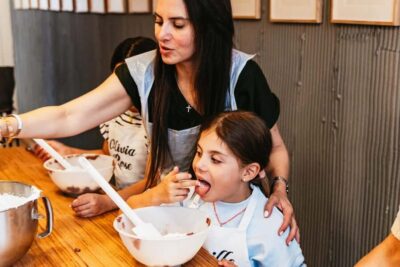
Buttercream filling: balancing taste and structure
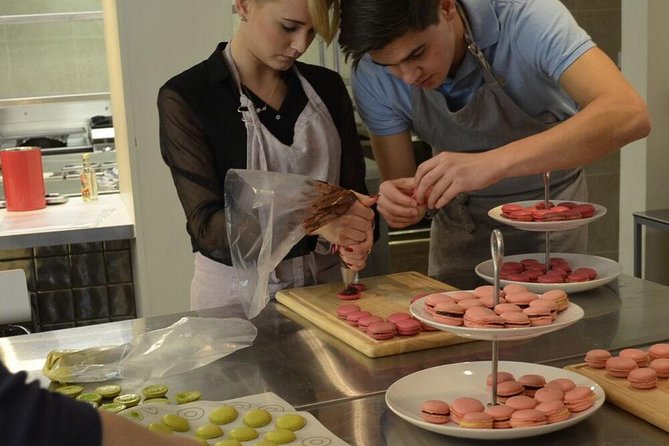
Once the shells are ready, you learn to fill them with buttercream. This step sounds simple, but it affects the final bite. Too little filling and macarons feel dry. Too much and they can slide or look messy.
You also leave with a box of 20 to 30 macarons. So you should plan on packing time for the final assembly outcome and not expecting just one “perfect” cookie. The class is set up for you to take a real batch home.
Instructors you might meet, and why small-group teaching matters
A big reason this class gets such strong marks is the teaching style described across many experiences. People mention instructors who were friendly, funny, and very direct when it came to fixing technique.
You may meet different chefs depending on the session. Names showing up in past classes include Chef Luc, Stephane, Paulo, Stefan (spelled that way in one review), Fanny, Florence, and Ann. The consistent theme is that these instructors adjust to different skill levels and explain each step in plain, usable terms.
What makes this important for you is the macaron learning curve. If you’re doing this at home later, you’ll want to know what to fix first. In a max four-person class, teachers can actually watch your specific piped shapes and your batter behavior, then correct quickly. That’s hard to get in a larger class where you only get a glance once in a while.
One more detail that repeatedly shows up in feedback: the pace feels “social, educational, and delicious.” That sounds like marketing, but in this context it means you get time to chat while things bake or set, not just a nonstop lecture.
Tasting and the French macaron angle: why it’s more than sugar
The tasting is not an afterthought. You finish with tea or coffee and sample what you made, and the host shares the macaron’s role in French culture and tradition.
Why you should care: macarons can feel like fancy sugar shells with a filling, especially if you only see them behind glass at patisseries. The cultural talk helps connect the dots between the fussiness of the method and the respect French pastry shops give to technique. You walk out understanding why people talk about meringue, macaronage (batter consistency), resting, and bake timing like they matter, because they do.
It also makes the class feel less like a hobby workshop and more like an authentic taste of French patisserie culture. You’ll likely remember what you learned when you later see macarons in a shop and think, I know why those steps exist.
Price and value: $156 for a method you can repeat
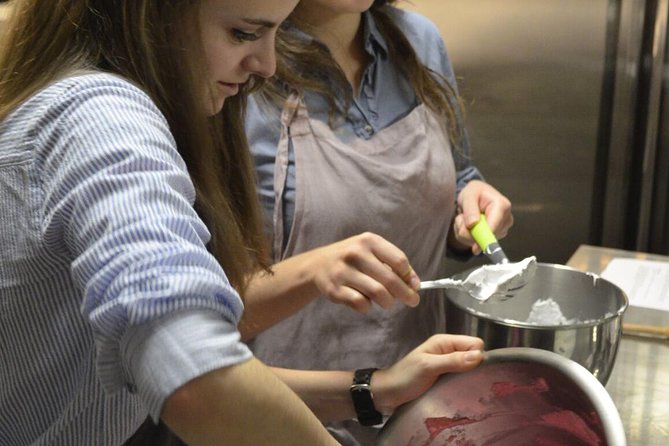
At $156 per person for about three hours, you’re paying for three things that add up fast if you try to DIY later:
- ingredients and equipment used for a real macaron batch
- skilled coaching through the most delicate steps
- a take-home outcome that is meant to be shared (and eaten)
You also get more included than many one-off workshops. The class includes:
- a welcome drink
- required equipment and attire
- coffee or tea
- a take-home box of 20 to 30 macarons
- and an advanced macaron class if you select that option
One practical way to judge value is the take-home quantity. If you’re leaving with 20 to 30 macarons, the class has enough output to feel like you genuinely made something, not just tested one cookie. Past guests also highlight that the results felt successful, even for people who started out nervous about the process.
If you choose the advanced option, you should expect the class to go deeper into subtleties, since that’s explicitly part of the offering when selected. That’s especially worth it if you already bake at home or you want to avoid repeating basic mistakes.
Who this class is best for (and who might want to think twice)
This experience is a great fit if you love pastry and want a structured path into a finicky dessert. It’s also a strong choice if you want a break from pure sightseeing. The class gives you a “do something” activity that still feels French, not touristy for tourist sake.
It also suits people with gluten allergies, as stated for this activity. If you have a gluten issue, it’s worth booking with confidence, but also be mindful to confirm any specifics when you book.
Good candidates:
- people who enjoy hands-on learning
- pastry lovers who want a real technique lesson
- couples or friends who want to spend a calm afternoon together
- families with teens, since the minimum age is 12
Consideration:
- if you dislike sweets, macarons may feel too sweet. One review noted that they ended up very sweet, and macarons are inherently a sugar-forward dessert.
- if you plan to travel with the box in checked luggage, handle the packaging carefully. A past guest raised a concern about the take-home box being flimsy for travel.
A few practical tips before you go
You’ll get required attire and equipment, so you can show up without bringing fancy gear. Still, a few smart habits will help your afternoon go smoothly.
- Plan to eat lightly beforehand. You’ll have a tea or coffee tasting and then you’ll take home macarons.
- Wear comfortable clothes. You’ll be working at a prep station and moving around a bit during piping and assembly.
- If you’re traveling soon after the class, think about how you’ll store the macarons immediately after pickup. The class gives you a box; your job is keeping it safe.
And if you want to maximize learning, ask questions during the step where things feel hardest. Piping is often the moment people get stuck, and instructors are there to guide you through it.
Should you book this Paris macaron class?
If you want a French food experience that is hands-on, focused, and genuinely repeatable later, I’d book it. The combination of small group size, step-by-step coaching, and a take-home box of 20 to 30 macarons makes it feel like you get your money’s worth.
Book it especially if you:
- want to learn the full method, not just a demo
- like small-group classes with personal help
- enjoy the idea of leaving with a sweet craft project that looks as good as it tastes
If you dislike sweets or you’re expecting zero hands-on work, you might look for something else. But for most people who love pastry, this is one of the most practical ways to spend a Paris afternoon that still feels local.
FAQ
What time does the macaron class start?
The class starts at 3:00 pm.
How long is the experience?
The experience lasts about 3 hours.
Where is the meeting point in Paris?
You meet at Le Foodist, 59 Rue du Cardinal Lemoine, 75005 Paris, France.
What group size should I expect?
The class has a maximum of 4 travelers.
Is the class offered in English?
Yes, the class is offered in English.
What’s included in the price?
Included items are a welcome drink, use of required equipment and attire, coffee or tea, and a take-home box of 20 to 30 macarons.
Is this class suitable for gluten allergies?
This tour/activity is listed as suitable for those with gluten allergies.
What is the minimum age, and can children attend alone?
The minimum age is 12 years, and no unaccompanied children are accepted.
What is the cancellation policy for a full refund?
You can cancel up to 6 days in advance for a full refund. Changes made less than 6 full days before the experience start time are not accepted.
If you cancel 2 to 6 full days before the start time, you get a 50% refund. If you cancel less than 2 full days before the start time, the amount paid is not refunded.
Latest Paris entries, notes attached





Workshops, compared.

Paris Cooking Class and Lunch with Wine plus Market Visit Option
Read our review →
Molinard Parfums Nice: Discovery Perfume Workshop
Read our review →
Paris Croissant Small-Group Baking Class with a Chef
Read our review →
Fragonard Eze: Perfume Making Class and Factory Tour
Read our review →
Molinard Parfums Grasse: Classic 1-Hour Perfume Workshop
Read our review →This tour also appears in