

Reviewed · LOUVRE TICKETS & TOURS
Paris: Guided Tour of the Must-Sees of the Louvre Museum
Crowds at the Louvre can turn your day into a shuffle. This 90-minute guided highlights tour focuses you on the biggest masterpieces, while a local guide helps you move through the museum without feeling swallowed by it. I like the practical skip-the-line ticket setup (and the headsets that keep you connected even in noisy galleries) and I especially like the way the tour strings together major eras, from Renaissance and Egypt to Greek and Roman art, plus 19th-century French painting. The one drawback to plan for: even with pre-reserved entry, you may still face a security wait of up to 20 minutes in peak season.
Meet at the Arc du Triomphe du Carrousel, walk in together, and then settle into a focused route through the Louvre’s overwhelming scale. You’ll see the Mona Lisa, Venus de Milo, and Winged Victory, but you won’t just spot-and-snap and rush on. You’ll get stories and context that make the works easier to remember later, instead of just harder to forget because you were tired.
One more note that affects how you enjoy the tour: this experience is not suitable for wheelchair users, and there are rules about no large bags and no baby strollers.
In This Review
- Key things I’d bet on with this Louvre tour
- Meeting at Arc du Triomphe du Carrousel, then straight into Louvre mode
- Skip the ticket line, but plan for security reality
- What you actually see in 90 minutes: the Louvre’s headline collection
- How guides turn art history into a route you can remember
- The Louvre’s eras: why this spread is a smart use of your limited time
- Crowd management that makes the difference between stressful and fun
- Practical tips for wearing the right shoes and carrying less stuff
- Price and value: is $82 worth 90 minutes at the Louvre?
- Who this Louvre tour is best for
- Should you book this Louvre must-sees tour?
- FAQ
- Where do I meet for the Louvre guided tour?
- How long is the tour and how much of it is guided?
- Does the tour include tickets and do I still wait in line?
- What are the main highlights covered during the visit?
- What should I bring and what is not allowed?
- Is it wheelchair accessible and what is the cancellation policy?
Key things I’d bet on with this Louvre tour

- Pre-reserved entrance tickets help you avoid the worst ticket-line headache
- Headsets mean you can hear your guide clearly through crowded rooms
- A guided route built for speed and clarity across the museum’s major highlights
- Big-name works plus context like Mona Lisa, Venus de Milo, and Winged Victory with era-by-era storytelling
- Small-group pacing that helps you stay together and keep moving
- A clear meeting point at Arc du Triomphe du Carrousel, with a guide wearing an orange Memories France lanyard
Meeting at Arc du Triomphe du Carrousel, then straight into Louvre mode

Your tour starts at the Arc du Triomphe du Carrousel, right by the Louvre. The meeting spot is opposite the glass pyramid, and your guide will be easy to spot, wearing a guide card on an orange lanyard with the Memories France logo. This matters because the Louvre area has a lot going on, and you do not want to spend your one-and-a-half-hour window hunting for your group.
Once you gather, you walk over to the museum together. That short on-foot transfer is more useful than it sounds, because you’re getting oriented before you hit security and gallery bottlenecks. You’ll also see how the tour’s overall plan keeps you moving as a unit, instead of scattering into random corridors where you lose time and energy.
Comfort tip: wear shoes you can stand in for a while. The tour includes a reasonable amount of walking, and the Louvre is not the place to test new sneakers, especially if you’re expecting to linger at a single masterpiece.
Skip the ticket line, but plan for security reality
This experience includes pre-reserved entrance tickets, which usually saves you a chunk of waiting at the front door. That’s the big win when you’re short on time, because the Louvre’s popularity can mean long waits even for people with museum stamina.
Still, don’t build your schedule on the idea that security will be instantaneous. Even with reserved entry, there can be a wait at security, and in high season it can be up to 20 minutes. So, if your goal is a calm day with minimal stress, show up a bit early and treat the first part as the price of entry.
In one review thread, people also mentioned that everything felt well managed once inside, with guides good at steering groups through the crowd flow. That is exactly what you want here: a plan that respects that the bottleneck exists, instead of pretending you can sidestep it entirely.
More hours budgeted for the Louvre:
- Paris: Louvre Guided Tour with Reserved Access & Boat Cruise
★ 4.3 · 16,353 reviews - Louvre Museum Masterpieces Guided Tour with Access
★ 4.5 · 12,023 reviews - Paris: Louvre Overview, Exploration tour and Reserved Entry
★ 4.1 · 10,145 reviews
What you actually see in 90 minutes: the Louvre’s headline collection
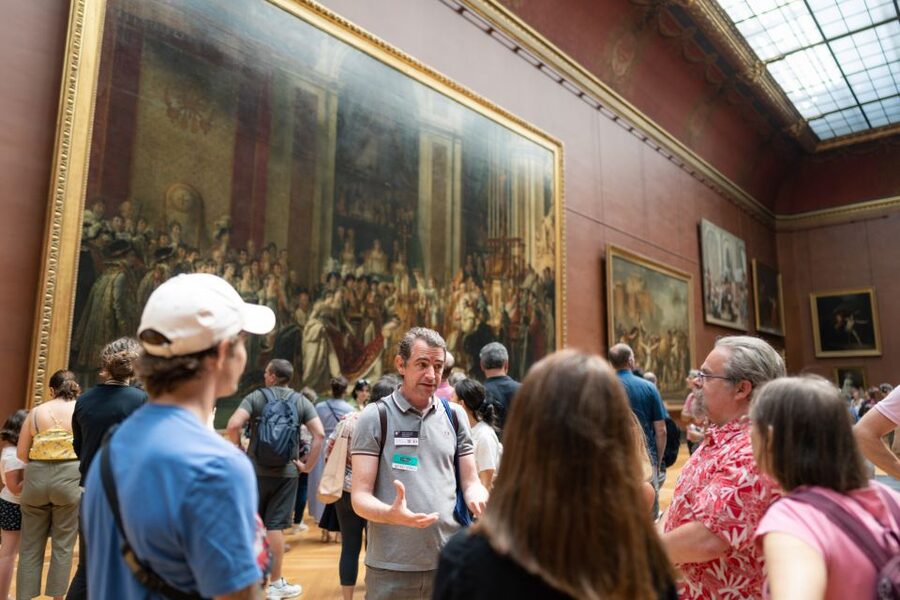
The core promise is simple: cover the must-sees in a tight time window. You’ll spend about 1.5 hours in the guided portion, with the tour finishing at the Musée du Louvre. The exact route can vary by guide and museum logistics, but the key works are part of the experience and the storytelling is built around them.
Here are the highlights you can expect to lock in:
- Mona Lisa: the obvious star, but you’re not just pointed at the painting. A strong guide helps you understand what makes it so iconic and how it fits into the bigger story of art and patronage.
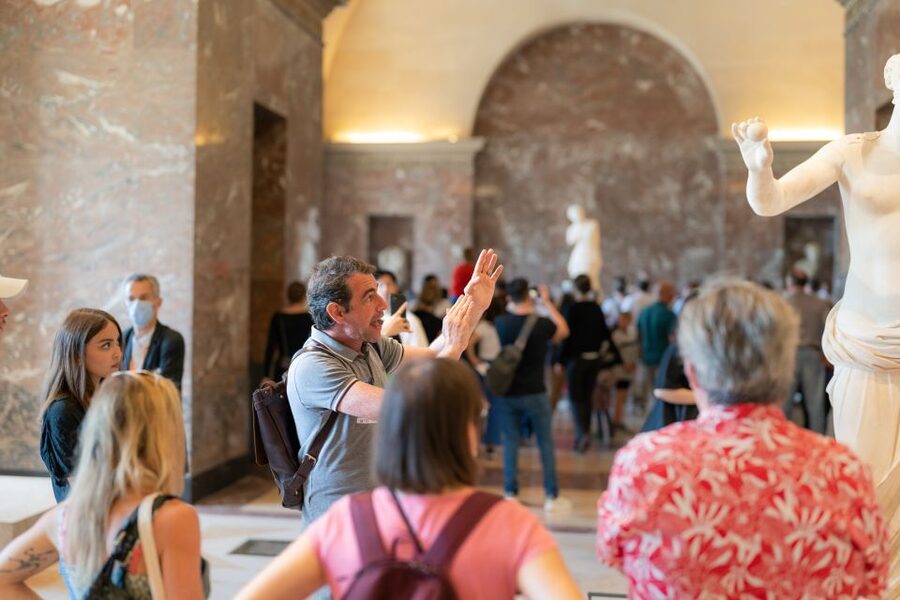
- Venus de Milo: this is where the tour’s historical context really helps. You get a framework for why this kind of classical sculpture became a cultural reference point.
- Winged Victory: again, you’re seeing the piece, but you’re also learning how classical themes carried influence and how audiences have read this work through time.
Beyond the three huge poster names, the tour aims to connect multiple collections you might otherwise never link together on your own. Expect coverage that moves through Italian Renaissance, ancient Egypt, and Greece and Rome, plus 19th-century French paintings. That span is a big reason this tour can feel more satisfying than a quick checklist, because you begin to sense how the Louvre is organized around civilizations and artistic styles, not just crowd favorites.
One more thing I like about this structure: it helps you prioritize. After the tour ends, you often have a much clearer idea of where you want to go next, because you’ve been given a guided map of what matters most.
How guides turn art history into a route you can remember
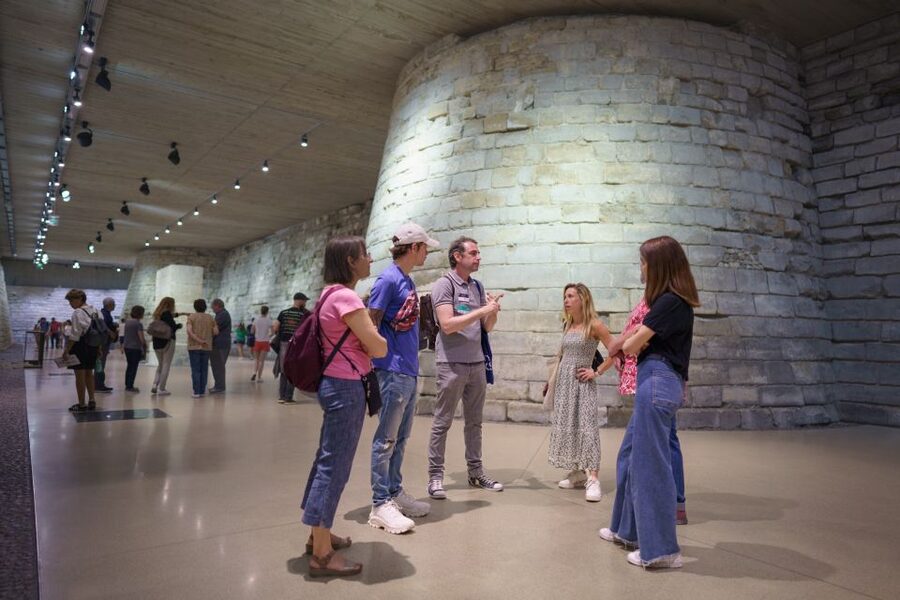
A museum like the Louvre is a maze in the best way and a trap in the worst way. The best part of a good guided highlights tour is not that it tells you facts. It’s that it gives you a sequence, so the day makes sense.
You’ll hear stories behind the artworks and artists, and you’ll also get broader context, including how the Louvre once functioned as a royal palace. That palace history is not just trivia. It changes how you view the building itself, because the museum setting starts to feel like part of the artwork experience, not just a container.
Different guides bring different delivery styles, but you can get a sense of what works well here from the guide names that have led tours, such as Marjolein, Antonio, Anton, Sara, Stan, and Sylvanie. In multiple accounts, guides were praised for being able to connect pieces to symbolism, encourage questions, and keep the group engaged so the time does not feel like a lecture marathon.
Headsets help a lot in a place this loud and crowded. One person specifically noted that the headphones worked well, so you can roam slightly and still catch the guide’s explanation without constantly staring at your guide’s back.
Also, the pacing is designed to prevent museum overwhelm. The Louvre is massive, and without a route you can end up bouncing between rooms, chasing landmarks, and getting tired before you’ve really seen anything. With this format, you get to see key works while the guide manages group timing so you don’t feel rushed in the way that can happen with generic bus-style tours.
The Louvre’s eras: why this spread is a smart use of your limited time
If you only have a day, the hardest thing about the Louvre is deciding what to cut. This tour’s strength is its coverage across multiple worlds, not just one art period.
You get exposure to:
- Italian Renaissance works and themes
- Ancient Egypt and how the museum presents it
- Greek and Roman art, including sculpture classics
- 19th-century French painting, which rounds out the story toward modern tastes
That era range matters because the Louvre’s identity is tied to its collection variety. If you go in only hunting for one famous painting, you can miss the larger pattern that makes the museum feel like a single conversation across centuries.
One review mentioned that the tour included the medieval section for them, which highlights an important point. Even if your must-sees are fixed, a good guide will often add context from other nearby collections when the route allows. That keeps your experience from feeling like it was stitched together with no flexibility.
More French collections worth the coat check:


Crowd management that makes the difference between stressful and fun

I’ll be honest: the Louvre can feel like a test of patience. Lines, security, dense rooms near iconic pieces, and the simple fact that everyone wants the same three photos.
The practical value of this tour is that the guide helps you navigate the crowd pressure. Reviews praised guides for moving efficiently through crowds, staying organized, and looking out for the group so nobody gets left behind. That type of attention is not fluff in the Louvre. It’s how you avoid losing your time window and ending the tour irritated instead of inspired.
A small group format also helps. It’s not a solo audio walk where you can’t ask questions, and it’s not a giant crowd where you get separated. One person reported being in a group of about 13, which suggests the group size is meant to stay manageable.
Expect some bottlenecks anyway, especially near the most famous works. But with a guided route and headsets, those bottlenecks become moments where your time still feels productive because you’re listening and learning while you wait.
Practical tips for wearing the right shoes and carrying less stuff

This tour includes walking, and the museum itself involves stairs and long distances. Bring passport or ID, and wear comfortable shoes you can stand in. Also follow the rules: no baby strollers and no luggage or large bags. If you show up with bulky items, you may waste time dealing with restrictions instead of getting art time.
If you’re traveling with family, this tour can work well because the guide style described in reviews included keeping kids involved and making explanations feel accessible. If you’re going as a pair or solo, the guide’s explanations still matter, because you’ll learn how to look longer at the works rather than just glance.
One limitation to keep in mind: it is not suitable for wheelchair users, so plan an alternative if mobility support is needed.
Price and value: is $82 worth 90 minutes at the Louvre?
At about $82 per person for 90 minutes, this is not a cheap add-on. But in the Louvre, time is your most expensive resource, and this tour attacks the two major time-wasters: entry friction and museum confusion.
Here’s the value breakdown that matters:
- You get pre-reserved tickets to reduce the front-door waiting.
- You get an expert English-speaking guide to select what you should see first.
- You get headsets, which lets you hear clearly without losing the group.
- You get a plan that aims to cover major icons plus additional key works, so you’re not walking for hours hoping you stumble into the right rooms.
If your goal is to hit the Mona Lisa, Venus de Milo, and Winged Victory and still come away understanding what you saw, this price can feel reasonable. If your goal is to wander freely with zero structure, you might prefer self-guided time. But if you only have one shot at the Louvre, a guided highlights format like this often earns its cost by preventing decision fatigue.
Who this Louvre tour is best for
This tour shines for people who:
- Want a fast, confident first Louvre visit
- Are short on time in Paris and still want the biggest masterpieces
- Prefer guided context over a lonely map and random discoveries
- Like hearing stories in a chronological or era-based way
It’s also a good fit if you want to decide where to spend extra time afterward. Several accounts described how the tour ended in a spot that made it easier to continue exploring based on what you just learned.
If you’re the type who loves deep research and wants to spend hours in one wing, you might find the pacing a bit tight. But for a highlights approach, it’s built for focus, not for slow wandering.
Should you book this Louvre must-sees tour?
Yes, I think it’s a smart booking for the right kind of trip. If you care about seeing the Louvre’s headline works and you don’t want to spend your limited time playing logistics roulette, this tour gives you a structured path, clear explanations, and a crowd-tested way to move.
I’d especially book it if:
- You want Mona Lisa, Venus de Milo, and Winged Victory without getting stuck in the chaos.
- You’re traveling with limited time and want the museum to feel organized.
- You’d rather listen to a guide and see the major eras than wander until you’re too tired to enjoy it.
If you want total freedom, or you need accessibility support that this tour cannot provide, you should look for a different format. But for most visitors who want a first-rate Louvre experience without the stress, this is a strong choice.
FAQ
Where do I meet for the Louvre guided tour?
You meet at Arc du Triomphe du Carrousel, opposite the glass pyramid. The guide will be wearing an orange lanyard with the Memories France logo and a guide card around their neck.
How long is the tour and how much of it is guided?
The total duration is 90 minutes, with a guided visit of about 1.5 hours inside the Louvre.
Does the tour include tickets and do I still wait in line?
The tour includes pre-reserved entrance tickets to the Louvre. Even with pre-reserved tickets, there can still be a wait at security, and during high season it can be up to 20 minutes.
What are the main highlights covered during the visit?
You’ll see major works such as the Mona Lisa, Venus de Milo, and Winged Victory, along with other key collections spanning Italian Renaissance, ancient Egypt, Greece and Rome, and French 19th-century painting.
What should I bring and what is not allowed?
Bring your passport or ID card and wear comfortable shoes. Baby strollers are not allowed, and luggage or large bags are not allowed.
Is it wheelchair accessible and what is the cancellation policy?
This tour is not suitable for wheelchair users. Free cancellation is available up to 24 hours in advance for a full refund, and refunds are not possible for missed tours.
Latest Paris entries, notes attached







Louvre Tickets & Tours, compared.

Louvre Guided Tour with Reserved Access & Boat Cruise
Read our review →
Louvre Museum Masterpieces Guided Tour with Access
Read our review →
Louvre Overview, Exploration tour and Reserved Entry
Read our review →
Louvre Museum Entry Ticket With Host and River Cruise
Read our review →
Mona Lisa & Louvre Masterpieces Tour with Reserved Access
Read our review →
Louvre Museum – Exclusive Guided Tour (Entry Included)
Read our review →
Louvre Museum Hosted Entry and Mona Lisa Audioguide
Read our review →
Louvre Access with Mona Lisa Escort or Guided Option
Read our review →This tour also appears in