
Reviewed · CYCLING TOURS
Paris Local Districts and Stories Off the Beaten Track Guided Bike Tour
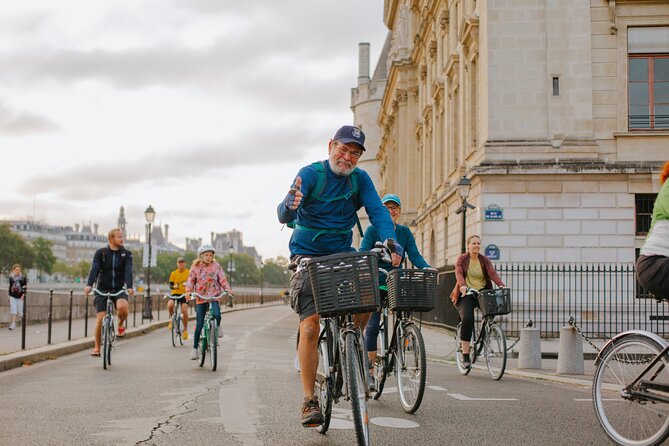
Pedal past Paris’ big stories, minus the crowds. This small-group guided bike loop strings together real neighborhoods like the Marais and Ile Saint-Louis, with local explanations that make the city feel readable fast. It’s a great way to cover ground without spending the day playing foot-tourist.
I love the way the tour is built around short, practical moments, starting at Le Peloton café with a laid-back meet and a chance to grab a waffle and craft coffee. I also love the mix of recognizable Paris stops with lesser-seen stops like Arenes de Lutece and the Wall of Philip II Augustus, so you get variety without feeling scattered.
One thing to consider: the route packs in a lot of stops with quick photo pauses, so if you want long indoor time or a slow, sit-down day, this isn’t that kind of tour. Also, you’ll want moderate fitness since the ride is easy overall but not flat-flat.
In This Review
- Quick hits before you book
- Le Peloton café start: the easiest way to hit “go” fast
- Hotel de Ville and the Marais: reading Paris like a local
- Philip II’s wall and Place des Vosges: old stones with sharp context
- Bastille grounds and the Quartier Latin drift: Revolution and academia vibes
- Jardin-des-Plantes: a botanical pause that feels like a mini vacation
- La Mosquee de Paris and Arenes de Lutece: faith and Roman Paris, side by side
- Notre-Dame’s backside loop and the reconstruction view
- Ile Saint-Louis: the “get a little lost” payoff
- How the ride feels: pace, safety, and what “easy” really means
- Price and value: why $54.42 is reasonable here
- Small-group guide energy: English lessons without the stiff vibe
- Practical tips so your day goes smoothly
- Should you book this Paris local districts bike tour?
- FAQ
- How much does the Paris local districts bike tour cost, and how long is it?
- Where do I meet, and does the tour end there too?
- What’s included in the tour price?
- Is food and hotel pickup included?
- Is the tour in English, and does it require biking experience?
- Can I cancel for a full refund?
Quick hits before you book
- A neighborhood start at Le Peloton café so you ease in before you ride
- Hotel de Ville by bike storage gives you an up-close look right at the start
- Old Paris layers in one loop from Roman ruins to medieval walls and Revolution sites
- Gardens and faith stops with Jardin-des-Plantes and La Mosquee de Paris included
- Small max group size (12) for easier pacing and safer navigation
- English tour with helmet included so you can just show up and ride
Le Peloton café start: the easiest way to hit “go” fast
Meet at Le Peloton café on Rue du Pont Louis-Philippe in the 4th arrondissement. You’ll check in about 15 minutes early, then meet your guide and group before rolling out. It’s a nice setup because you are not scrambling for bikes in a random street corner. You start somewhere that feels like Paris life, not a tour staging area.
A small perk is that the café experience is part of the vibe. Before you ride, you can grab a waffle and a craft coffee. Even if you skip the food, the timing works well: you’re warmed up, you’ve got caffeine if you want it, and you’re already in the mood for local streets.
Why this matters for your trip: Paris is easy to over-plan, and it’s easy to waste energy standing in line or searching for the “right” entrance. Starting in a calm, local spot helps you get your bearings fast, then get moving right away.
Hotel de Ville and the Marais: reading Paris like a local
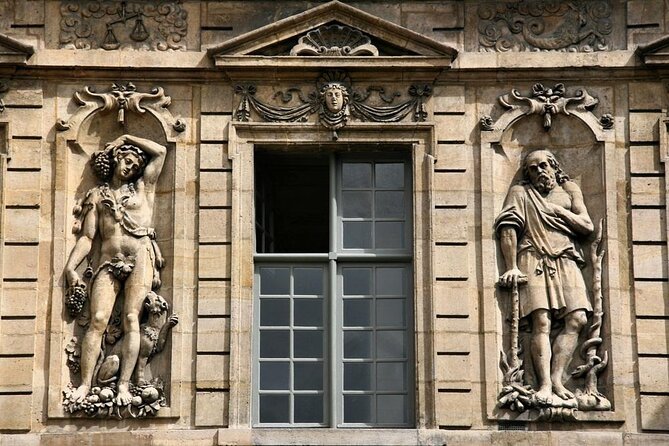
Early on, you get to Hotel de Ville, and you’ll see it up close because the bikes are stored under the building area. That might sound like logistics, but it’s actually smart. You are not just viewing it from a distance. You’re starting from a spot that puts you right in the flow of central Paris.
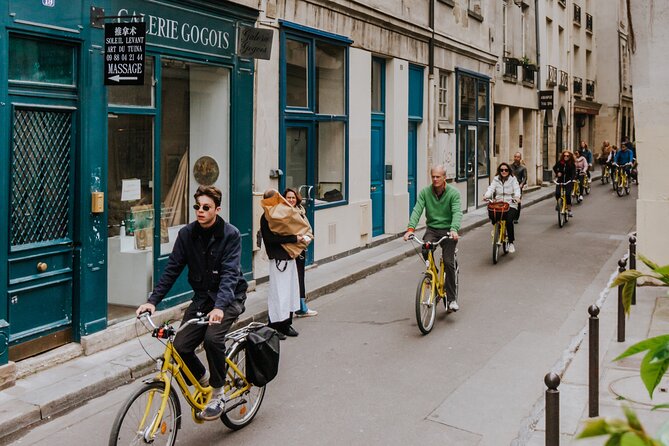
From there you head into Le Marais, where the tour is paced for real street understanding. The guide stops at multiple locations in the neighborhood and explains what you’re seeing. This is the difference between “I saw a pretty street” and “I get why this place looks like this.” The Marais is famous, but it’s still easy to wander through it without learning how the neighborhood changed over time.
A practical benefit: on a bike, you can cover a lot of ground in the Marais without feeling like you’re taking on a walking tour stamina test. The small-group size helps too, because bikes stay together and you’re not constantly waiting for stragglers.
One more thing I like: even if you’ve been to Paris before, the Marais can still surprise you. The neighborhood has layers, and the route is designed to help you notice them.
Other Paris bookings in the margin notes
- Versailles Palace Bike Tour with Market & Marie-Antoinette hamlet
★ 5.0 · 2,680 reviews - Paris: Charming Nooks and Crannies Bike Tour
★ 4.8 · 2,585 reviews - Versailles Full Day Bike Tour with Palace, Gardens, & Picnic
★ 5.0 · 2,217 reviews
Philip II’s wall and Place des Vosges: old stones with sharp context
Next up is the Wall of Philip II Augustus, one of the oldest wall remnants you can still see. You’ll spend a short stop here, but the payoff is that you learn what a wall like this meant in daily life, not just what it dates to. It turns a leftover stretch of stone into an actual historical scene.
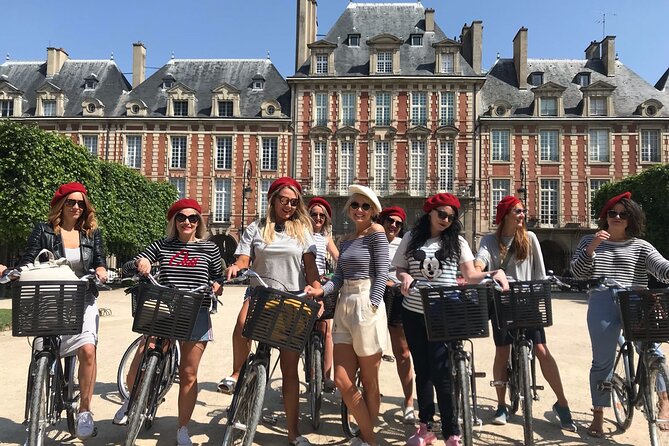
Then comes Place des Vosges, a beautiful square and park area that once belonged to royal life. One of the most useful parts of a guided tour is learning what to look for in a place like this: the layout, the surrounding architecture, and the idea that royal power shaped the space long before tourists arrived with cameras.
In practice, Place des Vosges is also a “reset moment.” By now, you’ve warmed up to riding and listening, and you can breathe in the open space before heading into Revolution country.
Potential drawback here: because stops are short, you will want to be ready with your phone or camera. Don’t count on a slow, lingering vibe at every historical node.
Bastille grounds and the Quartier Latin drift: Revolution and academia vibes
At Place de la Bastille, you’re in the area of the former Bastille prison site, with the guide explaining the French Revolution context. This stop is valuable if you like history but don’t want to spend hours reading panels. Seeing the place while you understand the story makes it stick.
Then you “glide” around the academic quarter, which is where the tour shifts from grand political moments to the everyday flow of older Paris neighborhoods. This is the kind of area where Paris changes texture block to block: tighter streets, more student energy, more local rhythm.
This segment tends to be memorable because it’s not just monuments. It’s streets. The point of cycling here is that you get motion in the background while the guide points out what’s important. It’s easier to understand how people moved and lived here than it is when you stand still.
Jardin-des-Plantes: a botanical pause that feels like a mini vacation
Next stop is Jardin-des-Plantes, Paris’s botanical garden. Even if you’re not a plant nerd, it’s a lovely break in the day. This is a different type of “sight,” less photo-posing and more sensory: greenery, paths, and space.
From a tour-value standpoint, it’s also smart. By the time you reach the garden, you’ve already done dense historical sights. A green stop gives your legs a different workload and gives your brain a new kind of input.
A tip for your time here: keep an eye on what the guide highlights. With short pauses, the best strategy is not to try to see everything. Instead, follow the guide’s lead on the areas worth your attention.
More Things to Do in Paris

La Mosquee de Paris and Arenes de Lutece: faith and Roman Paris, side by side
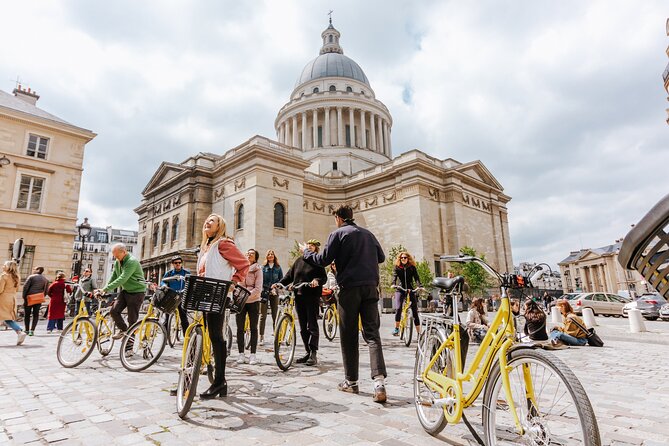
The La Mosquee de Paris stop adds a meaningful cultural layer. You can see the mosque and explore the gardens. There’s one important limitation: certain times are reserved for prayer on holidays, so you might not be able to go everywhere depending on the day and schedule.
This is a good example of why a guided tour beats solo wandering. The guide helps you understand boundaries and etiquette so the experience stays comfortable for everyone.
After that, you go to Arenes de Lutece, an ancient Roman amphitheatre. Imagine 15,000 seats, then look at what remains. Even with a short stop, it’s a powerful mental exercise. It also helps you understand that Paris has been layered for ages, not invented from scratch during the modern era.
If you like history that doesn’t feel like a lecture, these two stops together do well. They show different kinds of “old Paris” in close sequence: Roman public entertainment, then later religious life and community spaces.
Notre-Dame’s backside loop and the reconstruction view
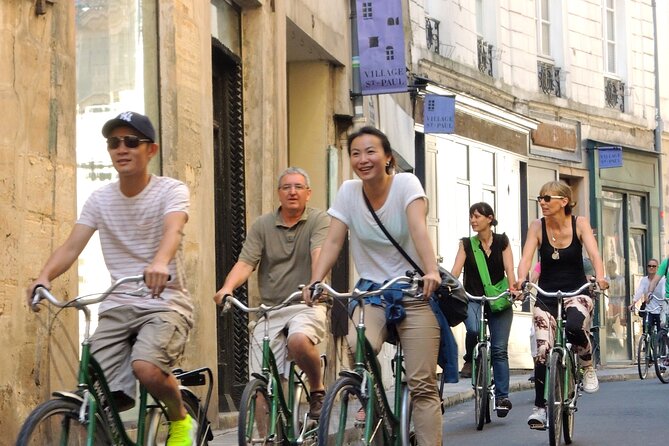
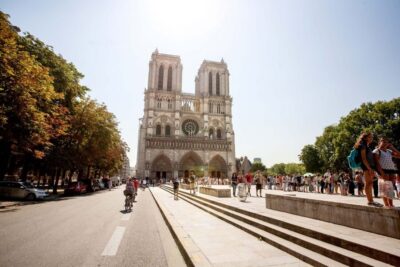
The tour then cycles behind Notre-Dame on the island area and ends up at the Cathedrale Notre-Dame de Paris stop where you circle around the back and learn about the architecture and the reconstruction. This matters for two reasons.
First, it’s a chance to view Notre-Dame from angles you might not hit on a quick walk. Second, reconstruction details are easier to grasp when someone connects them to architecture choices, not just headlines.
One practical note: Notre-Dame is famous, and there will likely be crowds around major approaches. A bike loop helps you get a different viewpoint without spending your time stuck in the same foot-traffic funnels.
Ile Saint-Louis: the “get a little lost” payoff
Finally, you ride into Ile Saint-Louis and get to explore the tiny streets with the guide’s help. This is a great ending style because it’s softer. After seeing heavy history and landmark architecture, the island gives you a feeling of calm, local life, and wandering.
Also, it’s a smart close because it’s close to how you might want to continue your day. You can end the tour and keep exploring on foot, grab a snack, or just linger in side streets with a better understanding of what you’re seeing.
If you want photos: plan to do them during the stops, not while you’re rolling. The tour is designed around safety and staying together.
How the ride feels: pace, safety, and what “easy” really means
This tour is a moderate-fitness ride. That’s not a gimmick. You don’t need to be a cyclist, but you should expect some turns, a few street navigation moments, and occasional hills.
What stands out most in the experience setup is that safety comes first. Guides are attentive, and the route uses side streets and smaller roads designed to keep you comfortable. The bike and helmet are included, which removes two big uncertainties.
Pacing is also a big part of why the tour works. The stops are short, which means you stay active, but you still get enough breaks to process what you’re seeing. If you are traveling with kids or you’re a solo traveler who gets anxious in big city traffic, this style of tour is often a relief because the group stays together and you’re not figuring it out alone.
Potential drawback to keep in mind: because stops are brief, you need to be ready to move on. If you like long museum breaks and slow conversations at every stop, you may wish you had more time.
Price and value: why $54.42 is reasonable here
At $54.42 per person for about 3 to 3.5 hours, you’re paying for three things:
1) a local guide who connects the dots between landmarks and neighborhoods
2) equipment (bike plus helmet)
3) the ability to cover multiple districts efficiently
The price feels especially reasonable because the stops include major, diverse sights without extra ticket costs mentioned for admissions. In other words, you’re not paying a bundle of separate entry fees for each stop, and you’re not spending your entire time commuting across Paris.
Also, the group size max (12) matters. A small group usually means less time waiting, clearer direction, and an easier flow through busy areas.
And here’s the real value angle: if you only have a short time in Paris, a 3-hour bike tour can help you choose where to return later. You don’t just “see” places. You learn which neighborhoods you’ll want to revisit.
Small-group guide energy: English lessons without the stiff vibe
The tour is offered in English, and with a max of 12 travelers, it’s easier for the guide to keep the whole group engaged. Many guides on this route, including people like Simon, Marley, Hannah, Jude, Ryan, Cedric, and Mara (names you may see with this operator), are known for combining humor with clear storytelling and keeping everyone moving smoothly.
Even if you’re not into history lectures, you’ll probably like this style because it’s tied to place. The guide isn’t just reciting dates. They point out what you’re looking at and why it matters.
One small language-related consideration: if you prefer very structured, quiet explanations, you might find the humor-and-stories style a bit more lively. But most people seem to enjoy that tone because it keeps you alert during the ride.
Practical tips so your day goes smoothly
- Arrive 15 minutes early so you can check in calmly and fit your start-time buffer.
- Wear comfortable shoes, even with biking, because you’ll still be off the bike for stops.
- Bring a light layer. Paris mornings and late starts can shift, and you’ll be outside for most of the tour.
- If it rains, the tour provides rain ponchos, and you should dress accordingly. (If you have waterproof shoes, even better.)
Food and drinks aren’t included. Plan your meal around the timing. Since the route ends back at the meeting point area, you can easily pick up a crepe or coffee afterward if you want to keep the day easy.
Should you book this Paris local districts bike tour?
Book it if you want a fast, fun way to connect multiple districts without getting stuck in long walking lines. It’s a strong choice for first-timers who want context, and it’s also a great refresher for repeat visitors because it hits areas and angles you might skip.
Skip it if you want an unhurried pace with long indoor stops, or if you dislike riding in a city even when guides keep things controlled. You’ll be moving enough that you should be comfortable with short stops and quick transitions.
If you’re deciding between a classic highlights tour and something more local-feeling, this one leans local. You’ll leave with a better sense of why Paris looks the way it does, plus the kind of street memory that helps you wander the rest of your trip with confidence.
FAQ
How much does the Paris local districts bike tour cost, and how long is it?
The price is $54.42 per person, and the tour runs about 3 hours to 3 hours 30 minutes.
Where do I meet, and does the tour end there too?
You start at Le Peloton Café at 17 Rue du Pont Louis-Philippe, 75004 Paris. The tour ends back at the meeting point.
What’s included in the tour price?
The tour includes a local guide and the use of a bicycle and helmet.
Is food and hotel pickup included?
No. Food and drinks are not included, and there is no hotel pickup or drop-off.
Is the tour in English, and does it require biking experience?
The tour is offered in English, and it’s recommended for travelers with a moderate physical fitness level. You do not need to be a seasoned cyclist, but you should be comfortable riding a bike for a few hours.
Can I cancel for a full refund?
Yes. You can cancel for free up to 24 hours in advance for a full refund.
Latest Paris entries, notes attached






Cycling Tours, compared.

Versailles Palace Bike Tour with Market & Marie-Antoinette hamlet
Read our review →
Versailles Full Day Bike Tour with Palace, Gardens, & Picnic
Read our review →
Highlights of Paris Bike Tour w/ a Local Guide (English or Dutch)
Read our review →
Versailles Bike Tour with Market, Gardens & Guided Palace Tour
Read our review →This tour also appears in