
Reviewed · WORKSHOPS
Paris: Macarons Class, Teatime and To-Go Box
Macarons get technical fast. This 3-hour Paris class at Le Foodist turns the scary parts into something you can actually do, using the Italian meringue method for more reliable results. You work in a small group (up to 6), so the teacher can correct your technique before small mistakes snowball.
I love the hands-on structure: you pipe shells, add color, then make a ganache or curd-style filling and learn how the filling is built, not just poured. I also love the stop that many food classes skip, a proper teatime with tea, coffee, fruit juices, and stories about macarons and French culture.
One possible drawback: macarons are detail-driven. If you want a casual, low-focus activity, the process needs attention and you will be working for the full stretch.
In This Review
- Key things I’d mark on your planner
- Where the class starts at Le Foodist on Rue Cardinal Lemoine
- The 2-hour macaron class that actually teaches technique
- Italian meringue, shells, and the moment you control the batter
- Piping practice and why it matters more than looks
- Filling time, ganache or curd, and learning the assembly
- The teatime break: drinks, stories, and a chance to eat your work
- Your to-go box: why it changes the value of the class
- Price and value: what you get for $152 per person
- Who this is perfect for, and who should choose a different plan
- Tips to get the most from the class day
- Should you book this Paris macaron class?
- FAQ
- How long is the experience?
- How big is the group?
- Is the class taught in English?
- What is included in the price?
- What macarons technique do you learn?
- Can children participate?
- Where do I meet for the class?
Key things I’d mark on your planner
- Italian meringue method taught step-by-step for more dependable shells
- Small group, kitchen focus, with instructors who slow down and correct technique
- You pipe and fill, including shell coloring and a ganache or curd option
- Teatime component with drinks plus story time tied to French food culture
- To-go box included, so you leave with macarons you made yourself
- Recipes in English (hard copy and electronic) for repeating your results later
Where the class starts at Le Foodist on Rue Cardinal Lemoine
You meet at Le Foodist, 59 Rue Cardinal Lemoine, 75005 Paris. This is one of those locations that works well for a pre-planned afternoon, because you are not bouncing across the city for ingredients or stops.
If you are arriving by taxi or rideshare, plan to be there a few minutes early. One frequent hiccup with small kitchens is finding the exact street entrance, and showing up on time keeps the whole rhythm smooth for your group. The class is also built around a kitchen workflow, so you will want to be ready to jump in when it’s your turn.
The 2-hour macaron class that actually teaches technique
The core experience is a 2-hour hands-on macarons lesson inside the kitchen. You will learn macarons using the Italian meringue approach, which is often considered harder to master at first, but more reliable once you get the temperature and mixing rhythm right.
Here’s what makes this part worth your time: you are not only watching. You are doing the mixing steps, then practicing the part that separates good macarons from bad ones, piping consistent shell shapes.
And because the class is small, the instructor can steer you when you hit the classic trouble spots, like batter texture, piping pressure, and shell consistency. Many people highlight how patient and individually focused the teaching feels, with instructors such as Anne, Luc, Stéphane Jimenez, Hugo, Amanda, Florence, and Frederic named in past classes.
Other Paris bookings in the margin notes
- Fragonard Paris: Mini Perfume Workshop
★ 4.5 · 1,924 reviews - Paris: Macaron Class at Galeries Lafayette
★ 4.2 · 1,196 reviews - Paris Cooking Class and Lunch with Wine plus Market Visit Option
★ 5.0 · 1,024 reviews
Italian meringue, shells, and the moment you control the batter
Italian meringue is the backbone here. In plain terms, you build a stable meringue and then fold it into your macaron batter until it reaches a specific flow. Get it too thick and the shells can struggle, get it too thin and you can lose the structure.
You’ll also work on color. You are taught how to incorporate a color into your shells, which matters because color is not just decoration. It can hint at consistency and mixing, and it affects how the batter behaves under piping.
This is where the class earns its keep. Macarons look simple in photos, but they are really a texture game. The teacher’s job is to keep you from guessing, and instead help you adjust in real time.
Piping practice and why it matters more than looks
Piping is where most first-timers feel the mismatch between what they see and what their hands do. You learn how to pipe, and you are guided on how to make shells that are consistent enough to bake evenly.
Consistency is not vanity. Even baking means better feet, better texture, and fewer half-baked shells that crack or dry out unevenly. In a class like this, you can focus on technique without the pressure of figuring out the whole system on your own.
One practical bonus: the kitchen setup includes all equipment and an apron. That means you can show up and work, instead of tracking down baking tools or worrying about where to stand with your ingredients.
Filling time, ganache or curd, and learning the assembly
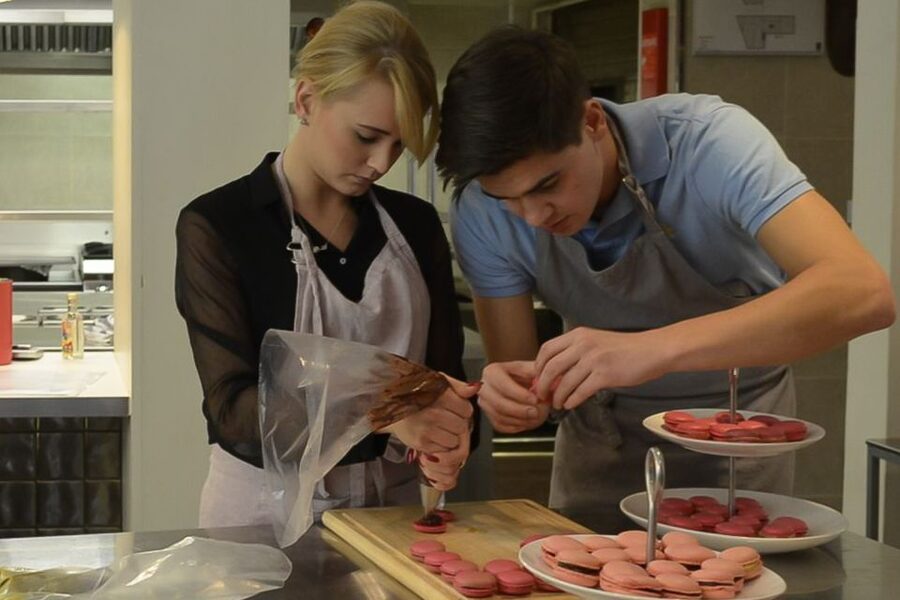
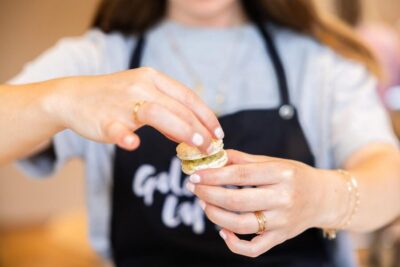
Once shells are baked and ready, the filling step turns into the “wow” moment. You create your own filling and learn how to pipe, which is different from simply tasting a pre-made macaron.
Depending on the class flow, you make a ganache or curd filling option. Either way, you get the logic of how the filling should sit and how much to use so the macaron stays balanced.
This is another reason the class works for beginners. You are not just collecting recipes. You are learning the assembly rules that tell you how a macaron should feel and look when it’s done.
More Things to Do in Paris



The teatime break: drinks, stories, and a chance to eat your work
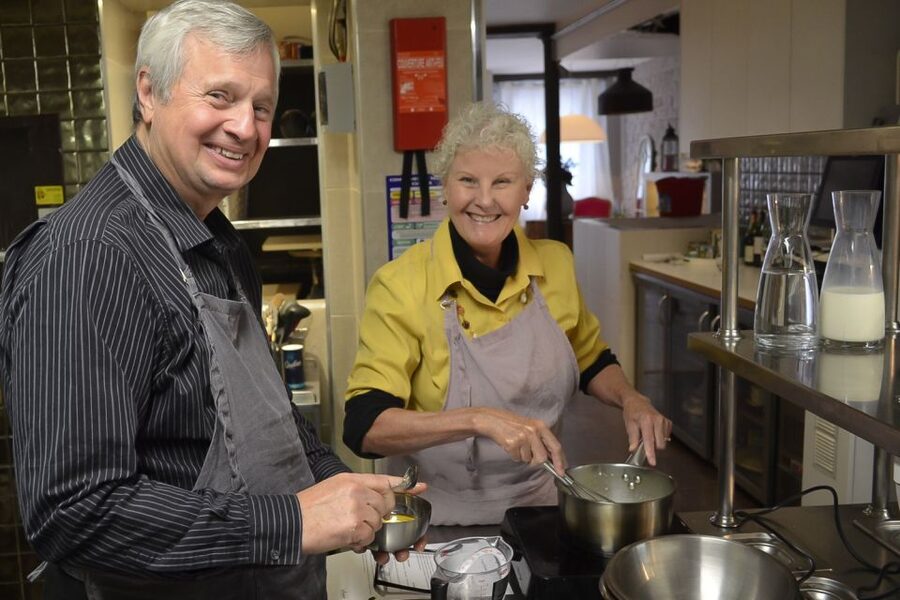
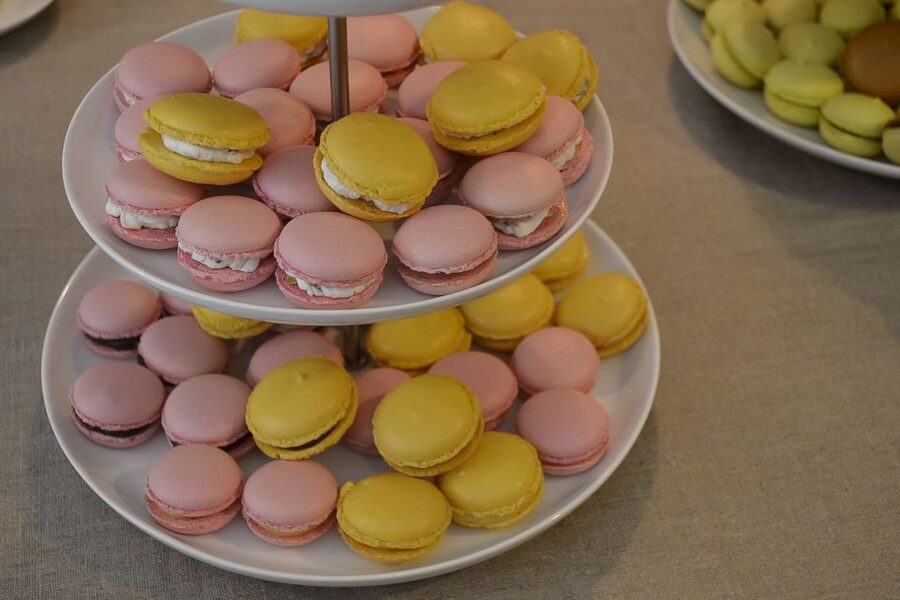
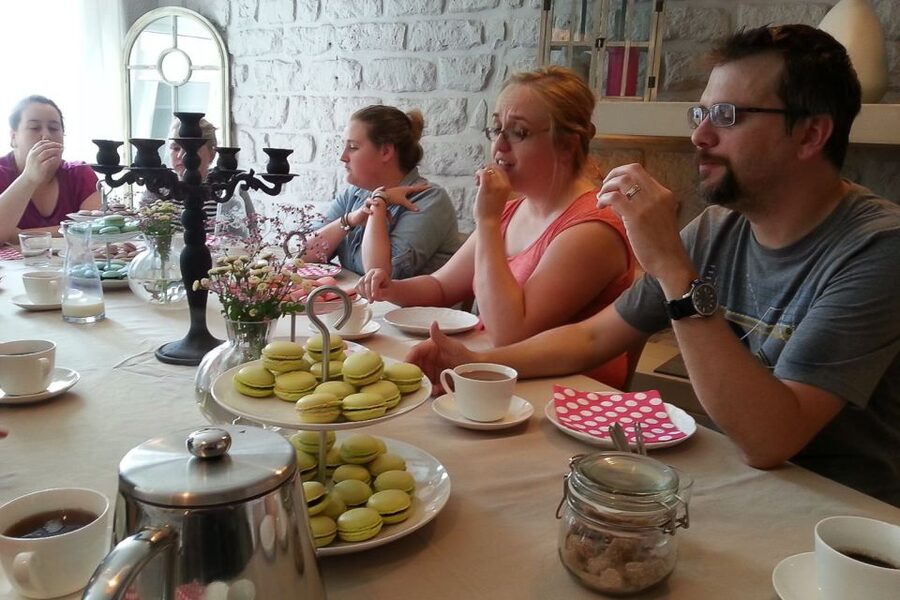
After the baking, you sit down for teatime. This is not a token snack. You get tea, coffee, and fruit juices, and you eat a selection of the macarons you made.
What I especially like about this portion is the story time. The host shares stories about the macaron, plus a couple of other interesting French culture stories, often told with a playful, tongue-in-cheek tone. It turns the class from a pure cooking session into a small slice of French food culture you can talk about after you go home.
Also, you typically end up with enough macarons to enjoy during the sitting, then still have plenty left for your take-away box.
Your to-go box: why it changes the value of the class
You leave with a to-go box filled with macarons you made. This matters more than you’d think. The “lesson plus snack” model can be fun, but the chance to share what you made the same day is a real morale boost and a memory anchor.
Based on past class experience, people often describe leaving with a lot of macarons, enough to eat with coffee or tea and still pack a meaningful box for later. That turns the experience into something you can extend at home instead of finishing when the course ends.
Plus, the class provides recipes in English in both hard copy and electronic form. That means you can recreate what you learned without translating everything on the fly.
Price and value: what you get for $152 per person
At $152 per person for about 3 hours total, you are paying for three main things:
- Hands-on instruction in a small kitchen group
- The technical focus of Italian meringue macarons, piping, and filling assembly
- The full experience package, including teatime and a take-away box
If you tried to learn macarons solo, the cost would quickly balloon with ingredients, equipment, and wasted batches. Here, your tuition buys instructor time and technique correction, plus the benefit of leaving with tangible results right away.
You also get recipes in English, and that is a practical way to keep the value after the class. Without a written plan, macarons are hard to repeat. With recipes, plus the method you practiced, you can actually run a second attempt at home while the steps are still fresh.
Who this is perfect for, and who should choose a different plan
This is a strong fit if you want a hands-on food activity in Paris that is not just tasting. If you like learning by doing, you’ll enjoy the rhythm of mixing, piping, and filling, then switching to teatime to reset.
It also works well for families with teens. Past classes included participants aged 14 to 16, and there is often praise for how well instructors keep everyone involved.
But read the age rules carefully:
- Unaccompanied minors are not allowed.
- Children under 12 cannot participate.
- For children between 12 and 16, a participating adult must accompany them.
- Only participants can enter the kitchen, and there is no crèche or childcare facilities.
So, if you are traveling with very young kids, you may be better off booking a different kind of Paris activity where spectators can comfortably join in.
Tips to get the most from the class day
Come with a simple mindset: you are learning a baking process, not just making a snack.
A few practical moves that help:
- Bring a notebook if you like taking notes. Even though recipes are provided in English, some people prefer capturing the teacher’s personal tips in the moment.
- Wear comfortable clothes. You’ll be standing and working, and you’ll likely be fully hands-on for the 2-hour session.
- Manage expectations about perfection. Macarons reward attention. If your first batch has minor issues, treat it like part of the learning curve.
Also, the kitchen environment is described as clean and organized in past experience, which is reassuring when you are doing a process with timing and temperature.
Should you book this Paris macaron class?
I’d book it if you want a memorable Paris food activity that teaches a real, repeatable skill. The Italian meringue method plus piping practice plus filling instruction makes this more than a “watch and taste” class.
You should consider skipping it if you want a low-effort, no-stress activity. This one asks you to focus and work during the whole session, because macarons do not forgive distraction.
If your goal is to go beyond souvenir desserts and come home with skills, recipes, and a box of macarons you made, this is a great bet.
FAQ
How long is the experience?
The total experience is 3 hours. The macarons class itself is 2 hours with hands-on instruction, followed by teatime.
How big is the group?
It is a small group with a maximum of 6 participants.
Is the class taught in English?
Yes. Instruction and recipes are provided in English, with recipes given as hard copy and electronic copy.
What is included in the price?
All cooking equipment and an apron are included, along with teatime (tea, coffee, fruit juices), drinks and stories, and a box of the macarons you make to take away.
What macarons technique do you learn?
You learn to make macarons using the Italian meringue method.
Can children participate?
Children under 12 cannot participate. Ages 12 to 16 must be accompanied by a participating adult. Unaccompanied minors are not allowed, and only participants can enter the kitchen.
Where do I meet for the class?
Meet at Le Foodist, 59 Rue Cardinal Lemoine, 75005 Paris.
Latest Paris entries, notes attached





Workshops, compared.

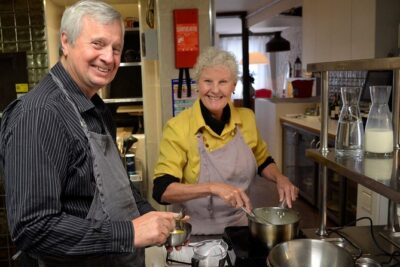
Paris Cooking Class and Lunch with Wine plus Market Visit Option
Read our review →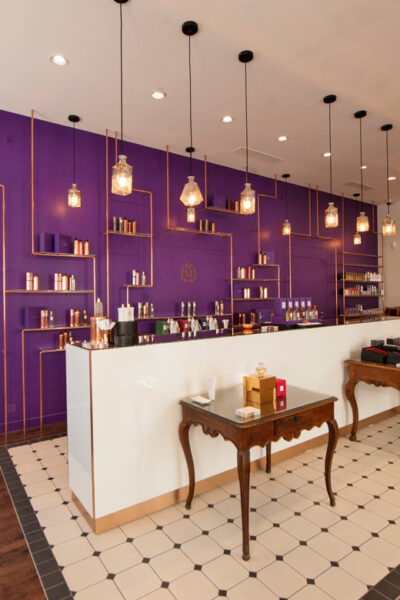
Molinard Parfums Nice: Discovery Perfume Workshop
Read our review →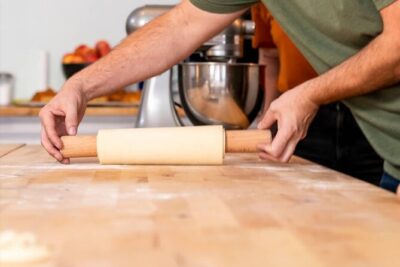
Paris Croissant Small-Group Baking Class with a Chef
Read our review →
Fragonard Eze: Perfume Making Class and Factory Tour
Read our review →
Molinard Parfums Grasse: Classic 1-Hour Perfume Workshop
Read our review →This tour also appears in