
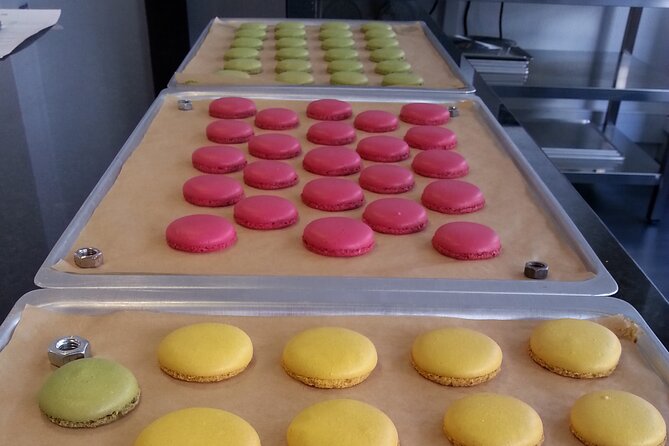
Reviewed · MACARON & PASTRY CLASSES
Paris Small-Group Macaron Making Class with a French Chef
Macarons are magic, and the method matters. This small-group Paris class has you making macarons and ganache step by step, using the more technical Italian meringue method, so you can get those crisp shells and clean filling. I also like that it is built for real hands-on practice, with equipment and recipes handled for you, but it can feel more intense and precise than casual baking classes.
You’ll start at a working pastry space near public transport, put on an apron, and get tea and coffee while you learn how to pipe, mix, and judge doneness. The biggest practical win is that it is gluten-free, and you still leave with a box of what you made plus an English copy of the process.
Key things I think you’ll care about
- Max 6 people means you get the kind of attention that actually helps you fix timing and texture.
- The class teaches the Italian meringue method for more reliable results.
- You learn ganache texture control, including how to hold the whisk for silkiness.
- It is built around doneness cues you can use later, including judging by touch.
- You leave with take-home bags, plus an anniversary eBook gift.
In This Review
- Why This Paris Macaron Class Feels More Like Training Than Watching
- Entering Patisserie a la Carte: Where the Class Actually Happens
- The Shell Lesson: Italian Meringue, Piping, and the Touch Test
- Ganache Filling Done Right: Whisk Control, Texture Tricks, and Mix-Ins
- What You Eat and Take Home From This Gluten-Free Workshop
- The Chef Factor: How the Small Group and Clear Direction Pay Off
- Price and Value: Is $114.65 Worth It?
- Who This Class Suits Best (And Who Might Want a Different Style)
- Quick Tips to Use the Method After You Leave Paris
- Should You Book This Paris Macaron Class?
Why This Paris Macaron Class Feels More Like Training Than Watching
A macaron class can easily turn into a performance. This one is different because it is designed for doing, not just looking. With a maximum of 6 participants, you are working in a group small enough that the chef can notice when your batter is too thick, your piping is off, or your filling is not quite ready. That matters because macarons punish tiny mistakes.
I like that the focus is on technique that you can repeat. You are not only told what to do, you learn why the steps matter. The class follows a clear path: shells first, then ganache filling, then assembly and finishing touches. And it keeps returning to precision, like how you pipe and how you check when the shells are done.
One more thing: this is not a quick, beginner-only sugar sprint. One review called it an advanced, intense experience compared with other classes. That lines up with what the class teaches: Italian meringue and texture targets. If you want relaxed, no-pressure baking, you might find the pace demanding. If you want to get good fast, it is a good fit.
Entering Patisserie a la Carte: Where the Class Actually Happens
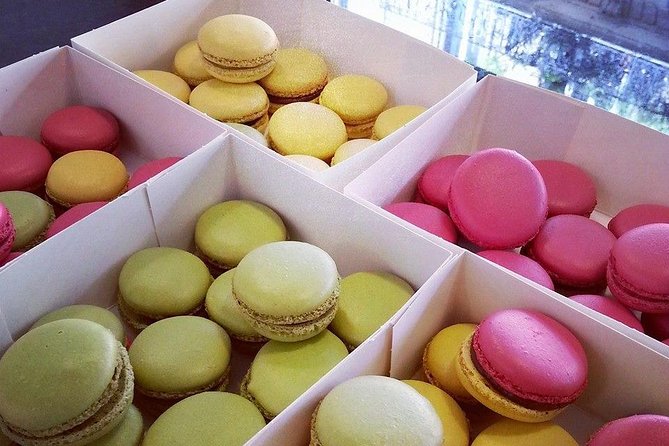
The class meets at 9 Rue Thimonnier, 75009 Paris and ends back at the same spot. The location is near public transportation, so you are not stuck planning an elaborate metro route just to reach a short workshop. Also, since there is no hotel pickup or drop-off, it is best if you are comfortable using transit or walking through the city.
When you arrive, you are set up with what you need to work. Expect aprons, all cooking equipment, and an English recipe guide. You’ll also get tea and coffee, which sounds small, but it helps keep the session comfortable. A macaron class is hands-on and timing-based, so you do not want to start hangry.
A practical note from the fine print: after 5 minutes of delay the course starts without you, and after 15 minutes without anyone showing up it is canceled. That rule is strict. So build in extra walking time. Paris side streets can slow you down, even when you are close.
The Shell Lesson: Italian Meringue, Piping, and the Touch Test
Your shell training is based on the Italian meringue method. That detail is a big deal. Italian meringue is more technical than some other approaches, but it is also known for giving more consistent structure because you manage temperature and texture carefully.
Here is what that means for you in the real world. You learn how to make your macaron paste light enough to pipe into smooth rounds, then how to control the final result so you get cookies that are light and crunchy rather than chewy or hollow.
You also learn doneness cues. The class includes the skill of judging when they are ready by touch. That is the kind of tip that changes everything when you try again at home. Oven times vary by machine, tray material, and even humidity. Touch-based cues give you a fallback when your timer lies.
Piping technique is covered right to the finishing touches. That includes how to load and pipe the batter so the shells bake up evenly. You’ll be working with guidance the whole time, so if your shapes come out uneven, you can correct your technique while it is still useful.
Finally, the class keeps it grounded in the goal: you are learning a method that produces repeatable shells, not just a one-off batch.
More piping bags and patient shells:
- Paris: Montmartre Cheese, Wine & Pastry Guided Walking Tour
★ 4.8 · 2,255 reviews - Paris: Macaron Class at Galeries Lafayette
★ 4.2 · 1,196 reviews - Paris Croissant Small-Group Baking Class with a Chef
★ 5.0 · 910 reviews
Ganache Filling Done Right: Whisk Control, Texture Tricks, and Mix-Ins
Once the shells are ready, the class shifts into ganache. This is where the experience earns its keep, because ganache is not just chocolate. It is temperature, ratio, and movement.
You learn a specific technique: how to hold your whisk to get a silky ganache. That sounds almost too simple, but the instruction is aimed at the texture you want. If your whisking is off, your filling can turn grainy or too thick to spread.
The class also teaches “little tricks” for making a ganache filling that behaves. You’ll get the filling into the right consistency for pairing with macaron shells, and you’ll learn how to keep the process smooth enough to finish on time.
Then comes the fun part, the flavor direction and garnishes. You get hands-on learning with options like:
- Chocolate ganache
- Pistachios
- Vanilla
- Raspberries
- Chocolate shavings
- Passionfruit
Even if you do not make every garnish choice, you’ll understand the logic behind balancing flavors and textures. That makes the class more than a one-flavor workshop. It becomes a framework you can remix later.
What You Eat and Take Home From This Gluten-Free Workshop
The experience is built around “make it, taste it, and keep it.” You can enjoy the macarons on the spot if you resist the urge to eat them immediately. And you also get take-home bags, so you can prolong the pleasure later.
The class is gluten-free, which is a rare plus without turning into a compromise experience. You are still learning classic French technique and structure, just with a gluten-free approach.
From the reviews, the take-home part seems like a real highlight. One parent noted they were able to take home about 15 macarons, which gives you a sense of how much you can realistically produce in 2.5 hours with a small group and an active chef.
You will also leave with a practical souvenir: the chef provides a recipe copy in English. That matters if your goal is to remake macarons at home, not just taste a nice afternoon.
And as a bonus, the operator mentions a “10th anniversary” gift: an Everyday Gourmet French Tarts eBook. It is not macaron-specific, but it is a good extra for anyone who wants more French baking ideas after the class.
The Chef Factor: How the Small Group and Clear Direction Pay Off
The strongest praise in the feedback centers on instruction quality and attention to detail. Multiple chef names show up, including Hiba, Gaëlle, Marie, and Julie, with guests praising patience and clear direction. Even when the teaching style is more calm and businesslike, the consistent theme is that the chef makes the process understandable and correctable.
In a technical bake like macarons, you want someone who can translate “right texture” into something you can recognize. That is what you get here: direction that focuses on what ingredients should look and feel like at each stage, and what you should do if things drift.
Small group size is what makes that possible. Maximum 6 people means you are not lost in the crowd. It also explains why the class includes moments where participants may work in pairs for certain preparations. That structure keeps you moving without turning it into chaos.
If you are a first-time baker, the class is still approachable because the process is broken into steps with feedback. If you have tried macarons before and failed, the method focus and the texture-based cues are exactly the kind of course correction you need.
Other Paris bookings in the margin notes

Price and Value: Is $114.65 Worth It?
At $114.65 per person, you are paying for a very specific service: professional chef instruction, materials, equipment, and a hands-on session focused on a notoriously finicky pastry.
Here is the value logic. You are not just buying ingredients. You are buying:
- A French pastry chef’s guidance through a technical method
- All equipment and cooking supplies handled for you
- English recipes so you can repeat the method
- Aprons and take-home packaging
- Tea and coffee, which keeps the session comfortable
- A structure that limits the class to 6 people, so you get feedback when you need it
If you try to learn macarons from random videos, you will pay in wasted shells, failed attempts, and time. This class compresses that learning curve. You also leave with a usable recipe plus a clear sense of the texture milestones, including touch-based doneness.
If you are already set up with lots of baking gear and love independent practice, you might feel the cost is steep compared to cooking at home. But the point here is mentorship plus hands-on technique coaching, and for macarons, that can be worth it.
Who This Class Suits Best (And Who Might Want a Different Style)
This class is a strong match if you are:
- A food lover who wants an authentic Paris skill, not just a taste
- A baker who wants technique and repeatable results
- Someone traveling with a teen who enjoys hands-on cooking (the minimum age is 12)
It is also a good fit if you care about dietary needs. The class is gluten-free, and the operator asks you to advise allergies and special dietary requirements at booking. That is the right move, because you want the chef to plan safely from the start.
The main caution is intensity. One review described it as more advanced and intense than other classes. You should expect precision and focus, especially with Italian meringue and ganache texture control. If you want a laid-back vibe more than a skills workshop, you might find it a little serious.
Language is English, which helps. But even in English, baking is visual and tactile. So if you prefer learning mostly through explanation and not through doing, you may need to lean into the hands-on part.
Quick Tips to Use the Method After You Leave Paris
If you want this class to actually change your home baking, treat it like a technique course, not just a souvenir.
Here are practical habits you can copy:
- Work carefully with measured ingredients and follow the steps in order. Macarons are time and texture sensitive.
- Pay attention to the class’s emphasis on texture cues. The touch-based doneness skill is a big one.
- Use the ganache guidance as a consistency target, including how you approach mixing. Small movement habits can affect texture.
- Choose your garnish plan before you assemble. The class covers options like pistachios, vanilla, raspberry, passionfruit, and chocolate shavings, and having a flavor direction helps you finish smoothly.
Also, keep the English recipe copy close when you bake again. The class gives you recipes you can follow back home, and the key is doing it while the “why” is still fresh in your mind.
Finally, remember that macarons reward repetition. One “bad batch” does not mean the method is wrong. It means you need one more practice round to match the exact texture milestones.
Should You Book This Paris Macaron Class?
I’d book it if you want a serious skills session in a small group, with a professional chef teaching the Italian meringue approach and ganache texture control. The combination of gluten-free, English recipes, included equipment, and take-home packaging makes it feel like more than just an activity. It is a practical baking experience you can use again.
I would think twice if you want a high-energy, carefree class. Expect precision and an intense pace rather than a casual pastry hangout. Also, since transportation and pickup are not included, plan to reach the meeting point near public transport on your own.
If your goal is to leave Paris able to make better macarons, this class is the kind of workshop that gives you the method, not just the memory.
Latest Paris entries, notes attached





Macaron & Pastry Classes, compared.
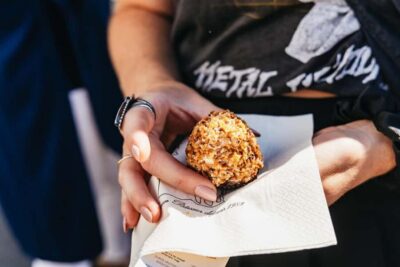
Montmartre Cheese, Wine & Pastry Guided Walking Tour
Read our review →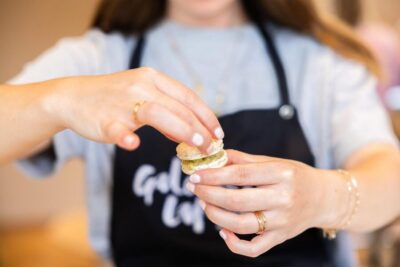
Paris Croissant Small-Group Baking Class with a Chef
Read our review →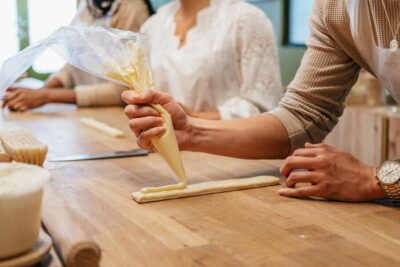
Saint-Germain: Gourmet Chocolate & Pastry Walking Food Tour
Read our review →
Paris Chocolate, Macaron & Pastry Food Tour: 10 Gourmet Tastings
Read our review →
Macaron Bakery Class at Galeries Lafayette Paris
Read our review →This tour also appears in