Reviewed · TICKETS
Pierrefonds: Château de Pierrefonds Entrance Ticket
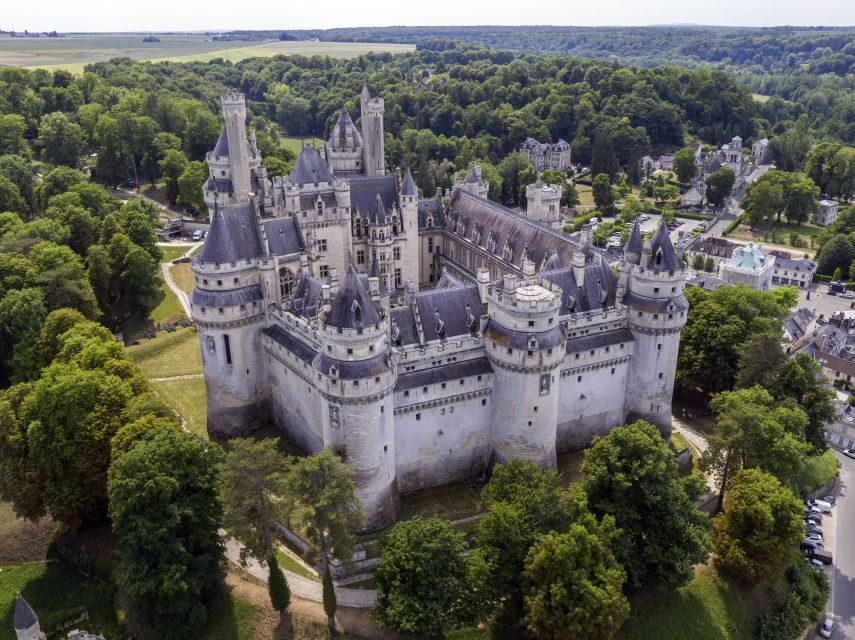
A fairytale castle that feels real. The Château de Pierrefonds is a reconstructed medieval-style stronghold that makes you slow down, look up, and soak in the details, all in a small group setting. It’s one of those surreal-château experiences you remember long after you’ve left.
I especially like the way this ticket gets you inside a complete route, from the central courtyard to the donjon and chapel, without feeling rushed. I also like the movie credibility, since the château has been featured in The Man in the Iron Mask and even plays to fans of Merlin’s Camelot. One consideration: some indoor rooms may feel a bit more like displays than fully dressed period scenes, so if you crave lots of authentic, staged furnishings in every room, manage your expectations.
In This Review
- Key highlights worth planning for
- Château de Pierrefonds and why this looks like a movie set
- Ticket basics: what the $10 entrance gives you
- Getting there from Paris, Lille, and friends nearby
- Meeting your host at the entrance and setting your pace
- Courtyard and salons: where the jaw-drop happens
- Donjon and chapel: the fortress feel
- Le Bal des Gisants in the old dungeons, plus the light show
- Merlin’s Camelot rooms and the movie magic factor
- The Man in the Iron Mask connection: why it feels authentic anyway
- Photo time: how to get the best shots without stressing
- Audio guide reality check: French only, but still useful
- A few wrinkles: corridors, room layout, and getting turned around
- What to bring for a comfortable day in Pierrefonds
- Free entry rules and discounts that can lower your total cost
- When it is closed, so you do not waste a trip
- Should you book this Château de Pierrefonds entrance ticket?
- FAQ
- What is included with the Château de Pierrefonds ticket?
- Is an audio guide included?
- How much does the entrance ticket cost?
- How long is the visit valid for?
- Where do I meet the host?
- Is the tour audio guide available in English?
- Are there free entry options for kids or young adults?
- When is the site free for everyone?
- What time should I arrive?
- Is the château accessible for wheelchair users?
Key highlights worth planning for

- Napoleon III reconstruction inside a National Monument, after the original medieval castle was demolished centuries earlier
- Central courtyard, large salons, donjon, and chapel in one smooth walking circuit
- Le Bal des Gisants in the old dungeons, with a light show
- Rooms connected to Merlin’s Camelot, plus the big-screen vibe of The Man in the Iron Mask
- Comfortable pace in a group limited to 10, which helps photos and navigation
- Optional audio guide you can buy on-site (French only), if you want the story thread
Château de Pierrefonds and why this looks like a movie set
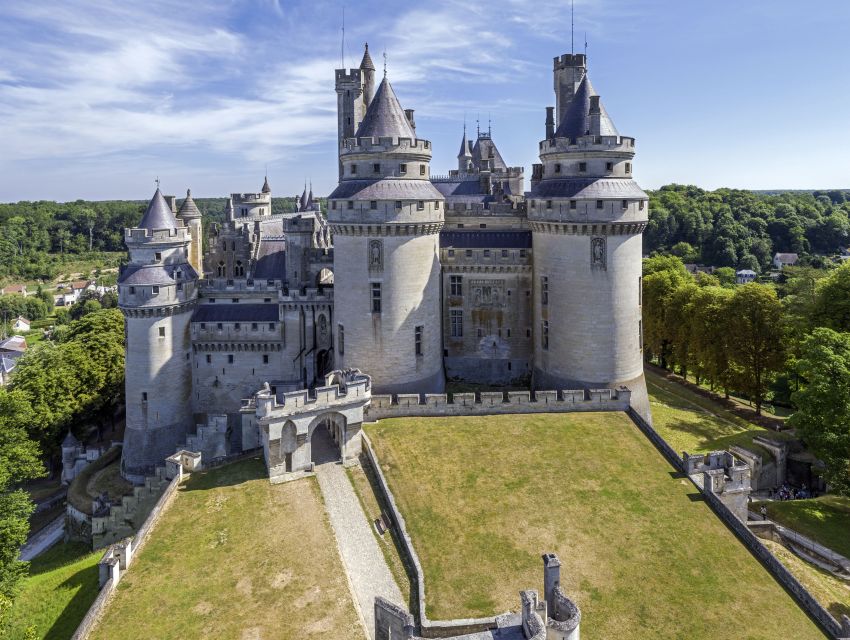
The Château de Pierrefonds is the kind of place where your brain instantly goes cinematic. Outside, the château looks like it belongs to a medieval fantasy, and inside it keeps that same spell going as you move through salons, courtyards, and fortress-style spaces.
This reconstruction is tied to Napoleon III. The original castle on this spot dates back to the 14th century, it was demolished in the 17th century, and then Napoleon III had the château rebuilt. That timeline matters, because you’re not just touring stonework, you’re seeing a 19th-century vision of what a medieval castle should feel like.
And yes, the pop-culture connections are real. The château has appeared in The Man in the Iron Mask, and some rooms have been featured in Merlin’s Camelot. Even if you are not a superfan, you’ll still enjoy the way the spaces are designed to support storybook atmosphere.
Ticket basics: what the $10 entrance gives you
This experience is straightforward: your entrance ticket is the core. It’s priced at about $10 per person, and it’s valid for 1 day based on available starting times.
The big decision is the audio guide. It is not included, but you can buy one on-site for 3 € per person the same day. Also, the language listed is French, so plan accordingly if you do not read or listen comfortably in French. If you do want the extra context, the audio guide can be an easy add-on since the château covers multiple zones, not just one room.
Time planning matters here. The park closes 45 minutes before the monument closes, and the last entry to the site is 1 hour before closing. That means you should build your day around being inside the key spaces with enough cushion to finish before the final waves.
Small groups are part of the value. The group size is limited to 10 participants, and that tends to make the experience feel more personal. You are not fighting a crowd to see the best viewpoints and photo corners, which is a big deal at a site that looks like it belongs in a fairy tale.
Getting there from Paris, Lille, and friends nearby
Château de Pierrefonds is about 80 km from both Paris and Lille. Driving is simple, and the routes are clearly mapped if you want to keep control of timing.
From Paris, take the A1 motorway, then exit 9, follow D200 to Compiègne, then D973 to Pierrefonds. From Lille, take the A1 and exit 11.
If you are coming from Reims, take exit 8 via RN31 toward Compiègne, then D335 to Pierrefonds. If you are coming from Rouen, take exit 2 via RN31 to Compiègne, then D973 to Pierrefonds.
That 80 km distance makes it a realistic day trip. It also explains why this château can feel calmer than the biggest, most famous names, even when you visit at popular times.
Meeting your host at the entrance and setting your pace
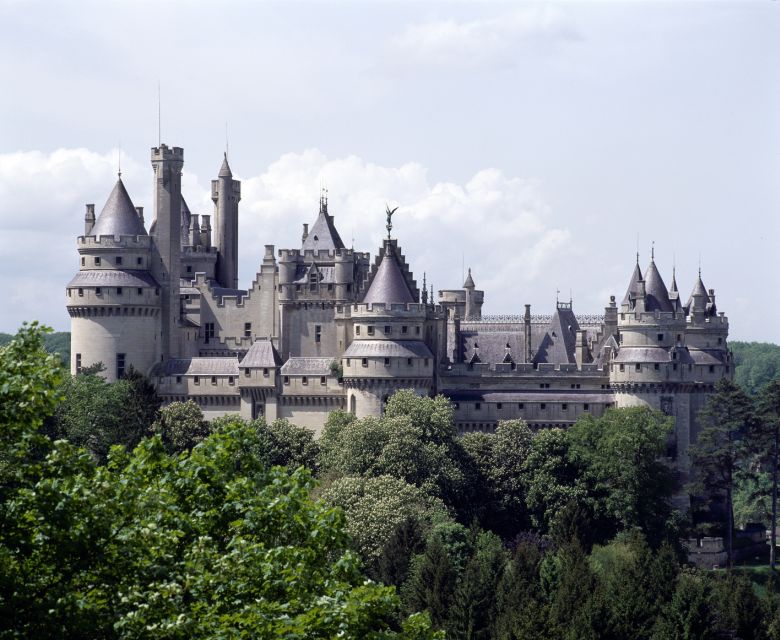
You meet your host at the Château de Pierrefonds entrance. The host or greeter is French, and the experience is described as a small group format.
Even though this is an entrance ticket, the host element is what helps you get oriented fast. You get the feeling that the visit is designed to guide you through the right flow: salons, courtyard, donjon, chapel, and then into the dungeon space for the signature moment.
A practical tip: wear comfortable shoes and plan to move at a steady walking pace. This is a castle circuit, so even if you take breaks for photos, you will still cover a lot of ground across multiple floors and sections.
Also, note the accessibility info. This experience is not suitable for wheelchair users. If you rely on a wheelchair, you should look for alternative access options before committing.
Courtyard and salons: where the jaw-drop happens
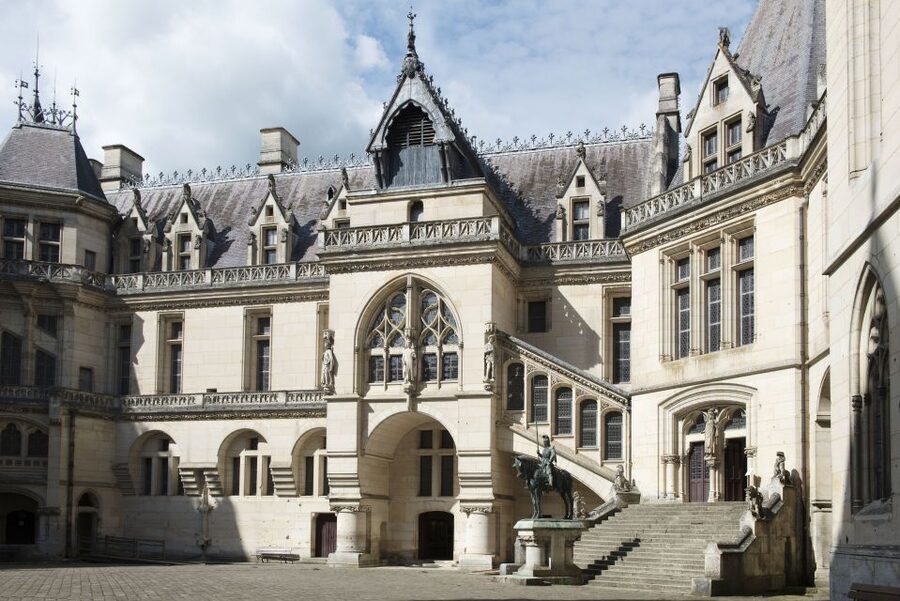
The first wow factor is how the château looks once you cross the threshold. The route includes the large salons and the central courtyard, and these are the zones where the architecture does the heavy lifting.
In the courtyard, you get that classic castle rhythm: open space framed by stone and fortress shapes. It is the part that makes the place feel lived-in, even though you know it is a rebuilt castle. The central courtyard also tends to be the best area for photos because it gives you a sense of scale.
Then you move into the salons. This is where the château shifts from open-air spectacle to indoor rooms you can take your time with. The interior walk is part of what makes this worth the effort, because you are not only seeing an exterior landmark.
One heads-up from a practical perspective: some interior areas may feel like you are looking at rooms with display elements rather than fully staged period rooms. That does not ruin the experience, but it can change the vibe if you are expecting every square inch to feel like a historical movie set.
Donjon and chapel: the fortress feel
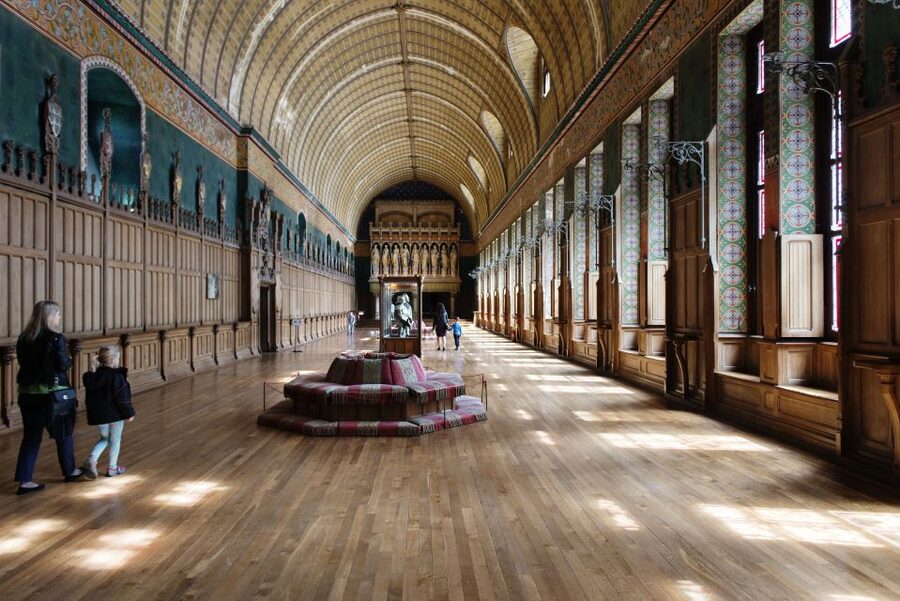
Next up is the donjon and the chapel. Even if you are not a medieval architecture specialist, you will likely feel the shift in mood. These spaces are more about structure and atmosphere than about one single highlight.
The donjon is where the château leans into the fortress identity. You get a better sense of how a castle like this would have defended itself, even though what you are seeing is a later reconstruction. The chapel adds another layer, since religious spaces in castles often show up as distinct, purpose-built rooms.
What I like about including these areas in one visit is that it makes the château feel complete. Instead of treating the castle like a theme park set, you move through different functions, from ceremonial rooms to chapel space.
Le Bal des Gisants in the old dungeons, plus the light show
If you want one moment that feels like it was built for modern audiences, it is Le Bal des Gisants in the old dungeons, paired with a light show.
The setting is the big part. Old dungeons are naturally atmospheric, and the light show makes that atmosphere intentional. This is exactly the kind of stop where you should slow down, look around, and let the lighting do its job. It is also a good point in your route to pause for a snack and regroup mentally, because you will likely want your attention on the experience, not just on taking photos.
Plan for it by not sprinting through earlier rooms. If you rush the salons and courtyard, you can end up moving through the light-show portion on autopilot. Give this stop its due time.
Merlin’s Camelot rooms and the movie magic factor
This château has a strong entertainment connection, and that shows in the way certain rooms are identified as part of Merlin’s Camelot. Even if you only remember a few episodes, you will probably enjoy spotting how the rooms translate to screen.
What matters for you is that this does not need fandom to work. The rooms connected to the series are still real, physical spaces. The show link simply gives you a reference point, which makes it easier to stay curious rather than treating it as generic sightseeing.
If you did not watch the show, you can still enjoy the castle as a reconstructed medieval scene. The movie connections are a bonus layer, not the whole product.
The Man in the Iron Mask connection: why it feels authentic anyway
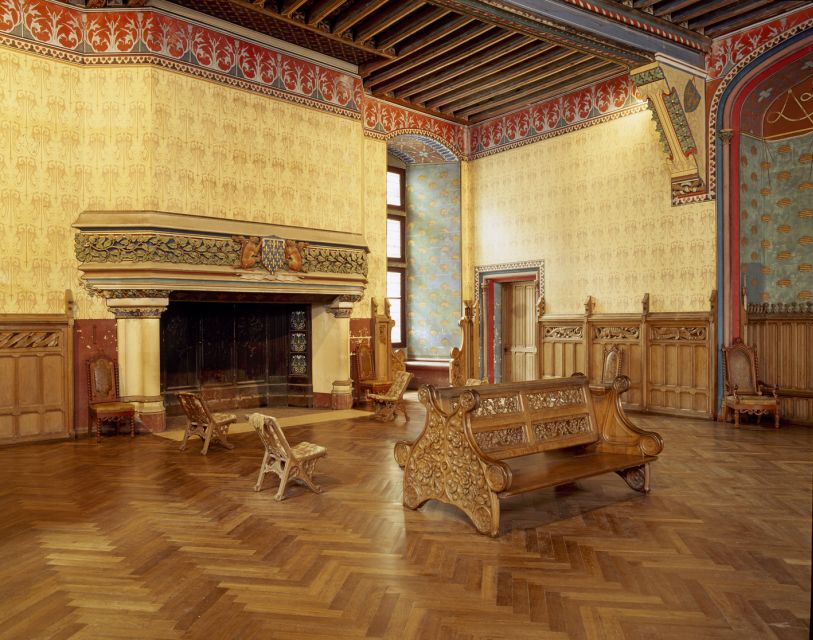
The Man in the Iron Mask is another big name tied to this château. That connection can make you expect overproduced, costume-friendly sets.
Instead, what you get is architecture that already has drama built in. The château’s silhouette, fortified forms, and interior layout all support that cinematic look. So even if you do not care about the film itself, the site’s appearance is still doing its job.
This is one reason why Pierrefonds works as a day trip. You get both the cultural context and the immediate visual impact, without needing multiple tickets or separate guided segments.
Photo time: how to get the best shots without stressing
One of the most practical wins is how the visit can feel calmer than many top-name castles. The château is far from the crowds you might expect at something like Versailles. That helps for two things: photos and movement.
Here is how you can use that advantage:
- Start with wide angles in the central courtyard, where the space gives you scale.
- Then shift to tighter shots indoors, since quieter rooms let you frame better.
- Finally, return to any outdoor vantage points you missed earlier, using the light show as your internal schedule anchor.
Also, because it’s a castle, you will want to protect your comfort. Sunscreen and water are on your packing list for a reason. Even if the weather is mild, you’ll be outside for stretches while moving between zones.
Yes, this is a great place for Instagram stories. But keep it practical, not frantic. Set your phone up once for the shot you care about most, then explore.
Audio guide reality check: French only, but still useful
If you like understanding what you are seeing, plan to add the audio guide. You can buy it on-site for 3 € per person, but it is listed as French.
If you speak French, this is an easy way to connect the dots between the architecture, the reconstructed design, and the different spaces you pass through. If you do not speak French, you might still find it helpful for tone and structure, but you should expect less detailed comprehension.
Because the site covers multiple areas, the audio guide can prevent you from leaving with only images and a vague sense of where you went. Even a basic audio context helps you notice more as you walk.
A few wrinkles: corridors, room layout, and getting turned around
Two practical considerations are worth calling out.
First, some indoor spaces may not feel like they are styled with lots of period furniture. Instead, you might see areas where the display is more object-based, like structural or decorative elements. If you love fully dressed historical interiors, you may wish there were more scene-setting in every room.
Second, navigation can be a bit tricky inside. The signage may not behave like a modern building map, and it is possible to feel like you are following exit cues that do not match what you expect. The fix is simple: take your time, use your senses, and if you feel lost, stop for a moment and re-orient to the courtyard.
The good news is that these are minor compared to the overall impact. Even with a little interior wandering, the château’s design keeps pulling you back in.
What to bring for a comfortable day in Pierrefonds
Bring what you need to stay comfortable through a full castle circuit.
You should have:
- Passport or ID card
- Comfortable shoes
- Sunscreen
- Water
- Comfortable clothes
The ID piece matters because there are free-entry rules tied to age and EU status, and you may need to show a photo ID at the ticketing station first.
Free entry rules and discounts that can lower your total cost
This is where you can save money.
- Visitors under 18 have free entrance.
- EU citizens under 26 also have free entrance, but you must show a photo ID at the ticketing station first before going to the monument entrance.
- There is free entrance on the first Sunday of January, February, March, November, and December.
- There is also free entrance during European Heritage Days, which is the 3rd weekend of September each year.
If you are planning a family trip or you have EU citizens under 26, this is worth checking early, so you do not pay when you do not need to.
When it is closed, so you do not waste a trip
This château is closed on:
- January 1st
- May 1th
- December 25th
If your schedule is flexible, aim for a day when it is open and you can arrive early enough. Remember, last entry is 1 hour before closing, and the park closes 45 minutes earlier than the monument.
Should you book this Château de Pierrefonds entrance ticket?
Book it if you want a medieval-style château experience that feels visually dramatic, photo-friendly, and tied to famous screen appearances. The price is reasonable for a full day ticket, and the small group format helps keep the visit enjoyable rather than stressful.
I would also book it if you like castle architecture and you want an itinerary that covers both ceremonial and fortress-style areas, from salons and courtyard to donjon and chapel.
Consider a skip or at least lower expectations if you are specifically hunting for fully staged period rooms in every chamber, or if you need wheelchair access since this is not suitable for wheelchair users. Also keep in mind that the audio guide is French only, so you may want to treat it as an optional add-on rather than a must-have.
If your goal is to see a reconstructed château that feels like it belongs in a story, then this is a strong choice for a day trip from Paris or Lille.
FAQ
What is included with the Château de Pierrefonds ticket?
The ticket includes your entrance to visit the château.
Is an audio guide included?
No. The audio-guided tour is not included in the ticket price. You can buy an audio guide on-site for 3 € per person on the day.
How much does the entrance ticket cost?
The price is listed as $10 per person.
How long is the visit valid for?
The ticket is valid for 1 day. Starting times depend on availability.
Where do I meet the host?
You meet your host at the Château de Pierrefonds entrance.
Is the tour audio guide available in English?
The listed language is French.
Are there free entry options for kids or young adults?
Yes. Visitors under 18 get free entrance. EU citizens under 26 also get free entrance, but you must show a photo ID at the ticketing station first.
When is the site free for everyone?
Free entrance is offered on the first Sunday of January, February, March, November, and December, and during European Heritage Days (the 3rd weekend of September).
What time should I arrive?
The last entry to the site is 1 hour before closing time. The park closes 45 minutes before the monument closes.
Is the château accessible for wheelchair users?
No, it is listed as not suitable for wheelchair users.
Tickets, compared.

Versailles Palace and Gardens Full Access Ticket
Read our review →
Eiffel Tower Entry Ticket with Optional Summit Access
Read our review →
Moulin Rouge Cabaret Show Ticket with Champagne
Read our review →
Montparnasse Tower Observation Deck Entry Ticket
Read our review →