Reviewed · TICKETS
Poissy: Le Corbusier’s Villa Savoye – Entry Ticket
One house can teach a whole design philosophy. The Villa Savoye is that, a UNESCO-listed masterpiece by Le Corbusier that turns a country weekend home into a guided-feeling walk through modern architecture.
I love the way the building makes ideas physical, especially with its concrete experiments and the famous architectural promenade concept. I also love the layered story, from ambitious 1928 experimentation to wartime use and careful restorations.
One possible drawback, you have to manage time. Last admission is 30 minutes before closing, and the site bans large bags and suitcases, so plan light.
In This Review
- Key things that make this ticket worth your time
- Poissy and the Villa Savoye: why this modern house draws crowds
- Price and logistics you actually need to know (before you arrive)
- Entering the villa: the experience starts with how you move
- Spotting Le Corbusier’s five points as you walk
- Concrete, prefabrication dreams, and the real construction story
- The villa’s wartime chapter and the scars restorers had to fix
- How the house survived: from a threatened demolition to careful preservation
- Your best way to see it in one day
- Value for money: why the ticket feels fair
- Who this experience suits best
- Should you book the Villa Savoye entry ticket?
- FAQ
- What is included with the Villa Savoye ticket?
- How long is the ticket valid?
- Is this experience refundable?
- Is the site wheelchair accessible?
- What days is the villa closed?
- When is the last time I can enter?
- Are pets allowed inside?
- Are strollers allowed?
- When is free entrance available?
Key things that make this ticket worth your time
- UNESCO status since 2016 for Le Corbusier’s 17 related sites across multiple countries
- The “five points” of modern architecture you can spot as you walk through
- A real architectural promenade, meaning the order of spaces is part of the design
- On-the-ground construction details, including how materials were cast or made on site
- History you can read in the building, including German requisition and later damage
Poissy and the Villa Savoye: why this modern house draws crowds
If you think modern architecture is hard to understand, the Villa Savoye is a friendly place to start. This is not modernism as a distant theory. It is modernism as a physical route you can follow, with sightlines, ramps or transitions (depending on what areas are open), and carefully planned views across the property.
The setting in Poissy, in the Ile-de-France region, matters too. The villa sits in a broad setting that helps you understand how the house was designed to relate to open space. That helps you read the building instead of just admiring it from one angle. You’ll likely find it easier to grasp why Le Corbusier treated this as a total project, not just a box with windows.
And yes, the UNESCO connection is a big deal here. Since 2016, the Villa Savoye is part of the Le Corbusier sites inscribed as World Heritage. That means you’re looking at one of the clearest examples of his approach, recognized at the highest global level.
Price and logistics you actually need to know (before you arrive)
The ticket is priced around $10 per person, which is a pretty solid value for a UNESCO landmark tied to one of the most influential architects of the 20th century. You are paying for access to a place that is not just famous, but foundational for understanding modern architecture.
A few practical points can shape your visit:
- The ticket is valid for 1 day from first activation.
- Opening hours can vary, so check before you go.
- Last admission is 30 minutes before closing time, so don’t aim for the final minutes.
Access is also fairly straightforward. The villa is wheelchair accessible, which is a big plus if you have mobility needs. Just know there are constraints on what you can bring.
Also plan your packing list. The site has a bag screening process, and access is not authorized with suitcases or large bags. There is no luggage storage at the monument. If you are traveling with a lot of gear, this is the kind of place where you will feel happier with a small bag you can manage through security.
Closures are also consistent enough to plan around. The villa is closed on Mondays, and also on January 1, May 1, and December 25.
Entering the villa: the experience starts with how you move
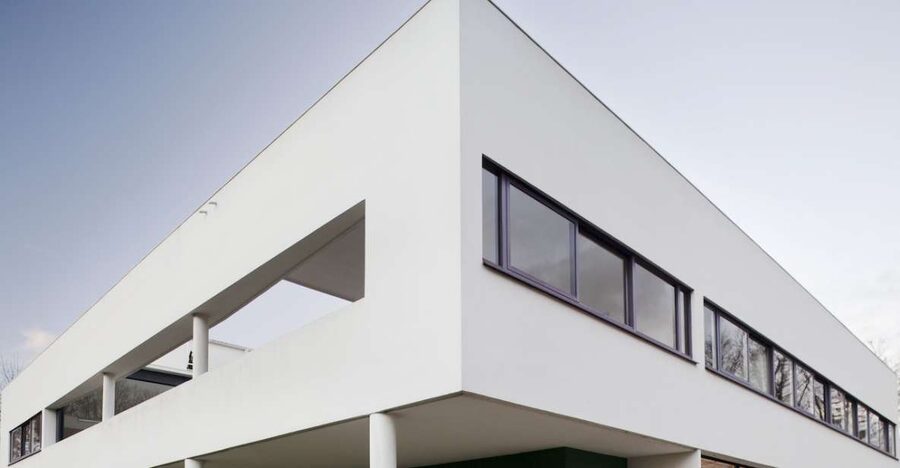
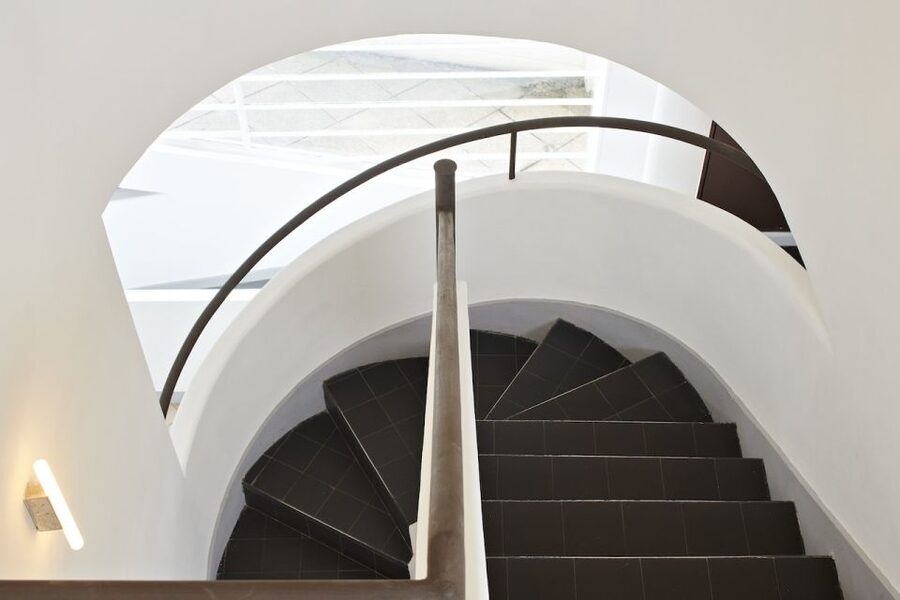
You might expect a house tour to feel like a set of rooms. This place is different. Le Corbusier designed the Villa Savoye around the idea that the experience is a route. The building is often described as an architectural promenade, and you can feel what that means as you move from one viewpoint to another.
What makes this valuable is that your brain locks onto the design faster. Instead of scanning details randomly, you naturally start comparing how the plan changes your perspective. It becomes less about memorizing and more about noticing.
As you enter, take a minute to reset your expectations. This is not a traditional manor where you wander at will and admire décor. It is a design laboratory. The “wow” is not just the look. It is the logic behind it.
Spotting Le Corbusier’s five points as you walk
This is the heart of the visit. Le Corbusier built the Villa Savoye as the culmination of years of research and experimentation, and he applies his famous five points of a new architecture here.
Here is what to look for as you explore, in plain terms:
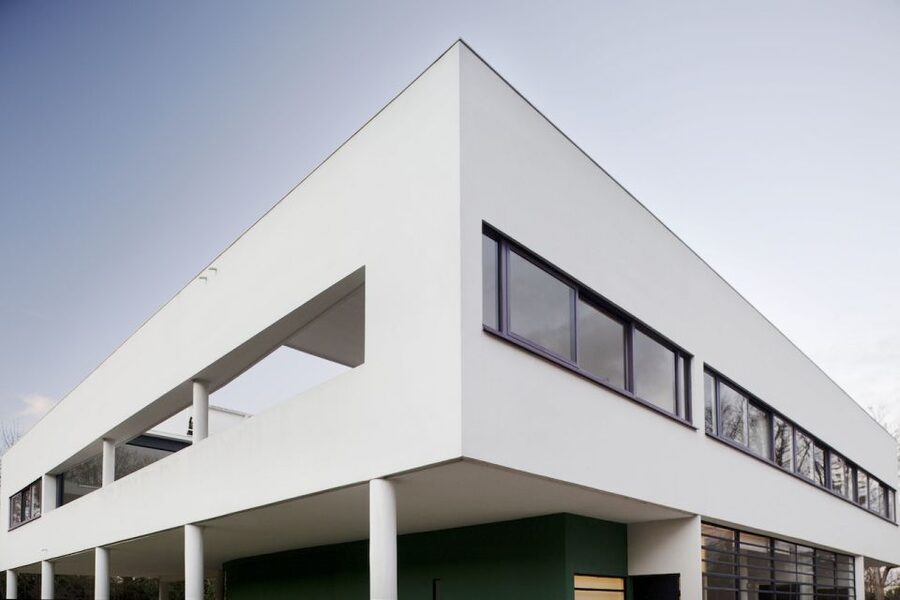
- Pilotis (supporting columns)
Look for the way the building rises on supports. This helps separate the structure from the ground, changing how light and space read. Even if you don’t know the theory, you’ll likely notice the house feels lifted rather than heavy.
- A long window in a band
Instead of broken-up windows, you’ll see the idea of horizontal continuity. This affects how light moves inside and how the façade communicates rhythm.
- A flat roof
The roof is not treated as an afterthought. It is part of the architecture. Even when you cannot access certain roof views, the flat-roof idea helps you understand the overall massing.
- A free plan
The layout emphasizes flexibility of internal space rather than being constrained by traditional load-bearing walls. As you move, notice how the building feels designed by space relationships, not by old-school construction logic.
- Free facades
The exterior is designed as a composition. The façades are not just what’s left after structure is done. The building’s face reads as a deliberate diagram, designed to work with the rest of the plan.
Why this matters for your trip: you’ll feel smarter without doing homework. If you can spot these elements, you’ll understand why the villa is more than a pretty building. It is a working demonstration of a new way to think about housing.
Concrete, prefabrication dreams, and the real construction story
One thing that makes the Villa Savoye especially fascinating is the construction narrative. In the late 1920s, the Savoye family chose Le Corbusier as an avant-garde architect after seeing his earlier work, including the Church villa in Ville-d’Avray.
This villa was a place to test new materials and new methods, with concrete playing a key role. The ambition included prefabricated components, but the reality was messy. In the end, much of it was cast or made on site, even the hollow cement bricks that fill the walls.
Why you should care: architecture history often gets reduced to big ideas and iconic silhouettes. Here, the story includes the stubborn, practical side of building something new. You can look for the evidence of “done on site” thinking in how the structure reads and how surfaces and openings are composed.
If you like details, this is where your visit rewards you. You’ll likely slow down and start noticing how the building’s surfaces behave, not just how they look.
The villa’s wartime chapter and the scars restorers had to fix
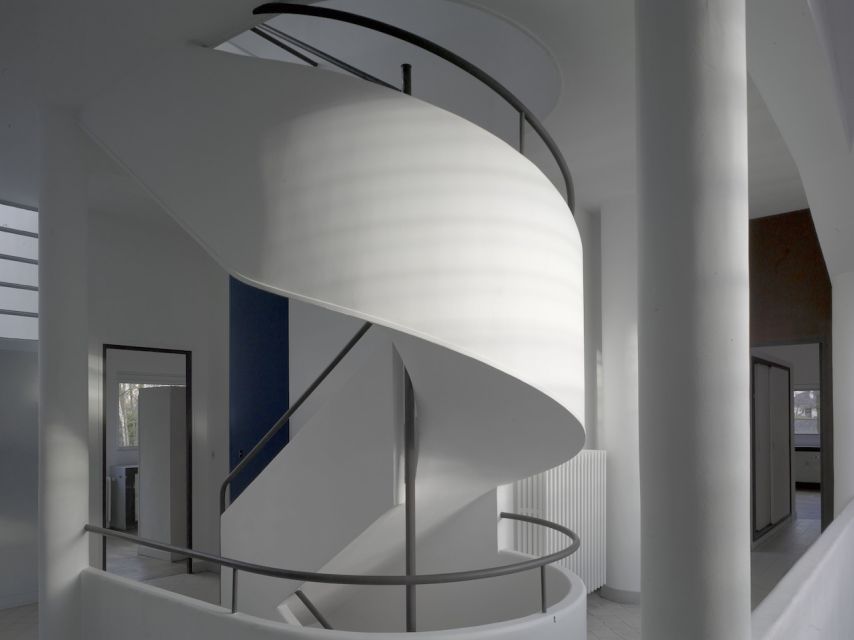
The Villa Savoye did not simply sit there as a monument. After the Second World War, the Savoye couple took refuge in Poissy for a time, then moved to the provinces in May 1940. During the occupation, the villa was requisitioned by the Germans, used as a strategic vantage point over the Seine valley and even the Ford factories.
Then came new damage. After liberation, the American army settled there. When the Savoyes returned after the conflict, the house was badly damaged: broken windows, frozen radiators, and damage to the parquet. In 1945, everything had to be redone.
Instead of launching full restoration right away, the couple transformed the property into a farm, with the house serving as a storage location. Years later, Eugenie Savoye returned regularly to pick fruit and vegetables.
What makes this layer powerful for you as a visitor is that it turns the villa into something more human than a museum object. Buildings survive because people use them, repair them, fight for them, and reimagine them. You are seeing architecture that was tested under real-world pressure, not just photographed at its best.
How the house survived: from a threatened demolition to careful preservation
By the 1950s, Poissy was growing, and the city had plans that put the villa at risk. The agricultural plateau was considered ideal for housing, and in 1958 Poissy planned to build a high school there. Until that happened, the villa was transformed into a cultural space for young people.
But architects mobilized, forming a committee to save the villa. In 1959, Minister of Culture André Malraux took measures to preserve it. Poissy sold the property to the State along with a plot of 1 hectare, and restorations began in 1963.
In 1965, the villa was classified as a Historic Monument. Since then, there have been two more restoration programs and research on the polychromy of the walls, which is a fancy way of saying they investigated the original wall colors and finishes rather than treating it like a monochrome rebuild.
This preservation story changes how you view the building. You can look at the villa as a collaboration between design vision and decades of restoration decisions. It also makes the UNESCO listing feel less like branding and more like recognition of a long rescue effort.
Your best way to see it in one day
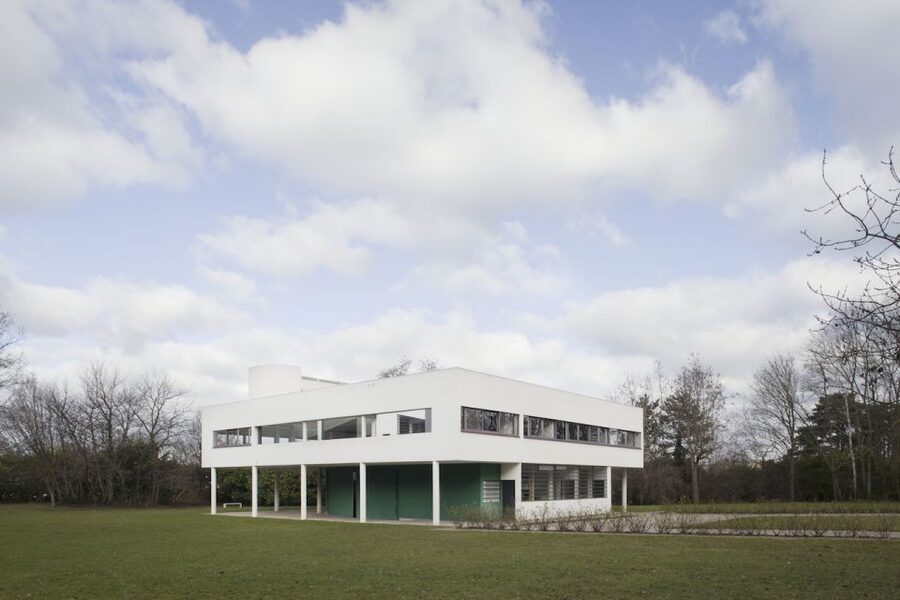
This is an entry ticket experience, so your success depends on how you spend your time once you are inside. I suggest you work with a simple plan:
First, do one slow pass just to get your bearings. Then, go back and focus on the five points of modern architecture. If you try to memorize everything at once, you will feel overwhelmed fast. If you instead match what you see to a short checklist, the building starts speaking clearly.
Second, treat movement as part of the exhibit. The villa is designed as a sequence. Even small changes in your viewing angle can reveal how the plan and façade are composed.
Third, pause for the historical overlay. Keep the wartime and restoration story in mind as you look around. It makes small details feel less random. When you understand the villa was damaged and later repaired, you start noticing what looks original versus what looks restored or reconsidered.
One more practical tip: arrive with enough time to pass bag screening comfortably. Because large bags and suitcases are not allowed and there is no storage, your visit will feel smoother if you keep it simple.
Value for money: why the ticket feels fair
At about $10 per person for a UNESCO-recognized work by Le Corbusier, this ticket is usually a good deal. The cost is low enough that you can see it as value for access and time, not just value for a quick photo stop.
Think about what you get for that price:
- a globally famous building tied to modern architecture’s core ideas
- the chance to connect those ideas to the actual space you walk through
- a site that includes complex historical layers, not just one era
If you are already touring Poissy or doing a broader Ile-de-France day, this makes a lot of sense. If you are coming only for a half-hour photo, you might feel shortchanged. But if you like thoughtful design and can give it a real visit window, you get a lot.
There is also a good sign in the numbers. With an overall rating around 4.8 out of 5 across 88 ratings, the experience tends to land well for people who show up curious and ready to look.
Who this experience suits best
I think Villa Savoye is ideal for:
- architecture fans who want a clear, walkable example of the five points
- travelers who like meaningful context, not just famous names
- anyone who wants a break from traditional museums and prefers a building-as-exhibit
It may feel less ideal if:
- you want a classic room-by-room mansion tour
- you hate timed site rules and strict closing procedures
- you are traveling with oversized luggage, since you cannot store it and suitcases or large bags are not authorized
Should you book the Villa Savoye entry ticket?
Yes, if you’re the type who likes understanding what you’re seeing. This is one of the few UNESCO sites where the concept is not hidden behind text. You can sense it while moving through the space.
Book it if you want a practical day outing with strong value, and if you can plan around the last admission rule. I would not book it if your schedule is too tight for a finish-time entry, or if you are arriving with a suitcase. Keep your bag small, give yourself time, and you’ll come away feeling like the villa taught you something, not just posed for a photo.
FAQ
What is included with the Villa Savoye ticket?
The ticket includes entrance to Le Corbusier’s Villa Savoye.
How long is the ticket valid?
It is valid for 1 day from the first activation.
Is this experience refundable?
No. The activity is non-refundable.
Is the site wheelchair accessible?
Yes. The experience is listed as wheelchair accessible.
What days is the villa closed?
It is closed on Mondays, and also on January 1, May 1, and December 25.
When is the last time I can enter?
The last admission is 30 minutes before closing time.
Are pets allowed inside?
No pets are allowed, except guide dogs.
Are strollers allowed?
No. Baby strollers are not allowed in the monument.
When is free entrance available?
Free entrance is available on the first Sunday of January, February, March, November, and December, and during European Heritage Days (the 3rd weekend of September). Free entrance is also available for visitors under 18 and EU citizens under 26, but you must show a photo ID at the ticketing station first.
Tickets, compared.

Versailles Palace and Gardens Full Access Ticket
Read our review →
Eiffel Tower Entry Ticket with Optional Summit Access
Read our review →
Moulin Rouge Cabaret Show Ticket with Champagne
Read our review →
Montparnasse Tower Observation Deck Entry Ticket
Read our review →