
Reviewed · 2-HOUR EXPERIENCES
Saint-Émilion: 2 hours – Visit of the vineyard, the cellar and tasting
Wine country, but with real machinery. I like how this Saint-Émilion experience turns a short walk in the vines into a full picture of how the wine is grown, made, and aged, then capped with a guided tasting.
Two things I really appreciate: the vineyard section led by Florent (with his mother, Marie-Anne, sometimes also involved) is hands-on and paced for a small group, and the tour finishes with a structured tasting of four Château wines, including two from the Grand Cru appellation.
One thing to keep in mind: you are on-site for about two hours and you’ll be moving through vineyard paths and cellar spaces, so comfortable shoes help if you’re visiting when the ground is damp or uneven.
In This Review
- Key highlights you should notice
- From Vine Rows to the Barrel Cellar in Two Hours
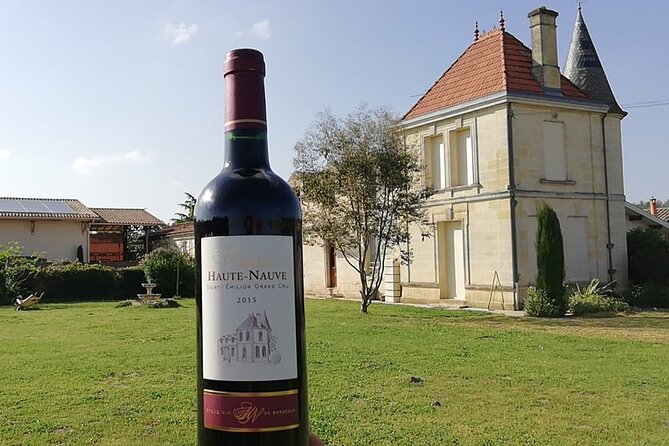
- Meeting Château Haute-Nauve and Getting a Small-Group Experience
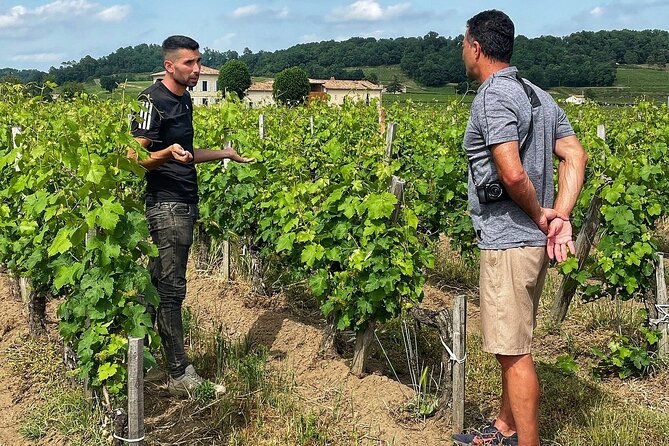
- The Vineyard Walk: Plots, Seasons, and a 4th-Generation Estate
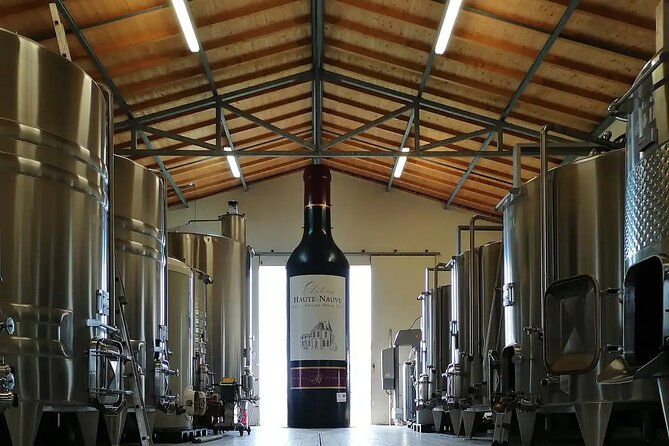
- Wind Turbine, 6 Meter Bottle, and the Sustainability Story
- Inside the Winery: Fermentation, Pumping, and Pressing
- Barrel Cellar Aging: How the Wine Learns Patience
- The Tasting: Rosé, Saint-Émilion, and Two Grand Cru Bottles
- Price and Value: What You Get for About $30
- Who This Tour Fits Best
- A Balanced Take: The Best Part and One Practical Consideration
- Should You Book Château Haute-Nauve’s Vineyard and Cellar Tour?
- FAQ
- How long is the Saint-Émilion vineyard and cellar tour?
- Is the tour offered in English?
- How many wines do you taste?
- What types of wines are included in the tasting?
- What is included with the tour price?
- Where does the tour start?
- What is the maximum group size?
- Are service animals allowed?
- Is free cancellation available?
Key highlights you should notice
Vineyard walk with 4th-generation context and a clear timeline of what changes through the year
Real estate touches like a wind turbine and a 6 meter high wine bottle, tied to sustainability choices
Production tour with the basics of fermentation, pumping, and pressing explained in plain language
Barrel cellar stop so aging is not just a word on the menu
Tasting of four Château wines, including two Saint-Émilion Grand Cru bottles
Small group size (up to 15) makes it easier to ask questions in English
From Vine Rows to the Barrel Cellar in Two Hours
This is the kind of Saint-Émilion tour that respects your time. In about two hours, you go from the vineyard where the grapes start, to the cellar where the wine is produced, and finally to the tasting table. It’s built for people who want more than a quick photo stop, but don’t want a half-day commitment.
I especially like the way the tour is sequenced. You learn what the grapes need and how the vineyard is managed, then you see how that work translates into production steps like fermentation and pressing, and only then do you taste. The result is that the tasting makes sense, even if you are not a wine expert.
Meeting Château Haute-Nauve and Getting a Small-Group Experience
The tour meets at Château Haute Nauve 1 Haute Nauve, 33330 Saint-Laurent-des-Combes, France, and it ends right back there. That loop is handy. You avoid the hassle of hopping between far-flung stops, and you can arrive, park, and settle without stress.
You’re capped at 15 travelers, and that matters. In a small group, you actually hear the explanations, and your guide can react to what you care about, whether it’s how the vineyard handles risk or how the aging affects flavor. The tour is offered in English, which makes it a good option if you want a full experience without relying on translations.
Timing is also realistic: it’s an approximate two-hour format. If you’re building a day around Saint-Émilion, you can usually fit it between meals or pair it with another short activity in the region.
More of France by the course:
- Wine Discovery Tasting In Carcassonne
★ 5.0 · 85 reviews - MARSEILLAN : Maison Noilly Prat, cellars visit and tasting FRENCH
★ 5.0 · 76 reviews - Winery Tour & Wine Tasting – Deli Plate & 3 Wines
★ 5.0 · 72 reviews
The Vineyard Walk: Plots, Seasons, and a 4th-Generation Estate
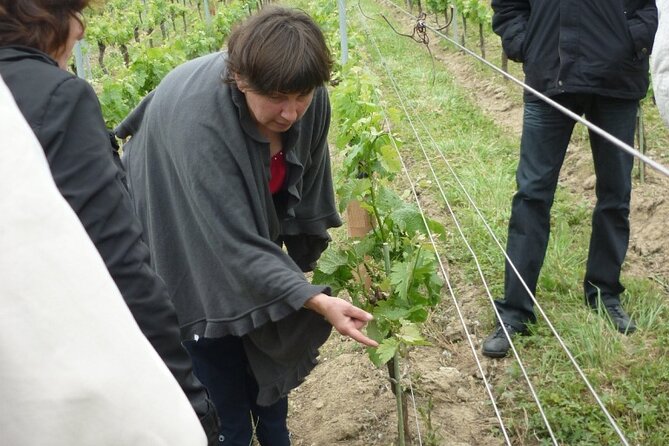
The experience starts in the vineyards, where you get the estate story and the practical side of viticulture. You’ll hear about the estate’s 4th-generation connection to winemaking, which helps you understand why the approach feels consistent but not stuck in the past. The tour also talks about what makes Saint-Émilion’s appellation specific, so you’re not just learning about one property, you’re learning the “why” behind the region.
What I like most here is the focus on how work changes through the year. You’ll discover different plots of vines and learn that not every patch is treated the same way. That concept is crucial if you want to read a wine label later without feeling lost. The guide’s goal is to show how decisions in the vineyard can lead to different characteristics in the glass.
If you’re the type who enjoys asking questions, this is a good moment to do it. Vineyard management involves weather, timing, and trade-offs, and you’ll have a chance to ask what they prioritize and why.
Wind Turbine, 6 Meter Bottle, and the Sustainability Story
After the initial vineyard walk, the tour points out a few estate features that turn the sustainability conversation from theory into something physical. You’ll see a wind turbine and a 6 meter high wine bottle, both used as visual anchors for the broader message.
The guide also covers challenges like crop freezes and how the winery responds when the weather threatens the harvest. You’ll hear about a strategy that includes sustainability and diversification, along with how they are developing new wines. I find this part valuable because it shows that modern wine is not just tradition. It’s decision-making under pressure.
This section is especially useful if you’ve ever wondered how vineyards adapt to climate swings. You leave with a clearer picture of why wineries talk about resilience as much as they talk about terroir.
Inside the Winery: Fermentation, Pumping, and Pressing
Next comes the winery, where you connect vineyard work to production. You’ll see the steps of winemaking laid out in a way that’s easier to follow than most people expect. The tour covers fermentation, pumping, and pressing, so you understand what happens after the grapes arrive.
There’s also a practical element here. You’ll typically get a look at the kind of tanks and equipment used after harvest, with an emphasis on what each stage is supposed to accomplish. The “from grapes to wine” explanation is the backbone of the tour, and it helps you taste with context later.
A small-group format makes this easier. If you want clarification on terms like fermentation versus pressing, you can usually ask and get a straight answer without feeling rushed.
Other France bookings in the margin notes

Barrel Cellar Aging: How the Wine Learns Patience
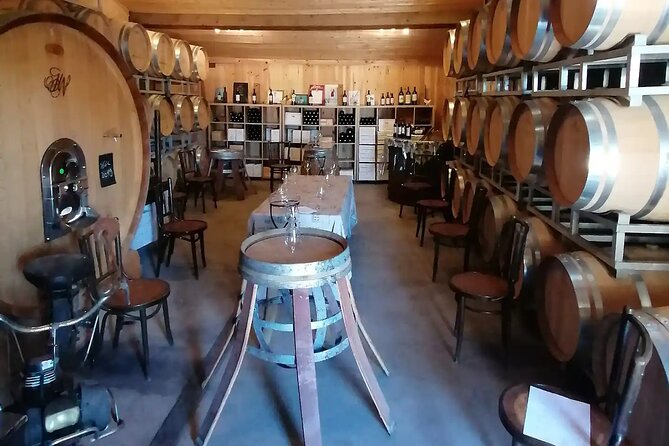
The tour then moves into the barrel cellar, where the wine ages. This stop turns aging from a vague marketing phrase into a real process you can picture.
Even without complicated jargon, aging matters because it influences texture and flavor development. Seeing the barrel environment helps you understand why two wines from the same general region can taste different. It also sets up the tasting so you aren’t only judging by acidity or fruitiness, you’re also thinking about structure.
This part is also a good reality check. Wine quality does not appear only at harvest. It’s shaped after the grapes are already turned into must, then fermented, then refined during time in barrels.
The Tasting: Rosé, Saint-Émilion, and Two Grand Cru Bottles
Finally, you sit down for a guided tasting of four Château wines. This is the heart of the ticket value because you’re not just tasting one bottle. You’re tasting a set that shows range.
The tasting includes:
a Rosé
one Saint-Émilion
two wines from Saint-Émilion Grand Cru
That mix is smart. A rosé gives you an early point of comparison, then you move into the main appellation and finally into the Grand Cru segment. By the time you reach those two Grand Cru pours, you’re already training your palate on what to look for.
In the vineyard and cellar sections, you learned about vineyard decisions and production steps. Now the tasting tells you how those decisions can translate into what you notice in the glass. If you pay attention here, you’ll come away with a stronger sense of style, not just a list of what you liked.
I also appreciate that the tasting is guided. You’re not left with a confusing free-for-all. The guidance helps you learn how to taste without turning it into a school exam.
Price and Value: What You Get for About $30
At $30.04 per person, this tour is priced like an entry-level wine experience, but it includes the ingredients that make a difference: vineyard time, cellar time, and a tasting of four wines. Many lower-cost wine activities offer only a quick cellar visit and one bottle. Here, you get multiple steps of the process and four pours, including two Grand Cru wines.
The short duration also boosts value. Two hours is long enough to feel like you experienced something real, and short enough that you can still plan the rest of your day in Bordeaux wine country.
If you want a deeper dive into only one aspect, like a long technical cellar tour, you might pay more elsewhere. But if your goal is to understand the wine journey in a compact, friendly format, this feels like a fair deal.
Who This Tour Fits Best
This tour works well for:
Wine beginners who want a clear path from vineyard to bottle
Casual wine lovers who like tasting but want the why behind it
Anyone traveling with limited time who still wants a real vineyard and cellar visit
- English speakers who want explanations without swapping languages all day
It may be less ideal if you hate walking on uneven ground or if you’re looking for an ultra-long, highly technical tasting seminar. But for most people, it hits a sweet spot: structured, informative, and paced so you don’t feel overwhelmed.
A Balanced Take: The Best Part and One Practical Consideration
The standout strength is the full chain of learning. You see vineyard plots and learn how seasonal work fits the bigger picture, then you get the production steps in the winery, then you taste with four Château wines that include two Grand Cru bottles. That combination turns the tasting into something you can actually interpret.
The practical consideration is simple. You’re in the vineyard and then moving through cellar spaces. If you have mobility issues, you’ll want to think about how comfortable you are with short walks and indoor steps in a working wine environment.
Should You Book Château Haute-Nauve’s Vineyard and Cellar Tour?
I’d book it if you want a tight, high-value wine experience in Saint-Émilion. You get exactly what you came for: a vineyard walk with real farming context, a winery tour with production steps like fermentation and pressing, and a guided tasting that includes both Saint-Émilion and Grand Cru wines.
If you’re planning your day around Saint-Émilion and Bordeaux wine country, this is a smart move because it gives you perspective fast. You’ll leave with a clearer sense of how vineyard choices connect to what ends up in the glass.
FAQ
How long is the Saint-Émilion vineyard and cellar tour?
The tour lasts approximately 2 hours.
Is the tour offered in English?
Yes, it is offered in English.
How many wines do you taste?
You taste 4 Château wines.
What types of wines are included in the tasting?
The tasting includes a rosé, one Saint Émilion, and two Saint Émilion Grand Cru wines.
What is included with the tour price?
The ticket includes the tasting of 4 Château wines, including alcoholic beverages.
Where does the tour start?
The tour starts at Château Haute Nauve 1 Haute Nauve, 33330 Saint-Laurent-des-Combes, France, and it ends back at the meeting point.
What is the maximum group size?
The tour has a maximum of 15 travelers.
Are service animals allowed?
Yes, service animals are allowed.
Is free cancellation available?
Yes, you can cancel for a full refund if you cancel up to 24 hours in advance of the experience’s start time (local time).
Latest France entries, notes attached

2-Hour Experiences, compared.
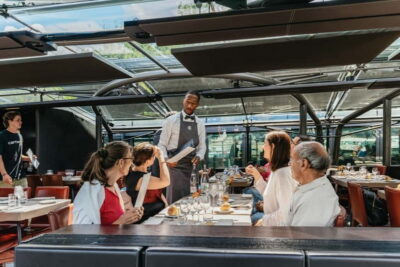
2-Hour River Seine Lunch Cruise with 3-course-menu
Read our review →
The Père Lachaise Cemetery: Guided 2-Hour Small-Group Tour
Read our review →
Paris Louvre: 2-Hour Private Tour for Groups or Families
Read our review →
This tour also appears in