
Reviewed · CANOES & KAYAKS
Sarlat la Canéda: The Dordogne valley by canoe
The Dordogne feels different from a canoe. I love the slow, steady paddling that suits beginners, and I love the up-close castle-and-cliff views that you simply cannot get from the road. One thing to consider, the trip depends on river conditions, and high water can mean cancellation.
This canoe descent from Vitrac lets you choose a shorter float or a longer day on the river, with stops for swimming, picnics, and lunch along the way. Price is about $29.04 per person, and it’s one of the most consistently liked activities in the area, with a 4.7 rating and strong recommendation rates.
In This Review
- Key Highlights You’ll Feel on the Water
- Why a Dordogne Canoe Float Beats the Usual Sights
- Choosing Your Time Window: 2 Hours or a Full River Run
- Vitrac Start, Beynac Views, and How the Shuttle Fits In
- What You Actually See and Do While Paddling
- Staying Comfortable: Sunscreen, Shade, and Shoes That Work
- Canoes Loisirs: Helpful Staff and Support That Goes Beyond the Basics
- Price and Value: Why This Costs Less Than It Feels Like
- Who Should Book This Canoe Descent (and Who Might Not)
- Should You Book Canoes Loisirs in the Dordogne?
- FAQ
- How long is the canoe descent?
- Where does the canoe trip start and how do you get back?
- Is the experience offered in English?
- What’s included with the canoe trip?
- Is it suitable for beginners?
- Are service animals allowed?
- Is there free cancellation?
Key Highlights You’ll Feel on the Water
- Easygoing current: The Dordogne moves gently, so the trip feels peaceful instead of workout-heavy.
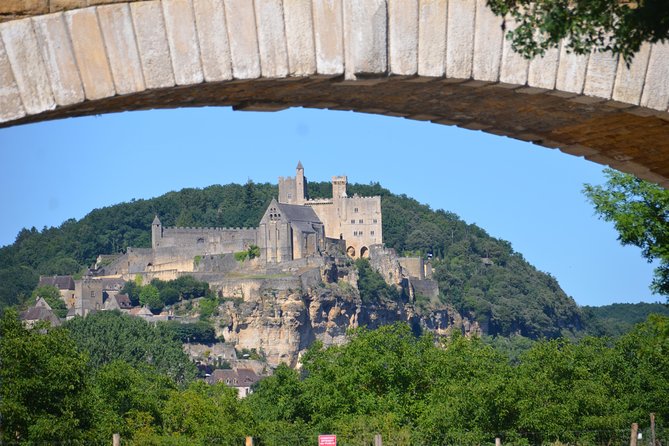
- Castles and villages close up: You paddle past cliff-top chateaux and stone towns you’d miss from a car.
- Go at your own pace: Pick when to stop for a swim, a beach lunch, or a quick stretch.
- Staff help you get started: You get clear instructions, equipment, and practical support from Canoes Loisirs.
- Transport is handled: You’ll deal with shuttles and buses so you don’t have to fight parking and directions.
- Wildlife sightings are realistic: Kingfishers, buzzards, kites, dragonflies, and more are part of the day.
Why a Dordogne Canoe Float Beats the Usual Sights
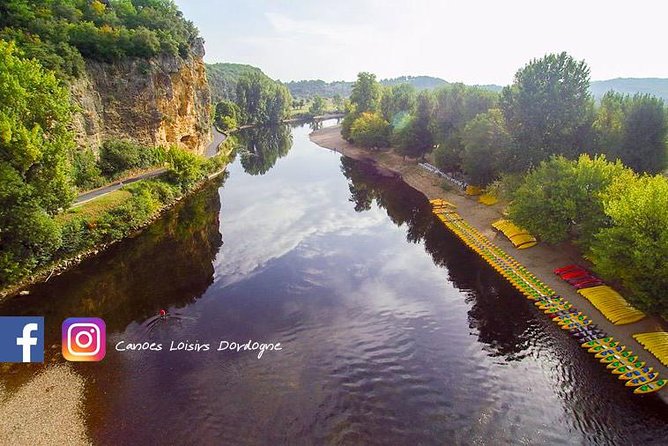
A day on the Dordogne by canoe is one of those rare experiences where the “main event” is the river itself. You’re not rushing from viewpoint to viewpoint. You’re moving slowly, looking around, and actually noticing the details, like limestone cliffs, bridges overhead, and the rhythm of villages along the water.
I like how this works for different travel styles. If you love castles, you’ll spot chateaux perched on cliffs. If you love nature, you’ll be watching birds and insects while you paddle. And if you just want a break, the current does the heavy lifting.
It’s also an ecological way to travel on a day that can otherwise turn into car time and hot parking lots. You’ll be in the fresh air, and you’ll feel less time in traffic and more time under open sky.
The only big watch-out is that this is weather and river dependent. When conditions are wrong, the experience may be cancelled. That is not a guarantee, but it is a real possibility you should keep in mind when you plan your Dordogne days.
Choosing Your Time Window: 2 Hours or a Full River Run
This experience can run from about 2 to 6 hours, and the time you choose changes the feel of the day. Shorter options tend to be more relaxing, with fewer hours of straight paddling. Longer options give you more scenery, more chances to stop, and more castle moments.
From what you can select on the river, there are versions people describe as 2.5 hours with five chateaux, and longer rides like four or six castles that can stretch toward a half day to most of the day. One helpful way to think about it: the longer routes can include stretches where you’re not getting much push from the current, so you’ll paddle more.
There’s also the question of where the canoe time “feels” long. On some options, you may start downstream after a shuttle or bus move to the start point, then float back. That can be efficient, but it can also mean some time off the canoe before you start.
If you’re travelling with kids or you want a mellow day, I’d lean shorter. If you want more river time and you’re okay with some extra paddling, go longer. Either way, the day’s personality is the same, slow water, scenery, and frequent chances to hop out.
Other Bordeaux bookings in the margin notes
- Marseille: Côte Bleue Calanques Half-Day Kayak Tour
★ 4.7 · 877 reviews - Marseille: Calanques Catamaran Tour & Standup Paddle
★ 4.8 · 411 reviews - Montpezat: Canoe and kayak rental in the Verdon Gorges
★ 4.7 · 361 reviews
Vitrac Start, Beynac Views, and How the Shuttle Fits In
The canoe ride departs from the Vitrac riverside area. A key detail that can save you confusion: this is not the town of Domme up on the hill, it’s the riverside area in the Domme region.
Most of the time, you’ll float downstream through the Dordogne valley and keep moving until you reach the end point where a shuttle or bus brings you back. People describe a route that carries you downstream to just past Beynac, then pickup back to the Vitrac base camp. Another note I found useful: shuttle service can run hourly, which helps if you’re trying to plan lunch or stops along the way.
If you’re pairing this with other Dordogne stops, think of it like a sightseeing loop anchored to the river. You’re choosing a “chapter” length, then letting the river deliver the scenes.
Also, it helps to arrive ready for a quick change from walking around town to being on the water. The staff are set up for a smooth transition, and it’s easier if you don’t make it a last-minute scramble.
What You Actually See and Do While Paddling
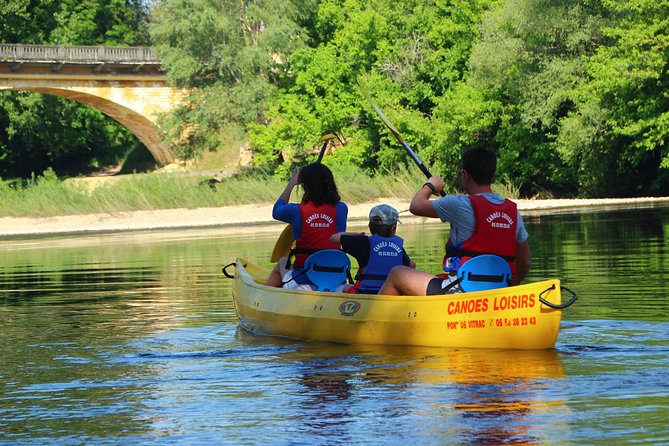
This is a self-paced canoe descent, so your day is what you make of it. The main rhythm is simple: you paddle, you look, you stop where it works for you, then you float on. The river moves gently enough that beginners can manage, especially after the first few minutes when your steering hands learn the canoe.
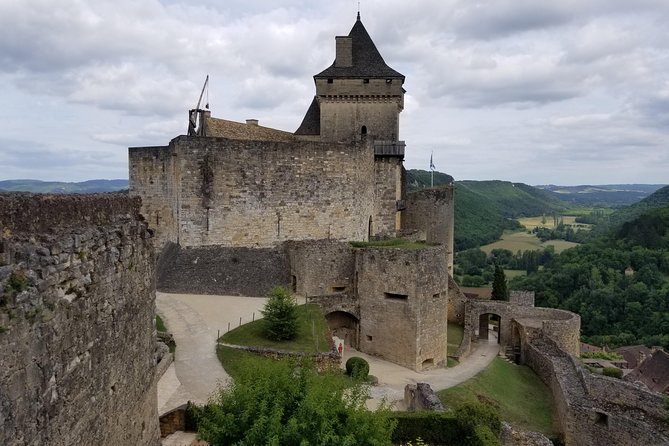
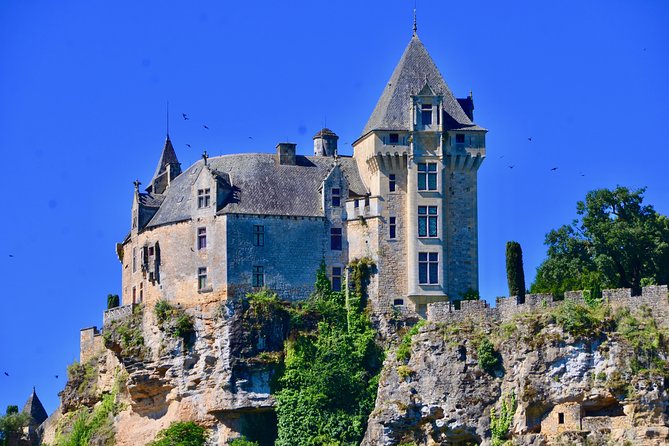
One of the best parts is how the views change without you realizing it. You start with riverbank scenery, then the cliffs and cave-like rock formations come into focus. As you go, you see medieval architecture from below, including cliff-hugging chateaux that look dramatic from the water.
Swimming and picnicking are a big part of the experience when the weather cooperates. People describe docking for lunch at river access points, and using snack stops along the route for practical food like burgers, fries, and wine. If it’s hot, that ability to jump in for a break can turn the whole day into one long exhale.
Nature sightings are also a plus. Birdlife comes up in day descriptions, including kingfishers and raptors. You may also spot dragonflies and other insects doing their river work.
For history fans, one account mentions seeing ledges used in prehistoric times from below. Even if you are not chasing facts, it adds a deeper layer to what you’re seeing.
And yes, there’s even some movie-culture trivia floating around, with one bend in the river linked to a scene from Ever After. If you’re a movie spotter, it’s worth mentally marking that kind of detail as you paddle.
Staying Comfortable: Sunscreen, Shade, and Shoes That Work
This is a water day, which means the comfort checklist matters. I’d treat it like a beach day, because in warm weather there may be not much shade along the canoe route. Bring sunscreen, sunglasses, and a hat, and plan for the sun to feel more intense than you expect.
Footwear is another practical detail. Water shoes are helpful, but not required in every case. What is required is thinking about traction and what you step on when you hop out to stretch, swim, or grab a lunch stop. If you only wear flip-flops, you’ll likely regret it.
The river can also get a little choppy at certain points. One very concrete tip: larger boats travel on parts of the route between a couple of bridges, and they can create choppy water. The advice from the people who’ve done it is straightforward, get out of their way and stay alert when you hear or see them coming.
Rain does not automatically ruin the day. One account notes they still had a beautiful trip even when the weather wasn’t perfect. The key is packing for weather changes and being ready to dry off later.
More Things to Do in Bordeaux


Canoes Loisirs: Helpful Staff and Support That Goes Beyond the Basics
The operation here is built for people who want the river, not a complicated itinerary. Canoes Loisirs provides the canoe and the gear, plus safety equipment and a map, and staff explain how to paddle and steer so you’re not figuring it out the hard way.
English support is part of the deal, with the experience offered in English, and that matters on a day when you need quick clarity. Even if you don’t speak much French, you can still get your bearings fast and know what to do.
People also emphasize the staff’s professionalism and friendliness. One standout example: during a rare incident where a canoe became stranded around a bridge, the team handled rescue quickly. The story included a waterproof bucket that was left with the canoe, then later returned with personal items to the hotel. That kind of follow-through is worth noting, because it shows they treat the experience like more than a checkout line.
Other accounts mention punctual timing and organized flow, including being transported to the meeting point and returned afterward. If you’re trying to reduce stress during your Dordogne trip, that consistency is a real value.
Price and Value: Why This Costs Less Than It Feels Like
At about $29.04 per person, the big value is not just “renting a canoe.” You’re getting a full package that generally covers the essentials: the canoe, the kit and safety gear, a map, and the system that moves you to the start point and brings you back at the end.
That matters because the Dordogne can be a bit of a logistics puzzle if you’re relying on self-drive and river access spots. Here, the river is the route, and the company handles the moving parts. Reviews also reflect that people pick up canoes via the operator and then get dropped back after the float.
Duration options are another value lever. For a shorter float, you’re paying for a couple of hours of major scenery. For longer options, you’re paying for a bigger portion of the day, with more time to stop and enjoy.
A smart planning tip: this activity is popular and tends to get booked. It’s also often reserved around a month in advance on average. If you’re travelling in peak season or on a specific day with good weather expected, I’d book earlier rather than gambling.
Who Should Book This Canoe Descent (and Who Might Not)
I think this is a great fit if you want a day that feels like Dordogne at human speed. It works for couples who want romance without a strict schedule. It works for families because the pacing can be relaxed and manageable. It works for friends because everyone can take breaks when they want and enjoy the scenery together.
Castle fans will also be happy. You’re not just seeing chateaux from far away. You’re seeing them from water level, which is a totally different perspective.
If you’re the type who only enjoys sightseeing when every minute has a guided explanation, you might find this less “structured.” The strength is freedom and scenery, not a lecture. Still, the staff support at the start can get you comfortable enough to focus on the river.
If you dislike water completely, or if you’re uncomfortable hopping out for short stops, you may feel limited. And if you’re planning your entire schedule around one specific date, remember there is a risk of cancellation due to high water levels.
Should You Book Canoes Loisirs in the Dordogne?
If you want a practical, scenic Dordogne day with easy paddling, real chances to swim, and the kind of castle views you can only get from the river, then yes, I’d book it. The package value is strong, and the operator’s organization and English support reduce day-of stress.
My only “don’t forget” advice is to treat the river conditions as part of the plan. Choose your Dordogne days with a bit of flexibility, and pack like it’s a beach day even if you’re not spending all day on land.
FAQ
How long is the canoe descent?
It runs for options from about 2 to 6 hours, depending on which route duration you choose.
Where does the canoe trip start and how do you get back?
The canoe ride departs from the Vitrac riverside in the Domme area. A shuttle or bus brings you back to the Vitrac base camp after your downstream paddle.
Is the experience offered in English?
Yes, the experience is offered in English.
What’s included with the canoe trip?
You get the canoe plus the kit and safety equipment, and you’ll also receive a map and instructions from the staff.
Is it suitable for beginners?
Most travelers can participate, and many people describe the paddling as peaceful and surprisingly easy, even for beginners.
Are service animals allowed?
Yes, service animals are allowed.
Is there free cancellation?
Yes. You can cancel for a full refund up to 24 hours in advance. If you cancel less than 24 hours before the start time, the amount you paid is not refunded.
Latest Bordeaux entries, notes attached





Canoes & Kayaks, compared.
Montpezat: Canoe and kayak rental in the Verdon Gorges
Read our review →
Saint-Tropez: Kayak Experience in Ramatuelle Reserve
Read our review →
3 Hour of Sea Kayak Trip in the Creeks of Sete
Read our review →
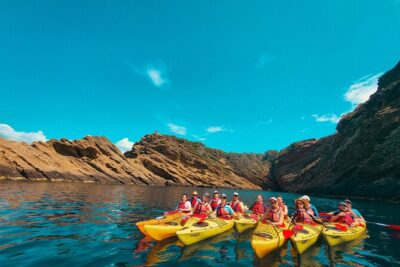
Kayak Tour at Calanques National Park (Ciotat)
Read our review →This tour also appears in