
Reviewed · BURGUNDY VINEYARD TOURS
Skip the Line: Abbaye de Fontenay Admission Ticket
A quiet abbey can reset your whole day. This skip-the-line ticket gets you into Abbaye de Fontenay, a UNESCO World Heritage site where Romanesque buildings still feel made for silence. I really love how the complex has been preserved through centuries of change, and I love that you can see the key rooms without spending your morning hunting for the right entrance.
The one thing to keep in mind is that this is a short, self-paced visit (about 1 to 2 hours). If you want a long, full-day plan, food included, or a multi-stop day, you’ll likely want to pair it with other Burgundy sights.
In This Review
- Key Things To Know Before You Go
- Skip-The-Line Admission That Makes the Abbey Feel Effortless
- Abbaye de Fontenay: Why This World Heritage Abbey Still Works
- Your Visit Flow: What You’ll See Inside the Abbey Grounds
- The Abbey Church: Where Silence Actually Feels Physical
- Dormitory: A Stark Space With a Strong Sense of Purpose
- Cloister: The Garden-Focused Pause You Deserve
- Chapter Room, Common Room, and Forge: How the Abbey Survived Change
- Chapter Room: The Monastic Decision Space
- Common Room: Where Daily Life Took Shape
- The Forge: The Site’s Industrial Chapter, Still Visible in Stone
- Gardens and Lapidary Museum: Two Extras That Extend the Mood
- Gardens: Take a Breather Without Leaving the Story
- Lapidary Museum: When You Want the Stone Details
- Timing, Ticket Handling, and Getting There Without Stress
- Plan for the Paper Ticket Moment
- Small Group Feel
- Near Public Transportation
- Price and Value: Does $13.91 Make Sense?
- Who Should Book This Abbey Ticket, and Who Might Not
- My Booking Advice: Should You Book Abbaye de Fontenay in Advance?
- FAQ
- How long is the Abbaye de Fontenay admission experience?
- Where is this experience located?
- What is included in the ticket price?
- Are food and drinks included?
- What are the opening hours?
- Is the ticket paper or digital?
- Is the experience offered in English?
- How far in advance is this usually booked?
- How big is the group?
- Can I cancel and get a full refund?
Key Things To Know Before You Go
- Skip-the-line entry for an easier arrival at a heavily visited abbey
- Oldest preserved Cistercian abbey with Romanesque buildings still standing
- Privately owned since 1820, with public visiting all year round
- You get the gardens and the lapidary museum along with admission
- Small group size (max 15 people), which helps keep the mood calm
- English availability for the ticketed experience
Skip-The-Line Admission That Makes the Abbey Feel Effortless
Abbaye de Fontenay is one of those places where you should spend your energy looking, not figuring things out. With a pre-booked admission ticket, you can focus on the experience from the moment you arrive. The ticket is paper, so you just show it at entry and get moving.
This kind of timed access matters here because the abbey is both a historic monument and a working visit destination. It draws large numbers of visitors each year, and having a planned entry helps you avoid that awkward wait time that can steal the calm you came for.
Also, the visit is designed to fit real travel rhythms. You’re looking at about 1 to 2 hours, which is perfect if you want something meaningful without burning your whole day. Most people can take part, and the group size is kept small, capped at 15 people.
Abbaye de Fontenay: Why This World Heritage Abbey Still Works
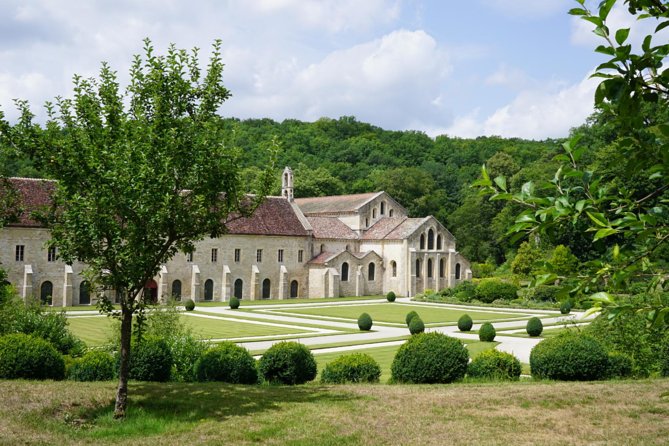
Fontenay Abbey, in Burgundy, was founded in 1118 by Saint Bernard of Clairvaux. That name gets said a lot in religious history, but here it’s more than a date. You’re walking through a real, standing example of early Cistercian architecture, still shaped by the ideas of simplicity and spiritual practice.
In 1862, it was recognized as a French historic monument. Then in 1981, UNESCO listed it as World Heritage. What I like about this sequence is that it shows the site was protected not just for its age, but for its significance and the way it connects to its surroundings.
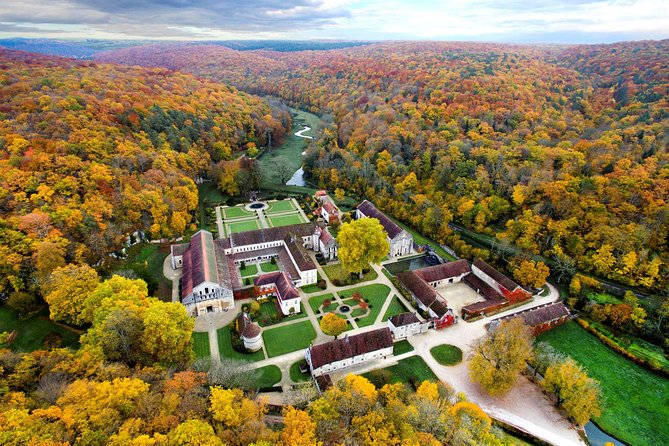
One of the big reasons this abbey feels special is the setting. It sits in a preserved valley that stretches over 1,200 hectares in northern Burgundy. That “out of town” feeling is part of why the abbey works as a quiet place, not just a photo stop.
Then there’s the garden side. In 2004, the abbey’s landscaped park was listed as a “Remarkable Garden” by the National Council of Parks and Gardens. So when you’re done with stone buildings, you’re not stuck in another corridor. You can slow down outside, where the setting supports the atmosphere instead of fighting it.
More Burgundy rows walked glass in hand:
- Burgundy Bike Tour with Wine Tasting from Beaune
★ 5.0 · 674 reviews - Dijon: La Cave du Palais Burgundy Wine Tasting Experience
★ 4.8 · 400 reviews - Small-Group Full-Day Tour of Côte de Nuits, Côte de Beaune Vineyards and Beaune Historical District
★ 5.0 · 364 reviews
Your Visit Flow: What You’ll See Inside the Abbey Grounds
Your ticket centers on Abbaye de Fontenay itself, and the pacing matches the kind of site it is. Plan on getting your bearings, stepping through the main buildings, and taking time to notice details.
The abbey includes a remarkable run of Romanesque spaces that were preserved even after major historical upheaval. During the French Revolution, the monks left, and the site was converted to industrial use. What’s impressive is that the buildings of the Romanesque period were kept, so you can still visit key areas that help you understand how monastic life was arranged.
You’ll focus on several core parts:
- The Abbey Church
- The Dormitory
- The Cloister
- The Chapter Room
- The Common Room
- The Forge
Not every historic place has this kind of intact layout. Here, you get a coherent sense of how the daily rhythm likely worked, even if you’re only visiting for a short time.
The Abbey Church: Where Silence Actually Feels Physical
The abbey church is usually the first stop for a reason. It sets the tone. Romanesque churches can feel heavy and grounded, and Fontenay’s spaces help you slow down without trying. Even if you’re not religious, you’ll probably notice how your mind quiets when the architecture does not ask for attention. It asks for respect.
If you’re sensitive to noise, this is where you’ll benefit most from arriving with a planned entry. One of the strongest themes people mention with this place is the sense of calm inside key rooms, and that calm is easier to catch when you’re not arriving late and crowded.
Dormitory: A Stark Space With a Strong Sense of Purpose
The dormitory is another highlight because it’s plain, direct, and human-scale in the best way. It’s not about flashy decoration. It’s about how the building supports a life of discipline.
If you like to understand history through what people actually used day after day, the dormitory is a smart use of your time. It’s a room that helps you picture routine, not just grand ceremonies.
Other Burgundy bookings in the margin notes
Cloister: The Garden-Focused Pause You Deserve
The cloister is where most people finally exhale. It’s a built-in pause, a transition space between the intense focus of church and the administrative areas of the monastery. It also connects you to the outdoors, which matters because Fontenay’s “slow” feeling is tied to both stone and open air.
You’ll likely want to linger here, even if you’re only visiting for 1 to 2 hours. Give yourself that buffer so the rest of the day stays pleasant.
Chapter Room, Common Room, and Forge: How the Abbey Survived Change
If you’re wondering why this abbey is still worth visiting long after it was founded, this is the answer. Fontenay isn’t frozen in time. It kept being used.
After the monks left, the site shifted to industrial use, but the Romanesque buildings were preserved. That means you can still visit spaces that represent monastic organization, then see how the site maintained its structure even when its purpose changed.
Chapter Room: The Monastic Decision Space
The Chapter Room is where the monastery’s internal life would have been shaped. It’s a key room because it helps you understand the abbey as an institution, not just a church.
If you like history that shows how communities were organized, spend a few extra minutes here. The architecture supports a sense of order. You’ll feel it even without a long lecture.
Common Room: Where Daily Life Took Shape
The Common Room is a helpful stop because it rounds out the story. The abbey isn’t just spiritual ritual. It also involved meals, work, and everyday living within the monastic framework.
For a short visit, this is a good use of time because it bridges the gaps between the church, sleeping quarters, and work areas.
The Forge: The Site’s Industrial Chapter, Still Visible in Stone
The forge is where Fontenay becomes unusually interesting for modern visitors. It’s tied to the period after the French Revolution when the abbey became industrial. Seeing a forge within a Cistercian complex is not something you expect, and it helps explain why the building stock survived.
The practical payoff for you is clarity. You come away understanding that this place is layered. It’s not only old and sacred. It’s also a survivor.
Gardens and Lapidary Museum: Two Extras That Extend the Mood
Your ticket includes access to the gardens and the lapidary museum. That matters because it gives you two different ways to slow down.
Gardens: Take a Breather Without Leaving the Story
The abbey has a landscaped park recognized as a Remarkable Garden in 2004. This kind of official recognition is worth paying attention to because it signals that the grounds are not just pretty, they’re designed and curated with real intention.
In a short 1 to 2 hour visit, gardens can be the difference between seeing stone and feeling the place. If you’re traveling with anyone who gets tired of standing in rooms, gardens help keep the visit balanced.
Lapidary Museum: When You Want the Stone Details
The lapidary museum is included with admission, and that’s a gift if you like material details. Even if you’re not a museum person, a lapidary setting can make the architecture easier to read. Stone becomes the language of the whole abbey.
This also gives you a second indoor option if the weather is unpredictable. You can keep your pace without forcing yourself outdoors for every minute.
Timing, Ticket Handling, and Getting There Without Stress
This experience runs daily, with seasonal hours. From 11/12/2025 to 03/31/2026, it’s open:
- Monday to Sunday: 10:00 AM to 12:00 PM, and 2:00 PM to 5:00 PM
From 04/01/2026 to 11/11/2026, it’s open:
- Monday to Sunday: 10:00 AM to 6:00 PM
So you can plan around your energy level. If you prefer to start earlier, the 10:00 AM opening is the simplest move. If you like a late start, the summer hours are generous, and the longer window gives you more flexibility.
Plan for the Paper Ticket Moment
The ticket is paper. That’s good news for many people because there’s no phone battery drama. Still, I recommend keeping it in a spot you can grab quickly. Abbaye visits usually go smoother when you’re ready at the entry point.
Small Group Feel
The group is capped at 15. That typically makes the experience feel less like a crowd line and more like a controlled flow through the abbey. You’re also offered in English, which helps if you want clarity while still enjoying your own pace.
Near Public Transportation
The site is listed as being near public transportation. That means you can build it into a broader Burgundy plan without depending entirely on a car.
Price and Value: Does $13.91 Make Sense?
At $13.91 per person, this is one of those purchases that feels practical. You’re paying for admission, plus the benefit of pre-booked entry, which is what earns the “skip-the-line” value. In historic sites, the biggest hidden cost is often time, and time is what you don’t get back.
For this specific abbey, your ticket also includes two extra add-ons in the same visit window, the gardens and the lapidary museum. That helps justify the price because you’re not paying for only one room. You’re getting a full visit circuit that matches the 1 to 2 hour duration.
If you’re deciding whether to pre-book, the average time is about 17 days in advance. That’s a good sign. It suggests the abbey is popular enough that planning ahead helps your schedule land the way you want.
Who Should Book This Abbey Ticket, and Who Might Not
This visit is a great match for you if you want:
- A quiet, contemplative environment in a historic setting
- A short visit that still feels complete
- Romanesque architecture and monastic layout, from church to daily spaces
- A stop that includes gardens and a lapidary museum, not just stone corridors
It may be less ideal if:
- You’re hoping for a full day with multiple attractions included
- You want food and drinks provided
- You’re traveling with a very strict schedule and 1 to 2 hours feels too tight for your style
Also, if you’re not interested in historical buildings, the church, cloister, and chapter spaces are the heart of the experience. You’ll still see them, but the value comes from paying attention.
My Booking Advice: Should You Book Abbaye de Fontenay in Advance?
Yes, I’d book this ticket if your timing matters at all. The abbey’s fame is not a small thing. You’re visiting a UNESCO-listed site with a preserved complex of Romanesque buildings, and pre-booked entry helps you show up ready to experience it calmly.
You’ll also get good value because the ticket isn’t just admission to one room. It includes the gardens and the lapidary museum, and the visit fits into a realistic 1 to 2 hour window.
One more nudge based on what people consistently emphasize: the experience is at its best when you slow down inside key spaces. If you rush, you’ll miss what makes the abbey feel special.
FAQ
How long is the Abbaye de Fontenay admission experience?
It’s approximately 1 to 2 hours.
Where is this experience located?
It’s in Beaune, France.
What is included in the ticket price?
Admission to Abbaye de Fontenay, including its gardens and the lapidary museum.
Are food and drinks included?
No, food and drinks are not included.
What are the opening hours?
From 11/12/2025 to 03/31/2026: Monday to Sunday 10:00 AM to 12:00 PM and 2:00 PM to 5:00 PM. From 04/01/2026 to 11/11/2026: Monday to Sunday 10:00 AM to 6:00 PM.
Is the ticket paper or digital?
It’s a paper ticket.
Is the experience offered in English?
Yes, it’s offered in English.
How far in advance is this usually booked?
On average, it’s booked 17 days in advance.
How big is the group?
The maximum group size is 15 travelers.
Can I cancel and get a full refund?
Yes. You can cancel up to 24 hours in advance for a full refund, based on the local time.
Latest Burgundy entries, notes attached






Burgundy Vineyard Tours, compared.

Burgundy Bike Tour with Wine Tasting from Beaune
Read our review →
La Cave du Palais Burgundy Wine Tasting Experience
Read our review →
Small-Group Full-Day Tour of Côte de Nuits, Côte de Beaune Vineyards and Beaune Historical District
Read our review →

Burgundy Grand Crus Route Day Tour – 14 Wines Tastings in Domains
Read our review →
Maison Champy Guided Cellar Tour with Wine Tasting
Read our review →
Taste Wine in Lyon: Burgundy, Beaujolais, Rhône, and more
Read our review →This tour also appears in