
Reviewed · THINGS TO DO IN BORDEAUX
The Most Complete and Best Rated Tour of Bordeaux
Bordeaux can feel big fast, so this walk gives you a clean plan. In just 2 to 3 hours, you trace a smart line through icons like the Water Mirror and major gates, with a guide who turns facades and street names into stories.
What I love is how efficient the route is, and how often you get a real sense of why each place matters, not just what it looks like. If you’re starting your trip, this kind of structure helps you get your bearings fast.
Two other big wins: the guides. People rave about personalities like Pascale and Elisa for being warm, energetic, funny, and ready to answer questions. Plus, the tour includes actual value add with entrance to the Cathedral of Bordeaux and/or Basilica of San Miguel and the Water Mirror stop.
One drawback to plan for: it’s still a walking tour, so if you’re hoping for lots of museum time, you may feel the price is steep for the time on your feet.
In This Review
- Key highlights you will feel on the street
- A smart Bordeaux orientation walk, from Grand-Théâtre to the Water Mirror
- Who this tour fits best
- Starting at Opéra National de Bordeaux and getting oriented fast
- Place de la Comédie: the square that anchors the center
- Gambetta, Pey-Berland, and the Cathedral bell tower moment
- Grosse Cloche and Saint James Street: a bell gate you can feel
- Basilique Saint-Michel and the Saint-Michel neighborhood stop
- Marché des Capucins: where the tour turns practical and delicious
- Porte Cailhau to Pont de Pierre: gates and a bridge that moves the story
- Place de la Bourse and the Water Mirror: the best ending kind of stop
- Porte de Bourgogne and the Galerie des Grands Hommes: finishing with names that matter
- Guide style is a big reason this tour scores a 5 out of 5
- Price and value: is $119.72 per person fair?
- Timing, tickets, and how to make it enjoyable
- What to wear
- How early you should book
- Should you book this Bordeaux landmark walk?
- FAQ
- What language is the tour offered in?
- How long is the Bordeaux tour?
- Where does the tour start and end?
- Is admission included for the Water Mirror?
- What entrances are included during the tour?
- Is the Grand-Théâtre stop included for admission?
- Are there any free stops on the route?
- Is this a private tour?
- Is the tour near public transportation?
- Can I bring a service animal?
- What is the cancellation policy?
Key highlights you will feel on the street
- Private, English-speaking guide that can keep the pace comfortable for your group
- Water Mirror plus Place de la Bourse as a real finale, not a random stop
- Cathedral or Basilica entrance included, so it is more than exterior sightseeing
- Marché des Capucins for market energy, local products, and bite-sized food inspiration
- A route that links gates, bridges, and squares so Bordeaux reads like one story
- Top-rated guide performance with lots of praise for enthusiasm and story-telling
A smart Bordeaux orientation walk, from Grand-Théâtre to the Water Mirror
This tour works best when you treat it like a map you can walk. You start in the heart of the city at Opéra National de Bordeaux, the Grand-Théâtre, and end at the Water Mirror by Place de la Bourse. That means you get both the classic grandeur and the postcard waterfront in one go.
At the center of it all is pacing. The route is built for short stops, quick photos, and brief explanations that connect one spot to the next. You end up with a mental model for Bordeaux, especially if you keep hearing the same names repeated by your guide, like Pey-Berland, the Grosse Cloche, or Porte de Cailhau.
Who this tour fits best
I think this is ideal for you if:
- It’s your first time in Bordeaux and you want an overview that actually sticks
- You like street-level history, not long museum marathons
- You have limited time, but you still want market time and major landmarks
- You want a guide who will adapt the walk to your interests and questions
It is also a good choice for families, since the pace is not all sprinting and the stops give kids a reason to look up, point out details, and ask why a bell tower or a gate is so important.
More Things to Do in Bordeaux
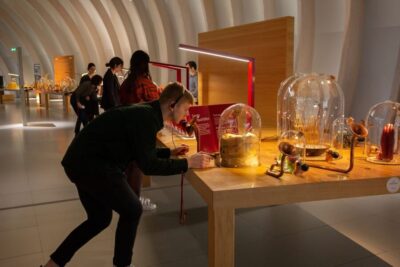
- Bordeaux: Cité du Vin Entry Ticket and Wine Tasting
★ 4.6 · 3,885 reviews - Bordeaux: River Garonne Cruise with Glass of Wine and Canelé
★ 4.5 · 3,630 reviews - From Bordeaux: Afternoon Saint-Emilion Wine Tasting & snack
★ 4.8 · 1,581 reviews
Starting at Opéra National de Bordeaux and getting oriented fast
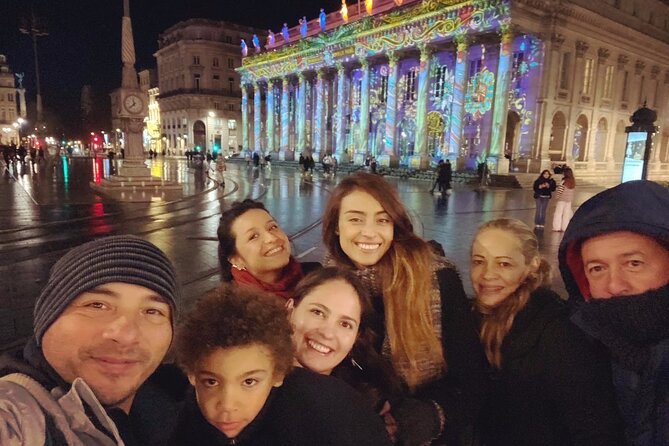
You meet at Pl. de la Comédie, in front of the Opéra National de Bordeaux, Grand-Théâtre. Even if you do not go inside, the setting is a strong “you are in the right place” moment. The Grand-Théâtre’s facade reads like history in stone, and your guide uses it to set the theme for the whole walk.
One practical detail: the tour looks at the Grand-Théâtre, but admission is not included for that stop. So plan on viewing it from the outside and using the guide’s explanation to understand what you’re seeing.
From there, you move a short distance into the next anchor zone, Place de la Comédie. This is where your guide’s job gets easier. The buildings and nearby landmarks line up in a way that makes storytelling feel natural, not forced.
Place de la Comédie: the square that anchors the center
At Place de la Comédie, you get a layered view: the opera area nearby, the Bordeaux Grand Hotel area, and public art in the mix. The stop is short, but it matters because it frames how the city’s grand spaces connect to everyday street life.
Gambetta, Pey-Berland, and the Cathedral bell tower moment
Next comes a stop at Place Gambetta, with the Dijeaux gate discussed in context. Gates may seem like “just old walls” until you connect them to trade, movement, and the way a city grew. That’s where a good guide pays off, and this tour gets high marks for exactly that kind of clarity.
Then you reach Tour Pey-Berland, the separate bell tower of Bordeaux Cathedral. This is one of those places where a small amount of time gives you a big payoff. You can see the tower’s role right away in the way it rises away from the main cathedral structure, so you understand why it is called out as a distinct landmark.
Admission at this stop is free, which is great. The included entrance is tied to the cathedral or Basilica of San Miguel, and the guide uses this area to help you understand what you’ll see when you go inside.
The Bordeaux dossier continues:
Grosse Cloche and Saint James Street: a bell gate you can feel
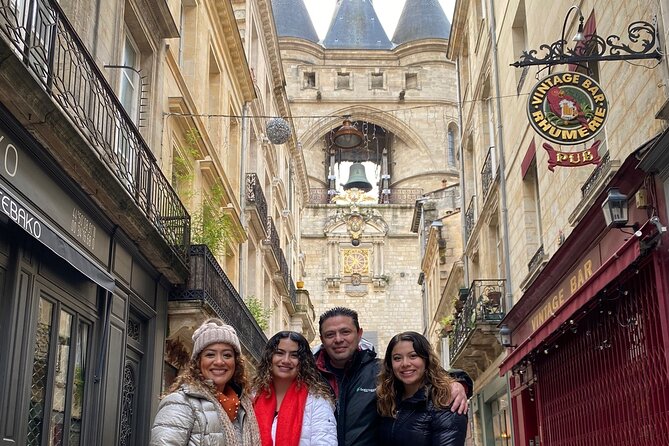
From Tour Pey-Berland, the walk heads toward the Grosse Cloche. This stop is connected with Saint James Street and the Gate of the Great Bell.
Here’s what I like about this part: your eyes get trained. The city throws details at you, from the street layout to the massing of buildings. Your guide gives you a reason to notice the “why,” not just the “wow.”
This is a free stop, and it works well as a breather. You get a short pause in the walk rhythm before moving into the Saint-Michel neighborhood.
Basilique Saint-Michel and the Saint-Michel neighborhood stop
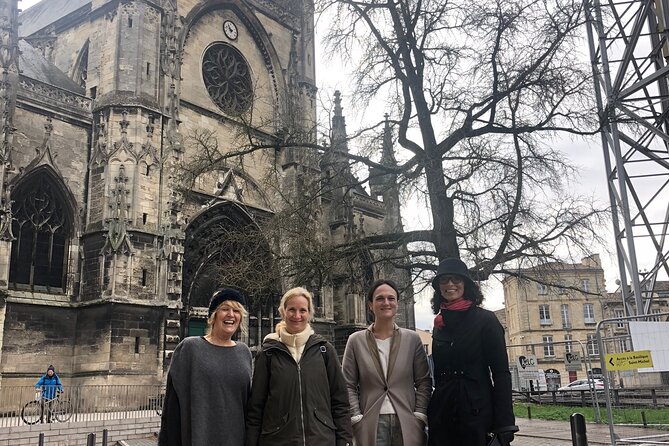
You then reach Basilique Saint-Michel, in the Saint-Michel neighborhood. This is another exterior-focused stop, with a clear payoff for people who enjoy architecture and neighborhoods rather than only big single monuments.
You can treat this section as a gentle transition: from grand civic pieces like the cathedral tower to the more lived-in energy of the street and market area that comes next.
Marché des Capucins: where the tour turns practical and delicious
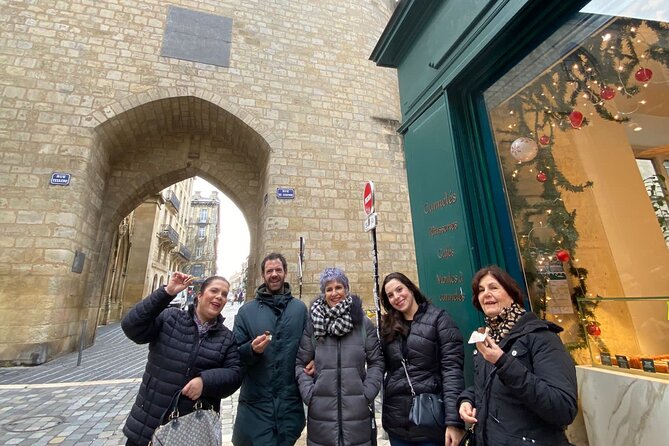
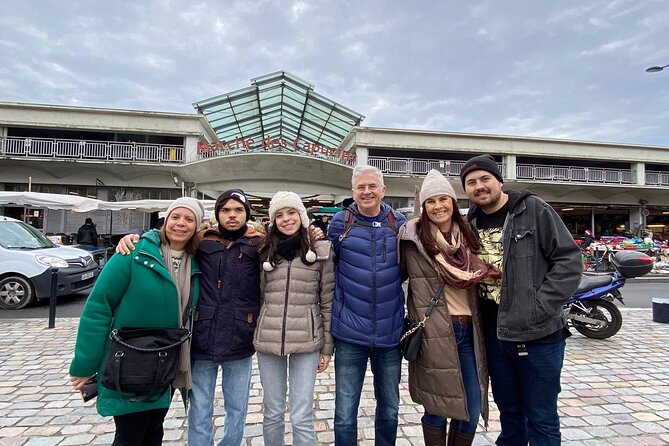
If you remember one stop from this tour, make it Marché des Capucins. It is the kind of place that changes your trip, even if you only spend 15 minutes there.
You see a traditional market atmosphere and you get cues for local products. The market is described as a place where you find cheese and wine, plus prepared meals and coffee. Even if you do not plan to buy much, it’s worth using it to learn what to look for later when you are choosing where to eat.
A guide that is worth your time will also connect the market stop to the rest of your walk. When you see Bordeaux’s gates and squares and then smell food in the air, the city starts to feel like one place, not a list of buildings.
Porte Cailhau to Pont de Pierre: gates and a bridge that moves the story
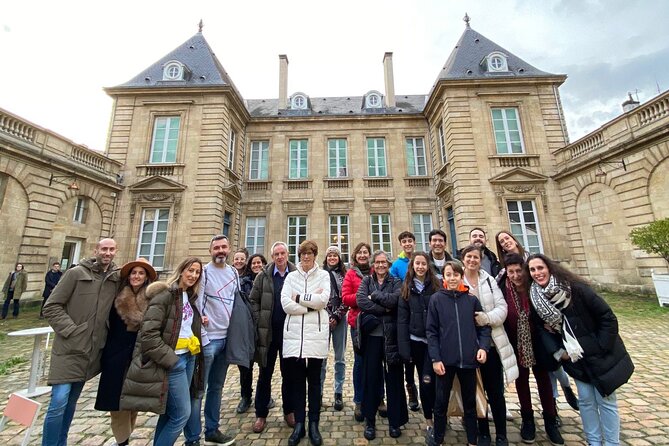
After the market, you move toward Porte Cailhau, a castle-like gate with palace-square surroundings. It was formerly the main gate of the city, and the explanation here is exactly why this tour earns its high rating. A gate stops being random when you understand it as a checkpoint in a living city.
Then comes Pont de Pierre, the stone bridge and the Victor Hugo Avenue area. This is where you feel the city’s two sides more clearly. Even if you stay in the same general central area, the bridge gives you a sense of movement and scale, and it sets you up for the final stretch near the water.
Place de la Bourse and the Water Mirror: the best ending kind of stop
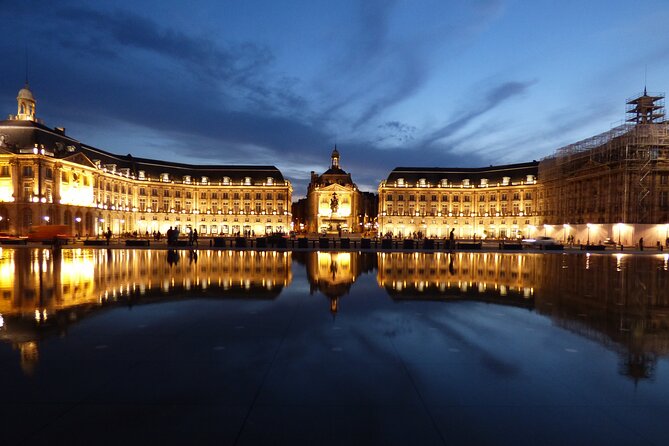
Place de la Bourse is next, with the water mirror, Quai de Bordeaux, and the Port of the Moon referenced as key context. This is your “pause and look” zone.
The finale is The Water Mirror itself. This stop has admission included, and it is the kind of landmark that looks best when you can actually take your time. The whole point of ending here is that the city’s waterfront vibe is not something you should rush past.
Practical tip: show up ready to stand still. If you try to walk through this moment quickly, you miss why people love it as the closing image of the day.
Porte de Bourgogne and the Galerie des Grands Hommes: finishing with names that matter
After the waterfront, the walk closes with Porte de Bourgogne, described as a great gate with Napoleon Bonaparte’s route mentioned on his way to Spain. This is a neat reminder that Bordeaux is not only medieval. It’s also tied into wider European history.
Then you head to La Galerie des Grands Hommes, described as being in the area sometimes called the Golden Triangle of Bordeaux. Even though this is one of the shorter stops, it helps tie together the last theme of your walk, people and legacy, not just stone.
Guide style is a big reason this tour scores a 5 out of 5
What really separates this from a basic highlights walk is how the guides perform in real life. Names that come up again and again include Pascale, Elisa, Nicolás, Nicholas, Raphaël, and Pamela. The consistent pattern in the praise is easy to summarize:
- They keep the walk lively and conversational
- They bring city history down to street level
- They handle questions without sounding scripted
If you’re the type who hates being dragged at a fixed pace, you’ll likely appreciate that the tour can adapt to your interests. One review described a guide asking about interests at the start and adjusting the walk for the group. That matters, because it turns the tour from a lecture into a conversation.
Also, you should know the walking itself is easy in the sense that the route makes frequent short stops. You are not doing long stretches of uninterrupted pavement.
Price and value: is $119.72 per person fair?
Let’s talk straight. $119.72 per person is not the price of a casual self-guided walk. Some people will compare it to other free walking tours and feel sticker shock, especially if the time feels short.
Here’s the value argument that holds up based on what you get:
- You have a private setup, meaning it’s your group and not a large crowd
- Entrance is included for the cathedral and/or Basilica of San Miguel, and the Water Mirror stop is included
- The guide is not just pointing. People repeatedly mention story-telling, humor, and the ability to answer questions
- The route is built to connect many sights quickly, which saves you decision-making time in a city that has a lot going on
Here’s the consideration: if you want extensive museum time or multiple paid interiors, this tour will not be that. This is designed for orientation and iconic sightlines, with only selected entrances included. If that matches your goal, the price can feel fair. If your goal is heavy indoor time, you may regret it.
Timing, tickets, and how to make it enjoyable
The tour runs about 2 to 3 hours. That is a sweet spot for first-time visitors, because it helps you build a route you can later extend on your own.
You will also want to remember:
- Confirmation is received at booking time
- The tour uses a mobile ticket
- It is offered in English
- Service animals are allowed
- It is near public transportation, so you can get there without complicated planning
What to wear
Since this is a walking tour, wear comfortable shoes. Also, plan for changing weather. One guide was praised for keeping the tour going through rain, which tells you the experience is built around moving even when conditions are not perfect.
How early you should book
It’s often booked about 55 days in advance. If you’re traveling in peak weeks, you’ll save yourself stress by booking earlier rather than treating it like an optional last-minute add-on.
Should you book this Bordeaux landmark walk?
Book it if you want:
- A structured introduction to Bordeaux’s key sights
- A private guide who can answer questions and adjust pace
- Cathedral or Basilica entrance plus the Water Mirror included
- A route that connects gates, squares, a market, and the waterfront in a single storyline
Skip it if you want:
- A museum-heavy day with many paid interiors
- A long, slow walk with lots of independent time inside multiple buildings
- The cheapest possible way to see central Bordeaux
If you fall into the first group, this is a strong pick. The consistently high rating is not just about the sights. It’s about the way the walk is guided, with energy, humor, and enough stops to keep you from feeling rushed.
FAQ
What language is the tour offered in?
The tour is offered in English. There is also mention of guide language matching your booking, with English or Spanish listed as available guide languages.
How long is the Bordeaux tour?
It takes about 2 to 3 hours.
Where does the tour start and end?
It starts at Opéra National de Bordeaux – Grand-Théâtre, Pl. de la Comédie, 33000 Bordeaux, France, and ends at Miroir d’eau, Pl. de la Bourse, 33000 Bordeaux, France.
Is admission included for the Water Mirror?
Yes, entrance to the Water Mirror is included.
What entrances are included during the tour?
Entrance to the Cathedral of Bordeaux and/or Basilica of San Miguel is included.
Is the Grand-Théâtre stop included for admission?
No. The Grand-Théâtre stop is listed with admission ticket not included.
Are there any free stops on the route?
Yes. Several stops are listed as free, including Place de la Comedie, Place Gambetta, Tour Pey-Berland, Grosse Cloche, Basilique Saint-Michel, Marché des Capucins, Porte Cailhau, Pont de Pierre, Place de la Bourse, Porte de Bourgogne, and La Galerie des Grands Hommes.
Is this a private tour?
Yes. It is listed as a private tour/activity, so only your group will participate.
Is the tour near public transportation?
Yes, it is listed as near public transportation.
Can I bring a service animal?
Yes, service animals are allowed.
What is the cancellation policy?
Free cancellation is available. You can cancel up to 24 hours in advance for a full refund. If you cancel less than 24 hours before the start time, the amount paid is not refunded.
Latest Bordeaux entries, notes attached






Things to Do in Bordeaux, compared.
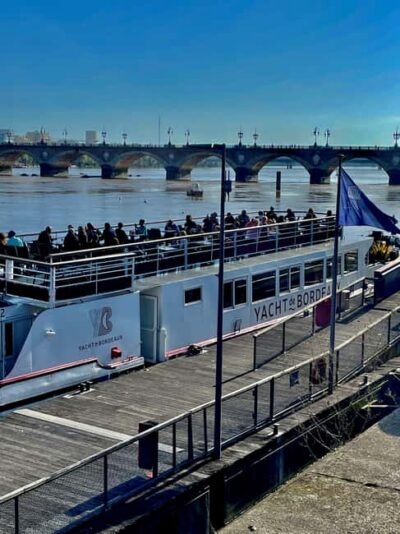
River Garonne Cruise with Glass of Wine and Canelé
Read our review →
Afternoon Saint-Emilion Wine Tasting & snack
Read our review →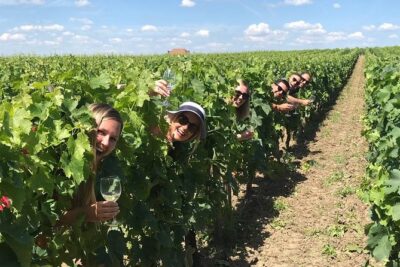
Medoc or Saint Emilion Wine Tasting and Chateau from Bordeaux
Read our review →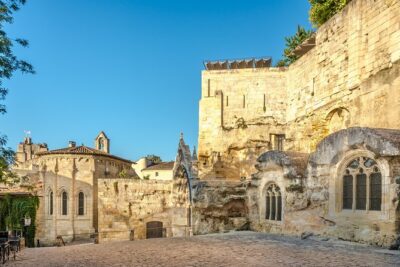
Saint Emilion Day Trip with Sightseeing Tour & Wine Tastings from Bordeaux
Read our review →
Saint-Émilion: Grand Cru Classé Winery Visit and Tasting
Read our review →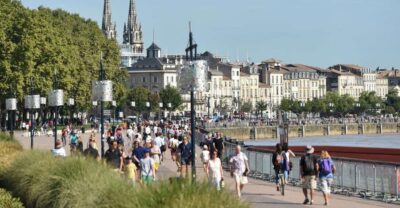
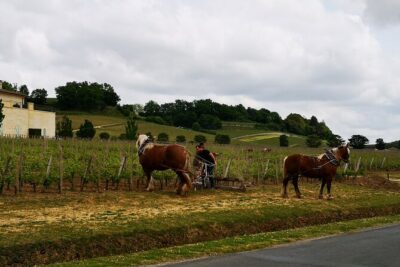
Saint Emilion Half-Day Trip with Wine Tasting & Winery Visit from Bordeaux
Read our review →This tour also appears in