
Reviewed · HISTORICAL TOURS
Vieux Lyon Cultural & Historical Walking Guided Tour (English)
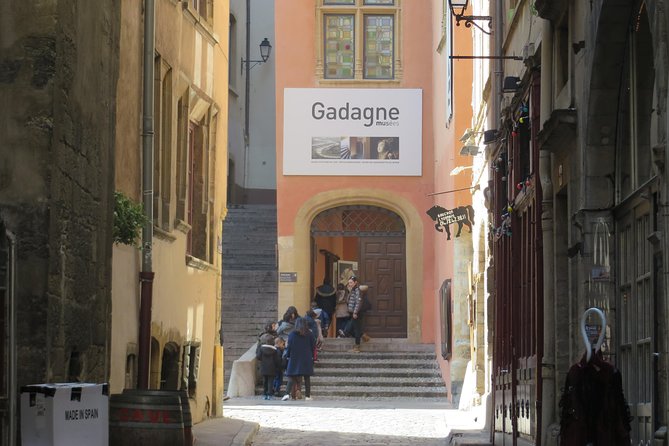
Two hours, and Lyon starts making sense. This small-group walk through Vieux Lyon links Middle Ages life to WW2 Resistance stories, while showing off silk history, secret passageways, and key landmarks like Saint-Jean’s astronomical clock.
What I like most is how Paul (easy to spot thanks to his height) turns Lyon into a story you can follow, with clear, funny explanations and plenty of practical tips for the rest of your day. I also love that the route is built around the city’s signature details: traboules (hidden passageways), silk-making heritage, and then a real look at how Lyon’s institutions evolved over time.
One thing to keep in mind: you may not always get full indoor time at every stop, since opening hours can vary (one guest noted issues with planned museum/church access on a Monday). Also, there’s no audio system mentioned, so if the group spreads out, hearing everything can get harder.
In This Review
- Key takeaways before you go
- A smart two-hour orientation to Vieux Lyon
- Start at Place Saint-Jean, then get your bearings quickly
- Saint-Jean-Baptiste and the astronomical clock moment
- Traboules du Vieux Lyon, where secrets are practical
- A quick pause at Musée du Cinéma et de la Miniature
- Tour Rose and Maison du Crible, signature architecture in minutes
- Brochier Soieries Vieux Lyon: silk, live silkworms, and craft
- Courthouses and the Klaus Barbie trial context
- Theatre des Célestins, façade first, then the hidden modern layer
- The main shopping street, plus local rhythm
- Grand Hôtel-Dieu: the ending inside Lyon’s repurposed hospital
- Value for money: what the $6.05 booking fee really buys
- Pace and group size: who this tour fits best
- What to do before you start (so you get the most from it)
- Should you book this Vieux Lyon guided walk?
- FAQ
- How long is the Vieux Lyon Cultural & Historical Walking Guided Tour?
- Where does the tour start and end?
- Is the tour offered in English?
- Are entry fees included?
- Does the tour include breakfast or pick-up?
- What group size should I expect?
- What is the cancellation policy?
Key takeaways before you go
- Silk + food history, tied to real places in Vieux Lyon
- Traboules walk you through Lyon’s secret “shortcut” world
- Included entry fees so you avoid surprise add-ons
- WW2 and Resistance context, including the courthouse where Klaus Barbie was tried
- A small maximum group size (18), which helps the pace stay friendly
- You finish inside Hôtel-Dieu, in the heart of Lyon’s repurposed heritage
A smart two-hour orientation to Vieux Lyon
Lyon can feel like two cities at once: medieval lanes overhead, and serious institutions under the surface. This tour is designed to help you connect those layers fast. In about two hours, you move from grand religious architecture to hidden passageways, and then from silk workshops to the courthouses tied to WW2 history.
For the price, it’s also a practical deal. You’re paying a small online amount (about $6.05 per person), and the tour includes admission fees for multiple stops. If you’re the type who likes to get value early, this is the sort of walk that helps you plan the rest of your trip without overthinking it.
Start at Place Saint-Jean, then get your bearings quickly
You meet at Place Saint-Jean (Pl. Saint-Jean, 69005), and the finish point is Place de l’Hôpital inside Hôtel-Dieu (Pl. de l’Hôpital, 69002). That end point matters. Instead of ending in a random corner, you wrap up in one of the most impressive repurposed buildings in the center of town.
The meeting spot is also a good “index” location. From here, you can orient yourself toward Vieux Lyon’s main sights, and you’ll have an easier time finding your way later. One more practical point: the guide is typically easy to identify, including by height, which really helps when the group is small but the streets are busy.
More Walking Tours in Lyon
- Lyon: Private Walking Tour of “Traboules” in the Old Town
★ 5.0 · 866 reviews - Lyon: City Highlights Walking Tour
★ 4.9 · 847 reviews - Lyon Highlights & Secrets Walking Guided Tour (small group) including Funicular
★ 5.0 · 831 reviews
Saint-Jean-Baptiste and the astronomical clock moment
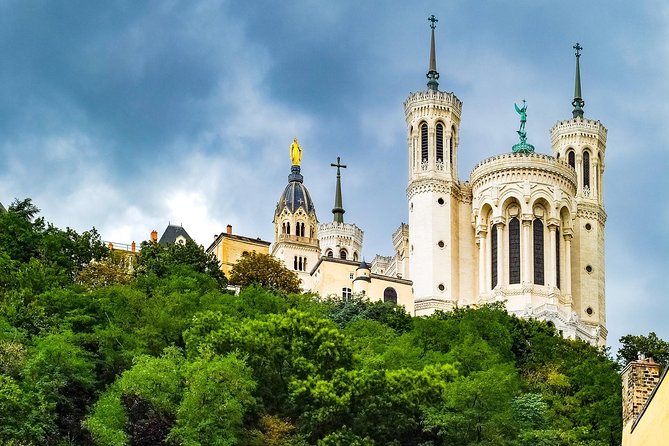
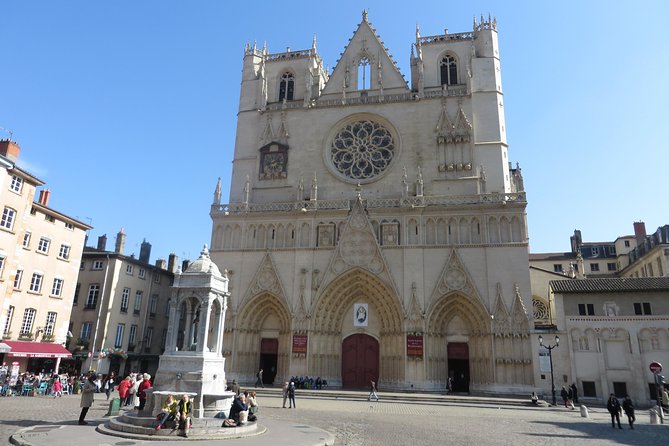
The tour’s first stop is Cathedrale Saint-Jean-Baptiste de Lyon. You get a quick look at the cathedral plus its astronomical clock, with about 15 minutes on site and admission included.
Why this stop is worth your time: the astronomical clock is a reminder that Lyon’s history is not only about trade and food. It’s also about learning, civic pride, and the way cities displayed intelligence in stone. Even if you only catch a short view, it sets the tone for everything you’ll see next: Lyon’s past was built to be understood, not just admired.
A small consideration: indoor time can depend on day-of-week and opening hours. If the cathedral is closed for a portion of the visit, you’ll still get the general orientation from the guide’s explanations, but you may not see everything as planned.
Traboules du Vieux Lyon, where secrets are practical
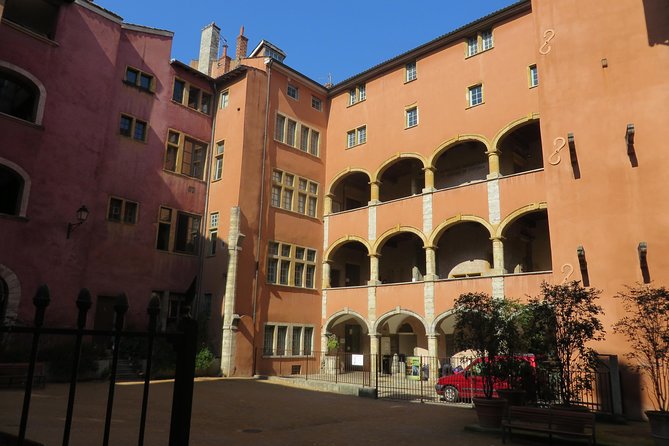
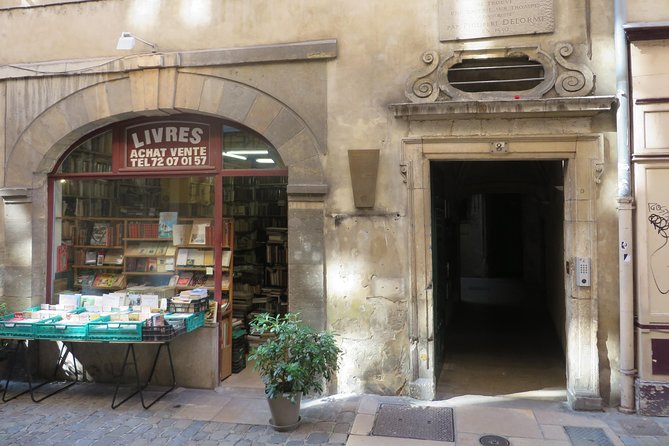
Next you head into one of Lyon’s most distinctive systems, the traboules (hidden passageways). The tour includes visits to a few of them, with about 15 minutes spent here, also with entry included.
This is the part you’ll feel in your legs. You’re not just standing at viewpoints. You’re walking through narrow passages that were designed for real daily movement. Historically, traboules helped people move goods and access buildings efficiently, and during wartime they could become routes that kept people safer.
What I like about this section is how it changes your view of old streets. Suddenly, the facades you’ve been staring at have a second life behind them. It’s also the most “wow, I didn’t know this existed” portion of the walk, even if you think you know Vieux Lyon from photos.
A quick pause at Musée du Cinéma et de la Miniature
You then stop at Musée du Cinéma et de la Miniature. The visit is brief, about 10 minutes, and it focuses on miniatures in the free courtyard of the museum.
This section works as a reset. After the intensity of underground-like passageways, you get something lighter and visual. Miniature displays also make it easier to understand scale and architecture because the city’s forms are presented in a more “readable” way.
Real talk: the courtyard setup is meant to be accessible without deep ticketing requirements. Still, if your schedule has tight indoor constraints, this short stop is a good compromise because you don’t lose your entire momentum.
More France at boulevard pace:



Tour Rose and Maison du Crible, signature architecture in minutes
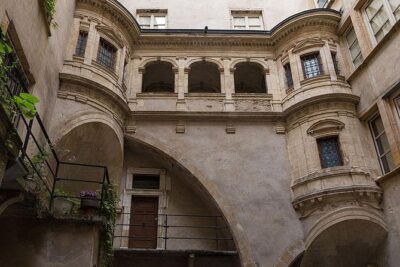
The tour then highlights a standout traboule-related landmark, Maison du Crible, Tour Rose. It’s only about 5 minutes, with admission included.
You’re mainly there for the iconic architecture and the sense of place. This is the kind of stop where the guide’s explanation matters more than time does. Even a quick look can make the building’s role click, especially when tied back to the city’s networks of passageways and courtyards.
If you’re a detail person, this is also one of the easiest photo stops to appreciate because the structure is recognizable fast. If you’re less into architecture, the guide’s framing still helps you connect it to how Lyon functioned.
Brochier Soieries Vieux Lyon: silk, live silkworms, and craft
One of the most distinctive stops is at Brochier Soieries Vieux Lyon. You get about 5 minutes here, with admission included, and the experience includes seeing live silkworms during silk season. You might also see a model of the jacquard loom.
This is where Lyon’s reputation becomes something you can almost touch. Silk was a major part of the city’s wealth and identity, and the craft shows up in buildings, trade networks, and even the way people speak about food and tradition.
Keep expectations realistic: silk season timing matters. If you visit outside the period when live silkworms are available, you’ll still get the silk-workshop context, but the most dramatic element may be reduced. Still, the presence of the jacquard loom model, if available, makes the technology easier to picture.
Courthouses and the Klaus Barbie trial context
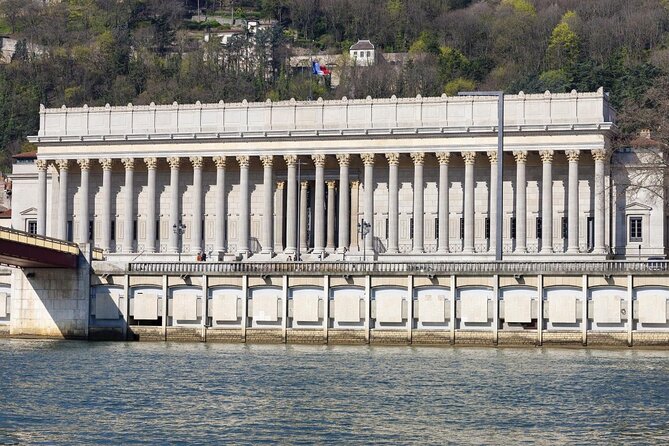
Another serious turn in the story comes at Lyon’s courthouses, where the trial of Klaus Barbie took place. You stop here briefly (the tour doesn’t list a specific minute count for this stop), but it’s clearly part of the history arc from earlier eras through WW2 Resistance.
Why it matters on a walking tour: many city walks treat wartime history as a side note. This one puts it into the physical civic spaces where decisions were made. That contrast adds weight to what you learned in the passageways section. It’s not only about secret routes. It’s also about how society responded once conflict reached institutional levels.
Practical note: if you’re sensitive to heavy topics, this stop is where you’ll want to pay attention to how the guide frames it. But it also helps you understand Lyon as more than a beautiful old town.
Theatre des Célestins, façade first, then the hidden modern layer
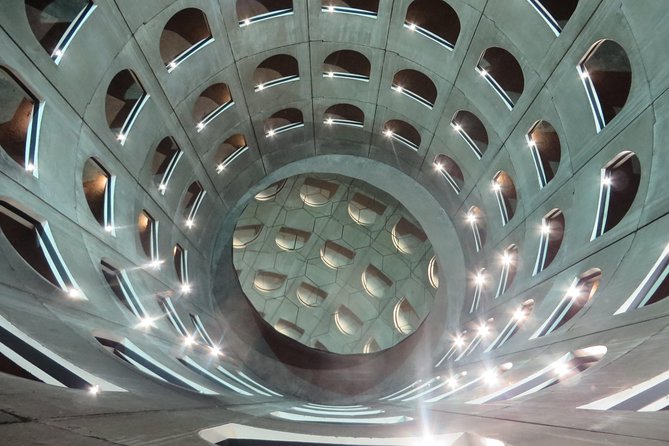
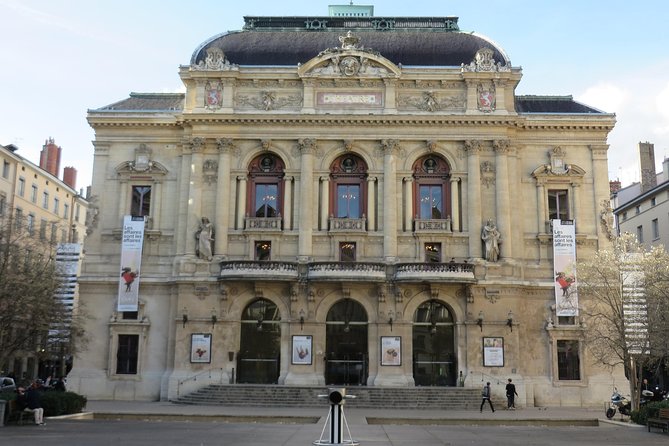
Next you see the Theatre des Celestins. You spend about 10 minutes on the façade and, depending on access, you may even descend into modern artwork hidden underneath the square.
This stop is a nice reminder that Lyon didn’t freeze in time. Old theaters, new art, and changing uses of space all coexist. It’s also a good break point, because you’re shifting from courtyards and passages back to an open square environment.
If you’re hoping for the underground art portion, it’s worth having flexible expectations. The tour description indicates you might descend, so treat it like a bonus rather than a guarantee.
The main shopping street, plus local rhythm
You also spend time walking along Lyon’s main shopping street. This segment is less about a single monument and more about seeing how the city actually moves day to day.
I find this kind of stretch useful because it helps you understand where locals flow, where cafes cluster, and what direction the day’s energy goes. It’s also a natural place for your guide to mention food and coffee suggestions, since you’re literally passing the kinds of places you might want to revisit later.
Grand Hôtel-Dieu: the ending inside Lyon’s repurposed hospital
The final highlight is Grand Hotel Dieu, the Hôtel-Dieu complex. You visit about 10 minutes here, with admission included, and you finish inside the site.
This is one of those stops where Lyon’s “past and present” theme becomes real. Hôtel-Dieu started as an old hospital and has been transformed into a blend of shopping, a luxury hotel, and a food court inside the historic structure. Finishing here feels like a reward: you’re done with the walking, and you’re placed right where you can grab lunch or browse without immediately recalculating your route.
If you’ve spent the day learning why Lyon matters, Hôtel-Dieu is a strong last page. It also gives you a practical option if the weather turns, since it’s an indoor-friendly place to linger.
Value for money: what the $6.05 booking fee really buys
At about $6.05 per person, this tour is priced for people who want guidance without paying a premium for a private ride. The big value point is that entry fees are included for multiple stops. That matters in France, where “just walk in” can turn into surprise costs quickly.
Also, the small group size (maximum 18 travelers) is a real quality factor. You’re more likely to hear the guide, ask questions, and keep the pacing natural, instead of feeling like you’re being herded.
One more thing: the tour seems to operate with a tip-based spirit in practice, even if you pay a small processing fee to book online. If you want the best experience for your guide and the smoothest day for the group, it’s wise to bring a little cash for tipping.
Pace and group size: who this tour fits best
This walk is designed for most travelers, and it lasts about 2 hours. It’s also offered in English, with a mobile ticket, and it’s near public transportation.
The tour fits best if you:
- want an overview that connects history, food culture, and city secrets
- like walking but still want a manageable route
- are visiting for the first time and want help planning where to go next
It may be less ideal if you:
- need guaranteed quiet listening the whole time, since there’s no audio system mentioned
- have very tight timing for specific indoor visits, since opening hours can affect access
What to do before you start (so you get the most from it)
I recommend treating this as an early-trip orientation. Doing it at the start gives you a framework for everything else you see after. You’ll also collect practical restaurant and coffee suggestions as you go, which many guides include as part of their Lyon recommendations.
Wear comfortable shoes. Traboules and courtyards involve uneven old-stone surfaces and lots of tight turns. And bring a light layer if weather is shifting. Even when rain pops up, a good guide tends to route you toward covered spots and keep the story going.
Should you book this Vieux Lyon guided walk?
If you want a fast, fun way to understand Lyon, this is an excellent pick. The best reasons to book are clear: traboules, the silk heritage stop with live silkworms during season, and the way the guide connects civic landmarks to WW2 context. Add in included admissions and a short duration, and it’s hard to beat as a value-first outing.
If you are picky about indoor access and you’re visiting on a day when churches or museums might be closed, keep flexibility. In that case, focus on the street-level story and the included courtyard views, and you’ll still get a strong introduction to the city.
FAQ
How long is the Vieux Lyon Cultural & Historical Walking Guided Tour?
The tour runs for about 2 hours.
Where does the tour start and end?
It starts at Place Saint-Jean (Pl. Saint-Jean, 69005 Lyon) and ends at Place de l’Hôpital (Pl. de l’Hôpital, 69002 Lyon). The tour finishes inside Hôtel-Dieu.
Is the tour offered in English?
Yes, it is offered in English.
Are entry fees included?
Yes. The tour includes admission fees and entry fees for the stops that require them.
Does the tour include breakfast or pick-up?
No. Pick-up is not included, and breakfast is not included.
What group size should I expect?
The tour has a maximum of 18 travelers.
What is the cancellation policy?
You can cancel for free up to 24 hours in advance for a full refund. Cancellation changes within 24 hours are not refunded.
Centuries, Footnoted
- Paris: Louvre Museum Entry with History of Mona Lisa
★ 3.9 · 2,823 reviews - Paris: Dark History and Ghostly Guided Walking Tour
★ 4.7 · 1,000 reviews - Bordeaux: Historic Center & Chartrons District Bike Tour
★ 4.8 · 709 reviews - From Strasbourg: Best Of Alsace Historical Day Trip
★ 4.7 · 633 reviews
Latest Lyon entries, notes attached







Historical Tours, compared.
Louvre Museum Entry with History of Mona Lisa
Read our review →

Toulouse Food & History Tour with a Chef (in English)
Read our review →
Small-Group Full-Day Tour of Côte de Nuits, Côte de Beaune Vineyards and Beaune Historical District
Read our review →

Le Marais/Paris – The Historic, Trendy, Jewish, LGBT district
Read our review →This tour also appears in