
Reviewed · PROVENCE DAY TOURS
Visit Avignon and Villeneuve lez Avignon aboard a Double-Decker Bus
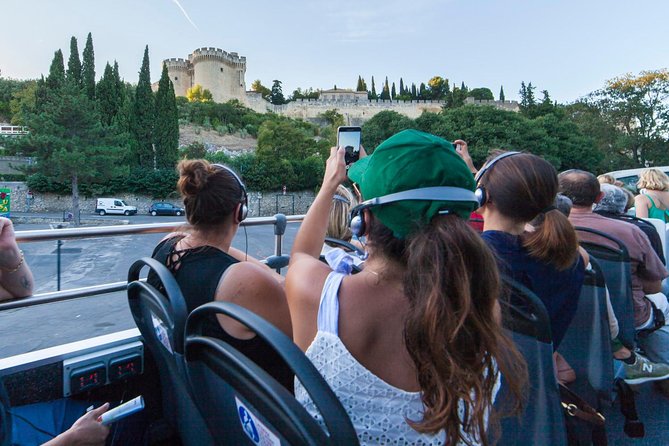
Avignon from the river looks better by bus. This double-decker loop uses English audio to stitch together Papal-era landmarks, plus modern art and garden breaks along the Rhône. I like how the route gives fast orientation, and I like how the narration ties each stop to the story of popes, cardinals, and the bridge that mattered.
One caution: the bus keeps a set pace, so timing can make photos feel rushed and some stops may feel like a quick look unless you plan your time well.
In This Review
- Key highlights
- Getting your bearings: how this bus loop works in real life
- What I like about the pace
- A practical heads-up for photos
- Pont Saint-Bénézet: the bridge that popes, pilgrims, and a song made famous
- What you’re likely to experience at this stop
- Consideration before you jump off
- Lambert Collection modern art: a calm break from the Papal grind
- The value play here
- Quick practical tip
- Philippe le Bel Tower: medieval control, right at the bridge approach
- What to do here
- Fort Saint-André and the Saint-André gardens: viewpoints and a walk that feels like a reward
- Ticket value
- Consideration: walking comfort
- Chartreuse de Villeneuve lez Avignon: the cardinal residence across the Rhône
- How to decide if you’ll do this one
- Île de la Barthelasse: a short reset with big Rhône views
- Why this stop is smart even if time is tight
- Consideration
- Price and ticket reality: what $16.30 buys you, and what it doesn’t
- How I’d judge value for you
- Booking timing
- Small on-board issues to watch for, and how to handle them
- Should you book this Avignon double-decker bus loop?
- FAQ
- How much does the Avignon and Villeneuve lez Avignon double-decker bus tour cost?
- How long is the tour?
- Is the tour offered in English?
- Where is the meeting point for the tour?
- Are entrance tickets included for each stop?
- What kind of ticket do I receive?
- Are service animals allowed?
- Is the tour suitable for most travelers?
- Can I cancel for a full refund?
- What happens if the tour is canceled due to weather?
Key highlights
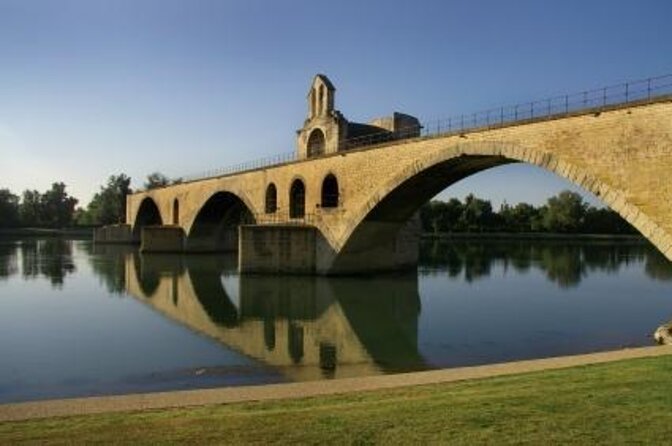
- Papal bridge drama at Pont Saint-Bénézet, including pilgrim-route history and why it got paved
- Lambert Collection modern art in an 18th-century mansion, focused on works from the 1960s onward
- Philippe le Bel Tower, a medieval power-control statement at the bridge access point
- Fort Saint-André and the famous gardens, plus Romanesque and Renaissance touches around Saint-André
- Chartreuse de Villeneuve lez Avignon, a former cardinal residence shaped by Pope Innocent VI
- Île de la Barthelasse for a short Rhône-side break and city-of-the-Pop e s panorama
Getting your bearings: how this bus loop works in real life
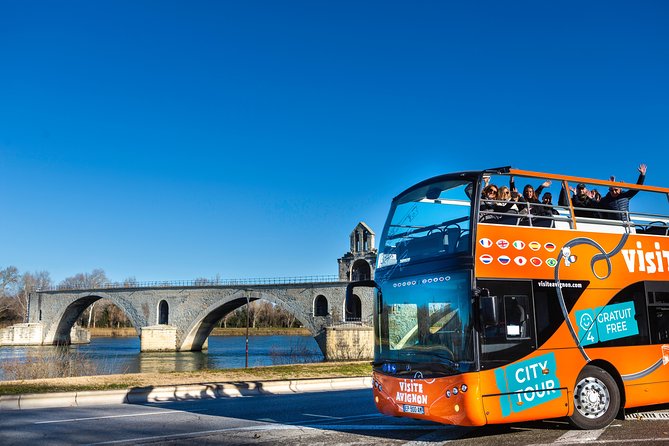
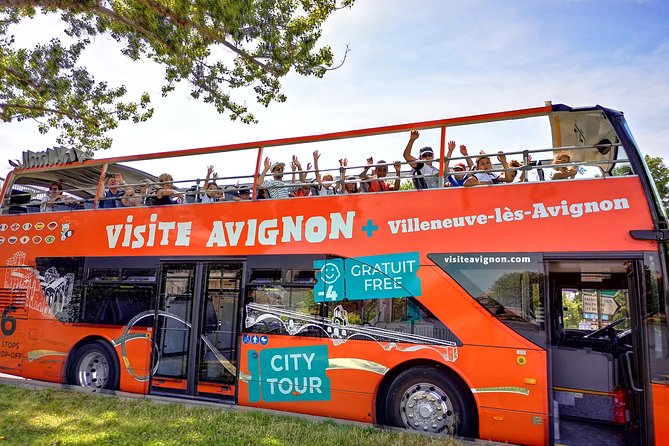
This is a double-decker, hop-on hop-off style loop around Avignon and over to Villeneuve lez Avignon. You meet at 40 Cr Jean Jaurès (84000 Avignon) and the tour runs on paper tickets with English audio. With a maximum of 73 travelers, it usually feels big-city efficient, not cramped.
The overall timing is listed as about 1 hour to 1 day. In practice, you should think of it as a loop with multiple “important outside sights,” plus a few options to step inside paid sites. Some stops are marked as free, which helps you build a visit around views and gardens without paying entrance fees at every turn.
The best way to enjoy this kind of route is to treat it like a moving guidebook. First, ride and listen until you can picture where everything sits: the bridge, the Papal power area, and the more relaxed green spaces across the Rhône. Then, pick one or two stops where you’ll spend real time on foot. That approach helps avoid the most common problem with bus loops, feeling like you’re collecting “place names” instead of experiences.
What I like about the pace
The audio does a lot of heavy lifting. Instead of guessing what you’re looking at, you get specific context as the bus passes and you reach stops. You also get that “I can connect the dots” effect fast, which is exactly what you want on a first day in town.
Other Avignon bookings in the margin notes
- Provence Highlights Full-Day Tour from Avignon
★ 5.0 · 499 reviews - Chateauneuf du Pape wine tour
★ 5.0 · 484 reviews - From Avignon: Châteauneuf du Pape Half-Day Wine Tour
★ 4.7 · 365 reviews
A practical heads-up for photos
The bus moves, and some stretches happen with limited time for stopping. If you care about photos, aim to shoot from the deck while you’re traveling, then use your stop minutes for closer angles. Bring your camera strap or phone lanyard, and keep your hands free.
Pont Saint-Bénézet: the bridge that popes, pilgrims, and a song made famous
Pont Saint-Bénézet (Pont d’Avignon) is the headline stop, and it’s worth treating it like a mini history lesson you can walk on. Even if you only know it from the famous song On the bridge of Avignon, the real story is bigger: this bridge is tied to the main pilgrimage route linking Italy and Spain.
Here are the kinds of details that make this stop click when you’re standing there. The bridge began in 1177, stretched about 920 meters, and had 22 arches. Construction moved fast for the era, finished in about eight years, and then everything got interrupted by conflict. During the siege of 1226, the bridge was destroyed up to the fourth arch, then rebuilt with a similar plan, about 900 meters long with 22 arches again.
This matters because the bridge wasn’t only a crossing. In the Middle Ages, it functioned as a crucial connection between different regions of Europe. Later, when the papal court moved to Avignon in the 14th century, the bridge became the practical link between multiple cardinal residences and the Palais des Papes inside Avignon’s ramparts.
One of the most vivid bits of background is how the popes used the bridge. At crossings, they were said to stop in front of the Bénezet chapel to pray and leave alms of a florin. Add to that the later “safety upgrade” detail: the bridge was paved in 1377 by order of Cardinal Blandiac to reduce slips, accidents, and drownings. If you like details that make a place feel real, this bridge does it.
What you’re likely to experience at this stop
You’ll get a look at the bridge remains and the sense of scale that comes from knowing it used to be the main artery. If you’re visiting with kids, the bridge story is easy to connect to a catchy cultural reference, then pivot into real medieval engineering.
The Avignon dossier continues:

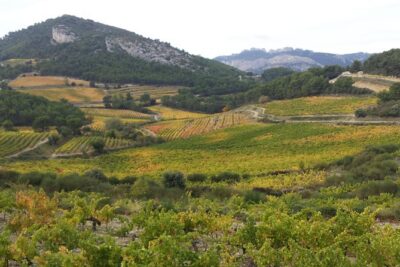

Consideration before you jump off
Admission here is listed as not included. If you only want the outdoor view and the setting, plan your stop to focus on the bridge and surrounding viewpoints. If you want to go inside or add on paid sections, budget extra time.
Lambert Collection modern art: a calm break from the Papal grind
After the medieval shock and awe of the bridge, Lambert Collection (Museum of Modern Art) is a smart tonal shift. It’s housed in a former 18th-century mansion, which makes the modern works feel a little more intimate than they would in a bland white cube.
This collection opened in June 2000, tied to Avignon as European Capital of Culture. The museum’s focus is tight and clear: 350 works from the 1960s to the present, drawn from the Lambert Collection. The museum also describes a larger reference base behind it, with over 1,200 references in the holdings. The space is about 2,000 square meters, organized into exhibitions, preventive conservation, activities for younger visitors, and a bookstore with artists’ editions. There’s also a restaurant in the courtyard of the mansion.
If you’re the type who likes to see what locals value, this is a helpful stop. It tells you Avignon is not only a medieval set. It’s also a living arts city that invests in contemporary collecting.
The value play here
Admission is not included, so you should decide based on your art interest. If modern art isn’t your thing, use the time on the deck or in outdoor areas and keep your paid stops minimal. But if you enjoy art that’s more idea-driven than crowd-driven, this can be a genuinely relaxing hour.
Quick practical tip
This stop is a good “reset.” Museums slow your pace, and you’ll come back outside with better energy for the forts and gardens.
Philippe le Bel Tower: medieval control, right at the bridge approach
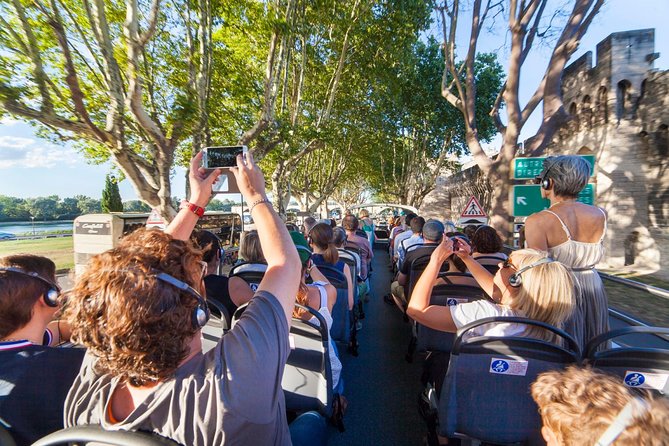
Philippe le Bel Tower is one of those spots where the story is in the shape. It was built in the 13th century by the Capetian king Philippe le Bel, with the specific purpose of controlling access to the Pont d’Avignon.
That detail is the whole point. While the papal side projected spiritual authority in Avignon, the royal side put its authority into infrastructure and control. A tower like this is military architecture with messaging built in. It says who governs movement across the bridge.
Standing near a structure like this, you can understand why Avignon felt like a political chessboard. The route over the Rhône was not just logistics. It was power.
What to do here
Use this stop for two things: photos that show the tower from angles that emphasize vertical lines, and quick listening to the audio narration so the “why” clicks. Don’t treat it like a long-walk destination. Think short stop, good understanding, move on.
Admission specifics for this exact stop aren’t clearly stated in the information, so base your expectations on what you can see outside.
Fort Saint-André and the Saint-André gardens: viewpoints and a walk that feels like a reward
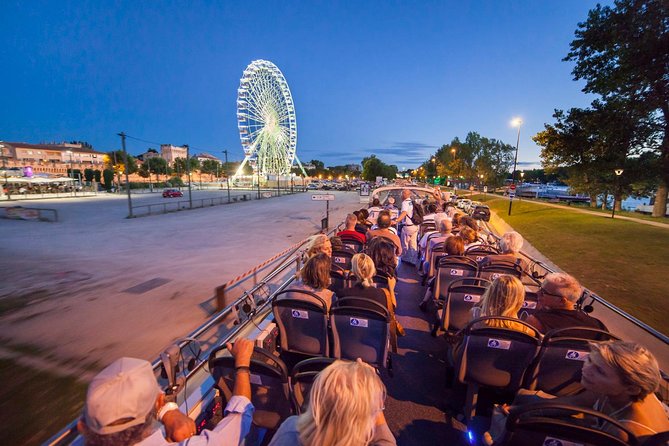
Fort Saint-andré is connected to the Benedictine abbey of the same name. Construction began at the end of the 12th century, then later in the 14th century the fort defended the abbey. That timeline matters. It’s not one building. It’s a system that evolved.
The gardens are a major reason people rate this stop highly. The gardens are described as ranked among the most beautiful in France. Whether or not you believe every superlative you hear, the practical takeaway is simple: this is where you go to slow down, enjoy views, and walk without the museum crowds.
The surrounding abbey area adds another layer. From vaulted rooms decorated in the 17th century to exteriors featuring Romanesque remains and Renaissance Tuscan-style ornaments, the site blends periods without feeling like a museum hallway. You’ll also see rose beds and Mediterranean plants called out as part of the garden character.
This is the kind of stop that works even if you’re tired. It’s not all stone and signage. You’re rewarded with open space and perspective.
Ticket value
Fort Saint-andré is listed as free. That makes it a strong budget-friendly anchor in your day. Even if you don’t pay for interior visits elsewhere, you can still get a meaningful portion of your Avignon experience here.
Consideration: walking comfort
This is a garden and fort area, so wear shoes that work on uneven ground. Take a little water break if you’re visiting in warm weather, because you’ll want to actually enjoy the gardens instead of rushing through.
Chartreuse de Villeneuve lez Avignon: the cardinal residence across the Rhône
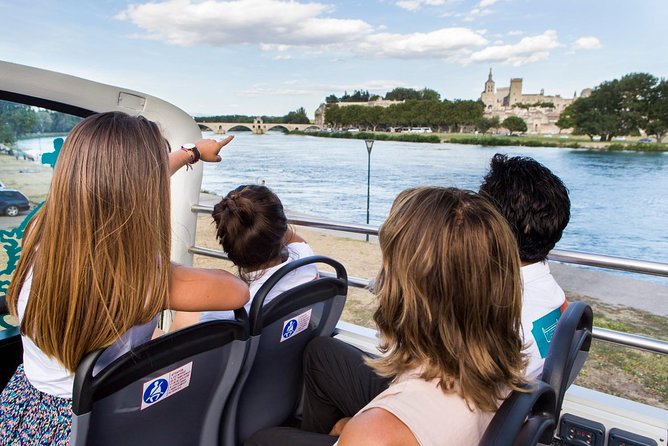
Chartreuse de Villeneuve lez Avignon is your bridge from “Avignon proper” to the cardinals’ escape area. The Chartreuse de Val de Bénédiction was built under the impetus of Pope Innocent VI, starting from 1353. It served as a former residence for cardinals.
This stop is about power shifting and comfort matters. Avignon could be described, in a poet’s terms, as unpleasant, and cardinals moved to Villeneuve to avoid the nuisances of the city. The chartreuse helped provide a calmer base while still staying connected to the Papal center.
It’s housed in a 14th-century mansion. That means you’re not just seeing a structure, you’re stepping into a place built for high-level residents.
How to decide if you’ll do this one
Admission is listed as not included, so this is a “pay if it matches your interests” stop. If you like religious architecture, medieval residences, or stories about how elite people structured their daily lives, this is a good use of your time.
If you’d rather prioritize outdoor gardens and scenic breaks, keep your paid stops to one or two max and treat Chartreuse as optional.
Île de la Barthelasse: a short reset with big Rhône views
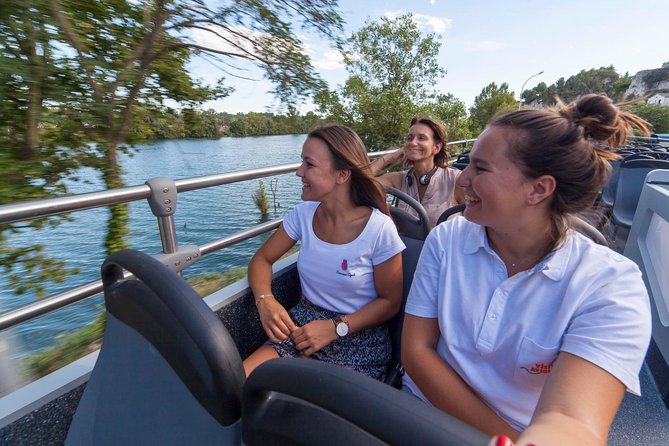
Île de la Barthelasse is the “green lung” option on the right bank of the Rhône. The island is described as about 700 hectares, which is huge. Your stop is short, usually 10 to 15 minutes, long enough to breathe and look back toward Avignon.
This is where you get the panorama of the city of the Popes from across the water. If you’re the kind of person who enjoys geography, this stop helps you understand how Avignon sits in relation to river crossings and neighborhoods.
There’s also a practical option if you want to keep moving without thinking too hard. You can take the free river shuttle to reach the historic center. Or you can continue a bike ride if that’s your style, since the information mentions pairing the stop with cycling options.
Why this stop is smart even if time is tight
When a route includes paid museums and forts, you can end up mentally exhausted. This short island stop gives you space to reset without committing to a long indoor visit.
Consideration
It’s brief. If you want more time on the island, you’ll need to plan around your return, since the bus loop has its own rhythm.
Price and ticket reality: what $16.30 buys you, and what it doesn’t
At $16.30 per person, this tour is priced like a value orientation ride. The bus transportation plus English audio helps you make sense of a wide area, and the inclusion of at least some free stops (Fort Saint-andré and Île de la Barthelasse) makes the “extra costs” easier to manage.
That said, several stops list admission tickets as not included: Pont Saint-Benezet, Museum of Modern Art (Lambert Collection), and Chartreuse de Villeneuve. So you’re not buying one single all-inclusive ticket. You’re buying a structured route that gives you a chance to add paid visits where they make sense.
How I’d judge value for you
This is good value if:
- You want a fast first-day overview across Avignon and Villeneuve
- You like audio explanations more than reading from a guidebook
- You’re happy to mix paid interiors with free garden and viewpoint stops
It may feel less good value if:
- You only want to go inside museums or paid monuments, not just look from outside
- You’re expecting a slow, detailed guided walking tour at every stop
A smart way to avoid paying twice for time is to choose one paid interior stop and let the rest be outdoors, like gardens and bridge viewpoints.
Booking timing
The tour is often booked about 20 days in advance on average. If you’re traveling in peak season, book early so you can pick a time that fits your day.
Small on-board issues to watch for, and how to handle them
Bus tours are practical, but they aren’t perfect. From the kinds of issues people report, I’d plan like this:
- Audio can sometimes be spotty. If your audio connections aren’t working, tell the driver right away so you can get the correct working speaker setup.
- Stops can feel like a quick hop rather than a slow stroll. If you want photos, use the deck while moving and treat each stop as a focused task.
- Double-check that you understand where your bus stop location is, especially if you rely on printed maps. Arrive a bit early and look for the bus rather than assuming you’re in the exact right spot.
Also, if your visit includes Sundays or Mondays, it’s worth confirming that service is scheduled for your specific date, since some dates can have unexpected gaps.
Should you book this Avignon double-decker bus loop?
Book it if you want a fast, low-thinking way to understand Avignon and Villeneuve, especially if you’re mixing outdoor viewpoints, forts, and one or two paid stops. The route design makes sense for first-time orientation, and the blend of Papal-era bridge context plus Lambert Collection modern art is a strong combo.
Skip it or adjust expectations if you only want deeply guided walking tours with long stop times. This is a bus loop with audio, not a slow private guide following you step by step. If you treat it like a route plus optional add-ons, you’ll get more out of it.
If you’re pairing it with other time in Avignon, I’d plan your day around the free garden stop at Fort Saint-andré, then decide whether Chartreuse or Lambert Collection is your “one paid hour” choice.
FAQ
How much does the Avignon and Villeneuve lez Avignon double-decker bus tour cost?
The price is $16.30 per person.
How long is the tour?
It is listed as about 1 hour to 1 day (approx.).
Is the tour offered in English?
Yes, it is offered in English.
Where is the meeting point for the tour?
The tour starts at 40 Cr Jean Jaurès, 84000 Avignon, France, and ends back at the meeting point.
Are entrance tickets included for each stop?
No. Admission tickets are listed as not included for Pont Saint-Benezet, the Museum of Modern Art (Lambert Collection), and Chartreuse de Villeneuve lez Avignon. Fort Saint-andre and Île de la Barthelasse are listed as free.
What kind of ticket do I receive?
You get a paper ticket.
Are service animals allowed?
Yes, service animals are allowed.
Is the tour suitable for most travelers?
Most travelers can participate.
Can I cancel for a full refund?
Yes. You can cancel up to 24 hours in advance for a full refund, based on the local start time.
What happens if the tour is canceled due to weather?
The experience requires good weather. If it is canceled due to poor weather, you will be offered a different date or a full refund.
Latest Avignon entries, notes attached


Provence Day Tours, compared.
Provence Highlights Full-Day Tour from Avignon
Read our review →

4×4 Camargue Safari 4h – Departure from Arles
Read our review →
Luberon Villages Half-Day Tour from Aix-en-Provence
Read our review →
This tour also appears in