
Reviewed · D-DAY BEACHES TOURS
2- to 6-hour sidecar excursion on the D-Day Landing Beaches
A sidecar makes history feel close. This D-Day beaches outing turns the Normandy coast into a moving story, with vintage goggles, real-world navigation, and stops that connect events from June 6 onward. My favorite part is how quickly you see major sites without spending the day stuck in traffic.
I also like the small, private group feel. Most bookings are capped at six people, so your guide can answer questions and adjust pacing. Plus, the guides like Remi, Philippe, and Jack bring a mix of serious detail and light comic relief that keeps the ride from becoming a stiff lecture.
One consideration: you are riding a motorcycle sidecar in coastal weather, so plan for wind and cold. The tour supplies rain gear, but if you hate chilly air or you are uncomfortable on motorbikes, this may not feel like the Normandy experience you want.
In This Review
- 5 things I’d circle before you book
- Entering the D-Day beaches by sidecar, not a van
- Picking up in Bayeux, gearing up, and getting moving fast
- Arromanches-les-Bains and the Mulberry B harbor you can still picture
- Longues-sur-Mer: the Atlantic Wall battery between Omaha and Gold
- Port-en-Bessin-Huppain and the Allied fuel pipeline, 120 km of plumbing
- Omaha Beach on foot, then the American Cemetery with a cliffside view
- Pointe du Hoc in the 6-hour option, where strategy meets the ridgeline
- How long you ride shapes what you learn
- Weather, clothing, and the scarf test
- Value check: what $169.31 gets you, and why it can be worth it
- Who this tour fits best, and who should think twice
- Should you book Retro Tour Normandy? My call
- FAQ
- What is the meeting point in Bayeux?
- How long is the sidecar excursion?
- What D-Day sites are included?
- Are helmets and other safety gear included?
- Is lunch included in the price?
- Is this tour private?
- What is the minimum age?
- Will you definitely visit the American Cemetery at Colleville?
- What happens if the weather is bad?
5 things I’d circle before you book
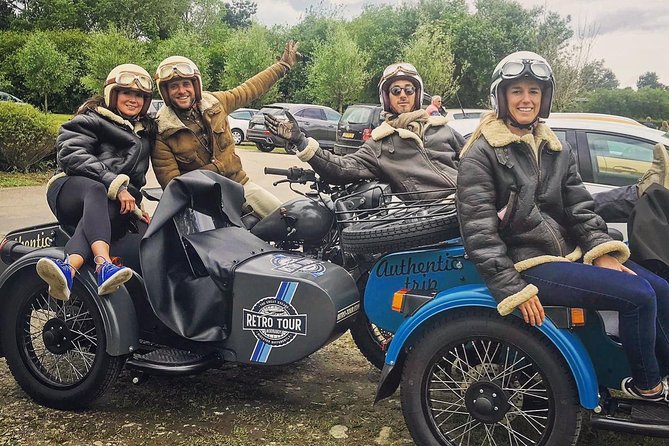
- Vintage sidecar pickup and safety gear: helmets, gloves, and retro goggles are provided.
- D-Day stops that follow the logic: Mulberry B at Arromanches, Atlantic Wall at Longues-sur-Mer, and the pipeline story at Port-en-Bessin.
- Omaha Beach plus the American Cemetery: you get both the sands and the memorial space, when schedules allow.
- Pointe du Hoc only on the 6-hour option: you trade time for a high-impact strategic site.
- Guides who drive the day, not a script: in real-world terms, you get room to ask questions.
Entering the D-Day beaches by sidecar, not a van
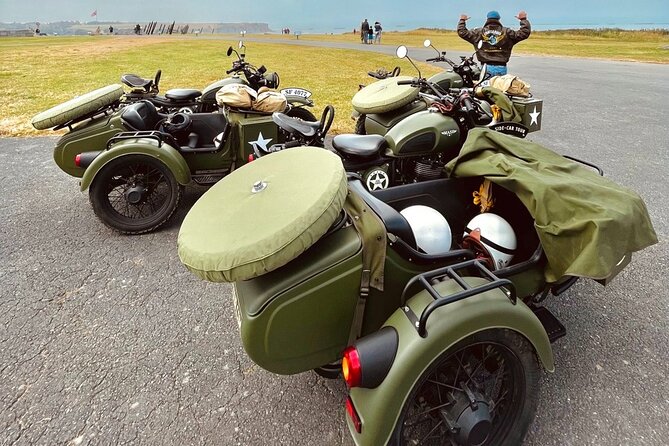
This tour has a simple pitch that works: you cover a lot of ground, then you stop at the places where the WWII details actually matter. The sidecar format gives you something you cannot recreate in a standard bus seat, a more open feeling of speed and sightlines as you move between towns and coastal stretches.
The other big win is pacing. You are not trying to rush through everything like a checklist. There are breaks for photos, and the guide’s job is to translate the geography into meaning, so the story clicks as you go.
You also get a clear mix of emotion and context. Omaha Beach and the American Cemetery are heavy visits, and your guide sets the tone with respect, while still giving you the why behind what you are seeing.
Picking up in Bayeux, gearing up, and getting moving fast
Your day starts in Bayeux with a meet-up at a pickup location of your choice, or at the Bayeux Battle of Normandy Museum parking lot, or at the Bayeux bus station. That flexibility matters because you can align pickup with your lodging plans instead of building your whole trip around a single address.
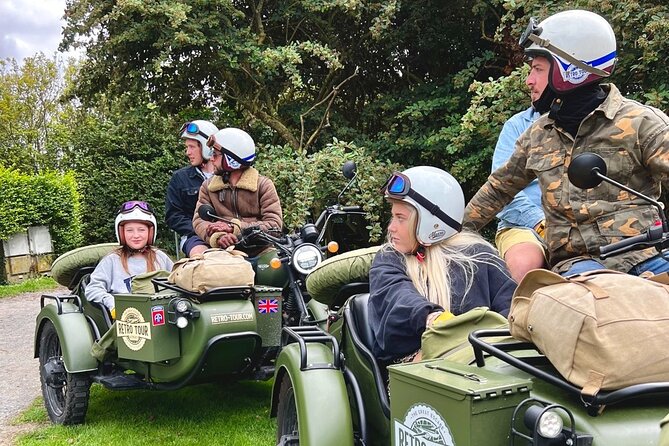
Then you get kitted up with the included gear: helmets, gloves, and vintage goggles. The sidecar setup is designed for one person behind the pilot and one in the basket, and most groups stay small enough that you will not feel swallowed by a crowd.
This first stop is also where you get the feel for how the day will run. You head out with your driver/guide, and you will have photo and break stops along the way. A couple of reviews also stress that the wind can be serious, even when the rest of the day is bright and clear, so keep that in mind as you dress.
More visits along the D-Day coast:
- Normandy American D-Day Beaches Full Day Tour from Bayeux
★ 5.0 · 2,103 reviews - Normandy American D-Day Experience – Group tour from Bayeux
★ 5.0 · 1,566 reviews - Omaha and Band Of Brothers Full Day Tour
★ 5.0 · 1,104 reviews
Arromanches-les-Bains and the Mulberry B harbor you can still picture
Arromanches-les-Bains is a standout stop because it explains a practical military problem. After D-Day, the Allies needed a way to land heavy equipment fast, without waiting for deep-water ports like Le Havre or Cherbourg. That is why Mulberry B was built as a temporary artificial harbor.
What I like here is the cause-and-effect story. Arromanches was spared from the worst fighting on June 6, and that mattered because the harbor installation depended on not damaging the beach and preserving nearby communication routes.
Your guide connects it to the map you are riding through. The British troops landed farther east between Asnelles and Ver-sur-Mer, then liberated Arromanches by land on the evening of June 6. The harbor went into service on June 14, so you are not just staring at a shoreline. You are seeing a timeline.
Tip for this stop: bring a mental checklist of “why here” questions. When you know the logic of a harbor built in haste, the visit becomes more than scenery.
Longues-sur-Mer: the Atlantic Wall battery between Omaha and Gold
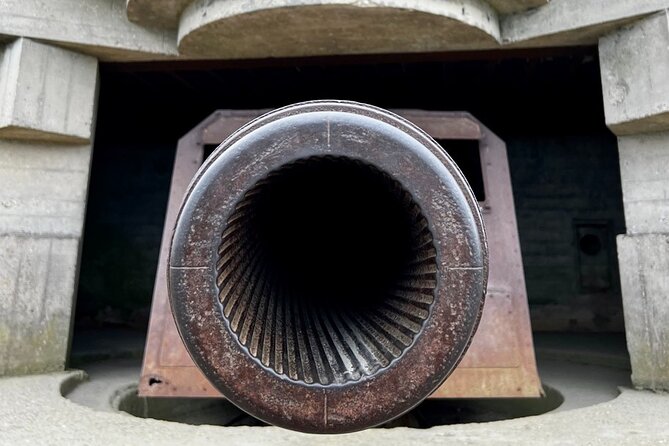
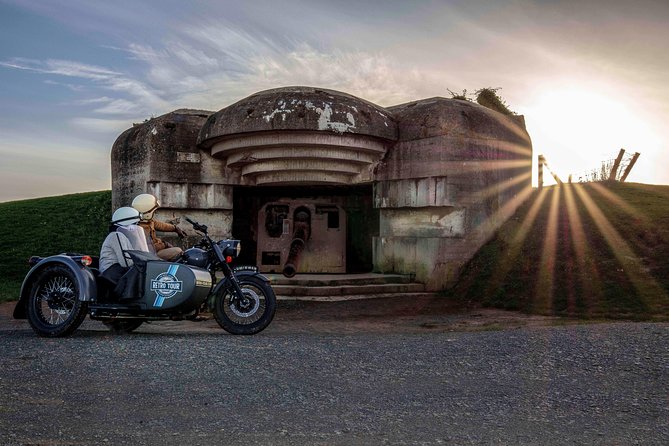
Longues-sur-Mer is one of those places where the terrain makes sense once you understand the weapons. This battery on the Atlantic Wall was equipped with four long-range 150 mm naval guns, each protected by reinforced concrete casemates, plus support installations.
On D-Day, intense aerial and naval bombardments prevented the battery from fully engaging. It was captured the following day by British troops. That sequence gives you a clearer picture of how air power and artillery fit into the ground outcome.
The site is also notably well preserved and developed for visitors. That means you can take your time looking at how the guns were housed, then watch your guide connect those structures to the threat they posed to the Allied landing zones.
One drawback worth planning for: if you only have the shortest tour time, this stop may feel brief compared to what you might want if you are a true WWII gear nerd. Still, it is an efficient stop, because you get the main story without the day sprawling.
Port-en-Bessin-Huppain and the Allied fuel pipeline, 120 km of plumbing
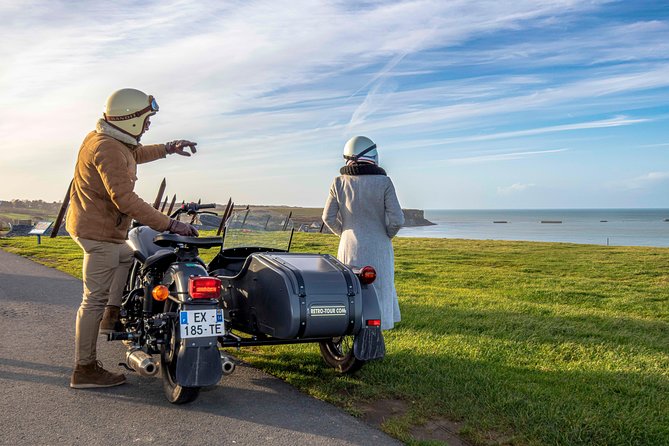
Port-en-Bessin-Huppain is easy to overlook if you are only thinking about beaches and battles. But this stop turns the spotlight to logistics, which is where WWII often gets won.
You’ll learn that it was liberated on June 8, 1944, and soon became the central hub of a fuel pipeline network of about 120 km. Then, by the end of August 1944, Operation PLUTO expanded things with underwater pipelines between the Isle of Wight and Querqueville near Cherbourg.
I love this kind of lesson because it changes how you read the coast. Instead of thinking only in terms of front lines, you start thinking in terms of supply. And when you later look at the scale of Omaha and the cemetery, that supply story makes the human sacrifice feel even more connected to real-world needs.
The stop time here is shorter than some others, around 30 minutes. So go in with one goal: understand what the pipeline system enabled.
More Things to Do in Normandy
Omaha Beach on foot, then the American Cemetery with a cliffside view
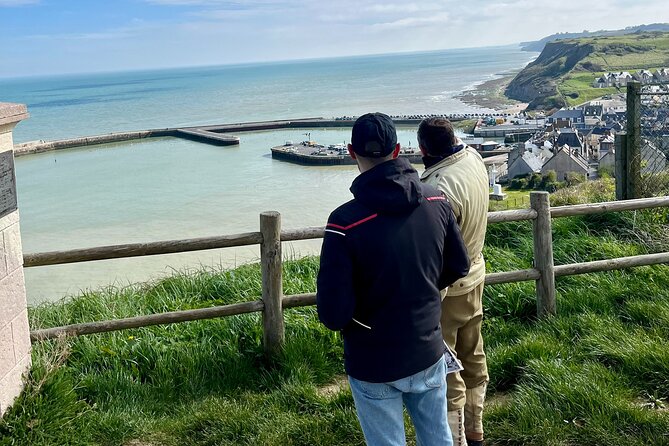
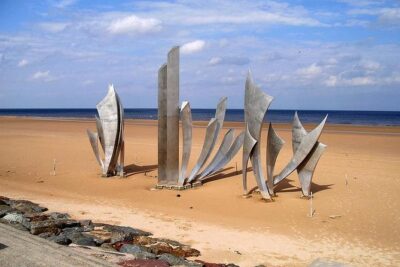
Omaha Beach is the big one. This is where thousands of American soldiers landed amid intense gunfire and artillery bombardment. Your guide shares moving accounts of what the soldiers faced, and you will walk along the sands with the time to reflect.
Practical note: you should plan to slow down at the memorial points. This tour includes time for paying tribute and taking in the emotional weight, and it works best when you do not treat it like a photo stop.
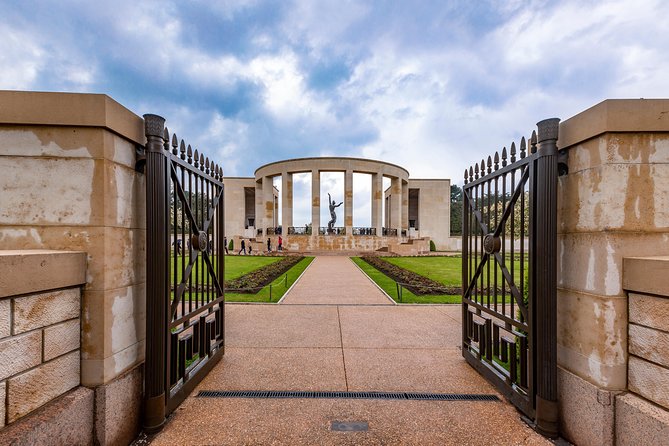
Then comes the Normandy American Cemetery and Memorial at Colleville-sur-Mer. It sits on a cliff overlooking Omaha Beach, and the setting is designed to be quiet and direct: white marble crosses, Stars of David, and a sense of gratitude that is hard to fake.
Your guide may share stories about individuals buried there. That detail is often what turns a cemetery visit from “I saw it” into “I understand it a little better.”
Important timing considerations
- In low season, the cemetery can close early.
- Any tour starting at 4:00 PM may not include the cemetery visit.
- Starting in 2026, the Omaha Cemetery visit cannot be guaranteed and may be replaced by a visit to WN60.
If your heart is set on seeing the cemetery, aim for a time earlier than late afternoon, and ask when you book.
Pointe du Hoc in the 6-hour option, where strategy meets the ridgeline
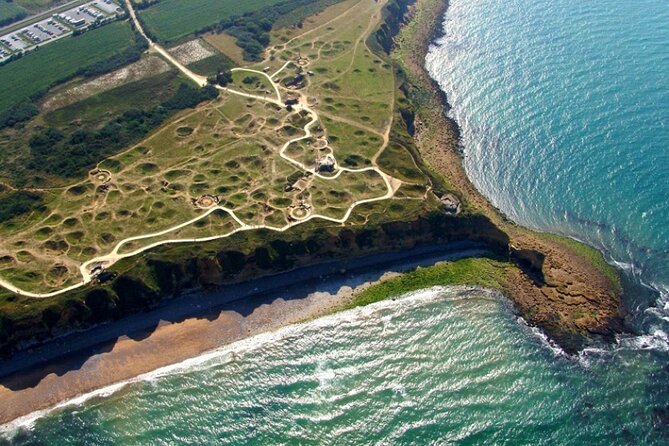
If you choose the full 6-hour option, you add Pointe du Hoc. This promontory between Utah Beach and Omaha Beach was a strategic target, heavily fortified by Germans.
Allied aerial reconnaissance identified long-range artillery pieces that threatened neighboring beaches. Neutralizing those guns was essential to the success of the landings.
What you get at Pointe du Hoc is a site built for observation. You look at lines of sight, elevation, and the way terrain can protect and expose. Your guide frames it so that you understand the risk and urgency behind why soldiers needed to get control of that ground.
This stop is included only for the 6-hour option, so if you are time-limited, you may need to choose between adding Pointe du Hoc or spending longer at other places like Longues-sur-Mer. For me, Pointe du Hoc is worth it when you want the broader “how did they think” part of D-Day, not just the beachfront story.
How long you ride shapes what you learn
The duration ranges from about 2 to 6 hours, and the stops align with route options that mix British sector and American sector sites. In practical terms, shorter tours can feel like the highlights, and longer tours feel like you are building a fuller chain of events.
A 2-hour version focuses on fewer key places, so you get less time for reflection and fewer side details. A half-day or full-day format adds more geography and more connective tissue between locations.
If you are traveling with kids, the tour has a minimum age of 4 years old. That is a real plus for families who want something different from a standard walking tour. Just expect that younger riders still need jacket layers for wind and coastal weather.
Group size also matters for the experience. This is a private tour/activity, so it is just your group. You can have up to six people per booking, or up to twelve upon request. That small scale is why you often get questions answered, and why you can sometimes slow down when something sparks curiosity.
Weather, clothing, and the scarf test
Normandy weather is part of the experience, and several guides and riders mention that wind is the main issue. Late fall and early winter especially can feel colder than you expect once you’re moving on the bike.
The good news is that rain gear is included. Reviews also mention that guides come prepared to deal with rain, and people often report staying dry even when the morning weather is wet.
Still, I would not gamble with comfort. Bring warm layers, and seriously consider a scarf for your neck and face. One practical tip from the ride experience: the wind can get chilly along the coast, and a simple scarf cuts the discomfort fast.
And yes, gloves matter. The tour provides gloves, which helps, but you will still feel the difference between a thin jacket and something warm.
If you hate cold wind, you may prefer a warmer month. If you tolerate it, you will likely enjoy the day even more because the beaches are often quieter and the atmosphere feels more focused.
Value check: what $169.31 gets you, and why it can be worth it
At $169.31 per person, you are paying for three things at once: transport, expert narration at multiple stops, and the included protective gear. You are also paying for time efficiency, because the sidecar lets you cover the D-Day region with fewer transfers and less hassle than trying to drive and park your own car.
Is it cheap? No. But it can be good value if you want a guided route that hits the major points and you value not dealing with logistics. Many tours force you to choose between “see the sites” and “learn the story.” This one leans hard into both.
The small-group, private format adds to that value. With fewer people, your guide can slow down or explain something extra when you ask.
So here is the simple value question to ask yourself: do you want to actively experience the D-Day beaches with a knowledgeable guide and transport, or do you want to do it at your own pace with a rental car? If you want the first option, this price starts to look more reasonable fast.
Who this tour fits best, and who should think twice
This tour is a great fit if you want a fun, different way to see Normandy while still learning the real D-Day story. It also suits families, because the experience is small, guided, and the tour is offered in English with most travelers able to participate.
It is especially good for first-timers who feel overwhelmed by how many sites exist. You get a route that connects British sector and American sector locations into one coherent day.
If you are sensitive to motion, cold wind, or you strongly prefer quiet, slow walking, you might want to reconsider. The sidecar is part of the thrill and part of the comfort challenge.
One more fit factor: ask for your guide’s style. People often mention Remi, Philippe or Jack as guides who are friendly, funny, and serious about the history. In at least one case, Philippe had served in the French army in the tank division and shares detailed stories about weapons and tanks, which can be a big draw if that is your interest.
Should you book Retro Tour Normandy? My call
I’d book this tour if you want the D-Day beaches with motion, meaning, and a guide who connects the dots between places. It is one of those rare tours where the transport is not just a ride, it is part of the storytelling, and the included gear makes it feel safe and well planned.
I would hold off if you know you will be miserable in wind and cold. In that case, even rain gear may not fix the comfort issue, and you will likely end up counting minutes instead of taking in the sites.
If your timing works, and you pick a route that includes what you care about most like Omaha Beach and the American Cemetery, this can be a memorable, practical way to understand Normandy without spending the whole day coordinating logistics yourself.
FAQ
What is the meeting point in Bayeux?
You can meet your sidecar guide at a pickup location of your choice, or at the parking lot of the Bayeux Battle of Normandy Museum, or at the Bayeux bus station.
How long is the sidecar excursion?
The tour runs about 2 to 6 hours, depending on which option you choose.
What D-Day sites are included?
You visit Bayeux, then you may go to Arromanches-les-Bains and Longues-sur-Mer (British sector options), and/or Port-en-Bessin-Huppain, Omaha Beach, and the Normandy American Cemetery (American sector options). Pointe du Hoc is only included for the 6-hour option.
Are helmets and other safety gear included?
Yes. The tour includes helmets, gloves, vintage goggles, and rain gear.
Is lunch included in the price?
No. Lunch and dinner are not included. Your drivers can recommend restaurants if you want.
Is this tour private?
Yes. It is a private tour/activity, and only your group participates.
What is the minimum age?
The minimum age to participate is 4 years old.
Will you definitely visit the American Cemetery at Colleville?
Not always. In low season the cemetery can close early, and any tour starting at 4:00 PM may not be able to include it. Also, starting in 2026 the Omaha Cemetery visit cannot be guaranteed and may be replaced by a visit to WN60.
What happens if the weather is bad?
This experience requires good weather. If it is canceled due to poor weather, you will be offered a different date or a full refund.
Latest Bayeux entries, notes attached




D-Day Beaches Tours, compared.

Normandy D-Day Sites & Cemetery Day Trip from Paris with Lunch
Read our review →
Normandy D-Day Small-Group Day Trip with Omaha Beach, Cemetery & Cider Tasting
Read our review →
Normandy D-Day Beaches and American Cemetery Day Trip from Paris
Read our review →
Normandy American D-Day Beaches Full Day Tour from Bayeux
Read our review →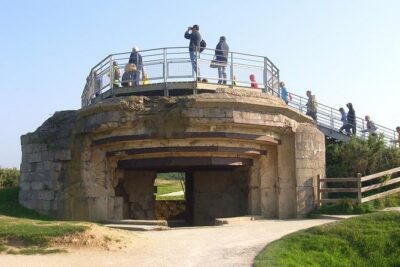
Normandy American D-Day Experience – Group tour from Bayeux
Read our review →
Omaha Beach D-Day Experience – Afternoon group tour from Bayeux
Read our review →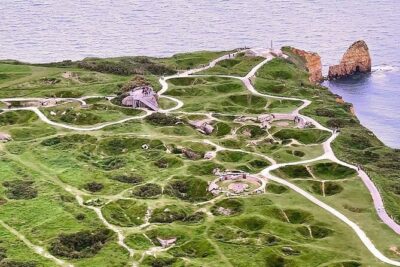
This tour also appears in