
Reviewed · LE MARAIS WALKS
Award-Winning Paris French Bakery Experience — Le Marais, 4th Arr
Bread class in a real Paris bakery.
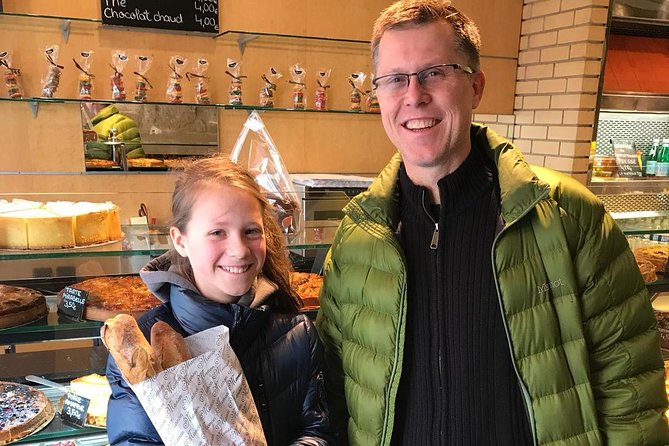
In Le Marais, this small group session gives you hands on baking with a master French baker, starting with a traditional breakfast or afternoon goûter and moving straight into the backroom work. I love the practical way you learn real baguette and pastry technique, and I especially like that you take home a freshly baked baguette when it’s done.
One thing to plan carefully is the meeting point. Morning and afternoon tours can start at Miss Manon or Chez Manon, and you’ll be in a working bakery environment where stairs may come into play.
In This Review
- Key things that make this class worth your time
- Le Marais location, meeting point, and what “real bakery” means
- Breakfast or goûter first: how the tasting sets you up to bake
- The bakery tour part: watching dough, machines, and ovens in action
- Hands on practice: baguettes, croissants, and pain au chocolat
- The guide makes it: how Mourad, Alice, Lisa, and Tuc shape the vibe
- Taking home your bread: what to pack and how to eat it right
- Price and value: what you get for about $114.88 per person
- Timing, group size, and booking smart in peak season
- Who should book this Paris baking class, and who might want another option
- Should you book this Le Marais baking experience?
- FAQ
- Where is the meeting point for the class?
- Do I need hotel pickup?
- How long is the baking class?
- Is the class taught in English?
- What is included in the price?
- What can I expect to bake?
- How big is the group?
- Are children allowed?
- What if I need to cancel?
- Is there any walking involved or stairs?
Key things that make this class worth your time
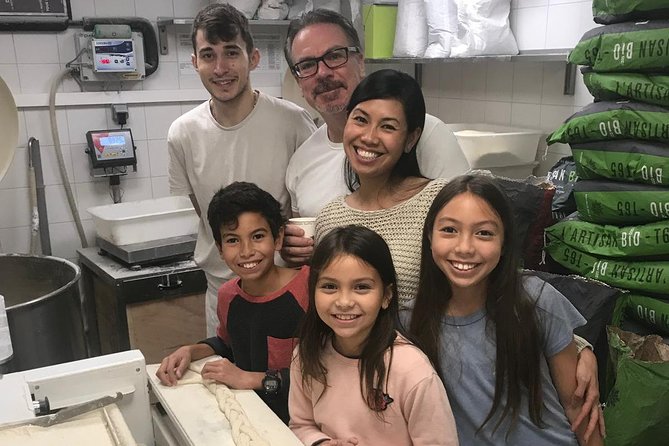
- Real boulangerie setting: You learn in the same spaces where bread and pastries actually get produced
- Small group size: Limited to a maximum of 9, so you get more direct attention
- Breakfast or goûter first: You start by eating French baked treats, not just watching from the sidelines
- Baguette plus classic pastries: You practice baguette making and also work on croissant style pastries and pain au chocolat
- Master baker energy: Many guides, including Mourad and Alice in past groups, keep the class fun and clear
- Take home bread: You leave with your own baguette, and often more than that based on what the group makes
Le Marais location, meeting point, and what “real bakery” means
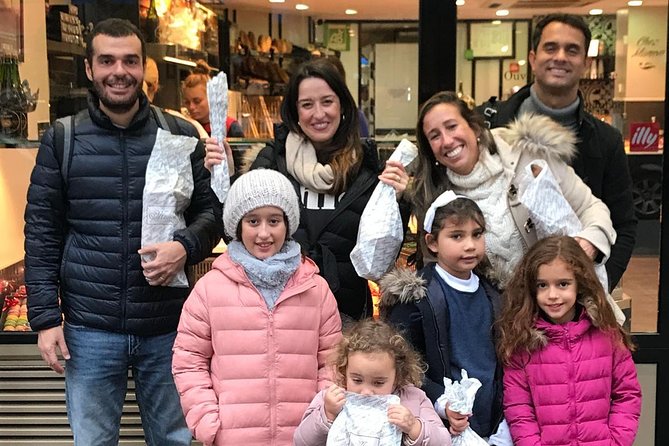
This class is based in the Le Marais area of Paris, right in the 4th arrondissement. Your job is simple: make your own way to the bakery start point on time. The tour meets at Miss Manon at 87 Rue Saint Antoine, 75004. For the morning versus afternoon sessions, the exact address can differ, with classes running at Miss Manon in some cases and Chez Manon in others.
This matters because this is not a museum style experience. You’re walking into a functioning French bakery space where the staff and production are part of what’s going on around you. That’s why the tour feels authentic, and also why it pays to arrive early enough to get oriented, find the group, and settle in.
The tour lasts about 2 hours. In many cases, it’s booked well in advance (on average about 51 days ahead), which tells you this is popular and sells out during peak travel times. I’d treat this like a “book it early” activity, not a last minute add on.
Also, there is no hotel pickup. You’re near public transportation, so getting there is usually straightforward, but you should still plan on doing a short walk and a bit of standing.
Breakfast or goûter first: how the tasting sets you up to bake
The experience starts with a traditional French breakfast at arrival, or a goûter if you’re on the afternoon session. This is more than a snack. It’s a smart way to get your head in the right place: you’re about to learn bread and pastry technique, so eating the style of food you’ll be making helps you notice texture, flavor, and how pastries should feel when they’re done.
In past sessions, groups have been served coffee, juice, and a spread of French baked treats before class work begins. That gives you an immediate payoff while you’re settling in, and it helps you understand what ingredients and processes are actually aiming for.
Then the guide typically shares what you’re going to do next, plus a bit of how a working bakery operates. You’ll sample baked items, then you’ll roll up your sleeves and move to the backroom work area. The structure is useful: you’re not learning in a vacuum, and you’re not just repeating recipes. You start tasting, then you start practicing.
More Marais doorways worth a pause:
- Paris Le Marais Food Tour With 10+ Tastings, Cheese, Wine & More
★ 5.0 · 985 reviews - Paris Le Marais District Original Food and Wine Tasting Tour
★ 4.5 · 880 reviews - Paris Bike Tour Hidden Secrets in the Latin Quarter & Le Marais neighborhoods
★ 5.0 · 766 reviews
The bakery tour part: watching dough, machines, and ovens in action
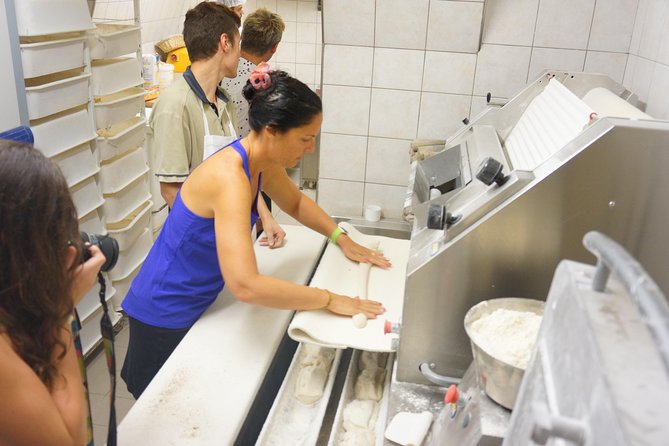
After the initial tasting, you head into the backroom and production side of the bakery. This is where the experience becomes more than a cooking class. You get a tour of a real French bakery, including how bakers work both with hands on methods and with industrial machines and ovens for batch production.
This matters because Paris bread is not just a home kitchen hobby. A real boulangerie balances craft and efficiency. You can see how a bakery keeps workflows moving, how ovens play a central role, and how production supports consistent quality.
One review noted a sense of baking below street level, with an underground bakery space that lets you observe how bread and pastries are made on a larger scale. Even if your session is not exactly the same setup, the core idea is consistent: you see the production environment, not just a staged classroom.
You’ll also get an explanation of the handmade details alongside the tools used for bigger batches. If you’ve ever wondered why a baguette crust is so specific, or why croissant layers behave the way they do, this kind of peek behind the scenes helps connect technique to the results you see on the counter.
Hands on practice: baguettes, croissants, and pain au chocolat
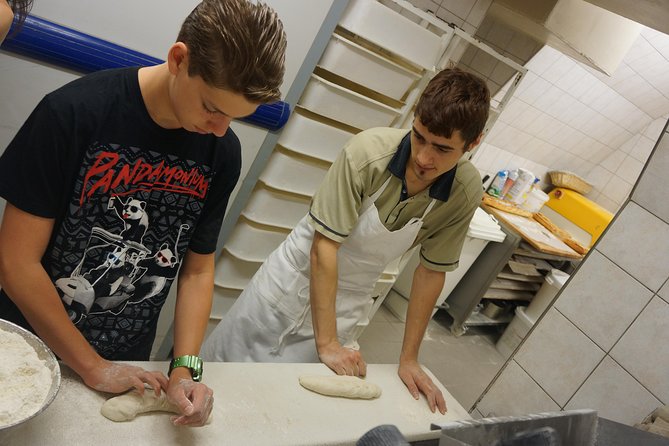
This is the heart of the class. You’ll work at the bakery with your guide, rolling, kneading, mixing, and baking. You’ll learn the process for items like baguettes, croissants, and pain au chocolat, and you’ll practice enough steps that you understand what each stage is trying to accomplish.
A practical way to think of it is this: you’re not only learning what to do, you’re learning why bakers do it that way. For baguettes, that means working dough texture and shaping techniques so the final loaf has the right structure. For pastries like croissants and pain au chocolat, it’s about understanding dough handling and how the pastry form influences baking results.
In many past groups, participants made baguettes and also worked with pastries such as croissants and financiers. Some classes included additional items like rolls or madeleine style cakes, depending on what the day’s menu and production plan looked like.
Important note on expectations: the workspace can be tight because it’s an active bakery. One review mentioned a cramped setup with limited table space for multiple participants. Another mentioned that some doughs may be pre prepped, meaning your role might be shaping or finishing more than starting from raw ingredients. That doesn’t automatically mean it’s a bad class. It does mean you should read the experience as a guided, hands on workshop inside a working kitchen, not a slow step by step demonstration with unlimited personal turns.
The guide makes it: how Mourad, Alice, Lisa, and Tuc shape the vibe
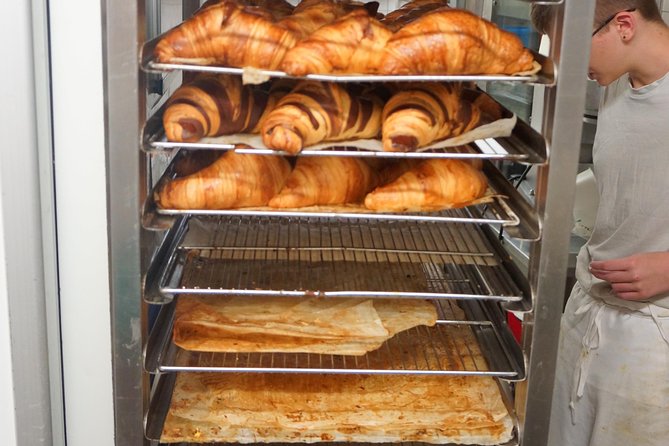
In a small group setting, the guide’s personality matters. A lot. This class is led by a Parisian baker, and the best sessions are the ones where the guide teaches while also keeping things light and clear.
Some past guides that stood out include Mourad, Alice, Lisa, and Tuc. People consistently described these hosts as patient, funny, and great at explaining technique in English. The humor isn’t just entertainment. It helps you relax, ask questions, and remember steps when your hands are busy.
You’ll also see how guides manage a working kitchen rhythm. In a bakery, timing is everything, and you can’t slow down production the way you might in a home class. A good instructor keeps the group moving while still stopping to correct your shaping or dough handling.
If you’re traveling with kids or a mixed ability group, this matters even more. One family described the instructor as patient with kids, with the class staying fun while still teaching real technique.
More Things to Do in Paris




Taking home your bread: what to pack and how to eat it right
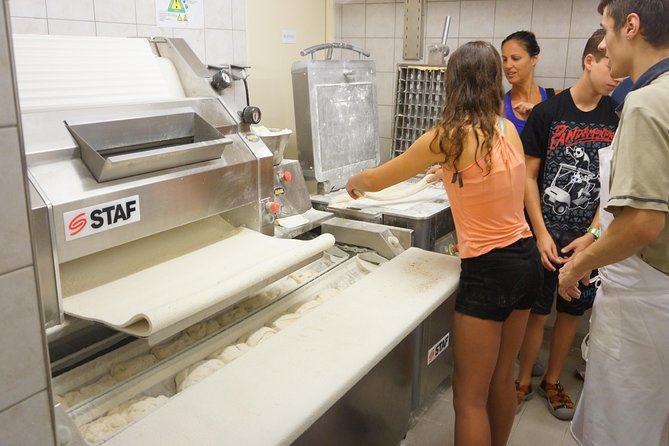
You leave with your own homemade baguette, which is the big included takeaway. In practice, many groups also report taking home a generous amount of what they made, like financiers and croissants, because the class is built around multiple baked items.
How you handle the bread once you’re back in your hotel or apartment can change the whole experience. Baguettes are best when eaten relatively soon after baking, while the crust is crisp and the inside stays tender. If you need to keep it for later, plan to wrap it in a way that protects crust quality.
Also, think about timing. Since the class ends back at the meeting point and doesn’t include hotel pickup, you’ll likely be heading out on your own right after. Bring a bag that can stand upright, and avoid cramming it under heavy items in your day pack.
If you’re feeding a family, tell yourself ahead of time that the bread is part of the meal plan. You might end up eating more than you planned, but that is kind of the point here.
Price and value: what you get for about $114.88 per person
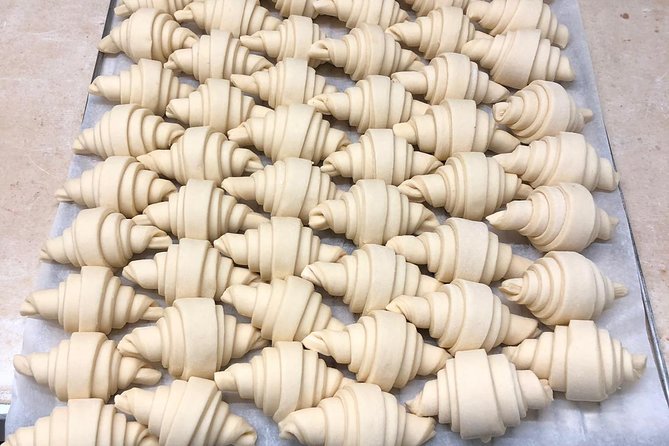
The price is $114.88 per person for about 2 hours. That’s not the cheapest way to spend an afternoon in Paris, but it includes more than just a recipe lesson.
You get:
- Traditional breakfast at arrival (or a goûter for afternoon groups)
- A tour of a French bakery
- A small group baking class with a master French baker
- Your baguette to take with you
Value is highest when you care about technique and you want the real working environment. If you’ve done a simple food tasting before, this feels different because you’re hands on in a boulangerie and you’re learning from the person producing bread and pastries for customers.
The small group limit of up to 9 also matters. In larger classes, you might only get quick turns. Here, you have a better shot at hands on guidance while the baker corrects details.
Where the price can feel harder to justify is when your personal expectation is full croissant making from scratch with lots of dough time. Some sessions may involve pre prepped dough or quicker shaping steps, and one review suggested a class lasting closer to one hour than the advertised 2 hours on a specific day. That kind of mismatch can make the value feel thin.
My advice: book this if you want a serious taste of how French baking works in the real world. Book something else if you specifically want a long, slow, full instruction croissant build with lots of step repetition.
Timing, group size, and booking smart in peak season
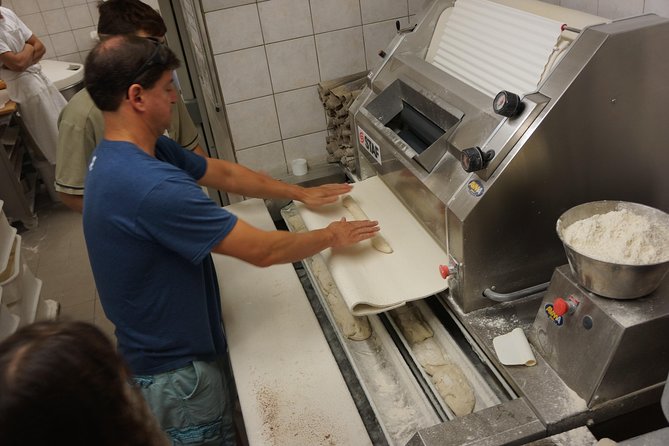
This class is popular and tends to be booked around 51 days in advance on average. I’d schedule it early in your Paris plan so you have more choice on dates and session times.
You should also double check the exact start address for your time slot. Morning and afternoon can run at different locations, and the difference can cost you time if you show up at the wrong spot. If you’re anxious about that, keep your booking messages and confirmations handy and recheck the meeting address the day before.
The group is capped at 9. That small size is a big part of why people recommend the class so strongly. It also means the experience is more sensitive to late arrivals and schedule changes than a big open walking tour would be.
Who should book this Paris baking class, and who might want another option
This tour is a great match if you:
- Want hands on bread and pastry technique, not just eating
- Like the idea of learning inside a working boulangerie, with real ovens and real production
- Have a kid, teen, or group member who learns best by doing
- Want a memorable edible souvenir that you bake, not just buy
It may not be the best fit if you:
- Expect a long, slow croissant lesson with maximum dough time and no pre prep
- Are very sensitive to cramped kitchen layouts
- Need easy access, since at least one review mentioned walking up and down a steep staircase
If you’re unsure, I’d lean toward booking if baguettes are your main goal and you enjoy the idea of taking home fresh bread. If croissants are the only thing you care about, you might want to compare what other classes offer in terms of how much dough handling you do personally.
Should you book this Le Marais baking experience?
I think this class is worth booking if you want a real bakery feel, a small group format, and a master baker guiding your hands. The breakfast or goûter start is a nice touch, and the “take home your baguette” ending is practical and satisfying.
Book it now if you’re traveling in a busy season, because it fills ahead of time. Just be careful with the meeting point for your session time and arrive early, so you don’t stress yourself out on a working bakery staircase and tight backroom space.
If you’re the type who loves learning French food technique, this is one of those experiences where you don’t just taste Paris, you learn how it gets made.
FAQ
Where is the meeting point for the class?
The start point is Miss Manon, 87 Rue Saint Antoine, 75004 Paris, France. Morning and afternoon tours are held at different locations, so confirm which bakery applies to your specific time slot.
Do I need hotel pickup?
No. The experience does not include hotel pickup or drop off. You will make your own way to the meeting point.
How long is the baking class?
It runs for about 2 hours (approximately).
Is the class taught in English?
Yes. It is offered in English.
What is included in the price?
It includes a traditional French breakfast at arrival (or goûter depending on the session), a tour of a French bakery, a small group baking class, and your baguette to take with you.
What can I expect to bake?
You learn and practice making baguettes and classic French pastries such as croissants and pain au chocolat, guided by a master French baker.
How big is the group?
The class has a maximum of 9 travelers.
Are children allowed?
Yes, but children must be accompanied by an adult.
What if I need to cancel?
Cancellation is free up to 24 hours in advance for a full refund.
Is there any walking involved or stairs?
The class takes place in a working bakery setting. One review specifically noted walking up and down steep stairs, so plan accordingly.
Latest Paris entries, notes attached





Le Marais Walks, compared.
Paris Le Marais Food Tour With 10+ Tastings, Cheese, Wine & More
Read our review →
Paris Le Marais District Original Food and Wine Tasting Tour
Read our review →
Paris Bike Tour Hidden Secrets in the Latin Quarter & Le Marais neighborhoods
Read our review →
Paris Culinary Tour: 11 Tastings & 2 Wines in Le Marais
Read our review →
Le Marais District Food Tour with 10+ Tastings & Wine
Read our review →
Le Marais District & Jewish Quarter Guided Walking Tour 12ppl Max
Read our review →This tour also appears in