
Reviewed · LE MARAIS WALKS
Le Marais District & Jewish Quarter Guided Walking Tour 12ppl Max
Paris changes fast when you walk it. This 2.5-hour small-group route strings together royal Marais landmarks and the older Jewish Quarter streets, with a live English guide doing the explaining as you go.
I particularly like how the tour balances architecture with people, starting at major sites like Place des Vosges and then shifting to streets around the Pletzl and Rue des Rosiers. I also like that you mostly stay outside, so you keep moving and you still get context for places you can later revisit on your own time.
The only thing to consider is what is not included: you do not go inside synagogues, and a couple of major museums on the route are only exterior or need separate admission if you choose to enter.
In This Review
- Key things I’d zero in on
- Why this Marais and Jewish Quarter walk is such a smart use of 2.5 hours
- Starting at Saint-Paul-Saint-Louis: Jesuit design in the 1600s
- Hotel de Sully courtyard and Place des Vosges for a real Paris reset
- Pletzl and Rue des Francs Bourgeois: where community and commerce meet
- Musée Carnavalet plus the Marais mansions you see from the street
- Rue des Rosiers and Jardin des Rosiers, a WWII memorial you can pause at
- Centre Pompidou and Hôtel de Ville: big contrast in one stroll
- Saint-Gervais-Saint-Protais near City Hall, baroque style in miniature
- Value, pacing, and what to bring for rain or shine
- Should you book this tour of the Marais and Jewish Quarter?
- FAQ
- How long is the Le Marais District & Jewish Quarter guided walking tour?
- What is the group size?
- Is the tour offered in English?
- Does the tour run in bad weather?
- Are synagogues included in the tour?
- Do I need separate tickets for anything on the route?
- Where does the tour start and end?
- What information do I need to provide before the tour?
- Is the tour suitable if I have walking disabilities or use a wheelchair?
Key things I’d zero in on
- Max 12 people, with a semi-private feel that makes questions easier
- English-speaking professional guide with lots of street-level storytelling
- Classic Marais hits in one loop, from Saint-Paul-Saint-Louis to Hôtel de Ville
- Jewish Quarter focus without synagogue entry, due to security and access rules
- Time-smart route that includes Pompidou and several landmark churches from the outside
- Most stops are free, with Musée Carnavalet and Pompidou admission not included
Why this Marais and Jewish Quarter walk is such a smart use of 2.5 hours
If you only have a half day, the Marais can feel like a maze of pretty streets and perfect façades. This walk helps you connect the dots fast. You get a guided route across the neighborhood’s different eras, so you understand why these buildings look the way they do, and why certain streets became the social and commercial center for generations.
You also get something practical: you can enjoy the sights without having to research each turn in advance. The guide keeps things moving through courtyard views, square stops, and short photo pauses, so you end up with a mental map of the area. That matters in Paris, where getting lost is easy and daylight time is not unlimited.
And this route has good pacing for most people with moderate walking stamina. It is designed as a “walk and learn” itinerary, not a museum marathon. Still, bring realistic expectations: it is outdoors most of the time, with some stops that are pass-by style rather than inside visits.
Starting at Saint-Paul-Saint-Louis: Jesuit design in the 1600s
The tour begins with Saint-Paul-Saint-Louis, a 17th-century church built by the Jesuits. The interesting detail here is the design inspiration, tied to the Gesù church in Rome. That is your first clue that the Marais is not just Paris nostalgia. It’s a place where foreign ideas were imported and adapted.
Even if you do not go inside, churches like this help you read the neighborhood. You start seeing the Marais as a layered stage, where religious power, politics, and architectural taste overlap. A guide can point out what to notice, like the overall shape and the kind of visual language that was common when the Jesuits were shaping church building across Europe.
One small consideration: the tour notes that some attractions cannot be visited from the inside due to security measures. So your best plan is to enjoy what you can see from the street and courtyards, then decide later if you want to add specific museum or interior visits on your own.
More Walking Tours in Paris
- Paris Top Sights Half Day Walking Tour with a Fun Guide
★ 5.0 · 2,893 reviews - Montmartre Hidden Gems and Scenic Highlights Walking Tour
★ 5.0 · 2,684 reviews - Montmartre Hill French Gourmet Food and Wine Tasting Walking Tour
★ 5.0 · 2,588 reviews
Hotel de Sully courtyard and Place des Vosges for a real Paris reset
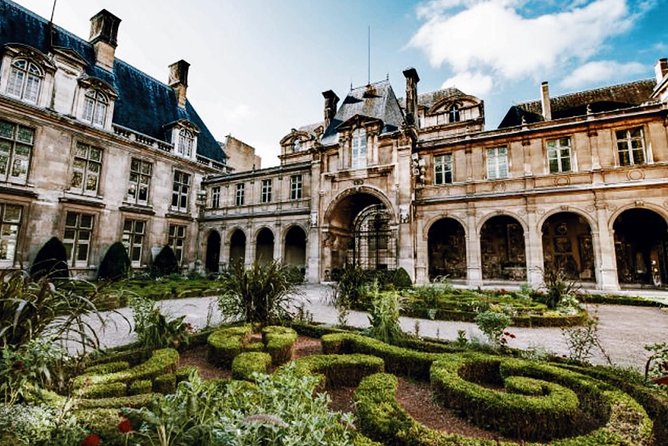
Next comes the Hotel de Sully area, including the courtyard and garden. The building dates to the early 1600s, built between 1624 and 1630, and it mixes Renaissance style with Baroque elements. You are not just staring at a pretty wall here. This stop gives you a window into how the Marais became a prestigious address.
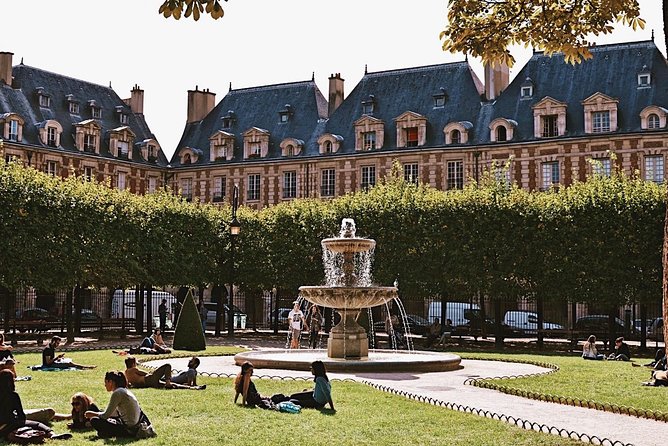
From there, you walk to Place des Vosges, and yes, this stop earns its fame. It is the oldest planned square in Paris, and the architectural uniformity is the point. When you understand that this kind of planning was intentional, the square feels less like a postcard and more like a carefully designed public room for the city.
What I like about guides doing this transition is that it sets you up for everything after. Once you see how grand mansions and planned squares work, you can better understand how the neighborhood later held very different communities, and how that history shaped street life.
Pletzl and Rue des Francs Bourgeois: where community and commerce meet
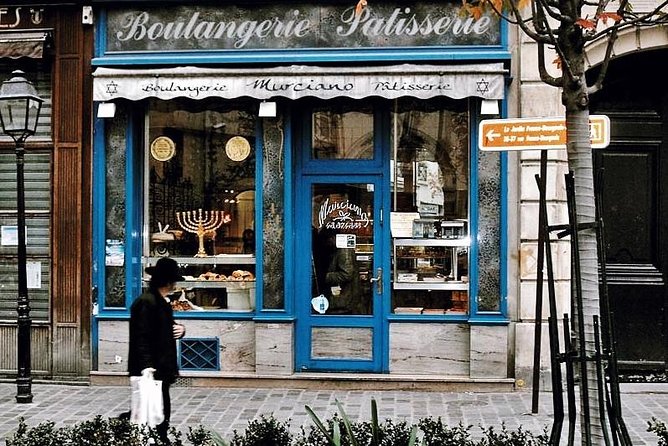
After the royal and architectural Marais stops, the walk shifts into the older Jewish Quarter story. You follow the theme through the Pletzl area, including places like bakeries and boutiques, then onward along rue des Francs Bourgeois.
Rue des Francs Bourgeois is a great “feel it with your feet” street. It has a long stretch of shops and fashion energy, but the guide connects that present-day shopping culture to the neighborhood’s earlier identity. That helps you avoid treating the Jewish Quarter as just a historical exhibit. It becomes a living neighborhood, not a frozen timeline.
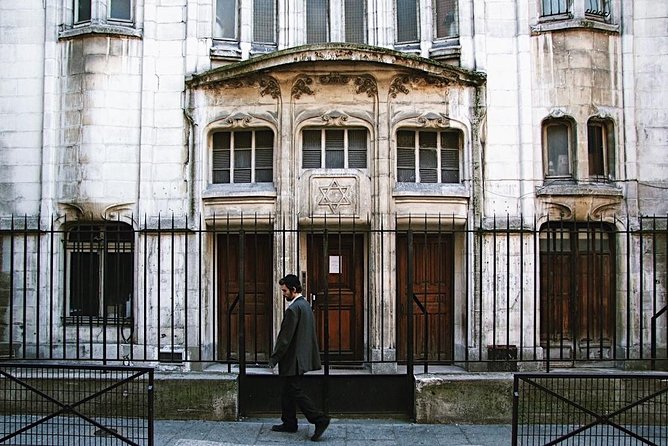
A key detail on this tour is that you get community context without forcing entry into restricted spaces. The tour specifically states that it does not include entry into synagogues because access is restricted for security and to worshippers. That is a real limitation, but it is also why the guide can keep the focus on what you can safely and respectfully experience on the route: streets, landmarks, and the story behind them.
Musée Carnavalet plus the Marais mansions you see from the street
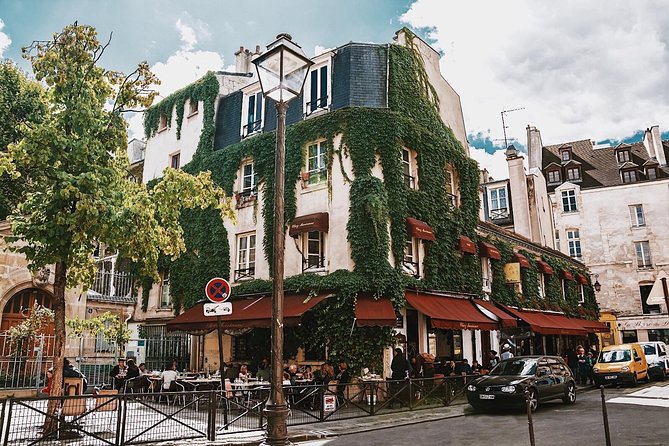
You pass the Musée Carnavalet area, connected to the Hôtel Carnavalet, which is noted as an example of Renaissance architecture in Paris. The museum itself highlights the past of Paris, and the tour gives you a short window to understand what kind of story you might find if you go inside later.
Here is the practical angle: Musée Carnavalet admission is not included. So this stop works in two ways. If you want a quick exterior look and a guided explanation, you’re fine. If the theme hooks you, you can choose to revisit and buy tickets separately when you have more time.
This is where the Marais walking style becomes valuable for your planning. Instead of trying to cram museums into the 2.5 hours, the guide uses these architectural anchors to guide your curiosity. You finish the walk with clear targets for a second visit.
Also, the tour includes pass-by context on the kind of mansion history the Marais is famous for. Even when the buildings are now museums or offices, the guide helps you recognize what makes these structures distinctive, so you can spot them on future walks.
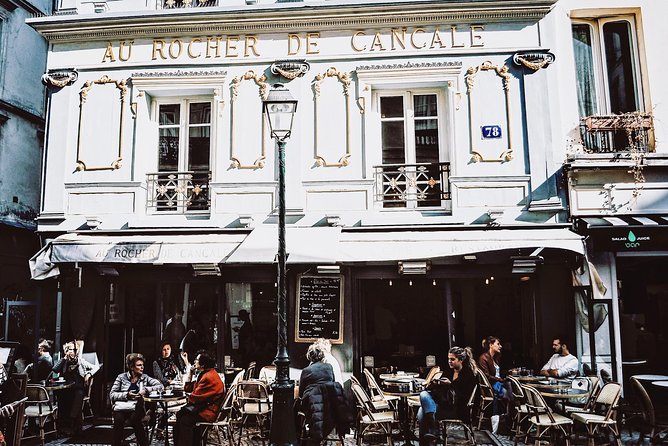
More Marais doorways worth a pause:
Rue des Rosiers and Jardin des Rosiers, a WWII memorial you can pause at
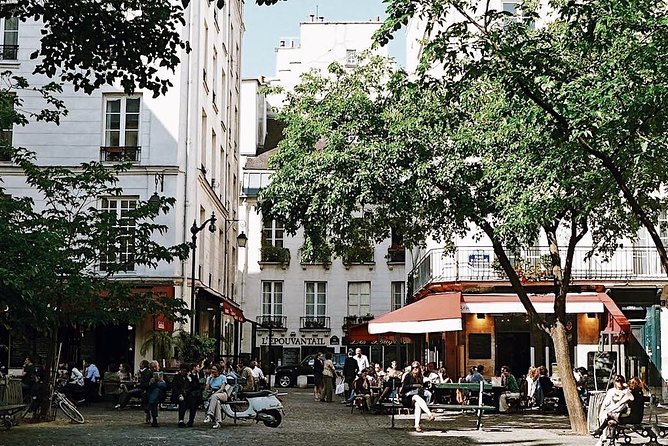
The most moving part for many people is the time spent around Rue des Rosiers and the nearby Jardin des Rosiers – Joseph-Migneret. Rue des Rosiers sits at the center of the Jewish Quarter area, so it is both a historical reference point and a real-life shopping and food street.
Then comes the garden, which feels like a breather between buildings. The tour notes it is hidden behind boutiques and tucked between hotels. Even better, it is named for Joseph Migneret, a school principal who helped students during World War II by hiding them, and who was later arrested and killed. That is the kind of story that changes how you see the street.
This is also where a good guide matters most. Without explanation, you might treat a garden like a pretty pause. With context, you understand it as memory made physical, right in the middle of everyday life.
If you want a personal tip: take a moment here to slow down your phone habit. Look around first, then let the story land.
Centre Pompidou and Hôtel de Ville: big contrast in one stroll
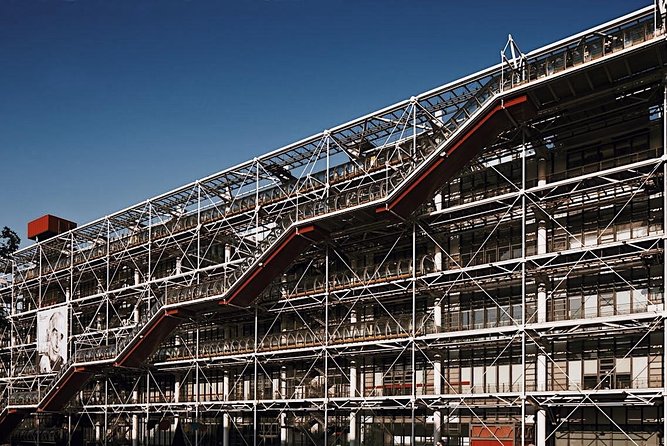
Near the end, the tour shifts to Centre Pompidou, a contemporary museum known for its high-tech style outside. Even if you do not enter, it is a useful contrast after the Marais architecture. You see how Paris can pivot from early modern squares and hôtels particuliers to bold contemporary design without changing neighborhoods.
Important detail: Centre Pompidou admission is not included. The tour is structured so you can experience the approach and the exterior presence within the walk, then choose your own museum time later if it interests you.
After Pompidou comes Hôtel de Ville, the city hall building, and the tour gives you a major historical anchor: it has housed Paris municipal administration since 1357. Standing near it, you start to understand how governance shaped the city and how civic power influenced what neighborhoods became important.
This segment works well because it connects art and government, not as separate topics, but as parallel engines of city identity. You walk out of the Marais past one kind of public monument into another.
Saint-Gervais-Saint-Protais near City Hall, baroque style in miniature
Right next to Hôtel de Ville, the walk includes a glimpse of Église Saint-Gervais-Saint-Protais. The guide frames it as an early French baroque style example in Paris. Even if you only catch it from the outside, the building type is a useful checkerboard for your visual vocabulary.
This stop also helps you understand Paris baroque and how it differs from other church styles you might have seen elsewhere. It is a quick close to the walk, but it gives your eyes one more style note before you’re done.
If you are the type who likes to keep a running list in your head, note the difference between what you saw earlier at Saint-Paul-Saint-Louis and this baroque cameo. The guide’s short explanations can make those comparisons click.
Value, pacing, and what to bring for rain or shine
At $59.69 per person for about 2 hours 30 minutes, this tour can feel like a good deal if you value guided context more than museum ticket time. Most stops are free to view, and the format is designed to keep you moving through the Marais. The two “not included” admissions to keep in mind are Musée Carnavalet and Centre Pompidou.
The price also buys you something harder to measure: a guide who can answer the questions you would otherwise save for later research. The tour is capped at a maximum of 12 people, and it is described as semi-private. That typically translates to a calmer experience where you can ask follow-ups.
Timing matters in Paris. This walk runs rain or shine, and the route may change due to national celebrations. So I recommend planning to be flexible with minor changes, and treat it as a highlight route rather than a rigid checklist.
Pack like you’re walking a neighborhood, not touring a theme park. The notes recommend comfortable shoes and bring water. It also suggests an umbrella in case of rain and a hat during summer. And one more detail to take seriously: no large bags or suitcases.
If you care about guides, there are standouts named in the guide feedback you provided, including Hugo, Eden Mele, and Adrien. People praised them for engaging, story-driven explanations and for making the Jewish Quarter part of the route feel personal and clear, not like a lecture.
Should you book this tour of the Marais and Jewish Quarter?
Yes, I think you should book it if you want a guided Marais orientation plus a meaningful Jewish Quarter context in one afternoon. It is especially worth it if you care about architecture and streets, and you want to understand the neighborhood’s layers without spending hours digging through maps.
Skip it or adjust expectations if your top goal is interior synagogue visits. This tour does not include entry into synagogues, due to restricted access for security. Also, if you need fully accessible routes or you use a wheelchair, it is not recommended, and you should look for an alternative format.
If you book, do this: wear walking shoes, keep your day flexible for rain or celebration detours, and treat Musée Carnavalet and Centre Pompidou as optional add-ons. This is a “get your bearings fast, then choose your next move” kind of tour, and it sets you up to explore the Marais on your own afterward.
FAQ
How long is the Le Marais District & Jewish Quarter guided walking tour?
It runs about 2 hours 30 minutes.
What is the group size?
This is a semi-private tour with a maximum of 12 travelers.
Is the tour offered in English?
Yes, it is offered in English.
Does the tour run in bad weather?
Yes, it runs rain or shine.
Are synagogues included in the tour?
No. The tour does not include entry into any synagogues, since access is restricted to worshippers for security reasons.
Do I need separate tickets for anything on the route?
Musée Carnavalet and Centre Pompidou are listed as not included for admission. Other stops are marked as free.
Where does the tour start and end?
It starts at Saint-Paul 75004 Paris, France and ends in Le Marais, Paris, France.
What information do I need to provide before the tour?
You must provide a mobile phone number (including country code).
Is the tour suitable if I have walking disabilities or use a wheelchair?
The tour is not recommended for those with walking disabilities or using a wheelchair, and it’s described as requiring moderate physical fitness.
Boulevard Pace
- Paris: Montmartre Highlights Walking Tour with a Local Guide
★ 4.9 · 2,318 reviews - Paris Île de la Cité and Notre-Dame Walking Tour With Crypt
★ 5.0 · 2,272 reviews - Paris: Montmartre Cheese, Wine & Pastry Guided Walking Tour
★ 4.8 · 2,255 reviews - Paris in a Day: Louvre or Orsay, Eiffel Tower, City Walk & Cruise
★ 5.0 · 1,956 reviews
Latest Paris entries, notes attached






Le Marais Walks, compared.

Award-Winning Paris French Bakery Experience — Le Marais, 4th Arr
Read our review →
Paris Le Marais Food Tour With 10+ Tastings, Cheese, Wine & More
Read our review →
Paris Le Marais District Original Food and Wine Tasting Tour
Read our review →
Paris Bike Tour Hidden Secrets in the Latin Quarter & Le Marais neighborhoods
Read our review →
Paris Culinary Tour: 11 Tastings & 2 Wines in Le Marais
Read our review →

Le Marais District Food Tour with 10+ Tastings & Wine
Read our review →
This tour also appears in