
Reviewed · WINE TOURS
Bordeaux Wine and Trade Museum Admission Ticket with Wine Tasting
One ticket, two flavors, and a quick lesson in how Bordeaux wine really got traded. This visit takes you through the Musée du Vin et du Negoce in old vaulted cellars, then finishes with a short wine tasting.
I like the way it ties the wine to the people and systems behind it, merchants, coopers, and the long timeline of the grands vins de Bordeaux. The main drawback is that the setting is a cellar, so if you are sensitive to smells, plan for a bit of musty cellar character.
In This Review
- Key Things You’ll Notice Right Away
- Entering The Musée du Vin et du Negoce In Bordeaux
- How the Museum Visit Works (And What You Actually Learn)
- The coopers and the cellar world
- Bordeaux as a network, not a single estate
- Merchant families and archival documents
- 18th-century architecture, used for storage and trade
- The Tasting Moment: Merlot and Cabernet Sauvignon With Context
- What you learn during the tasting
- How long the tasting feels
- Cellar Comfort: Humidity, Smell, and Real-World Expectations
- Price and Value: What $14.51 Actually Buys
- How This Fits Into Your Bordeaux Itinerary
- What I Think About The Exhibit Size and Pace
- Who Should Book This Ticket (And Who Should Skip It)
- A Quick Name Check Before You Go
- FAQ
- FAQ
- How long should I plan for this experience?
- What wines are included in the tasting?
- Is this experience offered in English?
- Is the wine tasting included in the admission ticket?
- What are the museum opening hours?
- Where does the experience take place?
- Can I choose different times throughout the day?
- What is the cancellation policy?
- Is this suitable for most travelers?
- Should You Book This Wine and Trade Museum Ticket?
Key Things You’ll Notice Right Away
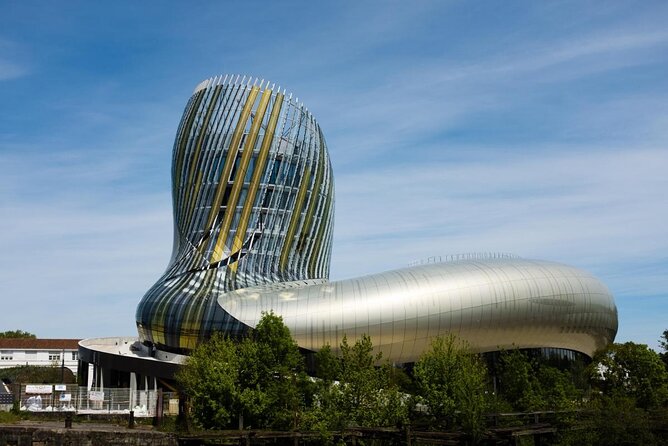
- Vaulted cellars and 18th-century trade architecture inside the royal broker Louis XV building
- Three centuries of Bordeaux wine history, with attention to the nineteenth-century wine trade
- Self-paced museum flow paired with English explanations so you can go at your speed
- Two-wine tasting focused on Merlot and Cabernet Sauvignon
- Merchant vs. château wine explained in plain terms during the tasting
- Multiple daily time slots, so it fits cleanly into a sightseeing morning or afternoon
Entering The Musée du Vin et du Negoce In Bordeaux
Bordeaux makes wine in big, famous ways. But this ticket gives you a different angle, the trade side, the “how wine moved” story.
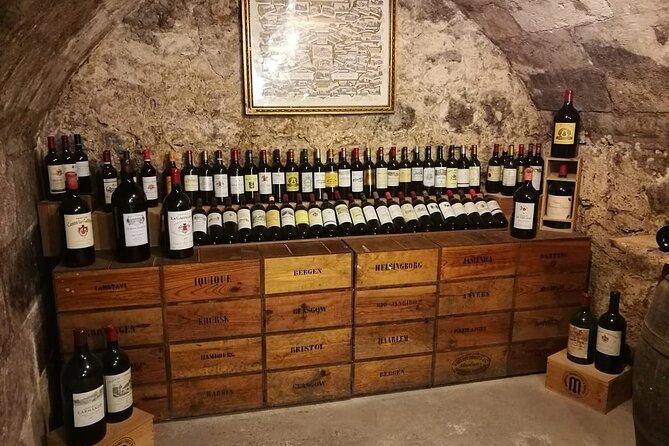
You’ll start at the Musée du Vin et du Negoce, housed in a historic building linked to Louis XV’s era. The museum sits in vaulted cellars associated with wine storage and the practical work of the time. If you’ve toured flashy wine attractions, this one feels more old-school. It is smaller, close-up, and centered on the business of Bordeaux wine, not just tasting.
The building itself matters. You’ll see how those spaces supported traditional aging practices and how the coopers’ work shaped what ended up in barrels and bottles. That physical context makes the exhibits easier to picture, especially when the displays focus on traders and how Bordeaux wine traveled beyond local roads.
How the Museum Visit Works (And What You Actually Learn)
The museum portion is designed so you can explore at your pace. You’re not stuck in a big group rhythm. You’ll move through exhibits that are built around history and trade, plus collections that go beyond the classic “two seas” idea associated with Bordeaux routes.
Here are the main themes you’ll run into as you walk:
More Wine Tours in Bordeaux
- Bordeaux: Cité du Vin Entry Ticket and Wine Tasting
★ 4.6 · 3,885 reviews - Bordeaux: River Garonne Cruise with Glass of Wine and Canelé
★ 4.5 · 3,630 reviews - From Bordeaux: Afternoon Saint-Emilion Wine Tasting & snack
★ 4.8 · 1,581 reviews
The coopers and the cellar world
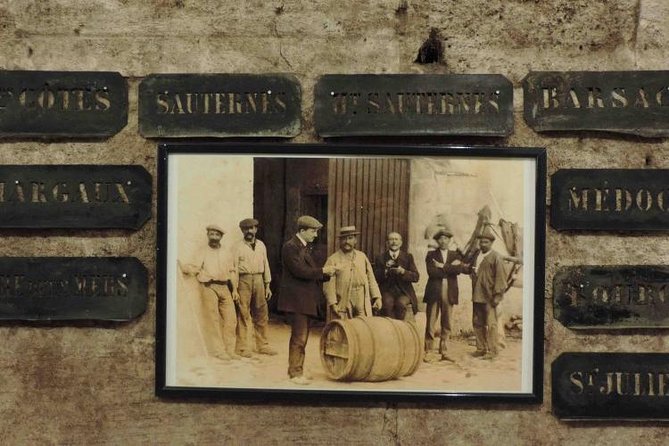
One of the strongest parts is the way the vaulted cellars connect to the work that kept wine stable. Built in 1720, the cellars are presented as a place where the coopers and the traditional aging process show up in physical form, not just in posters.
Bordeaux as a network, not a single estate
The museum doesn’t treat Bordeaux as one style. It treats it as a system. You’ll see collections that illustrate the Bordeaux wine trade with reach beyond the immediate region.
This is where the museum starts to feel useful for you, even if you are not a wine-history person. If you have ever wondered why Bordeaux reputations became so powerful, it is partly because of logistics, merchants, archives, and the repeated work of getting the right wine to the right market.
Merchant families and archival documents
There are exhibits with artifacts and archival materials pointing to merchant families, plus ancestral know-how from cellar workers. It’s not just names, it’s the idea that wine reputation was built over generations, with labor and records.
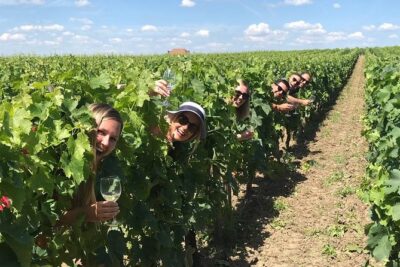
More French appellations, visited:


18th-century architecture, used for storage and trade
The museum highlights the sophistication of the 18th century architectural style connected to this trade heritage. Even if you don’t care about architecture, this helps you understand why the building itself feels like part of the story, not just a backdrop.
The Tasting Moment: Merlot and Cabernet Sauvignon With Context
At the end of your visit, the ticket leads you into the boutique for a tasting of two wines. You’ll sample Merlot and Cabernet Sauvignon, and the staff explain how to distinguish between the grape varieties in a practical way.
This is the part I think you should pay attention to. Many wine tastings are just taste, smile, move on. Here, the experience is structured around letting you connect what you taste to what you learned in the museum: trade, classification, and how Bordeaux wine is packaged for different buyers.
What you learn during the tasting
You’ll hear comparisons that go beyond flavor notes. Specifically, you’ll learn:
- How Merlot and Cabernet Sauvignon differ
- The difference between merchant wine and château wine
That merchant vs. château distinction is the “why it matters” insight. It helps you make sense of what you might see later when you browse bottles in shops or on menus. In Bordeaux, the label story can be more complex than you expect, and this tasting gives you a shortcut to understanding it.
How long the tasting feels
The overall time for the experience is about 1 to 2 hours. In practice, the museum side may move faster or slower depending on how much you read and watch. Some people seem to speed through if they prefer the tasting, but you have enough time to take it in without rushing.
Cellar Comfort: Humidity, Smell, and Real-World Expectations
Let’s talk reality, because this is the one place where the setting can affect your enjoyment.
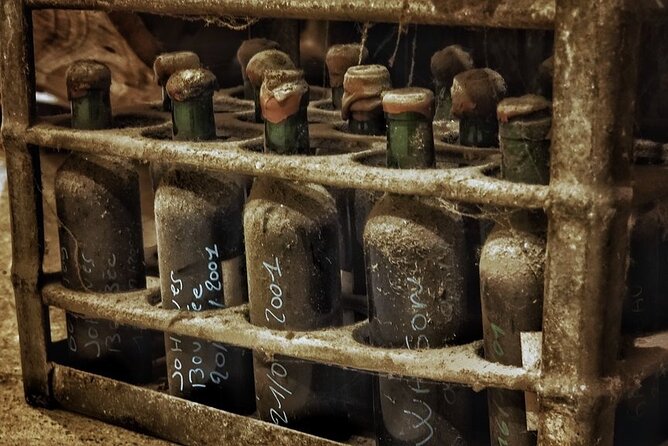
The museum is in vaulted cellars tied to wine storage. That means humidity is part of the design logic. The upside is that these spaces were built to keep wine conditions stable over time. The downside is that some visitors report a musty or mouldy smell in the cellars.
If you are sensitive to odors, take it seriously. Come prepared for the fact that you’re entering historic storage space, not a modern climate-controlled gallery. If you can handle that, you’ll likely appreciate the authenticity more.
Also, plan to move your visit with purpose. Wear a light layer, because cellars can feel cooler. And keep your phone tucked away if you are the type who needs perfect air-conditioned comfort for a long sit-down.
Price and Value: What $14.51 Actually Buys
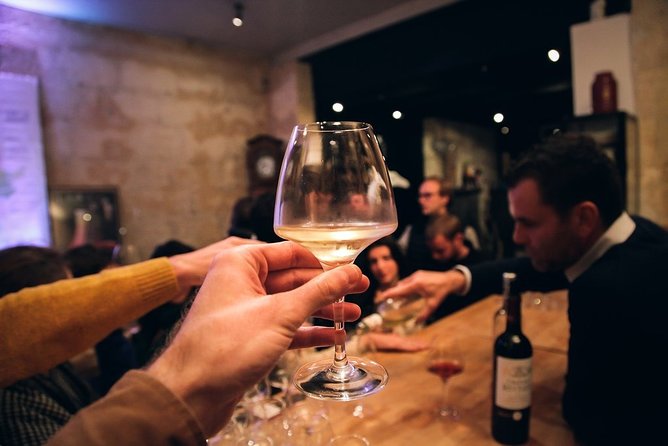
At about $14.51 per person, you’re paying for a museum admission ticket plus a tasting of two wines. That means you are not just buying entry into a small exhibition. You’re buying the chance to leave with a concrete flavor memory and a couple of clear explanations.
Here’s how the value stacks up in real life:
- If your Bordeaux day is short, this gives you a focused theme, wine trade history, without demanding an all-day commitment.
- If you like education that connects to the label world, the merchant vs. château explanation is the kind of detail that can follow you into future wine purchases.
- If you already know Bordeaux pretty well, you may find the museum portion modest. The payoff can lean more heavily on the tasting.
So I see this as best value when you want something smarter than a quick glass, but not as time-heavy as bigger, tech-forward experiences.
How This Fits Into Your Bordeaux Itinerary
This is a great “in-between” activity. The museum is open Monday through Sunday from 10:00 AM to 6:00 PM, with multiple time options throughout the day.
You’ll also appreciate that it’s near public transportation. If you are doing Bordeaux on foot plus a couple of metro or tram jumps, it slots in without drama.
Timing tip: if you’re fresh in the morning, you may read more and enjoy the trade exhibits more. If you’re already tired from walking, choose a later time slot and treat the tasting like your reward. Either way, you’ll finish with the guided part, Merlot and Cabernet Sauvignon, and the label logic that helps the whole visit click.
What I Think About The Exhibit Size and Pace
This museum is small. That can be either a plus or a minus, depending on your travel style.
If you like compact museums, you’ll likely enjoy that you can absorb a lot of information without feeling trapped. The exhibits are focused. The self-paced nature means you can spend extra minutes where you care most and skim the rest.
If you want something ultra-interactive, you might wish for more hands-on elements. The museum is presented with English explanations and clear notes, so it works well if you don’t want to hunt for translations. But it is still an exhibition space where your attention is doing most of the work.
One practical choice: go in with a question. For example, ask yourself how merchants and estates became linked to Bordeaux’s global reputation. Then, when the tasting explains merchant vs. château, you’ll connect the dots faster.
Who Should Book This Ticket (And Who Should Skip It)
This ticket suits you if:
- You want a short, focused Bordeaux experience
- You enjoy wine, but you also like the business and history behind the bottles
- You want an English-friendly way to learn how to taste Merlot vs. Cabernet Sauvignon
- You are curious about how Bordeaux wine trade shaped what you see today
Skip it or consider it carefully if:
- You are strongly sensitive to cellar odors
- You want a large, high-tech, hands-on museum experience
- You already have a deep understanding of Bordeaux trade terms and just want pure tasting volume
If you are planning a day that includes other major wine sites, I’d treat this as the “small, real, trade-focused companion.” It complements the bigger attractions by giving you the merchant and trade lens that many visitors miss.
A Quick Name Check Before You Go
One thing I recommend: double-check the exact title you book. There’s a risk of confusion with similarly named Bordeaux wine experiences. You want the Musée du Vin et du Negoce specifically, since this is the one tied to the trade museum and the two-wine tasting.
FAQ
FAQ
How long should I plan for this experience?
Plan for about 1 to 2 hours total.
What wines are included in the tasting?
The tasting includes two wines, Merlot and Cabernet Sauvignon.
Is this experience offered in English?
Yes, it is offered in English.
Is the wine tasting included in the admission ticket?
Yes. Wine tasting is included with admission.
What are the museum opening hours?
The museum runs 10:00 AM to 6:00 PM, Monday through Sunday.
Where does the experience take place?
It takes place at the Musée du Vin et du Negoce in Bordeaux, near public transportation.
Can I choose different times throughout the day?
Yes, it’s offered at multiple times throughout the day.
What is the cancellation policy?
You get free cancellation up to 24 hours in advance for a full refund.
Is this suitable for most travelers?
Yes, most travelers can participate.
Should You Book This Wine and Trade Museum Ticket?
Yes, if you want a smart, short Bordeaux stop that explains how the wine world works, not just how wine tastes. At this price, the combination of museum trade context plus a guided tasting of Merlot and Cabernet Sauvignon is a practical way to leave with something you can use later when you order wine or shop for bottles.
I’d think twice only if you know you cannot handle cellar smells. If that’s you, choose a different wine experience or plan for fresh air breaks. Otherwise, this is exactly the kind of compact, authentic ticket that turns a quick visit into a real takeaway.
Worth the Coat Check
- Bordeaux: Museum of Illusions Entry Ticket
★ 4.2 · 588 reviews - Bordeaux: Wine and Trade Museum Entry Ticket & Wine Tasting
★ 4.4 · 121 reviews - Paris: Orsay Museum Entry Ticket
★ 4.7 · 25,647 reviews - Louvre Museum Masterpieces Guided Tour with Access
★ 4.5 · 12,023 reviews
France by the Course
- From Bordeaux: Half-Day Saint-Émilion Tour and Wine Tasting
★ 4.7 · 699 reviews - Saint-Émilion: Bordeaux Vineyard Tour and Wine Tasting
★ 4.8 · 578 reviews - Bordeaux: Vineyards Wine Tasting Half-Day Trip
★ 4.2 · 470 reviews - Saint-Émilion: Vineyard Walking Tour and Tasting
★ 5.0 · 404 reviews
Latest Bordeaux entries, notes attached





Wine Tours, compared.

Authentic Parisian Gourmet Food Tour with 10 Local Dishes & Wines
Read our review →
Loire Valley Castles Day Trip from Paris with Complementary Wine
Read our review →

River Garonne Cruise with Glass of Wine and Canelé
Read our review →
Montmartre Hill French Gourmet Food and Wine Tasting Walking Tour
Read our review →
Montmartre Cheese, Wine & Pastry Guided Walking Tour
Read our review →
Loire Valley Castles Day Trip With Wine Tasting
Read our review →
Paris 3-Courses Gourmet Dinner Seine River Cruise with Champagne
Read our review →This tour also appears in