
Reviewed · TICKETS
Carcassonne: Castle and Ramparts Entry Ticket
Carcassonne’s walls make time feel physical. With this self-guided ticket, you can move through the Château Comtal courtyards, museum stops, and ramparts at your own rhythm, and I especially loved the climb to Bishop’s Tower plus the striking interior stillness of the Salle Pierre Embry and its early 15th-century polychrome alabaster statues.
If you go in with low tolerance for stairs, you’ll want a plan, because the ramparts are real medieval stonework, not a flat stroll.
In This Review
- Key things I’d focus on
- Carcassonne at wall level: why this place feels different
- Château Comtal courtyards and museum stops: start where the fortress breathes
- Salle Pierre Embry: the 15th-century statue window you’ll remember
- Bishop’s Tower climb: views that also explain the walls
- The ramparts loop: timing, stairs, and the western views add-on
- Where to spend your time on the walls
- Leaflet vs audio guide: what to choose for your pace
- Price and value: is it worth about $15?
- Practical planning: when to go and what to bring
- Who this ticket suits best
- Should you book the Carcassonne Castle and Ramparts entry ticket?
- FAQ
- How much does the Carcassonne Castle and Ramparts entry ticket cost?
- How long is the experience?
- What is included with the ticket?
- Is an audio guide included?
- Where do I meet for this activity?
- What dates is it closed?
- Are there any special ramparts closures?
- What time does it close on December 24th and December 31st?
- Are there age-based discounts or free entry?
- Are there restrictions on what I can bring inside?
Key things I’d focus on
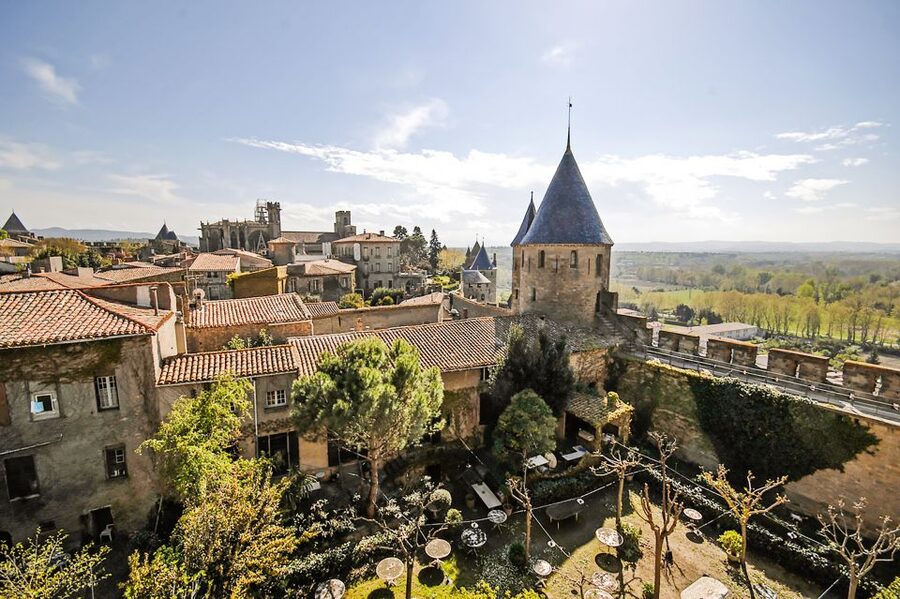
- Bishop’s Tower: the only construction that straddles both city walls, so the views feel extra dramatic
- Salle Pierre Embry: a window made from three polychrome alabaster statues from the early 1400s
- Double-walled ramparts: see why medieval power in Carcassonne wasn’t a single wall, it was layered defense
- Western ramparts views: a newer self-guided addition where the city opens up fast
- Optional audio for 3 euros: not required, but it’s the easiest way to connect the dots while you walk
Carcassonne at wall level: why this place feels different
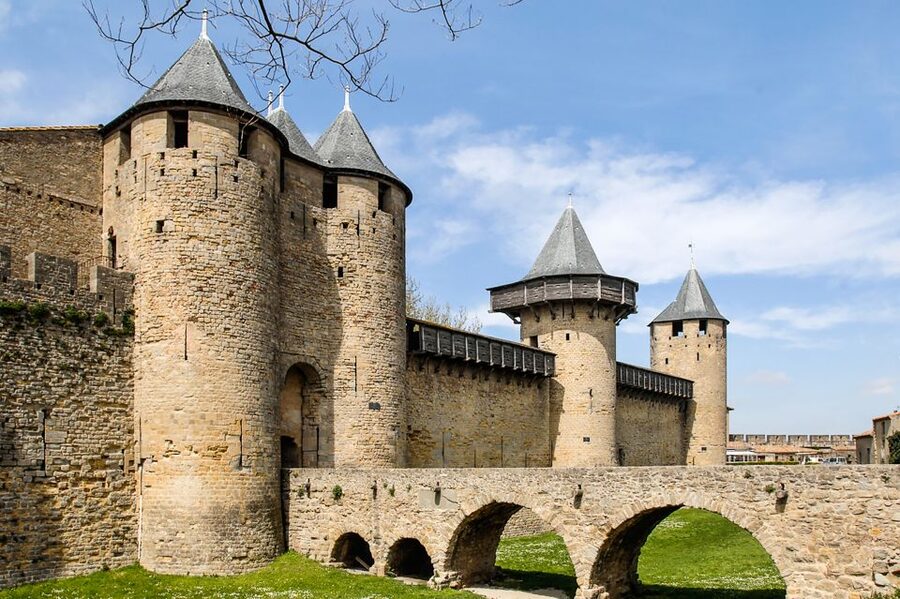
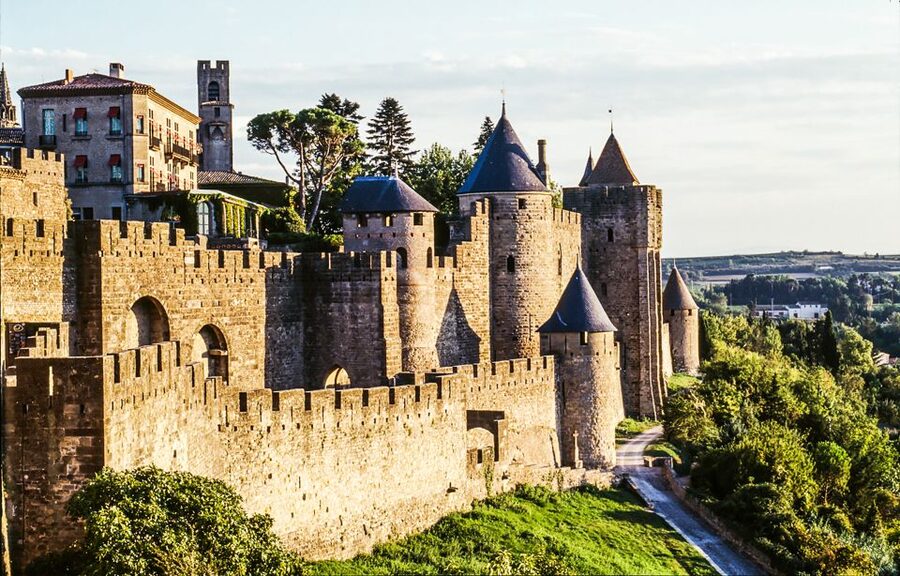
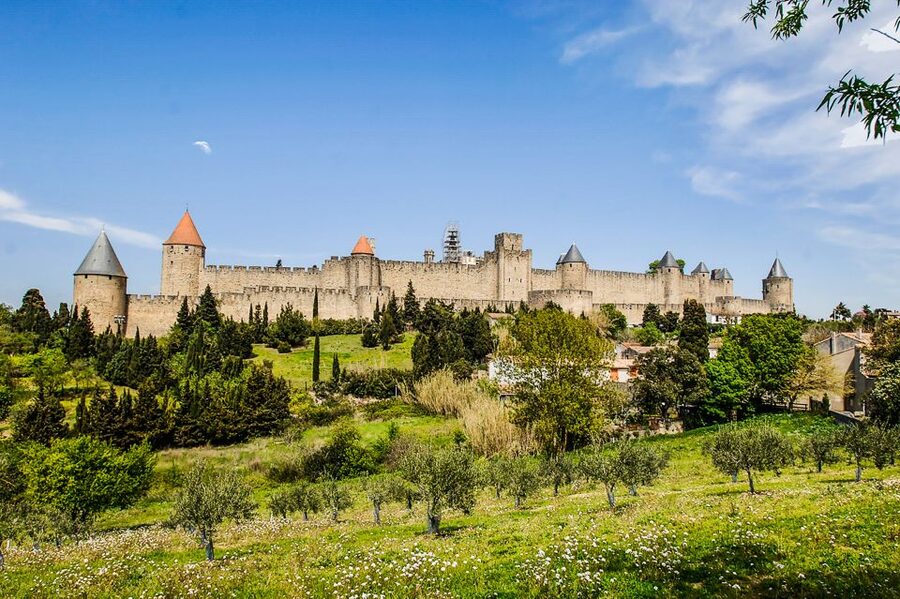
Carcassonne has been fortified for ages, starting from a very early settlement and later becoming an important Roman town. By the Middle Ages, it mattered strategically, and the city took its distinctive form in the 13th century when the king ordered the famous double-walled ramparts and expanded the castle.
What makes the Château and ramparts so satisfying is that you’re not just looking at pretty old stones. You’re moving through the design logic of defense: chokepoints, layered walls, and built-in sightlines. Even if you skip an audio headset, the site gives you enough to understand what you’re seeing.
And then there’s the story of ruin and return. Carcassonne was left in ruins after the Cathar Crusade (1209 to 1229), tied to the Inquisition and exile of the Trencavel family. In the 19th century, Eugène Viollet-le-Duc was commissioned in 1844 to restore the Cathar city, with the work completed in 1911 under Paul Boeswillwald, and the whole medieval city was later inscribed on UNESCO’s World Heritage list in 1997.
Château Comtal courtyards and museum stops: start where the fortress breathes
This ticket is self-guided, so the trick is pacing. I like beginning with the Château Comtal areas first because you’re essentially stepping from the medieval city mood into the fortress mindset.
You’ll have access to the castle courtyards and an archaeological museum area included with your entry. Even when you’re not reading every card, the courtyards help you orient fast. You see how the buildings sit inside the defensive shell, and you get a sense for why the castle and walls were meant to function as one system.
One practical note: inside the Château Comtal and on the ramparts, scooters, bicycles, helmets, non-folding strollers, and large luggage are not permitted. If you’re traveling light, you’ll feel less “stuck” by the rules, and you can move through the narrow spaces without worrying about what’s allowed in your hands.
More rounds of the walled city:
- Toulouse: Carcassonne Day Trip by Coach with Audioguide
★ 4.4 · 580 reviews - Carcassonne During World War 2
★ 5.0 · 127 reviews - Wine Discovery Tasting In Carcassonne
★ 5.0 · 85 reviews
Salle Pierre Embry: the 15th-century statue window you’ll remember
One highlight that really holds attention is the Salle Pierre Embry, described as a window made of three polychrome alabaster statues from the early 15th century. It’s the kind of detail that’s easy to miss if you’re doing a rushed scan, which is why I recommend slowing down right here.
The appeal is simple: it’s not abstract decoration. It’s an artwork tied to the era when the city’s power was being displayed through stone, light, and crafted religious imagery. You’re also standing inside the fortress complex, which changes how the art lands. Instead of thinking museum, you think ceremony and authority.
If you’re the type who likes “one really good stop” more than ten quick ones, this is that stop.
Bishop’s Tower climb: views that also explain the walls
Climbing Bishop’s Tower is one of the best reasons to buy this specific ticket. It’s special because it is the only construction that straddles both city walls. That detail matters. It turns a viewpoint into a lesson in how the fortifications were built, layered, and connected.
As you go up, pay attention to how the tower relates to the surrounding structures. The walls aren’t just tall, they’re designed to create overlapping control. When you’re at height, you start to understand the medieval logic behind where openings sit and why certain stretches of the ramparts feel exposed, not random.
This is also where the photo benefits are real. The views are not only scenic, they’re legible. You can see the medieval city shape and how the ramparts connect to it.
The ramparts loop: timing, stairs, and the western views add-on
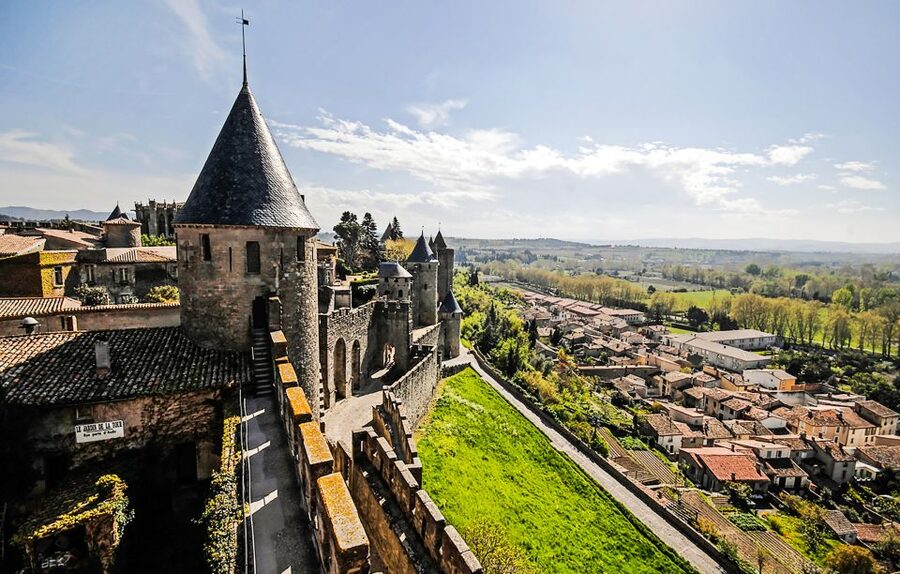
The ramparts are where Carcassonne turns into an outdoor history walk. The self-guided entry includes the ramparts, plus there’s an invitation in this experience to see magnificent views from the medieval western ramparts.
In my mind, the best way to do it is to treat the walk like a photo and orientation loop. One review-style hint I’d actually follow: plan for about 30 minutes for the ramparts walk, and you’ll likely feel both complete and not rushed. The circuit is narrow in places, so I’d rather start early than “hope” the timing works out.
Also, there are some real constraints:
- Be ready for high steps and uneven stone surfaces along the ramparts.
- You can usually exit the ramparts at various points if you need to shorten the walk.
- On July 14, the ramparts will be closed due to fireworks.
If your group has mixed mobility needs, you’ll be glad the monument is described as accessible for people with limited mobility at least for the Barbican and main courtyard. Still, the full wall circuit is the part with the most steps.
Where to spend your time on the walls
Don’t just pass through. Slow down for the sections where the city opens up. You’ll feel the ramparts work like a balcony system: the first views help you orient, and later views give you that “I get it now” moment about how Carcassonne was meant to be controlled.
Leaflet vs audio guide: what to choose for your pace
This ticket includes a leaflet with information in many languages, including French, English, German, Italian, Spanish, Portuguese, Dutch, Japanese, Chinese, Russian, and Polish. That matters because you can still get good context even without an audio headset.
An audio guide can be rented on-site for a fee of 3 euros. If you like history with a narrator, it’s an easy add-on, and it tends to make the stops feel connected rather than separate.
Two ways to decide:
- If you’re moving quickly and want practical context, use the leaflet and read the key points.
- If you want a guided feel while you walk, rent the audio and let it run while you look out over the city.
One thing to be aware of: audio can feel a bit abrupt if you miss a station or enter a room where the story changes. I’d call that more of a pacing issue than a dealbreaker. If you stop to refocus, it usually works out fine.
Price and value: is it worth about $15?
At about $15 per person for a 1-day self-guided experience, the value comes from two things. First, you’re not paying extra to “get into the city,” you’re paying for access to the parts where Carcassonne’s history is preserved and explained through space.
Second, you’re getting both the castle interior areas (courtyards and museum) and the ramparts in one entry. Many single-site attractions force you to choose between “indoors” and “views.” Here, you can do both without changing tickets.
You also have the small-group size mentioned for the activity listing (limited to 10 participants). Even though the tour itself is self-guided, a smaller group setup generally means less friction at entry points, and it helps you avoid the worst bottlenecks when you arrive.
If you plan well, you’ll spend most of your time outside on the walls, then come back to the art and stone details inside the castle complex.
Practical planning: when to go and what to bring
Carcassonne closes on certain dates: January 1st, May 1st, and December 25th. On December 24th and December 31st, this attraction closes at 4:00 PM.
If you can choose your day, aim for earlier entry. One consistent theme I’d take from practical experience: the site gets queue-y later, and the ramparts are narrow enough that crowds make the walk feel tighter than it needs to be. Starting earlier makes the whole experience calmer.
What to bring:
- Passport or ID card
- Cash
Why cash matters: your entry may involve on-site add-ons like the audio rental. Having cash ready keeps you from hunting around at the last second.
If you qualify for free entry, it’s based on age and residency rules listed, and for EU citizens under 26 you must pre-book a timeslot at www.remparts-carcassonne.fr. That’s a big one to sort out before you travel.
Also, if you’re using navigation, plan to reach Château et Remparts de la Cité de Carcassonne, 1 rue Viollet-le-Duc, 11000 Carcassonne. The medieval city street layout can be confusing when you arrive with a tired brain, so give yourself a little buffer.
Who this ticket suits best
This is ideal if you:
- Want a self-guided experience where you set your pace
- Love city walls, viewpoints, and architectural details you can actually walk through
- Prefer to read and look, not sit in a loud group for long stretches
It’s also a good choice for couples and solo travelers because you can pause whenever you want on the ramparts and in the courtyards. Families can do it too, but keep an eye on step-heavy sections and the no-stroller rules listed for certain stroller types inside the monument areas.
If you have limited mobility, don’t assume the full ramparts loop is realistic. The monument notes accessibility for the Barbican and main courtyard, so you can still get a meaningful visit even if you shorten the wall walk.
Should you book the Carcassonne Castle and Ramparts entry ticket?
Yes, book it if your goal is to experience Carcassonne as a fortified medieval city, not just as a postcard. The combination of Château Comtal access plus ramparts walking, including the Bishop’s Tower straddle feature and the Salle Pierre Embry window, gives you a balanced visit in one ticket.
Book with confidence if you’re willing to do stairs and you want views that are tied to real defensive architecture. If your mobility is limited, you can still plan a satisfying visit by focusing on the Barbican and main courtyard areas and shortening the ramparts as needed.
If you hate stairs and want a fully level, stroller-friendly route, you might feel boxed in by the ramparts. In that case, consider whether you can adjust your expectations to a partial wall experience before you buy.
FAQ
How much does the Carcassonne Castle and Ramparts entry ticket cost?
The price listed is $15 per person.
How long is the experience?
It’s valid for 1 day.
What is included with the ticket?
It includes a self-guided tour of the castle courtyards, the archaeological museum, and the ramparts, plus a leaflet in multiple languages.
Is an audio guide included?
No. An audio guide can be rented on-site for a fee of 3 euros.
Where do I meet for this activity?
The meeting point is Château et Remparts de la Cité de Carcassonne, 1 rue Viollet-le-Duc, 11000 Carcassonne.
What dates is it closed?
It is closed January 1st, May 1st, and December 25th.
Are there any special ramparts closures?
Yes. The ramparts will be closed on July 14 due to fireworks.
What time does it close on December 24th and December 31st?
On those dates, it closes at 4:00 PM.
Are there age-based discounts or free entry?
Yes. Entrance is free for those under 18 and EU citizens under 26 with valid ID, but a timeslot must be pre-booked for EU citizens under 26.
Are there restrictions on what I can bring inside?
Scooters, bicycles, helmets, non-folding strollers, and large luggage are not permitted inside the Château Comtal or on the ramparts. Animals are also not allowed inside the monument.
Latest Carcassonne entries, notes attached



Tickets, compared.


Versailles Palace and Gardens Full Access Ticket
Read our review →

Eiffel Tower Entry Ticket with Optional Summit Access
Read our review →
Moulin Rouge Cabaret Show Ticket with Champagne
Read our review →
Montparnasse Tower Observation Deck Entry Ticket
Read our review →