Reviewed · FULL-DAY
Full day Australian Battlefields Tour
Amiens to the Somme in one day. This full-day Australian battlefields drive strings together memorials and battlefield landmarks in a way that actually helps you understand what happened, not just where it happened. I especially liked the way Sir John Monash Centre brings the Western Front to life, and how the day keeps coming back to the human scale of sacrifice.
My other big plus was having a local, Brigitte De Cuyper, whose storytelling is tied to the places in front of you. One consideration: this is a long 8-hour day, and it walks and stands a bit at multiple sites, so you’ll want a moderate fitness level.
In This Review
- Key highlights you should not miss
- From Amiens Cathedral to the Western Front, the day makes sense
- A practical note for the cathedral stop
- Villers-Bretonneux: where Australian memory meets real streets
- Villers-Bretonneux Military Cemetery and the “Diggers”
- The Sir John Monash Centre: the most modern stop on the route
- The Australian Corps Memorial: names, loss, and dawn-day meaning
- Into the Somme Valley: viewpoints and architecture rebuilt
- Chipilly and the Camp Cesar viewpoint
- Basilica Notre Dame de Brebières: Neo-Byzantine, rebuilt after the war
- Lunch stop and timing: plan for food on your own terms
- Lochnagar Crater: the mine that changed the battlefield
- How to get more out of just 20 minutes
- Pozières and the Australian sacrifice: memorials that explain the cost
- The 1st Australian Division Memorial
- Windmill site and the tank context
- Mouquet Farm: another Pozières-sector name
- Thiepval and the Ulster Tower: the missing and the names
- Memorial de Thiepval: the Memorial of the Missing
- Ulster Tower: division memory plus field traces
- Newfoundland Memorial Park: sacrifice as identity, not just tragedy
- Price and logistics for a private 8-hour drive from Amiens
- Pickup and how the guide finds you
- The big day reality check
- Should you book it? My straight take
- FAQ
- How long is the Full Day Australian Battlefields Tour?
- What time does the tour start?
- Is pickup offered?
- Is this tour private?
- What language is the tour conducted in?
- Is lunch included in the price?
- Are tickets to attractions included?
- What kind of physical fitness do I need?
- Are mobile tickets provided?
- Can I bring a service animal?
- Is free cancellation available?
Key highlights you should not miss
- Sir John Monash Centre (1 hour) uses interactive installations to tell the story in letters, diaries, and life-size scenes
- Villers-Bretonneux memorial time feels purposeful, with a cemetery visit plus space to pay respect
- Lochnagar Crater is a real, dramatic piece of the 1916 mine warfare (70 feet deep, 330 feet wide)
- Pozières adds the sacrifice layer, including the 1st Australian Division Memorial and Windmill area context
- Thiepval explains the missing, with a memorial listing over 72,000 soldiers
- Newfoundland Memorial Park connects identity and loss, tied to the women of Newfoundland who purchased the ground in 1921
From Amiens Cathedral to the Western Front, the day makes sense
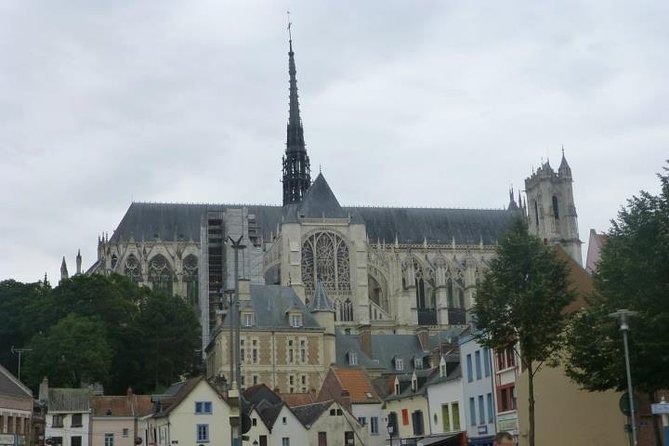
This tour starts in Amiens, and that matters more than you might think. You begin with Amiens Cathedral, a huge Gothic landmark that is celebrating its 800th birthday this year. Even if you only glance up at the scale at first, it gives you a feeling for how long the region’s story has been evolving. Then the guide shifts you into the Middle Ages and forward to the present, so when the day turns to WW1, it feels less like a random detour and more like a chapter of a longer place.
I like that the drive is not just driving time. Your guide folds the route into context: rolling Somme countryside, local culture, and the economy of the area. The goal is simple. You’re not collecting stops. You’re building a mental map.
You also get a steady rhythm of “see, then understand.” You’ll pause at major memorials and viewpoints, and between them the guide explains the “why” behind each place. That is what turns a list of names into something you can carry home.
A practical note for the cathedral stop
The cathedral is part of your opening orientation, but the day is full. If you care about architecture, arrive mentally ready to watch details quickly. If you prefer reflection over close inspection, treat this as a respectful warm-up before the heavier sites later.
Other Amiens bookings in the margin notes
- Versailles Full Day Bike Tour with Palace, Gardens, & Picnic
★ 5.0 · 2,217 reviews
Villers-Bretonneux: where Australian memory meets real streets
After Amiens, your first major WW1 focus is Villers-Bretonneux, one of the emotional anchors for Australians touring the Western Front. This part of the day has two big strengths: you get cemetery time, and you also get storytelling time that goes beyond plaques.
Villers-Bretonneux Military Cemetery and the “Diggers”
You’ll stand in the area linked to the Australian Memorial, and your guide walks you through Australia’s role on the Western Front in WW1. The emphasis is on the context of the Western Front, including the Allied counter-attack led in April 1918.
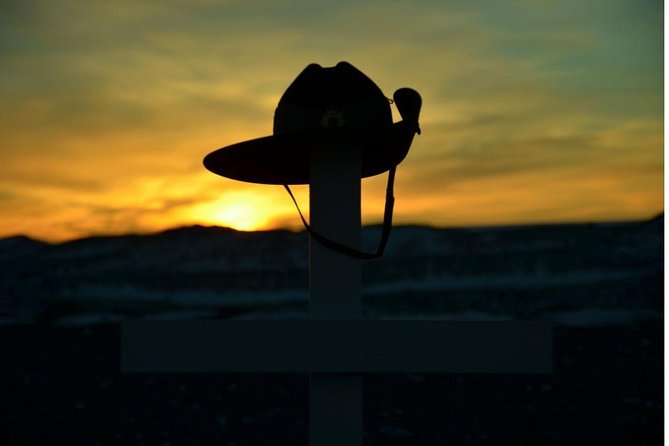
Then the tour shifts into a slower pace. You get allocated time to pay your respects on the graves of the Digggers. That pause is short, but it’s intentional, and it helps you understand that these are not just historical points. They’re places where families still visit.
The Sir John Monash Centre: the most modern stop on the route
Right nearby is the Sir John Monash Centre, and this is a highlight for good reason. Your tour includes about 1 hour inside, and it uses interactive media to tell Australia’s Western Front story through the voices of those who served, using letters, diaries, and life-size figures.
What I like here is the match between medium and subject. You’ve spent the morning seeing memorial landscapes. Monash gives you the interior view: what soldiers wrote, what daily life sounded like, and how the journey connected to the places you’ll visit later. It’s one thing to know dates. It’s another to hear words in the same kind of spaces where you’ll later stand by craters and memorial walls.
One small caution: the day is scheduled tightly. If you’re the type who wants to read every panel, you might feel slightly rushed. Still, even with a brisk pace, it makes the rest of the itinerary hit harder.
The Australian Corps Memorial: names, loss, and dawn-day meaning
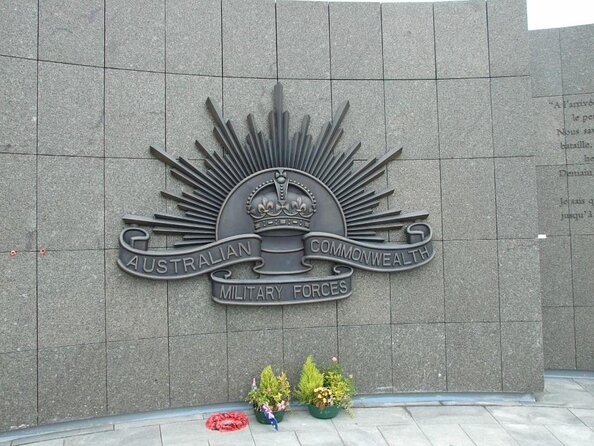
Next you visit the Australian Corps Memorial, situated at the heart of the Villers-Bretonneux CWGC cemetery. The guide explains that it was inaugurated on 22 July 1922 by King George VI, and that its walls list the names of 10,729 Australian servicemen.
There’s also a powerful recurring note for anyone connecting this to modern remembrance: ANZAC Day dawn commemorations often gather here. Even if you’re not there on the 25th of April, the site makes you understand why the dawn moment matters to families.
Into the Somme Valley: viewpoints and architecture rebuilt
Once you leave Villers-Bretonneux, you transition from memorial concentration to a broader sense of the campaign. This is where the tour feels like a real road trip through the Somme, not just a stop-and-go day.
Chipilly and the Camp Cesar viewpoint
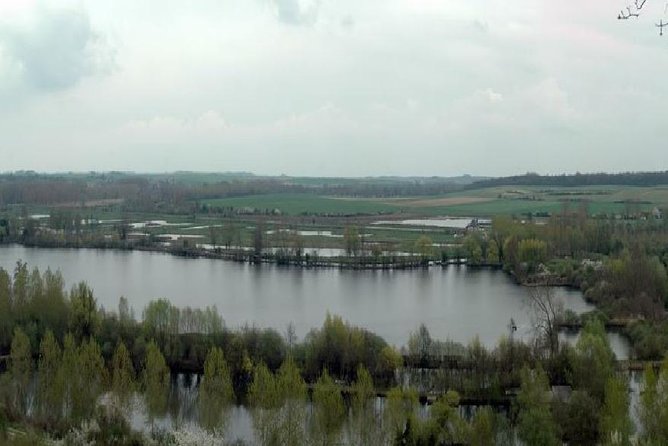
Your next scenic moment comes around Chipilly, with a viewpoint stop called Camp Cesar. From here, you get a panoramic view of the Somme valley, the same area that gave the “Battle of the Somme” its name in 1916.
This is the kind of viewpoint that helps you understand battlefield logic. Even a quick look across the valleys and fields gives context for why certain areas became fiercely fought over. You also hear the beginning of the Battle of the Somme explained, including why it was planned and which nations took part.
It’s only around 10 minutes, so treat it like a quick mental photo. If you want slow photos, save most of your camera time for later, more structured stops.
Basilica Notre Dame de Brebières: Neo-Byzantine, rebuilt after the war
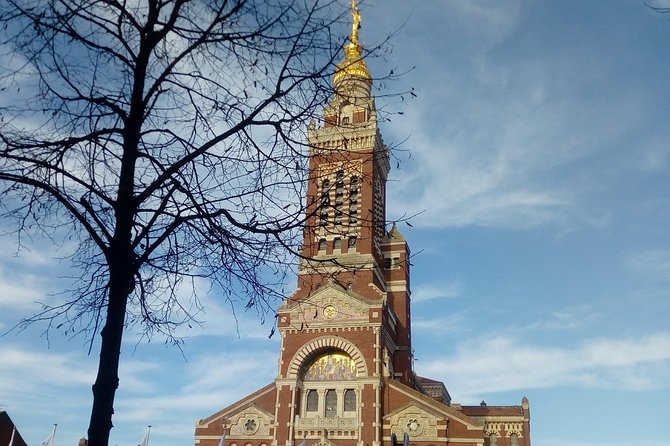
You then visit the Basilica Notre Dame de Brebières, a striking Neo-Byzantine building dating to the late 19th century. The tour highlights something very specific here: it was destroyed during WW1 and reconstructed identically by Edmond Duthoit, the son of the original architect.
Look for the dome, covered with gold sheets, and the statue of the Virgin Mary holding baby Jesus. The guide ties that statue to WW1 storytelling, which is a nice reminder that reconstruction was not only about buildings. It was about restoring meaning for the living.
Lunch stop and timing: plan for food on your own terms
Lunch happens at Le Hygge Restaurant Brasserie, with about 1 hour provided. Lunch is not included, so you’ll need to budget for your meal.
For a full day like this, I treat lunch as a chance to reset your energy for the heavier stops later. If you know you tend to eat quickly, use that hour strategically. If you prefer a slower meal, you’ll still have enough time to keep the day’s flow.
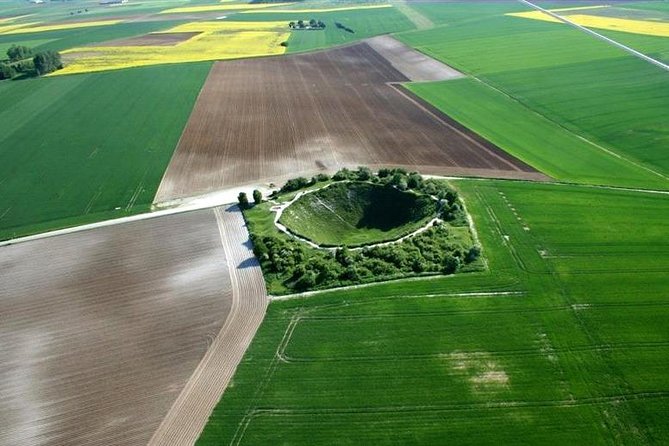
Lochnagar Crater: the mine that changed the battlefield
After lunch, the day moves fully into the “ground-level evidence” phase. The first major action-site stop is Lochnagar Crater.
Here’s what the tour provides that makes this stop worth the time: Lochnagar Crater was created by a large mine placed beneath German front lines on the first day of the Battle of the Somme. It was one of 19 mines under German lines from the British section of the Somme front, intended to help infantry advance at the start.
The size is hard to absorb until you’re standing near it: it is listed as 70 feet deep and 330 feet wide, and the tour frames it as the largest crater in the Somme.
How to get more out of just 20 minutes
Your crater time is about 20 minutes, so don’t rush to “see it.” Instead, look for the story in the shape. The crater is not an abstract hole. It’s a plan made of explosives, engineered geography, and infantry consequences. Your guide will connect it to the wider fighting you’ll see later, especially around Pozières.
Pozières and the Australian sacrifice: memorials that explain the cost
Next you move into Pozières territory, where the tour focuses tightly on the Australian front within the Somme campaign.
The 1st Australian Division Memorial
The 1st Australian Division Memorial stop is tied to the story of Pozières, a place described in the tour as one of the most densely paid-for areas by Australian sacrifice. The scale is stark: almost 7,000 men lost their lives there, during fighting between 23 July and 3 September 1916.
Your guide explains that battle and helps you connect what you’re seeing to why it mattered, not only to the war effort but to the way Australia remembers its role on the Western Front.
Windmill site and the tank context
Right alongside the memorial story is the Windmill site at Pozières, established as an Australian memorial in the 1930s with the suggestion of Australia’s official war historian Charles Bean. This site commemorates 23,000 casualties, including people who died in the surrounding countryside.
The tour also mentions the Tank Memorial nearby, giving a chance to talk about tanks on the Western Front and the role of modern warfare. It’s a smart pairing, because it reminds you that WW1 wasn’t only trench endurance. It involved new battlefield tools and new tactics, even when the results were painfully inconsistent.
Mouquet Farm: another Pozières-sector name
The day also includes a stop at Mouquet Farm. There’s no extra description attached in the provided details, but it belongs to the same broad Pozières fighting narrative. If you want maximum meaning from this part of the itinerary, ask your guide how Mouquet Farm fits into the sequence of attacks and defenses they’ve been explaining all afternoon.
Thiepval and the Ulster Tower: the missing and the names
After Pozières, the tour widens again. You move toward two different memorial “lenses”: one centered on the missing, the other on a division identity.
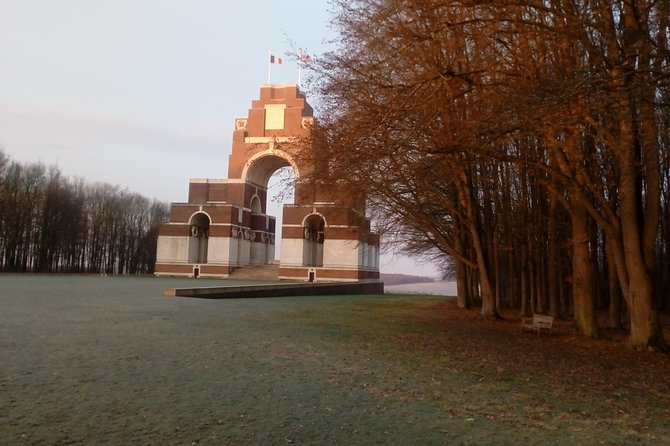
Memorial de Thiepval: the Memorial of the Missing
Your next big stop is Memorial de Thiepval, described as the Memorial of the Missing, and framed as the largest British war memorial in the world. It overlooks rolling countryside, and its walls list the names of over 72,000 soldiers who were missing, whose bodies were found but not identified, and similar fates.
This is an emotionally intense pause, and the guide helps explain the notion of being missing, along with what that meant for families. That family-side meaning is the key takeaway here. It’s not just that someone didn’t come home. It’s that the waiting could be endless.
Your visit is about 45 minutes, which gives enough time to read names without feeling like a time-check is constantly chasing you.
Ulster Tower: division memory plus field traces
The itinerary also includes the Ulster Tower, Northern Ireland’s national war memorial. It commemorates the men of the 36th Division and all those from Ulster who served in WW1. The tower was officially opened on 19 November 1921.
From the top of the hill, you can still see traces of the Battle of the Somme front lines and remains of a German machine-gun post. This “look across the field” moment works with the earlier viewpoints from the day, but it also feels different because the memorial is so connected to a specific group identity.
Newfoundland Memorial Park: sacrifice as identity, not just tragedy
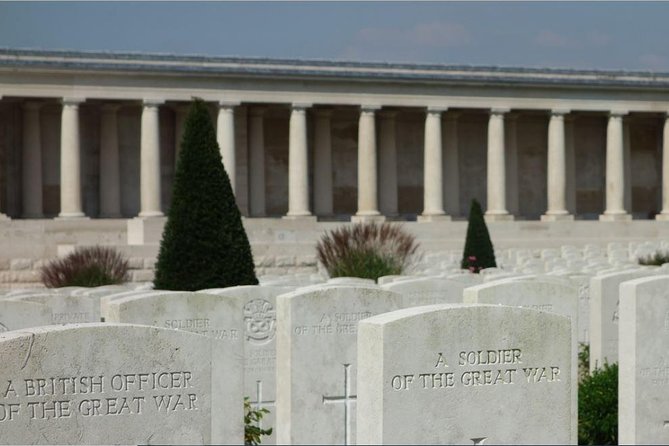
The tour’s final major memorial focus is the Memorial Terre-neuvien de Beaumont-hamel, also referred to as the Newfoundland Memorial Park. The stop is about 30 minutes.
This part hits hard because it connects sacrifice to identity. The tour frames Newfoundland as purchasing the ground in 1921 with women of Newfoundland and their government, turning the battlefield into a symbol of sacrifice and a source of island identity. It also ties the story to the regiment’s first major engagement of the Somme, where staggering losses happened on 1 July 1916.
If you’ve been feeling the weight of the day’s names and losses, this is a powerful “last lens.” It helps you see that remembrance is not only mourning. It is also community, and it is continuity across generations.
Price and logistics for a private 8-hour drive from Amiens
At $253.97 per person for about 8 hours, the value depends on what you want most: transportation, guidance, and structured stops.
Here’s what you’re getting that supports the price:
- You’re visiting many key sites with admission included where noted (the Sir John Monash Centre is listed as included).
- Several memorial stops are marked free, which means you’re paying primarily for the guide and the full-day routing rather than ticket stacking.
- The day is offered as a private tour, meaning it’s only your group participating. That matters if you want questions answered right when they pop up, or if you want a pace that fits you.
Pickup and how the guide finds you
Pickup is offered, and the guide is described as wearing a badge. The meeting point details are brief, so it helps to confirm your pickup instructions clearly before morning. If you’re staying outside central Amiens, double-check timing and location so your day starts clean.
The big day reality check
This is not a quick “drive past some memorials” outing. You’ll spend much of the day walking short distances and pausing at multiple sites, plus you’ll handle weather as the Somme region can be changeable. I recommend planning for layers, good walking shoes, and patience for a long day that is emotionally heavy and physically steady.
Should you book it? My straight take
Book this tour if you want Australian and Commonwealth-focused WW1 sites with a guide who keeps the story tied to the ground. I’d especially recommend it if:
- You care about Villers-Bretonneux, Pozières, Lochnagar Crater, and Thiepval and want real explanation around them.
- You like interactive education, and you’re excited to spend an hour at the Sir John Monash Centre.
- You have a family connection and want help connecting names and places to what you’re researching, since the tour’s format supports that kind of personal attention.
I would think twice if you’re after a light, casual outing. This day focuses on memorials, graves, and battlefield evidence. It’s thoughtful, often moving, and it will make you slow down.
FAQ
How long is the Full Day Australian Battlefields Tour?
It runs for about 8 hours.
What time does the tour start?
The start time is 9:00 am.
Is pickup offered?
Yes, pickup is offered. The guide will wear a badge.
Is this tour private?
Yes. It is listed as private, so only your group participates.
What language is the tour conducted in?
The tour is offered in English.
Is lunch included in the price?
No. Lunch is not included. The lunch stop is listed at Le Hygge Restaurant Brasserie, and lunch takes about 1 hour.
Are tickets to attractions included?
Sir John Monash Centre admission is included. The other listed memorials and stops are marked free where noted. All fees and taxes are included.
What kind of physical fitness do I need?
The tour lists moderate physical fitness as the requirement.
Are mobile tickets provided?
Yes. Mobile tickets are listed as included.
Can I bring a service animal?
Service animals are allowed.
Is free cancellation available?
Yes, free cancellation is available up to 24 hours in advance for a full refund. If you cancel less than 24 hours before the start time, the amount paid is not refunded.
Latest Amiens entries, notes attached

Full-Day, compared.
Versailles Full Day Bike Tour with Palace, Gardens, & Picnic
Read our review →
Normandy American D-Day Beaches Full Day Tour from Bayeux
Read our review →
The Best of the French Riviera Full Day Tour
Read our review →