
Reviewed · THINGS TO DO IN NORMANDY
Full-Day Canadian Battlefields & sites Normandy Tour from Bayeux
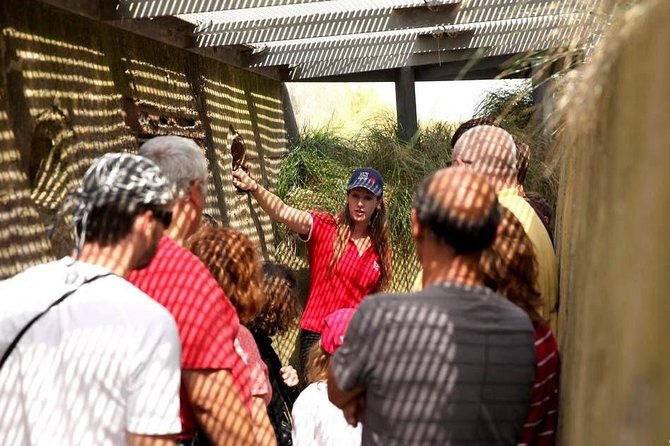
One beach, one country’s sacrifice. This full-day Canadian Battlefields tour from Bayeux is interesting because it tracks Canadian troops across the Normandy landings and battles of summer 1944, then slows down at the memorials so it actually lands. I especially like the small group setup, max 8, because it feels more like guided conversation than a lecture. I also like that the day centers on Juno Beach Centre, so you get context, photos, and the excavated bunkers, not just photo stops.
The only real downside is the day is packed and emotional. You should plan for a long stretch of sitting in a minivan, frequent get-in-and-out moments, and wind that can feel brutally cold near the coast in winter.
In This Review
- Key points to know before you go
- From Bayeux to Normandy, with history in the driver’s seat
- Juno Beach, where the Canadians hit shore
- The Juno Beach Centre: museum time that changes how you see the sand
- Beny-sur-Mer Canadian War Cemetery: the moment that stays with you
- Authie, then Abbey d’Ardenne: tracing June 7 movement
- Carpiquet and the push toward the airfield
- Hill 67 Canadian Memorial: the fight for momentum
- Air-conditioned comfort, small group attention, and pacing that works
- Price and value: is $161.32 a smart use of a Normandy day?
- Who should book this Canadian battlefields tour?
- Should you book this tour from Bayeux?
- FAQ
- Where does the tour meet, and where do I get dropped off?
- What time does the tour start?
- How long is the tour?
- What is included in the price?
- Is lunch included?
- Is hotel pickup available from Paris or ports?
- What language is the tour offered in, and how big is the group?
- What is the cancellation deadline for a full refund?
Key points to know before you go
- Canadian-focused route that follows the story west of Caen and toward the fight around Carpiquet
- Juno Beach Centre included so you see the museum and the excavated German bunkers
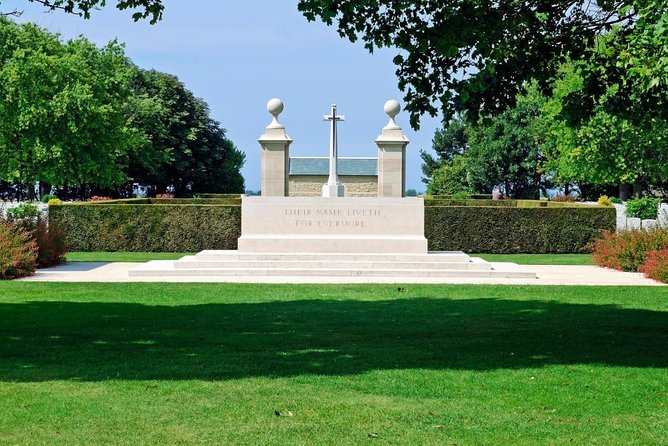
- Canadian War Cemetery + Hill 67 for the moments of respect that make the history real
- Tight group size (max 8), which usually means more back-and-forth with your guide
- A schedule with variety: beach, museum, cemetery, village stops, and memorial viewpoints
- Transport handled for you with an air-conditioned minivan and pickup within Bayeux
From Bayeux to Normandy, with history in the driver’s seat
Your day starts around 8:30 am with a guide meeting you at Bayeux train station, Place de Quebec, or your Bayeux hotel. Then you slide into a comfortable air-conditioned minivan, and the “how did this all unfold?” story begins right away, while you’re still on the road and the energy is good.
What makes this format work is simple: you are not trying to figure out distances, parking, or timing between scattered sites. You just show up, and the guide stitches the geography together. That matters in Normandy, where everything looks close on a map but feels totally different when you stand in the fields, towns, and beach zones.
I also like how the tour is tuned to Canadian history, not a generic D-Day whistle-stop. The guide sets the stage with what happened on June 6, 1944, then zooms in on the Canadian role west of Caen, including how Canadians held key positions and helped blunt German counter-attacks, including pressure from the 12th SS Panzer division. It helps you understand why the Canadians were so central to the momentum of the campaign.
One practical note: even with air-conditioning, you may find the back of the van cooler or less consistent. The reviews also hint that when the van is full, it can feel snug. So pack with comfort in mind, and bring layers for the coast.
Juno Beach, where the Canadians hit shore
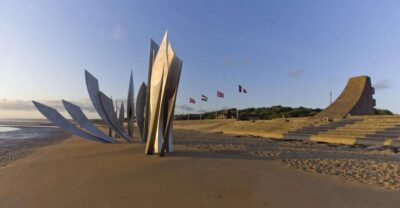
The first major stop is Juno Beach with about 30 minutes on-site. This is short on purpose. Your time here is meant to give you bearings, not to turn it into a full beach day.
Juno is not just a pretty shoreline. It’s the landing ground where Canadian assault troops first went ashore under heavy pressure. You’ll hear how the Canadians faced fierce attacks from German strongholds and how the casualty burden here was extremely high, with Canadians taking the second-highest number of casualties, behind Americans at Omaha Beach.
If you want to get more from the short window, do this: stand where you can see the beach stretches and then listen for how your guide connects what you see now to what the soldiers faced then. Normandy can feel quiet today. The guide’s job is to rebuild the scene in your mind, using details like the Canadian landings along the sands from St. Aubin-sur-Mer to Graye-sur-Mer, including the 3rd infantry division landing areas. That specific orientation is what turns a beach visit into understanding.
What to watch for in your photos: don’t just aim at the waterline. Capture signs, markers, and the general slope of the beach. Those small angles help you remember the “how would this look from the landing craft?” perspective later.
Also, plan for wind. Even when it’s sunny inland, the Channel breeze can bite fast.
More Things to Do in Normandy
- Normandy American D-Day Beaches Full Day Tour from Bayeux
★ 5.0 · 2,103 reviews - Normandy American D-Day Experience – Group tour from Bayeux
★ 5.0 · 1,566 reviews - Normandy Beaches Half-Day Afternoon Trip from Bayeux (A2)
★ 4.5 · 1,116 reviews
The Juno Beach Centre: museum time that changes how you see the sand
Next comes the Juno Beach Centre for about 1 hour, and the admission is included. This is one of the best-value parts of the day, because it slows things down and grounds the story in people, not just dates.
The centre focuses on the 45,000 Canadians who died during the war, including 359 on D-Day and about 5,500 during the Battle for Normandy. That scale is hard to absorb at a cemetery or on a plaque. Inside, you get photographs, archives, first-hand accounts, and artifacts that help you picture who was there, what they endured, and how the losses stretched beyond June 6.
A standout feature is the excavated German bunkers along the beach. You get to see what the troops were dealing with, up close, and that makes the battle narrative feel less abstract. The reviews also mention that the centre time can include access to the bunker areas and grounds, so you’re not just staring at cases behind glass.
If you’re going with a family member who prefers hands-on learning, this museum section usually works well because it offers multiple ways to process the story. If you’re more of a text-and-detail person, it also rewards that approach. Either way, it gives the day emotional weight without turning it into pure sorrow. It’s about context and sacrifice, with the individuals at the center.
Practical tip: bring a good sense of pacing. One hour is enough to get the big story, but if you stop to read everything, you’ll feel the time pressure. I suggest picking the key sections your guide points out first, then doing a second pass if you have energy.
Beny-sur-Mer Canadian War Cemetery: the moment that stays with you
After the museum, you head to Beny-sur-Mer Canadian War Cemetery for about 1 hour. This stop is included and is one of the most meaningful parts of the whole route.
This cemetery is where the story becomes unmistakably personal. You are not looking at a simulation. You’re in the presence of names and graves tied to the fighting. The tour’s framing makes it especially effective here because earlier you’ve followed the broader campaign thread. Now you can feel the cost.
If you’ve seen other cemeteries in Europe, you already know the rhythm: you walk, you look, you try to read inscriptions carefully, and your brain does the math of how many losses one place can hold. If you haven’t, it can be a shock in the best way, because it turns a “war history topic” into something human.
If you want to make the most of this time, slow down and pick one section to focus on, then move on. Otherwise, your eyes will glaze over from the sheer number of markers.
Bring a small note-taking habit too. Even if you don’t plan to write names down, jot down what you learned from the guide right before you enter. You’ll be glad you did later when you connect the cemetery to the battlefield stops you see afterward.
Authie, then Abbey d’Ardenne: tracing June 7 movement
The tour then includes a 30-minute stop in Authie. This is one of those “quiet but important” moments. Village and roadside stops can feel less dramatic than beaches or bunkers, but in Normandy, the ground between the big sites is part of the war story. These stops help you understand how troops moved, regrouped, and pressed forward after the initial landings.
From there, you visit Abbey d’Ardenne for about 1 hour. This is tied to the route of the 9th Brigade advance on June 7, and it’s connected to the action around the drive toward Carpiquet. The abbey setting gives you a sense of scale that open ground sometimes lacks. You also get a built-in reference point, which helps your mind map the timeline.
Why I like this segment: it transitions from “landing and first shocks” to “what happened next.” D-Day is June 6 in the headlines. But the Battle of Normandy is months long, and the pressure shifts as the Allies try to secure key towns and airfields.
You’ll likely hear how places like Abbey d’Ardenne fit into that wider push. It’s not just a scenic stop. It’s a waypoint in a larger chase.
Other Bayeux bookings in the margin notes
Carpiquet and the push toward the airfield
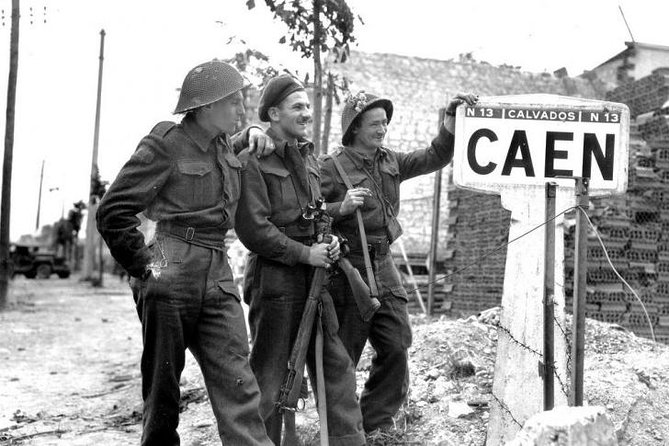
The next site is Carpiquet for about 1 hour. This stop isn’t just a location name. It represents a crucial part of the battle map: the capture of Carpiquet, including the drive tied to air power and tactical movement.
In plain terms, airfields mattered because they affected how quickly the Allies could support operations from the air, resupply, and keep pressure on German positions. So when you stand at Carpiquet and hear how Canadians pushed forward, it helps you connect why the fight wasn’t only about holding beachheads. It was about controlling the “next” positions that made the campaign possible.
The countryside feel around these stops is part of the lesson. You start to see how hard it would have been to move under fire, and how quickly plans could change. If you’re a detail lover, the guide’s routing choices often give you better comprehension than a self-guided car day would.
One more practical thought: this is still a long day in a minivan. If your legs tend to stiffen after sitting, use the breaks between viewpoints to stretch your calves and loosen up. Small comfort habits keep you focused for the final memorial.
Hill 67 Canadian Memorial: the fight for momentum
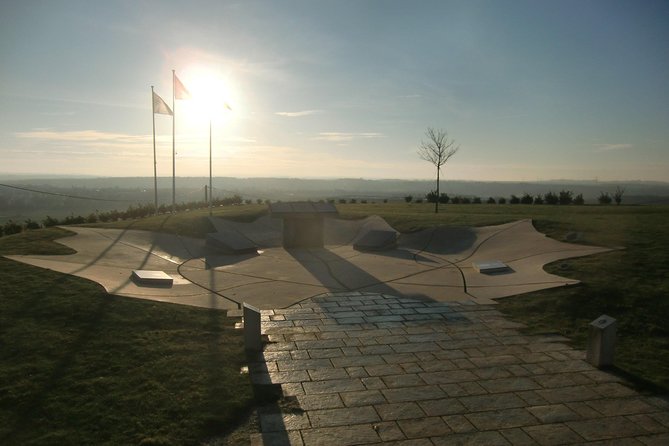
The last major historical anchor is Hill 67 Canadian Memorial for about 30 minutes, just south of Caen. This is a memorial stop, and it’s short by design, so you can absorb it without feeling like the day is dragging.
Hill 67 matters because it symbolizes a brutal and stubborn fight. Your guide ties it back to the battles around Caen and explains why these “named places” were worth so much blood. This stop often hits hardest because by the time you reach it, you’ve already visited Juno Beach, the museum, a cemetery, and sites tied to movement and capture. Hill 67 becomes the last piece of that Canadian campaign puzzle.
If you’re wondering what to do during a short memorial stop: face the direction the guide indicates, read what you can, then pause. Let your mind connect the battle details you heard earlier to the idea of a single hill holding outsized importance.
The Channel light can be dramatic here too. If you’re photographing, do it quickly, then give yourself a moment with no lens. That’s the part you remember.
Air-conditioned comfort, small group attention, and pacing that works
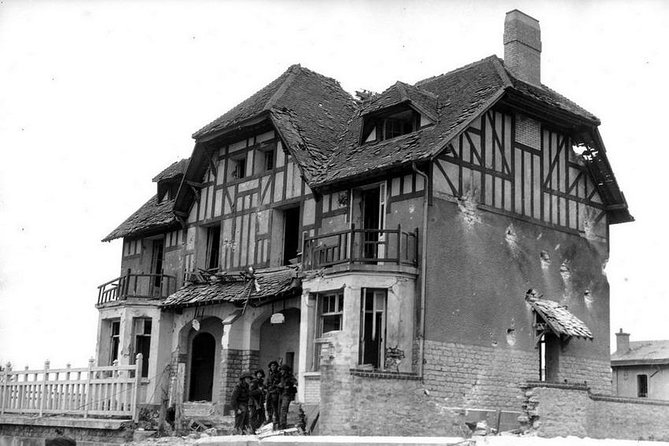
The tour is built around the idea that you want a guide who can respond to you. With a maximum of 8 travelers, you’re not swallowed by a crowd. You can ask questions. The guide can adjust pacing. And you can follow the narrative without constantly tuning out because of noise or crowding.
Reviews also highlight the guide factor again and again, with names like Emmanuel, Laurent (Wally), Remy, Bice, and Manon showing up as standout guides. The recurring theme is passion plus detailed storytelling that keeps the day moving. If you care about context, that matters. War history can become a list of facts. A good guide turns it into a story you can picture.
A small logistical consideration: it is a full day, and you are on the go from 8:30 am until about 6 pm, with drop-off back where you started. This isn’t a “take your time at one place” style tour. It’s a “see the key Canadian sites and understand why they matter” style tour. If that sounds like your travel brain, you’re a great fit.
For food: lunch is not included. You should plan for either bringing a snack or budgeting for a meal stop during the day. One review mentions enjoying lunch at a local restaurant, which tells me there’s usually a practical window to eat, but don’t count on a specific restaurant name being in your plan.
Price and value: is $161.32 a smart use of a Normandy day?
At $161.32 per person for roughly 8 hours, this tour can feel like a fair deal if you value guided interpretation. You are paying for the minivan, the guide, and key paid access like the Juno Beach Centre entrance. You also get a routing that hits multiple Canadian WWII sites without the hassle of self-driving and guessing timing.
Here’s the value math I look at for day tours like this:
- You’re not only paying to visit one museum. You’re getting several major sites in one day.
- The Juno Beach Centre admission is included, and that centre is the main “learn-by-seeing” stop.
- The small group size can save you from the frustration of hearing less or waiting longer in crowds.
If you were to rent a car, you’d save the guide fee, but you’d still pay in time, parking stress, and the cost of admission plus fuel. For many travelers, the guide’s ability to connect the stops into a clear timeline is what makes the day feel worth the money.
Bottom line: it’s priced for a guided, structured day. If you want freedom above all else, a car might suit you better. If you want the story told well and efficiently, this price looks reasonable.
Who should book this Canadian battlefields tour?
This tour is ideal if you fall into any of these buckets:
- Canadians visiting Normandy who want the story in a distinctly Canadian lens, from landings to later battles.
- World War II history fans who like specifics, not vague summaries, and who appreciate memorial stops as part of the learning.
- First-time Normandy visitors from Bayeux who want to knock out the Canadian core sites without planning a route.
- Small-group travelers who don’t want to feel like one face in a sea of tourists.
It’s also a solid choice for people who want a guide that is flexible. Several reviews mention guides adding extra insights or making small adjustments when relevant, like when visitors want to connect the history to family members. That’s not something you can easily recreate on your own.
If you tend to get tired easily, plan your day like it’s a hike. Wear comfortable shoes. Bring a light layer even if it’s warm when you leave Bayeux.
Should you book this tour from Bayeux?
Yes, I think you should book it if you want the most meaningful Canadian WWII route in one efficient day, with the museum stop included and a guide who can explain what you’re seeing while you’re seeing it. The small group size is the difference between “I visited sites” and “I understood the campaign.”
Skip it only if you want a slow, do-everything-optional kind of trip, or if you strongly prefer to read history at your own pace without a timed structure. Otherwise, this tour gives you a powerful mix: Juno Beach, the Juno Beach Centre, the Canadian War Cemetery, and the memorials at Abbey d’Ardenne and Hill 67.
FAQ
Where does the tour meet, and where do I get dropped off?
The guide meets you at Bayeux train station, Place de Quebec, or your Bayeux hotel. The tour returns to Bayeux and drops you off at the original starting point around 6 pm.
What time does the tour start?
The start time is 8:30 am.
How long is the tour?
The duration is about 8 hours.
What is included in the price?
The tour includes transport by air-conditioned minivan, a professional driver/guide, fuel surcharge, hotel pickup and drop-off from Bayeux only, and admission to the Juno Beach Centre.
Is lunch included?
No. Lunch is not included.
Is hotel pickup available from Paris or ports?
Pickup is from Bayeux only. There is no hotel pickup from Paris or from ports.
What language is the tour offered in, and how big is the group?
The tour is offered in English, and the maximum group size is 8 travelers.
What is the cancellation deadline for a full refund?
You can cancel up to 6 days in advance of the experience for a full refund. Cancel at least 6 full days before the start time for the full refund.
Latest Bayeux entries, notes attached

Things to Do in Normandy, compared.
Normandy American D-Day Beaches Full Day Tour from Bayeux
Read our review →
Normandy American D-Day Experience – Group tour from Bayeux
Read our review →
Normandy Beaches Half-Day Afternoon Trip from Bayeux (A2)
Read our review →
Omaha Beach D-Day Experience – Afternoon group tour from Bayeux
Read our review →
Normandy Battlefields Tour – American Sites (A3)
Read our review →
This tour also appears in