
Reviewed · WALKING TOURS
Harlem in Paris : the Birth of Jazz in France (Small Group Walking Tour)
This walk turns Pigalle into a jazz timeline. I like how the story puts Josephine Baker right in front of you, tied to photos and recordings instead of vague legend. I also love the cast of characters, from Louis Armstrong’s orbit to less-famous names like Eugene Jacques Bullard and Bricktop, all grounded in real street corners you can still stand on today.
One thing to consider: a good chunk of the tour time is a sit-down presentation before you head out. If you mainly want nonstop outdoor walking, plan for some indoor history first.
In This Review
- Key things to know before you go
- Why this tour feels like jazz history you can touch
- The start in a cozy, story-first setting
- Place Blanche: Chez Josephine and Josephine Baker’s Paris leap
- Rue Mansart: where Armstrong found a bite and met jazz connections
- Rue Pierre-Fontaine and Zelli’s: Eugene Jacques Bullard, Black Jacques
- Place Blanche again, but now for the Jazz Ladies
- Rue Victor Massé: Alberta Hunter’s comeback at the edge of modern Paris
- How much walking you actually do, and what the route feels like
- Price and value: what $107.84 buys you in real-world terms
- Who should book this, and who might want a different style
- Should you book Harlem in Paris in Pigalle?
- FAQ
- How long is the Harlem in Paris walking tour?
- Where do I meet the tour, and where does it end?
- What language is the tour offered in?
- Is food or drinks included?
- Are admissions required for the stops?
- Is this a private tour?
- What’s included during the tour besides the walking?
- How will I receive my ticket?
- Does the tour run in any weather?
- Are service animals allowed?
- What if I need to cancel?
Key things to know before you go
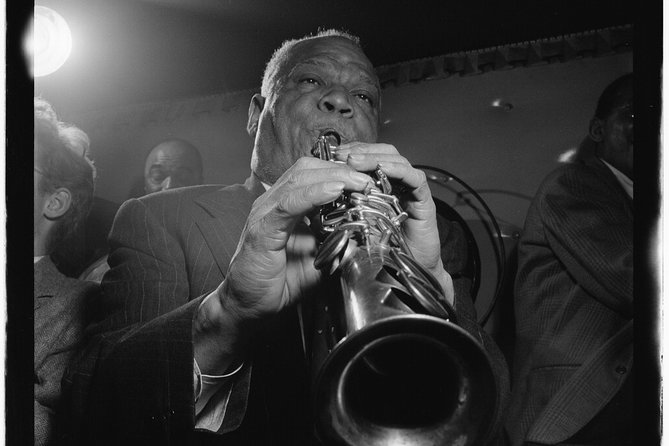
- Multimedia storytelling: music, photos, and videos run throughout, shown on a tablet.
- Pigalle addresses, not museum walls: you visit places tied to famous clubs and performers.
- Big names plus under-told stories: Josephine Baker, Louis Armstrong, Bricktop, Valaida Snow, Eugene Jacques Bullard, Alberta Hunter.
- Former venues now look different: some club locations are closed or changed, so you’ll use imagination with the help of visuals.
- An easy, family-friendly pace: the walk is short enough for strollers, and the guide keeps the group engaged.
Why this tour feels like jazz history you can touch
Paris loves to show you its big monuments. This tour flips the script. You trade grand vistas for street-level storytelling in Pigalle, the neighborhood tied to night life, cabarets, and musicians chasing the spotlight.
What makes it work is the way the guide blends eras. You’re not just told that Black artists shaped jazz in France. You see how their fame tied into specific places, then you walk to those same blocks. Even when the original clubs are gone, the addresses still carry the vibe. The tour keeps you moving, but it also gives you mental pictures so the area makes sense as you go.
The start in a cozy, story-first setting
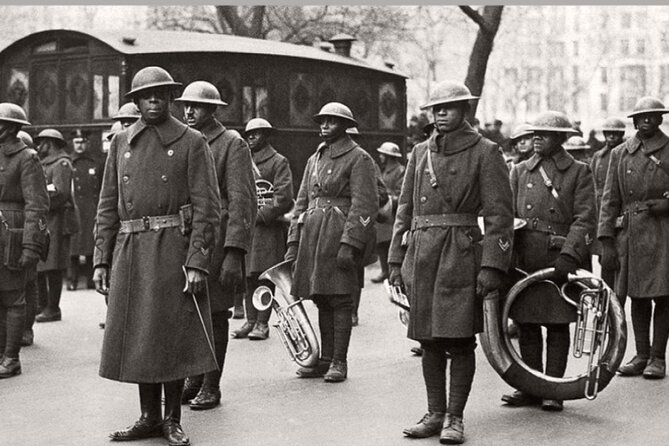
You begin with a presentation before heading out. It’s not a dry lecture. Expect narrative, plus visuals like photos and music clips that help you place the musicians in time.
This matters because so many of the stops are exterior viewpoints. If you arrive with zero context, it can feel like standing in front of random buildings. With the intro, you get enough backstory to recognize what you are looking at, and why it mattered.
The guide’s style is also practical. You’re encouraged to ask questions, and the material is paced to keep attention from drifting. That balance is a big reason this is a standout choice for couples and families who want history without turning the afternoon into school.
More Walking Tours in Paris
- Paris Top Sights Half Day Walking Tour with a Fun Guide
★ 5.0 · 2,893 reviews - Montmartre Hidden Gems and Scenic Highlights Walking Tour
★ 5.0 · 2,684 reviews - Montmartre Hill French Gourmet Food and Wine Tasting Walking Tour
★ 5.0 · 2,588 reviews
Place Blanche: Chez Josephine and Josephine Baker’s Paris leap
One of the first stops is Place Blanche, right by the site connected to Josephine Baker’s club, Chez Josephine. Baker was known in popular culture as the Black Venus of Paris. She became a French national and lived here for decades.
The tour connects her French breakthrough to her earlier roots in vaudeville and Harlem performance. Baker arrived in France in 1925 as a dancer with the NY Syncopated Orchestra, with Sidney Bechet alongside her. She headlined a show called Revue Negre, commissioned by the Theatre des Champs Élysées, featuring a large lineup of dancers and musicians with Baker at the center.
On the ground, this stop works because you are linking three things at once:
- the performer, Baker as a star in her own right
- the production, the Revue Negre moment when French audiences really leaned in
- the place, the neighborhood where fame became geography
The guide keeps this respectful and grounded. You get the sense of audacity and instant impact without turning it into cheap gossip.
Rue Mansart: where Armstrong found a bite and met jazz connections
Next you walk to Rue Mansart, toward a bistro where Louis Armstrong would dine after rehearsal at a studio nearby. You also learn the small, human details that make famous people feel real, like Armstrong discovering choucroute, sausage and cabbage, in Paris.
This stop also links Armstrong to a meeting point for major European jazz influence. The tour ties his time in the area to a connection with Django Reinhardt, the Gypsy Jazzman. Even if the exact day-to-day details are not the point, the takeaway is clear: Paris acted like a mixing bowl, bringing American jazz energy and European talent into the same orbit.
If you’re the type who likes “how did they actually live?” history, you’ll probably enjoy this stop the most. It’s not just a spotlight moment. It’s meals, rehearsals, and the networking that happens between performances.
Rue Pierre-Fontaine and Zelli’s: Eugene Jacques Bullard, Black Jacques
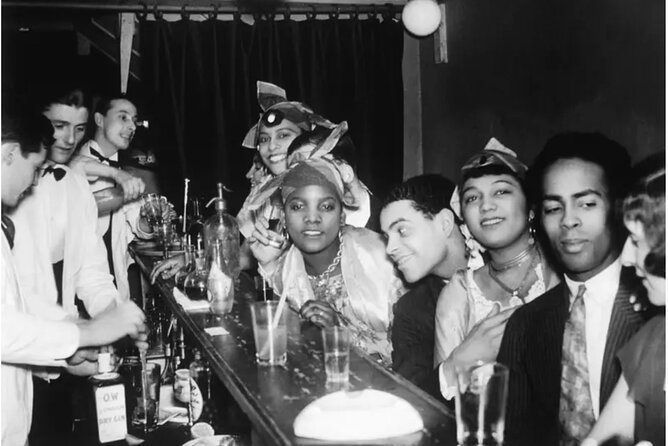
At rue Pierre-Fontaine, the tour points you toward Zelli’s, described as the mythical Parisian cabaret of the 1920s. This club became popular thanks to avant-garde jazz music. You’re not just being told its name, you’re being given the significance: why it drew people and how it sat inside the nightlife ecosystem.
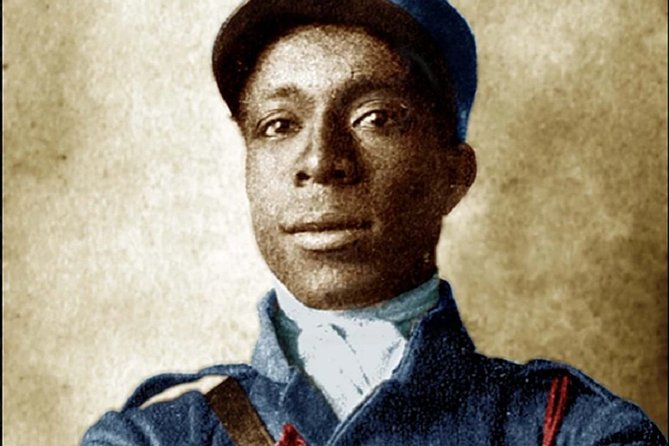
Then the story shifts to Eugene Jacques Bullard, nicknamed Black Jacques. Bullard was born in Martinique to a freed enslaved parent, and he became the first African American fighter pilot in history. He flew 30 missions for France and downed two German planes, earning promotion and that famous nickname.
After the war, the tour explains how Bullard moved into music. He learned drums and later worked as a musician at Zelli’s, rising to manager. With support from Joe Zelli, he eventually opened his own club, the Grand Duc, offering hot jazz alongside soul food.
This is one of those stops where the multimedia helps a lot. You can look at a street and feel nothing. Then you see an image or hear a clip that matches the time period and your brain clicks. Suddenly you’re not guessing at the setting. You can feel the rhythm of what the club scene must have been.
More France at boulevard pace:
Place Blanche again, but now for the Jazz Ladies
The tour returns to Place Blanche to introduce the Jazz Ladies and their legends. This section is a strong reminder that jazz history in France was not only about one or two names.
You meet Bricktop, Queen of Pigalle. The tour shares how she arrived in Paris with $24, then built her reputation until she was rubbing shoulders with royalty and celebrities. Bricktop is presented as someone who seized opportunity and became part of the Paris social world, not just a performer on a stage.
Then comes Valaida Snow. The tour calls her the second best trumpet player in the world, quoting Louis Armstrong’s words. You also learn she didn’t fit a single-box role. She played multiple instruments, sang, danced, and charmed audiences across Europe in the 1930s.
In 1940, while playing in Denmark, Snow was arrested by the Nazis. She was later saved in a prisoner exchange, returned to the US, and rebuilt her life and music career. This arc gives the stop real emotional weight, not just entertainment nostalgia.
If you want a tour that treats Black women as central, not side notes, this portion is a highlight.
Rue Victor Massé: Alberta Hunter’s comeback at the edge of modern Paris
The final neighborhood stop is Rue Victor Massé. The tour notes that the club connected to the story is closed, blamed on Covid. Even with that loss, you’re not left with a dead end.
Instead, the guide uses the location to tell the story of Alberta Hunter, a blues singer who lived both Harlem and Paris jazz age. The tour explains that she left music in the 1940s to become a nurse for about 20 years. Then, at age 83, she was persuaded to return to singing and became a star again with her voice.
This is a good example of how the tour handles change over time. Paris is not a time capsule. Buildings close, clubs shift, and places transform. The tour leans into that reality and still finds meaning in the streets by focusing on people who refused to fade out.
How much walking you actually do, and what the route feels like
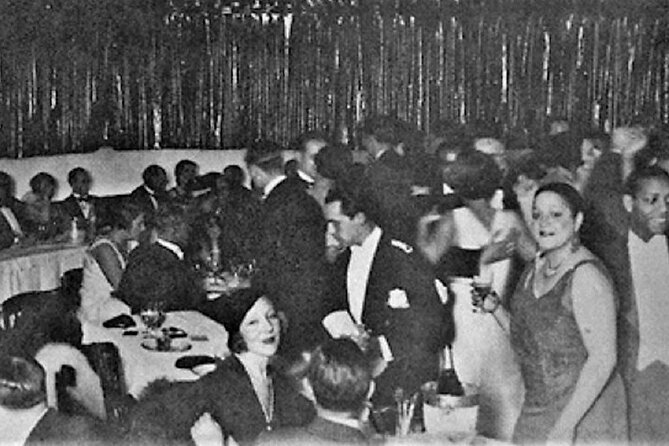
This is a walking tour, but it’s not a marathon. You cover around 2 km across multiple locations. The total time is about 2 hours 30 minutes, so you get a mix of seated presentation and short outdoor hops.
That short-hops style is practical. You get frequent “scene changes,” which helps keep the story clear. It also keeps the tour from tiring you out, even if you’re not used to long walks in Paris.
One practical downside is also built in: because you’re often looking at former venues, some buildings may be vacant or repurposed. You’ll need your imagination a bit. The multimedia and photos are there to support that mental reconstruction, so it’s not totally on you.
If you like to stroll slowly and linger for photos, build in extra time at a couple of stops. The tour moves efficiently, and you may want to pause once you feel the story click.
Price and value: what $107.84 buys you in real-world terms
At $107.84 per person for about 2 hours 30 minutes, this isn’t a budget throwaway. But it is also not overpriced for what you’re getting.
You’re paying for several value drivers:
- Guided interpretation, not just directions to buildings
- Multimedia support with music, photos, and videos
- Multiple performer stories, including big names and lesser-known figures
- Stops that are free to access at the time period you’re visiting, listed as admission free
Also, the tour offers group discounts and uses a mobile ticket. Availability tends to be strong, with bookings averaging about 49 days in advance, so it’s smart to reserve early.
For jazz fans, history lovers, and anyone who likes their sightseeing to have a point, the price feels easier to justify. You’re not just looking at Pigalle. You’re learning how Pigalle turned into a stage for Black artists and how that influence landed in France.
Who should book this, and who might want a different style
This tour fits best if you want:
- jazz history tied to specific streets and addresses
- storytelling that includes famous and surprising names
- multimedia that helps you “hear” the era, not just read it
It also works well for families. The pace is short, and the guide keeps the group entertained throughout.
If you want a heavy literary focus, you might feel the tour leans more toward musicians and nightlife than writers. Still, the trade-off is that you get a very musical, very place-based picture of how jazz took root in Paris.
And if your dream is all outdoor walking with zero seated time, this may not match your ideal. The intro is part of the experience, and it helps you understand why the buildings matter.
Should you book Harlem in Paris in Pigalle?
I’d book it if you want your Paris history to come with sound and faces, not just facts. The tour’s biggest strength is its mix: major figures like Josephine Baker and Louis Armstrong, plus stories that deserve more spotlight, like Eugene Jacques Bullard and Alberta Hunter.
Skip it only if you’re allergic to any indoor time before walking or you strongly prefer museum-style history with minimal imagination needed. Otherwise, this is one of those small-group tours that makes a familiar neighborhood feel newly legible.
FAQ
How long is the Harlem in Paris walking tour?
It runs about 2 hours 30 minutes.
Where do I meet the tour, and where does it end?
You meet at Artemisia Montmartre, 11 Rue Fromentin, 75009 Paris. The tour ends at Place Pigalle, Pl. Pigalle, Paris.
What language is the tour offered in?
The tour is offered in English.
Is food or drinks included?
No. Food and beverages are not included.
Are admissions required for the stops?
The stops are listed as admission ticket free.
Is this a private tour?
Yes. It’s listed as a private tour/activity, with only your group participating.
What’s included during the tour besides the walking?
The tour includes music, photos, and videos throughout.
How will I receive my ticket?
You’ll receive a mobile ticket.
Does the tour run in any weather?
It requires good weather. If it’s canceled due to poor weather, you’ll be offered another date or a full refund.
Are service animals allowed?
Yes, service animals are allowed.
What if I need to cancel?
There is free cancellation up to 24 hours in advance for a full refund. Canceling less than 24 hours before the start time is not refundable.
Latest Paris entries, notes attached





Walking Tours, compared.
Paris Top Sights Half Day Walking Tour with a Fun Guide
Read our review →
Montmartre Hidden Gems and Scenic Highlights Walking Tour
Read our review →
Montmartre Hill French Gourmet Food and Wine Tasting Walking Tour
Read our review →
Montmartre Highlights Walking Tour with a Local Guide
Read our review →
Paris Île de la Cité and Notre-Dame Walking Tour With Crypt
Read our review →
Montmartre Cheese, Wine & Pastry Guided Walking Tour
Read our review →
Paris in a Day: Louvre or Orsay, Eiffel Tower, City Walk & Cruise
Read our review →
Paris City Center Free Walking Tour (Tip-Based)
Read our review →This tour also appears in