
Reviewed · CITY TOURS
Marseille: Essential Guided Walking Tour of the City
Marseille hits you fast, then explains itself as you walk. This essential walking tour strings together major sights and small backstreets in about 150 minutes, with local guide Charles bringing the details to life in French and English. You start under the big La Major Cathedral and finish with sea-and-city views from Le Pharo.
I love how the tour turns Marseille’s long timeline into something you can actually picture, from ancient Greek and Roman roots to the city’s more recent World War II story. I also like the small-group feel, capped at 8 people, plus Charles’s humor and use of maps and photos that make the places easier to remember.
One consideration: it’s a 5 km walk with uneven streets and steps, so it is not for wheelchair users and you will want sturdy shoes, water, and a bit of patience with the pace.
In This Review
- Key moments that make this tour worth your time
- La Major Cathedral Meet-Up: Neo-Byzantine to Romanesque Beginnings
- Le Panier Hillside: Murals, Vieille Charité, and Windmill Hill
- Accoules and Rue de la République: A Church Stop Then the City’s Main Line
- Vieux Port and WWII Memory at Saint-Jean and Saint-Nicolas
- Saint-Victor’s Abbey: Roman Stones, Then a Scenic Breather
- Palais du Pharo Views: Emperor Napoleon III’s Terrace Returns Marseille to the Sea
- Price, Pace, and What to Bring for a 5 km, 150 Minute Walk
- Is Charles’ Small Group Tour Worth It for You?
- Should You Book This Marseille Walking Tour?
- FAQ
- Where does the tour start?
- How long is the walking tour?
- How far do we walk?
- How big is the group?
- What languages are offered?
- What is included in the price?
- Is food or drink included?
- Where do we end the tour?
- Is the tour suitable for wheelchair users?
- Can I cancel for a full refund?
Key moments that make this tour worth your time
- La Major Cathedral as your starting “history anchor” before you move into older Marseille streets
- Le Panier on the hill with murals, Vieille Charité, and calm Windmill Hill viewpoints
- Accoules and Rue de la République for a mix of sacred corners and major city arteries
- Vieux Port with Forts Saint-Jean and Saint-Nicolas plus Marseille’s World War II context
- Saint-Victor’s Abbey for Roman architecture and a slower breather with scenic stops
- Palais du Pharo and Le Pharo terraces for big views over Palais du Pharo and the harbor area
La Major Cathedral Meet-Up: Neo-Byzantine to Romanesque Beginnings
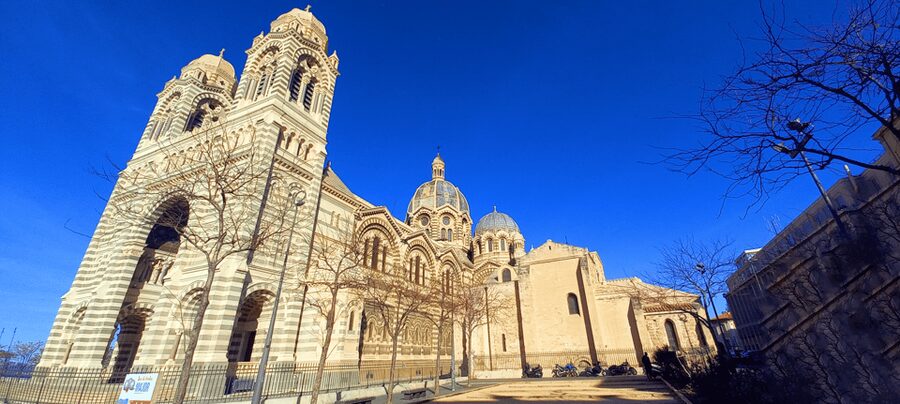
Your walk starts in front of Cathédrale Basilique Sainte-Marie-Majeure, known as La Major, with Charles wearing a white cap so you can spot him easily. Before you even leave the square, you get oriented by the cathedral’s imposing mix of Neo-Byzantine and Romanesque design.
This first stop matters because Marseille can feel like a lot all at once. A good opener helps you read what you see later, like where the old city sits, where the port dominates life, and why different eras left very visible marks.
Expect a guided introduction on Marseille’s deep timeline, with the tour framed around how the city shifted over time rather than just listing buildings. Charles tends to connect architecture to the people who built and lived around it, which makes the rest of the walk easier to follow.
Le Panier Hillside: Murals, Vieille Charité, and Windmill Hill
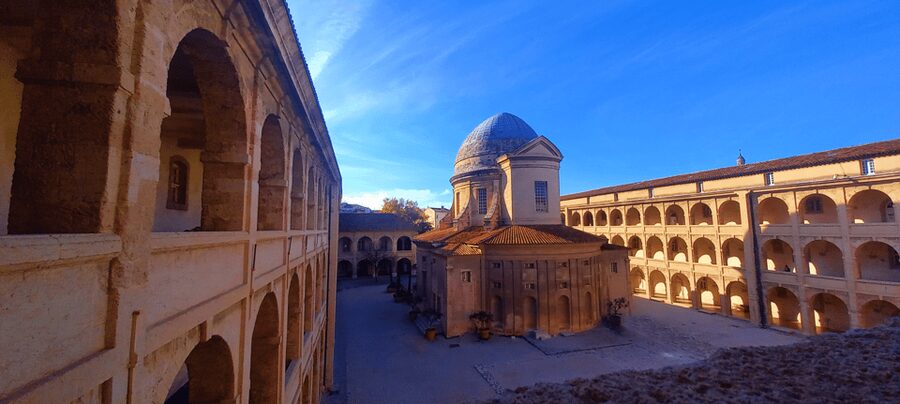
After La Major, you head toward Le Panier, one of Marseille’s oldest neighborhoods, perched on a hillside above the Mediterranean and the Vieux Port area. The feel changes quickly here. Streets get narrower, you see street art murals, and the city looks more human-scale.
Le Panier is also where you get a strong “read” of Marseille’s layers. You will pass the Vieille Charité hospital (an important historical stop) and then move toward Windmill Hill, which offers a calmer pause and excellent perspective over the port below.
What I like about this part is how Charles uses the neighborhood’s layout as a teaching tool. A hillside neighborhood is not just scenic, it explains movement patterns, defenses, and where daily life likely clustered long ago.
Small drawback here is simple physics: hillside walking means some uphill segments and more uneven paving. If you are already tired, pace yourself and take Charles up on any brief pauses that help everyone keep going comfortably.
More Walking Tours in Marseille
- Marseille: No-Diet Club Local Food Tasting and Walking Tour
★ 4.8 · 275 reviews - Marseille: Half-Day City Highlights Guided Walking Tour
★ 5.0 · 273 reviews - Marseille: Walking Food Tour with Full Meal
★ 4.7 · 137 reviews
Accoules and Rue de la République: A Church Stop Then the City’s Main Line
The next stretch takes you through the Church of Accoules, a quick guided visit that gives you another kind of landmark. This stop is short but useful because it adds texture. Not every major story in a city happens at the biggest monument.
Then you move to Rue de la République, Marseille’s well-known main avenue. Here you get contrast: open street sightlines, shops and activity, and a sense of where modern Marseille flows.
This is a good segment for first-time visitors because it shows you how the city’s energy is organized. After small lanes and hilltop views, the main street makes everything feel navigable, like you can map the city in your head.
If it is hot or bright, this is also the part where you may feel sun exposure more than you do in older shaded lanes. Bring sunglasses and plan water breaks when you can.
Vieux Port and WWII Memory at Saint-Jean and Saint-Nicolas
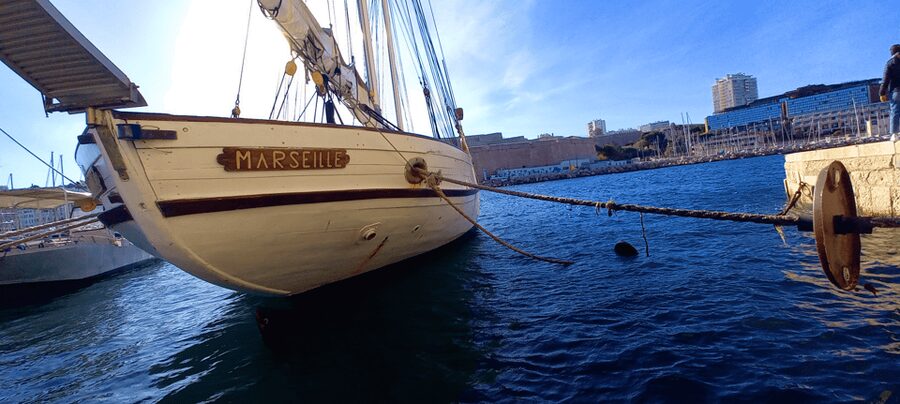
The tour then reaches Vieux Port, Marseille’s busy harbor area, where boats and yachts bob near the water. The port is not just a photo stop here. Charles frames it as the city’s focal point since ancient times, so you understand why so many other places connect back to it.
You also pass the Forts Saint-Jean and Saint-Nicolas, which guard the port. Even if you do not go inside, seeing the fort positions makes the harbor feel more strategic, like it was designed for control as much as trade.
One of the most powerful parts of the walk is the World War II context Charles brings into the harbor story. The goal is not to scare you, it is to show how Marseille’s role in larger events affected local life and memory.
It helps that this portion is guided while you can still look out at the water. You can connect the story to what your eyes are seeing, instead of treating the past like a separate subject.
Saint-Victor’s Abbey: Roman Stones, Then a Scenic Breather
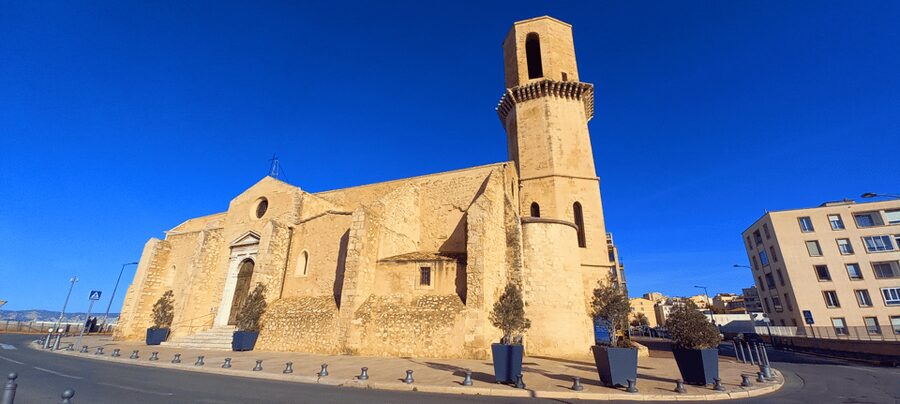
Next up is Saint Victor’s Abbey, one of the key architecture stops on the tour. The guided visit highlights the Roman architecture and the sense of continuity you get when a place keeps serving as a landmark across centuries.
There is also a break built into the timing, with scenic viewing along the way. This matters because it stops the tour from feeling like a checklist. You get time to look, ask questions, and reset your legs.
I like this section because it balances big storytelling with a slower tempo. It turns the walk into something you can enjoy rather than just “get through,” especially if you have been standing and moving nonstop since La Major.
If you are someone who hates lingering too long, this is still manageable. The pacing stays active, but Charles builds in moments where the surroundings take center stage.
More France at boulevard pace:

Palais du Pharo Views: Emperor Napoleon III’s Terrace Returns Marseille to the Sea
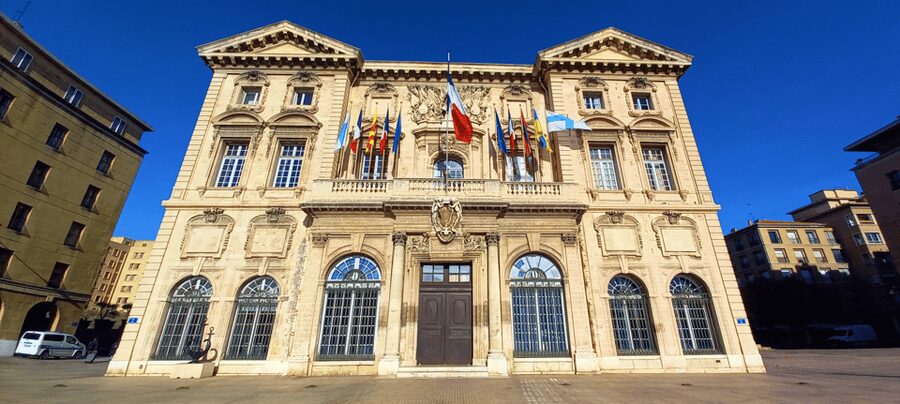
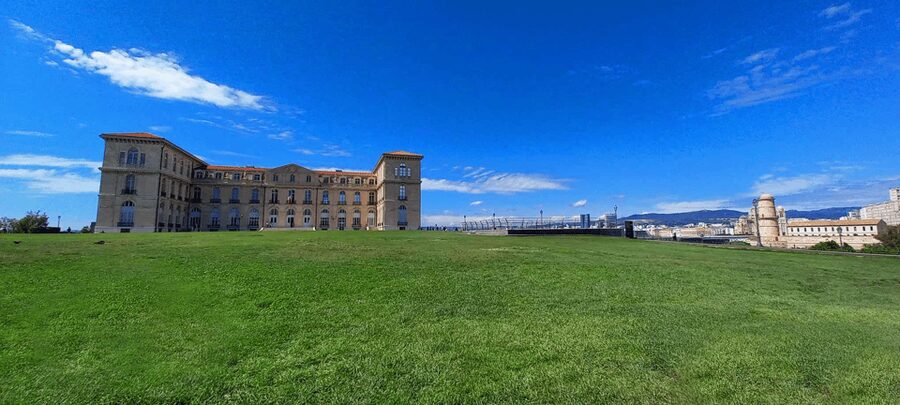
You finish at Le Pharo, including time at the Palais du Pharo area. Charles brings your route together here, so the city stops feeling like disconnected neighborhoods and starts feeling like one system built around sea access and viewpoints.
Palais du Pharo is the mid-19th century palace built by Emperor Napoleon III for Empress Eugénie, and the visit helps you see how Marseille played a role in French imagination beyond trade and industry.
From the terraces and viewpoint areas, you also get a clearer sense of how the harbor and the hillside connect. This is where the walk’s earlier stops pay off. You can look back and remember where you stood when the stories started.
The tour includes two drop-off locations, Old Port of Marseille and Palais du Pharo. That is a smart touch for planning, because you can either stay near the harbor for an easy next meal or head toward the viewpoint zone if you still want time outside.
Price, Pace, and What to Bring for a 5 km, 150 Minute Walk
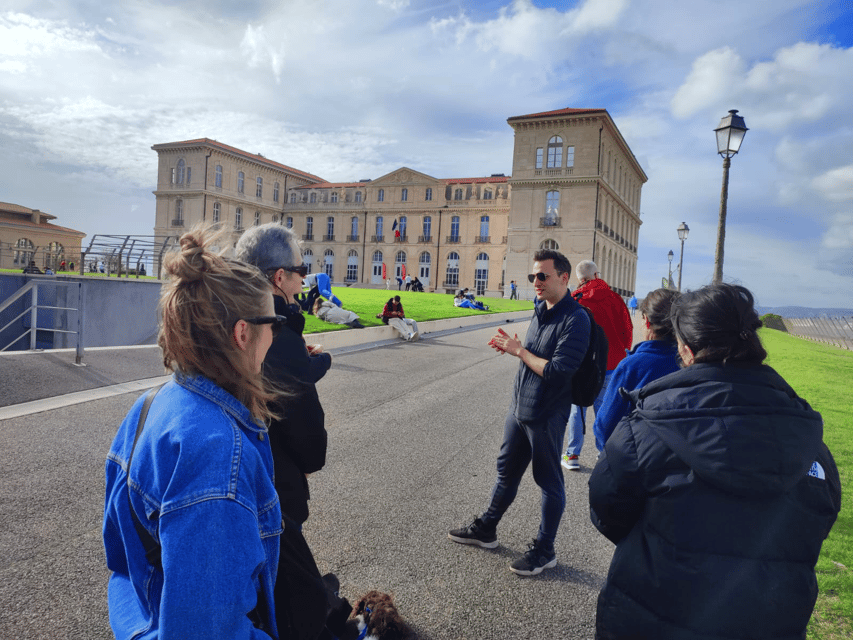
At $41 per person for about 150 minutes, the value comes from the “guided context per step.” You are paying for a local guide who explains why each place matters, not just for access to locations.
Also, the group size is limited to 8 participants, which usually means more chances to ask questions without feeling rushed. For Marseille, where streets shift character block to block, this smaller group setup makes the walk feel personal and flexible.
You should expect a 5 km route, and it will feel like walking, not strolling. Comfortable shoes are non-negotiable, especially in older areas where paving can be uneven and streets can include stairs.
Bring what keeps you moving: water, sunglasses, and food and drinks since the tour does not include them. If you plan a snack in your bag, you avoid that awkward decision later when energy is low and the next stop is still ahead.
Weather also matters. Marseille can swing between bright sun and cooler breezes near the water, so dress in comfortable layers and wear clothing that works for walking.
Is Charles’ Small Group Tour Worth It for You?
This is a strong choice if you want a fast, clear orientation to Marseille. It is also ideal if you like history that you can visualize, from ancient roots to Roman architecture to the darker World War II chapter.
The tour fits best for:
- First-time visitors who want the key neighborhoods tied together
- People who enjoy stories told while you are looking at the actual place
- Anyone traveling without a car, since the stops are walk-connected and end with practical drop-off points
Consider skipping or switching to another format if:
- You have limited mobility or cannot handle uneven streets and steps, since it is not suitable for wheelchair users
- You dislike structured walking tours and prefer to roam freely without timed stops
- You need frequent long breaks, because the pace is steady and designed to cover the route in 150 minutes
If you are flexible, the biggest payoff is how the tour helps you return later on your own. After you learn the port and hillside logic, Marseille becomes much easier to explore without feeling lost.
Should You Book This Marseille Walking Tour?
Yes, if you want a compact, high-impact introduction to Marseille with a local guide who knows how to explain what you are seeing. For $41 and a 5 km route, you get a lot of places that are otherwise easy to see but hard to interpret on your own.
I would book it early in your stay, so the route becomes your mental map. And if you do it with comfortable shoes, water, and a willingness to walk at a steady pace, you will finish with a sharper understanding of why Marseille looks the way it does, and why the port has always been the city’s main character.
FAQ
Where does the tour start?
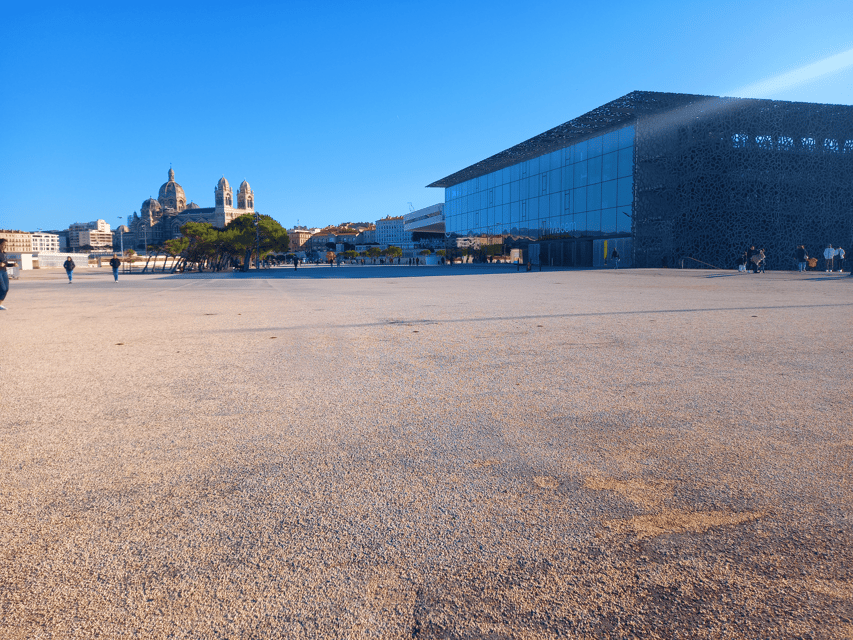
Meet your guide in front of La Major Cathedral in Marseille, Cathédrale Basilique Sainte-Marie-Majeure, dit La Major. Your guide will be wearing a white cap.
How long is the walking tour?
The duration is about 150 minutes.
How far do we walk?
The tour covers a 5 kilometer route.
How big is the group?
The group is small, limited to 8 participants.
What languages are offered?
The tour is guided in French and English.
What is included in the price?
The tour includes the guided walking experience with a live tour guide.
Is food or drink included?
No. Food and drinks are not included.
Where do we end the tour?
There are two drop-off locations: Old Port of Marseille and Palais du Pharo.
Is the tour suitable for wheelchair users?
No, it is not suitable for wheelchair users.
Can I cancel for a full refund?
Yes. Free cancellation is available up to 24 hours in advance for a full refund.
Latest Marseille entries, notes attached






City Tours, compared.

Eiffel Tower Summit Option with Seine River Cruise and City Tour
Read our review →
Paris in a Day: Louvre or Orsay, Eiffel Tower, City Walk & Cruise
Read our review →
Lyon City Hop-on Hop-off Sightseeing Bus Tour
Read our review →
Eiffel Tower Hosted Tour, Seine Cruise and City Tour
Read our review →
Paris City Center Free Walking Tour (Tip-Based)
Read our review →
Golf Cart in Paris – Private Guided City Tour – Pickup Included
Read our review →This tour also appears in