
Reviewed · MONTMARTRE WALKS
Montmartre/Sacre-Coeur/Paris- Artistic & Bohemian Epicenter
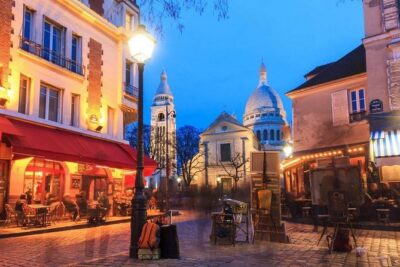
Montmartre feels like a movie set you can walk into. This 2-hour, small-group stroll strings together Sacré-Cœur, Place du Tertre, and the twisty lanes of old Montmartre Village, with plenty of art and street life along the way. I especially like how the route mixes big landmarks with the kind of street corners you normally miss when you rush.
Two more things I like: you stop at artist working spots, including the square where people can get an instant sketch, and you also get pop-culture art stops tied to Amélie plus real connections to early 1900s artists. The one consideration is timing, because when Sacré-Cœur area crowds spike, you may find lines and delays around the basilica that are not under your guide’s control.
If you want a short, walkable way to understand why Montmartre became a magnet for painters, singers, and dreamers, this route fits. Just wear comfortable shoes, because the whole area is all uphill, cobblestones included.
In This Review
- Key things to look forward to
- Montmartre, Sacré-Cœur, and Place du Tertre as One Easy Story
- 2 Hours, 7 Stops, and a Clear Pace for Walking in Montmartre
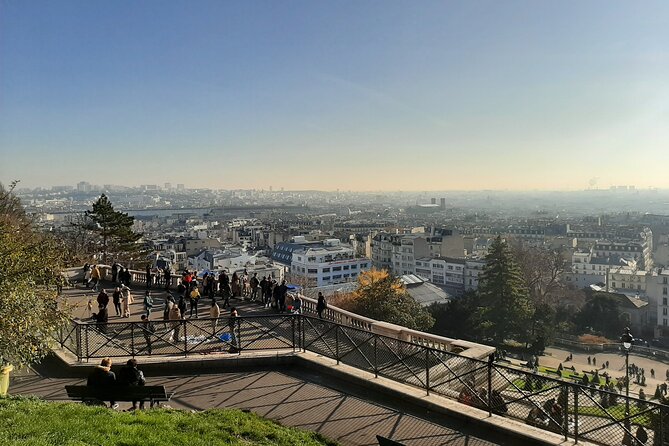
- Sacré-Cœur on the Hill: Panoramas and Architecture Without the Detour Game
- Rue Lepic and the Amélie Trail: See the Neighborhood, Not Just the Plot
- Place du Tertre: Artists at Work and the Small Thrill of an Instant Sketch
- Dalida’s Maison and Le Bateau-Lavoir: Fame, Then Modern Art
- Place des Abbesses and Montmartre Windmills: Art Nouveau Details and a Working-Class Past
- Guides Who Tell Stories Like They Live There (Jill and Matt)
- Price and Value for a 2-Hour Montmartre Art Walk
- Who Should Book This Montmartre Tour?
- Should You Book This Montmartre Artistic Tour?
- FAQ
- How long is the Montmartre, Sacré-Cœur, and Paris artistic walking tour?
- What is the starting point and where does the tour end?
- Is the tour in English?
- How big is the group?
- Are tickets included for Sacré-Cœur?
- Is coffee or tea included?
- What is the cancellation policy?
Key things to look forward to
- Small group (max 15) for more back-and-forth with your guide
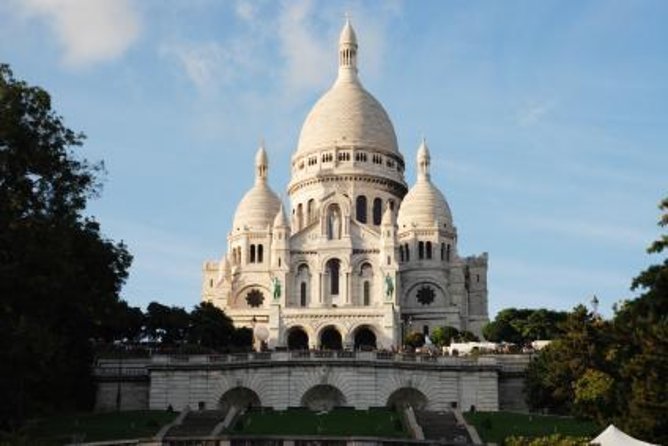
- Sacré-Cœur panorama stop after climbing through old, cobbled streets
- Rue Lepic + Amélie film shot spots for a fun, recognizable route
- Place du Tertre artists at work with instant sketches available on demand
- Le Bateau-Lavoir and Picasso area links for a modern art storyline in plain sight
- Dalida’s Maison stop to connect Montmartre with French-Italian pop fame
Montmartre, Sacré-Cœur, and Place du Tertre as One Easy Story
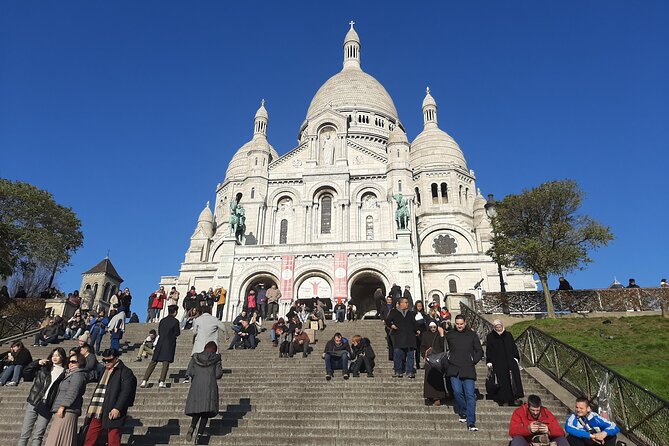
Montmartre can feel like three different places until someone ties it together for you. This walk does that job. You start in the Abbesses area, move through streets linked to artists and films, and end at Sacré-Cœur, where the views give you the big-picture context for everything you just saw.
The value here is not only in the stops, but in the way the guide uses the streets as a timeline. You are not just pointing at buildings. You are learning why this hill drew painters, musicians, and craft people in the first place. That makes the art and the famous names feel less like trivia and more like the logic of the neighborhood.
And because it’s only about 2 hours, you get a complete Montmartre taste without turning your day into a half-marathon of walking. That matters if you also want time for the rest of Paris.
2 Hours, 7 Stops, and a Clear Pace for Walking in Montmartre
The tour runs about 2 hours and keeps the group size to 15 people maximum. That small size helps on a steep neighborhood like this, where gaps form fast and people end up separated on narrow sidewalks.
You’ll start at 22 Rue des Abbesses, 75018 Paris. The route ends at Basilique du Sacré-Cœur de Montmartre, 35 Rue du Chevalier de la Barre, 75018 Paris. Practically, that means you’re walking uphill through the most interesting parts, then finishing near the basilica where the views and the payoff sit.
A note on “mobile ticket”: you’ll have a mobile ticket, and the tour is offered in English. That’s useful for keeping things simple at the start, especially when lines and street noise can make meeting up feel chaotic.
More climbs through Montmartre:
- Montmartre Hidden Gems and Scenic Highlights Walking Tour
★ 5.0 · 2,684 reviews - Montmartre Hill French Gourmet Food and Wine Tasting Walking Tour
★ 5.0 · 2,588 reviews - Paris: Montmartre Highlights Walking Tour with a Local Guide
★ 4.9 · 2,318 reviews
Sacré-Cœur on the Hill: Panoramas and Architecture Without the Detour Game
Stop 1 is at Basilique du Sacré-Cœur de Montmartre. The stop includes free admission ticket status and is timed at about 15 minutes. Translation: you get a meaningful look without it turning into a long museum-style commitment.
What I like about placing Sacré-Cœur early in the arc is that it gives you a visual anchor. Once you’re up there, you can glance back and understand the geometry of the streets you just walked through. The guide also helps with what to notice in the architecture and the feel of the basilica area, not just the postcard view.
One practical tip: plan to arrive ready for crowds around Sacré-Cœur. Even if your tour is well managed, the area can get packed. If your schedule is tight, give yourself a bit of buffer at the end so you’re not stressed about lingering at the viewpoints.
Rue Lepic and the Amélie Trail: See the Neighborhood, Not Just the Plot
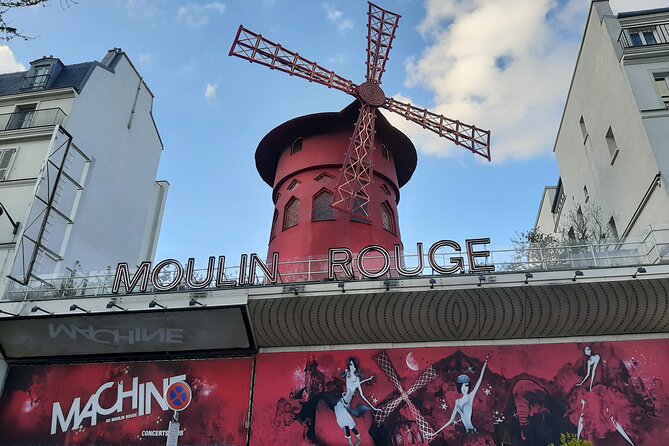
Next up is Rue Lepic, about 20 minutes. This is where the tour leans into the “walking in the footsteps” idea. You’re not only hearing art stories. You’re also seeing the neighborhood through the lens of the film connections tied to Amélie of Montmartre.
Rue Lepic matters because it’s a real street, not a staged attraction. That means your guide can point out how local scenes and street layouts inspired the impressionist-era mindset of painters who worked with what they could see nearby. It helps you spot what would have looked interesting to an artist standing right there.
If you’re a film fan, the movie shot spots add instant recognition. If you’re not, you still get value, because the street itself is charming enough to carry the mood. Either way, Rue Lepic is a good “reset” stop between the basilica spectacle and the art-world squares.
Place du Tertre: Artists at Work and the Small Thrill of an Instant Sketch
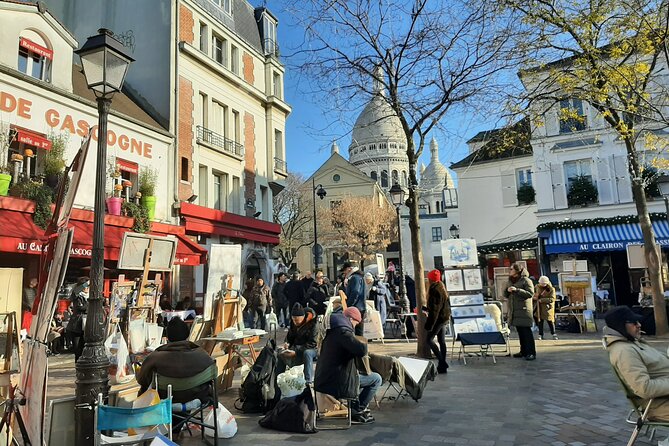
Stop 3 is Place du Tertre, about 15 minutes. This is the famous square where you can watch local artists work. The practical hook is simple: they make an instant sketch on demand of travelers.
What’s good for your time here is that you can engage at your own pace. Watch the process, pick what you want, or just take in the scene while your guide explains the context behind it. It’s one of those places where you learn how art and tourism coexist on a working street, not a sealed-off gallery floor.
Also, Place du Tertre is a great photo location, but go easy with your phone battery. Between wind, sun, and people, you’ll likely take more pictures than you planned.
More Things to Do in Paris


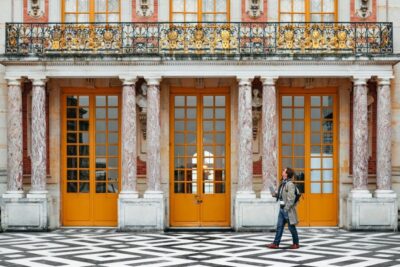

Dalida’s Maison and Le Bateau-Lavoir: Fame, Then Modern Art
Two short stops make a big contrast here.
First is La Maison de Dalida, timed at about 10 minutes. Dalida is described as a French-Italian star, born in Egypt, and connected here with Miss Egypt in the mid-1950s. Even if you only know her name, the stop adds a layer of pop-culture glamour to Montmartre’s creative identity.
Then you move to Le Bateau-Lavoir for about 10 minutes. This is a key early-20th-century artist meeting place. The tour also highlights a famous path: it notes that Picasso first came to Paris in 1900 and later fell for the city’s vibe, and you even pass by Picasso’s studio in Montmartre.
I love how this portion connects the dots. You go from street-level fame and entertainment to the gritty, human world where painters gathered, debated, and shaped modern art. It makes Montmartre feel less like a theme park and more like a creative ecosystem.
Place des Abbesses and Montmartre Windmills: Art Nouveau Details and a Working-Class Past
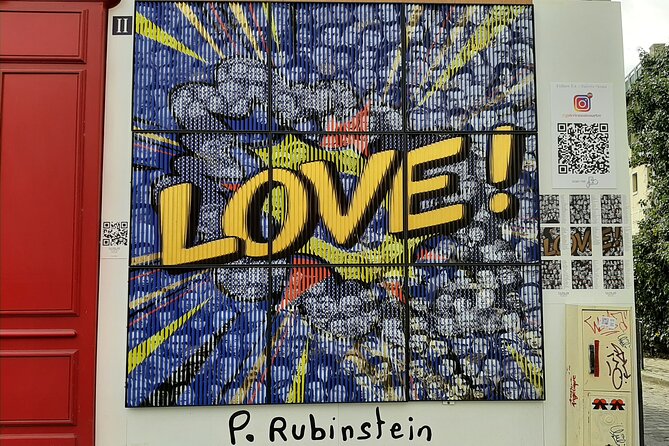
Stop 6 brings you to Place des Abbesses, around 10 minutes. Your meeting point is also in this area, so it helps to understand it quickly before the walking begins. The guide points out Art Nouveau attractions and the feel of village life.
This is one of those stops where details count. When you start noticing design in doorways, signage, and street corners, Montmartre starts making sense as more than “a view and a hill.”
The last stop covers the windmills of Montmartre, with a note that the first windmill dates to the 17th century. The tour frames this historically, reminding you that Montmartre was once a working-class village north of the main city. So the windmills are not just charming props. They’re part of the neighborhood’s older life before it became the art and film magnet it’s known for today.
Guides Who Tell Stories Like They Live There (Jill and Matt)
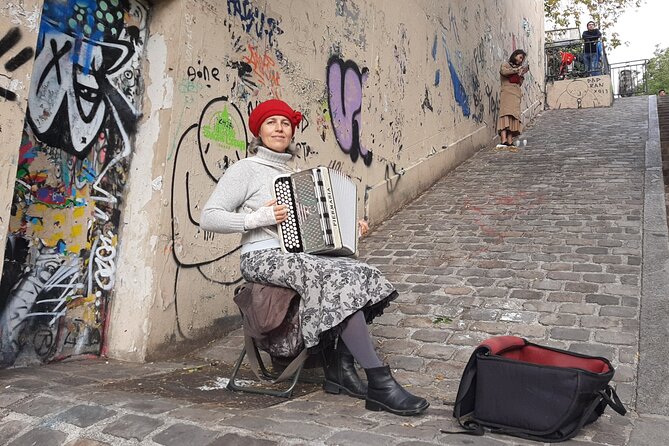
The biggest strength of this experience is the guide relationship. The tour is led by a local Paris guide who is an art lover and Montmartre Village resident.
In actual guide styles, Matt is highlighted for knowing the history without drowning you in minutia, keeping things to the point while still being entertaining. Jill is repeatedly praised for storytelling that makes you feel like you’re walking with people who actually lived in these streets, including ways she customizes the walk based on who you are.
One example from the tour experience: Jill can tailor the route for an emerging opera singer by adding composer stories, including Satie. That’s the kind of personalization you really feel in a small group. It keeps the tour from becoming the same script for everyone.
You also get recommendations threaded in naturally, like suggestions for food stops. Coffee or tea is not included, but a good guide can point you toward a nearby option that fits the vibe you’re craving.
Price and Value for a 2-Hour Montmartre Art Walk
At $48.37 per person for about 2 hours, you’re paying for three things: a local guide who can explain the neighborhood, a structured route that gets you to the highest-impact art and landmark spots, and a small-group size that prevents you from getting lost in the crowd.
Is it the cheapest way to see Montmartre? No. But it’s strong value if you care about context. Without a guide, you can absolutely wander Montmartre on your own. The catch is you’d be guessing which streets matter and why. Here, the guide turns those choices into a coherent mini-story.
Also, some stops list free admission ticket inclusion, like the Sacré-Cœur segment. Even when you can access places on your own, having time built in for the explanation and viewpoints is what you’re really buying.
One planning detail: coffee and/or tea are not included, so if you want a break, plan it. And because the tour is short, don’t schedule a heavy meal immediately after. You’ll likely want a quick bite and time to wander a bit longer.
Who Should Book This Montmartre Tour?
This is a great fit if you fall into one (or more) of these buckets:
- You want Montmartre explained fast, not in a multi-day deep dive.
- You like art-world stories tied to real streets, not only museum stops.
- You’re into film locations and want Amélie-linked sightings as you walk.
- You prefer a small group where you can ask questions and actually stay together uphill.
It’s also a smart pick for first-time Montmartre visitors who want the highlights plus the “why” behind them. And it works well for people who enjoy street-level culture, like watching artists work at Place du Tertre.
If you hate walking, know that Montmartre is famously steep and cobbled. This tour can be manageable for most people who can do a walk with upslope effort, but it’s not a flat stroll.
Should You Book This Montmartre Artistic Tour?
Yes, if you want the best parts of Montmartre in one compact block, with a guide who can connect landmarks, art, and neighborhood character into a clear route. The small-group size and the focus on lived-in street storytelling are the deciding factors.
I would particularly book it if:
- you want Sacré-Cœur with context, not just a quick look and photo,
- you enjoy Place du Tertre as more than a tourist backdrop,
- you care about how Picasso-era modern art and pop-culture fame fit into the same hill.
I’d think twice if your main goal is pure quiet or long indoor time, because this is a walk through active streets with crowds near major viewpoints. If you’re the type who likes to linger, build extra time into your day after the tour ends near Sacré-Cœur.
FAQ
How long is the Montmartre, Sacré-Cœur, and Paris artistic walking tour?
It runs for about 2 hours (approx.).
What is the starting point and where does the tour end?
The tour starts at 22 Rue des Abbesses, 75018 Paris, France. It ends at Basilique du Sacré-Cœur de Montmartre, 35 Rue du Chevalier de la Barre, 75018 Paris, France.
Is the tour in English?
Yes, it is offered in English.
How big is the group?
The tour has a maximum of 15 travelers.
Are tickets included for Sacré-Cœur?
The Sacré-Cœur stop includes an admission ticket marked as free.
Is coffee or tea included?
No, coffee and/or tea are not included.
What is the cancellation policy?
You can cancel for a full refund up to 24 hours before the experience’s start time. If you cancel less than 24 hours before, the amount paid is not refunded.
Latest Paris entries, notes attached






Montmartre Walks, compared.
Montmartre Hidden Gems and Scenic Highlights Walking Tour
Read our review →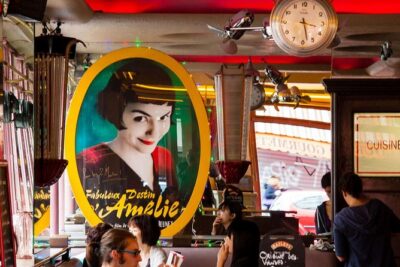
Montmartre Hill French Gourmet Food and Wine Tasting Walking Tour
Read our review →
Montmartre Highlights Walking Tour with a Local Guide
Read our review →
Montmartre Cheese, Wine & Pastry Guided Walking Tour
Read our review →
Sacré-Coeur and Montmartre Tour with Expert Guide
Read our review →
Private Montmartre Food Tour with Wine, Cheese & Pastries
Read our review →
Paris Montmartre Food Tour – A Full French Meal by Do Eat Better
Read our review →This tour also appears in