
Reviewed · MONTMARTRE WALKS
Montmartre Sacre Coeur Tour with Local guide
Montmartre can feel like a maze, but this tour gives it structure. You move through famous corners fast, with a local guide adding the stories that make the hill make sense. It’s a 1 hour 30 minutes, English, small-group walk (up to 25 people) that ends right by Sacré-Cœur for big city views.
What I like most is how efficiently you hit the area’s major landmarks, without spending your whole time just figuring out where to go. I also love the mix of well-known stops, like Van Gogh’s neighborhood and the I love you wall, plus quieter spots that give you a fuller Montmartre feel. The one thing to consider is that it’s outdoors and you’re on a slope, so cold or rain can make the walk tougher.
One more practical note: this experience is described as weather dependent, and the most negative feedback I saw was about a guide no-show in bad weather with delayed communication. That’s not the norm, but it’s a reminder to plan for possible weather disruptions and keep your booking details handy.
In This Review
- Key Highlights You’ll Actually Feel on This Walk
- First Impressions: What This Tour Does Better Than a DIY Walk
- Price and Value: Why $30.04 Can Make Sense Here
- Where You Start and How the Route Works
- Stop 1: Moulin Rouge, Cabaret Energy and Montmartre’s Reputation
- Stop 2: Van Gogh’s One of His Notable Paris Addresses
- Stop 3: Le Mur des Je t’aime, Love You Can Read in Any Language
- Stop 4: Le Bateau-Lavoir, Where Creative Movements Took Shape
- Stop 5: Le Moulin de la Galette, Artists, Bohemians, and a Famous Scene
- A Montmartre Detour: Dalida’s Square and Place Dalida
- Stop 6: La Petite Maison Rose de Montmartre Since 1920
- Stop 7: Vigne du Clos Montmartre, A Vineyard on the Hill
- Stop 8: Place du Tertre, Painters, Paintings, and the Montmartre Postcard Zone
- Stop 9: Sacré-Cœur Views, Romano-Byzantine Domes on Top of the Hill
- Guides, Group Size, and What the Best Ones Do
- Weather Reality and How to Plan for Cold or Rain
- Who This Tour Is Best For
- Should You Book This Montmartre Sacré-Cœur Tour?
Key Highlights You’ll Actually Feel on This Walk
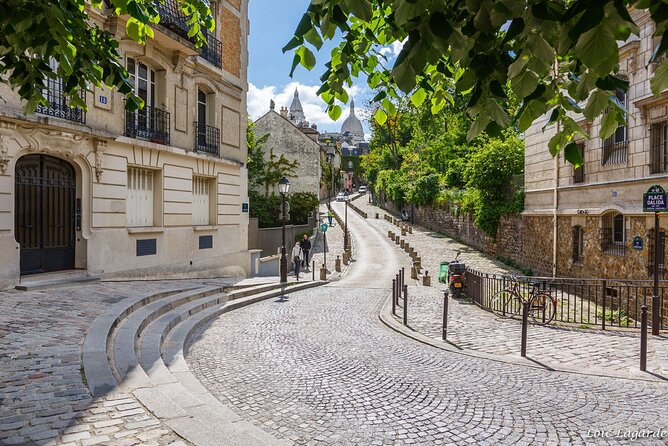
- A guided Montmartre route that flows, so you spend less time wandering uphill
- Stop-by-stop storytelling, including notable figures connected to Paris art
- Iconic sites without added ticket hassle, since most stops are free on this tour
- A final payoff at Sacré-Cœur, with an excellent view from the hill
- A small group size (max 25) that keeps the pace human
First Impressions: What This Tour Does Better Than a DIY Walk
If you’ve ever tried to explore Montmartre on your own, you know the problem fast. Streets curve, viewpoints appear, and suddenly you’ve walked in circles. This tour fixes that with a set route that strings together the big visual landmarks, plus a few culture-focused stops that help you understand what you’re seeing.
The second thing I like is the guide focus. You’re not just collecting photos. A good guide explains the why behind each stop, like how the cabaret scene shaped Montmartre’s reputation, or how specific places fit into major artists’ lives. You also get recommendations for more things to see around Paris, which is useful if it’s your first visit.
The pacing is built for real sightseeing, not a sprint. Still, Montmartre is Montmartre, meaning you should show up ready for uphill walking and stairs. On a cool, damp day, that part matters.
Price and Value: Why $30.04 Can Make Sense Here
At $30.04 per person for about 1 hour 30 minutes, the value comes from what’s included and what’s not. You get the guide service, a planned route, and a series of stops where most admissions are listed as free. That means you’re paying mainly for local context and time-saving navigation, not for attraction tickets.
Also, this is aimed at efficiency. Many Montmartre highlights sit within walking distance of each other, but DIY exploration can turn into wasted time. A guided route helps you see more of the key sites while staying oriented, especially if you’re visiting the area for the first time.
Two costs to keep in mind:
- A Moulin Rouge show ticket is not included.
- Even with free stops, you should budget for your own things like snacks, water, and any optional personal purchases at cafés and artist areas.
If you want a “see the key places, understand them, then keep exploring” kind of afternoon, this pricing style usually fits well.
More climbs through Montmartre:
- Montmartre Hidden Gems and Scenic Highlights Walking Tour
★ 5.0 · 2,684 reviews - Montmartre Hill French Gourmet Food and Wine Tasting Walking Tour
★ 5.0 · 2,588 reviews - Paris: Montmartre Highlights Walking Tour with a Local Guide
★ 4.9 · 2,318 reviews
Where You Start and How the Route Works
You meet at 59 Bd de Clichy, 75009 Paris, and the walk finishes at 35 Rue du Chevalier de la Barre, 75018 Paris, with the tour ending in front of Sacré-Cœur. Start time is 2:00 pm, so plan your day around an afternoon climb and views.
Because it’s a guided walk through multiple neighborhoods and viewpoints, it helps to arrive a few minutes early. That way you’re not stressed when the group is forming, and you can start listening right away.
The route is near public transportation, so it’s manageable even if you’re coming from another part of Paris. Service animals are allowed too, which is good to know for comfort and planning.
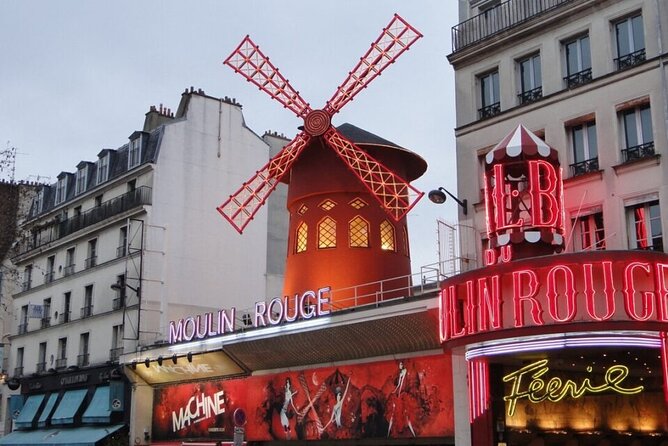
Stop 1: Moulin Rouge, Cabaret Energy and Montmartre’s Reputation
The tour kicks off with Moulin Rouge, with the guide explaining the history of the extravagant cabaret shows and the high-energy performances that made Montmartre famous. You’re not there to buy a show ticket, since admissions for this stop are listed as not included, but you do get the context.
This is a smart opener. Moulin Rouge isn’t just a landmark, it’s part of Montmartre’s identity. The guide’s framing helps you understand why so much of the area’s story revolves around performance, nightlife, and artistic ambition.
Practical tip: if you’re sensitive to crowds, this is the kind of place where you’ll want a moment for photos and then keep moving. The tour is designed to do that.
Stop 2: Van Gogh’s One of His Notable Paris Addresses
Next comes Van Gogh’s House area, where the guide points out one of his notable addresses in Paris. You’ll hear how the city influenced his art work, along with stories that connect the neighborhood to the artist’s life.
Even if you’re not an art history superfan, this stop gives you a lens for the walk. Montmartre is full of places that feel like they belong to famous paintings, but the guide helps you connect that feeling to real people and real times.
This stop is listed as free for admission, and it’s typically a quick, story-driven moment rather than a museum-style visit. That keeps the momentum going.
More Things to Do in Paris



Stop 3: Le Mur des Je t’aime, Love You Can Read in Any Language
At Le Mur des Je t’aime, you stop at the I love you wall. The guide explains it as a symbol of love and unity, and you’re encouraged to take a quiet moment as you explore Montmartre around it.
This stop is valuable because it breaks up the art and architecture with something emotional and human. Even if you’ve seen photos online, standing near it tends to land differently because the wall is literally part of the neighborhood you’re walking through.
Admission here is listed as free, so you can spend your time focusing on the meaning instead of logistics.
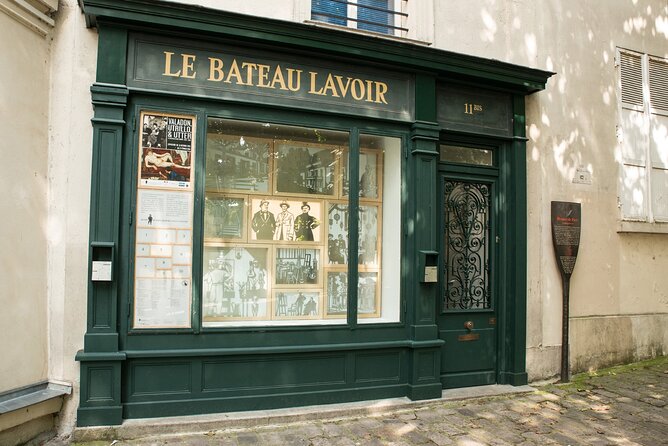
Stop 4: Le Bateau-Lavoir, Where Creative Movements Took Shape
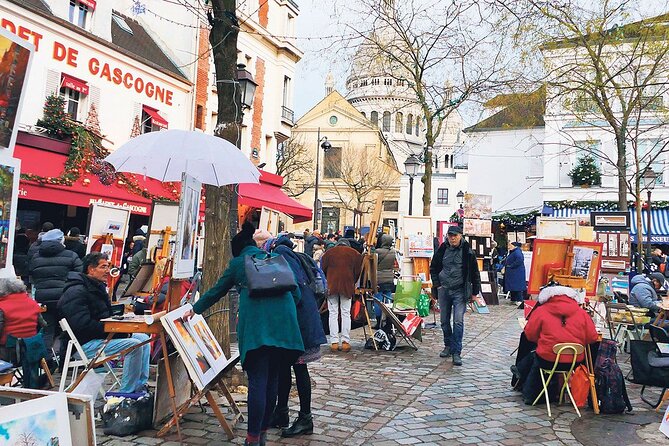
Then it’s Le Bateau-Lavoir, a building tied to early 20th-century artistic changes. The guide shares its history and explains how it witnessed the birth of revolutionary artistic movements, making it an iconic part of Montmartre’s artistic legacy.
This is one of the stops where a guide makes a real difference. Without context, a building can look like another old structure on a hill. With the story, it becomes a marker for how artists gathered, experimented, and changed what art could be.
Admission is listed as free, and the timing is tight, so expect a focused explanation rather than a long linger.
Stop 5: Le Moulin de la Galette, Artists, Bohemians, and a Famous Scene
The walk continues to Le Moulin de la Galette. Here you’ll hear history about the famous mill area and how it became a gathering place for artists, bohemians, and locals looking for a lively atmosphere. The guide also connects it to art by Pierre-Auguste Renoir, which helps you see the stop as part of a broader visual tradition.
This stop works well because it links everyday life with art. Montmartre was not only for famous painters. It was also for regular people who wanted music, conversation, and a good time.
The stop is listed as free for admission, so you’re again paying for the interpretation more than a ticketed attraction. If you like when art history meets street-level culture, this one lands.
A Montmartre Detour: Dalida’s Square and Place Dalida
During the tour, your guide also talks about singer Dalida and a square dedicated to her, Place Dalida. The square includes a bust and sits among cafes and boutiques, creating a calmer pocket inside Montmartre’s more famous scenes.
This part is a nice reminder that Montmartre is not just painters and poets. It’s also connected to pop culture and performers who helped shape how Paris sounded and felt.
Admission is free here too, so it’s more about atmosphere and story than spending time in a ticket line.
Stop 6: La Petite Maison Rose de Montmartre Since 1920
Next is the famous pink facade, La Petite Maison Rose de Montmartre (since 1920). You’ll hear about the house and how it hosted artists, writers, and bohemians over the years. The guide gives you a little time for pictures, and the place is clearly designed for it, with a quaint look that photographers love.
The value of this stop is the way it turns a recognizable photo into something with a timeline. You stop seeing it as just a pretty facade and start understanding why artists were drawn to this kind of view and setting.
Admission is listed as free, and the guide’s time for photos makes it less rushed than some “look and go” tours.
Stop 7: Vigne du Clos Montmartre, A Vineyard on the Hill
Then you walk to Vigne du Clos Montmartre, a unique vineyard in Montmartre. The guide explains how the vines are cared for and frames it as a place where you can appreciate winemaking on the hill. The tone here is more reflective than theatrical.
A vineyard stop can feel surprising if you think of Montmartre as only streets, art, and cafés. But it’s one of the best ways to remember that the neighborhood isn’t just a backdrop. It has real traditions and real land use.
Admission is listed as free. Expect a short stroll and a chance to enjoy the setting before moving back toward the crowd-heavy viewpoints.
Stop 8: Place du Tertre, Painters, Paintings, and the Montmartre Postcard Zone
Now it’s Place du Tertre, a square in the heart of Montmartre known for painters and paintings. The guide helps you understand what you’re seeing and how this area fits into Montmartre’s long art tradition.
This stop is fun because it’s tactile. You’re right in the middle of the artist culture that gave Montmartre its legend. But it can also be busy and touristy, so keep your expectations realistic. This is a photo-and-scene stop, not a quiet, empty corner.
Admission is listed as free, and you get about 10 minutes here, which is about right if you want a quick taste without losing time.
Stop 9: Sacré-Cœur Views, Romano-Byzantine Domes on Top of the Hill
Finally, you reach Basilique du Sacre-Coeur de Montmartre. The basilica is the main attraction of Montmartre, with its top-of-the-hill position and the incredible view from the area. Admission is listed as free on this tour.
This is the moment that makes the walk feel worth it. From the parvis, you see how Paris spreads out below, and the elevation changes how the city looks. Even on a clear day, it’s a different view than you get from typical streets.
If it’s cold or rainy, protect your comfort. Bring layers you can move in, and consider waterproof shoes or shoe covers if you have them.
Guides, Group Size, and What the Best Ones Do
The tour runs with English-speaking local guides and keeps groups to a maximum of 25 people. That size matters here. Montmartre is full of narrow streets and sudden crowd points, so a smaller group means fewer delays and better chances to hear the story without shouting.
In the experience’s feedback, guides such as Niko, Salome, Denise, and Pierre show up as standouts for being patient, enthusiastic, and good at keeping the tour moving even when weather turns. That tells me what to look for when you get your guide: someone who can adjust pace, manage the group, and still hit each stop without rushing your understanding.
Since you’re seeing a lot in 1 hour 30 minutes, that kind of guidance can be the difference between a checklist and a memorable afternoon.
Weather Reality and How to Plan for Cold or Rain
This is an outdoors, hill-walk style tour. The experience is described as requiring good weather, and cancellation due to poor weather can mean a different date or a full refund. That’s the official intent.
The not-so-perfect part is that bad conditions can also cause strain for operations when guides are sick or communication slips. In at least one reported case, guests said the guide did not show and refunds took longer than expected.
So here’s the practical approach I’d use if you book:
- Dress for the walk, not just for the destination.
- Bring a lightweight rain layer and keep your phone charged for the mobile ticket.
- If weather is rough, be ready to contact the provider quickly and keep your confirmation details close.
That keeps you from feeling helpless if the day gets messy.
Who This Tour Is Best For
This is a strong fit if you:
- Want Montmartre’s biggest highlights in a short time
- Enjoy art stories tied to real places
- Like walking with a guide who offers Paris recommendations
- Prefer a small group over massive bus tours
It may be less ideal if you:
- Hate slopes or stairs
- Need a fully indoor plan, since most stops are outdoors
- Are traveling with limited walking tolerance (this tour says most people can participate, but it does not claim a no-stairs, step-free route)
Should You Book This Montmartre Sacré-Cœur Tour?
I’d book it if your goal is to understand Montmartre while seeing the key sights, without spending the day lost in backstreets. The price is reasonable for a structured, story-heavy walk, and the stop mix covers the big names and the small neighborhood moments, from Moulin Rouge context to Van Gogh area stories, to Place du Tertre and the Sacré-Cœur viewpoint payoff.
I’d only hesitate if your schedule is rigid on weather or you cannot handle a cold, wet walk on a hill. If the forecast looks rough, plan to be flexible.
If you want Montmartre to feel like more than a photo route, this one is built for that.
Latest Paris entries, notes attached







Montmartre Walks, compared.

Montmartre Hidden Gems and Scenic Highlights Walking Tour
Read our review →
Montmartre Hill French Gourmet Food and Wine Tasting Walking Tour
Read our review →
Montmartre Highlights Walking Tour with a Local Guide
Read our review →
Montmartre Cheese, Wine & Pastry Guided Walking Tour
Read our review →
Private Montmartre Food Tour with Wine, Cheese & Pastries
Read our review →
Sacré-Coeur and Montmartre Tour with Expert Guide
Read our review →
Paris Montmartre Food Tour – A Full French Meal by Do Eat Better
Read our review →This tour also appears in