Reviewed · FRANCE
Narbonne: visit the Archbishops’ Palace and Cathedral
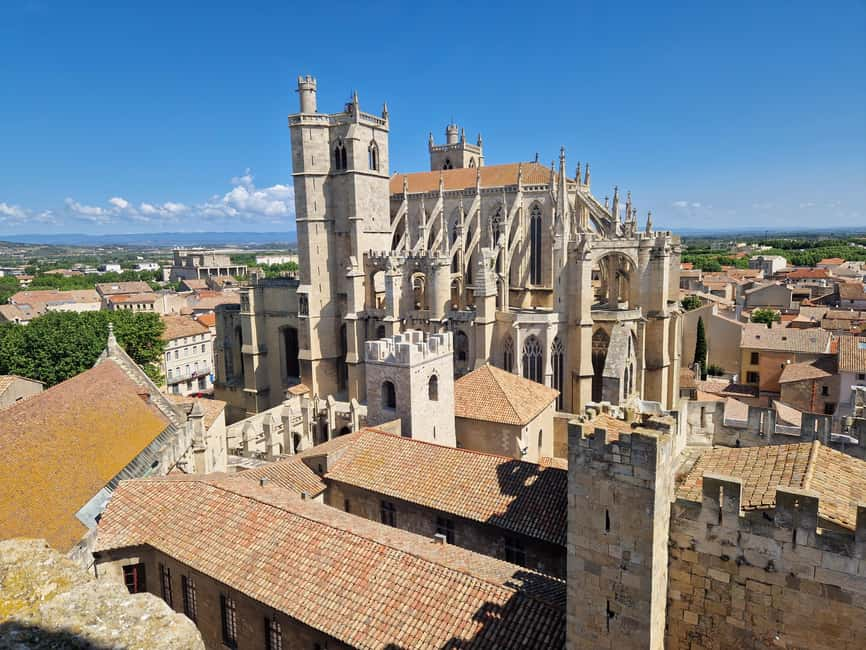
Cathedrals can feel like time machines. In just 2 hours, this Narbonne tour with Marion brings the Archbishop’s Palace and Saint-Juste and Saint-Pasteur Cathedral to life with stories you can actually see in the stone.
I also like how the visit is paced for real attention, not speed running. One possible drawback: the big extras inside Narbonne, like the Donjon, the town art museum, and the Treasure Room, require a separate €12 admission ticket, so this tour is best if you want the main palace and cathedral highlights.
In This Review
- Key things to look for on this Narbonne guided visit
- Where the tour starts: Les Halles, then straight into Narbonne’s layers
- Archbishop’s Palace: the façade you can read, then the courtyard that steals the show
- Via Domitia and Passage de l’Ancre: two stops that make the city feel connected
- Saint-Juste and Saint-Pasteur Cathedral: gargoyles, cloister rhythm, and vaulted height
- The archbishop’s garden: a breather that ties power to place
- Promenade des Barques to Les Halles and Pont des Marchands: ending where Narbonne gathers
- What’s included, what is extra, and how to think about the €23 value
- Who this tour suits best
- Should you book the Archbishops’ Palace and Cathedral tour?
- FAQ
- How long is the Narbonne Archbishops’ Palace and Cathedral tour?
- How much does it cost?
- Where do we meet for the tour?
- Is this a private group tour?
- What languages is the live guide available in?
- Is the tour wheelchair accessible?
- What is included in the tour?
- What is not included, and can I add it?
- Does the tour enter the cathedral?
- Can I get a refund if my plans change?
Key things to look for on this Narbonne guided visit
- Grand Staircase and palace courtyards that set the mood immediately
- Cloister gargoyles looming over you as you move through the cathedral complex
- Vaulted ceiling height inside the cathedral, the feature people remember
- Organ and altarpieces ranging from 14th-century sculpted work to later detail
- Promenade des Barques to Les Halles, ending where Narbonnais meet
- Pont des Marchands, a perfect final photo stop without making the day longer
Where the tour starts: Les Halles, then straight into Narbonne’s layers
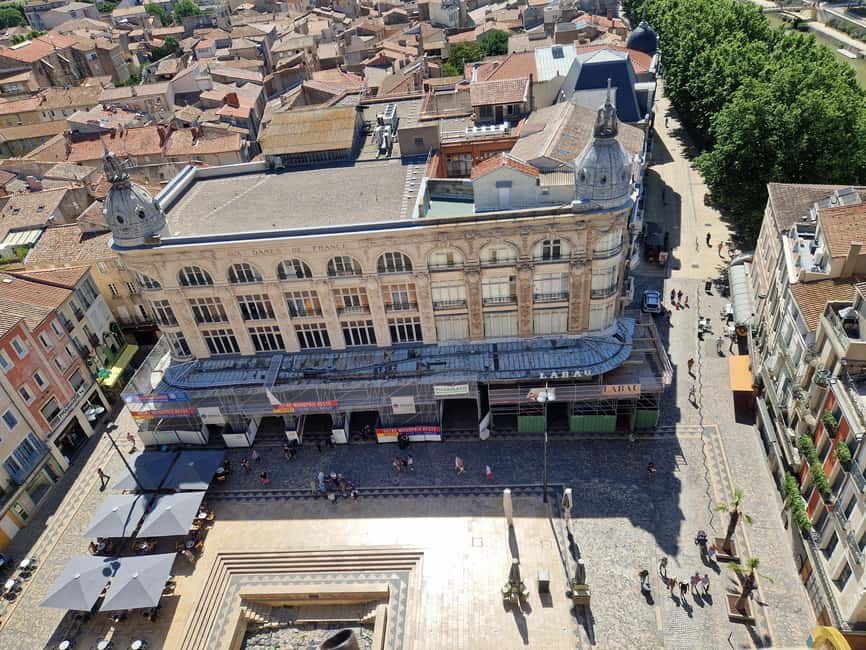
You meet at the main entrance to Les Halles de Narbonne, near the war memorial. It’s a smart start, because you get a living sense of the city right away, not just a museum mindset. Then you move from everyday Narbonne into older Narbonne, guided by Marion’s way of connecting buildings to the people who used them.
Because this is a private group, the pace stays human. You can ask questions, and the route is tight enough that you feel like you are progressing instead of wandering. The whole experience is about 2 hours, so it works nicely as a morning plan or as an anchor activity before dinner.
One practical tip: wear comfortable walking shoes. Even though the tour is short, you are going to be moving between courtyards, passages, and the cathedral area, plus a final stroll along the riverfront promenade toward the market.
Archbishop’s Palace: the façade you can read, then the courtyard that steals the show
The visit begins on today’s Place de l’Hôtel de Ville, where the former Palais des Archevêques still frames the story. What I like here is that you do not just look at a building, you learn how to notice it. The palace façade has enough visual cues to reward your attention, and Marion guides you to see what matters.
Next comes the main courtyard. This is where the tour really starts to feel cinematic, because you get access to the heart of the palace, including the Grand Staircase. Even if you are not a “formal architecture” person, staircases have a way of telling you who held power. You can feel the intention in how the space is structured for moving people up, forward, and into importance.
Marion is the kind of guide who keeps you engaged without drowning you in facts. In the reviews, her enthusiasm shows up again and again, and you can feel that energy in how she delivers details. Expect clear explanations, and if history feels heavy to you, she tends to lighten it with humor and simple phrasing.
After the palace courtyard, the walk continues toward the cathedral complex, with a sense that you are following a path archbishops would have recognized.
A page later in the Narbonne notebook:
- Château de Luc: Unique visit and wine tasting
★ 4.7 · 55 reviews
Via Domitia and Passage de l’Ancre: two stops that make the city feel connected
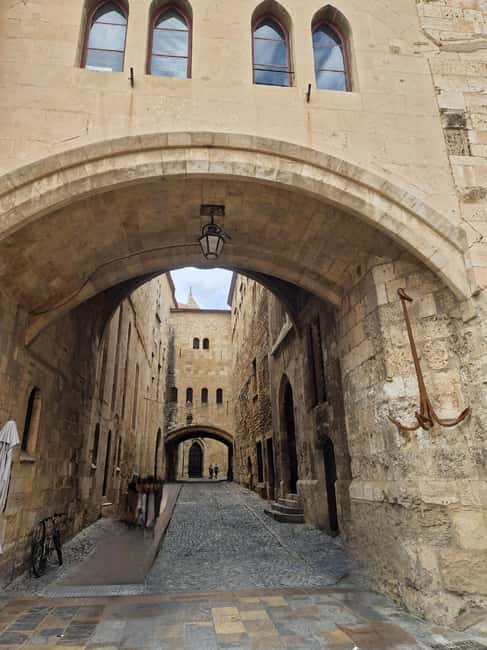
This is a small part of the tour, but it matters. You will include the Via Domitia and the Passage de l’Ancre. The value here is the bridge between “major monuments” and the real fabric of Narbonne.
When a tour only focuses on one big site after another, you can lose the thread of how a city functions. Adding these street-level connections helps you understand that Narbonne did not grow in a straight line. It layered itself, moved people along established routes, and kept using certain corridors over time.
If you like urban details, this section gives you that. If you are more into the cathedral, consider this your warm-up. It sets context so the next stops land with more meaning.
Saint-Juste and Saint-Pasteur Cathedral: gargoyles, cloister rhythm, and vaulted height
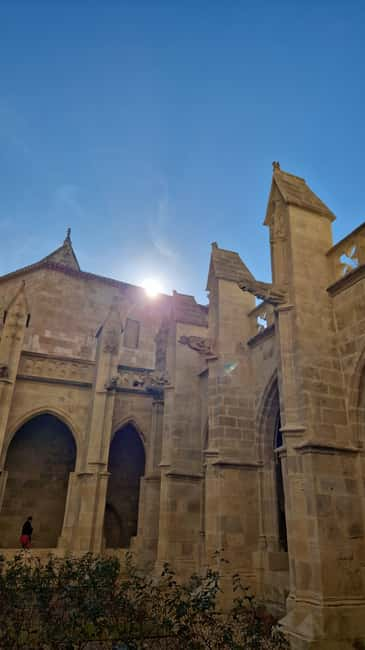
The cathedral visit is the centerpiece. You follow in the footsteps of the archbishops, and one of the first visual moments is the cloister area, where gargoyles tower above you. That is not just a creepy decoration. It helps you understand the medieval mindset of using sculpture as both art and message.
From the cloister, you enter the cathedral with one of the key reasons this place is famous: the height of the vaulted ceiling. Stand still for a moment. Let your eyes rise. The point is not just to see that it is tall, it is to notice how that height changes the feel of the space. It turns the interior into something almost vertical, like the building is insisting you look up.
Marion’s storytelling helps you interpret what you are seeing. She explains the architecture in a way that makes you feel oriented, not overwhelmed. This is where those repeat five-star comments about her ability to keep the full 2 hours compelling make sense.
The cathedral also includes plenty of “you can actually notice this” stops:
- You admire the monumental organ
- You look at the 17th-century altarpiece
- You stop for a 14th-century sculpted altarpiece, described in a way that makes it feel like a picture book
That last part is a useful way to prepare your eyes. If you think you will just glance at art, you will miss what makes it special. Treat those altarpieces like scenes. Let Marion point out what to focus on, then look again yourself for the details.
The archbishop’s garden: a breather that ties power to place
You also include the archbishop’s garden. I appreciate this stop because it shifts your body and your pace. After courtyards and cathedral interiors, a garden gives you a pause without ending the story.
It also makes sense thematically. Archbishops were not only religious figures inside stone walls. The garden reminds you there was an everyday life connected to this complex, with space for calm and routine.
If you tend to like tours that keep a nice rhythm, this garden section is a good sign. It prevents the experience from becoming one long indoor stretch.
Promenade des Barques to Les Halles and Pont des Marchands: ending where Narbonne gathers
To finish, you take a stroll along the Promenade des Barques, which leads you to Les Halles, Narbonne’s emblematic meeting place. Ending here is not random. It keeps the day grounded in daily life, and it gives you a satisfying “from power to people” arc.
On the way, you pass Pont des Marchands. It’s a practical final stop because you can pause for photos, take in the riverfront feel, and then walk straight into the market area where the city feels most active.
This ending also helps if you are planning the rest of your afternoon. After the cathedral and palace, you will likely want food, a drink, or a quick browse. Les Halles is the natural place to do that, and the tour hands you the timing.
What’s included, what is extra, and how to think about the €23 value
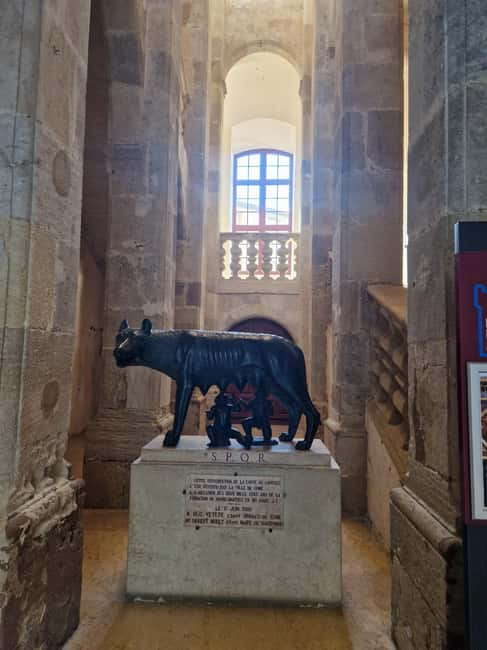
This tour includes:
- Via Domitia
- Archbishop’s Palace exterior and interior courtyards
- Passage de l’Ancre
- Cloister
- Cathedral interior and exterior
- Archbishop’s garden
- Promenade des Barques and Pont des Marchands
- Access to Les Halles
The extra admissions you might consider are listed clearly: the Donjon, the museum (the town’s art collection), and the Treasure Room. Those require a separate €12 admission ticket. That is important for value. Your €23 price buys a focused guided experience of the key story sites, not a full museum day.
So ask yourself what you want most:
- If you care about seeing the major architecture, sculptures, and sacred art while someone helps you understand it, the included route is a strong deal.
- If you want every possible internal ticketed space, you will probably spend the extra €12 to extend the visit beyond what the guide covers.
Duration matters too. With a 2-hour format, the tour is a great way to get a coherent Narbonne overview without sacrificing the rest of the day.
Who this tour suits best
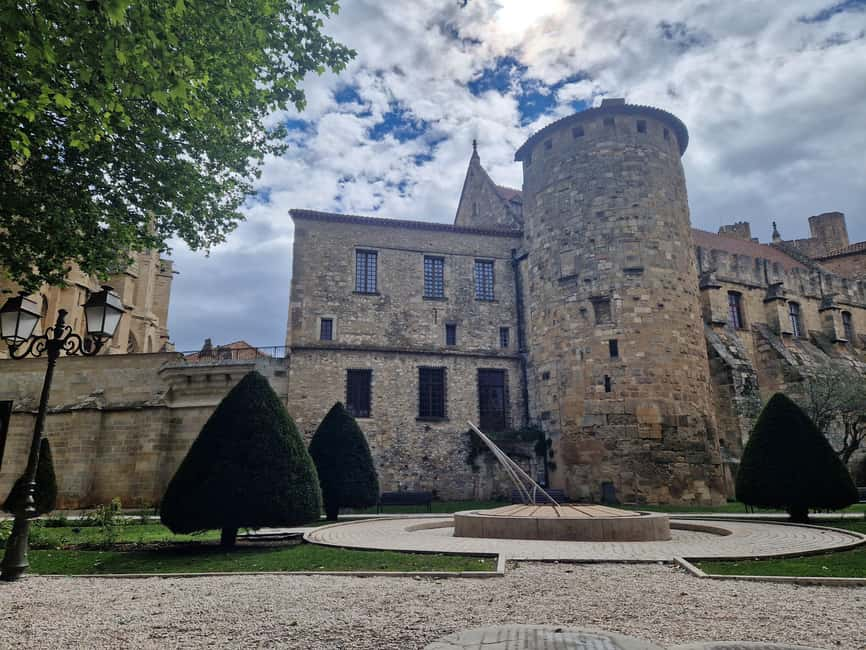
This is a good fit if you:
- Like guided history that stays readable, not heavy
- Want a tight route connecting palace, cathedral, and market life
- Appreciate stops where you can slow down, look up, and notice details like gargoyles and the cathedral vaults
- Enjoy tours led by a guide who keeps energy high across the whole time, like Marion does
It may be less ideal if you need an English tour, since the languages listed are French and Sangro. Also, if you are seeking a long museum session, the time limit means you will likely want that separate €12 ticket for the add-on spaces.
Should you book the Archbishops’ Palace and Cathedral tour?
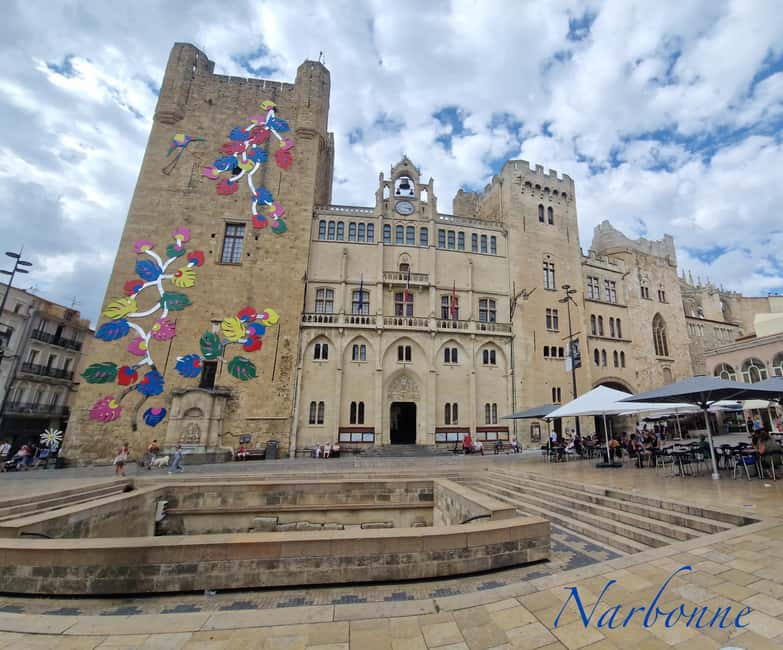
Yes, I think you should book if you want a concentrated, high-impact Narbonne visit. The combination is well chosen: you get the power base of the city in the Palais des Archevêques, the standout vertical drama of the Saint-Juste and Saint-Pasteur Cathedral, and a satisfying ending at Les Halles along the Promenade des Barques.
The main reason to feel confident is the guide factor. Marion’s ability to keep people captivated through the full 2 hours comes through strongly, and that matters more than anything on a short tour. If you bring curiosity and comfortable shoes, you are set for a visit that feels both structured and fun.
FAQ
How long is the Narbonne Archbishops’ Palace and Cathedral tour?
The tour lasts 2 hours.
How much does it cost?
The price is $23 per person.
Where do we meet for the tour?
Meet in front of the main entrance to Les Halles de Narbonne, near the war memorial. The guide will be wearing a green neckerchief with a professional card.
Is this a private group tour?
Yes, it is listed as a private group.
What languages is the live guide available in?
The live tour guide is listed in French and Sangro.
Is the tour wheelchair accessible?
Yes, it is wheelchair accessible.
What is included in the tour?
It includes the Via Domitia, the Archbishops’ Palace (exterior and interior courtyards), Passage de l’Ancre, the cloister, the cathedral (interior and exterior), the archbishop’s garden, Promenade des Barques, Pont des Marchands, and access to Les Halles.
What is not included, and can I add it?
Admission to the Donjon, the museum, and the Treasure Room is not included. Those are available with the purchase of a €12 admission ticket.
Does the tour enter the cathedral?
Yes, the cathedral visit includes the interior and the exterior.
Can I get a refund if my plans change?
Yes, free cancellation is available up to 24 hours in advance for a full refund.