
Reviewed · CITY TOURS
Paris: City Center Group Tour in German
Paris makes sense on foot. This German group walk strings together the historic axis of central Paris with stories that explain what you are actually looking at. You also get insider recommendations while you stroll, so the tour helps you plan the rest of your stay, not just take photos.
I especially like the pace. Reviews mention small groups that move quickly, so you spend less time waiting and more time watching the details go by with your guide.
One thing to consider: it is a 2-hour walking tour with photo stops, so if you want long time inside major sites, you will still need separate ticketed visits.
In This Review
- Key highlights at a glance
- Walking tour value: what $35 buys you in central Paris
- Where the tour starts near Opéra Garnier (and what to look for)
- Palais Garnier to Place Vendôme: where you learn what you are seeing
- Place de la Concorde and the Tuileries Garden: Revolution drama with breathing room
- The Louvre area and the Seine banks: making sense of a controversial pyramid
- Pont Neuf and Île de la Cité: the oldest bridge and Notre-Dame after 2024 reopening
- What the guide does best: stories plus answers
- Practical walking tips so you enjoy the full 2 hours
- Who this tour is best for (and who might want something else)
- Price reality check: why it feels fair at $35
- Should you book this German Paris city-center walking tour?
Key highlights at a glance
- Historic-axis route: from Place Vendôme toward the Louvre area, then onward to Notre-Dame
- Stories built into the walk: Napoleon, the French Revolution, and hidden legends tied to real spots
- Opera and royal squares to match your photos: Palais Garnier, Place Vendôme, Place de la Concorde, and the Tuileries
- Tuileries Garden views: a garden stroll with sightlines toward the Champs-Élysées area
- Pont Neuf plus Notre-Dame: you learn why Pont Neuf matters and you end at Île de la Cité to see Notre-Dame after 2024 reopening
Walking tour value: what $35 buys you in central Paris
At $35 for a 2-hour guided walk, you are paying for something that is hard to replicate on your own: fast orientation plus interpretation. Paris can feel like a pile of landmarks until someone connects them with cause-and-effect stories. That is where this tour delivers.
The other value is practical. You are not only shown the highlights like Palais Garnier, the Louvre area, and the Seine riverbanks, you also get on-the-ground advice for restaurants, museums, and local spots. For first visits, that saves you hours of guessing. For return trips, it helps you focus on what you might otherwise overlook.
And because the tour is in German with a live guide, you get smoother explanations than you would from audio alone, especially when the history gets specific. Reviews also mention guides like Marilena and Lasse, and they were praised for being entertaining and answering questions.
Where the tour starts near Opéra Garnier (and what to look for)
You meet at 7 Rue Meyerbeer, 75009 Paris, right in front of the Cadillac store. Look for a guide carrying a HelpTourists bag and wearing a pink baseball cap. This matters more than it sounds. Central Paris meeting points can be chaotic, and starting cleanly keeps the first stop feeling calm.
From there, you walk into the city’s core, building the route around major landmarks you will recognize instantly. The tour is designed for you to learn the “why” behind what you see, not just the “what.” That is why the guide’s role matters even during simple photo moments.
Palais Garnier to Place Vendôme: where you learn what you are seeing
The first major stop is Palais Garnier. Expect a photo stop and sightseeing along the way. What makes this stop more than a quick look is the kind of story the guide uses to frame it. The tour includes details like why women were once not allowed to sit in certain opera seats. That turns an iconic building into a window on social rules and power, not just architecture.
Then you move to Place Vendôme, another photo stop with classic Paris views. This square is often photographed for its elegant feel, but the walk adds meaning by linking it to the personalities and political shifts that shaped central Paris. You get a clearer sense of how one famous address relates to the next.
A bonus here is momentum. The tour’s structure keeps you moving through key spaces in a logical line. That helps your brain build a map, and after two hours you will feel like central Paris has order.
Place de la Concorde and the Tuileries Garden: Revolution drama with breathing room
Next is Place de la Concorde, again with a photo stop and time to look around. This is one of the most dramatic squares in Paris, and the tour connects it directly to the French Revolution. You will hear about how the place became a key stage for major events. It is the kind of background that changes how a square “reads” when you are standing there in daylight.
After that, you stroll through the Tuileries Garden. This is where the tour becomes less intense and more scenic. You get a pleasant walk through the garden space, with views toward the area of the Champs-Élysées. If you have ever felt overwhelmed by Paris, garden time helps you slow down without losing the historical thread.
This stop also works as a photo reset. You are not just snapping monuments. You are learning to notice sightlines, angles, and how Paris green space fits into the bigger layout.
The Louvre area and the Seine banks: making sense of a controversial pyramid
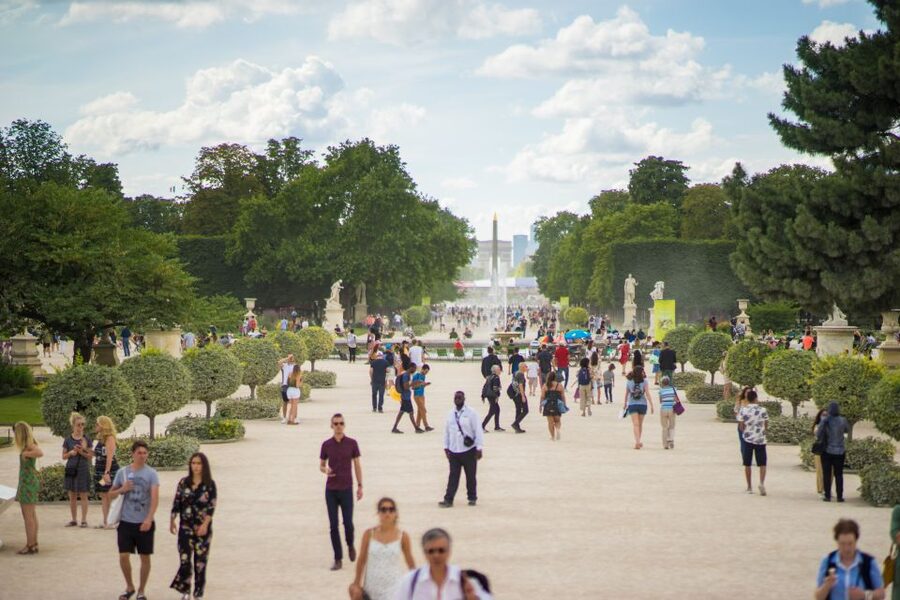
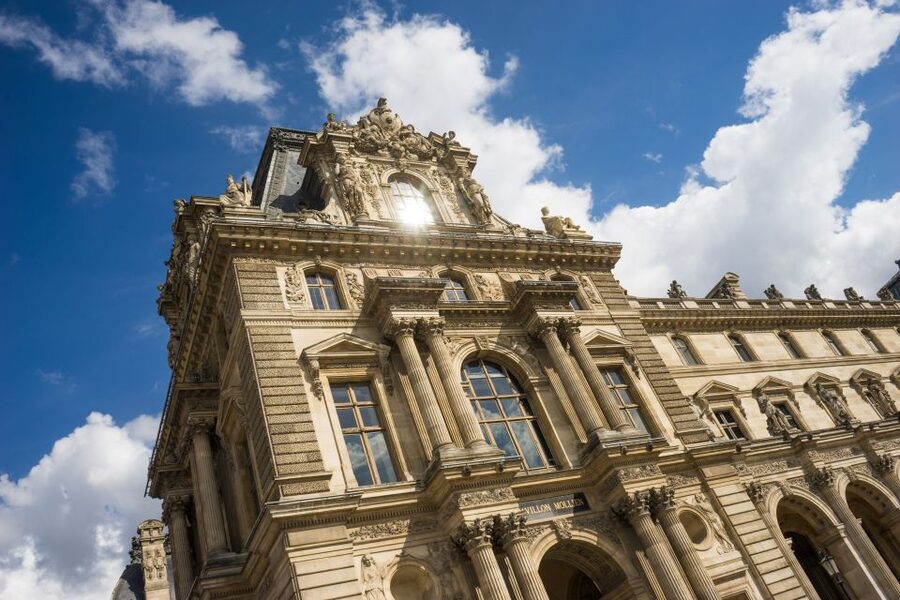
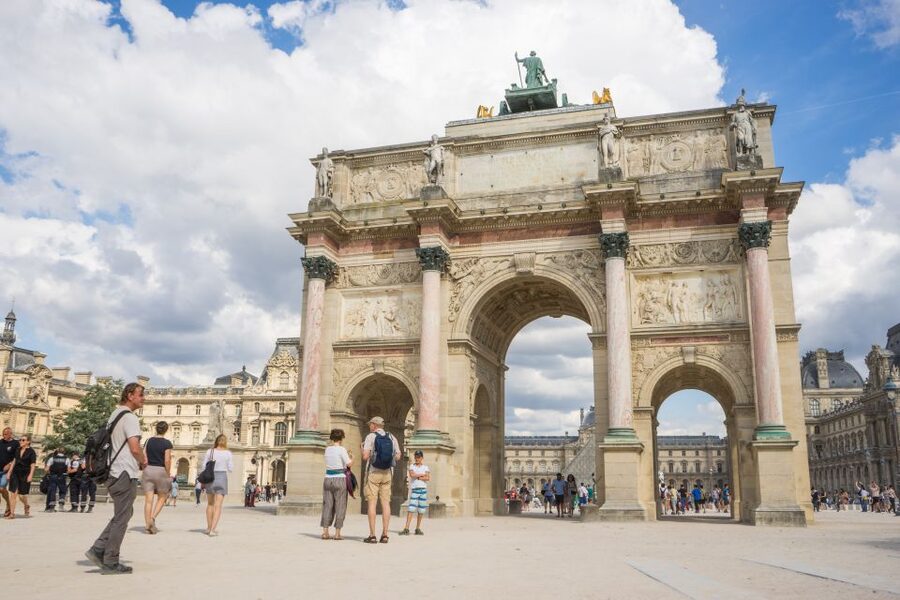
The tour reaches the Louvre Museum area with another photo stop and walking time. Even if you are not entering the museum, you are still in the right place to learn context. One of the tour’s included stories is why the Louvre Pyramid caused controversy when it was first built. That is a great example of what you gain with a guide: a modern landmark comes with a debate, and suddenly it feels less random.
From there, you continue along the Seine riverbanks as the route progresses toward Île de la Cité. The key idea is orientation. The Seine is a natural guide in Paris, and learning how this section of the river connects the city’s center helps you plan your own walks later.
Also, the tour is built around “look again” moments. You may think you already know the Louvre area because you have seen it in photos, but the guide’s framing helps you register details you would otherwise miss.
Pont Neuf and Île de la Cité: the oldest bridge and Notre-Dame after 2024 reopening
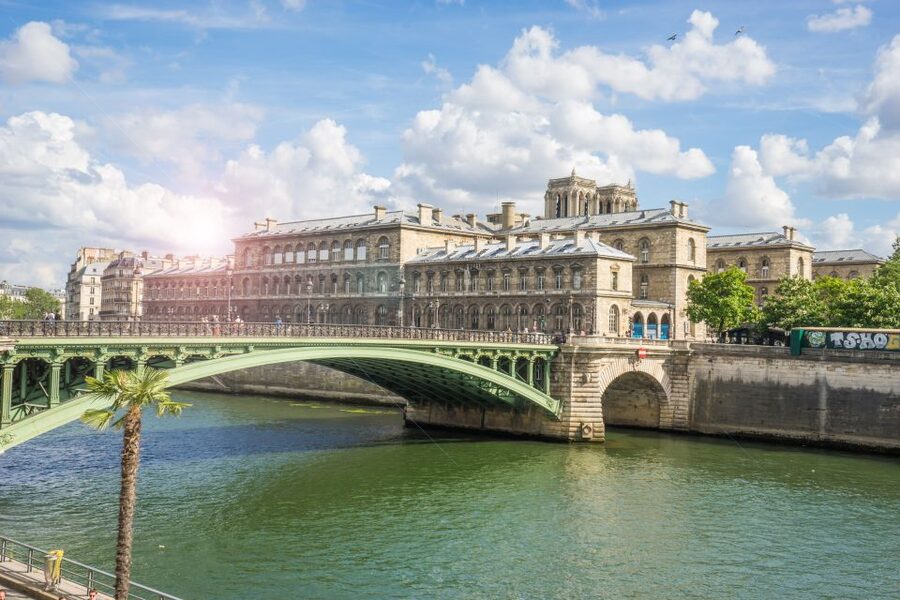
One of the most memorable stops is Pont Neuf. The tour includes the explanation that Pont Neuf is the oldest bridge in Paris. That fact alone is worth hearing, but the bigger value is learning how this part of the city evolved while staying visually continuous. You look at the bridge with new respect, not just as a crossing point.
Then you finish at Île de la Cité, where you see Notre-Dame after its 2024 reopening. This finale is satisfying because it is both cinematic and practical. You end at the heart of Paris’s river island, where the city’s identity concentrates, and you have a guide’s narration tying the route together.
If you like your tours ending with a “this is why the walk mattered” moment, this works. After covering Opéra, grand squares, gardens, the Louvre region, and the river, Notre-Dame feels like the natural destination.
What the guide does best: stories plus answers
This tour’s strongest trait is how the guide uses storytelling to make landmarks click into place. The route includes specific themes like Napoleon and hidden legends, plus the Revolution focus at key squares. Those themes are not just fun facts. They are a way to understand the city’s emotional tone and political history.
You also get real Q and A time. Reviews mention that guides answered questions clearly, including one comment praising Lasse for being nice and putting together an interesting tour, and another praising Marilena’s professionalism and entertainment. If you tend to ask practical follow-ups while sightseeing, this format gives you a platform.
That question-friendly approach is especially useful when you are trying to plan what to do next. The tour’s built-in insider recommendations aim to answer the stuff you actually worry about: what is worth your time, what to skip, and how to move through the city without wasting daylight.
Practical walking tips so you enjoy the full 2 hours
Since it is a 2-hour on-foot experience, your comfort matters. Wear shoes you can walk in all day, not just for short museum trips. You will be stopping for photos and listening for stories, so you want feet that can handle standing time too.
Bring a water bottle if you get thirsty easily. The tour does not include food or drinks, so plan a light snack before or after. If you are planning museums or dinner afterward, the tour is short enough to fit into a normal day, but it does require you to keep moving.
Also, arrive a few minutes early. Starting at 7 Rue Meyerbeer is simple once you spot the HelpTourists bag and pink cap, but Paris meeting points reward patience.
Who this tour is best for (and who might want something else)
I think this is a strong fit for:
- First-time visitors who want orientation and historical context in a short span
- German speakers who want a live guide and not just translations
- People who like photo stops but also want explanations, not just scenery
If you prefer long museum time, or you want to go inside major sites and linger, you might feel limited by the format. This tour keeps moving and focuses on the big picture along the Seine and central monuments, so it is best paired with separate entry tickets later.
Price reality check: why it feels fair at $35
In central Paris, the cost of getting guided interpretation can add up fast. Here, $35 covers a full 2-hour walk with a professional live German guide, plus stories that give you mental “labels” for landmarks you will otherwise just pass by.
The value improves if you will use the insider tips right away. If you leave the tour knowing where to go next for museums, food, or local spots, that saves time and can even save money by helping you avoid dead ends.
So the question is not just what you pay. It is whether you want a guide to connect the dots between Palais Garnier, major squares, the Louvre area, Pont Neuf, and the Notre-Dame finale. For many people, the answer is yes, and this price is a reasonable way to get there quickly.
Should you book this German Paris city-center walking tour?
I would book it if you want a compact, high-impact way to understand central Paris. The route hits the big names, but the real win is the guide’s historical storytelling, like the opera seating rule, the Revolution drama at Place de la Concorde, the Louvre Pyramid controversy, and the fact that Pont Neuf is the oldest bridge in Paris. Ending near Notre-Dame after its 2024 reopening makes the whole walk feel complete.
Skip it if your main goal is to spend long periods inside museums or you dislike walking in a paced group. The tour is short and story-driven, not a slow, deep visit.
If you match the style, you will get a clearer mental map of Paris, plus practical next-step advice for the rest of your trip.
City Tours, compared.

Eiffel Tower Summit Option with Seine River Cruise and City Tour
Read our review →
Paris in a Day: Louvre or Orsay, Eiffel Tower, City Walk & Cruise
Read our review →
Lyon City Hop-on Hop-off Sightseeing Bus Tour
Read our review →
Eiffel Tower Hosted Tour, Seine Cruise and City Tour
Read our review →
Paris City Center Free Walking Tour (Tip-Based)
Read our review →
Golf Cart in Paris – Private Guided City Tour – Pickup Included
Read our review →This tour also appears in