
Reviewed · SEINE SIGHTSEEING CRUISES
Paris Family Adventure- Time Quest For Kids + Seine Cruise Pass
Paris with kids can be a juggling act, this turns it into a mission. You follow a time-travel storyline with kid-centered clues that link famous sights to short, fun stops, from the animated Fontaine Stravinsky to a finish at the Eiffel Tower, plus a Seine River boat cruise pass to cap the day.
I love how the format keeps young attention moving, the guides use game-like challenges and can adjust the difficulty for younger kids. I also love the mix of famous landmarks and lesser-seen Paris details, so adults feel like they are sightseeing too, not just herding.
One possible drawback is the walking. In about 3 hours you cover a lot of ground, so if your child gets tired fast, bring a plan for breaks and bathroom stops.
In This Review
- Key points to know before you go
- The time quest mindset, built for under-12 energy
- Where the adventure starts: Fontaine Stravinsky and a modern puzzle
- Centre Pompidou to Le Défenseur du Temps: seeing Paris through motion
- Flamel, former baths, and street-level art you might miss
- A smart mid-tour reset at Bo&Mie
- Saint-Eustache to central Paris: the music connections kids can actually remember
- Bourse de Commerce and Palais Royal: art in unexpected spaces
- Comédie-Française and the Louvre: wrapping the quest on a high note
- From Napoleonic views to Impressionist brilliance: Arc de Triomphe du Carrousel and Musée d’Orsay
- Tuileries gardens and Place de la Concorde: big open-air time
- Pont Alexandre III, Grand Palais, and the Eiffel Tower finish
- How the Seine River boat cruise pass fits the day
- Pacing, weather, and the walking reality
- Who this family adventure is best for
- Price and value: what you really get for $102.12
- Practical tips to make it easier with kids
- Should you book the Paris Family Adventure with the Seine Cruise Pass?
- FAQ
- How long is the Paris Family Adventure?
- What is included in the tour price?
- Is the tour offered in English?
- Do I need to buy tickets for the stops?
- Where does the tour start and end?
- Is there a mobile ticket?
- How big is the group?
- Is snacks included?
- What ages is this best for?
- What happens if the weather is bad?
- Can I cancel and get a refund?
Key points to know before you go
- A real storyline for real sights: time-travel missions turn major Paris stops into clue points.
- Guides who work with kids, not over them: multiple guides have shown a knack for keeping children engaged and adjusting challenges by age.
- Modern Paris plus classic Paris: you hit contemporary art, kinetic sculptures, and big monuments in one route.
- Built-in energy break: there is time for a bakery stop so kids can refuel (snacks are not included).
- Seine cruise pass at the end: you get a second act with views that set up the Eiffel Tower moment.
The time quest mindset, built for under-12 energy
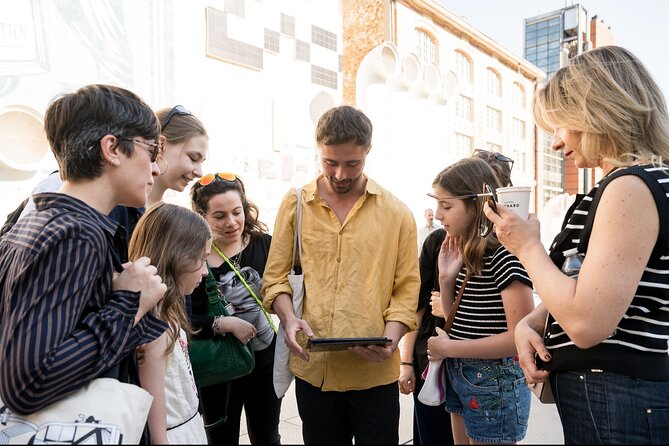
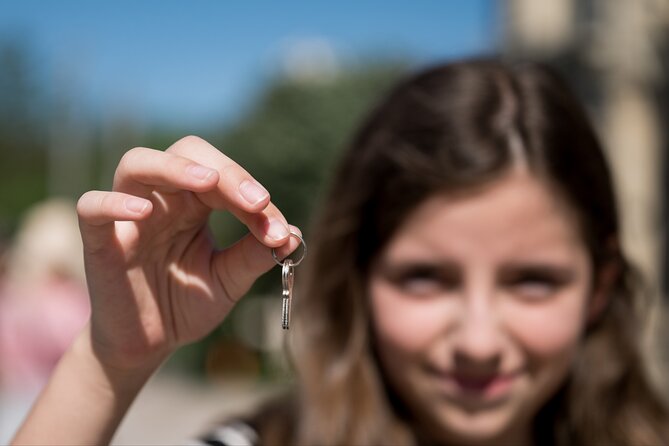
This is not a sit-and-listen tour. It is a guided walk where kids lead the rhythm by solving clues and watching for specific “missions” tied to each stop. The whole point is to get children looking up, pointing, asking questions, and feeling like they are on a quest, not dragged through a checklist.
The best part is how flexible it can feel for different ages. Kids around 5 to 10 tend to do really well here, and guides have been praised for changing the difficulty of the clues for younger participants. That means you can show up with a mixed-age group and still get a tour that works.
For adults, the payoff is that the clues still point you to real details, like why buildings matter, what artists were doing, and how Paris kept evolving over centuries. You are not stuck at the back. You are still learning, just in a more playful way.
Where the adventure starts: Fontaine Stravinsky and a modern puzzle
The meeting point is Fontaine Stravinsky, Rue Brisemiche (4th arrondissement). This is a strong opener because the fountain is kinetic, whimsical, and visually loud in the best way for kids. Even if your family only catches part of it, it is the kind of scene that instantly makes people lean in.
The mission begins right here, so kids can burn off energy early while the guide sets expectations for how the quest works. Practically, it is also easy to orient yourself in this area, because the fountain is a clear landmark.
From there, you move into bold modern Paris, with a quick pass by Centre Pompidou. You get the wow factor of that outside architecture without needing to turn the day into a museum marathon. If your child loves shapes and colors, Pompidou fits that vibe.
More Boat Tours in Paris
- Paris: 1-Hour Seine Cruise departing from the Eiffel Tower
★ 4.4 · 77,472 reviews - Paris: Evening River Cruise with Music
★ 4.4 · 22,721 reviews - Paris: Louvre Guided Tour with Reserved Access & Boat Cruise
★ 4.3 · 16,353 reviews
Centre Pompidou to Le Défenseur du Temps: seeing Paris through motion
A big theme of this walk is time. Not just clocks and dates, but also motion, mechanics, and how different eras share the same streets.
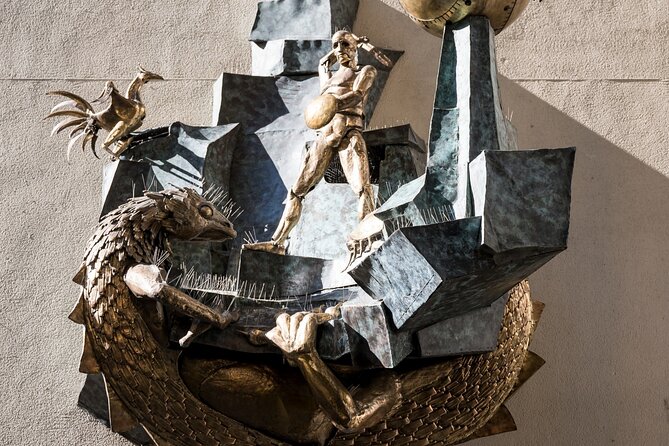
After Pompidou, you reach Le Défenseur du Temps, the “defender of time” mechanical sculpture in Paris’s Quartier de l’Horloge. This kind of stop works well with kids because it feels like it belongs in a storybook. The concept is kinetic, like it used to battle the elements hourly, and that gives the guide something fun to connect back to your quest.
Then you slide into smaller, more mysterious details. You pass the House of Nicolas Flamel, described as the oldest stone house in Paris, built in 1407 by the alchemist and philanthropist Nicolas Flamel. For kids, “oldest” is a hook. For adults, it is a reminder that Paris is full of real leftovers from centuries ago.
Flamel, former baths, and street-level art you might miss
Some Paris tours rush through neighborhoods. This one uses the pace to slow down at odd corners that families would not naturally stop for.
You also pass Les Bains Guerbois, once a luxurious 19th-century public bathhouse. The important idea here is the transformation, how a place designed for bathing turned into a later cultural hotspot and hotel space. Kids may not care about the plumbing history, but they do react to the “this used to be something else” concept.
You then get a scenic pause near L’Écoute by Henri de Miller, a striking surrealist work near Saint-Eustache Church. It is the kind of art stop that makes parents realize Paris has mystery on the sidewalk, not just in museums.
A smart mid-tour reset at Bo&Mie
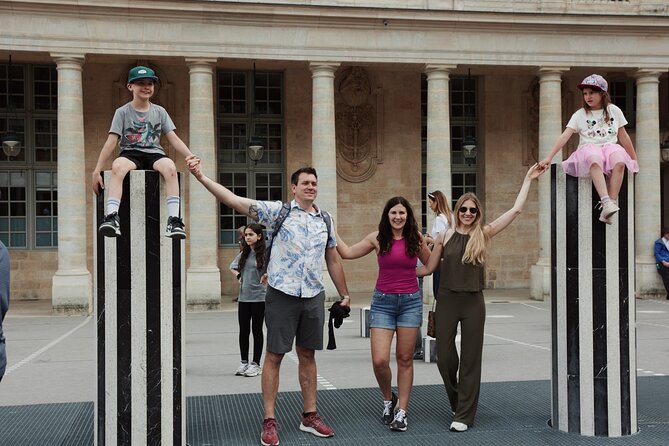
About halfway through, there is a bakery break at Bo&Mie. Kids get a treat time, which matters because 3 hours is long enough that energy dips can happen without warning. Snacks are not included, so this is when you should think ahead and decide how you want to handle it.
My practical advice: treat this as your planned refuel window, not an impulse stop. If your child has dietary needs, decide in advance what you want to buy, since the tour gives you limited time here.
The good news is that the break is short on purpose. You are not losing the whole momentum of the quest. Then you move back into the next clue stops, still in the action.
More bridges counted from the Seine:
Saint-Eustache to central Paris: the music connections kids can actually remember
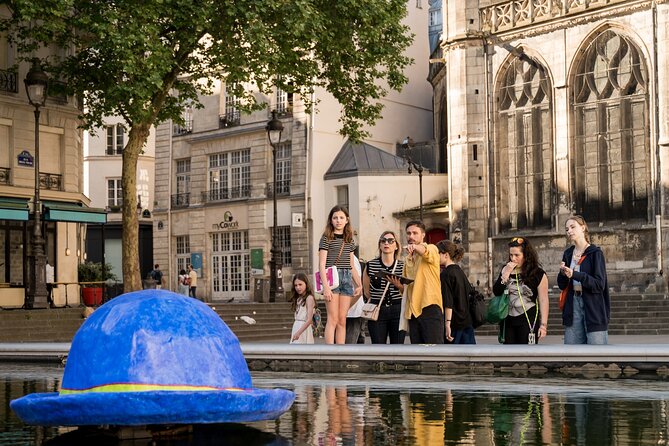
Next comes Saint-Eustache Church, one of those places where the building itself is impressive, but the stories are what stick. The tour ties it to major names connected with music and French culture, including Mozart, Richelieu, Molière, and Berlioz.
This kind of stop works with kids because it adds drama to what might otherwise feel like a quiet church visit. The guide can turn the facts into a memory hook, like this is where famous events happened, such as the funeral of Mozart’s mother and major premieres tied to Berlioz.
Even adults who think they “know churches” often leave with at least one new fact because the connections are specific, not generic.
Bourse de Commerce and Palais Royal: art in unexpected spaces
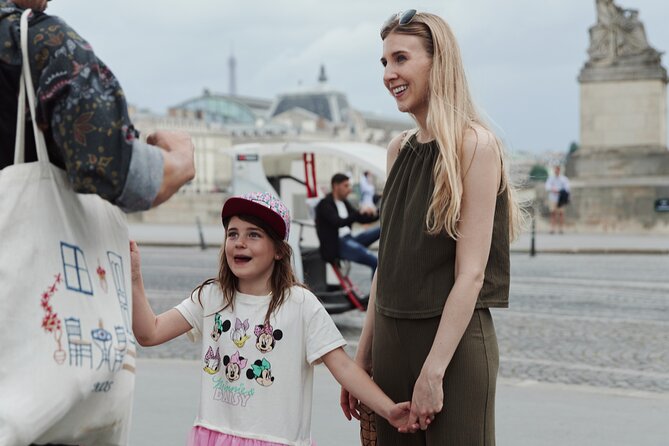
The route continues with stops that show Paris is not only about old stone. You pass Bourse de Commerce, now the Pinault Collection, an 18th-century commodities exchange rotunda turned modern art space. The contrast is the point, old architecture holding cutting-edge collections.
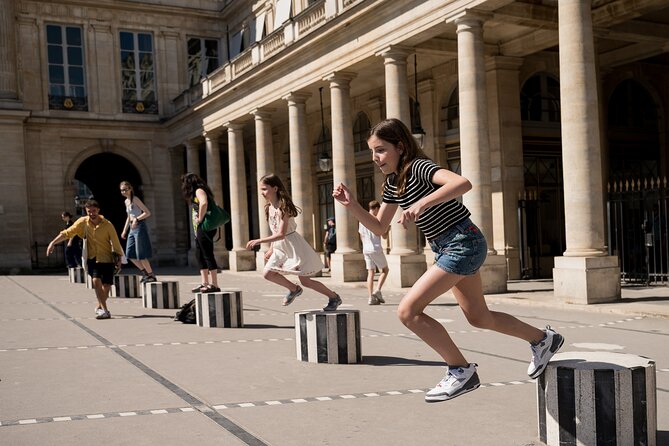
Then you reach Jardin du Palais Royal, which feels like a pocket of calm in the middle of the city. The clue setup includes the arcades and the famous black-and-white Colonnes de Buren installation, a fun visual that kids tend to want to inspect up close. You also get an elegant garden moment, which helps break up all the hard-edged landmark sightseeing.
Comédie-Française and the Louvre: wrapping the quest on a high note
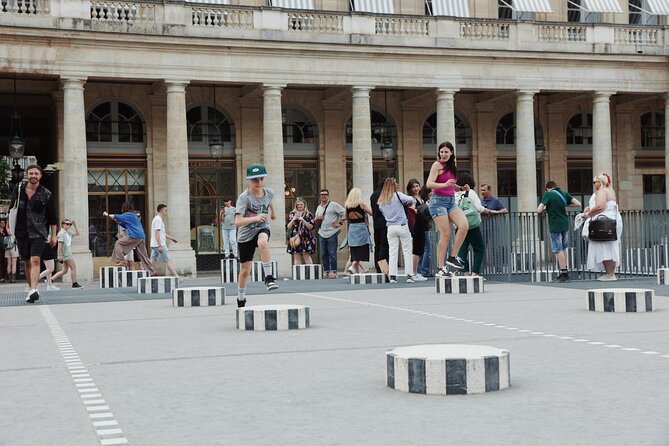
You pass La Comédie-Française, France’s prestigious theater and home to the world’s oldest active theater troupe, with a founding connection to Molière. The value for families is that theater becomes something physical and nearby, not abstract.
Then you get the Louvre stop, framed as a key moment where you reveal a secret tied to the quest. The Louvre is the kind of place where everyone expects crowds and overwhelm, so even getting a structured arrival moment helps. This tour keeps it moving so you do not feel stuck trying to see everything.
From Napoleonic views to Impressionist brilliance: Arc de Triomphe du Carrousel and Musée d’Orsay
After the Louvre, the route layers more Paris classics.
You move to the Arc de Triomphe du Carrousel, a Napoleonic-era triumphal arch with pink marble columns and a gilded chariot on top. For kids, it reads as a “portal” moment. For adults, it is a neat reminder that not all Paris monuments are medieval.
Next is Musée d’Orsay, inside a grand Beaux-Arts railway station building. This stop is important because it positions Impressionism and Post-Impressionism as part of the city, not locked behind a ticket gate. If your family loves art, this is a satisfying checkpoint before you head into the long stretch of outdoor sights.
Tuileries gardens and Place de la Concorde: big open-air time
Now you move into outdoor territory that makes the whole walk feel like a sightseeing sampler.
Jardin des Tuileries stretches between the Louvre and Place de la Concorde, designed by André Le Nôtre. It is a great break from walls and museums because your family can see long lines of the city and reset visually.
Then comes Place de la Concorde, the largest iconic square, with the Luxor Obelisk and fountains. The tour frames its revolutionary past, then balances it with views out toward major Paris boulevards and toward the Eiffel Tower.
For practical reasons, open-air squares are often easier with kids. They can stretch their legs and look around without needing constant instructions.
Pont Alexandre III, Grand Palais, and the Eiffel Tower finish
You reach Pont Alexandre III, described as Paris’s most opulent bridge. The point here is the visual richness, gilded statues, intricate ironwork, and arches that give you a strong view direction toward the Eiffel Tower.
Next is Grand Palais, built for the 1900 Exposition Universelle, with a soaring glass roof and Beaux-Arts grandeur. This is one of those stops where the architecture itself becomes the activity. Kids tend to point at the roof shape and adults tend to enjoy how large it feels.
Finally, the quest lands at the Eiffel Tower. You receive the final clue and your family gets to finish the story where Paris’s most famous landmark makes everything feel complete. The stop is also useful as a practical end location, since you know where you are when you are done.
How the Seine River boat cruise pass fits the day
The Seine cruise pass is included, and that matters because it turns the finish into a smoother ending. A boat ride is a natural pacing shift after a lot of walking. You get a calmer view rhythm, plus river perspectives of landmarks that you cannot see from street level.
Many families love that this is not just “one more attraction.” It is a change of scenery that can make the Eiffel Tower feel like part of a bigger picture, with the river acting as the connector between everything you saw.
Pacing, weather, and the walking reality
The tour runs about 3 hours. Stops often last around 5 to 10 minutes, so it is designed to keep moving and keep attention from fading. That means it works best when everyone can tolerate short bursts of walking, quick transitions, and occasional waiting.
You also have to plan around weather. The experience requires good weather, and if it gets canceled for poor conditions, you should expect a different date or a full refund. For families, this is a real factor, because rainy weather can make outdoor landmarks feel like a slog.
Group size is capped at a maximum of 30. This is enough people to feel like a real group, not a private tour. If you like quieter experiences, you might prefer a small-group day at a different time, but the advantage here is structure, so kids do not drift.
Who this family adventure is best for
This tour is ideal when you want a family-friendly way to see major Paris sights without turning the whole day into a museum beatdown.
Kids around 5 to 10, especially those under 12, are the sweet spot. You will feel the difference if your child likes puzzles, looking for details, and feeling like they are part of a story. It is also a strong option for mixed families, where one kid wants art and history and the other just wants to run around, because the quest gives both a job.
Adults tend to enjoy it when they are willing to walk, look up, and accept that the goal is discovery rather than checking off every single masterpiece. If you want maximum museum time, plan a separate museum visit. This is built for streets, squares, and fast, meaningful stops.
Price and value: what you really get for $102.12
At $102.12 per person for about 3 hours, the value hinges on two things: how much ground you cover and what is included.
First, the route stacks big names and major areas. You go from Stravinsky Fountain into modern landmarks, pass through central districts tied to art and culture, then finish at the Eiffel Tower. Each stop is short, which keeps the day efficient.
Second, you include a Seine River boat cruise pass. That is the kind of add-on that often costs extra when booked separately. So even if you were planning a cruise anyway, this package makes the day feel like you got a built-in plan.
What is not included is also clear: snacks are not included, and that Bo&Mie break is for a bakery treat you’ll need to buy. Build that into your budget, or pack your own snack strategy.
Practical tips to make it easier with kids
Comfort matters. Wear shoes that can handle uneven sidewalks and fast transitions. If your child gets hungry mid-walk, bring water and be ready to buy a snack at the bakery stop.
Arrive a few minutes early at Fontaine Stravinsky. A time quest works best when everyone starts together, especially when kids are listening for the next clue.
If your child is sensitive to crowds or fatigue, plan on taking the tour at a pace that feels supportive. Stops are short, but you can still ask for a quick pause without breaking the whole flow.
If rain threatens, bring a light rain layer. Since the tour needs good weather, you want to be ready if the sky is uncertain.
Should you book the Paris Family Adventure with the Seine Cruise Pass?
I think this is a smart booking if you want a family-friendly way to see real Paris without turning the day into a long lecture. The time-travel quest structure keeps kids engaged, and the route does not just show the “big three,” it spreads into modern art spaces, sculptures, churches, and classic squares.
Book it if your children like missions, puzzles, and the feeling of leading the way. If you prefer slow museum wandering or you know your family cannot handle a lot of walking in 3 hours, then this may feel rushed.
FAQ
How long is the Paris Family Adventure?
It runs for about 3 hours.
What is included in the tour price?
The Seine River boat cruise pass is included.
Is the tour offered in English?
Yes, it is offered in English.
Do I need to buy tickets for the stops?
The tour plan lists the stop admissions as free for the sights along the route. Snacks are not included at the bakery break.
Where does the tour start and end?
It starts at Fontaine Stravinsky, Rue Brisemiche, 75004 Paris, and it ends in front of the Eiffel Tower, Av. Gustave Eiffel, 75007 Paris.
Is there a mobile ticket?
Yes, it uses a mobile ticket.
How big is the group?
The tour has a maximum of 30 travelers.
Is snacks included?
No, snacks are not included. There is a bakery stop where kids can enjoy a treat, but you would need to buy it.
What ages is this best for?
This is commonly recommended for kids under about 12, with lots of positive fit for ages around 5 to 10.
What happens if the weather is bad?
The experience requires good weather. If it is canceled due to poor weather, you will be offered a different date or a full refund.
Can I cancel and get a refund?
Yes. You can cancel up to 24 hours in advance for a full refund. If you cancel less than 24 hours before the experience start time, it will not be refunded.
Rivers to Slide Along
- Paris: Tootbus Hop-on Hop-off (Optional River Cruise)
★ 4.3 · 15,279 reviews - Paris: Big Bus Hop-On Hop-Off Tour with Optional Cruise
★ 4.4 · 13,279 reviews - Paris: Illuminations River Cruise with Audio Commentary
★ 4.3 · 12,340 reviews - Paris: Louvre Museum Entry Ticket With Host and River Cruise
★ 4.6 · 9,926 reviews
Latest Paris entries, notes attached





Seine Sightseeing Cruises, compared.
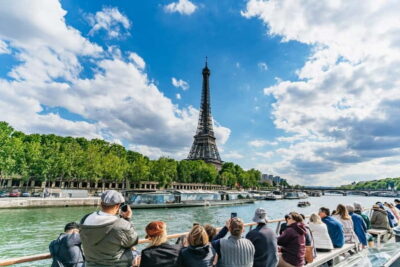
1-Hour Seine Cruise departing from the Eiffel Tower
Read our review →
Seine Cruise & Crepe Tasting near the Eiffel Tower
Read our review →
Eiffel Tower Access by Elevator & Seine River Cruise
Read our review →
3-Course-Dinner Cruise on the Seine with live music
Read our review →
Bateaux Parisiens Seine River Gourmet Dinner & Sightseeing Cruise
Read our review →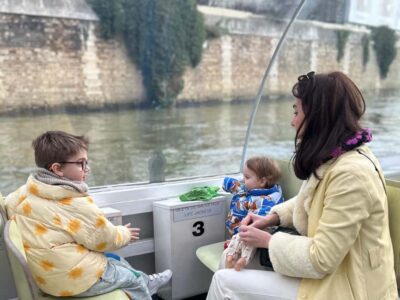
Hop-On Hop-Off Seine Cruise Pass with 9 Stops
Read our review →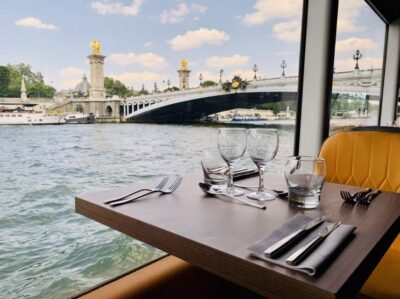
This tour also appears in