
Reviewed · MACARON & PASTRY CLASSES
Paris: Macaron Baking Class in Central Paris
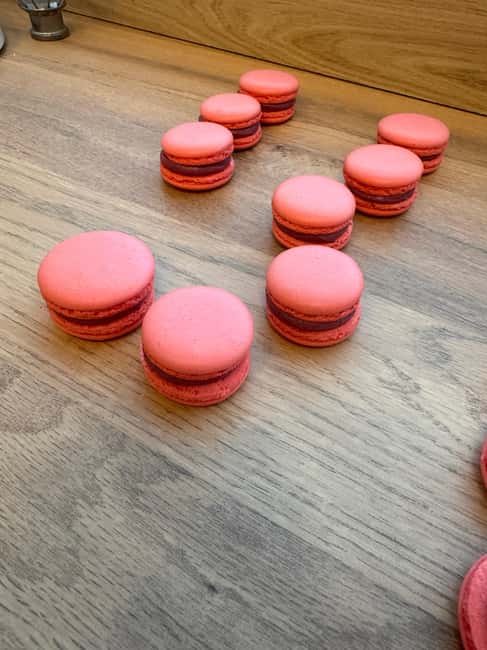
Macarons become possible with clear steps in Paris. This class turns the famous French cookie into a doable plan, with a small-group setup and hands-on instruction that keeps you moving from start to finish.
I especially like the way you learn the why behind the technique, not just the what. And you finish with something real to eat, not a sad sample plate.
I also like the energy level in the room. In the sessions led by instructors such as Chef Leo and Maria, the vibe stays friendly and focused, with humor and step-by-step guidance that helps you nail your batch. You also leave with a recipe to take home, so your effort does not evaporate the moment you get back to your hotel.
One drawback to think about first: the class is not for people with nut allergies, and it is not suitable for vegans.
In This Review
- Key points before you go
- Why This Central Paris Macaron Class Works (Even If You Fear Baking)
- Studio Pâtisserie Setup and How to Find the Grey Storefront
- The 150-Minute Plan: History, Ingredients, and Your First Mixing Lessons
- Shells and Piping: The Technique You Actually Get to Practice
- Fillings, Baking, and the Tasting That Confirms Success
- What You Take Home, and How to Recreate It Back in Your Kitchen
- Price, Group Size, and Value in the Heart of Paris
- Who Should Book, and Who Should Skip (Nuts, Vegan, Kids)
- Book It or Pass: My Decision Checklist
- FAQ
- How long is the macaron baking class?
- Is the instructor available in English?
- How big is the group?
- Do I get to take macarons and a recipe home?
- Is the class suitable for vegans or people with nut allergies?
- What should I bring with me?
- Where is the meeting point?
Key points before you go
- Small group (up to 10), so you get real feedback while you’re piping and working
- English-speaking instructor, with explanations that cover both technique and troubleshooting
- You taste what you make, with an ending that feels genuinely rewarding
- Recipe to take home, plus enough macarons to snack for days (many participants report a box worth)
- Chef-chosen flavors, which can be fun or a little unexpected if you were hoping for super mainstream options
Why This Central Paris Macaron Class Works (Even If You Fear Baking)
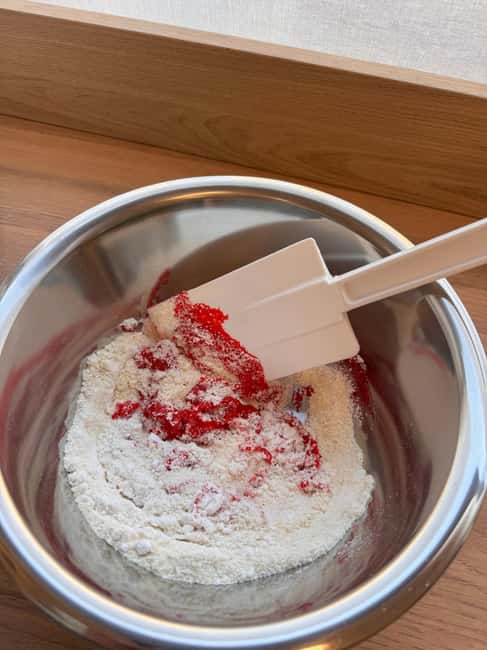
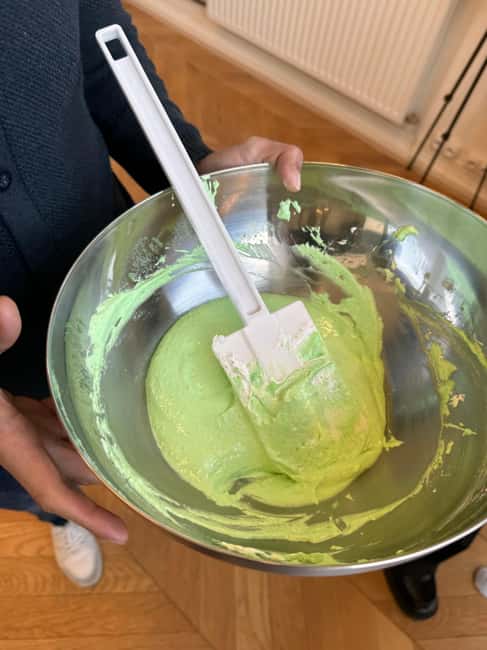
If you think macarons are only for people with pastry-school confidence, this experience is built to change that mindset. The best part is not just that you get macarons at the end, it’s that you learn the process as a sequence of controllable steps. When you understand what can go wrong and how to fix it, baking stops feeling like luck.
I like this format because it respects your time. You get a 150-minute session, which is long enough to teach, practice, and bake, but not so long that you feel trapped. It’s also a small group class, so you are not watching passively from the sidelines. You are actually working with the batter and shaping the shells, under an instructor who can spot issues early.
You’ll also enjoy the Paris setting without needing to be a hardcore food nerd. The class starts with the origin story and ingredient basics, so you understand why macarons are such a cultural icon, not just a fancy dessert. Then it quickly shifts into practical work: mixing, portioning, and shaping shells, plus learning how fillings get paired.
There is one practical consideration. Macarons can be sensitive to technique and even to conditions like humidity, so you’ll do best if you follow instructions closely and stay patient during the steps that take focus. If you want a class that feels perfectly effortless the entire time, this might test you slightly. The good news: that challenge is also why the finished results feel so satisfying.
Studio Pâtisserie Setup and How to Find the Grey Storefront
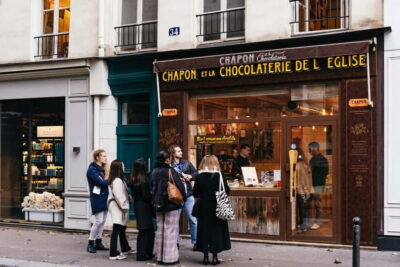
Your first job is to show up and get oriented, not to stress about hidden directions. The meeting point is a grey-colored store front on the main road. That simple visual cue matters in central areas where streets can look similar.
Once you arrive, you settle in and meet your fellow bakers. The room itself is repeatedly praised as clean and well organized, which is not a minor detail for baking classes. When your station is tidy and your tools are ready, you spend time learning instead of improvising. Several participants also mention that the space feels brand new and exceptionally clean.
Getting there is usually straightforward. One review notes that it is easy to reach by metro, which is exactly what you want in Paris: a plan you can execute without a long walk or a confusing transit maze.
What to bring is equally practical. Wear comfortable shoes and comfortable clothes. This is not a sit-and-smile workshop. You’ll be standing at your station, moving around, and working carefully with ingredients and equipment. If you want a smoother experience, wear layers, because indoor temperatures can vary by season.
And keep in mind that the class is for small groups with an instructor in English. If you speak English comfortably, you’re set. If you prefer a class with lots of quiet observation only, this probably won’t be your style. Here, you learn by doing.
More piping bags and patient shells:
- Paris: Montmartre Cheese, Wine & Pastry Guided Walking Tour
★ 4.8 · 2,255 reviews - Paris: Macaron Class at Galeries Lafayette
★ 4.2 · 1,196 reviews - Paris Croissant Small-Group Baking Class with a Chef
★ 5.0 · 910 reviews
The 150-Minute Plan: History, Ingredients, and Your First Mixing Lessons
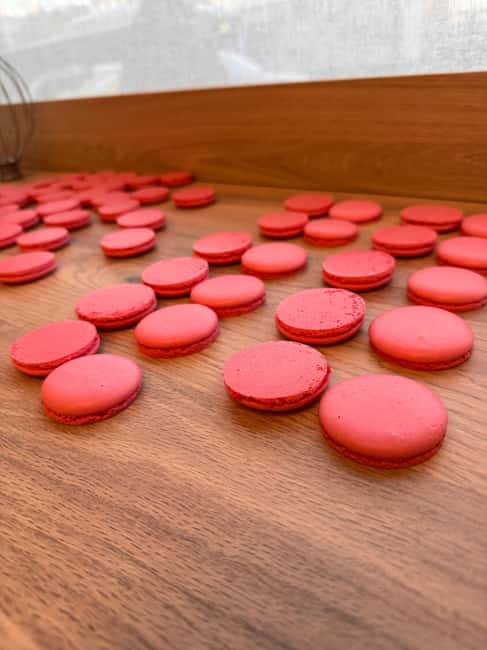
The class structure is designed to give you context and confidence before the real technique starts. First, you get an introduction to the history and artistry of macarons, including their cultural significance and a breakdown of the ingredients. This is helpful because it teaches you what each component is supposed to do, not just what to add.
Then comes the ingredient and process foundation. You’ll learn what goes into making macaron shells and fillings, and you’ll start practicing the initial steps in a guided way. Multiple reviews call out the clarity of the instruction and the fact that you learn from A to Z, not from vague tips.
What I like about this is the teaching approach. Instructors such as Chef Leo and Maria are praised for explaining the why behind the technique, and that changes how you bake later. Instead of memorizing a recipe like a script, you understand the logic: how your mixing and portioning affects texture and shape, and how small changes can lead to big differences.
You’ll also get a sense of what “success” looks like, which matters with macarons. People often think macarons are either perfect or ruined. In reality, you can learn what signals you are on track, and you can correct mistakes rather than giving up.
One more subtle benefit: this early structure keeps the room calm. With short, clear steps and a planned timeline, you avoid that common workshop feeling where you are always waiting for the next instruction. Here, you progress from learning to doing at a steady pace.
Shells and Piping: The Technique You Actually Get to Practice
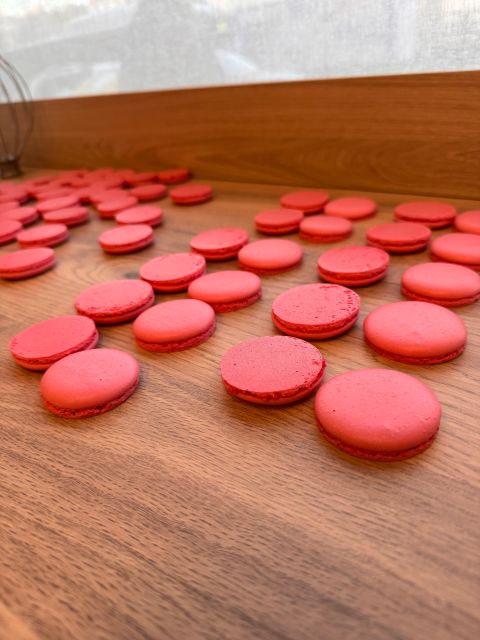
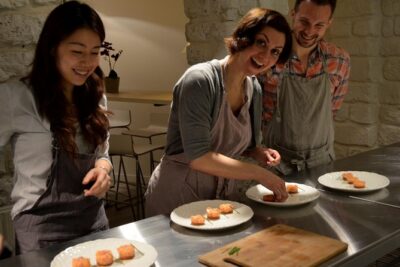
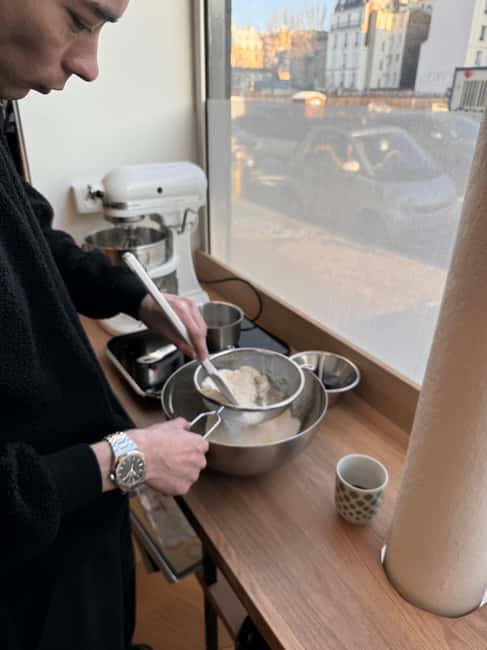
The hands-on part is where this class earns its top marks. You work on creating macaron shells yourself, with the instructor watching and adjusting your technique as needed. Reviews highlight that the class is interactive, with plenty of help during the steps that usually trip up beginners.
You’ll practice core skills that directly affect your final results:
- mixing the batter correctly
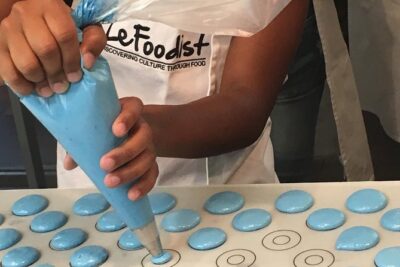
- piping shells in a way that creates consistent shapes
- learning troubleshooting tips when something seems off
This is especially valuable because macarons are fussy. If you have ever tried making them at home and felt like every batch depends on luck, this is the antidote. The instructor’s job is to show you the pattern of success, and then help you replicate it.
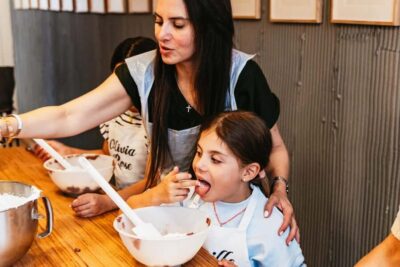
Chef Leo in particular gets repeatedly mentioned for patience and step-by-step guidance, plus a sense of humor that keeps you relaxed while you focus. Many participants say the class feels well organized and that the stations keep you from being crowded, so you can concentrate on your own work.
Also pay attention to the equipment and workflow. A review mentions top-line equipment and everything being prepared in advance, so you can focus on the fun parts rather than setting up ingredients and tools. When your station is ready, you can practice without interruptions.
One more “real life” tip: the instructor may share suggestions that reflect what happens when conditions change, like how macarons behave based on where you live and what your kitchen is like. That means when you bake at home, you are less likely to repeat the same mistake.
The experience is not just about following instructions. It is about learning technique under guidance, so your shells come out looking like macarons and not like a cookie-shaped experiment.
Fillings, Baking, and the Tasting That Confirms Success
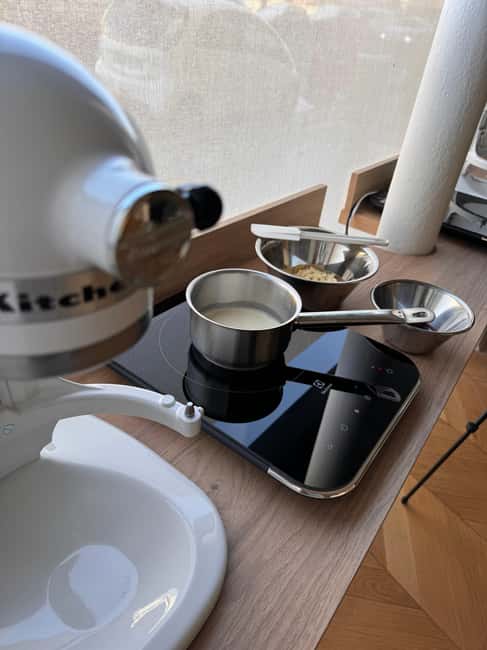
After the shell work, you move into fillings and the final stages. This part matters because macarons are not only about shells. The filling choice, the pairing, and the timing all affect the end result, including taste and that satisfying bite.
Once your batch is ready, you indulge. You taste the finished macarons you created, and that’s when the sense of accomplishment hits. Reviews call this a clear highlight, because it’s not a demo where you leave hungry. You actually get to eat the proof of your skills.
Another detail worth noting: many participants report leaving with enough macarons to snack for days, often describing a take-home box. Some specifically mention getting around 15 macarons each, which adds up to a satisfying amount for sharing or tasting later.
If you are picky about flavors, take one extra thing into account. In one review, the flavors offered were chocolate, black currant, and passionfruit, and the participant wanted more mainstream options like pistachio or vanilla. That does not mean every class will be the same, but it does suggest that flavor choices may be chef-directed rather than fully customizable.
The upside is that you may end up trying combinations you would not normally pick at a Paris bakery. The downside is that if you only want vanilla or pistachio, you should mentally prepare for whatever the chef has planned that day.
Either way, the class closes with a recipe to take home, so even if flavor options surprise you, you’re still leaving with the skills to make your own variations.
More French technique, taught properly:
What You Take Home, and How to Recreate It Back in Your Kitchen
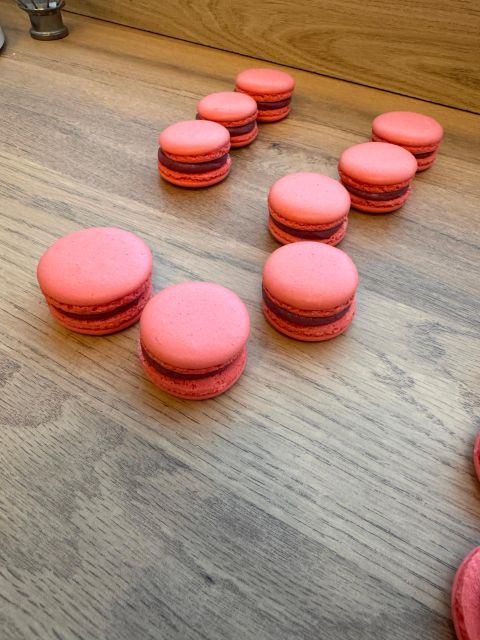
The take-home piece is a big part of the value. You get a recipe, and you also leave with practical tips that help your next attempt. Several reviews mention that the instructor sends a full recipe and helpful recommendations, including suggestions for Paris spots. That combination is nice if you want your class to be part of the overall trip, not a standalone event.
More importantly, the recipe alone is not enough with macarons. The reason macarons are hard at home is usually technique, not the ingredient list. That’s why the guidance during mixing and piping matters. You’re training your hands to match the structure the batter needs.
If you are the type who likes to bake with confidence, you’ll appreciate that the class focuses on troubleshooting. Reviews mention tips for troubleshooting common issues, plus the instructor explaining what went wrong when a batch needs adjustment. That kind of guidance is what turns a recipe into a repeatable skill.
If you are the type who just wants to impress people, you still win. Baking macarons gives you a story to tell, and a box of French pastry you made yourself. But it only works if you feel supported while you learn, and the class seems built for that support.
Practical reminder: take the recipe seriously when you bake at home. Read it all at once first, then follow it step by step. If you start skipping around, macarons will punish you. (They are French, after all.)
Price, Group Size, and Value in the Heart of Paris
At $122 per person for a 150-minute session, you are paying for several things at once: a professional instructor, a small-group setting, hands-on practice, tasting, and a recipe plus take-home macarons.
Is it cheap? No. But in central Paris, cooking classes are rarely bargain territory. What makes the price feel more reasonable here is the cap on group size, reported as small, with limited participants around 10. That matters because you get attention while you work, not just a general talk.
You also get time. 150 minutes is enough for meaningful practice. If it were a short demo, you could not learn piping technique properly. Here you get a real chance to work the batter, shape the shells, and participate through to the tasting and take-home portion.
The quality of the studio adds value too. Reviews repeatedly mention cleanliness, organization, and a comfortable setup with stations that do not crowd you. That reduces stress and helps you learn faster.
And the take-home element is not theoretical. Many reviews mention leaving with a box of macarons and enough to snack later. When you compare that to a class where you only sample a bite or two, this feels like you actually get your money’s worth.
If you like learning French flavors in a practical way, this is a solid use of time. If you are purely looking for the cheapest activity, keep shopping. If you want a guided food experience in Paris that you can repeat at home, this class makes sense.
Who Should Book, and Who Should Skip (Nuts, Vegan, Kids)
This class is best for adults and older teens who enjoy hands-on work. Children under 12 are not suitable, so plan accordingly if you are traveling with family.
It is also not suitable for vegans. The class involves ingredients that do not fit a vegan diet based on the activity rules provided. And it is not suitable for people with nut allergies. Since macarons are nut-based by nature in most classic recipes, you should treat this as a strict limit for safety.
Who does it suit well?
- Couples who want a shared activity in Paris beyond sightseeing
- Solo travelers who like meeting people in a structured class
- Anyone who wants a real skill, not just a photo and a pastry
- Food-lovers who want to understand the science behind the final texture and shape
Who should reconsider?
- If you cannot eat nuts or must follow a vegan diet
- If you expect a fully customized flavor menu each day
- If you want a low-effort activity where you never feel challenged
If that checklist matches your trip, you’ll likely love it. The class is small, structured, and supportive, and the payoff feels real.
Book It or Pass: My Decision Checklist
Book this class if you want a Paris activity where you learn by doing and leave with both food and a recipe. The most praised aspects are clear: the hands-on practice, the friendly, interactive instructors (Chef Leo and Maria are frequently highlighted), and the feeling that your batch turns out well because the guidance is precise.
Book this class if you like cooking classes that treat technique as trainable. Reviews mention clear instructions, patience, and troubleshooting tips, which is exactly what helps beginners succeed.
Pass this class if safety or diet rules exclude you, especially nut allergies and vegan needs. Also pass if you only want the most standard flavors and you do not want to take what the chef offers that day.
If you are trying to fit one food experience into a busy Paris schedule, this is a strong choice. It is short enough for a meaningful lesson, long enough to feel accomplished, and it gives you something tangible to take home.
FAQ
How long is the macaron baking class?
The class lasts 150 minutes.
Is the instructor available in English?
Yes, the instructor provides the class in English.
How big is the group?
The class is a small group with a limit of 10 participants.
Do I get to take macarons and a recipe home?
Yes. You get a tasting during the class, and you also receive a recipe to take home.
Is the class suitable for vegans or people with nut allergies?
No. It is not suitable for vegans, and it is not suitable for people with nut allergies.
What should I bring with me?
Bring comfortable shoes and comfortable clothes.
Where is the meeting point?
Look for a grey-colored store front on the main road.
More Workshops in Paris
- Fragonard Paris: Mini Perfume Workshop
★ 4.5 · 1,924 reviews - Paris: 2-Hour Perfume Creation Workshop
★ 4.8 · 731 reviews - Paris: French Macaron Culinary Class with a Chef
★ 4.9 · 591 reviews - Paris: French Wine Tasting Class with Sommelier
★ 4.8 · 550 reviews
Latest Paris entries, notes attached





Macaron & Pastry Classes, compared.
Montmartre Cheese, Wine & Pastry Guided Walking Tour
Read our review →
Paris Croissant Small-Group Baking Class with a Chef
Read our review →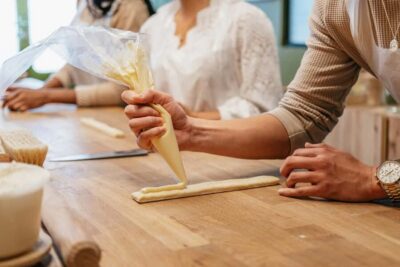
Saint-Germain: Gourmet Chocolate & Pastry Walking Food Tour
Read our review →
Paris Chocolate, Macaron & Pastry Food Tour: 10 Gourmet Tastings
Read our review →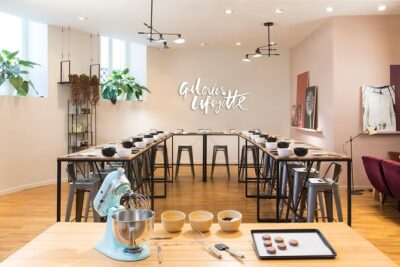
Macaron Bakery Class at Galeries Lafayette Paris
Read our review →This tour also appears in