

Reviewed · LE MARAIS WALKS
Paris Medieval Heart: Walking Tour in Ancient Marais
Marais history moves fast, but in a calm way. This 2.5-hour small-group walk strings together major landmarks and quieter corners, so you get a clear sense of the medieval Marais without spending half the day hopping between places. I love the intimate group size (max 15), and I also love that so many stops are free to enter, with a guide who adds context as you walk. One thing to consider, though, is the meeting point can be tricky to find if you arrive late, so give yourself a few extra minutes.
I also like that the tour feels designed for real touring, not just photo stops, with practical local recommendations for where to eat and shop after you finish. You end near the Centre Pompidou, which is great because it helps you plan your next move right where the vibe shifts.
In This Review
- Key Highlights to Know Before You Go
- Why This 2.5-Hour Medieval Marais Route Feels Worth It
- Where the Tour Starts, and How It Ends at Centre Pompidou
- The Medieval Heart: Old Synagogue to Place des Vosges
- Victor Hugo and the Quiet Courtyard at Hôtel de Sully
- Saint-Paul-Saint-Louis: From Gothic to Jesuit Baroque
- Rue des Rosiers and the Jewish Quarter: Food Streets With Depth
- Halles des Blancs-Manteaux and the Templar Connection
- Rue des Francs Bourgeois and the Factory of Ashes
- Picasso From the Outside, then Archives Nationales Gardens
- Hôtel de la Bretonnerie and the Modern Edge Near LGBT Community Spots
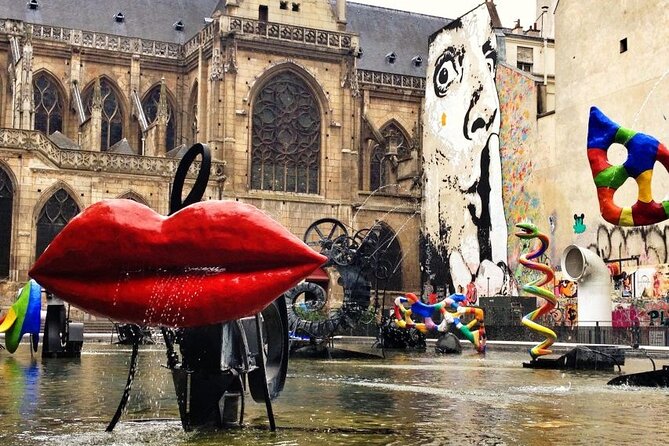
- Centre Pompidou: A Postmodern Landmark to Close the Loop
- How the Guide Impacts the Whole Walk
- Practical Tips So You Enjoy Every Stop
- Should You Book This Medieval Marais Walking Tour?
- FAQ
- How long is the Paris Medieval Heart walking tour?
- What is the price per person?
- Is the tour in English?
- How many people are in the group?
- Where does the tour start?
- Where does the tour end?
- Is bottled water included?
- Are tickets included for the stops?
- What ticket format do I get?
- What is the cancellation policy?
- Are service animals allowed?
Key Highlights to Know Before You Go
- Small group up to 15 people, which usually means more time for questions and a less crowded feel.
- Mostly free entry stops, so you spend your money on the tour, not on tickets at every corner.
- A mix of big names and “how did I miss this?” spots, including Victor Hugo’s home and hidden courtyards.
- Jewish Quarter route plus medieval traces, including places tied to defensive walls and older community life.
- Ends at Centre Pompidou, giving you an easy landmark for navigation after the walk.
- English-language guided experience with mobile ticket support.
Why This 2.5-Hour Medieval Marais Route Feels Worth It
The Marais can be overwhelming fast. Streets twist, courtyards hide behind stone walls, and it is easy to wander for hours without truly understanding what you are seeing. This tour is built like a guided thread through the neighborhood, with short stops that explain what matters and why.
For me, the best value is how the timing works. You are on foot long enough to get “I know this area now” momentum, but not so long that you burn out before you reach the good viewpoints. The price is reasonable for an organized, English-speaking guide who takes you to multiple historic sites in one loop.
Another smart part is how many stops focus on places you would likely pass by. Instead of only showing you the famous squares, you also hit courtyards, gardens, churches, and institutional sites that reveal different eras of the Marais.
Where the Tour Starts, and How It Ends at Centre Pompidou
You start at 3bis Place de la Bastille. That matters because Bastille is a good “arrival point” for many visitors, and it keeps you from starting in the deep center of the Marais where GPS can sometimes mislead you with similar-looking streets.
The tour finishes at Place Georges-Pompidou, in the area in front of the Centre Pompidou. That ending choice is practical: you get dropped off at a major landmark where it is easy to switch to metro, bus, or a walk toward other neighborhoods. It is also a natural shift from medieval streets to a big 20th-century cultural hub.
One practical tip: bring your phone map, and plan to be at the start location a few minutes early. I am not guessing here, there’s at least one past experience where the meeting point was hard to locate and the whole morning felt stressful.
More Walking Tours in Paris
- Paris Top Sights Half Day Walking Tour with a Fun Guide
★ 5.0 · 2,893 reviews - Montmartre Hidden Gems and Scenic Highlights Walking Tour
★ 5.0 · 2,684 reviews - Montmartre Hill French Gourmet Food and Wine Tasting Walking Tour
★ 5.0 · 2,588 reviews
The Medieval Heart: Old Synagogue to Place des Vosges
Stop 1 is at 21bis Rue des Tournelles, the location of the oldest synagogue in Paris. This stop sets the tone, because it reminds you that the Marais is not only about royal palaces and famous writers. It also holds deep religious and community stories that shaped the neighborhood for centuries.
From there, you move to Place des Vosges, the oldest square in Paris. This is one of those places where you can stare at the architecture for a long time, but it is easy to miss the layers without guidance. The guide’s job here is to give you the stories behind the symmetry and the significance of the square, plus small details you can spot as you look around.
If you like learning while you walk, this is a good pairing. You get an important landmark, then you get a landmark that is broader and public, so the neighborhood feels “real” right away instead of museum-only.
Victor Hugo and the Quiet Courtyard at Hôtel de Sully

Next comes Maison de Victor Hugo, where you visit the apartment of the iconic French writer. Even if you already know Hugo from school, the effect is different when you see the place tied to his daily life. It gives you a sense of how literary culture and big political history overlap in the Marais.
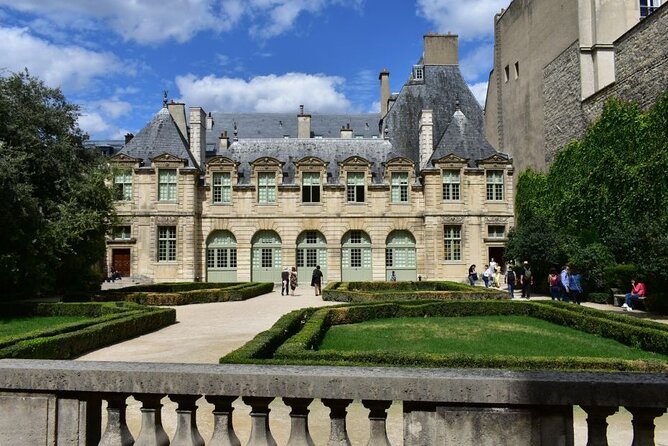
After that, you head to Cour et jardin de l’Hotel de Sully, a courtyard and garden that feels like the Marais’ version of a secret room. Hôtel de Sully was built by Sully, the finance minister of Henry IV (1589 to 1610). The guide helps you understand why this “hidden” green space matters and what kind of power and wealth created it.
This is also where the tour’s pacing starts to shine. These stops are short, but they give your brain a change of scenery. You get one moment that is all stone and story, then another that lets you breathe and reframe what you thought the Marais was.
Saint-Paul-Saint-Louis: From Gothic to Jesuit Baroque
You then reach Paroisse Saint-Paul Saint-Louis, a church that marks a turning point in style. The focus here is the shift away from pure Gothic and toward the Baroque style linked with the Jesuits.
Even if you are not a “church person,” this stop helps you see Paris as a place of changing tastes, not just repeating landmarks. It also teaches you a practical way to look: instead of only admiring a façade, you learn how to notice why styles change and what that says about the time period you are standing in.
More Marais doorways worth a pause:
Rue des Rosiers and the Jewish Quarter: Food Streets With Depth
Then you move into La Rue des Rosiers, the heart of the ancient Jewish Quarter. Here, the tour does something smart: it ties history to how the neighborhood actually feels today. You do not just hear about the past. You walk the street where people shop, eat, and still live out the area’s identity.
This stop is also a great moment to reset your travel hunger. Even though bottled water is not included on this tour, you can use the timing to grab a snack nearby if you want.
Right after, you visit Jardin des Rosiers – Joseph-Migneret, a hidden garden with traces of the medieval defensive wall of Paris. This is one of the most “how is this here?” moments on the route. The guide helps you connect the physical traces to the medieval city’s need for defense, so you understand why a wall was there even if you cannot see one at full scale.
Halles des Blancs-Manteaux and the Templar Connection

Next up: Halles des Blancs Manteaux, tied to a fortress used by the Templar Knights in the Middle Ages. The tour keeps the focus on what the place represented, not just where it is.
A key value of these stops is that they broaden your mental map. When people think “Paris medieval,” they often think only of the big royal sites. This route puts medieval military and institutional life into the picture, so the Marais feels less like a pretty maze and more like a functional piece of the city.
The time window is short, so you need to pay attention as you go. The guide will point you to the specific cues you should look for, and you will get the best payoff if you stay off your phone for a few minutes and watch what they describe.
Rue des Francs Bourgeois and the Factory of Ashes
Stop 9 is Rue des Francs Bourgeois, where the guide shows you a unique space: a factory of ashes that operated until the middle of the 19th century.
This is the kind of stop that makes the tour feel different from a standard “greatest hits” walk. It is not only art and royalty. It is how everyday materials and industry shaped the neighborhood.
If you like oddball history, this is a highlight. If you do not, it can still be useful because it teaches you how cities worked, and it explains how the Marais kept evolving after medieval times.
Picasso From the Outside, then Archives Nationales Gardens
You then have a pause in front of Musee Picasso-Paris, dedicated to Pablo Picasso, described here as the inventor of Cubism. Since the stop is in front of the museum, you are getting orientation rather than a full museum visit. That works well in a walking tour because you keep momentum without turning the day into a ticket line and gallery marathon.
After Picasso, you move to Musee des Archives Nationales. You get to see the hidden gardens behind the building fronts, tied to the luxury mansions of noble people from the era of the kings. This stop is excellent for anyone who thinks archives are only paperwork. You get to connect records to place, and you see the physical setting where power lived.
Hôtel de la Bretonnerie and the Modern Edge Near LGBT Community Spots
Stop 12 is Hotel de la Bretonnerie, where the guide brings you into an area with many trendy fashion stores, food shops, and cafés associated with the LGBT community. This is where the tour stops being only a time machine and becomes a current-day city guide.
Even if you are not shopping, you can use this moment to learn where the locals go for a break. The guide’s recommendations matter here because they help you plan the rest of your day without guessing.
This blend also makes the ending feel smoother. When you finish at Pompidou, you are already primed for a new energy level and a different kind of Paris.
Centre Pompidou: A Postmodern Landmark to Close the Loop
Finally, you reach Centre Pompidou. You get time to get acquainted with the building, created in the 1970s as a postmodern museum for contemporary art, and also described as a place for a library and cinema.
This ending helps you avoid the common walking-tour problem of leaving with great photos but no next step. Pompidou is a huge landmark. Even if you do not go inside, you have a strong reference point to reorient and choose what comes next.
How the Guide Impacts the Whole Walk
The quality of this tour lives or dies with the guide, and the evidence from past experiences is strong. Guides like Sacha, Maria, and Lucie are repeatedly noted for being friendly, prepared, and able to keep the group engaged even with younger visitors.
One practical detail that I think matters: some guides use a notebook of illustrations and pictures to match the moment. That helps when you are standing in a narrow street and trying to visualize what a place looked like in medieval times.
Also, the small-group setup can create a “real conversation” feel. On some days, it can even be just a couple of people plus the guide, which turns a walking tour into something closer to a guided chat with stops. If you value questions and back-and-forth, this format makes that easier.
Practical Tips So You Enjoy Every Stop
A few small moves make a big difference on this kind of route.
- Wear comfortable shoes. You are walking for about 2.5 hours, and the stops come fast.
- Bring water, even though bottled water is not included. You can buy it nearby, but do not assume it will be offered.
- Use your phone for directions, but also look up often. Courtyards and gardens are easy to miss if you are staring at a screen.
- If you care about timing, know that each stop is brief, often around 10 to 15 minutes, so stay ready to move on.
If you are traveling with teens or kids, this kind of pacing is usually a win because it mixes story, visuals, and quick scene changes. The route is also a good “orientation day” in Paris since it ends at a major landmark.
Should You Book This Medieval Marais Walking Tour?
I think it is a strong booking if you want an organized, English-speaking walk that connects medieval sites, Jewish Quarter streets, and major cultural landmarks without ticket-hunting all day. The small group and the high rate of recommended experiences are good signals that you are likely to get more attention and less crowd pressure.
Book it if:
- you want a guided overview of the Marais that you can build on afterward
- you like courtyards, gardens, and stories that make streets feel purposeful
- you want to end near Centre Pompidou so you can keep exploring easily
Skip it or think twice if:
- meeting location stress would ruin your morning, because the start point can be hard to spot if you arrive late
- you want a full museum entry day, since this tour focuses on quick visits and orientation rather than long inside-the-building time
If your goal is to understand the Marais fast and then wander with confidence, this is one of the better ways to do it.
FAQ
How long is the Paris Medieval Heart walking tour?
It runs for about 2 hours 30 minutes.
What is the price per person?
The price is $51.66 per person.
Is the tour in English?
Yes, it is offered in English.
How many people are in the group?
The tour has a maximum of 15 travelers.
Where does the tour start?
The meeting point is 3bis Place de la Bastille, 75004 Paris, France.
Where does the tour end?
It ends at Place Georges-Pompidou, 75004 Paris, France, in front of the Centre Pompidou.
Is bottled water included?
No, bottled water is not included.
Are tickets included for the stops?
Many stops are listed with admission free, while Place des Vosges is listed as admission ticket not included. Some stops focus on what you can see without purchasing a separate ticket.
What ticket format do I get?
You receive a mobile ticket.
What is the cancellation policy?
You can cancel for a full refund up to 24 hours before the experience start time.
Are service animals allowed?
Yes, service animals are allowed.
Boulevard Pace
- Paris: Montmartre Highlights Walking Tour with a Local Guide
★ 4.9 · 2,318 reviews - Paris Île de la Cité and Notre-Dame Walking Tour With Crypt
★ 5.0 · 2,272 reviews - Paris: Montmartre Cheese, Wine & Pastry Guided Walking Tour
★ 4.8 · 2,255 reviews - Paris in a Day: Louvre or Orsay, Eiffel Tower, City Walk & Cruise
★ 5.0 · 1,956 reviews
Latest Paris entries, notes attached







Le Marais Walks, compared.

Award-Winning Paris French Bakery Experience — Le Marais, 4th Arr
Read our review →
Paris Le Marais Food Tour With 10+ Tastings, Cheese, Wine & More
Read our review →
Paris Le Marais District Original Food and Wine Tasting Tour
Read our review →
Paris Bike Tour Hidden Secrets in the Latin Quarter & Le Marais neighborhoods
Read our review →
Paris Culinary Tour: 11 Tastings & 2 Wines in Le Marais
Read our review →

Le Marais District Food Tour with 10+ Tastings & Wine
Read our review →
This tour also appears in