
Reviewed · CITY TOURS
Paris: Private Guided City Tour in a Traction Avant or DS 21
Paris looks different at street level.
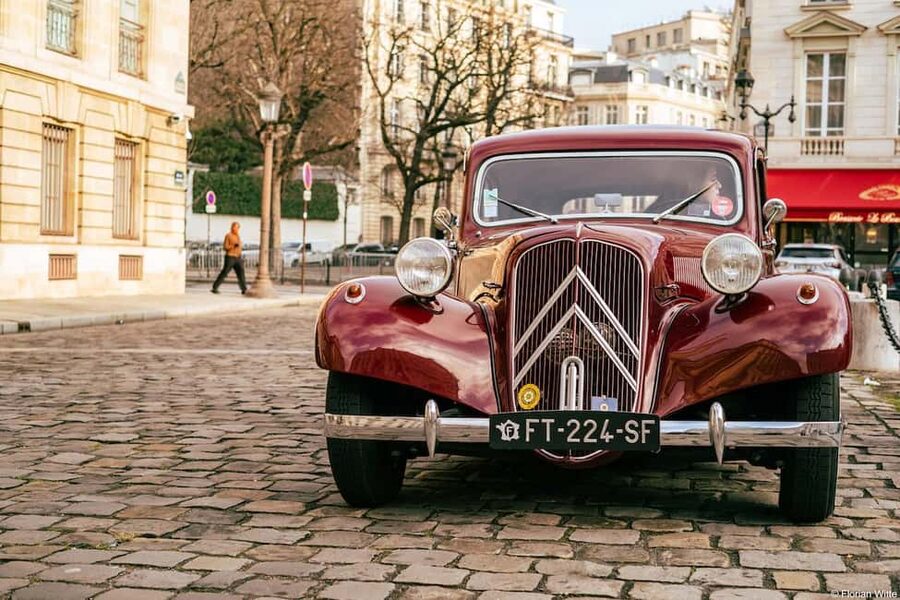
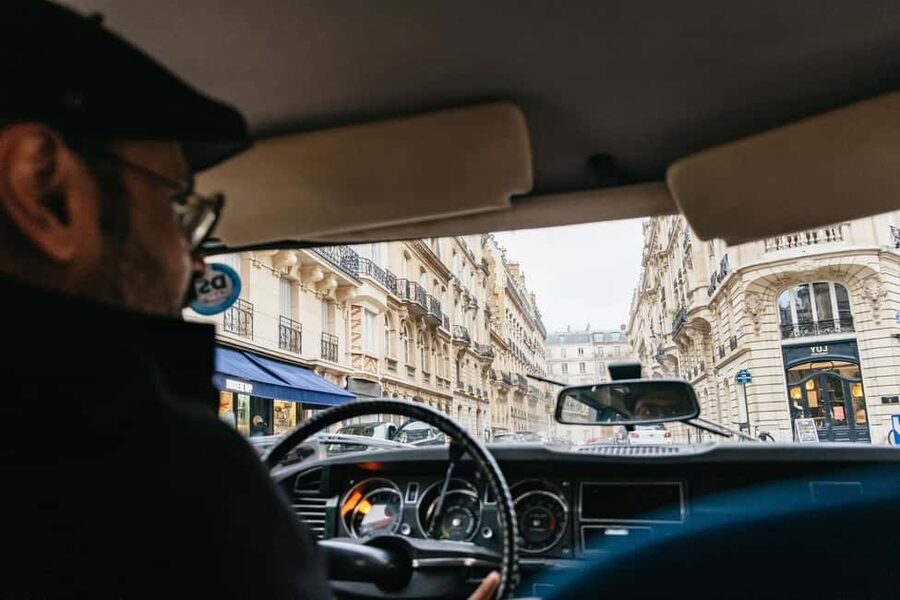
This private guided loop in a 1955 Citroën Traction Avant 11B or a 1971 Citroën DS 21 BHV turns sightseeing into a moving photo set, with your guide keeping the stops tight and the vibes very old-school. I love that you get hotel pickup and drop-off so you start cruising with zero hassle. I also like the flexibility, because you can pick a 1, 2, or 3 hour plan and customize the pace to what you care about.
The one watch-out is practical: this is a car tour with limited comfort for everyone, so it is not suitable for people with mobility impairments or wheelchair users, and luggage or large bags are not allowed. If you need step-free access or extra storage, plan a different format.
In This Review
- Key points before you book
- Paris by Citroën, not by bus: why this tour is a smart way to start
- Choosing the car: Traction Avant 11B vs DS 21 BHV
- Timing and your route choice: 1, 2, or 3 hours without feeling rushed
- Hotel pickup and private comfort: the logistics that actually matter
- The Eiffel-to-Arc corridor: Concorde, Champs-Elysées, Arc de Triomphe, and Eiffel Tower
- Invalides, Pont Alexandre III, and the palace fronts: why this middle section is so worth it
- Vendôme and Opéra country: Place Vendôme and Palais Garnier
- Moulin Rouge and Sacré-Cœur: atmosphere stops that feel more local
- Louvre Pyramid and Notre-Dame: seeing the center without tickets eating your day
- Photo stops and guide style: when the driver becomes part of the memory
- Price and value: $164 per group up to 4, plus what you still pay for
- Who this tour suits, and who should skip it
- Should you book this Paris vintage car tour?
- FAQ
- What vintage cars are used on this tour?
- How long is the tour?
- What is the price and how many people can be in the group?
- Does the price include hotel pickup and drop-off?
- Are entry fees included for museums or landmarks?
- Can I bring luggage or large bags?
- Is the tour suitable for wheelchair users or people with mobility impairments?
- What languages does the live guide speak?
Key points before you book
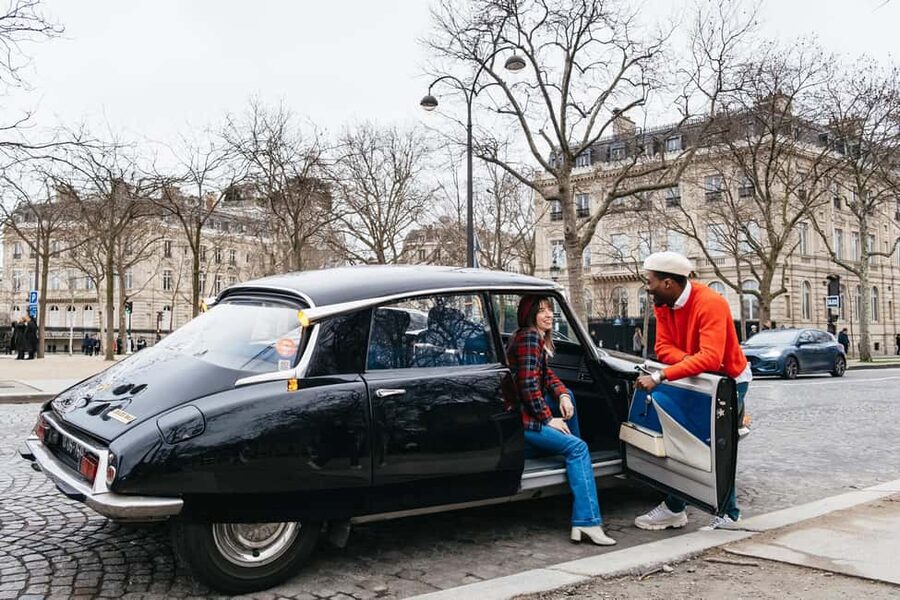
- Vintage-car magic: Ride in the real deal, a Traction Avant 11B or a DS 21 with that classic Paris wow factor.
- Tight, guided photo stops: Many of the big-name sights come with short stops so you can get the angle without losing the day.
- Your own route, within reason: You can steer toward landmarks or neighborhoods like Sacré-Cœur, Saint-Germain, and the foodie streets.
- Hotel pickup and drop-off included: Saves time, especially on a first day or when weather is bad.
- Car skills matter in Paris: Narrow streets and smart positioning help you see more than a big vehicle can.
- No ticket pressure: Entry fees are not included, so you can decide on museums based on your time.
Paris by Citroën, not by bus: why this tour is a smart way to start
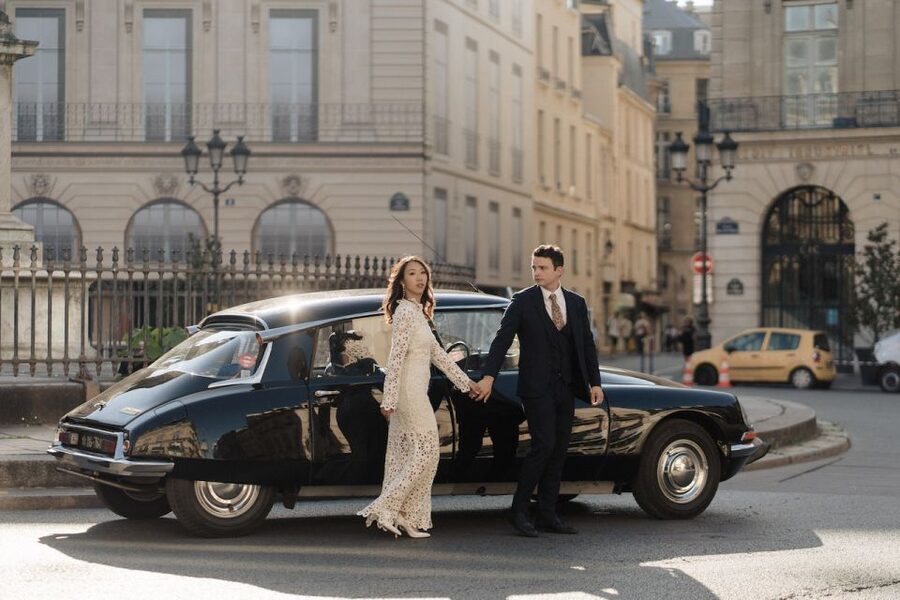
A private car tour sounds fancy, but the real win is simple: it helps you make sense of the city fast. You are not parked at a viewpoint for ages. You are moving, guided, and pointed toward the exact places that give you context, like how avenues line up with monuments and how neighborhoods shift block by block.
What I like about this setup is that you get the big hits without spending the whole day in lines. The stops include the obvious anchors like the Eiffel Tower, Arc de Triomphe, and Notre-Dame, but the route also throws in high-impact bridges, palace-front grandeur, and quick neighborhood looks that help you build a mental map for the rest of your trip.
Also, your driver is not just driving. The experience leans into storytelling plus street-level tips. In several successful departures, guides like Abi are praised for stopping at the right moments for photos and for sharing practical ideas for what to do next. That matters, because Paris is huge, and having a guide who can point you toward your next move is worth real money.
Choosing the car: Traction Avant 11B vs DS 21 BHV
You are given two distinct vintage options: a Citroën Traction Avant 11B from 1955 or a Citroën DS 21 BHV from 1971. Both are iconic, but they represent different eras of French car engineering.
- The Traction Avant is famous for being the world’s first unibody front-wheel-drive car. The payoff for you is the experience of classic mechanical character while cruising through the city in a car that draws attention every time you stop.
- The DS 21 is known for its hydraulic suspension, which gives a different feel on uneven Paris streets. The payoff is a smoother ride and that very “movie scene” presence when you roll up near monuments.
Either car works for the same goal: seeing Paris from a seat that makes people turn their heads. And that head-turning is not just vanity. It often creates breathing room for quick photo stops and short moments at landmarks where you otherwise would not blend in.
If you have a strong preference, request the one you want. One booking note even shows how the plan can change if the car choice gets mixed up during request, and the good news is the tour still lands well.
More Private Tours in Paris
- Louvre Museum Paris Essential Guided Tour Semi-Private 6ppl Max
★ 5.0 · 3,807 reviews - SUV Private Transfer: Paris to Charles de Gaulle Airport (CDG)
★ 4.0 · 3,091 reviews - Paris: Private Photoshoot at the Eiffel Tower
★ 4.7 · 2,636 reviews
Timing and your route choice: 1, 2, or 3 hours without feeling rushed
You pick a duration from 1 to 3 hours, and that choice changes everything about how you experience the day.
A 1-hour tour is great for orientation. You hit several headline areas with mostly photo stops and short guided moments. It works well when you are jet-lagged, on a tight schedule, or just need the “I get it now” version of Paris.
A 2-hour tour usually hits the sweet spot. You can see more of the city’s structure, like how the ceremonial axis works from central landmarks to grand boulevards. You also have enough time to absorb your guide’s explanations without constantly feeling like you are sprinting between stops.
A 3-hour tour is the one I’d steer most people toward if you care about neighborhoods as much as monuments. You still get the icons, but you also have the breathing room to slow down for photos, linger briefly at key corners, and adapt the route if something around a major landmark is awkward due to local changes.
One consistent theme in the feedback: people who booked longer tended to come away with better photo memories and more satisfaction with how much ground they covered.
Hotel pickup and private comfort: the logistics that actually matter
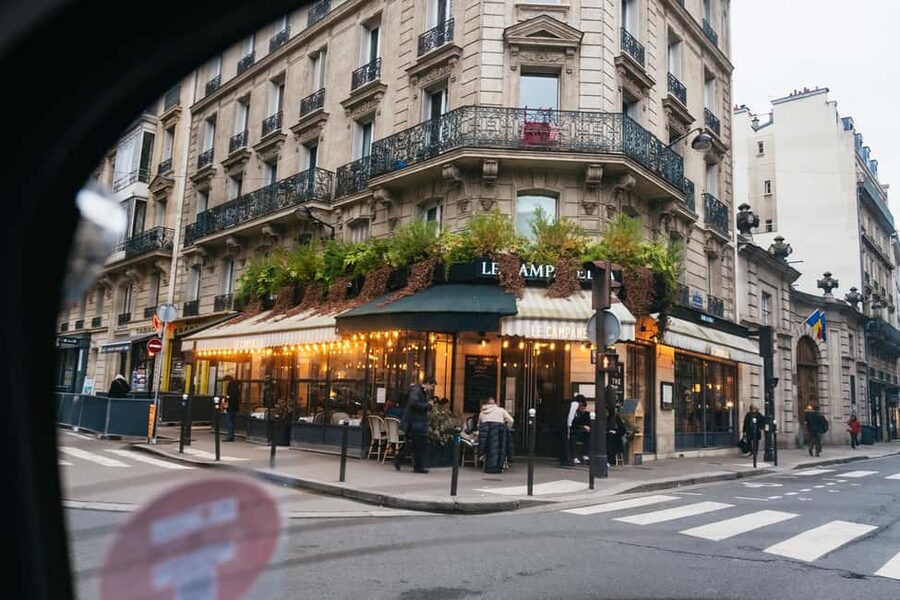
This tour includes hotel pickup and drop-off, and your pickup and drop-off options cover lots of central Paris postal codes (for example, areas like 75001, 75003, 75007, 75008, 75016, 75017, and more). Translation: you are less likely to spend your prime sightseeing time dragging bags or meeting a shuttle in some out-of-the-way place.
You also get a private group, with a price listed as $164 per group up to 4. That is meaningful because you are not paying per person. Four people sharing the same group price can turn this into a surprisingly sensible splurge, especially if you would otherwise pay for multiple taxis or ride shares to cover similar ground.
Two practical notes:
- Luggage or large bags are not allowed. Bring only what you can carry comfortably.
- The tour is not suitable for wheelchair users or people with mobility impairments, and it is also not set up for hearing-impaired visitors. If you fall into those categories, it will likely feel limiting rather than relaxing.
The Eiffel-to-Arc corridor: Concorde, Champs-Elysées, Arc de Triomphe, and Eiffel Tower

Your route often starts with ceremonial Paris, and it makes sense. Beginning around Place de la Concorde sets the stage for the city’s grand geometry. You get guided context while you glide past the kind of architecture that makes Paris feel like an open-air museum.
Then comes the Champs-Élysées, where you can see why this avenue is both iconic and exhausting when you try to do it on foot. From the car, you can appreciate the scale without getting trapped in slow crossings. Your guide can also point out details you might miss from street level, like the way buildings frame the view.
Next are the two monument hits people plan their trip around:
- Arc de Triomphe: There is a short photo and guided window (a brief stop is listed). The Arc works best when you quickly understand its position and what lines it up with. Even a short stop can be satisfying if your guide times it well.
- Eiffel Tower: Another short photo stop with guided context. You are not climbing anything here, but you get that first strong impression plus enough time for a memorable frame.
A small but important detail: several photo stops are listed as short. That is not a downside if you want highlights. It can be a downside if your goal is long contemplative time at one monument. If you want long museum-style pauses, you should lean toward the 3-hour option.
More Things to Do in Paris

Invalides, Pont Alexandre III, and the palace fronts: why this middle section is so worth it
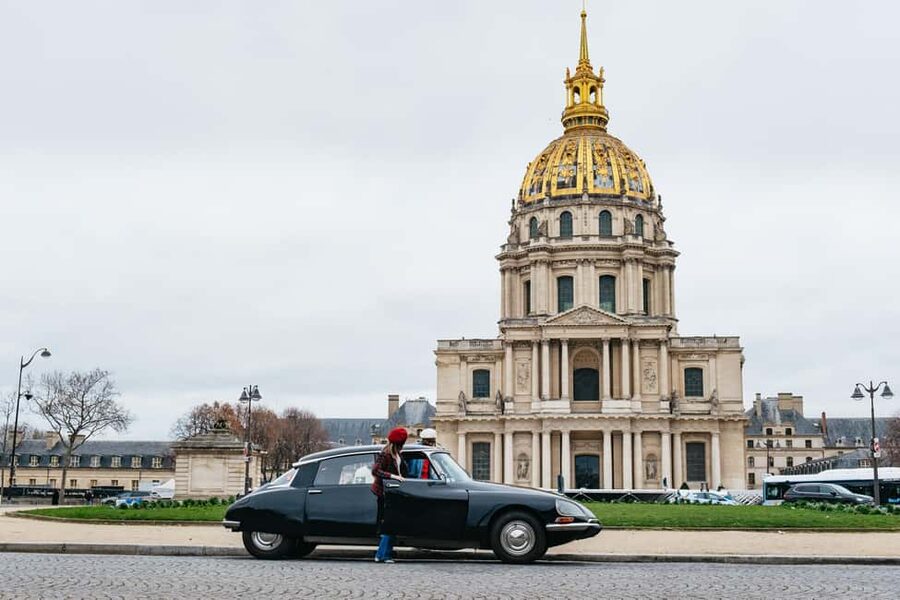
After you’ve loaded your brain with landmarks, the tour shifts into a more refined stretch of Paris. Les Invalides adds an important layer because it is tied to France’s military and political story, and it helps balance the more romantic “postcard” areas with a heavier historical tone.
Then you cross to the Pont Alexandre III, one of those bridges where the city looks staged. This is the part where you get to see Paris as a network, not just a list of attractions. The bridge itself sets off great viewpoints, and your guide can guide you to positions that capture the grandeur without forcing you into traffic-clogged sidewalks.
From there, you pass major arts and official buildings:
- Petit Palais and Grand Palais are both palace-front stops, the kind of architecture that makes you stop noticing the noise and start noticing details. Even from the car, you can appreciate the scale.
- Palais de l’Élysée appears as a guided stop, giving you a glimpse into how power sits in the city fabric.
This section is a payoff for people who want more than photos. It also helps you understand why Paris has so many impressive façades packed into relatively short distances.
Vendôme and Opéra country: Place Vendôme and Palais Garnier

The route continues with Place Vendôme, an elegant square that feels like a change in pace from the wider boulevards. It is the kind of stop where your guide can explain what makes the place important and how it fits into the surrounding city design.
Then you reach Palais Garnier, the Opéra building. From a car tour, you do not get a full museum experience, but you do get the exterior and the context that makes the building more than just a pretty façade. It is also one of those landmarks where a short stop can still be memorable because the building is so distinct.
If you are a theater nerd, you will likely enjoy this portion more than you expect. If you are not, it still works because it is visually striking and helps you see how Paris balances arts, elites, and everyday life.
Moulin Rouge and Sacré-Cœur: atmosphere stops that feel more local
Next come the areas people associate with Paris at night and on film. Moulin Rouge includes a short photo opportunity. This is a perfect example of why a guide helps: you can get the view without circling the neighborhood for ages or losing time in the crowd crush.
Then you can head toward Sacré-Cœur (Sacré-Coeur Basilica) for another short photo and guided stop. The key is the positioning. If your driver is good at timing, you can catch the look that sells the hilltop feel, without spending hours climbing or hunting for the best street angle.
One small piece of context: Sacré-Cœur is often busy. The car approach reduces your time dealing with foot traffic. You still get the icon, but you conserve energy for later.
If you prefer a different vibe, your tour can be customized toward neighborhoods like Sacré-Cœur or Saint-Germain, and that flexibility is a quiet superpower. It helps your Paris feel personal, not just pre-packaged.
Louvre Pyramid and Notre-Dame: seeing the center without tickets eating your day
The route touches the center of tourist Paris with quick, guided stops:
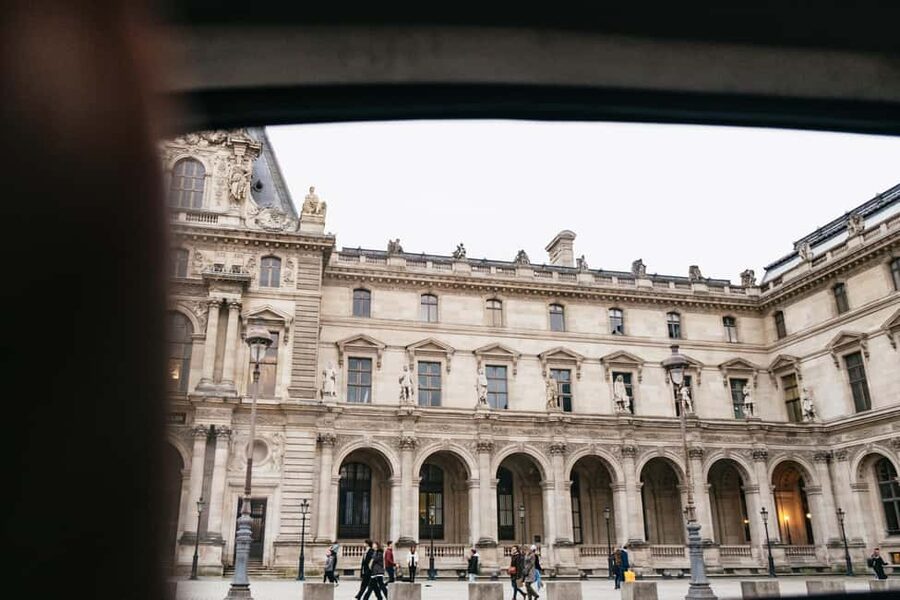
- Louvre Museum and the Louvre Pyramid
- Notre-Dame Cathedral
- Pantheon, Paris
For the Louvre area, you get guided context and exterior views. Entry is not included, so you should think of this stop as a visual bookmark. If you want to actually go inside, you can decide later based on your energy and ticket schedule.
With Notre-Dame, timing can matter because the area can have temporary road access issues. One booking note specifically calls out that road closures were a factor during a period when the area reopened, and the guide went out of the way to keep the planned sights on track. That is what you want from a private driver, a calm plan B when the city gets complicated.
The Pantheon is a strong closer because it feels different from the cathedral zone. It adds a civic, educational layer. Even with a short stop, it helps round out the story of Paris as a city of monuments, not just landmarks.
Photo stops and guide style: when the driver becomes part of the memory
One reason this tour rates so well is not just the cars. It is the stop quality. Many people describe their guide as someone who:
- offers ample opportunities for photos,
- knows the best spots and angles,
- and handles the traffic grind smoothly.
In multiple successful experiences, Abi is singled out for photo timing and for navigating tricky streets with confidence. People also describe him as attentive to requests and patient about taking pictures of families in and around the car.
Also, the vibe helps. Several bookings mention music along the way, and some mention an add-on like a champagne bottle. If that fits your trip style, it can turn a highlights loop into a small celebration without you needing to plan dinner right away.
Just keep expectations realistic: this is a tour designed to cover many areas in a short window, so some monuments are photo-focused rather than sit-and-stare focused.
Price and value: $164 per group up to 4, plus what you still pay for
At $164 per group up to 4, the value is strongest for couples and families who want a private ride without paying private-ride per-person pricing.
What your price includes:
- hotel pickup and drop-off
- tour guide/driver
- transportation by vintage car (Traction Avant or DS 21)
What you should plan to pay separately:
- food and drinks
- entry fees for any sites you choose to go into
So the value equation is about how much you save in logistics. If you would otherwise use multiple ride shares to cover central sights, a private vintage loop can feel like a bargain. If you are traveling solo and mainly want one or two areas, you may find the per-person value less compelling.
My advice: if you are a group of two to four, this is a strong “first day orientation” play and a memorable way to see the city without walking yourself into exhaustion.
Who this tour suits, and who should skip it
This works especially well for:
- first-timers who want major landmarks plus a few neighborhood flavors
- families who want someone else to handle the routing
- couples who want a romantic, photo-friendly experience without planning a full day
- anyone who wants Paris from street level, but not at the speed of a bus
It is not a great match if:
- you need wheelchair accessibility or step-free accommodations
- you rely on hearing accommodations, since the tour is not set up for hearing-impaired guests
- you have luggage or large bags you must bring along
If you fall into the access requirements, look for a different format. The car experience is the point here, and the tour is designed around that.
Should you book this Paris vintage car tour?
Book it if you want a fast, private introduction to Paris with iconic sights, strong photo opportunities, and a driver who can time stops and explain what you are seeing. The biggest reasons to say yes are the hotel pickup, the vintage car wow factor, and the way the route blends landmarks with more city texture.
Skip it if you want long museum-style stops at the Louvre or Notre-Dame, or if accessibility needs or luggage requirements make this format a mismatch. In that case, you will likely feel constrained rather than delighted.
If you are deciding between 1, 2, and 3 hours, my practical take is simple: choose the longer option if you care about photos, neighborhood detours, and not feeling rushed. Paris is too good to skim.
FAQ
What vintage cars are used on this tour?
You ride in either a Citroën Traction Avant 11B from 1955 or a Citroën DS 21 BHV from 1971.
How long is the tour?
You can book a private tour for 1 to 3 hours, depending on availability and your selected start time.
What is the price and how many people can be in the group?
The price is listed as $164 per group, up to 4 people.
Does the price include hotel pickup and drop-off?
Yes. Hotel pickup and drop-off are included.
Are entry fees included for museums or landmarks?
No. Entry fees to sites are not included.
Can I bring luggage or large bags?
No. Luggage or large bags are not allowed.
Is the tour suitable for wheelchair users or people with mobility impairments?
No. It is not suitable for people with mobility impairments or wheelchair users.
What languages does the live guide speak?
The live tour guide is available in English, French, and Japanese.
Latest Paris entries, notes attached






City Tours, compared.

Eiffel Tower Summit Option with Seine River Cruise and City Tour
Read our review →
Paris in a Day: Louvre or Orsay, Eiffel Tower, City Walk & Cruise
Read our review →
Lyon City Hop-on Hop-off Sightseeing Bus Tour
Read our review →
Eiffel Tower Hosted Tour, Seine Cruise and City Tour
Read our review →
Paris City Center Free Walking Tour (Tip-Based)
Read our review →
Golf Cart in Paris – Private Guided City Tour – Pickup Included
Read our review →This tour also appears in