

Reviewed · HISTORICAL TOURS
Paris Walking Tour , Historical Sites .
Paris makes more sense on foot. This 3-hour historical sites walk threads five central neighborhoods into one logical route, led in English by guide Neda. The best part is the cap of just seven travelers, which means you actually get answers, not just a recorded lecture.
I also like how the stops feel different from each other. You start in Saint-Germain-des-Prés, cross to the river, then shift gears into Le Marais, where Jewish life meets fashion and everyday shopping. The churches and major monuments are impressive, but what you’re really paying for is the way the guide ties the city’s layers together.
The main drawback is timing. A couple of the big-photo moments are short, like about 5 minutes at Saint-Sulpice and Pont Neuf, so if you love lingering, plan to add extra time later on your own.
In This Review
- Key points that make this tour feel worth it
- Why this Paris route works, Left Bank to Le Marais in one pass
- Saint-Sulpice start, the four cardinal directions fountain plus a calm square
- Saint-Germain-des-Prés quarter, where art, books, and food shops overlap
- Pont Neuf and the Seine, moving from old Paris to the riverfront icons
- Le Marais for Jewish traditions and fashion, cobblestones, boutiques, and synagogues
- Place des Vosges, Victor Hugo’s square of perfect symmetry
- What guide Neda adds, humor, real Q&A, and smart orientation
- Price and value, what $96.79 gets you for 3 hours
- Tips so you enjoy every stop, not just the photos
- Should you book this Paris Historical Sites Walking Tour?
- FAQ
- How long is the Paris walking tour?
- How many people are in the group?
- Is the tour offered in English?
- What does the tour cost?
- Are there paid tickets for the stops?
- What is the cancellation policy?
Key points that make this tour feel worth it

- Seven travelers max, so you get real interaction with guide Neda
- Five distinct areas in roughly half a day, from Left Bank to Le Marais
- Saint-Sulpice’s fountain of the four cardinal directions, a standout detail in an easy-to-reach square
- Pont Neuf and the Seine walk, with views you’ll connect to major landmarks you’ve seen in photos
- Le Marais as Jewish life plus modern fashion, including delis, bagels, and synagogues
- Place des Vosges symmetry and Victor Hugo House, a perfect finale square for art lovers
Why this Paris route works, Left Bank to Le Marais in one pass
This walk is built for orientation. If it’s your first afternoon in Paris, you’ll leave with a mental map, because you move through neighborhoods that feel like different cities. You begin around Saint-Germain-des-Prés on the Left Bank, then head toward the Seine and the City Island area, and finally finish in the historic core around Le Marais and Place des Vosges.
The route also makes practical sense: it ends near a lively square where you can easily grab dinner or continue exploring without needing a long commute. And because it’s only about 3 hours, it’s a good fit when you want something meaningful without sacrificing your whole day.
Group size matters here. With a maximum of seven people, you can ask questions when something catches your eye, from architecture to neighborhood history to simple how-to’s like where you’ll find the metro nearby.
Saint-Sulpice start, the four cardinal directions fountain plus a calm square
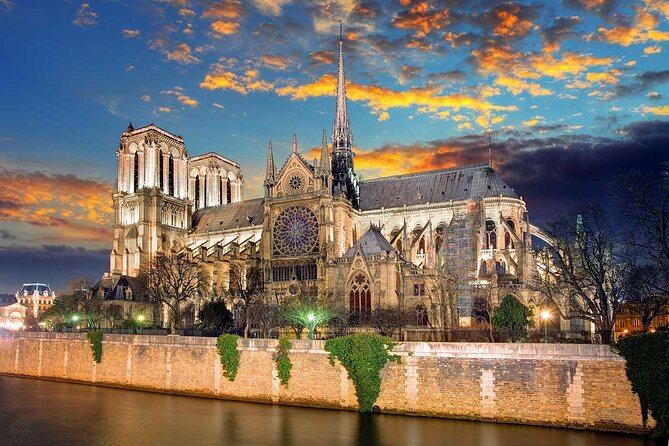
The tour begins at 1 Pl. Saint-Sulpice in the 6th arrondissement. Your first stop is Eglise Saint-Sulpice, one of Paris’s most important churches and famously the second-largest in the city. Even if you know Paris cathedrals, this one has its own personality, and the setting helps.
One specific detail to watch for is the church’s fountain of the four cardinal directions. The fountain sits in an open space, so it’s easier to take in than a cramped corner. It’s also a quick way to get the vibe of the Left Bank around Saint-Germain-des-Prés, with that classic Paris feel of stone, cafés, and nearby green space.
The timing is short here, about 5 minutes. That’s enough to see what makes Saint-Sulpice special and get oriented, but it also means you should be ready to move on. If you want a longer look inside, treat this stop like a tasteful preview and then plan a return visit later when you have more time.
More Walking Tours in Paris
- Paris Top Sights Half Day Walking Tour with a Fun Guide
★ 5.0 · 2,893 reviews - Montmartre Hidden Gems and Scenic Highlights Walking Tour
★ 5.0 · 2,684 reviews - Montmartre Hill French Gourmet Food and Wine Tasting Walking Tour
★ 5.0 · 2,588 reviews
Saint-Germain-des-Prés quarter, where art, books, and food shops overlap
Next you head into Saint-Germain-des-Prés. This is a neighborhood that runs on culture. You’ll pass by streets known for fine shops, museums, and the kind of Paris address people associate with writers and artists.
What I like about this segment is that it’s not only about monuments. It’s also about everyday Paris. You get time, about 35 minutes, to see the area’s flow, and you can spot food shops and markets that feel local instead of touristy. If you’re the type who thinks the best souvenirs come from what you taste, this is one of the most useful parts of the tour.
A small caution: because this section is partly strolling through streets rather than a single big attraction, you’ll get more out of it if you keep your eyes open. Look for shopfronts, consider what kind of day trip snacks you want later, and be ready to ask the guide what’s worth trying if you find something tempting.
Pont Neuf and the Seine, moving from old Paris to the riverfront icons
Then comes the Pont Neuf moment. It’s the oldest standing bridge in Paris, and it has a construction story stretching across reigns, with the initial push in the late 1500s and continuation under Henri IV around the turn of the 1600s. The bridge itself is a great reminder that Paris didn’t get built all at once, it got layered.
You only have about 5 minutes here, so this is about quick impact. Look for the bridge’s role as a link over the Seine, and use it as a mental switch from Left Bank landmarks to river views.
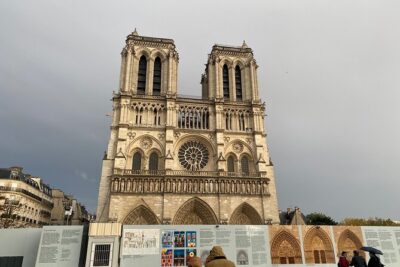
From there, the tour walks by the river and around the City Island area. You’ll also pass by a flower market and landmarks tied to some of Paris’s best-known church architecture, including Notre-Dame de Paris and Sainte-Chapelle. Even if you’ve seen pictures, seeing these from a walking route helps you understand how the city is shaped by its water.
Expect a lot of “Paris is doing Paris” energy here. Restaurants and ice cream places come up naturally along the river route. This is a good time to decide whether you want a quick snack now or save appetite for later. The tour doesn’t build in a formal long break, so your instincts matter.
Le Marais for Jewish traditions and fashion, cobblestones, boutiques, and synagogues
After the river stretch, you reach Le Marais, and the tone changes. Le Marais is full of small cobblestone streets where the city feels older and more intimate. The vibe is a blend: independent fashion boutiques, contemporary art galleries, and museums sit right alongside everyday local spots.
The most distinctive part of this tour is how it explains the neighborhood through the lens of Jewish traditions and modern style. You’ll see what that looks like in practice, with delis and bagel shops, plus synagogues that anchor the area’s cultural life. It’s a reminder that “historic” doesn’t mean “frozen in time.” Paris keeps evolving right where it remembers.
You’ll spend about 1 hour in Le Marais. That’s enough time to do more than take photos. Use it to browse with intent. If you love fashion, linger at independent stores for a few minutes and compare what you see to the street stories the guide is sharing. If you love food, look for places that feel like they belong to the neighborhood rhythm, not just the tourist crawl.
One practical note: cobblestones can slow you down. They also make your feet work more. Wear shoes that are comfortable for uneven surfaces, and you’ll enjoy this hour instead of just surviving it.
More France at boulevard pace:


Place des Vosges, Victor Hugo’s square of perfect symmetry
The tour finishes at Place des Vosges. This is one of Paris’s oldest and most beautiful squares, and it’s easy to see why. It’s perfectly symmetrical, bordered by 36 buildings, which creates that calming, ordered feeling you don’t get on wilder streets.
Art galleries line the square, so even if you’re tired, your eyes still have something to do. But the anchor point here is the Victor Hugo House, a museum dedicated to the author of Les Miserables. Victor Hugo lived here from 1832 to 1848, and that timeline gives the place a strong literary pulse.
You’ll have about 1 hour in this final zone. That works well because it’s a natural place to end: it’s scenic, central, and easy to plan your next move. If you want to keep exploring after the tour, you can branch out from the square into nearby streets without feeling lost.
What guide Neda adds, humor, real Q&A, and smart orientation

A big reason people rave about this walk is how guide Neda teaches. The consistent theme is energy and clarity, plus a sense of humor that keeps things from turning stiff. Instead of just naming buildings, she connects details to daily life in France.
The other big plus is that she doesn’t feel limited to a script. With a group of seven, questions land naturally, and you can get follow-ups when you’re curious. One guest even noted she helped them with practical metro orientation during the tour, which is exactly the kind of information that saves time later.
Also, I like that the guidance isn’t only about what’s famous. The route intentionally includes streets and side areas you might otherwise skip, which helps you learn Paris as it actually feels when you’re walking it.
In terms of extras, at least one review mentioned she shared additional restaurant and sightseeing recommendations afterward. That’s useful because it helps you keep the good momentum after the tour ends, instead of scrambling for ideas at dinner time.
Price and value, what $96.79 gets you for 3 hours

At $96.79 per person, this isn’t the cheapest thing in Paris. But it also isn’t priced like a private chauffeur situation. You’re paying for three practical advantages:
First, the time efficiency. In about 3 hours, you cover multiple central areas, from Saint-Sulpice to Le Marais and then to Place des Vosges, plus a river walk that links to landmark churches. That’s a lot of city geography for one block of time.
Second, you’re getting free-entry stops built into the itinerary. The tour lists admission as free at key points like Saint-Sulpice and the big outdoor/major area stops. That means you’re not hit with surprise museum ticket costs during the walk.
Third, the small group cap is real value. When you’re capped at seven travelers, you’re less likely to feel like you’re standing at a distance from the guide. It’s the difference between watching Paris and understanding it.
One more planning detail: this tour is booked, on average, about 48 days in advance. That’s not shocking for a 7-person maximum, so if your dates are fixed, you’ll likely do better reserving earlier rather than waiting for the last minute.
Tips so you enjoy every stop, not just the photos
A walking tour lives or dies on small choices. Here’s how you make this one smoother:
- Wear shoes you can trust on cobblestones. Le Marais is where your feet notice.
- Treat the short stops as previews. With some stops at 5 minutes, you’re meant to spot key features, then decide what to revisit later.
- Keep an eye on the final neighborhood. Ending at Place des Vosges puts you near a scenic, easy place to plan dinner.
- If you’re traveling with questions, bring them. With a seven-person cap, questions get answered instead of swallowed by a big crowd.
- If you want a relaxed pace, plan one rest moment after the tour. This route is efficient, not slow.
Should you book this Paris Historical Sites Walking Tour?
I’d book it if you want a fast, well-shaped route that helps you understand Paris beyond the biggest postcard spots. The combination of Saint-Germain-des-Prés, the Seine and City Island area, and Le Marais gives you a strong “three-part Paris” snapshot in one afternoon. And the small-group feel with guide Neda is exactly what turns a list of sights into something you remember.
Skip it if you prefer long museum time, slow meandering, or deep inside-the-church visits where you want to sit for a long stretch. This walk is built around movement and quick, meaningful stops, then leaving you ready to explore on your own.
If you’re an English speaker and you want free-entry sightseeing with a clear route and a guide who can handle questions, this is a very practical way to kick off your Paris days.
FAQ
How long is the Paris walking tour?
It runs for about 3 hours.
How many people are in the group?
The tour has a maximum of 7 travelers.
Is the tour offered in English?
Yes, it is offered in English.
What does the tour cost?
The price is $96.79 per person.
Are there paid tickets for the stops?
The tour lists admission as free for the stops mentioned, including Eglise Saint-Sulpice and the other highlighted sites.
What is the cancellation policy?
You can cancel for a full refund if you do so at least 24 hours before the start time. Cancellation within 24 hours of the start time is not refunded.
Centuries, Footnoted
- Paris: Louvre Museum Entry with History of Mona Lisa
★ 3.9 · 2,823 reviews - Paris: Dark History and Ghostly Guided Walking Tour
★ 4.7 · 1,000 reviews - Le Marais/Paris – The Historic, Trendy, Jewish, LGBT district
★ 5.0 · 341 reviews - Paris City of Fashion History Private Guided Walking Tour
★ 5.0 · 221 reviews
Latest Paris entries, notes attached






Historical Tours, compared.

Louvre Museum Entry with History of Mona Lisa
Read our review →
Vieux Lyon Cultural & Historical Walking Guided Tour (English)
Read our review →

Toulouse Food & History Tour with a Chef (in English)
Read our review →
Small-Group Full-Day Tour of Côte de Nuits, Côte de Beaune Vineyards and Beaune Historical District
Read our review →
This tour also appears in