
Reviewed · THINGS TO DO IN NORMANDY
Private Guided Tour in WW2 Jeep of the Landing Beaches
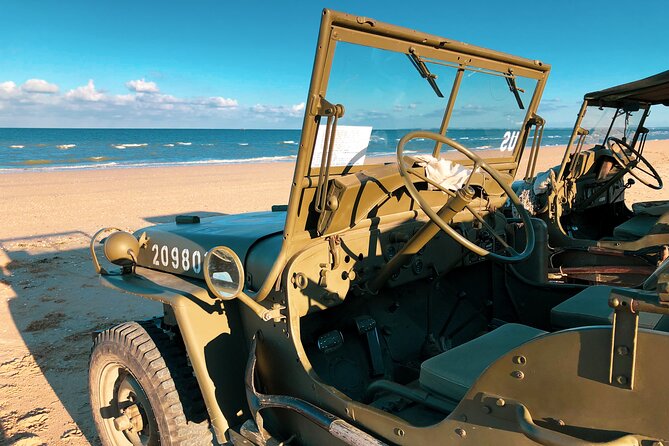
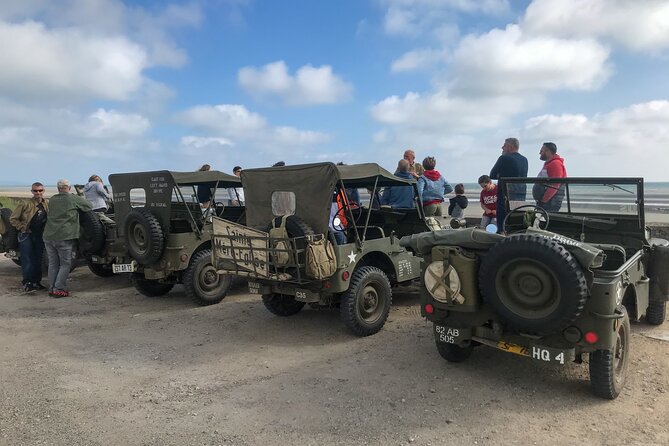
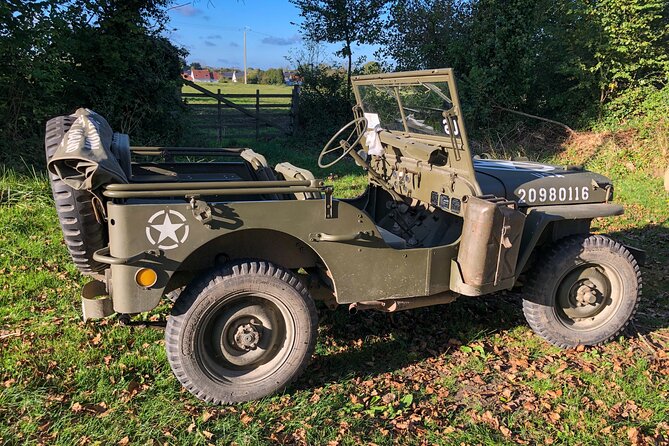
Utah Beach hits different from a WWII jeep. This private guided ride threads together the American paratroopers’ world and the June 6 landing sites, with stops that range from Sainte-Mère-Église to Utah Beach in about two hours. I love the WW2 jeep part because it makes the drive feel real, not like a bus excursion, and I love how the guide uses maps and photos to explain what you’re seeing as you roll along the country roads. You’ll finish with Utah Beach and a look at what’s left of the Atlantic Wall.
One thing to plan for: the tour is short and you’re outside for portions of it, so if the wind picks up (it often does in Normandy), bring a warm layer and consider a snack since lunch isn’t included.
In This Review
- Key Takeaways Before You Go
- A WW2 Jeep Tour That Connects the Paratroopers to Utah Beach
- Sainte-Mère-Église: Holy Mother Church and the John Steele Connection
- Turqueville: 101st Airborne Country and the View of the Drop Zone
- Beuzeville au Plain: Thomas Meehan’s Crash and the Band of Brothers Tie-In
- Saint-Germain-de-Varreville: First American Paratrooper Landing Spot
- Utah Beach: June 6, 1944 and Atlantic Wall Remains
- Why the Guide Style Makes or Breaks This Tour
- Price and Value: What $302.34 Buys for Up to 3 People
- Who This WWII Jeep + Airborne Stops Tour Fits Best
- Plan Your Day Around the Short Stops
- Should You Book This Private Guided WW2 Jeep Tour?
- FAQ
- How long is the private guided tour?
- What is the maximum group size?
- Where does the tour start and end?
- What language is the tour offered in?
- Is transportation included?
- Is lunch included?
Key Takeaways Before You Go
- Private, small-group feel: maximum of 3 travelers, so you can ask questions without shouting over the engine.
- US airborne focus: the route centers on the paratrooper drop-zone area around Sainte-Mère-Église before heading to Utah Beach.
- Five meaningful stops, short time at each: you get highlights and context, but it is not a slow museum crawl.
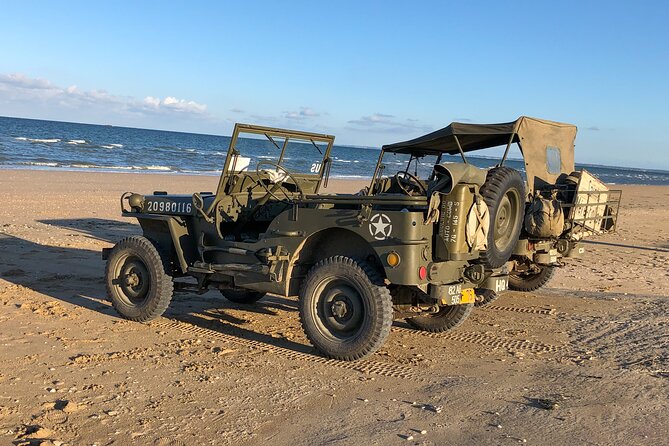
- WWII jeeps, still road-capable: the vehicles add an extra layer of authenticity to the day.
- Guides bring the plan to the map: many guests praised guides for using photos and maps to make strategy easier to grasp.
A WW2 Jeep Tour That Connects the Paratroopers to Utah Beach
This is a smart way to experience D-Day if you already know the headlines, but you want the “how did it actually look and feel on the ground” version. Instead of hopping only between the big landing beaches, this route builds the story from the US airborne side of June 6. You start in the Sainte-Mère-Église area, where the paratroopers’ landings shaped what happened next. Then you work your way toward Utah Beach, where American soldiers came ashore and where you can still spot parts of the Atlantic Wall.
The jeep matters. Even if you’ve seen plenty of WWII photos, there’s a gap between looking at terrain on paper and seeing it from a vehicle that can handle rough country roads. The ride also changes your pace. You slow down on the turns. You look more. You don’t just pass by history, you approach it.
The group size is also a real value boost. With room for up to 3 people, the guide can tailor explanations to what you care about, whether that’s specific paratroopers, the sequence of events, or how units moved from drop zones to objectives.
Sainte-Mère-Église: Holy Mother Church and the John Steele Connection
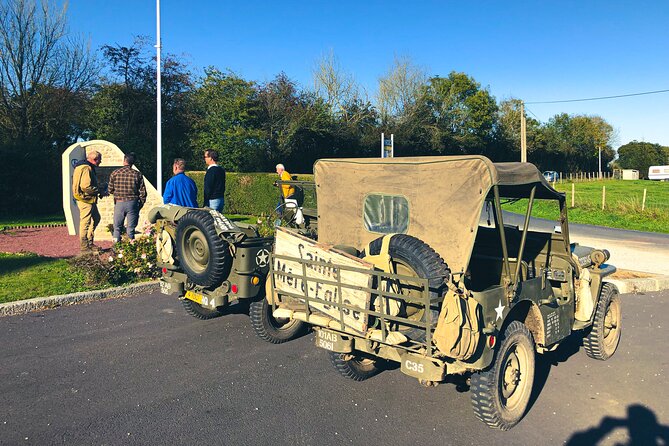
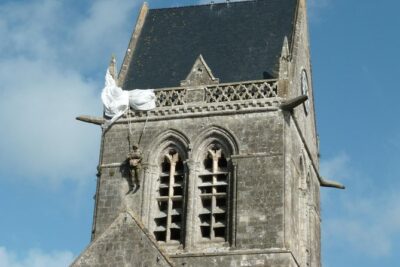
You begin near Sainte-Mère-Église, a town that’s almost impossible to understand without talking about paratroopers. The first stop is Holy Mother Church, a place famous in part because it appears in the story of the long-running film about D-Day. More importantly, it links visitors to the famous parachutist John Steele, whose name keeps coming up whenever people discuss the first hours of the invasion.
This stop is short, so don’t treat it like a sit-down visit to study every plaque. Instead, use it as a “set the scene” moment. When you’re with a guide who brings the timeline into the drive, the church stop works like a chapter opener. It gives you the local anchors for the next villages and drop-zone areas you’ll visit.
Possible drawback here is time. Ten minutes flies by fast if you get caught reading everything. If that’s you, take photos, then let the guide’s narration fill in the details while you’re moving.
More Things to Do in Normandy
- Normandy American D-Day Beaches Full Day Tour from Bayeux
★ 5.0 · 2,103 reviews - Normandy American D-Day Experience – Group tour from Bayeux
★ 5.0 · 1,566 reviews - Normandy Beaches Half-Day Afternoon Trip from Bayeux (A2)
★ 4.5 · 1,116 reviews
Turqueville: 101st Airborne Country and the View of the Drop Zone
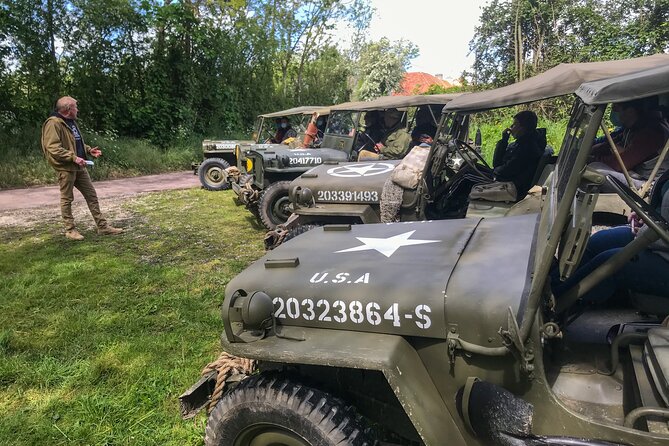
From there you head to Turqueville, in the middle of the airborne areas associated with the 101st. This is where the tour earns its keep: you don’t just see “a beach.” You see the kind of countryside where paratroopers had to land, regroup, and move under pressure.
The 20-minute stop gives you enough time to connect a few dots. Your guide can point out the relationship between villages and the fields between them. That context is huge because it helps you understand why some locations were more reachable than others, and how the terrain shaped movement in the first critical moments after landing.
One practical tip: keep your camera ready, but also keep your eyes up. In these Normandy back roads, it’s easy to focus on what’s directly next to the vehicle. The better insight usually comes from looking a little farther out, the way you’d scan terrain during a mission.
Beuzeville au Plain: Thomas Meehan’s Crash and the Band of Brothers Tie-In
Next is Beuzeville au Plain, tied to the crash of Thomas Meehan’s plane. This stop has a specific kind of power because it ties a person to a place, and then it connects the story to the cultural memory of WWII through the series Band of Brothers.
Twenty minutes is enough to understand why this area matters without turning the tour into an all-day lecture. The best part is that the guide can use the crash story to explain what parachute landings and aircraft operations meant in the same operational window. When the narration connects the dots between units and air operations, the geography stops being “random countryside” and starts feeling like part of a real plan.
If you’re a TV or book reader about WWII, this is the stop that may click the fastest. If you’re more of a maps-and-facts person, it can also feel grounding because it’s tied to a specific incident and named location, not just broad history.
Saint-Germain-de-Varreville: First American Paratrooper Landing Spot
The tour then heads to Saint-Germain-de-Varreville, a village linked with the landing of the first American paratrooper, Franck Lilyman. For many people, this is the emotional pivot. Early D-Day stories can feel abstract until you hear them anchored to a named landing spot.
Fifteen minutes might sound brief, but it works here because the stop is focused. You’re not wandering. You’re listening, looking, and getting oriented. The guide’s role is to connect the human story to the wider invasion timeline, so you understand why “first” matters and how those first landings set the tone for what followed.
This is also a good moment to ask questions. With a small group, you can usually get a direct answer without feeling like you’re holding up 30 strangers.
Other Normandy bookings in the margin notes
Utah Beach: June 6, 1944 and Atlantic Wall Remains
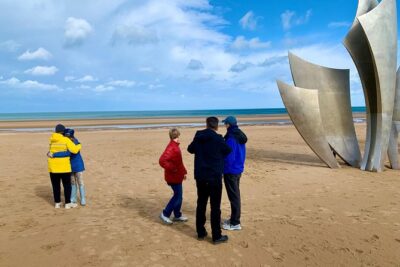
Finally, you reach Utah Beach, the landing area where American soldiers came ashore on June 6, 1944. This is the big emotional landing point for most visitors, and the guide’s narration helps it land for reasons beyond the obvious.
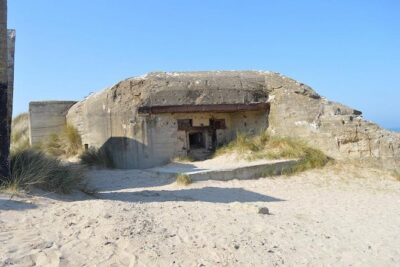
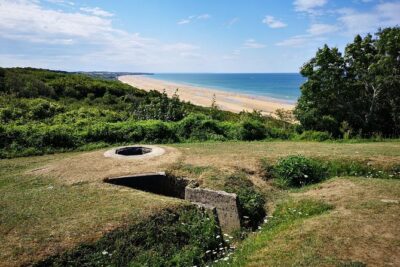
You also visit the remains of the Atlantic Wall. That matters because it gives you physical context for what soldiers were trying to break through and what defenders built to slow them down. Even when you only see fragments, those remnants help you picture the scale of fortification and the kind of obstacles landing forces faced.
The stop lasts about 20 minutes. Again, this isn’t a full beach museum stop. It’s more like a guided “meaning check.” The goal is to help you see what you’re looking at, understand what it was meant to do, and then get back on your feet with a clearer picture.
Practical advice: wear comfortable shoes. The beach and nearby areas can be uneven, and you’ll want footing without thinking about it.
Why the Guide Style Makes or Breaks This Tour
The most consistently praised part of this experience is the guide. Many standout accounts highlight guides like Thomas and Flavie for being passionate about the subject and for explaining complicated pieces with help from maps and photos. That style is not just for show. It changes the way the stops register in your head.
Instead of memorizing facts, you’re building a mental model. You connect names to terrain. You connect tactics to what the vehicle is doing right now as you turn onto the next road. That’s how a D-Day tour stops feeling like a checklist and starts feeling like comprehension.
Another thing that comes up is storytelling grounded in real material. Some guides are praised for drawing on research and for engaging with veterans over the years, so the narration doesn’t feel purely secondhand.
If you care about WWII details, this is where the value shows. You’re not just getting transportation and a route. You’re getting someone who can explain what you’re seeing, and why it mattered.
Price and Value: What $302.34 Buys for Up to 3 People
The price is $302.34 per group, for up to 3 travelers, for about two hours. That pricing can look high if you think in per-person terms. But the trick is to think in per-group terms, and then compare it to what “private plus a WWII jeep plus expert narration” typically costs in Normandy.
Here’s the practical way I’d judge the value:
- You get private transportation and a guided route across multiple key points tied to D-Day.
- You’re not sharing the experience with a crowd, so you gain question time and a more personal pace.
- You’re using the jeep itself as part of the storytelling, not just a taxi that drops you off.
It’s also useful to note what’s not included. Lunch isn’t included, so plan your timing if you’re stacking this with museums or other beach visits. If you’re doing Omaha and Utah on the same trip, consider this tour as your “airborne and context” segment, not your only stop.
Who This WWII Jeep + Airborne Stops Tour Fits Best
This works especially well if:
- You want a focused route that connects US airborne landings to the Utah Beach landing.
- You like history that has names and places, not just vague background.
- You’re traveling with a small group or family and want a guided plan without crowds.
It may also be a great first Normandy D-Day activity if you’re trying to get your bearings fast. Once you understand the airborne side, the beaches make more sense. And once you’ve seen how the terrain fits the story, it’s easier to enjoy nearby sites later with your own eyes.
Plan Your Day Around the Short Stops
Each stop is brief, so your job is simple: arrive mentally ready to listen. Don’t expect a long walking tour at each location. Bring a wind layer, because even on a sunny day Normandy can feel punchy. Also, if you’re the type who reads every sign, you might want to choose the guide’s narrative over trying to absorb everything in a rush.
A good strategy is to save your deepest questions for when you’re still moving between stops. When the vehicle pauses, pay attention to what the guide points out in the distance. That’s often where the “aha” moment happens.
Should You Book This Private Guided WW2 Jeep Tour?
If you want a high-impact D-Day experience with a small group, meaningful stops, and guides who can connect the dots, I’d book it. The route hits the US airborne story first, then lands you at Utah Beach with Atlantic Wall remains, so you get more than one view of June 6.
Skip it only if you specifically want a long, slow, museum-style tour at each site. This is a drive-through history experience. It’s designed to make you understand the bigger picture in a couple of hours, then send you out with clearer eyes.
FAQ
How long is the private guided tour?
The tour lasts about 2 hours.
What is the maximum group size?
The experience has a maximum of 3 travelers.
Where does the tour start and end?
It starts at Parking Rue Eisenhower, 14 Rue Eisenhower, 50480 Sainte-Mère-Église, France and ends back at the same meeting point.
What language is the tour offered in?
The tour is offered in English.
Is transportation included?
Yes. Private transportation is included.
Is lunch included?
No. Lunch is not included.
Latest Normandy entries, notes attached



Things to Do in Normandy, compared.
Normandy American D-Day Beaches Full Day Tour from Bayeux
Read our review →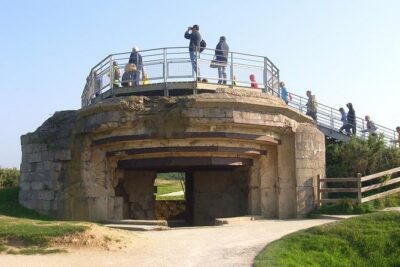
Normandy American D-Day Experience – Group tour from Bayeux
Read our review →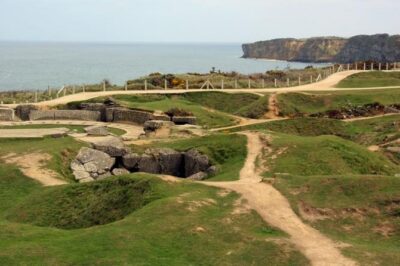
Normandy Beaches Half-Day Afternoon Trip from Bayeux (A2)
Read our review →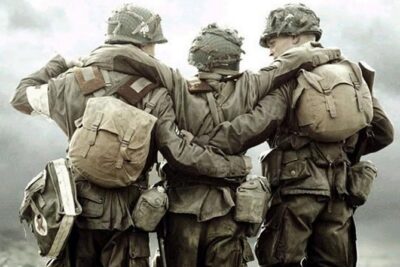
Omaha Beach D-Day Experience – Afternoon group tour from Bayeux
Read our review →
Normandy Battlefields Tour – American Sites (A3)
Read our review →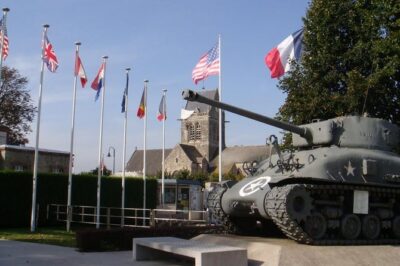
This tour also appears in