
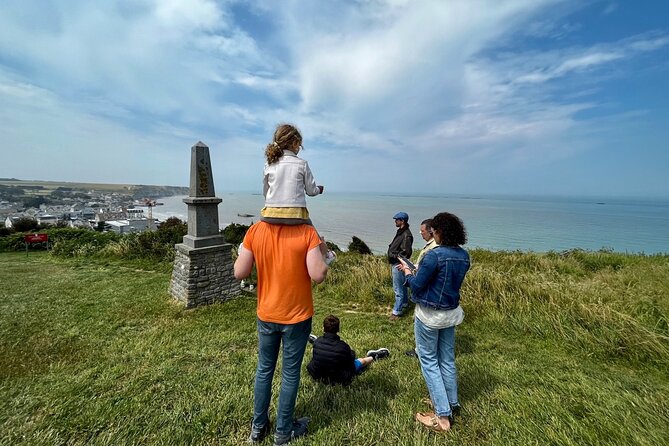
Reviewed · D-DAY BEACHES TOURS
Private vintage sidecar tour of the D-Day Landing Beaches
Sidecars make D-Day feel immediate. This private vintage ride turns the Normandy Landing Beaches into a sequence of human-scale moments, with helmets and vintage goggles and a guide who tells the story drive by drive. I love that you get real access to viewpoints and routes many tour buses miss, plus photo stops along the way.
The one thing to keep in mind is timing and weather. This tour needs good conditions, and depending on the day, you might not make every optional stop, especially if it is busy or moving slowly in traffic.
If you’re okay with dressing for the elements and trusting your guide to manage time, you’ll get a memorable mix of adrenaline and respect, without the usual cookie-cutter feel.
In This Review
- Key things that make this sidecar D-Day tour special
- Why a vintage sidecar tour fits Normandy better than a bus
- Getting rolling in Bayeux, and why the gear changes everything
- Stop 1 in Bayeux: medieval streets, then real-world war routes
- Arromanches-les-Bains: Mulberry B and the quieter D-Day story
- Longues-sur-Mer: seeing the Atlantic Wall guns up close
- Port-en-Bessin-Huppain: the fuel pipeline stop that rounds out the invasion
- Omaha Beach and the memorial moment, plus why time rules the day
- Normandy American Cemetery: the emotional high point, with timing limits
- The Bayeux return: closing the day with medieval charm
- Price and value: is $299.32 worth it?
- Practical comfort tips for a cold, windy, or rainy Normandy ride
- Who should book this tour, and who might prefer a different day
- Should you book Retro Tour Normandy’s D-Day sidecar tour?
- FAQ
- Where does pickup happen for this sidecar tour?
- How long is the tour?
- What sites are included during the tour?
- Is lunch included in the price?
- Is this a private tour?
- What riding gear is provided?
- What is the minimum age to join?
- Will the Normandy American Cemetery definitely be included?
- What happens if the weather is poor?
Key things that make this sidecar D-Day tour special
- Vintage sidecar ride, not a van, with helmets, gloves, and vintage goggles provided
- Private group experience (max six per booking, up to twelve on request)
- D-Day facts at the places that matter, from Mulberry B at Arromanches to the Atlantic Wall at Longues-sur-Mer
- Optional stops based on time, including Port-en-Bessin-Huppain and Omaha Beach
- Guides who adjust the route, aiming to reduce traffic when possible
- Normandy American Cemetery timing matters, especially for later starts and in low season
Why a vintage sidecar tour fits Normandy better than a bus
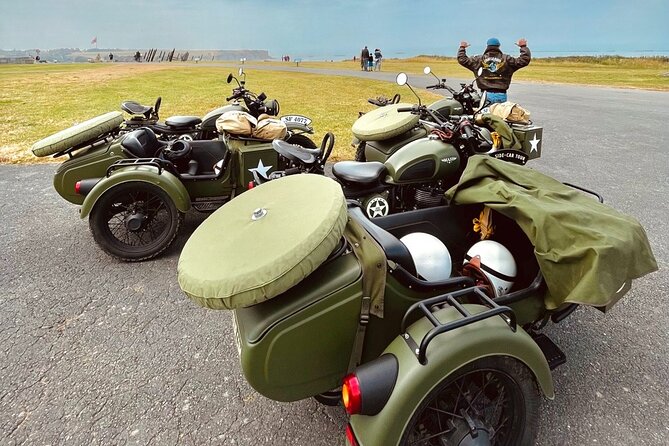
Normandy is big, and driving between sites is part of the story. What I like about this sidecar format is how it changes your pace. You are not sitting in a cushy chair watching history from the outside. You’re moving like locals do, through small towns and countryside, with the coast always in the back of your mind.
The vintage sidecar also gives you something practical: you get a more personal connection to each location. Instead of a rapid-fire stop where everyone spills out for a quick photo, your guide can slow down for the right detail. It helps especially at places like Longues-sur-Mer, where understanding the layout makes the remains feel less random and more intentional.
Of course, there’s a trade. Sidecars are thrilling, but they also mean you’ll feel wind, cold, and road vibrations more than you would on four wheels. That’s not a dealbreaker, but it is a real planning point for your comfort.
Getting rolling in Bayeux, and why the gear changes everything
The tour starts in Bayeux, and you can meet your guide at a pickup location you choose, at the Bayeux Battle of Normandy Museum parking area, or at the Bayeux bus station. That flexibility matters because Bayeux can be busy, especially around museum hours and popular departures.
Once you meet your Gentleman Sider, you gear up. You get helmets, gloves, and vintage goggles, plus rain gear if needed. This isn’t just for fun. The gloves and helmet are there so you can hold on and ride safely with confidence, and the goggles help you keep your eyes on the road ahead instead of dealing with wind and debris.
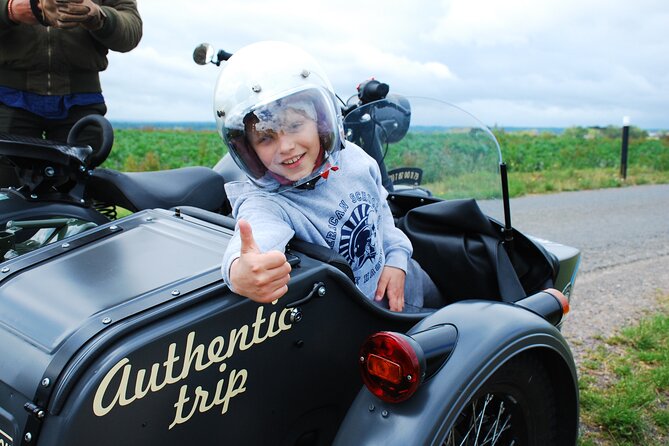
Seating is also worth understanding. The setup allows 1 to 2 passengers per sidecar, with one person in the sidecar and one person behind the driver. If you’re bringing kids or someone who dislikes fast movement, you’ll want to think about who can handle the ride position comfortably.
From what I’ve seen in the feedback, the guides are careful with first-timers. People mention how supportive the guides are, especially when it is a child’s first motorcycle ride. Still, plan to be a bit active: some riders do note it helps to be in decent shape, particularly for the back position behind the driver.
More visits along the D-Day coast:
- Normandy American D-Day Beaches Full Day Tour from Bayeux
★ 5.0 · 2,103 reviews - Normandy American D-Day Experience – Group tour from Bayeux
★ 5.0 · 1,566 reviews - Omaha and Band Of Brothers Full Day Tour
★ 5.0 · 1,104 reviews
Stop 1 in Bayeux: medieval streets, then real-world war routes
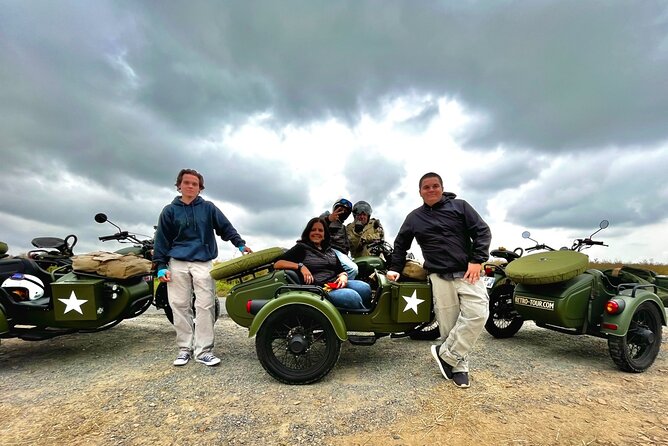
Bayeux is more than a convenient base. Starting (and returning) here gives the day a clean structure: medieval town at the beginning and end, with D-Day history in the middle.
On your first Bayeux stop, the goal is to meet up, gear up, and settle in before you start moving toward the beaches. It’s also where you get those early photo moments and the first quick orientation.
Later, on the return, you get a short Bayeux walking window. You’ll see half-timbered streets and the town’s big 11th-century cathedral. Even if you’ve never been to Bayeux before, this stop helps you connect the coastal sites to a living town, not just a battlefield map.
Arromanches-les-Bains: Mulberry B and the quieter D-Day story
Arromanches-les-Bains is a smart mid-tour choice. You arrive to a coastal setting that explains how the Allies kept the pressure going after June 6, 1944. This is where they built Mulberry B, a temporary artificial harbor designed to land heavy equipment without waiting for deeper-water ports.
What I like about this stop is that it adds a key layer most beach tours skip. Yes, D-Day is about the landings. But the next problem was logistics, and Arromanches is where you see the logic of supply. The harbor was designed so the Allies could move equipment quickly, which helped keep operations running while other ports were still contested or unusable.
Another detail that makes the visit meaningful: Arromanches was spared the worst fighting on D-Day. That contrast helps you picture how different sections of the coast were affected and why the Allies made decisions about where to land and where to reinforce.
You get around 30 minutes here, and the visit focuses on the harbor’s purpose and the way troops adjusted their actions to protect the beach area needed for the installation and operation.
Longues-sur-Mer: seeing the Atlantic Wall guns up close
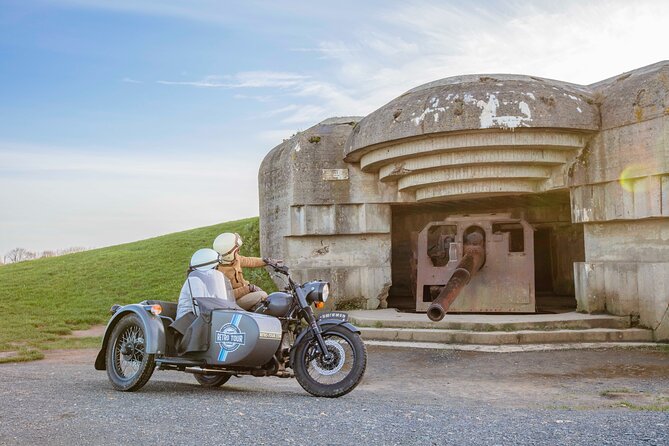
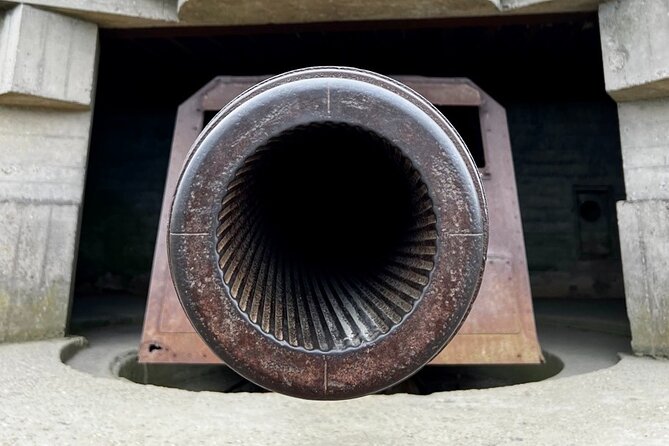
Longues-sur-Mer is one of those stops where your guide’s storytelling makes the concrete structures click into place. The battery here is part of the Atlantic Wall system, positioned between Omaha and Gold Beach.
You’ll learn about the long-range naval guns housed in reinforced concrete casemates, plus the surrounding installations used to operate and defend them. On D-Day, intense aerial and naval bombardment prevented the battery from fully engaging. Then British troops captured it the following day.
That sequence matters. It helps you understand that outcomes were not automatic. Even when defenses existed, timing, bombardment, and ground action shaped how much they could actually do.
Longues-sur-Mer is listed as a Historic Monument, and it’s in very good preservation. It’s open to visitors, and that makes a difference: you can walk around and get a real sense of the scale instead of relying only on photos. The stop is about 30 minutes, enough time to look closely while still keeping the day on track.
More Things to Do in Normandy
Port-en-Bessin-Huppain: the fuel pipeline stop that rounds out the invasion
Port-en-Bessin-Huppain is one of the more quietly impressive chapters of the Normandy campaign. It became a central hub for a pipeline network supplying Allied armies with fuel, starting early after liberation.
Your guide explains how the area started with a pipeline network of about 120 km, and how later the system expanded via Operation PLUTO, which involved underwater pipelines between the Isle of Wight and the region near Cherbourg.
This stop is also explicitly marked as flexible. It may be excluded if your guide thinks there’s not enough time left. That matters because it tells you the tour is built around real-world pacing, not a rigid checklist that ignores traffic and timing.
If you do make it, Port-en-Bessin is a useful balance to the more dramatic beachfront sites. The story becomes less about one wave and more about the systems that allowed thousands of people and vehicles to keep moving.
Omaha Beach and the memorial moment, plus why time rules the day
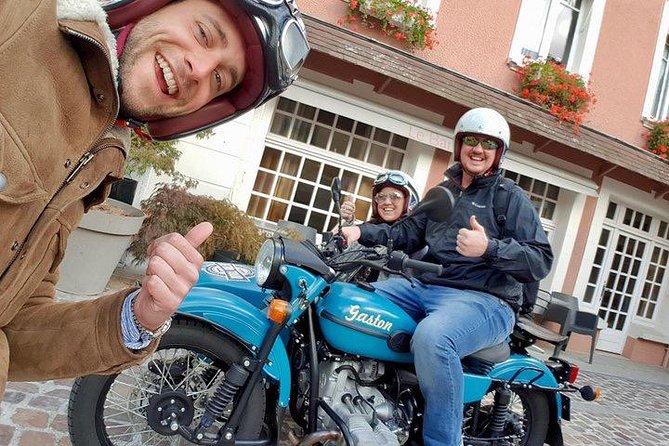
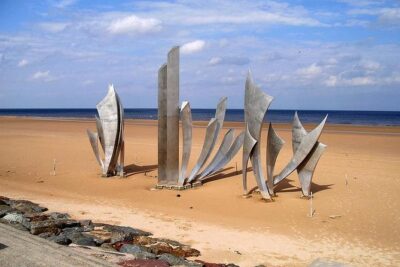
Omaha Beach is the big one, the iconic landing site tied to intense gunfire and artillery barrages. On this tour, you stand on the sands and hear accounts of what soldiers faced as they landed.
Your guide also points you to vantage points and explains what you are seeing as you move along the shoreline. People specifically mention getting views from above Omaha that feel different from typical photo angles. That fits the sidecar advantage: you’re not only watching from where every camera crowd gathers.
But Omaha is also one of the stops most affected by time. This tour notes that the Omaha Beach stop may be excluded if there isn’t enough time left. And that is a real consideration for anyone traveling during peak periods or major anniversaries, when traffic can slow everything down.
One caution I’d give you: plan for the day to be managed dynamically. If roads are crowded or the route is delayed, your guide may adjust what fits. That can be frustrating if you have your heart set on every single site, but it is also part of how a private tour stays respectful to the schedule you chose.
Normandy American Cemetery: the emotional high point, with timing limits
The Normandy American Cemetery and Memorial sits on a cliff overlooking Omaha Beach. This is where the day’s tone shifts hard, from action and structure to remembrance.
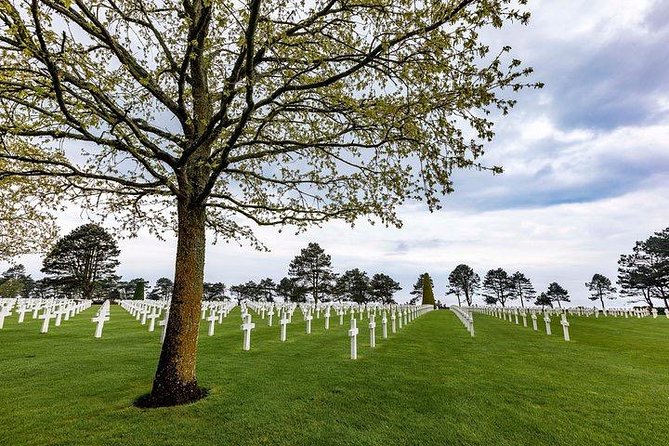
You walk among rows of white marble crosses and Stars of David, and your guide shares stories of individuals buried there and what their sacrifice meant in the larger course of history. Even if you think you know the basics, this stop hits differently when you’re standing in place with a guide who connects details to the people.
Timing is the practical issue. During low season, the cemetery closes early. Any tour starting at 4:00 PM will not be able to visit. And the tour also notes that beginning in 2026, a visit to the Omaha Cemetery cannot be guaranteed.
So if a cemetery visit is non-negotiable for you, you’ll want to plan for an earlier start time whenever possible.
The Bayeux return: closing the day with medieval charm
After the beach sites, you head back toward Bayeux. This last stop is short, about 15 minutes, but it gives your brain a place to land.
You’ll see more of Bayeux’s half-timbered streets and spend a moment with the cathedral in the background. The contrast between medieval stone and coastal wartime memory is part of what makes this day feel complete. You end the tour as a visitor in a living town, not just someone who spent hours at a memorial.
Price and value: is $299.32 worth it?
At $299.32 per person for a roughly 3 hours 30 minutes private sidecar tour, the price feels steep if you’re thinking like a bus rider. But value in this case is not only the sites. It’s the way you get there and how much attention you receive.
Here’s what you are really paying for:
- Private guiding in English, for your group only
- Transport on a vintage sidecar, which changes the whole feel of moving between locations
- Provided riding gear: helmets, gloves, vintage goggles, and rain gear
- Time-efficient stops at specific D-Day sites, including places some tours leave out
- Storytelling built around the layout, not just a generic overview
Also, the tour allows group discounts, and the booking capacity is small, max six people per booking (up to twelve upon request). That makes it easier to split costs among friends or family, and it keeps the experience from becoming crowded or rushed.
Could you do the beaches independently cheaper? Sure. But if you want the combination of a respectful guide, tight routing, and the sidecar ride itself, the price starts to make sense.
Practical comfort tips for a cold, windy, or rainy Normandy ride
I’ll say it plainly: this kind of tour is more weather-sensitive than a bus. People have called out that it can get chilly on the bike and that you should dress in layers. Rain gear is provided, but layers still matter because wind can cut through.
A few practical things to do before you meet your guide:
- Wear layers so you can adjust as you warm up.
- Bring gloves only if you think you’ll want extras, but don’t count on it, since gloves are provided.
- If you’re sensitive to noise, consider ear protection, because your ability to hear explanations can be affected by the bike sound at roadside stops.
- Wear something you can handle physically. One rider noted that sidecar position is easier than sitting behind the driver, but some decent riding stamina helps.
If the weather turns bad, the tour requires good weather and can be canceled for poor conditions, with an alternate date or full refund offered. That’s not an issue if your trip has flexibility, but if your calendar is tight, you’ll want to keep an eye on the forecast the day before.
Who should book this tour, and who might prefer a different day
This is a great fit for you if:
- You want D-Day history with personality, not a scripted museum lecture.
- You’re traveling with kids or teens who need movement and fun mixed with meaning.
- You like photo stops and side routes that feel less crowded.
- You want a private experience in English without the pressure of a huge group.
It may be less ideal if:
- You need guaranteed time in every single site, including Omaha Beach and the cemetery, regardless of crowds or timing.
- You struggle with chilly wind, since the ride is outdoors and you’ll feel it.
- You prefer a slower, walk-around pace at one place, because the tour is designed to cover multiple sites within the half-day window.
A small but real note: the day can be affected by traffic and large events. That’s not the tour’s fault, and your guide may adjust the route and which stops fit. Think of it as a living day plan, not a rigid checklist.
Should you book Retro Tour Normandy’s D-Day sidecar tour?
If your goal is to experience the D-Day Landing Beaches with emotion plus motion, I think you should book this. The vintage sidecar adds a memorable layer you can’t copy with a standard bus ticket, and the guide-focused storytelling turns each stop into something you understand, not just something you pass.
You should also book it if you like the idea of tight, meaningful time at Arromanches, Longues-sur-Mer, and Omaha, with optional stops like Port-en-Bessin-Huppain when timing allows. The small group size keeps it personal, and the provided gear means you’re not scrambling for rain protection at the last second.
Just go in with the right mindset: dress for the elements, expect some timing flexibility, and give your guide permission to make the day work. Do that, and you’ll walk away with clearer context, better viewpoints, and one unforgettable Normandy story you’ll tell for years.
FAQ
Where does pickup happen for this sidecar tour?
Pickup is offered in Bayeux and the surrounding area, up to 5 km. You can also meet at the Bayeux Battle of Normandy Museum parking lot or at the Bayeux bus station, based on what works best for you.
How long is the tour?
The tour lasts about 3 hours 30 minutes.
What sites are included during the tour?
You’ll visit Bayeux, Arromanches-les-Bains, Longues-sur-Mer, Port-en-Bessin-Huppain (may be excluded if time is short), Omaha Beach (may be excluded if time is short), and the Normandy American Cemetery (timing dependent). You also return to Bayeux at the end.
Is lunch included in the price?
No, lunch is not included.
Is this a private tour?
Yes. It’s private, meaning only your group participates.
What riding gear is provided?
You get helmets, gloves, vintage goggles, and rain gear.
What is the minimum age to join?
The minimum age to participate is 4 years old.
Will the Normandy American Cemetery definitely be included?
It depends on timing. The cemetery closes early during low season, and tours starting at 4:00 PM cannot visit. Also, beginning in 2026, a visit to the Omaha Cemetery cannot be guaranteed.
What happens if the weather is poor?
This experience requires good weather. If it is canceled due to poor weather, you’ll be offered a different date or a full refund.
Latest Bayeux entries, notes attached



D-Day Beaches Tours, compared.

Normandy D-Day Sites & Cemetery Day Trip from Paris with Lunch
Read our review →
Normandy D-Day Small-Group Day Trip with Omaha Beach, Cemetery & Cider Tasting
Read our review →
Normandy D-Day Beaches and American Cemetery Day Trip from Paris
Read our review →
Normandy American D-Day Beaches Full Day Tour from Bayeux
Read our review →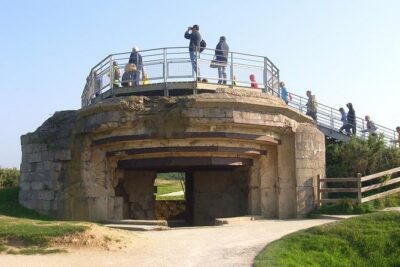
Normandy American D-Day Experience – Group tour from Bayeux
Read our review →
Omaha Beach D-Day Experience – Afternoon group tour from Bayeux
Read our review →
This tour also appears in