
Reviewed · CHAMPAGNE TASTINGS & CELLAR TOURS
The Must-sees 3h30 from Epernay (Private Half day Champagne Tour)
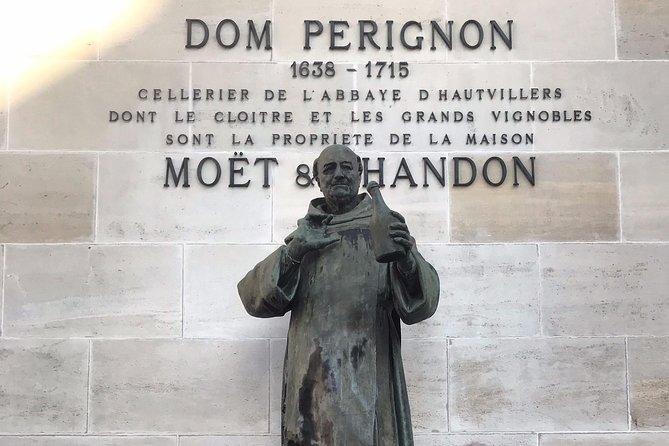
Dom Pérignon lives here, not just in bottles.
This private half day tour from Épernay ties together the UNESCO Champagne vineyard hills, the key villages tied to early Champagne, and a paced tasting day without feeling rushed.
I especially like how the route mixes big-name Champagne views with the human side of independent families growing and making wine. I also like that you get more than Champagne in the glass, you try classic Champagne region spirits and aperitifs along the way.
One possible drawback to weigh: this is a 3 hours 30 minutes format, so you get a focused hit of Champagne stops, not a long, sit-down tasting marathon at multiple large Champagne houses.
In This Review
- Key highlights to notice before you go
- Avenue de Champagne in Épernay, a UNESCO street with real cellar depth
- Abbaye Saint-Pierre d’Hautvillers, Dom Pérignon’s resting place and the myth check
- Hautvillers hillsides and a family grower tasting with Grand Cru and Premier Cru
- Aÿ-Champagne village time, Pinot noir work, and famous house headquarters
- Marc, ratafia, and the Mareuil-sur-Aÿ viewpoint from Mont du Gruguet
- Private pacing, pickup radius, and the vehicle you might ride
- What you should expect to taste, and how it fits a half day
- Who this private half day is for (and who might want something else)
- Should you book this private half-day Champagne tour from Épernay?
- FAQ
- How long is the private half day Champagne tour from Épernay?
- What is included in the tastings?
- Is this tour private?
- Where do they pick you up from?
- What language is the tour offered in?
- What are the main stops during the tour?
- Does the tour run in any weather?
Key highlights to notice before you go
- UNESCO Avenue de Champagne in Epernay, with a guided walk that explains the mansions and Champagne houses tied to the street.
- Abbaye Saint-Pierre d’Hautvillers, where you visit the church and the resting place of Dom Pérignon.
- A family grower visit plus a tasting of 3 Grand Cru or Premier Cru Champagnes, with details on pressing, winery work, and cellars.
- Aÿ-Champagne village time, including historic context, Pinot noir emphasis, and stops by famous house headquarters like Bollinger, Deutz, and Ayala.
- Classic Champagne region aperitifs, including Ratafia, Fine de la Marne, and Marc de Champagne from the Goyard Distillery.
- Scenic viewpoints like Mont du Gruguet plus vineyard villages including Mareuil-sur-Aÿ and Mutigny.
Avenue de Champagne in Épernay, a UNESCO street with real cellar depth
Your tour starts with a guided passage along the Avenue de Champagne in Épernay. This is the Champagne postcard you expect, but it also has the sort of facts that make the architecture click. The Avenue is described as the most expensive avenue in the world, and your guide uses that as a launch point to explain why: the prestige mansions and the production buildings belong to major Champagne houses that have shaped the region for centuries.
The standout part here is the context. You are not just walking past facades. You get a commented passage that ties the buildings to Champagne making and to the history of the houses associated with the Avenue, including names like Moët & Chandon, Perrier Jouët, and Pol Roger.
If you like photo stops, this opening also gives you an easy win. You will be in the right place, at the right time, with enough guidance to know what you are looking at. And because the tour is private, you can ask quick questions without the awkward pause you sometimes get on group formats.
Practical note: the Avenue is a central place, so it works well even if the weather is tricky. Still, you will spend more time outdoors later for viewpoints, so you will want a light jacket either way.
Abbaye Saint-Pierre d’Hautvillers, Dom Pérignon’s resting place and the myth check
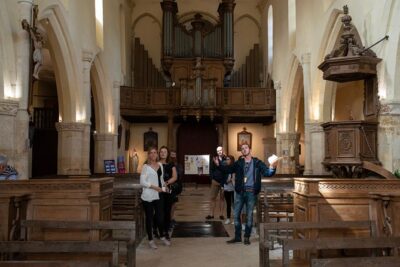
Next up is Hautvillers, often called the cradle of Champagne. Your stop is Abbaye Saint-Pierre d’Hautvillers, where you enjoy a private church visit and see the resting place of Dom Pérignon, the spiritual father of Champagne.
This stop matters because it anchors the rest of the day. When you later hear about terroir, hillside vineyards, and the nitty gritty of pressing and cellars, you will have a human starting point. Dom Pérignon is a big name in Champagne culture, but the tour is also blunt about the real question: you will learn his story and you will finally know whether or not he is the inventor of Champagne.
Even if you already think you know the answer, I like this kind of stop. It turns Champagne from a product into a timeline. A church visit is also a nice reset from driving, and the admission is listed as free, which makes it a good value add in a short itinerary.
The main drawback here is simple: the stop is timed. You get enough to see and absorb, but if you want a long, slow wander in a historic building, you might wish the day were longer. For most people, though, this is the right length for a half day.
More chalk cellars of Champagne:
- From Reims: Champagne and Family-Run Wineries Tour
★ 4.8 · 671 reviews - From Epernay : Champagne tasting with a vintage car
★ 4.9 · 133 reviews - Champagne experience with a vintage van from Epernay – 3 hours
★ 5.0 · 108 reviews
Hautvillers hillsides and a family grower tasting with Grand Cru and Premier Cru
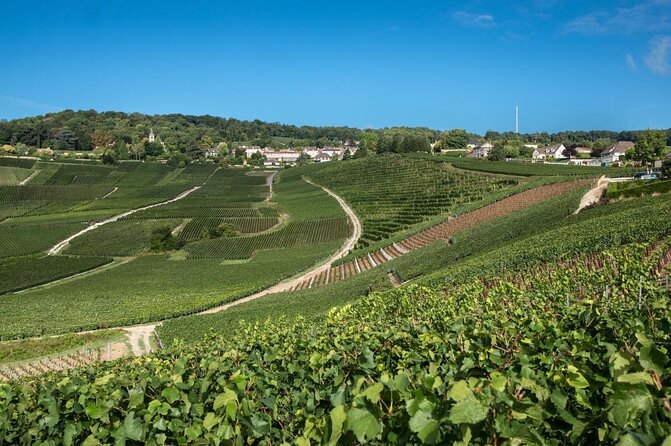
After Hautvillers church, you continue in Hautvillers to the historical hillsides that are listed by UNESCO. This is where the day starts to feel like Champagne instead of just Champagne history. You get a panorama over the Marne Valley, plus a view tied to Dom Pérignon’s experiments in winemaking.
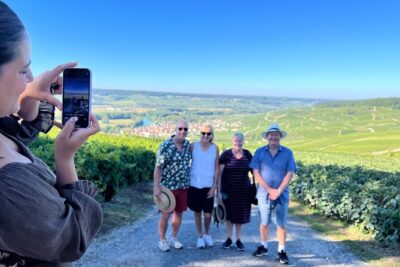
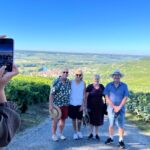
I like this stop for two reasons. First, it is where you learn what people mean by the region’s hillsides. The slopes and viewpoints are not abstract, you see them from the outside. Second, it is one of the easiest places to take memorable photos. You get a real overlook, not just a roadside snapshot.
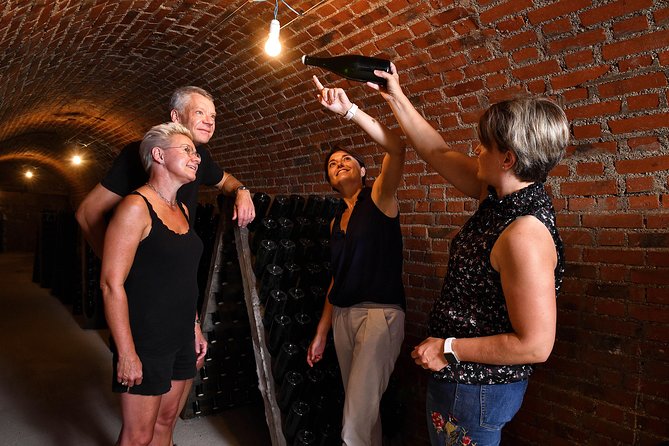
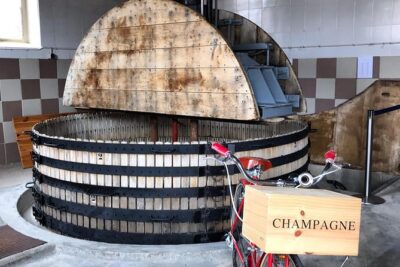
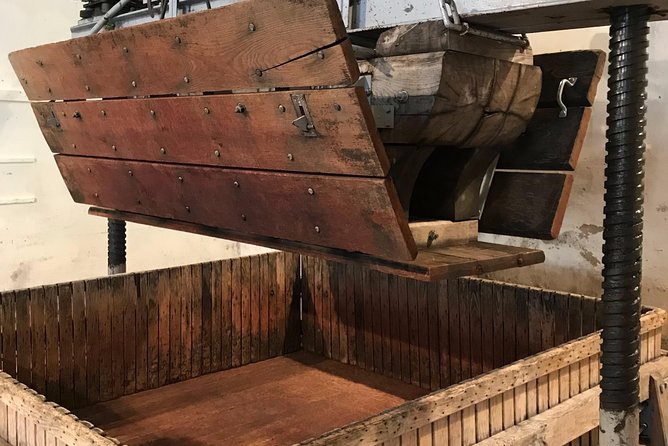
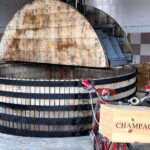
Then comes the heart of the tasting portion: a visit to a family of independent producer/growers. This is where the tour shifts from sightseeing to craft. You get explanations on the Champagne making process, plus a visit to the press, winery, and cellar. That matters because it connects the steps you hear about later with actual rooms and equipment you can point to.
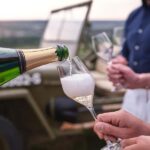
You also get a tasting during a commented session of 3 different Champagnes Grand Cru or Premier Cru, depending on season and availability. The tour notes that this tasting visit may take place in a village of the Côte des Blancs or in Aÿ-Champagne. So if you are planning a trip where you want one specific appellation flavor profile, keep flexibility in mind.
In terms of value, this is a strong use of your half day time. A family producer visit usually gives you more meaning per minute than a quick tour at a big brand. You are not just sampling, you are learning how those wines get made and why the grapes and decisions of the grower matter.
Tip for your taste buds: bring a question list. A good private guide format makes it easy to ask what you really want to know, like how they describe their base wine style or how the vintage and hillside affect the final Champagne character.
Aÿ-Champagne village time, Pinot noir work, and famous house headquarters
From Hautvillers, the tour heads to Aÿ-Champagne, one of the Grand Cru heartlands. Here you get village discovery plus history that goes beyond the usual surface-level facts.
You learn that Aÿ-Champagne was a main center of the Champagne industry in the 16th century. The tour also notes that kings of France had their own presses there, and that the wines of Champagne were formerly called Wines of Aÿ. That is exactly the kind of historical breadcrumb that helps you connect Champagne to older systems of production and trade.
You also get into the vineyard side. The tour explains the work of the vines, grape varieties, and talks about sustainable viticulture and the exceptional terroir. Pinot noir is the focus here, so expect the storyline to revolve around what that grape expresses in these hillsides.
Another memorable element is that you stop in front of the headquarters of famous houses in Aÿ, including Bollinger, Deutz, and Ayala. You are not entering a huge showroom for a long visit. Instead, you get a clear sense of the prestige map, with guidance that links these addresses to the broader Champagne story.
A quiet caution: if you want a full tasting menu at multiple big houses, this format might not satisfy. This route blends village, views, and a main producer tasting. It is ideal for first-time Champagne visitors who want the region’s geography and logic as much as they want bottles.
Marc, ratafia, and the Mareuil-sur-Aÿ viewpoint from Mont du Gruguet
Champagne is not just Champagne bubbles on this tour. In Aÿ-Champagne, you taste three essential Champagne alcohols and aperitifs: Ratafia, Fine de la Marne, and Marc de Champagne, from the Goyard Distillery, noted as the oldest in Champagne.
This is a big deal if you like variety. Most Champagne tours oversell Champagne and under-deliver on the region’s other drinks. Here, the tasting additions make the day feel like Champagne culture, not just one style. Also, these are the sorts of tastes you rarely get on quick stopovers, so it adds real learning value.
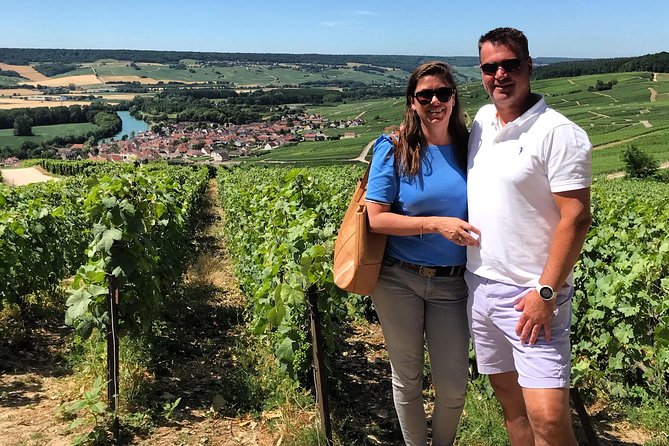
Then you move into the Marne Valley area through Mareuil-sur-Aÿ, described as a Premier Cru village with historic hillsides also listed by UNESCO. The tour includes a stop at a viewpoint called Mont du Gruguet. From here, you get an exceptional panoramic view, including the Côte des Blancs side, plus Marne Valley villages and vineyards where Champagne was born.
This is the end of the visuals stretch, and it is timed well. After Aÿ, you are already primed to understand what you are seeing. The viewpoint ties the map together: Chardonnay country at Côte des Blancs, Pinot noir villages in the Marne Valley, and the broader UNESCO hillside system you have been learning about all day.
Finally, the route crosses the small wine-growing village of Mutigny above Aÿ-Champagne, with a charming early 16th century church overlooking the vines. It is not the longest stop, but it adds atmosphere. You get one more reminder that this region is full of working villages, not just wine stops.
More French appellations, visited:
Private pacing, pickup radius, and the vehicle you might ride
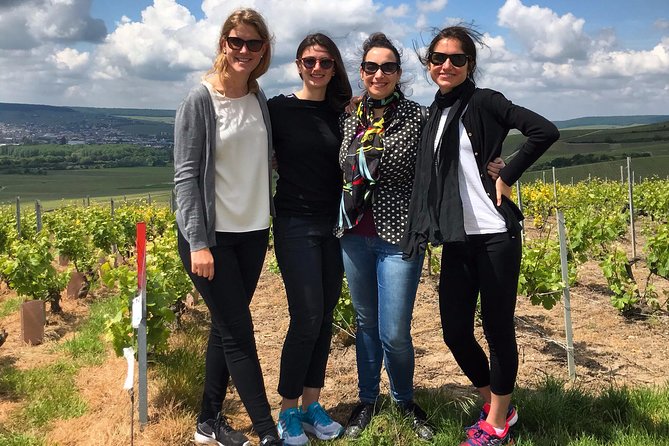
This is a private tour, meaning only your group participates. That single detail changes the feel of the day. In a short 3 hours 30 minutes, the biggest risk with wine tours is feeling rushed or herded. The private format helps you keep control of questions and stop durations, especially at viewpoint spots and during the producer visit.
Pickup is offered, but it is limited. The tour notes that pickup is within a 6 km radius around Épernay. Reims is about a 40 minute drive away and not within that radius, so you would need to join the tour in Épernay if you are outside the pickup zone.
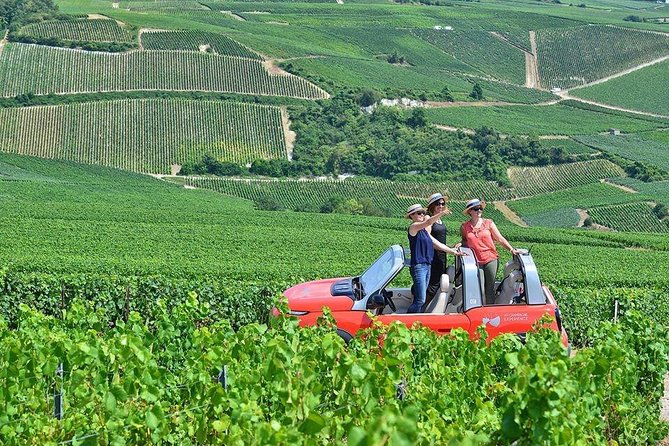
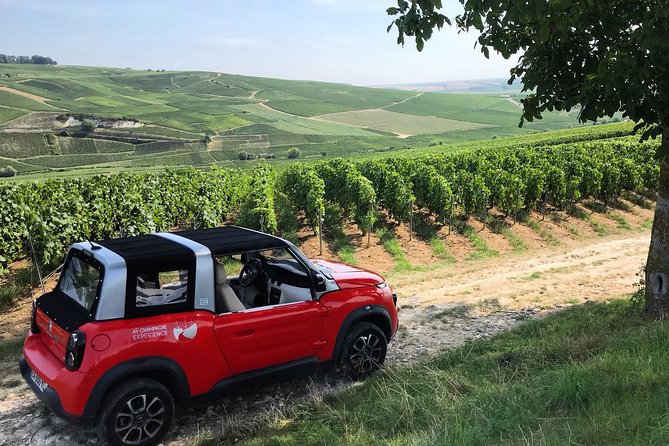
Transportation choices are also part of the day’s comfort. Depending on the weather and group size, the operator chooses from an electric E-Mehari, a premium van, or minivans. The electric E-Mehari is described as slightly raised, and they ask you to tell them if you have difficulty getting into vehicles like that.
My practical take: in a region like Champagne, time is everything. A private tour with pickup can turn a stressful logistics day into a smooth one. But you still want to be honest about where you are staying relative to Épernay, because if you miss the pickup area the day can become a self-transfer situation.
What you should expect to taste, and how it fits a half day
Across the day, you taste in two different ways.
First, you taste 3 Grand Cru or Premier Cru Champagnes during the family grower visit. Since the exact lineup depends on season and availability, you should treat this as a curated tasting rather than a guarantee of specific named cuvées.
Second, you taste Ratafia, Fine de la Marne, and Marc de Champagne from the Goyard Distillery, plus aperitifs. This gives you a broader palate snapshot of how the Champagne region treats grapes beyond the standard sparkling wine format.
Why this matters for your decision: at $293.14 per person, you are paying for a tight itinerary that combines:
- guided history and hillside context,
- a production-focused family visit (press, winery, cellar),
- and structured tastings that go beyond only bubbles.
If you already know you want a lot of Champagne tastings from multiple big Champagne houses, this might not be your best match. But if you want a grounded, region-focused day with meaningful producer contact and smart drink variety, it is a good value shape.
Who this private half day is for (and who might want something else)
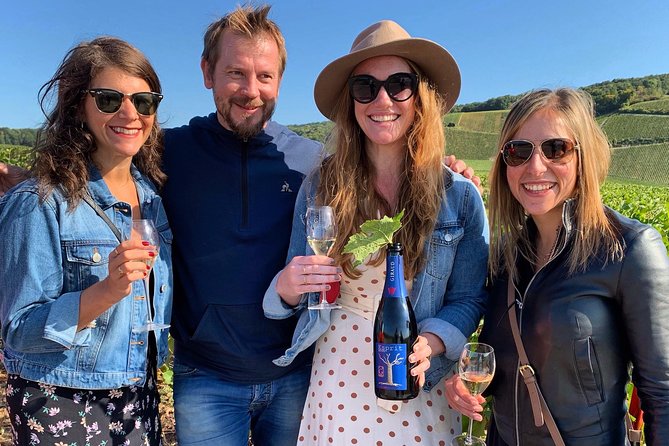
This tour suits best if you are:
- a first-time Champagne visitor who wants a logical route through key villages,
- a Champagne lover who also wants to understand how growers work,
- someone who likes scenic UNESCO viewpoints and vineyard panoramas,
- a small group that values private guide time and the ability to ask questions.
It may feel less ideal if you are:
- hunting for long, multiple large-house tastings,
- planning a day built around one very specific Champagne house tour,
- expecting a full-day schedule with more stops and more time at each location.
The half day structure is intentional. It is designed to give you enough to remember, but not so much that you feel like you are sprinting between locations.
Should you book this private half-day Champagne tour from Épernay?
If your goal is to get the Champagne story in 3 hours 30 minutes, I think you will like this. The combination of Avenue de Champagne, Abbaye Saint-Pierre d’Hautvillers, UNESCO hillside viewpoints, and a family producer tasting of 3 Grand Cru or Premier Cru creates a day that makes sense even when you are new to the region.
Book it if you care about more than bottles. The tasting at a grower, the explanation of pressing and cellar work, and the added region drinks like Ratafia and Marc de Champagne make the day feel fuller than a standard Champagne sampler.
One final decision helper: check your pickup distance from Épernay before you fall in love with the idea. If you are outside that 6 km zone, you will need to plan to meet the tour yourself in Épernay, because pickup may not be possible.
If you want, tell me your travel dates and what you like most, big houses, small growers, or hillside views. I can help you decide whether this route fits your Champagne style.
FAQ
How long is the private half day Champagne tour from Épernay?
It runs about 3 hours 30 minutes.
What is included in the tastings?
You taste 3 different Champagnes that are Grand Cru or Premier Cru during the family producer visit, plus you taste Ratafia, Fine de la Marne, and Marc de Champagne from the Goyard Distillery.
Is this tour private?
Yes. It is a private tour/activity, and only your group participates.
Where do they pick you up from?
Pickup is offered within 6 km (3.7 miles) around Épernay. Reims is not within that radius, so you would need to join in Épernay if you are farther away.
What language is the tour offered in?
It is offered in English.
What are the main stops during the tour?
You visit the Avenue de Champagne in Épernay, Abbaye Saint-Pierre d’Hautvillers in Hautvillers, UNESCO-listed Hautvillers hillside viewpoints, a family independent producer visit with tastings, Aÿ-Champagne including vineyard context and house headquarters stops, and Mareuil-sur-Aÿ with the Mont du Gruguet viewpoint.
Does the tour run in any weather?
The experience requires good weather. If it is canceled due to poor weather, you will be offered a different date or a full refund.
Latest Epernay entries, notes attached
Champagne Tastings & Cellar Tours, compared.
Day Trip to Champagne with 8 Tastings & Lunch
Read our review →
Champagne Day Trip with 6 Tastings, Reims and Winery from Paris
Read our review →
Guided Tour of Cathedral of Notre Dame de Reims
Read our review →
Champagne Day Trip from Paris with 8 Tastings & Lunch
Read our review →
Reims afternoon tour Champagne and family growers
Read our review →This tour also appears in