
Reviewed · CHAMPAGNE TASTINGS & CELLAR TOURS
Vineyard and Triple Tasting First Cru in the Mountains of Reims
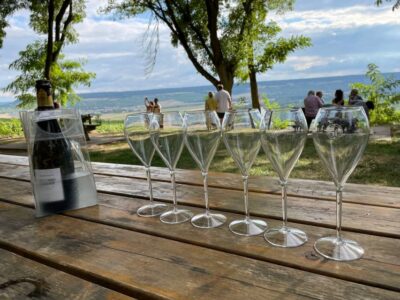
A glass of Champagne with a view. This 1 hour experience at Champagne Lallement Massonnot pairs a vineyard introduction in the mountains of Reims with a guided tasting using the Eye, Nose, Mouth approach, all while you look out toward the Cathedral of Reims. It is Champagne education that feels practical, not school-ish.
I really like how the host ties the bubbles to real-world details, from Chardonnay 1er Cru terroir to the people and choices behind Champagne. I also love the pacing of the tasting, you sample three cuvées selected from four options, with a style progression that helps you avoid palate overload.
One possible drawback: there are no snacks included, so if you are prone to feeling hungry, eat beforehand or plan to grab something nearby.
In This Review
- Key highlights you will feel right away
- A short Champagne lesson with a big view over Reims
- Entering the tasting mindset: Eye, Nose, Mouth, and gestures
- Chardonnay 1er Cru in the mountains of Reims
- A tour that makes the business side of Champagne make sense
- The three-cuvée tasting: choosing from Sun D’eden, Floresian Zest, Baies d’Alizés, and Vintage 2020
- Views, welcome, and a family-estate feel
- Value check: is $30.04 for three tastings worth it?
- Timing, pacing, and what to expect during the 1 hour
- Who this Champagne tasting is best for
- Practical tips so you enjoy it fully
- Should you book this Vineyard and Triple Tasting in the Mountains of Reims?
Key highlights you will feel right away
- Premier Cru vineyard setting: Ten hectares on the mountain of Reims west, with big views toward Reims
- Eye, Nose, Mouth training: You taste more intentionally, using simple steps and sommelier gestures
- Three tastings in about an hour: Enough time to learn, not enough time to get bored
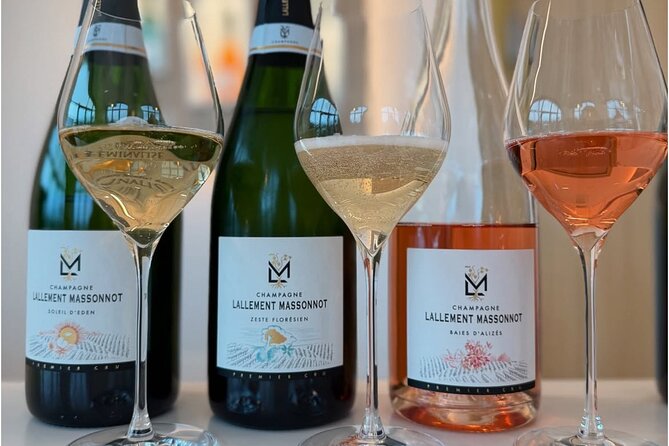
- Choice among four cuvées: Sun D’eden, Floresian Zest, Baies d’Alizés, and Vintage 2020, with three served in your group
- Small group feel: Maximum of 8 travelers, so questions are welcome
A short Champagne lesson with a big view over Reims
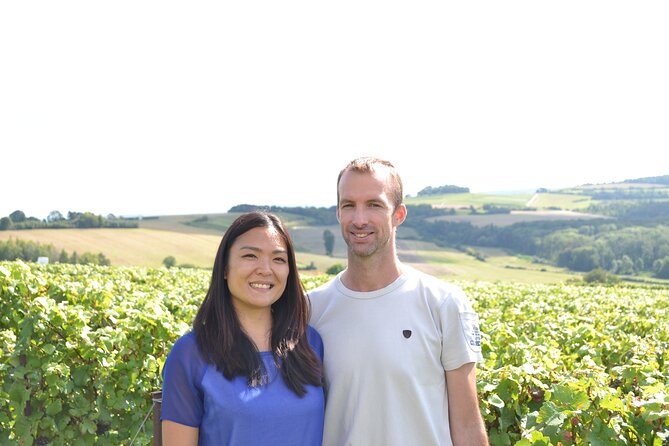
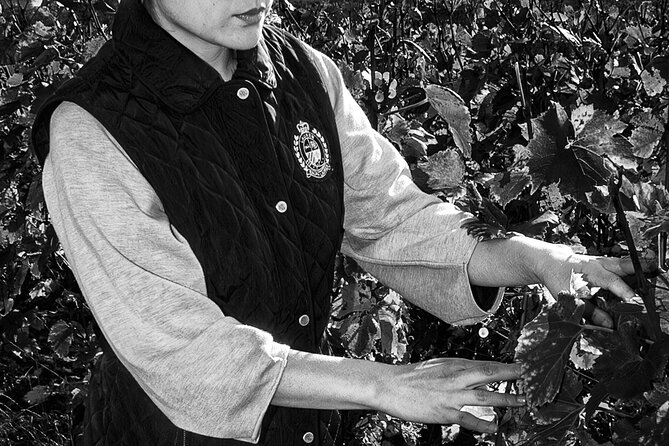
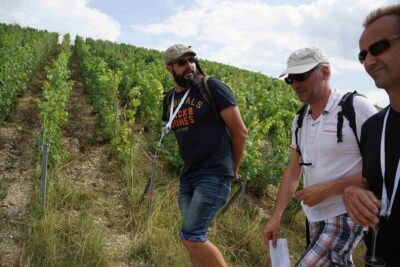
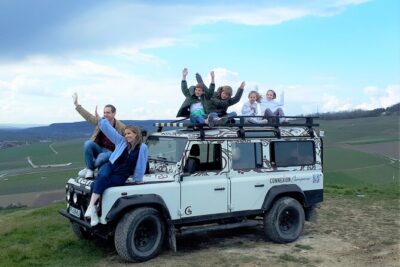
If you think Champagne is just something you drink, this tour nudges you to think again. You start with the setting, the vineyard plot where Chardonnay 1er Cru grows, spread across ten hectares on the mountain of Reims west. Even before you taste, you get that sense of place, the hills framing the scene and the Cathedral of Reims sitting in the distance like a landmark you cannot ignore.
This is the kind of experience that makes the bubbles feel less mysterious. The host talks about why Champagne exists as it does, covering the economic actors involved, what terroir means in real life, and how the long story of the region connects to the decisions winemakers make now. It is not a lecture that drones on. It is more like a guided walk where each idea connects to what you will do next with your glass.
And yes, the view matters. Champagne can be fancy, but here it stays grounded. You look out at the landscape, then you taste, then the talk comes back again. It keeps your brain awake in a good way.
Entering the tasting mindset: Eye, Nose, Mouth, and gestures
The core of the tour is a tasting method you can actually use later. You follow a three-step approach: Eye, Nose, and Mouth, supported by sommelier gestures that give you something concrete to copy. That is the trick. Instead of vague advice like learn to appreciate wine, you get a repeatable routine.
Here is what you will do in practice. First you look, then you smell, then you taste, with each step prompting different observations. This is exactly the sort of structure that helps you stop guessing and start noticing. You will likely find that your descriptions become simpler and more accurate, because the steps keep you from jumping around.
The tour also takes palate fatigue seriously. You taste three cuvées chosen in a way that respects the progression of styles, so you do not end up with your mouth tired and your brain done early. In an hour, that pacing is everything. You want learning, not just sipping.
More chalk cellars of Champagne:
- Reims: Guided Tour of Cathedral of Notre Dame de Reims
★ 4.5 · 857 reviews - Reims afternoon tour Champagne and family growers
★ 5.0 · 535 reviews - From Reims: Morning Champagne Tour and Tastings
★ 4.8 · 463 reviews
Chardonnay 1er Cru in the mountains of Reims
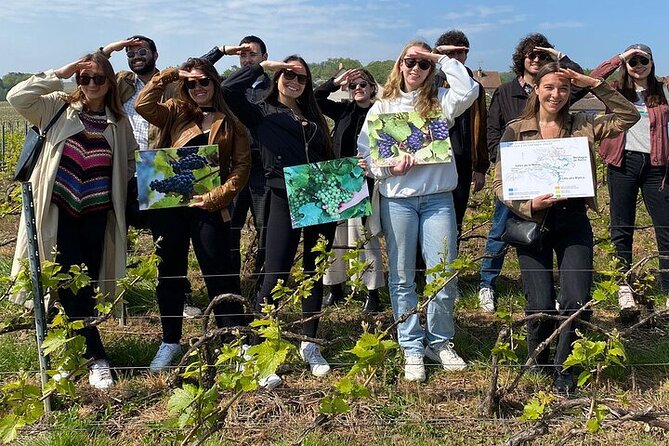
This experience is rooted in the vineyard, not just the glass. You begin with an introduction to Champagne right where Chardonnay 1er Cru is grown. That matters, because terroir is hard to understand when it is only words on a brochure. Standing in the vineyard puts context behind the concepts you hear.
The host also points out the assets winemakers rely on to keep Champagne thriving. Think of it as connecting tradition and practicality. The region has a reputation, but behind the scenes there is work, planning, and constant choices. When you understand that, the tasting becomes more than a flavor event. It becomes a way to read what the place is doing, season to season.
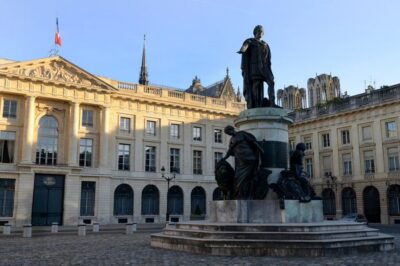
Also, the mountain setting helps you picture how Reims fits into the story. You are in the hills of the Montagne de Reims west, and you get that visual link between the viticulture and the city. When you can see the Cathedral of Reims from near the vines, the region stops being abstract.
A tour that makes the business side of Champagne make sense
Not every Champagne tasting talks about the human side. This one does. You learn about the different economic actors of Champagne and how terroir and history interact with the realities of making, selling, and sustaining a product over time. It is a reminder that Champagne is not only art. It is also a living business ecosystem.
That may sound heavy, but it is handled in a way that stays connected to what you are doing. As you taste, you can mentally connect the effort behind the scenes to the glass in your hand. You start to notice that quality is not accidental. It is built from decisions, from vineyard choices to production choices to how the house positions styles.
If you like wine that comes with explanations you can repeat, this is a strong fit. You will leave with a clearer mental map of what Champagne involves, beyond just the bubbles.
The three-cuvée tasting: choosing from Sun D’eden, Floresian Zest, Baies d’Alizés, and Vintage 2020
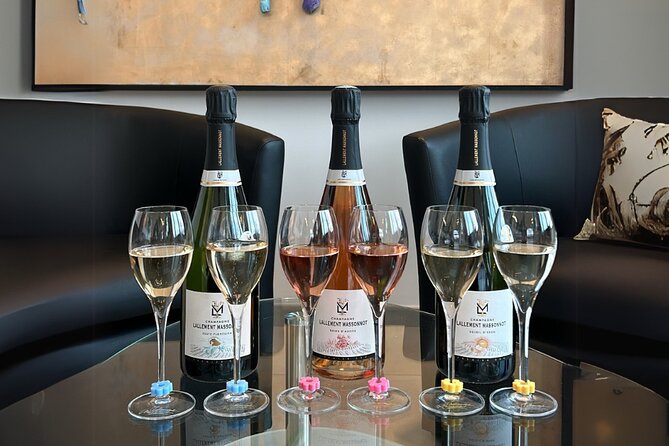
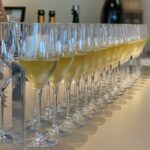
Now to the fun part. You taste three champagnes during the tour. The best detail here is choice. Your companion, if you are a couple, or your group, gets to choose which three cuvées to sample from a set of four. The cuvées you might taste include Sun D’eden, Floresian Zest, Baies d’Alizés, and Vintage 2020.
You do not get all four in the tasting, and that is a good thing. Sampling three keeps the experience focused in a short time window. It also reinforces the lesson about palate control. You learn to taste, compare, and reset within the hour.
What should you focus on while you taste? Use the method you are taught. Let the Eye step lead, then shift into Nose, then finish with Mouth. If you feel tempted to rush, slow down for the nose. That is where most people discover new things, fast.
Also, treat the three cuvées like a mini lineup. Even if you are not trying to memorize flavor notes, you can learn how styles differ in structure and impression. The host builds the tasting progression to help avoid saturation of the palate, so you can compare more accurately.
More of France by the course:
Views, welcome, and a family-estate feel
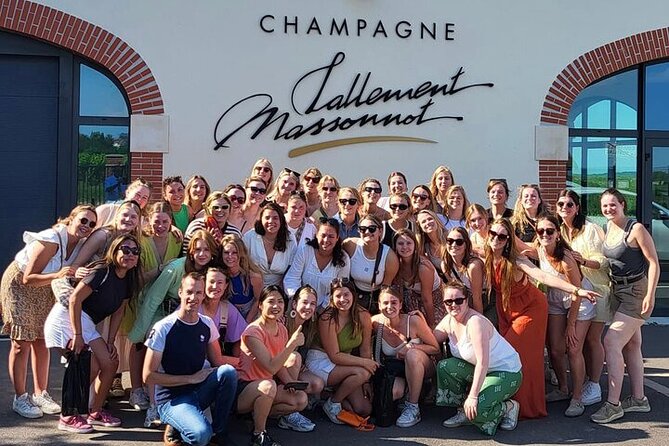
A lot of Champagne experiences feel like a performance. This one feels more personal, like you are being shown something the host genuinely cares about. If you meet Marie Lallement, you will likely recognize the warmth people describe, the sense of being welcomed into a family estate rather than handled like a number.
That personal touch shows up in how the tasting gets adjusted to your needs. Some tours give you the same script for everyone. Here, the experience is tailored, which helps you ask questions and get answers without feeling rushed.
And while the views of Reims and the Cathedral of Reims are the headline, the welcome is what makes you relax enough to actually enjoy the learning. You can taste more easily when you feel comfortable.
Value check: is $30.04 for three tastings worth it?
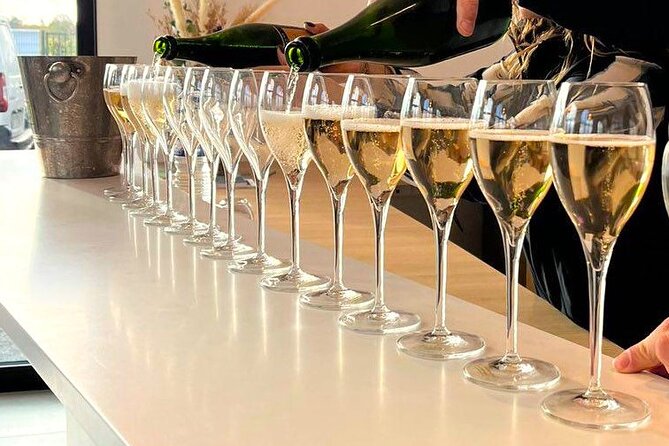
At about $30.04 per person, this is priced like a focused, single-session tasting experience. You get three champagne tastings, plus the structured coaching that teaches you how to taste with the Eye, Nose, Mouth method. There are no snacks included, so you should think of it as a tasting plus instruction, not a meal.
For me, the value comes from two places. First, three tastings in one hour is efficient. Second, you get a usable approach to tasting, not just a short pour-and-go event. If you are the kind of traveler who wants to understand what you are drinking, that coaching is where your money quietly does its best work.
Group size also supports the value. With a maximum of 8 travelers, the experience has room for interaction. In a larger group, the host might spend less time on individual questions. Here, the small cap makes it feel more like a conversation.
One caution on value: plan on being hungry if you skip food before the tour. The tour does not include snacks, so if your schedule is tight, make sure you eat earlier. Otherwise you may be thinking about your stomach more than the Champagne.
Timing, pacing, and what to expect during the 1 hour
The experience is about 1 hour. That is short enough to fit into a day in Reims without turning your afternoon into a logistics puzzle. It is also long enough to do more than a single tasting.
The flow is simple:
- You meet at Champagne Lallement Massonnot and start with an introduction to the estate and Champagne context.
- You experience the vineyard setting and learn how Champagne connects to terroir, history, and the people behind production.
- You then taste using Eye, Nose, Mouth, guided with sommelier gestures.
- You taste three cuvées selected from Sun D’eden, Floresian Zest, Baies d’Alizés, and Vintage 2020, with a palate-friendly progression.
Because it runs around an hour, you should come ready to concentrate for short bursts. If you are a casual drinker who wants only a quick sip, you might initially wonder where the time goes. But the tasting method is the reason it is not just random pours. By the end, you will likely feel more confident about what you are noticing.
Who this Champagne tasting is best for
This tour is a strong match if you:
- Want real tasting instruction and not just a pretty vineyard stop
- Like small group experiences with a personal feel
- Are curious about what makes Premier Cru Champagne different, not just how it tastes
- Prefer learning in an active way, looking, smelling, then tasting
It is also a nice option if you are traveling as a couple, since you can choose the cuvées together. If you are traveling with friends, the group choice keeps everyone involved.
If your main goal is to drink as much Champagne as possible, this is probably not the best fit. It focuses on three tastings and education. The point is quality of experience, not maximum volume.
Practical tips so you enjoy it fully
A few practical things will make your hour smoother.
First, eat beforehand. Snacks are not included, and you do want your focus for the tasting method.
Second, wear comfortable shoes. You are on a vineyard property, and even if the walk is not long, you will likely be on uneven ground.
Third, plan your day with a little breathing room. With a small group and a structured tasting, arriving early helps you settle in rather than rush.
Fourth, if you want to maximize your learning, go in with a simple intention. Tell yourself you will use Eye, Nose, Mouth and notice one new thing per pour. That keeps you engaged even if Champagne is not your usual hobby.
Finally, if you are visiting in peak season, book ahead. The average booking window is around 15 days in advance, so waiting until the last minute may squeeze your options.
Should you book this Vineyard and Triple Tasting in the Mountains of Reims?
I would book it if you want a focused Champagne experience that gives you something to take home: a clear tasting routine and a deeper sense of how Chardonnay 1er Cru connects to the Champagne you drink. The small group size, the three-cuvée format, and the Eye, Nose, Mouth method make it feel efficient and worth the price.
I would think twice if you are mainly looking for a full food-and-drink outing, because snacks are not included. Also, if you dislike structured activities, the guide-led tasting coaching may feel a bit more “learn” than “wander.”
If your ideal day in the Reims area includes vineyard views, hands-on tasting skills, and an hour that actually teaches you something, this one fits nicely.
Latest Reims entries, notes attached
Champagne Tastings & Cellar Tours, compared.
Day Trip to Champagne with 8 Tastings & Lunch
Read our review →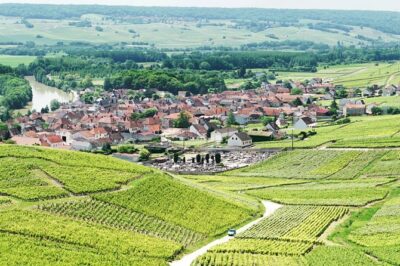
Champagne Day Trip with 6 Tastings, Reims and Winery from Paris
Read our review →
Guided Tour of Cathedral of Notre Dame de Reims
Read our review →
Champagne Day Trip from Paris with 8 Tastings & Lunch
Read our review →
Reims afternoon tour Champagne and family growers
Read our review →This tour also appears in