
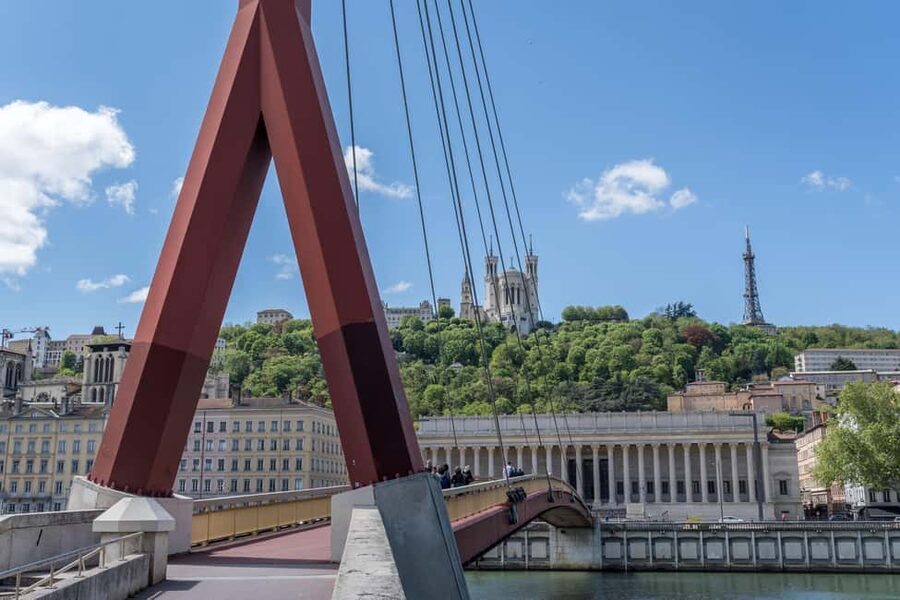
Reviewed · HISTORICAL TOURS
Culture History & Secrets: Lyon with a local artist -english
Lyon has a storyteller on its sidewalks. This 2-hour walk with Bertrand, a Lyon-born actor and visual artist, puts Roman origins and silk-era traboules right into your line of sight, not just on a signboard. The one drawback: it is a steady walking tour with short stops, so it is not ideal if you want a lot of sitting time or need wheelchair access.
What makes it feel different is the small group size, limited to 10, so you can actually ask questions and hear the details clearly. Bertrand guides in English live, and in practice he can adjust his explanations when people ask in different ways. The tour ends in central Lyon at Place Sathonay, which is a nice springboard for a meal or a second round of wandering.
Plan for weather and footing. Bring comfortable shoes, a water bottle, and an umbrella if the forecast looks unsure, plus your camera for the panoramas.
In This Review
- Key highlights worth centering your day
- Meeting Bertrand at Saint-Jean, then getting the lay of Lyon fast
- Cathédrale Saint-Jean-Baptiste and Vieux Lyon: where the story gets real
- Roman origins you can track on foot
- Traboules and silk-era streets: Lyon’s private passageways
- A food market pause that feels like Lyon, not a show
- Panoramic viewpoint and riverside perspective
- Palais de Justice and the contrast that makes Lyon click
- WWII chronicles in the middle of a morning walk
- How English guidance works, and what to expect with questions
- Duration, walking pace, and who this tour fits best
- Price and value at $24 for a guide-led UNESCO-area walk
- Practical tips so you enjoy every minute
- After the walk: ending at Place Sathonay
- Should you book this Lyon with a local artist?
- FAQ
- Is the tour guided in English?
- How long is the Lyon walk?
- How large is the group?
- Where do I meet the guide?
- What should I bring with me?
- Are food and drinks included?
- Are entrance fees included?
- Is the tour wheelchair accessible?
- Can I cancel for a refund?
Key highlights worth centering your day
- Bertrand the actor-artist guide, born and raised in Lyon, brings stories with stage-ready energy
- Max 10 people, designed to keep the walk comfortable and conversation-friendly
- UNESCO-protected old-area walking route, with monuments and lesser-known corners included
- Food market stop in Vieux Lyon, so you get the local rhythm without the pressure of a long meal
- Secret passageways and WWII chronicles, folded into the walk instead of treated like a separate lecture
- Panoramic viewpoint time, where the city’s layers finally line up visually
Meeting Bertrand at Saint-Jean, then getting the lay of Lyon fast
You start in the old center, at the meeting point tied to the area around the cathedral. Go to the metro station Vieux-Lyon, then head to Place Saint-Jean, in front of Cathédrale Saint-Jean-Baptiste. Bertrand will be easy to spot by the fountain in the middle of the square, wearing a white t-shirt on a wire hanger.
This start matters. Lyon’s old town can feel like a puzzle at first, with lanes twisting and viewpoints appearing when you least expect them. Having someone guide you from the cathedral area means you get orientation early, so later turns make sense instead of just being random.
And because the group is small, you do not spend the first 15 minutes fighting for a good spot to hear. In a city this historic, that alone can make a tour feel worth it.
Cathédrale Saint-Jean-Baptiste and Vieux Lyon: where the story gets real
The first stop is Cathédrale Saint-Jean-Baptiste. You do not get a long, museum-style visit, but you do get context. Bertrand’s approach is to connect what you see now to what Lyon was built on: power, faith, trade, and people making their lives in the same streets for centuries.
Right after, you move into Vieux Lyon. This is where the tour turns from “standing and looking” into “walking with meaning.” You’ll get a guided sense of the medieval street layout and how the city’s reputation formed over time, including its famous silk tradition.
Look for details as you go. Even if you have seen Lyon on postcards, the textures are different up close, and the guide’s commentary makes everyday architecture feel like it has a job. Narrow lanes, curved corners, and the way streets funnel toward key buildings all become part of the explanation.
The catch, again, is that each stop is short. If you want long photos at every corner, you’ll need to plan your pacing. You can still take pictures, but the tour rhythm is purposeful.
More centuries, footnoted:
- Vieux Lyon Cultural & Historical Walking Guided Tour (English)
★ 5.0 · 942 reviews - Historical and naughty tour of Lyon in french
★ 4.5 · 49 reviews - Lyon: Music History Tour with Wine Tasting
★ 4.9 · 34 reviews
Roman origins you can track on foot
Lyon’s origin story is not a single fact, it’s a chain of clues. Bertrand frames the city’s Roman roots as the start of its rise into a major cultural and financial center in Europe. Even with no printed map in your hands, you’ll start to see how the Roman era set the stage for what came later.
This is one of the most satisfying parts of the walk: you are not asked to memorize dates. You’re shown how the city’s timeline explains the present. The tour’s overall claim is that you’ll cover 2068 years of history, and the phrasing is playful, but the goal is serious. By the end, Lyon feels less like a destination and more like a timeline you walked through.
Traboules and silk-era streets: Lyon’s private passageways
One of the reasons this experience stands out in my mind is the attention to passageways. Lyon is famous for these lesser-seen routes through buildings, and they tie directly to the city’s silk tradition.
On this walk, you hear about how trade shaped everyday life. Silk was not just a product. It influenced where people moved, how buildings functioned, and why the city’s architecture includes these in-between routes. When you walk through or near these passageways with a guide, you finally understand why locals care about them.
There is also a “secret stop” style moment in the route, the kind of brief detour that makes you feel like you found something, even though you’re simply following a local’s sense of timing. It helps that the group stays small. In tighter groups, these routes can get crowded. Here, the design aims to avoid that.
A food market pause that feels like Lyon, not a show
You’ll spend a short window in Vieux Lyon at a food market. Food and drinks are not included, so this is not a tasting tour. Still, the stop gives you something important: the sensory part of the city.
Use this moment smartly. Look around, notice what’s local, and ask Bertrand what he recommends people try when they’re wandering afterward. In the feedback for this tour style, people often mention that the guide hands out practical suggestions, not just history facts.
If you’re hungry, keep it realistic. This is a walk with quick stops, so you might do a small snack purchase, then keep moving. Don’t plan a full sit-down here unless you want to fall behind the group.
More Things to Do in Lyon



Panoramic viewpoint and riverside perspective
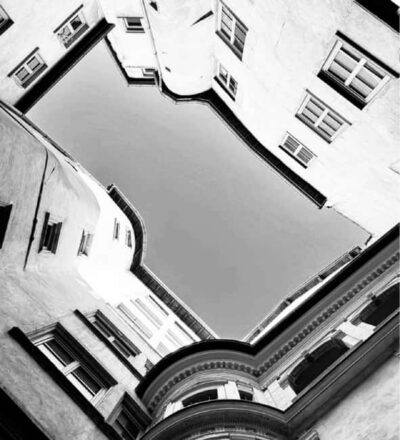
At some point you get to a view point with panoramic riverside views. This is your visual reset. After streets, passageways, and building details, the city opens up, and you can see how the hills and riverfront shape the layout.
The value here is in the pairing. Bertrand’s stories about Lyon’s changing role over time become easier to believe once you can see the geography that helped the city grow. You also get a break from the tight-lane pace.
Bring your camera here, and also bring your patience. Photo moments take longer than you think, especially with a small group everyone wants the same angles. The workaround is simple: shoot a few frames quickly, then step aside and listen. The audio side of this tour is where you get the payoff.
Palais de Justice and the contrast that makes Lyon click
Another key moment is Palais de Justice. Even if you know the name, you might not connect this kind of grand civic architecture to Lyon’s everyday street life. Bertrand helps you do that.
It’s a useful contrast stop. So much of Lyon’s fame sits in the old lanes and trade-era details, but power and governance also matter. When you stand near the legal center after spending time in the older neighborhoods, the city starts to feel like it has layers of control: trade, culture, law, and identity all shaping how people live.
It also keeps the walk from becoming repetitive. Short visits at multiple types of places is a small design choice, but it keeps your attention.
WWII chronicles in the middle of a morning walk
Lyon history includes the twentieth century, and this tour makes room for WWII chronicles without turning the morning into a heavy film session.
You’ll hear accounts woven into the streets, and that’s the key word: woven. The stories connect to locations, not just to generic timelines. When history lives in place names and building corners, it lands differently than a museum lecture.
I like this approach for one reason: it keeps you engaged. You’re still walking, still looking around, still hearing how people in Lyon adapted under pressure. It’s the kind of moment that makes you pay attention to small details you’d otherwise ignore.
How English guidance works, and what to expect with questions
The tour runs in English with a live guide. The group includes multiple nationalities in real life, and you may hear the guide adjust explanations when questions come in. In practice, Bertrand’s background as an actor helps him keep the tone clear and expressive, especially when people ask follow-ups.
Still, each stop is timed, so your best strategy is to ask your question at the right moment, not halfway through moving. If you want to talk longer, jot down what you want to ask next, then bring it up when you pause at the next location.
Duration, walking pace, and who this tour fits best
This is a 2-hour walking tour, and the route moves at a good pace with short visits, around 10 minutes per stop. The tour is limited to 10 participants, which helps maintain a comfortable pace and reduces crowd pressure.
It is not suitable for wheelchair users, which likely means you should expect uneven steps and tight corners. Also, if you have mobility limits, consider whether a continuous walk with brief pauses will feel doable for you.
Who it fits best:
- You want a local, story-led route through the UNESCO old-area zone
- You like history that sounds like people talking, not history that reads like a textbook
- You want both landmarks and small corners, without spending the whole day charting routes
Price and value at $24 for a guide-led UNESCO-area walk
At $24 per person for a 2-hour guided walk with a professional actor-artist guide, this sits in the “good value” category for Lyon. You’re paying for live storytelling, guided movement through a protected historic area, and access to monuments and lesser-seen spots.
What you are not paying for:
- Food and drinks
- Hotel pickup and drop-off
- Entrance fees to any attractions
So if you plan to enter museums or pay for specific paid sites along the way, expect that to be extra. But if your goal is to see Lyon’s layers through streets, buildings, viewpoints, and guided context, the price is a solid deal for the time you get.
Practical tips so you enjoy every minute
Before you go, keep it simple:
- Wear comfortable walking shoes
- Bring an umbrella and water
- Bring your camera
- Dress for changing weather, since you’ll be outside most of the time
When you arrive, aim to be early. Meeting by the cathedral square can have foot traffic, and you’ll want to start with the group when Bertrand does.
Also, keep your expectations aligned with the format. This is not a full-day, sit-down history class. It’s a compact, well-paced story walk. If you treat it like that, you’ll get more out of it.
After the walk: ending at Place Sathonay
The tour finishes at Place Sathonay. That’s a convenient landing zone in central Lyon. Use it like a reset point: grab a snack nearby, continue exploring on foot, or plan your next stop without feeling like you’re stuck far from restaurants and transport.
Should you book this Lyon with a local artist?
I’d book it if you want a small-group, English-led walk that connects Roman origins, silk-era culture, and WWII stories to real places you can still see today. Bertrand’s actor background brings energy, and the format keeps things moving without losing the details.
Skip it or think twice if you need long stops to rest, you have mobility limitations, or you dislike walking in historic areas with uneven ground. Also, if you expect entrance fees and tastings to be included, set that expectation now since food and admissions are not part of the price.
FAQ
Is the tour guided in English?
Yes. It is a live tour guide in English.
How long is the Lyon walk?
The duration is 2 hours.
How large is the group?
The group is small, limited to 10 participants.
Where do I meet the guide?
Meet at the metro station Vieux-Lyon, then go to Place Saint-Jean in front of Cathédrale Saint-Jean-Baptiste. Bertrand will be by the fountain in the middle of the square, wearing a white t-shirt on a wire hanger.
What should I bring with me?
Bring comfortable shoes, an umbrella, a camera, and water.
Are food and drinks included?
No. Food and drinks are not included. You do visit a food market.
Are entrance fees included?
No. Entrance fees to attractions are not included.
Is the tour wheelchair accessible?
No. It is not suitable for wheelchair users.
Can I cancel for a refund?
Yes. There is free cancellation up to 24 hours in advance for a full refund.
Latest Lyon entries, notes attached







Historical Tours, compared.
Louvre Museum Entry with History of Mona Lisa
Read our review →
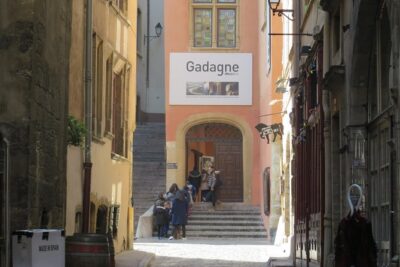
Vieux Lyon Cultural & Historical Walking Guided Tour (English)
Read our review →

Toulouse Food & History Tour with a Chef (in English)
Read our review →
Small-Group Full-Day Tour of Côte de Nuits, Côte de Beaune Vineyards and Beaune Historical District
Read our review →
This tour also appears in