
Reviewed · MONTMARTRE WALKS
Montmartre Self-Guided Audio Tour: More Than Meets the Eye
Montmartre feels like a maze until you get a soundtrack for it. This self-guided audio tour lets you follow the hilltop story of Paris at your pace, from the Wall of Love to the art studios and windmills around Moulin de la Galette. With offline access to audio and maps, you are not stuck hunting Wi-Fi while you climb.
I especially like the way the route stitches together artists and landmarks in a way that makes the streets feel lived-in, not just photographed. And the narration style adds humor, plus you can start, stop, and even speed up the recording if you want to move faster. The main drawback to plan for is physical, Montmartre has stairs and steep bits, and your phone battery matters a lot.
In This Review
- Key Points to Know Before You Start
- Montmartre by Audio, Not by Herd
- Price and What You Get for Under $15
- Gear Checklist: Smartphone, Headphones, and Battery Smarts
- Start Point: Rue des Abbesses and a Route That Ends at Sacré-Cœur
- Wall of Love and Mur des je t’aime: The Neighborhood Gets Romantic
- An Old Church With Records From 885
- Picasso, Modigliani, and the Idea of an Artistic Neighborhood
- Place Émile-Goudeau and Picasso First Studio
- La Maison de Dalida: Pop Culture Joins the Mix
- Moulin de la Galette Windmill and Artist Paintings
- Le Passe-Muraille and the Statue of Saint-Denis
- Rue de l’Abreuvoir to Maison Rose: Utrillo, Piaf, and Friends
- A Tiny Vineyard and the Spirit of Keeping It Up
- Lapin Agile: Cabaret Beginnings and the Rabbit Drawing
- Place du Tertre and the Restaurant Where Artists Ate
- Chevalier de la Barre Statues and the Sacré-Cœur Finish
- How Long It Really Takes, and How to Pace It on a Hill
- Navigation and Technical Tips That Can Make or Break It
- Who This Montmartre Audio Walk Suits Best
- Should You Book This Montmartre Self-Guided Audio Tour?
- FAQ
- Is this Montmartre tour available in English?
- How long is the Montmartre self-guided audio tour?
- Where does the tour start and end?
- What do I need to bring?
- Does the tour work offline?
- Is lifetime access included?
Key Points to Know Before You Start
- Offline audio and maps help you keep going even with spotty connectivity
- GPS location tracking means fewer wrong turns than a pure map-only walk
- Art-focused stops connect Picasso, Modigliani, Renoir, Van Gogh, and more to the streets
- Short, story-rich segments keep you moving, but you should still expect hills
- Smart pacing controls let you stop often without losing your place
- Some technical hiccups can happen, so bring a charged phone and have a backup plan
Montmartre by Audio, Not by Herd
Montmartre is the kind of place where you can do the classic sights quickly, then still feel like you missed the neighborhood’s real personality. A self-guided format solves that. You get to linger by viewpoints, watch street musicians, and decide when you’re ready to move on.
The best part here is that the tour is built like a walking story. It links Paris art life to specific corners, facades, and small surprises. That makes your walk feel more like a local stroll and less like a checklist.
You’ll get the most out of this if you enjoy art history as neighborhood lore, plus you like learning small details while you move. If you want only big museum highlights, you might still enjoy the walk, but you may crave more time in indoor spaces.
Price and What You Get for Under $15
At $14.99, you are paying for one thing: guided narration without a guide waiting on you. You are not buying museum tickets, and you are not paying for transport, so your money goes into making the streets understandable.
In practical terms, it’s good value because Montmartre is spread out on a hill. A walking tour that helps you connect sights in the right order can save time and frustration. And since the tour includes lifetime access, you can repeat it later, or listen again to refresh the stories without paying twice.
If you are traveling solo, this format also helps you avoid the “pace mismatch” problem of group tours. You can slow down when you see something worth stopping for, and speed up when you just want to keep moving.
More climbs through Montmartre:
- Montmartre Hidden Gems and Scenic Highlights Walking Tour
★ 5.0 · 2,684 reviews - Montmartre Hill French Gourmet Food and Wine Tasting Walking Tour
★ 5.0 · 2,588 reviews - Paris: Montmartre Highlights Walking Tour with a Local Guide
★ 4.9 · 2,318 reviews
Gear Checklist: Smartphone, Headphones, and Battery Smarts
This tour assumes you have your own phone. The listing does not include a smartphone or headphones, so bring both. If you do not, you can end up paying for audio you cannot actually hear.
The bigger practical concern is battery. There are reports of low-battery warnings, and one person flagged battery usage as a deal breaker. My advice is simple: start with a fully charged phone, and consider a power bank. Montmartre is hilly, and you do not want to run out of juice while you are halfway up Rue des Abbesses.
Also, keep in mind that GPS and audio together can be a power drain. If your phone tends to die fast, treat this as an all-day outdoor session, not a quick stroll.
Start Point: Rue des Abbesses and a Route That Ends at Sacré-Cœur
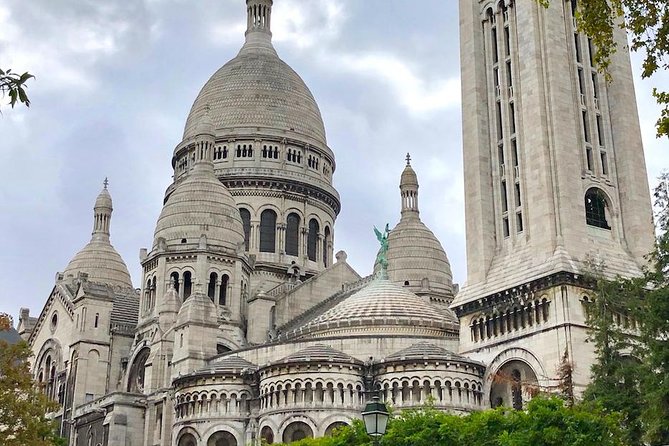
You begin at 22 Rue des Abbesses in Montmartre. That is a smart starting area because it sets you up for the neighborhood’s upward movement, so the day feels like it is naturally climbing toward Sacré-Cœur.
The tour ends at Basilique du Sacré-Cœur area, finishing in front of the basilica (35 Rue du Chevalier de la Barre). Expect a “quick peek inside” at the end, not a long guided visit. If Sacré-Cœur is your top priority, plan extra time beyond the audio.
Because the ending is tied to Sacré-Cœur, the last stretch is usually the part where you feel the most fatigue. That matters for your enjoyment, so pace yourself earlier.
Wall of Love and Mur des je t’aime: The Neighborhood Gets Romantic
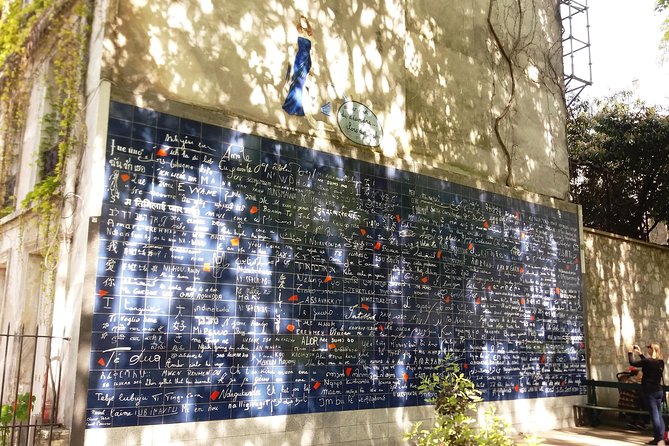
One early stop is the Mur des je t’aime, commonly called the Wall of Love. It was created in 2000 by Frédéric Baron and Claire Kito, and the whole point is scale and language. The tiles represent 311 ways to say I love you in 250 languages.
This is a great opener because it tells you what Montmartre does well. It mixes art, whimsy, and meaning into something you can actually walk past. The tour framing makes it easy to slow down, read a few tiles, and feel the place rather than just pass by.
If you are the type who enjoys symbols, it also sets the tone for what comes next: this is not just geography, it’s storytelling.
Other Paris bookings in the margin notes



An Old Church With Records From 885
Right after the Wall of Love, you briefly pause at a church site with written records dating back to the year 885. That detail is powerful because it reminds you that Montmartre’s significance is not just modern art and cafés.
The practical payoff is this. When you understand a place has been part of Paris for centuries, the buildings around you stop feeling random. They feel anchored.
One thing to watch for is how tours handle churches in general. If you step inside and the app seems to think you are off route, you may need to re-orient once you are back outside.
Picasso, Modigliani, and the Idea of an Artistic Neighborhood
Then the tour leans hard into artist life. You visit the workshop where Picasso lived between 1904 and 1909. The narration also ties in Modigliani and mentions Renoir, Juan Gris, Max Jacob, and le Douanier Rousseau as part of the wider creative scene.
This is where the self-guided format shines. When you are hearing names tied to specific spots, the streets feel like they have memory. You start noticing building fronts and corners differently, even if you only glimpse the outside.
The drawback is time and stamina. This part of Montmartre involves steady walking. If you pause for photos, you may stretch the tour longer than the “one to two hours” expectation.
Place Émile-Goudeau and Picasso First Studio
As you continue, you pass through Place Émile-Goudeau. Then you go by Picasso First Studio, another stop that makes the neighborhood’s art history feel concrete.
These are the kinds of locations that can be easy to miss if you are just walking. The narration helps you understand why those street moments matter, and it nudges you into paying attention instead of drifting.
If you like street-level art history, you will probably stay engaged through this whole stretch. If you mainly want panoramic views and dramatic buildings, you might want to save energy for the windmill and the basilica end.
La Maison de Dalida: Pop Culture Joins the Mix
The tour also passes by La maison de Dalida. This is an important reminder that Montmartre is not only painters and poets. It has hosted modern stardom too, and the neighborhood has long been a magnet for creative types.
This kind of stop helps the walking story stay varied. You are not stuck in one historical time period, and that keeps the audio from feeling like a single long lecture.
Moulin de la Galette Windmill and Artist Paintings
One of the most memorable segments focuses on the windmill. This beautiful windmill is one of only two left in Montmartre and historically specialized in grinding wheat. It also became a restaurant for a long time, where artists like Renoir, Van Gogh, and Pissarro frequented and painted it.
You’ll hear how Renoir’s Bal au Moulin de la Galette shows the party behind the famous facade, not the windmill itself. You’ll also get the connection that Van Gogh painted several versions because his brother Theo lived nearby and he knew the area well.
This stop is a good example of why audio helps. You can stand in the street looking at the facade, then suddenly see it through the lens of paintings you may have already heard of. It turns an iconic building into a set of stories and artistic choices.
Le Passe-Muraille and the Statue of Saint-Denis
The route continues past Le Passe-Muraille and a Statue of Saint-Denis. These are smaller, more “you have to notice it” spots. That is exactly what a self-guided tour should do, point you toward details a casual glance would miss.
If you enjoy charming, slightly surreal monuments, you’ll appreciate these pauses. They also add variety between the heavier art and architecture stops.
Rue de l’Abreuvoir to Maison Rose: Utrillo, Piaf, and Friends
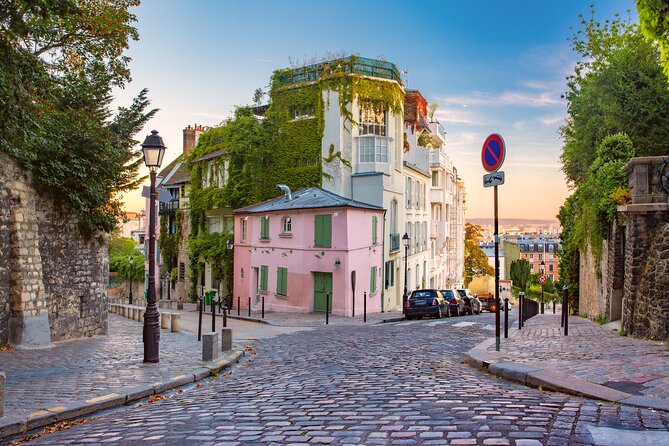
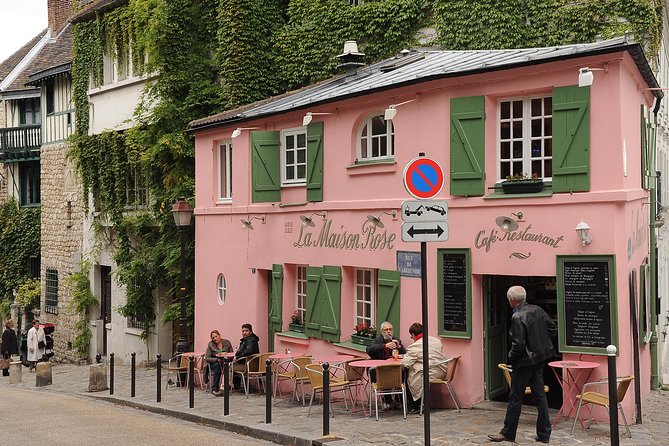
You then go down Rue de l’Abreuvoir and toward the famous pink house labeled Maison Rose. It became iconic through a local painter named Utrillo, and later it was bought by someone who had friends among famous singers.
The narration ties in Edith Piaf, Aznavour, and Jacques Brel, plus notes that Albert Camus was also a fan before them. That chain of names makes the house feel like a crossroads of Montmartre creativity, not just a pretty facade.
This is another place where you can easily take time. If you care about photos, this is a good point to slow down and frame a few shots. If you are conserving energy, you can still catch the stop without losing the overall pace.
A Tiny Vineyard and the Spirit of Keeping It Up
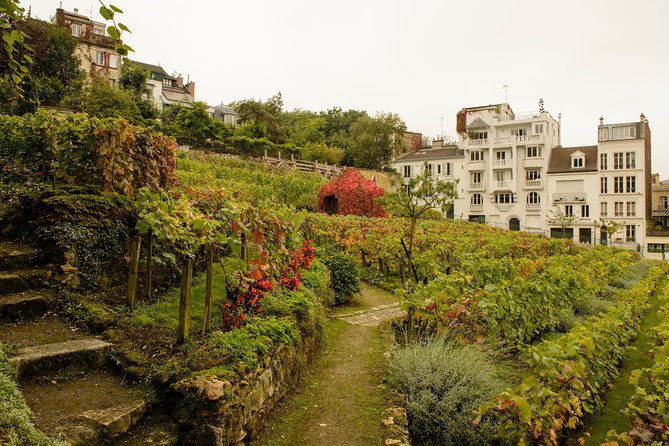
Montmartre used to have many vineyards, and the tour includes one of the few that remain. It is so small that one person can care for it, keeping it pretty for visitors, tour guides, the mayor, TV crews, and others passing through.
That line is the kind of detail that makes the neighborhood feel real. You start thinking about maintenance, tradition, and daily work, not only big monuments.
If you love gardens or atmospheric corners, you’ll likely enjoy this pause. It also gives your legs a break from constant uphill walking.
Lapin Agile: Cabaret Beginnings and the Rabbit Drawing
Another highlight is Lapin Agile, a cabaret and drinking establishment first opened in 1795. It went through name changes, from Rendez-vous of Thieves to Cabaret of the Assassins. Then in 1880, caricaturist André Gill was commissioned to create a new look, and he came up with the rabbit drawing.
This stop brings personality. It turns the neighborhood into a stage where witty culture lived long before modern tourism.
And it gives you a fun mental image for the rest of the walk: people have been gathering here for centuries, in different styles, with the same creative energy.
Place du Tertre and the Restaurant Where Artists Ate
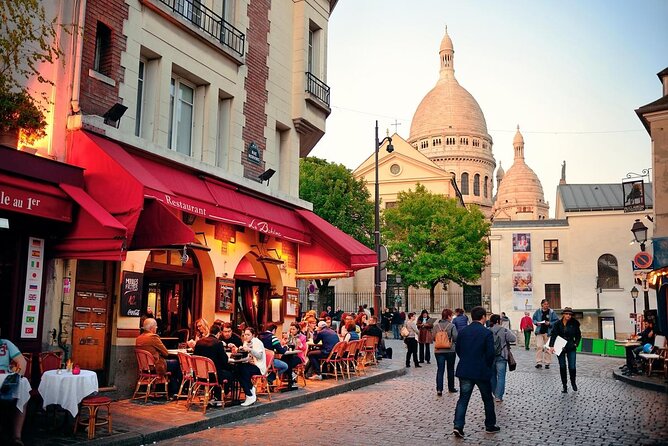
The route passes by Place du Tertre, a key Montmartre square known for its arts atmosphere. Then you reach a classic restaurant whose name means simple and without ceremony. The listing notes there has been a restaurant here since the 1500s, with rebuilds and renames over time.
The narration says painters and poets came for drinks and meals, and lists artists tied to this spot: Degas, Renoir, Monet, Cézanne, Sisley, and Toulouse-Lautrec. It also includes a specific moment: in 1886, Van Gogh painted La Guinguette à Montmartre here.
This is one of the most “anchored” storytelling areas on the route. You can connect the square, the restaurant, and the art tradition in one stretch, which is the type of chain reaction audio tours can do well.
One practical note: if you are hungry or tired, this is a good place to take a longer break. If you skip it, you might regret it later because the climb toward Sacré-Cœur can feel more intense when you are already low on energy.
Chevalier de la Barre Statues and the Sacré-Cœur Finish
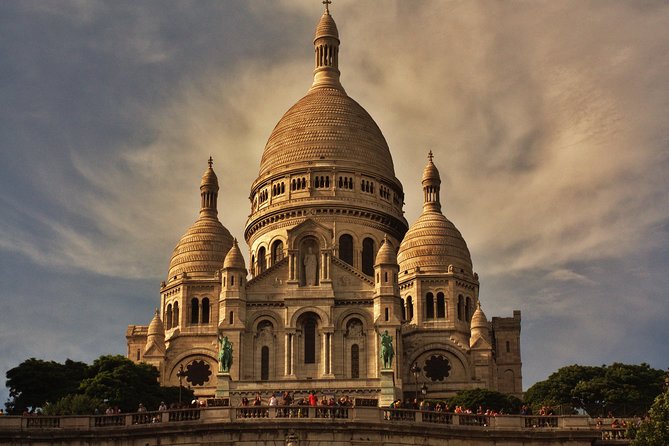
Near the end, you pass the 2nd Statue du Chevalier de la Barre. Then the tour finishes with a peep inside Basilique du Sacré-Cœur.
Sacré-Cœur is usually the “big final” moment. The tour does not position it as a full, long visit, so treat it as an arrival scene. If you want to sit, look longer, or take more photos around the basilica area, plan to extend your time beyond the audio ending.
If your legs are tired by this point, you can also shorten earlier pauses. The tour format lets you adjust on the fly, which helps you keep the day enjoyable instead of heroic.
How Long It Really Takes, and How to Pace It on a Hill
The tour duration is listed as about one to two hours. In real use, that can expand, especially because Montmartre is hilly and you may pause often. One of the best pieces of advice is to assume more walking time if you stop for street performers, cafés, or photos.
I also like that you can start and stop the audio as you go. That matters in Montmartre because you might want to linger by the Wall of Love or the windmill area, then move faster through less exciting blocks.
A smart pacing trick is to decide ahead of time how you want to spend your energy. If your top priorities are the art-studio stops and Maison Rose, you can move quickly through some squares. If views are your main goal, save your energy for the Sacré-Cœur end and treat earlier stops as shorter pauses.
Navigation and Technical Tips That Can Make or Break It
Most people like the ease of using the app and the way it tracks location. You get reminders if you get off route, and the audio can recognize where you are. There are also mentions of the narrator being easy to follow and adding humor, plus the option to speed up playback.
Still, there are a few issues worth planning for. Some users reported that GPS locations can be off, and the app can feel unclear about where to go next. Others reported technical problems, like the app not starting audio at a stop, crashing, or being hard to pause and resume.
Here’s how I’d protect your day:
- Keep a close eye on the on-screen map during church stops, since apps can sometimes interpret you as being lost when you step inside.
- Keep your phone charged so the audio and GPS do not compete for battery.
- If something stalls, calmly exit and re-check where you are before you assume the tour is broken.
If you want a stress-free Montmartre day, treat the tour as guidance, not as a life-or-death GPS mission.
Who This Montmartre Audio Walk Suits Best
This works best for independent travelers who like learning as they walk. It is especially good for solo travelers because you avoid strangers and the pacing pressure of a group.
It also suits art fans who want street-level connections to Picasso, Modigliani, Renoir, Van Gogh, and others. If you care about small landmarks and why they matter, this tour does that job.
If you have limited mobility or you are sensitive to stairs and long uphill stretches, you should think twice. Montmartre’s physical reality is part of the experience, and at least one person found the stairs and phone demands extremely difficult.
Should You Book This Montmartre Self-Guided Audio Tour?
Yes, if you want a low-cost way to make Montmartre feel like a story, not a set of random streets. At $14.99 with lifetime access and offline listening, it is an easy add-on to a Paris trip. I’d book it if your style is self-paced walking, and you enjoy art history tied to real corners.
Maybe skip or choose a different format if you know your phone battery runs low, you dislike GPS-based guidance, or you need step-free routes. And if you are extremely time sensitive, give yourself extra buffer so you do not rush through the final Sacré-Cœur area.
FAQ
Is this Montmartre tour available in English?
Yes. The audio tour is offered in English.
How long is the Montmartre self-guided audio tour?
It is approximately 1 to 2 hours.
Where does the tour start and end?
It starts at 22 Rue des Abbesses, 75018 Paris, France. It ends at the Basilique du Sacré-Cœur area in front of Sacré-Cœur, 35 Rue du Chevalier de la Barre, 75018 Paris, France.
What do I need to bring?
You need your own smartphone and headphones.
Does the tour work offline?
Yes. It includes offline access to audio, maps, and geodata.
Is lifetime access included?
Yes. The tour includes lifetime access to the app and the audio tour.
More Self-Guided Tours in Paris
- From Paris: Versailles Palace Self Guided & Gardens tickets
★ 4.4 · 1,100 reviews - Paris: Openair Double Decker Bus Audio-Guided City Tour
★ 3.5 · 938 reviews - Bruges Guided or Audio Trip with Canal Cruise Option from Paris
★ 4.0 · 795 reviews - Versailles Domain Audio Guided Half Day Tour from Paris
★ 3.5 · 415 reviews
Latest Paris entries, notes attached







Montmartre Walks, compared.

Montmartre Hidden Gems and Scenic Highlights Walking Tour
Read our review →
Montmartre Hill French Gourmet Food and Wine Tasting Walking Tour
Read our review →
Montmartre Highlights Walking Tour with a Local Guide
Read our review →
Montmartre Cheese, Wine & Pastry Guided Walking Tour
Read our review →
Private Montmartre Food Tour with Wine, Cheese & Pastries
Read our review →
Sacré-Coeur and Montmartre Tour with Expert Guide
Read our review →
Paris Montmartre Food Tour – A Full French Meal by Do Eat Better
Read our review →This tour also appears in