
Reviewed · MONTMARTRE WALKS
Paris: Montmartre Must-See Walking Tour with a Local Guide
Montmartre rewards good shoes and good stories, and this walking tour gives you both. I love the Sacré-Cœur parvis views and the chance to see mosaics and artwork up close. I also love the finish at Le Mur des Je T’aime, where you end with a smile and a photo you will keep. The tradeoff is that the route has uphill stretches, cobblestones, and stairs, so you have to plan your pace.
This is a 150-minute, English-led walk in Paris’s 18th arrondissement, starting at Carrousel de Saint-Pierre and ending at Place des Abbesses. With a local guide (French Tales) and an English audio guide included, you get the landmark checklist, plus the little bits that make Montmartre feel like a neighborhood, not a postcard.
In This Review
- Key highlights that matter
- Starting at Carrousel de Saint-Pierre and spotting your guide
- Square Louise Michel, where the hill shows you its angles
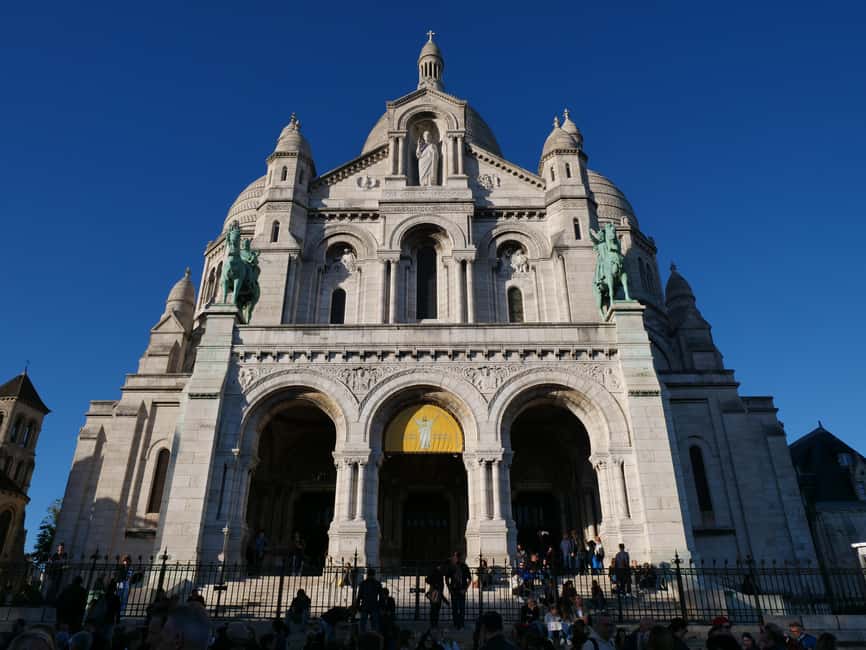
- Sacré-Cœur Basilica: mosaics, steps, and a real payoff
- Place du Tertre and Le Poulbot: art on the street, and the story behind the name
- The Dali moment, the Maison Rose photos, and Square Nadar’s quiet angle
- Vignes du Clos Montmartre: the vineyard story most people miss
- Moulin de la Galette and Bateau-Lavoir: from windmill to artist studios
- Cabaret Au Lapin Agile and Wall of Love to close strong
- The extra story stops that make Montmartre feel personal
- Why the guide experience is the real value at $29
- Timing and comfort tips for uphill Montmartre streets
- Should you book the Montmartre Must-See Walking Tour?
- FAQ
- How long is the Montmartre walking tour?
- Where is the meeting point for the tour?
- Where does the tour finish?
- Is the tour available in English?
- What is included in the price?
- What is not included?
- Does the tour run in bad weather?
- What should I wear or bring?
- What is the cancellation policy?
Key highlights that matter
- Carrousel de Saint-Pierre start near Square Louise Michel, with an easy “look for French Tales” meeting point
- Sacré-Cœur inside + panoramic parvis stop, timed for big views
- Place du Tertre for artists, caricaturists, and classic Montmartre street energy
- Vignes du Clos Montmartre for the rare vineyard story still tied to Paris
- Cabaret Au Lapin Agile for artists and writers in the kind of room Montmartre mythology loves
- Wall of Love (Le Mur des Je T’aime) with I love you in over 250 languages as a perfect ending
Starting at Carrousel de Saint-Pierre and spotting your guide
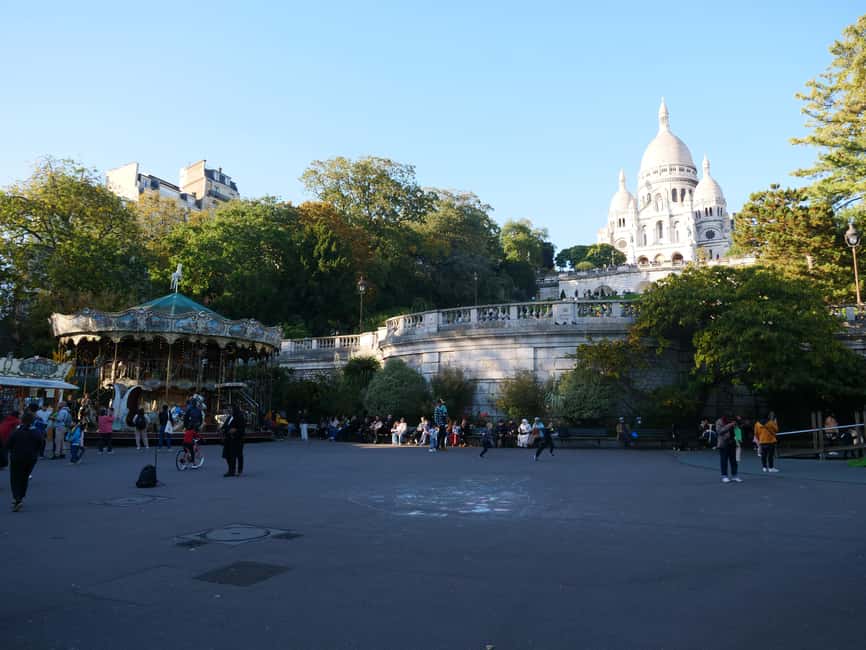
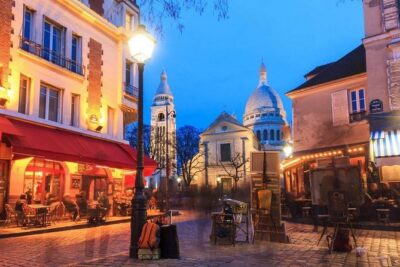
Most Montmartre tours start in the same broad area, but this one makes the first step simple. You meet at Place Saint-Pierre (bottom of Square Louise Michel), right in front of Café Le Ronsard, the one with a red storefront. Aim to arrive about 15 minutes early, because you want a smooth start when the group begins funneling uphill soon after.
How you know your guide is the guide: they hold a sign for French Tales and carry a stick with a Ratatouille character. That visual cue matters in a place where street performers, snack lines, and side streets can make you feel like you’re searching for a needle.
For getting there, you have two metro options close by. Line 2, Anvers, is about a 5-minute walk. Line 12, Abbesses, is about 7-10 minutes on foot, but the tip is practical: avoid the stairs if you can, use elevators instead.
Square Louise Michel, where the hill shows you its angles
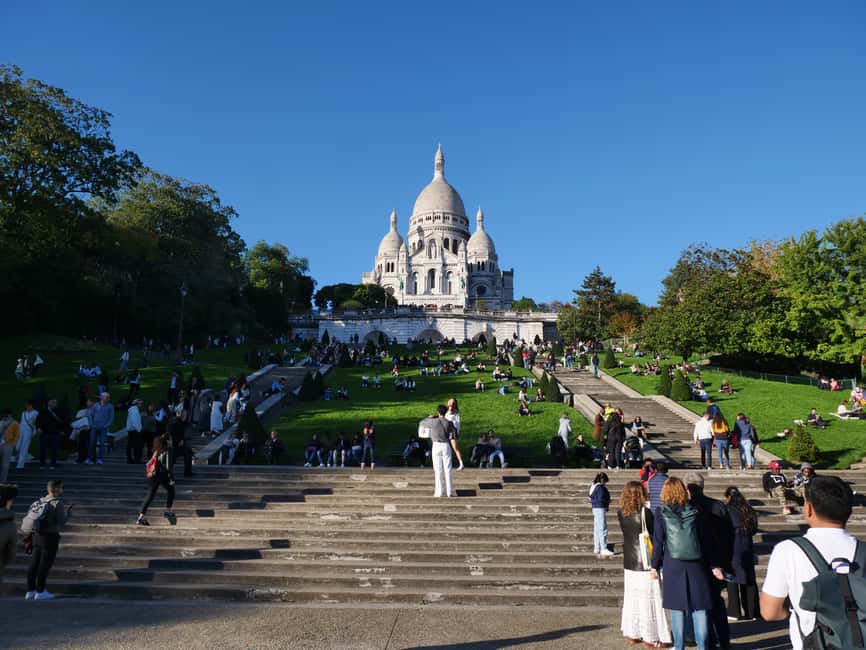
Before the big climb, you ease into Montmartre at Square Louise Michel. This is one of those stops that feels small, but it helps you understand what you are about to do. From the garden area at the base of the hill, you start seeing why Montmartre has layered viewpoints and why the neighborhood photographs so well.
You also get a quick reset here. The tour then moves toward steeper streets and cobblestones, so this is a good moment to put on your walking mindset, check your footing, and decide how you will handle photo stops later without slowing the whole group.
If you care about photos, bring your camera ready but keep your rhythm. Square stops work best when you shoot a few “clean” frames first, then let the guide’s story land, then shoot again.
More Walking Tours in Paris
- Paris Top Sights Half Day Walking Tour with a Fun Guide
★ 5.0 · 2,893 reviews - Montmartre Hidden Gems and Scenic Highlights Walking Tour
★ 5.0 · 2,684 reviews - Montmartre Hill French Gourmet Food and Wine Tasting Walking Tour
★ 5.0 · 2,588 reviews
Sacré-Cœur Basilica: mosaics, steps, and a real payoff
The Sacré-Cœur Basilica stop is the reason many people come to Montmartre, and the tour uses that stop wisely. You get time at the parvis (the open area in front) for panoramic views, then you go inside for a church visit and its visual detail.
Plan for the climb. Even if you are fit, those stairs and uneven paths catch people off guard, especially when you are walking from street to street right after. The good news is that the parvis and the views feel like a reward for effort. This is also where you get a sense of Montmartre’s “high ground” identity, because Paris spreads out below in a way you do not get from ground level.
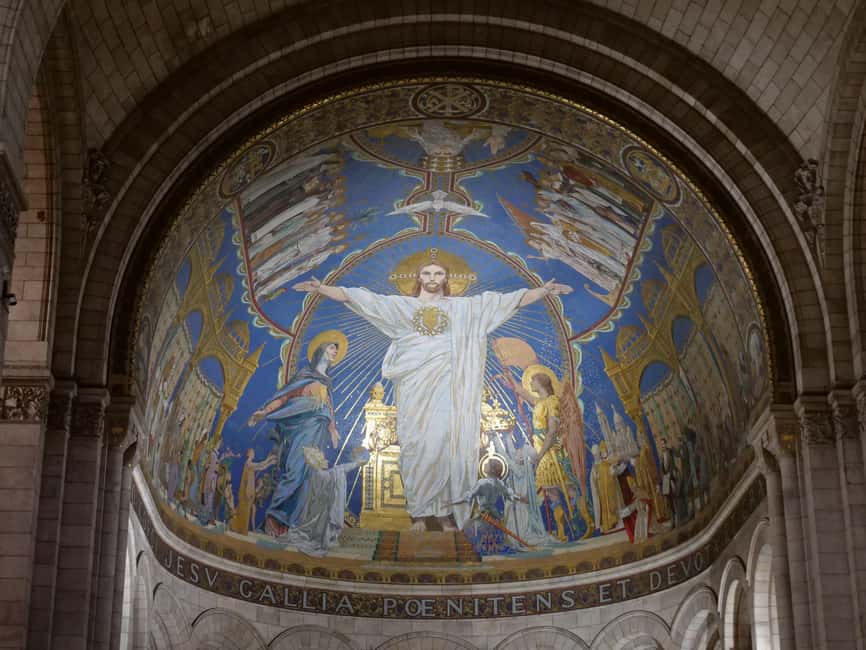
Inside, the emphasis is on what you can actually see: the mosaics and the church’s distinctive look. If you have ever rushed Sacré-Cœur on your own, you will appreciate having a guide help you notice what matters and where to stand for a better angle.
Place du Tertre and Le Poulbot: art on the street, and the story behind the name
Next comes Place du Tertre, the heart of the artist square. You will find painters and caricaturists, plus plenty of cafés clustered around the square. The point here is not just to watch. It is to understand how Montmartre presents itself through art, costumes, and old-fashioned street entertainment.
Then you pivot to Le Poulbot, a beloved eatery named after Poulbot, the illustrator tied to Montmartre street children. That name matters. It connects the neighborhood to the way artists and illustrators shaped the public image of Montmartre, not only as a place to visit, but as a place with characters and a social story.
A useful mindset here is to let the guide steer you away from common tourist traps. One strong theme in participant feedback is that the guide includes practical advice for staying safe around the area. You might still see hustles, but you will be prepared.
The Dali moment, the Maison Rose photos, and Square Nadar’s quiet angle
Montmartre has a way of stacking art styles in small spaces, and this tour gives you a few smart stops for it.
- Square Nadar is a quiet spot dedicated to the photographer. It is a breather, and it also shows how Montmartre celebrates different kinds of artists, not just painters.
- The Dali Museum stop is a homage to Salvador Dalí, pointing you toward Montmartre’s surrealist and eccentric side.
- La Maison Rose is your classic pastel-pink photo target. Even if you take only one photo there, you will end up glad you did, because it is one of those Montmartre symbols people recognize instantly.
What I like about the way these stops are handled is pacing. You are not treated like you are sprinting from one landmark to another. Instead, you get small blocks of time to look, listen, and then move. That rhythm is helpful for keeping photos from turning into a traffic jam.
More climbs through Montmartre:
Vignes du Clos Montmartre: the vineyard story most people miss
Then you get to a detail that changes how you see the neighborhood: Vignes du Clos Montmartre. This is a vineyard in Montmartre, and the tour frames it as a rare example of Paris winemaking history still alive in the neighborhood.
For me, that is one of the most valuable parts of any guided Montmartre walk. A lot of people think the area is only about art and nightlife. The vineyard stop forces a second look. You start connecting Montmartre to how it evolved, from earlier village life and agriculture into a creative district.
The photo stop here is usually less about one famous building and more about atmosphere. Look for the contrast, the idea that wine vines can still exist in a city better known for shopping and museums.
Moulin de la Galette and Bateau-Lavoir: from windmill to artist studios
The itinerary then leans into the visual history Montmartre is famous for.
At Moulin de la Galette, you learn about this historic windmill and the role it played in Montmartre’s artistic and social life. This is a stop that helps you understand why the neighborhood shows up so often in paintings and stories. Even if you never studied art history, you can still feel the connection between place and imagination.
After that, you head to Bateau-Lavoir, a famed workshop that hosted major artists such as Picasso and Modigliani. That is the part of Montmartre that feels more grounded. You are not only looking at the “icon” version of the neighborhood. You are seeing the working spaces that came before modern fame.
If you are an art lover, this is where the walk becomes more than sightseeing. It is about the working rhythm, the idea that creative breakthroughs needed spaces, not just inspiration.
Cabaret Au Lapin Agile and Wall of Love to close strong
Two of the most memorable emotional stops come near the end.
Cabaret Au Lapin Agile is where you hear tales of the legendary cabaret and the artists and writers it hosted in the 20th century. This is Montmartre as performance culture, not just visual culture. When a guide talks about places like this with energy, it makes the neighborhood feel like it had a heartbeat before today’s crowds.
Then you finish at Wall of Love (Le Mur des Je T’aime). This is the romantic monument featuring I love you written in over 250 languages. It is also a smart “wrap-up” stop. By the time you reach it, you have walked uphill, listened to stories, and collected photos. The Wall gives you something universal and easy to enjoy.
If you want a photo, go a bit slow here. People cluster naturally, so choose your spot, wait for a cleaner moment, and you will get a better image.
The extra story stops that make Montmartre feel personal
Montmartre is full of small names with big meaning, and this tour threads those in.
You will also pass Place Dalida and stops tied to Dalida’s house, plus her statue. Dalida is a great example of how Montmartre connects to French and Italian popular culture, not only the painter crowd.
You will also reach Square Suzanne Buisson, which is a peaceful garden dedicated to a local heroine. That kind of stop might not look dramatic on a map, but it matters. It breaks the visual noise and gives you a chance to sit with what you just learned.
There are also a couple additional quick photo stops along the route. The idea is practical: they help you catch viewpoints and key street scenes without turning the walk into a long chain of detours.
Why the guide experience is the real value at $29
At about $29 per person for 150 minutes, the headline price is only half the story. The real value is how the guide turns the neighborhood into a connected narrative instead of a list.
A few things stand out from what I’ve seen in guide-driven feedback patterns for this tour:
- The guides tend to be fun and interactive, not lecture-only. People repeatedly highlight storytelling that keeps families and even teenagers engaged.
- The pace feels planned. When streets get steep, the guide builds in breaks so you are not dying for water right after the best viewpoint.
- You get safety and street-smart advice. Some feedback specifically calls out tips on avoiding scams and staying comfortable in busy spots.
- The guide also gives recommendations for local cafés and attractions, which is a big deal when you want dinner that feels French, not just convenient.
Some participants mention guides by name, with Jean-Baptiste showing up a lot as a particularly entertaining, detail-heavy presence (often called JB). That matters because Montmartre rewards a storyteller. You can read about Sacré-Cœur mosaics online, but you cannot get the same “why this place matters” feeling without someone pointing it out on the ground.
Also, this tour includes both a live English guide and an English audio guide. That combination is useful when you want the flow of a guided walk but still have a way to re-check details later.
Timing and comfort tips for uphill Montmartre streets
This is a walking tour, so wear it like a plan, not a surprise.
The route includes uphill paths and cobblestones, and you should expect some stairs along the way, especially around Sacré-Cœur. The tour operates rain or shine, so dress for weather, not for comfort fantasies.
Here is what I recommend you do before you go:
- Wear comfortable shoes with real grip.
- Bring water if you run hot or if you know you get thirsty while climbing.
- Keep your expectations realistic if you have mobility limits. The tour is not wheelchair accessible due to uneven terrain and stairs, and it is not suitable for people with mobility impairments.
Duration-wise, 150 minutes is enough time to see the key icons without turning into an all-day ordeal. But it is still long enough that you will feel the hill if you try to do it in stiff shoes or without breaks.
The finish at Place des Abbesses is convenient for metro access, and if you are heading toward Line 12, elevators are available on the approach from the Abbesses area.
Should you book the Montmartre Must-See Walking Tour?
Book it if you want Montmartre in one strong morning or afternoon: Sacré-Cœur, Place du Tertre, art stops like the Dali Museum and Maison Rose, the working-studio story at Bateau-Lavoir, and the crowd-pleasing finish at the Wall of Love.
Skip it or think twice if stairs and long uneven walks are hard for you. This tour is not designed for mobility aids, and the hill is part of the experience.
If you do book, show up early, wear grippy shoes, and let the guide steer you. When the story clicks, Montmartre stops feeling like a sightseeing checklist and starts feeling like a place with characters.
FAQ
How long is the Montmartre walking tour?
The tour lasts about 150 minutes.
Where is the meeting point for the tour?
You meet at Place Saint-Pierre, 75018 Paris, located at the bottom of Square Louise Michel, in front of Café Le Ronsard with a red storefront.
Where does the tour finish?
The tour finishes at Place des Abbesses.
Is the tour available in English?
Yes. The live tour guide is English, and an English audio guide is included.
What is included in the price?
Included items are the local guide, the walking tour, stops at iconic landmarks, and recommendations for local cafés and attractions, plus an English audio guide.
What is not included?
Food and drinks are not included, and transportation is not included.
Does the tour run in bad weather?
Yes, it operates rain or shine.
What should I wear or bring?
Wear comfortable walking shoes because the route includes uphill paths and cobblestones. Bringing a bottle of water is recommended.
What is the cancellation policy?
You can cancel up to 24 hours in advance for a full refund.
Boulevard Pace
- Paris Île de la Cité and Notre-Dame Walking Tour With Crypt
★ 5.0 · 2,272 reviews - Paris in a Day: Louvre or Orsay, Eiffel Tower, City Walk & Cruise
★ 5.0 · 1,956 reviews - Paris City Center Free Walking Tour (Tip-Based)
★ 5.0 · 1,340 reviews - Paris: Dark History and Ghostly Guided Walking Tour
★ 4.7 · 1,000 reviews
Latest Paris entries, notes attached







Montmartre Walks, compared.
Montmartre Hidden Gems and Scenic Highlights Walking Tour
Read our review →
Montmartre Hill French Gourmet Food and Wine Tasting Walking Tour
Read our review →
Montmartre Highlights Walking Tour with a Local Guide
Read our review →
Montmartre Cheese, Wine & Pastry Guided Walking Tour
Read our review →
Sacré-Coeur and Montmartre Tour with Expert Guide
Read our review →
Private Montmartre Food Tour with Wine, Cheese & Pastries
Read our review →
Paris Montmartre Food Tour – A Full French Meal by Do Eat Better
Read our review →This tour also appears in