
Reviewed · MONTMARTRE WALKS
Private Walking Tour of Montmartre and Sacré-Cœur Visit
Montmartre stories start the moment you climb. This private walk strings together Belle Époque cabaret lore and artist sites like Le Bateau-Lavoir, then spotlights the Mur des Je t’aime wall before ending at the Sacré-Cœur viewpoint. I love the chance to take photos that actually match the meaning behind them.
One consideration: this is an uphill, sometimes steep walk, and if you want Sacré-Cœur’s dome view, there’s an extra fee on top of the free basilica entry.
In This Review
- Quick hits you’ll remember
- Why this Montmartre walk works in real life
- Belle Époque cabaret start: Moulin Rouge area energy
- Van Gogh-adjacent streets and where local life still shows up
- Art Nouveau metro entrance and the “real streets” feel
- Le Bateau-Lavoir: where artist history gets very human
- Le Moulin de la Galette: art you can stand in front of
- Le Passe-Muraille: a quick optical illusion reset
- Place Dalida and the pink house: where the walk feels personal
- Place du Tertre painters and the I love you wall moment
- Finishing at Sacré-Cœur: free basilica now, optional dome later
- Price and value: what $118.63 gets you, and what costs extra
- Guide style, pace, and that “photos and questions” sweet spot
- Should you book this Montmartre and Sacré-Cœur tour?
- FAQ
- How long is the private walking tour of Montmartre and Sacré-Cœur?
- Is this tour private, and is it offered in English?
- Where do I meet the guide, and where does the tour end?
- Is entry to Sacré-Cœur included?
- Do I need to pay extra for the Sacré-Cœur dome?
- Is this tour very hilly?
Quick hits you’ll remember
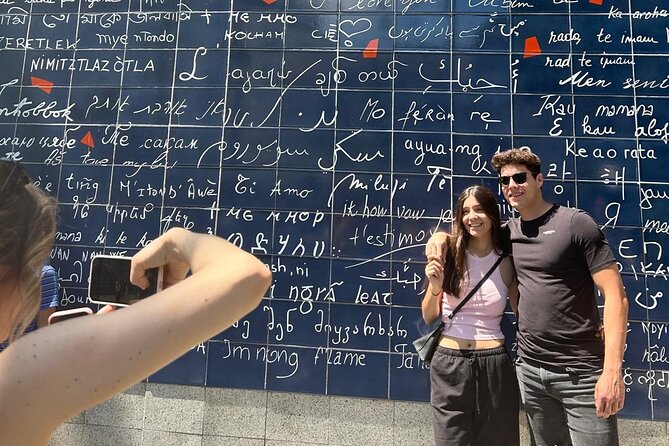
- Mur des Je t’aime: an I love you wall written in over 250 languages
- Le Bateau-Lavoir: Picasso and others made modern art here, linked to Les Demoiselles d’Avignon
- Le Moulin de la Galette: a classic Montmartre scene tied to Renoir’s Bal du moulin de la Galette
- Le Passe-Muraille: a playful optical illusion sculpture inspired by Marcel Aymé
- Sacré-Cœur: free basilica entry, with an optional dome access fee
- Guide quality: names like Ifi and Benedict show up in the praise, often for helpful answers and patience with photos
Why this Montmartre walk works in real life
Montmartre can feel like a maze until someone helps you read it. This tour is built for that, a focused 2-hour route that connects recognizable landmarks to the artists, neighborhoods, and legends behind them. You’ll start at 5 Pl. Blanche in the 9th and finish at the Sacré-Cœur area in Montmartre’s 18th, so you get a natural “lower streets to the hilltop” flow.
What makes it practical is the private format. Only your group goes, and the guide is there to steer you through the right streets, stop at the photo angles, and explain what you’re actually looking at. You also have a mobile ticket, which is one less thing to manage while you’re navigating.
Value-wise, the price is set for a guided, time-boxed experience, not a slow wandering day. For $118.63 per person, you’re paying for the guide’s direction plus the “not just views” part: art sites, specific stories, and curated stops that fill the time efficiently. If you’re visiting for the first time, or you want Montmartre without the guesswork, that structure pays off.
Belle Époque cabaret start: Moulin Rouge area energy
You begin in the layer of Montmartre that Paris loves to romanticize: the Belle Époque cabaret world. The tour kicks off with a world-famous cabaret connected to extravagant shows and bohemian nights for more than a century. The point here is not just spotting something famous. It’s learning how that era shaped Montmartre’s reputation as a place where artists mixed with nightlife and risk-taking.
In a practical sense, this opening helps you set expectations for the rest of the walk. Montmartre is famous for art, but it’s also famous for performance culture, the kind that turns ordinary street corners into stages. When the guide ties the neighborhood to artists and performers, you’ll notice details you might otherwise miss.
You also get an early chance to warm up before the hill gets serious. It’s a good time to fix your footing, get your camera ready, and decide whether you want to splurge on the optional French wine tasting upgrade later (more on that when we hit value).
More Private Tours in Paris
- Louvre Museum Paris Essential Guided Tour Semi-Private 6ppl Max
★ 5.0 · 3,807 reviews - SUV Private Transfer: Paris to Charles de Gaulle Airport (CDG)
★ 4.0 · 3,091 reviews - Paris: Private Photoshoot at the Eiffel Tower
★ 4.7 · 2,636 reviews
Van Gogh-adjacent streets and where local life still shows up
From the cabaret-era mood, you move into streets that feel much more daily. You’ll pass a charming, winding street lined with historic cafés, bakeries, and shops, and you’ll hear about where Vincent Van Gogh once lived. That detail matters because it changes the street from a pretty backdrop into a place with creative presence.
Here’s what I like about this part: it slows the tour down just enough to let the neighborhood register. The guide points out patterns you can use later on your own, like where people linger, which storefronts and corners match the historic character, and how the streets connect into the climb ahead.
This segment is also where you’ll feel how Montmartre is built. Even when the walk is short, the slope begins to show. If you’re sensitive to steep stairs or cobbles, take it easy for the first ten minutes, keep a steady pace, and let the guide handle the navigation.
Art Nouveau metro entrance and the “real streets” feel
Montmartre isn’t only about hilltop icons. You’ll spend time on one of the more authentic-feeling streets, with classic Parisian bistros, boutiques, and an Art Nouveau metro entrance. That metro entrance is an important sight for architecture lovers, but it also serves the bigger purpose of the tour: you’re seeing how design and everyday life coexist here.
Art Nouveau details are easy to overlook if you’re just rushing for photos. With a guide, you’re more likely to notice the style cues and understand why the neighborhood has such a distinctive look. And because you’re not alone, you can ask questions when something catches your eye instead of guessing what it is.
This section also helps you break the climb into manageable mental chunks. After this, you’re headed into specific “artist Montmartre” stops. By then, you’ll already understand the rhythm: pass lively street life, then hit a meaningful art marker, then keep moving upward.
Le Bateau-Lavoir: where artist history gets very human
Le Bateau-Lavoir is one of those places where the scale is small, but the story is huge. You’ll stop at the legendary artists’ residence where names like Picasso and Modigliani worked. The guide connects the humble building to a major turning point in art, including the reference to Picasso painting Les Demoiselles d’Avignon.
The practical value here is that you leave with context. Without that, you might treat it like another old wall. With it, you start to picture what these spaces were like for working artists. It also helps you appreciate the “Montmartre myth” that Paris loves, because you see how the myth is grounded in actual studios, shared spaces, and real people.
Important detail: the stop is structured as a short visit, and admission to the site is not included. If you want to go inside or see special exhibits, plan for extra costs and time beyond the tour’s walking pace.
More Walking Tours in Paris
Le Moulin de la Galette: art you can stand in front of
Next up is Le Moulin de la Galette, tied to the Impressionist painting Bal du moulin de la Galette by Pierre-Auguste Renoir. This is a great stop because it connects a painted memory to a specific location. You can stand near the scene and feel the difference between an artist’s composition and what the neighborhood looks like in real life.
Like Le Bateau-Lavoir, the visit is brief, and admission is not included. That’s not a problem if your goal is street-level understanding and photos. It becomes a consideration if you planned on spending longer inside. Still, even from the outside, the connection to Renoir is a payoff. It’s one of those moments where art history turns into an actual place, not just a museum label.
Le Passe-Muraille: a quick optical illusion reset
After the heavier art stop, Le Passe-Muraille is a smart palate cleanser. You’ll see the optical illusion sculpture known as Le Pass-Muraille (The Man Passing Through the Wall), inspired by a story by Marcel Aymé.
This stop is valuable because it gives your brain a break from “learn mode” and back into “watch mode.” You’ll likely want photos, and you’ll also get a tiny story that sticks. It’s small, fun, and easy to remember later when you tell friends what you saw.
Admission is not included, but you’re not missing out on anything big by keeping it as a short stop. It’s designed as a quick, memorable landmark on the way up.
Place Dalida and the pink house: where the walk feels personal
Montmartre has a knack for making small squares feel like stages. Place Dalida is a quiet, tucked-away square dedicated to Dalida, with a statue and a local legend that touching her bronze bust brings good luck. This is a free stop, which means you can spend your time just absorbing the atmosphere.
Then you move to La Petite Maison Rose de Montmartre, a charming pink building dating back to 1920, once a haunt for artists like Picasso and Modigliani. These two stops matter because they add variety. Instead of only hitting major art sites, you also get everyday-feeling corners tied to famous names.
They also give you small breaks in the route. That matters on a steep hill. If you’re pacing yourself, these are the moments where you can stop, look around, and refuel mentally without feeling like you’re “falling behind.”
Place du Tertre painters and the I love you wall moment
Place du Tertre is Montmartre’s famous square, where painters set up easels daily. It’s one of the easiest places to understand why Montmartre became an artist magnet in the first place. Even if you don’t buy anything, it shows you the ongoing living tradition, not just old legends.
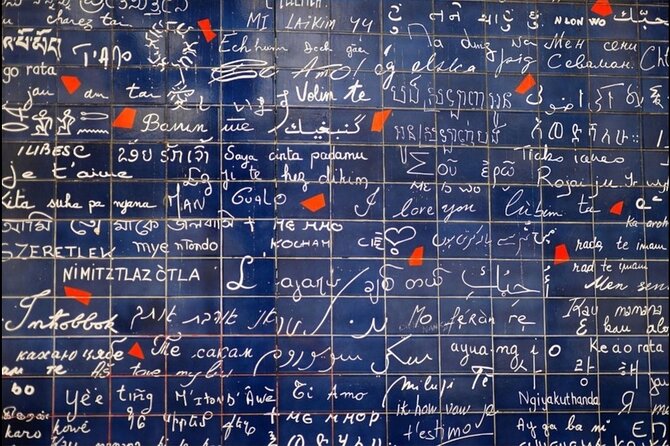
Then comes the emotional, photo-friendly stop: the romantic installation featuring I love you written in over 250 languages. This is the kind of sight that works for couples, friends, and anyone who just likes meaningful street art. You’ll likely spend a few minutes composing the best shot, and the guide can point you toward angles that make the languages readable.
Practical tip: because it’s visual and popular, expect people to drift through the spot. Keep your movements calm, and if you’re photographing, step aside between shots so you don’t block others.
Finishing at Sacré-Cœur: free basilica now, optional dome later
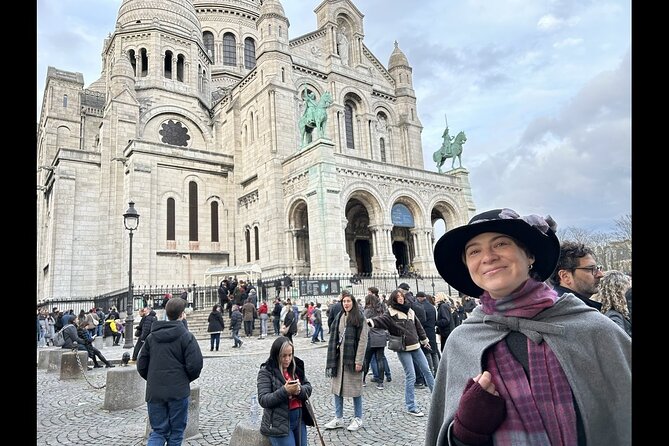
You end at Basilique du Sacré-Cœur, perched on Montmartre’s highest ground. The basilica’s white presence is instantly recognizable, and the panoramic views from up there explain why people keep climbing long after they’re tired.
Here’s the money detail that affects your plan: entry to the Sacré-Cœur basilica is free, but you’ll pay an additional fee of €7.00 per person to access the dome. That means you can choose your own energy level. If you only have enough stamina for the basilica and views, you’re covered. If you want the dome experience for the extra viewpoint, you should budget for it.
From a traveler’s perspective, this ending is smart. The tour includes the most famous “why Montmartre is worth it” moment, but it doesn’t force you to spend extra. You control how high you go.
Also, because the route is uphill, this is the time to slow down and let your legs recover a bit. Take in the view, stand still long enough to see the city layers, then decide if you want to keep exploring on foot after your tour ends.
Price and value: what $118.63 gets you, and what costs extra
At $118.63 per person for about 2 hours, you’re paying for a private, English-led walk that includes real guided stops plus Sacré-Cœur. You’re also getting plenty of photo ops at iconic places, plus recommendations for local attractions and hidden picks for where to go next.
The value is strongest if you like context. Montmartre can look like a postcard loop if you’re self-guided. With a guide, you’ll hear why each site matters, from the artist residence connections to the stories behind the sculptures and installations. It makes your photos feel like they have captions.
What’s not included is also clear. Tips for the guide are extra, and dome access at Sacré-Cœur costs €7.00 per person. Entrance tickets for specific artist-related stops (like Le Bateau-Lavoir and Le Moulin de la Galette) are not included either. If you want to add indoor visits, set aside time and money beyond the core walk.
There’s also an optional upgrade for a private tour or an exclusive French wine tasting. If you enjoy pairing local history with a glass at the right moment, that can turn a good tour into a memorable, slower finish. If you’re trying to keep costs tight, you can skip it and still get a lot from the standard route.
Guide style, pace, and that “photos and questions” sweet spot
One reason this tour tends to land well is the way guides interact with people. In the praised experiences I read, named guides like Ifi and Benedict were singled out for being helpful with questions and patient when taking photos. That matters because Montmartre stops are visual, and you’ll often want a second attempt when the light hits differently.
The tour is also built around a steady walking pace with short stop time at each site, which keeps it from dragging. If you like moving, learning in small bites, and then moving again, it fits. If you want long museum-style time, you may find you want to add extra time after the walk to go deeper at the places that grabbed you.
You’ll also get local recommendations for attractions and hidden corners. Even if you don’t follow every suggestion, it helps you steer your next hours without falling into tourist-only traps.
Finally, the private format means you’re not stuck with a one-size script. If the guide can adjust to your interests, that can turn “I’ve seen Montmartre before” into “I finally got it.”
One rare caution: there has been at least one reported situation where a guide didn’t show up due to a canceled booking, with help coming afterward and a refund issued. That’s not typical, but it’s smart to double-check your confirmation details and be ready to contact the provider if anything seems off on the day.
Should you book this Montmartre and Sacré-Cœur tour?
I’d book it if you want a guided, efficient way to understand Montmartre without spending the whole day sorting out streets and stories. It’s especially good for first-timers who want the big ending at Sacré-Cœur, art fans who like Picasso-linked stops like Le Bateau-Lavoir, and couples who want a meaningful photo moment at I love you in 250 languages.
Skip or adjust your expectations if you dislike uphill walking. This is moderate physical fitness territory, and some parts feel steep. Also, if your plan is mostly photos and minimal learning, a self-guided walk could be cheaper. But if you want the “why” behind the sights, the guided time is the point.
If you’re open to it, consider the dome option only if you still feel good after the climb. €7.00 is easy to justify when you’re already standing there and can enjoy the extra viewpoint.
FAQ
How long is the private walking tour of Montmartre and Sacré-Cœur?
It’s about 2 hours.
Is this tour private, and is it offered in English?
Yes, it’s private, and it’s offered in English.
Where do I meet the guide, and where does the tour end?
You start at 5 Pl. Blanche, 75009 Paris, and the tour ends in front of the Sacré-Cœur Basilica, 35 Rue du Chevalier de la Barre, 75018 Paris.
Is entry to Sacré-Cœur included?
Entry to the Sacré-Cœur Basilica is free, and the tour includes visiting the basilica.
Do I need to pay extra for the Sacré-Cœur dome?
Yes. Access to the dome costs an additional €7.00 per person.
Is this tour very hilly?
It requires moderate physical fitness. The walk includes uphill sections and can be steep.
Boulevard Pace
- Paris Île de la Cité and Notre-Dame Walking Tour With Crypt
★ 5.0 · 2,272 reviews - Paris in a Day: Louvre or Orsay, Eiffel Tower, City Walk & Cruise
★ 5.0 · 1,956 reviews - Paris City Center Free Walking Tour (Tip-Based)
★ 5.0 · 1,340 reviews - Paris: Dark History and Ghostly Guided Walking Tour
★ 4.7 · 1,000 reviews
Climbs Through Montmartre
- Paris: Montmartre Cheese, Wine & Pastry Guided Walking Tour
★ 4.8 · 2,255 reviews - The Secrets of Montmartre Walking Tour
★ 4.8 · 1,258 reviews - Paris: Sacré-Coeur and Montmartre Tour with Expert Guide
★ 4.1 · 1,027 reviews - Private Montmartre Food Tour with Wine, Cheese & Pastries
★ 5.0 · 1,027 reviews
Latest Paris entries, notes attached






Montmartre Walks, compared.
Montmartre Hidden Gems and Scenic Highlights Walking Tour
Read our review →
Montmartre Hill French Gourmet Food and Wine Tasting Walking Tour
Read our review →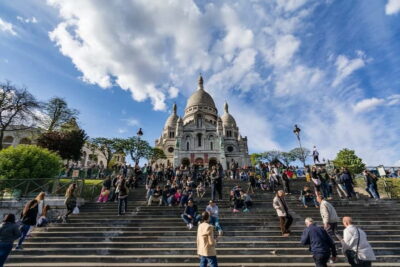
Montmartre Highlights Walking Tour with a Local Guide
Read our review →
Montmartre Cheese, Wine & Pastry Guided Walking Tour
Read our review →
Private Montmartre Food Tour with Wine, Cheese & Pastries
Read our review →
Sacré-Coeur and Montmartre Tour with Expert Guide
Read our review →
Paris Montmartre Food Tour – A Full French Meal by Do Eat Better
Read our review →This tour also appears in