Reviewed · WINE TOURS
Professional – Bordeaux Wine and Cheese Tasting with a walking tour
Chartrons makes Bordeaux smell like wine. This Chartrons walking route and blind wine and cheese tasting combo gives you history on the street, then real practice sniffing and sipping. I also like that the tasting is paired in a way that teaches you how Bordeaux flavors work together, not just what to drink.
One thing to weigh: most big sights here are viewed from the outside and at a distance. If you expect inside museum time, this is more of a short-city tour plus tasting, and it runs best with good weather.
In This Review
- Chartrons Wine-Merchant Streets, Port de la Lune, and the Opening Pour
- Quais de Bordeaux River Views, Wine Trade Stories, and Fast Orientation
- Pont de Pierre, Napoleon-Era Engineering, and Wine Meets Power
- Pont Jacques Chaban-Delmas and Why Modern Wine Tech Gets Mentioned
- Eglise St Louis des Chartrons: Iconic Church Views and Local Identity
- Spotting Cité du Vin From Afar, Without the Inside Detour
- Maisons Jumelles at 29 Quai des Chartrons and the Foreign Merchant Angle
- The Chartrons Blind Wine and Cheese Tasting: Where the Lesson Lands
- What You Learn Here That Actually Helps You Buy Wine in Bordeaux
- Guides You May Meet, and What Their Style Means for Your Experience
- Walking Pace, Timing, and What to Bring for a Smooth Afternoon
- Price and Value: Why This Might Be Worth Your Wine Budget
- Who This Tour Fits Best in Bordeaux
- Should You Book This Bordeaux Wine and Cheese Walk?
- FAQ
- How long is the Bordeaux wine and cheese tasting with walking tour?
- What is the price per person?
- Is the tour offered in English?
- What is the group size limit?
- Where do I meet, and where does it end?
- What wines and food are included in the tasting?
- Is the tasting blind?
- Will the Cité du Vin museum be visited up close?
- What weather and cancellation rules should I know?
Chartrons Wine-Merchant Streets, Port de la Lune, and the Opening Pour
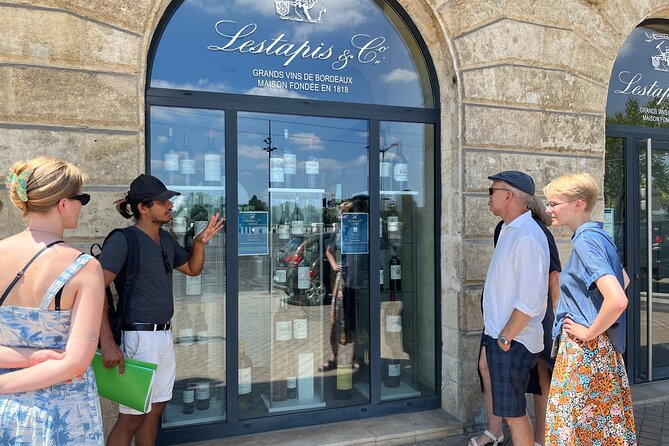
Your afternoon starts in Chartrons at 64 Quai des Chartrons, an area often linked with Bordeaux’s older wine trade. This is the district locals and visitors associate with the Port de la Lune, a nickname that points back to how Bordeaux’s river port helped shape the wine industry as far back as the 17th century. You’ll also be walking through parts of Bordeaux that are recognized as UNESCO heritage scenery, so you are not just killing time on sidewalks.
The vibe here is old-world and practical. You’re in a real wine district, and the guide uses the streets as a living classroom. It makes the later tasting feel more earned, because you understand what you are looking at before you start tasting.
You’ll likely notice the group stays small, with a max of 15 people. That matters because you can ask questions and actually get an answer, not just hear the same talking points at full volume.
Quais de Bordeaux River Views, Wine Trade Stories, and Fast Orientation
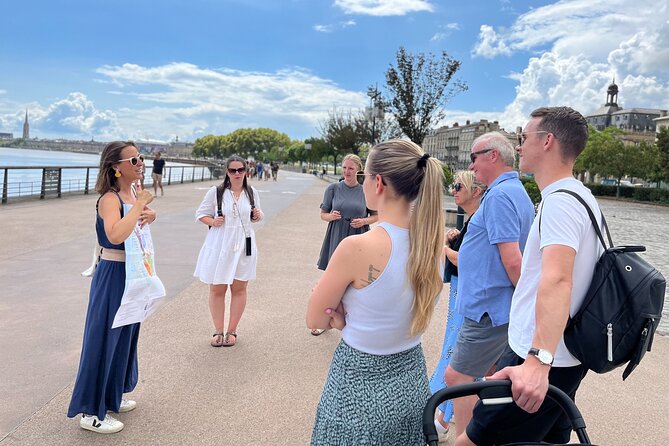
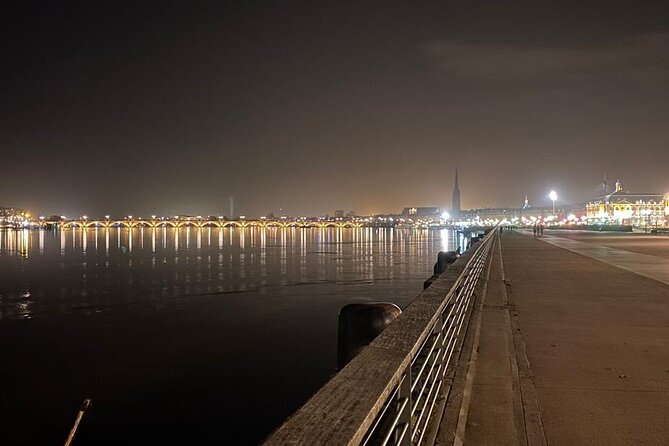
From the starting quays, you head along the Quais de Bordeaux for river views over the Garonne. This section is about getting your bearings fast. The guide ties what you see in the port area to how Bordeaux moved barrels, glass, and finished bottles over the years.
That river setting also helps you understand why Bordeaux became such a big deal. Water routes made wine easier to export, and Bordeaux’s port culture influenced everything from merchants to building styles. Even if you are not a “history first” person, this is the kind of context that makes the region feel logical.
Expect stops that are quick and focused. They are not long museum lines. Think short photo pauses, short lessons, then onward.
Pont de Pierre, Napoleon-Era Engineering, and Wine Meets Power
One of the highlights of the walk is the view at Pont de Pierre. You won’t go up close to it, but standing by the river you can see how important this bridge is in Bordeaux’s story. It dates to the early 19th century and is connected with Napoleon Bonaparte, which adds a surprising political angle to something as everyday as wine.
Here, the guide connects the idea of wine and kings. It’s a reminder that Bordeaux’s wine economy never lived in a vacuum. When rulers and courts wanted certain tastes, it affected what got planted, how it was marketed, and who profited.
This is one of those moments where you get an extra layer, without the tour turning into a lecture. You see a landmark, then you understand why it matters.
More Walking Tours in Bordeaux
- Bordeaux: Guided Walking Tour
★ 4.4 · 1,038 reviews - Saint-Émilion: Vineyard Walking Tour and Tasting
★ 5.0 · 404 reviews - Bordeaux: City Highlights Guided Walking Tour
★ 4.7 · 316 reviews
Pont Jacques Chaban-Delmas and Why Modern Wine Tech Gets Mentioned
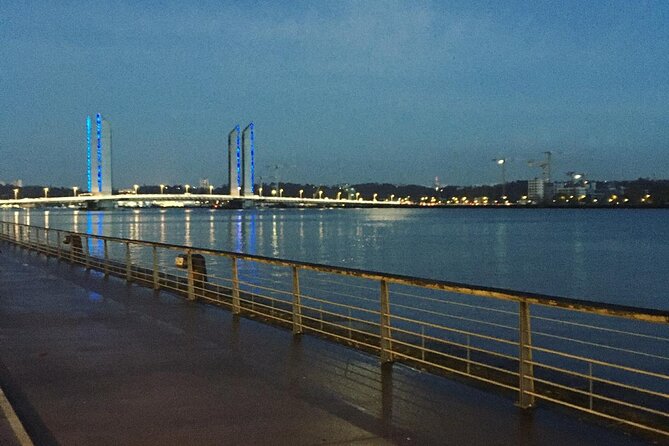
Next comes a distant view toward Pont Jacques Chaban-Delmas. Like Pont de Pierre, you won’t visit close up, but the guide points out the bridge as an example of impressive engineering and technology. The interesting twist is how the tour links that theme to new technologies used in making wine.
That connection works because it gives you a useful way to think. Bordeaux is not only about old barrels and old labels. Wine is also science, experimentation, and careful decision-making, even when the region is built on tradition.
If you like bridges, architecture, and the “how did they do that” angle, this segment gives you a satisfying mental picture. If you are more of a wine person, you still get a clear takeaway about how innovation fits into Bordeaux winemaking.
Eglise St Louis des Chartrons: Iconic Church Views and Local Identity
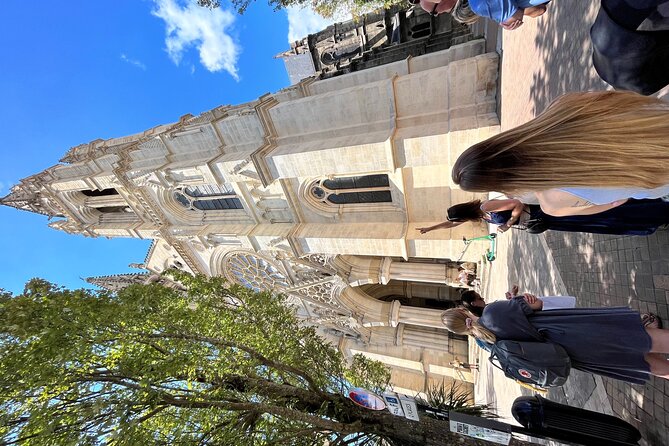
You then reach Eglise St Louis des Chartrons, one of Bordeaux’s iconic churches. Again, you are mostly viewing and learning from the street. But that is not a letdown here, because the guide uses the church to explain local identity and historical context.
Religious buildings can feel like “just another stop” on some tours. Here, it helps explain the human side of the district where merchants lived, worked, and socialized. Bordeaux’s wine trade was not only about vineyards. It was also about neighborhoods and community structures.
This stop adds a pause in the walk that feels like you are stepping into the city’s daily rhythm, not only into wine-land.
Spotting Cité du Vin From Afar, Without the Inside Detour
You also get a view up the river toward Cité du Vin, described as the biggest world wine exposition museum. The tour does not include going inside or getting close. You are essentially using the museum as a landmark so you understand where Bordeaux puts its wine spotlight today.
That is actually a smart approach for a 2 hour experience. You get context for what the museum represents, without sacrificing the tasting time. If you later want to visit Cité du Vin on your own, you’ll already know where it is and why it matters.
In short, you leave the walk oriented toward the city’s modern wine identity.
More Wine Tours in Bordeaux
Maisons Jumelles at 29 Quai des Chartrons and the Foreign Merchant Angle
One of the more story-driven stops is at 29 Quai des Chartrons, where you can see the Maisons Jumelles twin houses. The guide explains that these were lived in by a foreign wine merchant, which opens the door to a larger theme: foreigners helped shape Bordeaux’s wine trade.
This is where the tour becomes more than just regional facts. It turns into a theme about trade networks. Bordeaux’s wine story is international in practice, not only in flavor.
You might also hear this reflected in guide examples. In the past, guides like Clemence and others have shared attention to how British influence shows up in Bordeaux’s wine connections. You also see repeated emphasis across the tour on how merchants and trade relationships affected what Bordeaux became.
The Chartrons Blind Wine and Cheese Tasting: Where the Lesson Lands
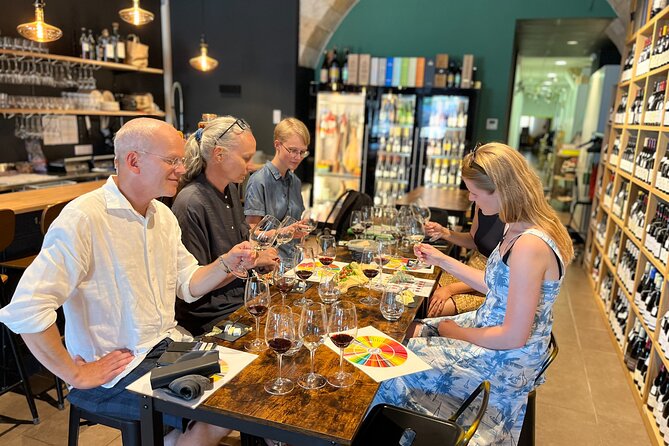
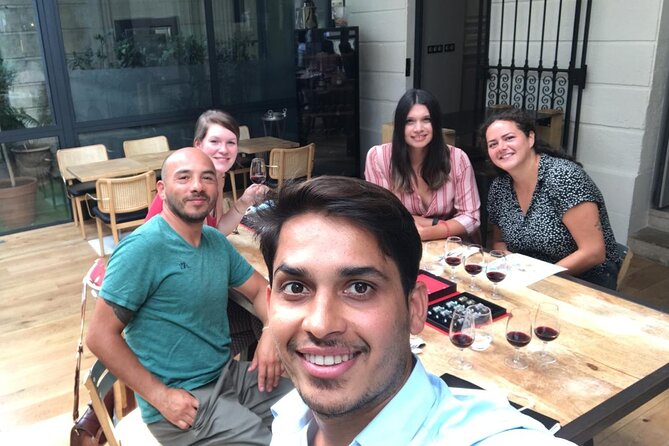
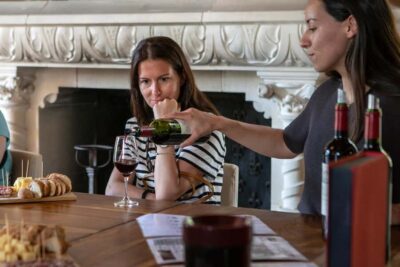
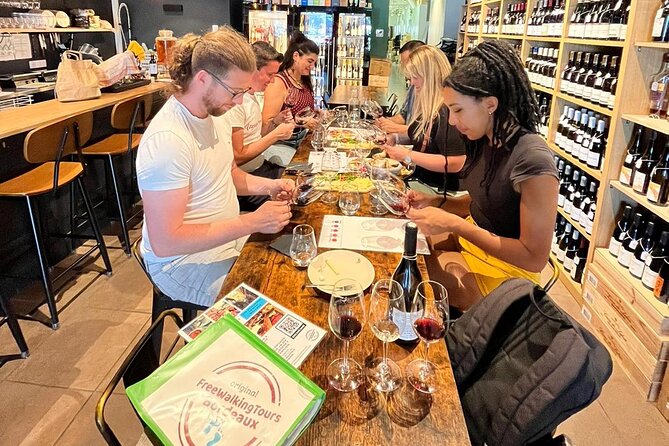
The final and most hands-on portion happens back in Chartrons, at a local wine bar. This is the time for a blind wine tasting, where you start sniffing and sipping as the guide guides you through the process. Expect it to feel structured but fun.
The tasting is described as generous, with Bordeaux Bio wines paired with an assorted cheese platter. You’ll sample four wines: one white, two reds, and one sweet wine. That range gives you a practical education in Bordeaux styles, instead of forcing you to guess your way through one narrow lane.
Pairing is the point. The guide explains how wine flavors connect with cheese, and this is where the city lessons pay off. Instead of memorizing grapes from a brochure, you can connect aromas and tastes to real foods you can later order.
Some guides add extra interaction. For example, one guide (Caz) has been praised for using a game-show style competition about the four wines. Another guide (Adrian) has been singled out for spending time answering questions and steering pairing choices. The common thread is that the guide keeps you actively tasting, not passively listening.
You’ll likely also have bread or baguette in the mix. That matters because Bordeaux wine often shines with simple food, not only fine dining plates.
What You Learn Here That Actually Helps You Buy Wine in Bordeaux
A walking tour about wine would be useless if it did not help you make decisions later. This one tries to do that.
Here are the practical takeaways you can carry into a wine shop or restaurant:
- How to read Bordeaux wine styles by how they taste, not just by label hype.
- How to match wine to food, using cheese pairing as the training wheels.
- How to talk about what you like, because you taste a white, reds, and a sweet so you can narrow your preferences fast.
If you plan to buy bottles while you are in town, this tasting helps you avoid the common trap of buying what sounds famous rather than what fits your palate. You’ll leave with a short list of flavors you already recognized in the glass.
Also, because the tasting includes Bio wines specifically, you’ll get an easy starting point if you care about how wine is made, not only how it tastes.
Guides You May Meet, and What Their Style Means for Your Experience
Guide quality is the biggest factor in a wine tasting. The names that come up often are Adrian, Pascale, Ani, Clemence, Caz, and Pedro, among others. What they seem to share is an ability to connect city history to wine in a way that keeps people engaged.
You’ll also notice a pattern in the praise: guides are called out for explaining grapes and wine styles, pairing choices, and answering questions fully. Some guides also keep the energy light with games or humor, which can be a real advantage when you are tasting alcohol and trying to focus.
One practical note: like any newer venue or small-bar setup, details can vary. A small number of experiences have mentioned venue issues on their specific day. If that happens, the host is still likely to keep the tasting portion moving, but it’s worth showing up with flexibility.
Walking Pace, Timing, and What to Bring for a Smooth Afternoon
This is an approximately 2 hour experience that includes walking time. It starts at 1:30 pm and keeps a manageable pace. The tour also notes that travel time is included in the duration, which is good because it prevents the classic problem of “2 hours tour” turning into “half day shuffle.”
Because it’s a walking route, comfortable shoes matter. This is especially true around the quays and bridges where you’ll be on your feet and stopping for views.
If you want to buy wine after, consider how much you can carry. One guest mentioned not having room for shopping with hand luggage, which is a real-world detail that can affect your plans.
Also, bring a camera for the river views and church exterior shots. You won’t get close to some landmarks, but the sightlines are part of the fun.
Price and Value: Why This Might Be Worth Your Wine Budget
At $78.64 per person, the value comes from combining two things that are usually separate: a focused city walk and a structured tasting. You’re not only paying for the glass pours. You’re paying for explanations that help you understand what you’re tasting and why Bordeaux became Bordeaux.
The tasting includes four Bio wines plus an assorted cheese platter, and it is guided. That turns “a tasting” into a mini lesson you can use later.
If you have limited time in Bordeaux and want the most educational hour-to-dollar ratio, this format makes sense. If you already know Bordeaux well and mostly want to sit and drink without any walking, you might prefer a dedicated wine bar session instead.
Who This Tour Fits Best in Bordeaux
This is a strong fit if you:
- Want a short, easy way to learn Bordeaux wine while also getting city context in Chartrons.
- Enjoy the idea of a blind tasting where you can recalibrate your taste in a playful way.
- Like pairings, especially cheese with wine, and want guidance on what works.
It’s also a good choice if you are visiting for the first time and want orientation. The route touches major wine merchant landmarks, key quays, bridge views, and a church exterior, all without demanding museum time.
If you are traveling with someone who is more history-focused, the bridges and church stop give them material. If your partner is more wine-focused, the tasting segment is the obvious payoff.
Should You Book This Bordeaux Wine and Cheese Walk?
Yes, if you want a practical Bordeaux afternoon: a walk with real place-based stories, then a guided tasting that trains your palate and teaches pairing logic.
Before you book, set expectations correctly. This is not a close-up, inside-everything sightseeing day. Several landmarks are viewed from a distance, and the museum is spotted rather than visited. If you want hands-on architecture time or indoor museum hours, you might pair this with a separate visit later.
If your goal is to leave with confidence, not just souvenir knowledge, this tour does the job.
FAQ
How long is the Bordeaux wine and cheese tasting with walking tour?
It’s about 2 hours.
What is the price per person?
The price is $78.64 per person.
Is the tour offered in English?
Yes, it is offered in English.
What is the group size limit?
The tour has a maximum of 15 travelers.
Where do I meet, and where does it end?
It starts at 64 Quai des Chartrons, 33300 Bordeaux, France, and ends at Rue Notre Dame, Bordeaux.
What wines and food are included in the tasting?
You taste 4 Bordeaux Bio wines, including 1 white, 2 reds, and 1 sweet wine, paired with an assorted French cheese platter. Bread or baguette pairing is also mentioned as part of the tasting experience.
Is the tasting blind?
Yes, be prepared for a blind wine tasting during the tasting portion.
Will the Cité du Vin museum be visited up close?
No. Cité du Vin is spotted from a distance, and the monument is not visited close-up on this tour.
What weather and cancellation rules should I know?
The tour requires good weather. If it’s canceled due to poor weather, you’ll be offered a different date or a full refund. You can also cancel for a full refund up to 24 hours before the experience starts.
France by the Course
- From Bordeaux: Half-Day Saint-Émilion Tour and Wine Tasting
★ 4.7 · 699 reviews - Bordeaux Wine and Trade Museum Admission Ticket with Wine Tasting
★ 4.5 · 599 reviews - Saint-Émilion: Bordeaux Vineyard Tour and Wine Tasting
★ 4.8 · 578 reviews - Bordeaux: Vineyards Wine Tasting Half-Day Trip
★ 4.2 · 470 reviews
Appellations, Visited
- Saint Emilion Day Trip with Sightseeing Tour & Wine Tastings from Bordeaux
★ 5.0 · 1,120 reviews - Saint-Émilion: Grand Cru Classé Winery Visit and Tasting
★ 4.6 · 1,118 reviews - Saint Emilion Half-Day Trip with Wine Tasting & Winery Visit from Bordeaux
★ 4.5 · 1,034 reviews - From Bordeaux: St. Emilion Village Half-Day Wine Tour
★ 4.7 · 728 reviews
Latest Bordeaux entries, notes attached

Wine Tours, compared.
Authentic Parisian Gourmet Food Tour with 10 Local Dishes & Wines
Read our review →
Loire Valley Castles Day Trip from Paris with Complementary Wine
Read our review →
River Garonne Cruise with Glass of Wine and Canelé
Read our review →
Montmartre Hill French Gourmet Food and Wine Tasting Walking Tour
Read our review →
Montmartre Cheese, Wine & Pastry Guided Walking Tour
Read our review →
Loire Valley Castles Day Trip With Wine Tasting
Read our review →